Le Chic En Rose

Diaries of an independent traveller

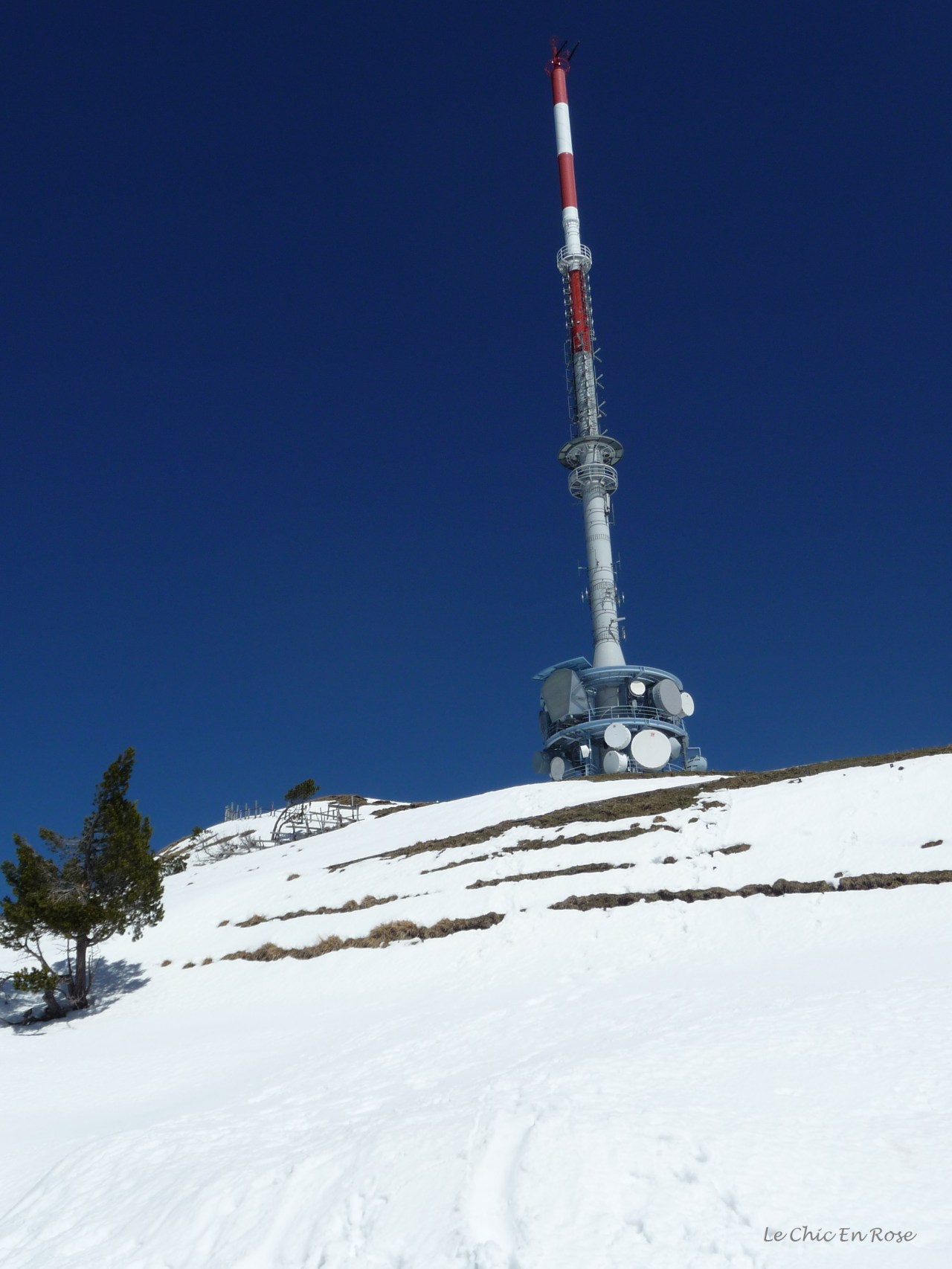
Rising up behind our hotel in Weggis was the impressive Mount Rigi – an iconic image of the skyline of the Lucerne area and renowned as the Queen Of The Mountains. The Rigi area has been a tourist paradise for many years now and really took off as a travel destination in Victorian times when the Victorian concepts of health and beauty led the well heeled to search for places in which they could relax and nurture their souls! Queen Victoria herself was carried up the mountain in a sedan chair in 1868 (spare a thought for the porters!) so she could spend the night at the hotel at Rigi Kulm and awake to a glorious sunrise. She would not however have seen the TV tower perched on the top of the mountain as this was obviously not constructed until much later – by Swisscom in 1958 to be precise!

Indeed the Romantic poets and painters of the nineteenth century were quite obsessed with the beauty of this area and it provided inspiration for many of their works. As early as 1814 the poet Shelley, who was a great admirer of the Alps, visited the area with his companion, Mary Godwin, who wrote of their stay in the Lucerne area, “this lovely lake, these sublime mountains and wild forests, seemed a fit cradle for a mind aspiring to high adventure and heroic deeds”. I also discovered that the famous British painter JMW Turner was fascinated by the Rigi landscape and painted it no less than 30 times. The wonderful lighting effects that he observed created inspiration for some beautiful works of art, Blue Rigi, Red Rigi and Dark Rigi amongst others. The Blue Rigi : Sunrise (1841/2) has pride of place in an exhibition currently being held at the Tate Gallery entitled, Tate Britain, “Late Turner:Painting Set Free” . This retrospective is a collection of Turner’s work from 1835 when he turned 60 up to 1850, the year in which his final work was exhibited.

Now I am certainly neither a painter or a poet but I do love to take photos so, as I’ve been lucky enough to make the ascent to the top of Rigi Kulm several times, I have now amassed quite a collection. All were taken at the same time of year in April and the differences in weather, temperature and conditions are very interesting. On our recent trip this year we were hardly able to see anything. As soon as we reached the summit a sudden fog descended and the temperature plummeted a good 10 to 15 degrees in a matter of seconds.


I should also add that although it is possible to walk up and down the mountain (or ski in the colder months) Monsieur Le Chic and I took the cogwheel railway up to the summit at Rigi Kulm. There are in fact a number of options available. Accessibility was greatly increased by the opening of the first cogwheel railway in Europe in 1871, which went from Vitznau on Lake Lucerne up to the summit station at Rigi Kulm (1798 metres above sea level). The little red train is still operating – no need to take a sedan chair up to the top anymore! On the Lake Lucerne side you can also take the cable car from Weggis to Rigi Kaltbad and then connect with the railway for the last section up to the summit. Coming from the other side of the mountain in the direction of Lakes Zug and Lauerz, you can take the blue cogwheel railway from Arth-Goldau all the way up to the top. All of these travel options are free with the Swiss Pass otherwise a return ticket costs 68 Euros full price and 34 Euros half price (concessions are available).

Checking the weather forecast but sometimes going ahead with the planned trip anyway can pay dividends. Last year we just about had the place to ourselves as the damp misty weather at lakeside level had put most tourists off from making the Rigi ascent. On this occasion we could enjoy the 360 degree panorama at the top where views stretch out towards the Alps proper (technically Rigi is part of the Swiss Plateau not the Alps). We could gaze across to the Saint Gotthard Massif and the Eiger and Jungfrau many miles away. However due to the heavy clouds at lower lying levels, it looked as though we were floating about on a sea of cotton wool.

The previous year was quite spectacular! It had been a very cold winter and there was still heavy snow at the summit. You could see exactly why this is a paradise for winter sport lovers with skiing, sledging and Nordic cross country skiing all very popular. In the summer the hikers come out to enjoy the wonderful panoramic views and the benefits of walking in the clear mountain air.

You never know what to expect up at the top of Rigi which adds to its fascination!
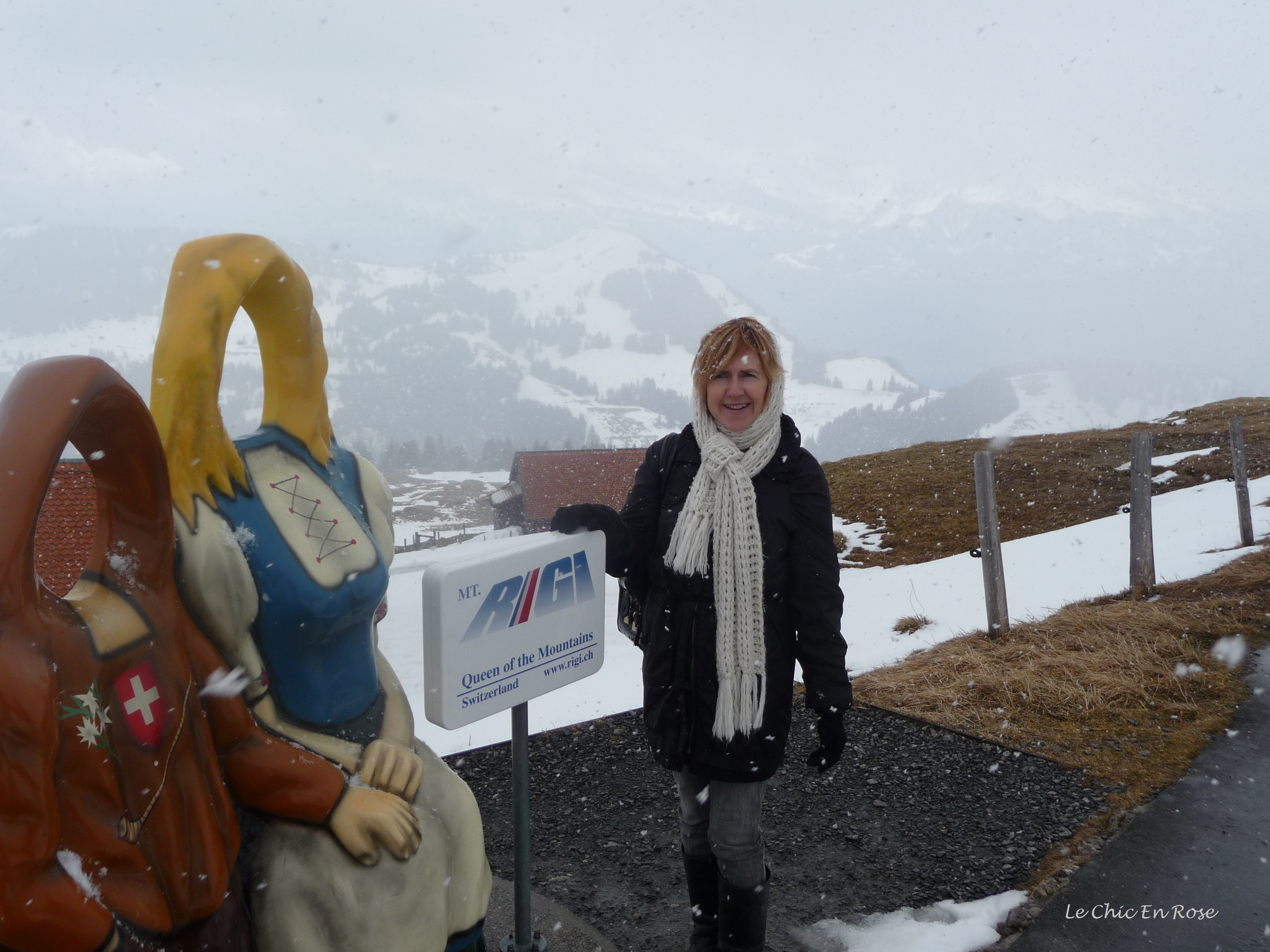
Sudden snowstorm on Rigi Kulm during one of our visits there

Sudden snowstorm on Rigi Kulm during one of our visits there

There are plenty of facilities at the top too – the Rigi Kulm Hotel has an excellent cafe style restaurant and there is a well stocked souvenir shop and kiosk too just in case it’s warm enough for a quick ice cream whilst waiting for the train back down the mountain! We have never stayed overnight at the hotel so haven’t experienced a “Red Rigi” sunset or sunrise though we have certainly seen Dark Rigi and Blue Rigi if you are referring to the azure colour of the skies on a clear day. However on the cable car descent we did down into the pretty little town of Weggis, we saw the beautiful light that must have inspired Turner to paint Blue Rigi. It is somewhere between a soft hazy blue, lilac and grey and the effect over the shimmering waters of Lake Lucerne against the backdrop of the mountains is truly magical.

On one of our descents I spotted my Traumhaus (Dream House). However Monsieur Le Chic feels it would be too impractical to live there not to mention considerably out of our price range! I can dream on!

My dream house on Rigi Mountain

My dream house on Rigi Mountain

Copyright © 2014 Rosemary Thomas Le Chic En Rose. All rights reserved
The American author and travel writer, Mark Twain, wrote in 1897 that Weggis was, “the loveliest place” he had ever visited! It would be hard to disagree and I’m almost loathe to share this enchanting place with everyone as the secret will surely be out! We first came across this lakeside paradise in central Switzerland 5 years ago, on a visit to Lucerne, when we decided to take a trip across the lake to Mount Rigi. On the return journey the cable car descent took us straight into the heart of this pretty little town. We spent an idyllic hour or so whilst we waited for the next boat enjoying a couple of glasses of wine on the lakeside terrace of the Beau Rivage Hotel. When it was time to leave we were so smitten we vowed to come back some day!


Since then we have been lucky enough to come back 3 times most recently this April. We have found that Weggis is an ideal place in which to spend a few nights en route back to Australia, after our visit to the family in the Uk and makes a refreshing change from our usual fast paced travels through Europe! It is the perfect place to chill, relax, breathe in the pure mountain air and recharge our batteries. Our little home from home has been the Post Hotel Weggis (POHO), which has as its aptly named promotional logo, “Chill Out In Style”.


View back towards the Post Hotel Weggis

View back towards the Post Hotel Weggis


To say its situation is superb would be an understatement. Only 45 minutes by ferry back to Lucerne you can literally step off the boat, wheel your suitcases across the little road via a pedestrian crossing, walk through the hotel doors and take the lift up to the hotel lobby. You could always walk up the grand marble staircase too if you’re travelling light or have a refreshing drink to recover from your journey in the bar terrace or in the warmer months down on the lakeside terrace. Buses also leave regularly from the quay in front of the hotel, which will take you to Kuessnacht and train connections to Lucerne.


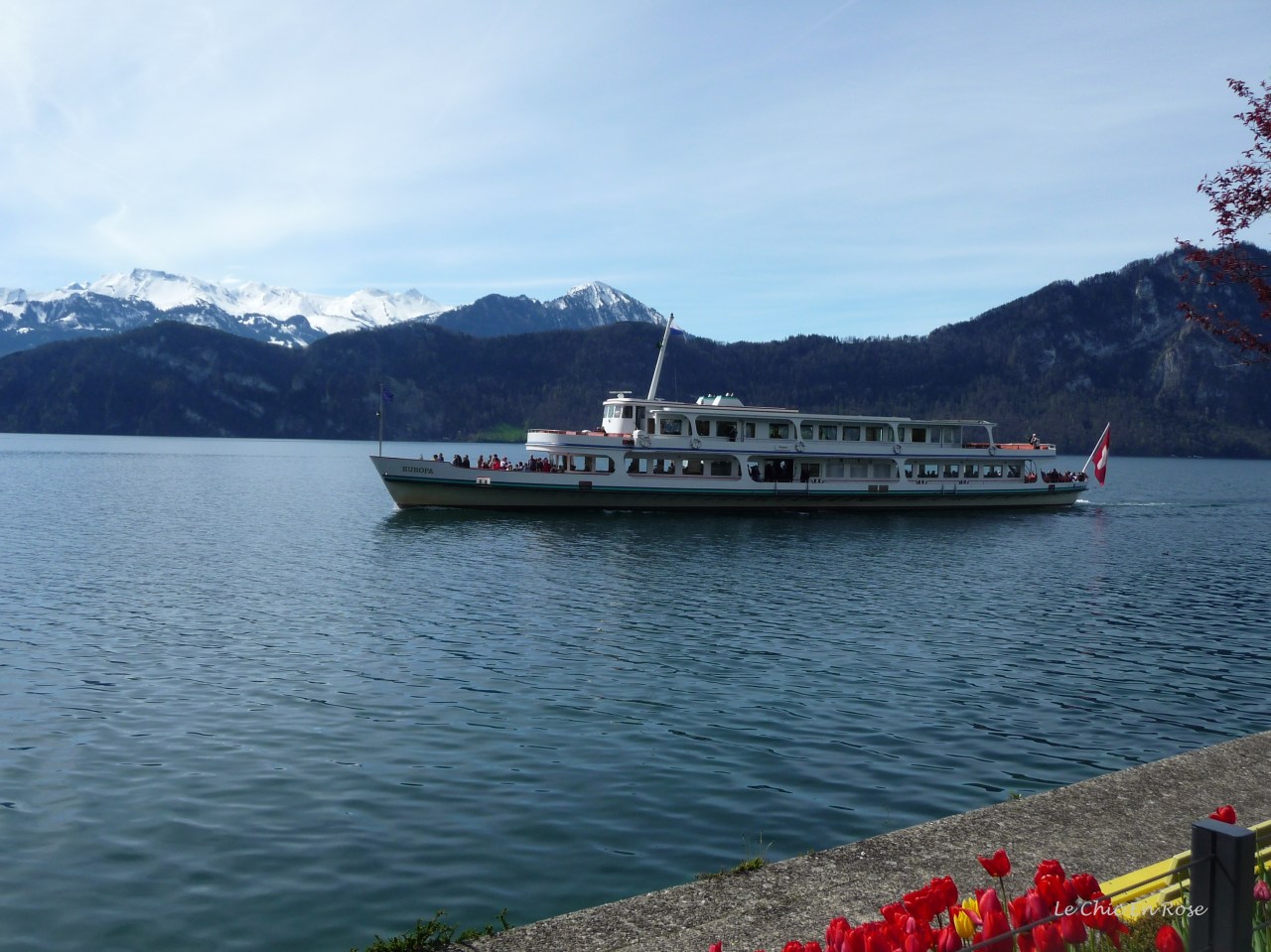
Since we usually visit in low season (April) we can get better deals on the room rates and also it is much less crowded than the more popular winter and summer seasons. Hence we always ask for and have been lucky enough to get a deluxe lakeside room with a view. You could while away many hours sitting on the balcony, overlooking Lake Lucerne (Vierwaldstaettersee) and watch the boats coming and going from the little quay below.  The views out across the lake to the snow capped mountains beyond are magnificent!


In fact with all its facilities including a spa, beautiful rooms with a view,  a comfortable guest lounge, and a wonderful terrace overlooking the lake, you could easily just stay at the hotel all day long. The breakfasts are superb (full buffet and additional a la carte options available) and there are several restaurants including the authentic Swiss Weggiser Stuebli and Enoteca where you can again enjoy Swiss style food such as macaroni cheese with apple sauce or roesti in an intimate rustic wine cellar ambience. It is certainly not the place for diets or those with dairy intolerance delicious though the food is!

Quiet and peaceful, Weggis is a lovely place for a walk especially along the lake (there is another part of the town further up the hill called Weggis Dorf or village). Stepping out from the Post Hotel by the quay, one way leads back down to the Beau Rivage Hotel and the other in the direction of Lucerne, takes you past moorings with little boats bobbing up and down on the water until you reach a statue of a dancing nymph (or lady I haven’t been able to ascertain which). The point that you reach here, is a perfect spot in which to sit and contemplate the world or watch the ferries drawing in towards the quay further down by the Post Hotel.


Each time we have visited, without fail, Weggis has had a beautiful display of flowers! The colours have been slightly different but always superb.


Walking back along past POHO one early evening and just before we reached the Beau Rivage Hotel, we took a detour up into the side streets which lead up to the Cable Car station. Everywhere was immaculate, the houses are small and many of them are divided into apartments but they always find a spot for some flowers and maybe even a gnome or two.


Finally you can walk back down to the lake and return to the Quay pausing to say hello or “Gruezi” to a couple of local ducks who waddle around quite happily!


Weggis is absolutely beautiful at any time of day or night,  but when the clouds come in and the mist descends over the lake it takes on a haunting magical quality that has to be seen to to believed!


Next week we’ll explore the mountain that rises up behind the Post Hotel, Rigi “”Queen Of The Mountains”. In the meantime for more wonderful walking ideas from around the world head over to Jo’s Monday Walks!


Ciao, Tchuess, Au Revoir (all of which we heard for “goodbye” in Switzerland)!


Copyright © 2014 Rosemary Thomas Le Chic En Rose. All rights reserved

Once upon a time, a long time ago, I was taken on a day trip up to London with my parents and brother. The highlight was a visit to London Zoo where we got to see the giant panda, Chi Chi. I was so excited! By this stage, however, she was very old and no doubt rather cranky with all the hordes of tourists peering at her, so you could only just get a glimpse of her fast asleep in her pen! I didn’t realise how long ago this actually was until I started doing some research for this post and discovered that Chi Chi passed away on 22nd July 1972!

Ever since then I have been fascinated by pandas, especially as they are such an endangered species. The World Wildlife Fund set up in 1961 is famous for its giant panda logo. Sir Peter Scott, who was one of the founders of the WWF, said the panda logo was chosen as the panda is, “an animal that is beautiful, endangered and one that is loved by many people”.

Our daughter, Mlle Chic Fille, had visited Berlin Tiergarten (Berlin Zoo) in 2011 and sent me a photo of the giant panda she saw there. Therefore on our trip to Berlin last year, we set off to the zoo (yours truly like an excited schoolgirl) so I could finally see a “real” panda again after so many years! Round and round the zoo we walked but all we could find at the panda enclosure marked on the map were some exotic geese. Eventually in the monkey enclosure we came across a panda but it was not the one I was hoping to see!


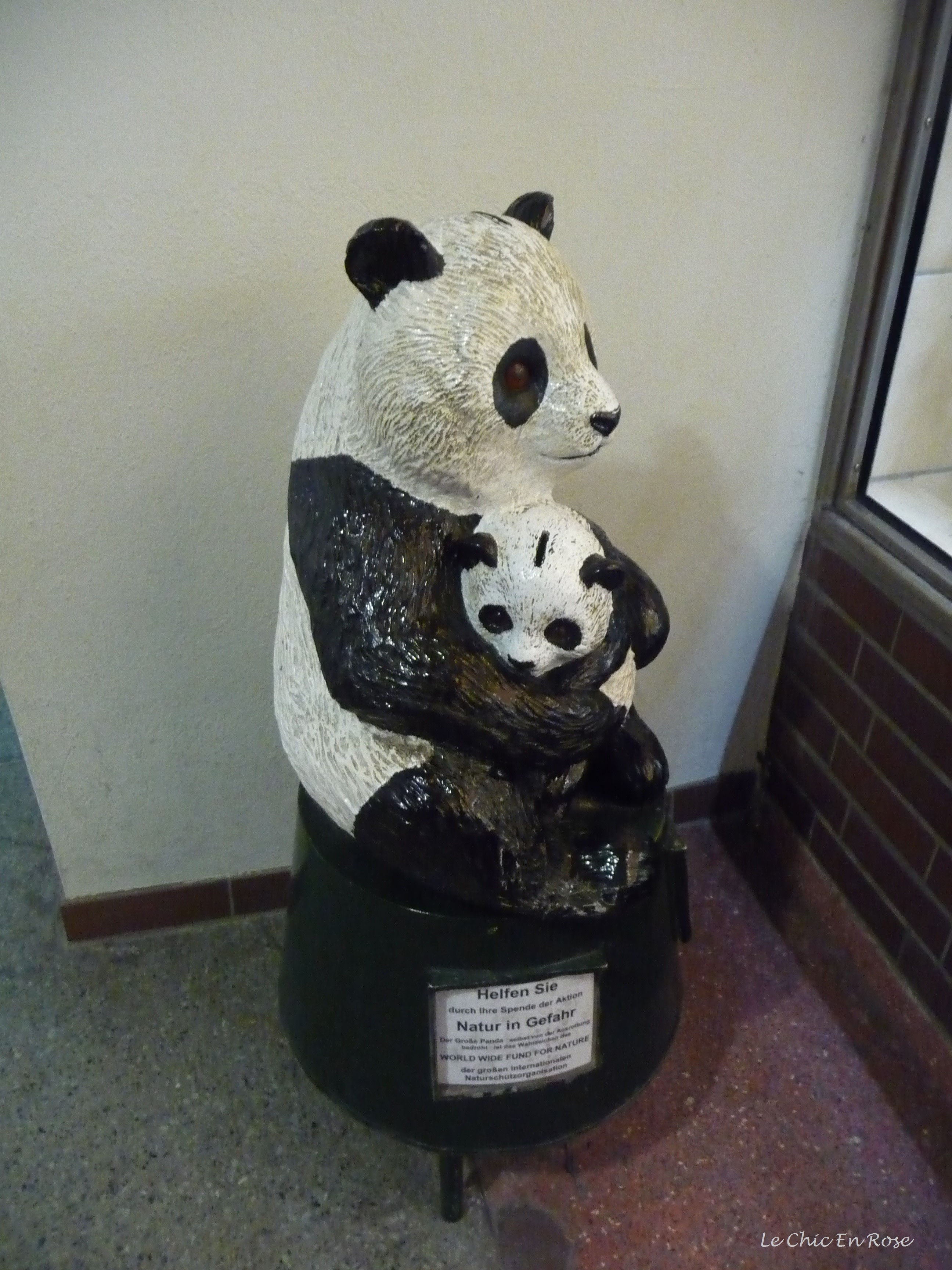
WWF Collection Box at Berlin Tiergarten

WWF Collection Box at Berlin Tiergarten


By this stage Monsieur Le Chic’s patience was beginning to wear a bit thin as there were many other places in Berlin we were still hoping to visit, so I agreed to go to the information booth and asked in my best German, “Was passiert mit dem Panda?” which translates as, “What’s happened to the panda?”. The lady at least understood what I’d said as she answered, “Leider, letztes Jahr ist der Panda gestorben!”. Oh no – “unfortunately the panda died last year!”. Bao Bao was very old by panda standards and had passed away at the ripe old panda age of 34 years old the previous August. We had arrived a few months late to see him – very upsetting! I must add that Berlin Tiergarten is a fine zoo but after my disappointment I was in no mood for a lingering look around, so we headed off to do other things!


Fast forward a year and we found ourselves in Vienna this April with just 4 days to look around and the zoo was not high on Monsieur Le Chic’s priorities. However we were keen to have a tour round Schoenbrunn Palace, which we duly did before I spotted a sign to the Tiergarten. What I hadn’t realised is that Vienna Zoo (or Schoenbrunn Tiergarten) is in fact in the grounds of the palace – not a bad setting really!


In front of Schoenbrunn Palace Vienna

In front of Schoenbrunn Palace Vienna


I had also read that Vienna Zoo had giant pandas but scarred by our experience in Berlin, I was not confident we would actually be able to see any! Since I was in a race to find the pandas I didn’t take too many photos along the way though we did see a magnificent peacock and some fine looking lions as we sped towards the area marked as the panda enclosure!


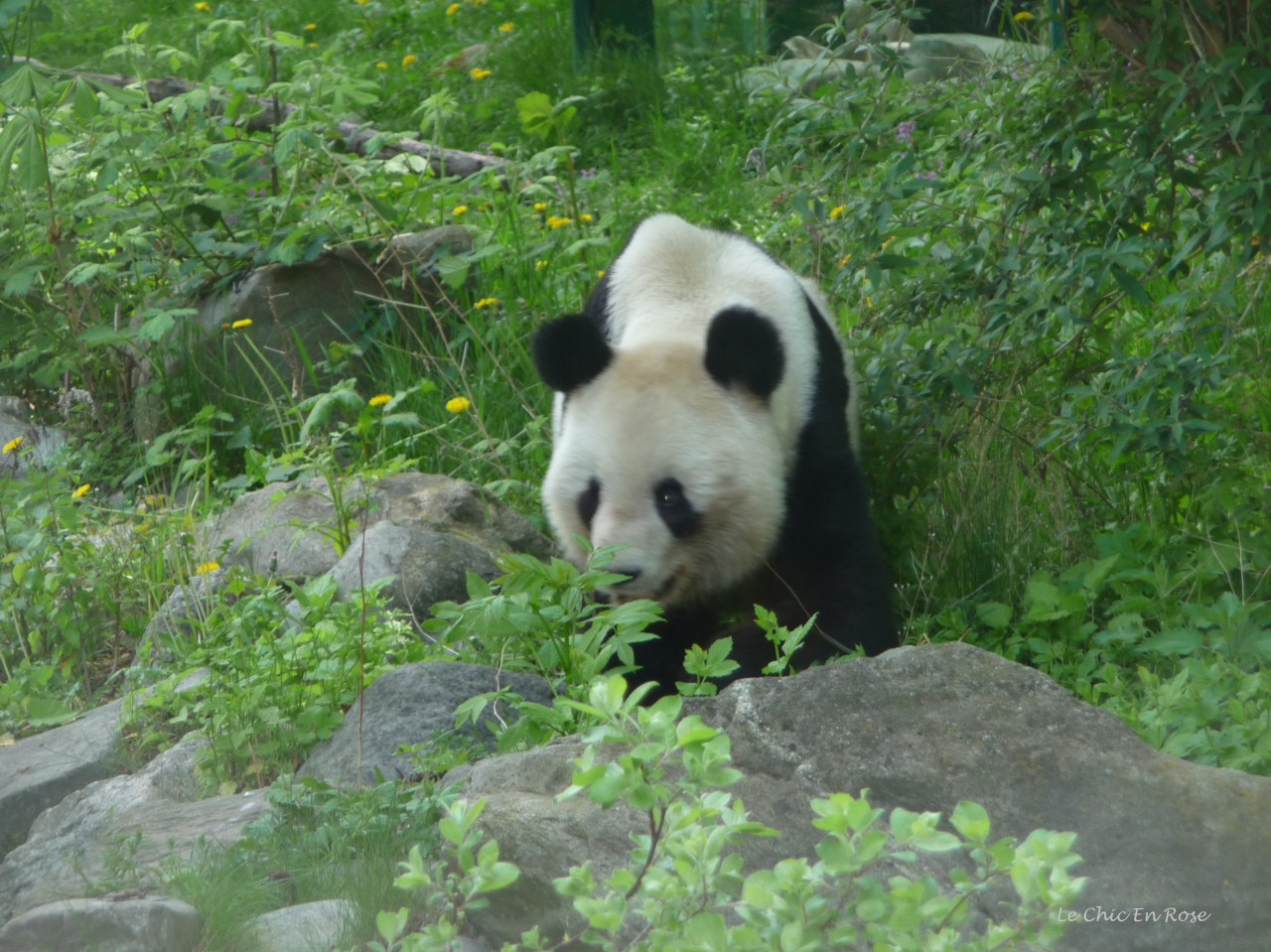
Although we did appear to be in the right place, I couldn’t initially see any signs of pandas apart from the information board so was starting to get a bit concerned when suddenly out from the bushes “strolled” a very active and distinctive looking panda! We spent quite a while just watching him (or her I wasn’t sure which was which!) wandering around the grounds of the enclosure and then later tucking into a feast of bamboo shoots with his/her mate!


There must be something in the waters at Schoenbrunn Zoo as not only do they have a high success rate for many of their breeding programmes, they have had amazing success with the giant pandas. The pair we saw, Yang Yang (female) and Long Hui (male) have had no less than 3 panda babies all conceived naturally, which is unusual in captivity. The most recent addition is Fu Bao (the happy leopard) and he came into the world on 14th August 2013. He has 2 older brothers, Fu Long (the happy dragon) born on 23rd August 2007 and Fu Hu (the happy tiger) born on 23rd August 2010 (August must be panda baby time!) who have both now been repatriated to China as part of the conditions of “loaning” pandas to zoos outside of China. Young Fu Bao will be able to stay at Schoenbrunn until he is 2 years old and then he will rejoin his brothers in China.

Schoenbrunn is the oldest zoo in the world and was established in 1752 on the orders of the then Holy Roman Emperor, Francis 1, husband of the Hapsburg Empress Maria Theresa. It was to be used as an imperial menagerie (must have been fun for all their many children!). It was centred around a pavilion meant for imperial breakfasts and the animal enclosures fan off from this point.  The pavilion was also a favourite spot of Emperor Franz Josef who spent his last years at Schoenbrunn Palace and who died here on 21st November 1916. Today the Cafe Restaurant Kaiserpavillon is situated at the centre of the zoo and makes a rather impressive location for a cafe/restaurant!


The panda enclosure is conveniently situated just down a path from the Kaiser Pavilion so after our pleasant lunch in the spring sunshine, we popped back to see them once more – still tucking away with gusto into their bamboo shoots!


The pandas were enthusiastically eating their lunch!

The pandas were enthusiastically eating their lunch!


Copyright © 2014 Rosemary Thomas Le Chic En Rose. All rights reserved

Following on from our Core Cider House visit, we had another excursion up into the Perth Hills last week. This time the temperature was a tad too hot – it was nudging 37 degrees as we drove up to the top of the Darling escarpment!

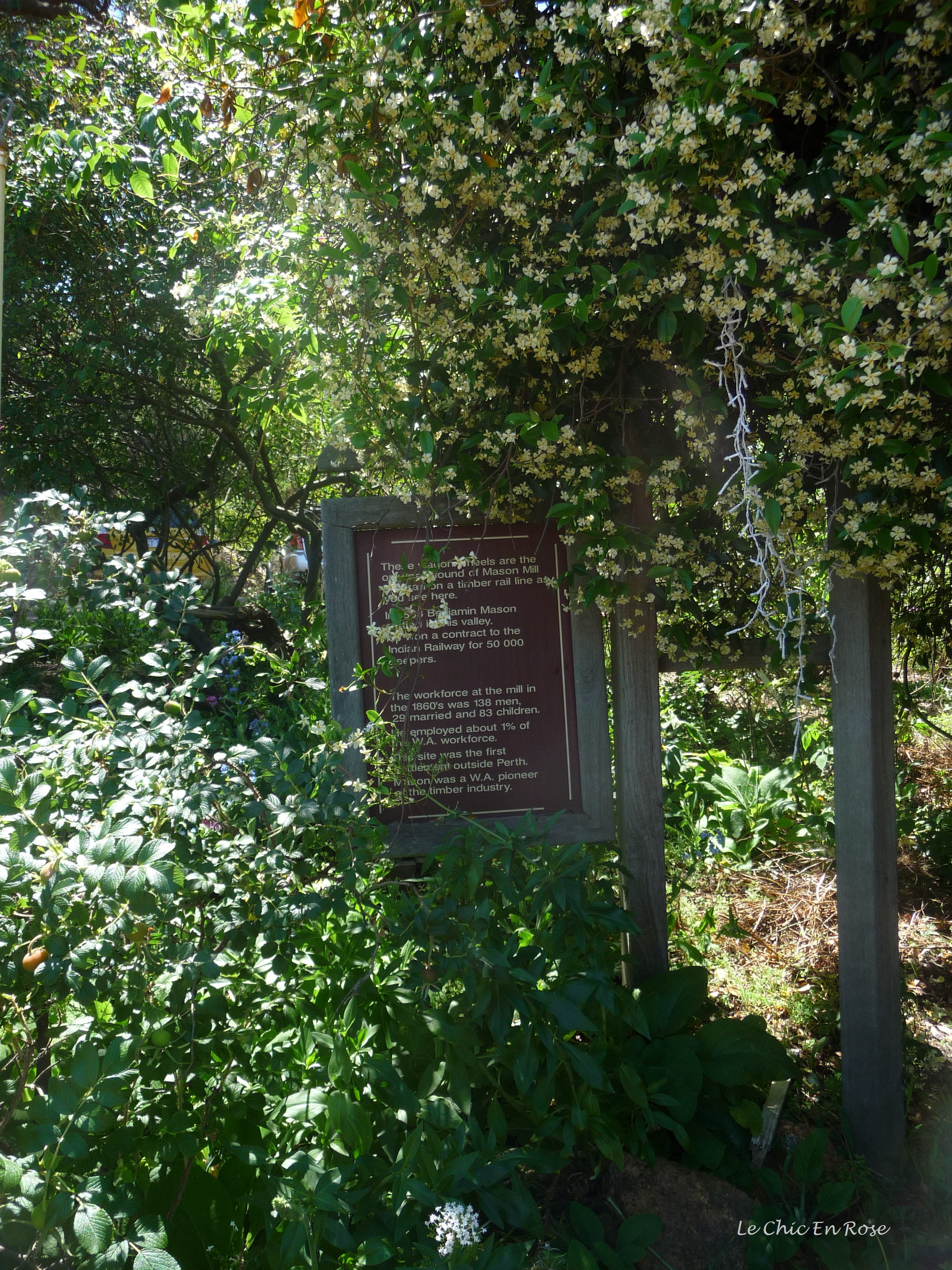
Our lunch destination was The Rose Heritage Cafe. Nestling in the Hills locality of Carmel down the quaintly named Masonmill Road, the Rose Heritage Cafe is a restaurant attached to the beautiful Melville Rose Nursery, which specialises (as its name would suggest!) in roses. My camera evidently was not impressed with this sudden heatwave after a pleasant start to the warmer months and went down with a touch of heatstroke. I wanted to take a photo of the plaque that commemorates one of the early settlers in the area, Benjamin Mason, who gave his name to Masonmill Road. I eventually managed to take one after several failed attempts when my camera went on strike. Unfortunately the plaque is partly obscured by the bushland surroundings. However the aforesaid Benjamin was an early pioneer of the timber industry in the 1860’s. Somehow he survived up in the hills without air conditioning and the modern conveniences we take for granted not to mention the wild winter storms. I won’t discuss the possibility of snake sightings either – we didn’t see any!


Commemorative Plaque to the early settlers of the Carmel area and the founders of the timber industry in particular Benjamin Mason

Commemorative Plaque to the early settlers of the Carmel area and the founders of the timber industry in particular Benjamin Mason


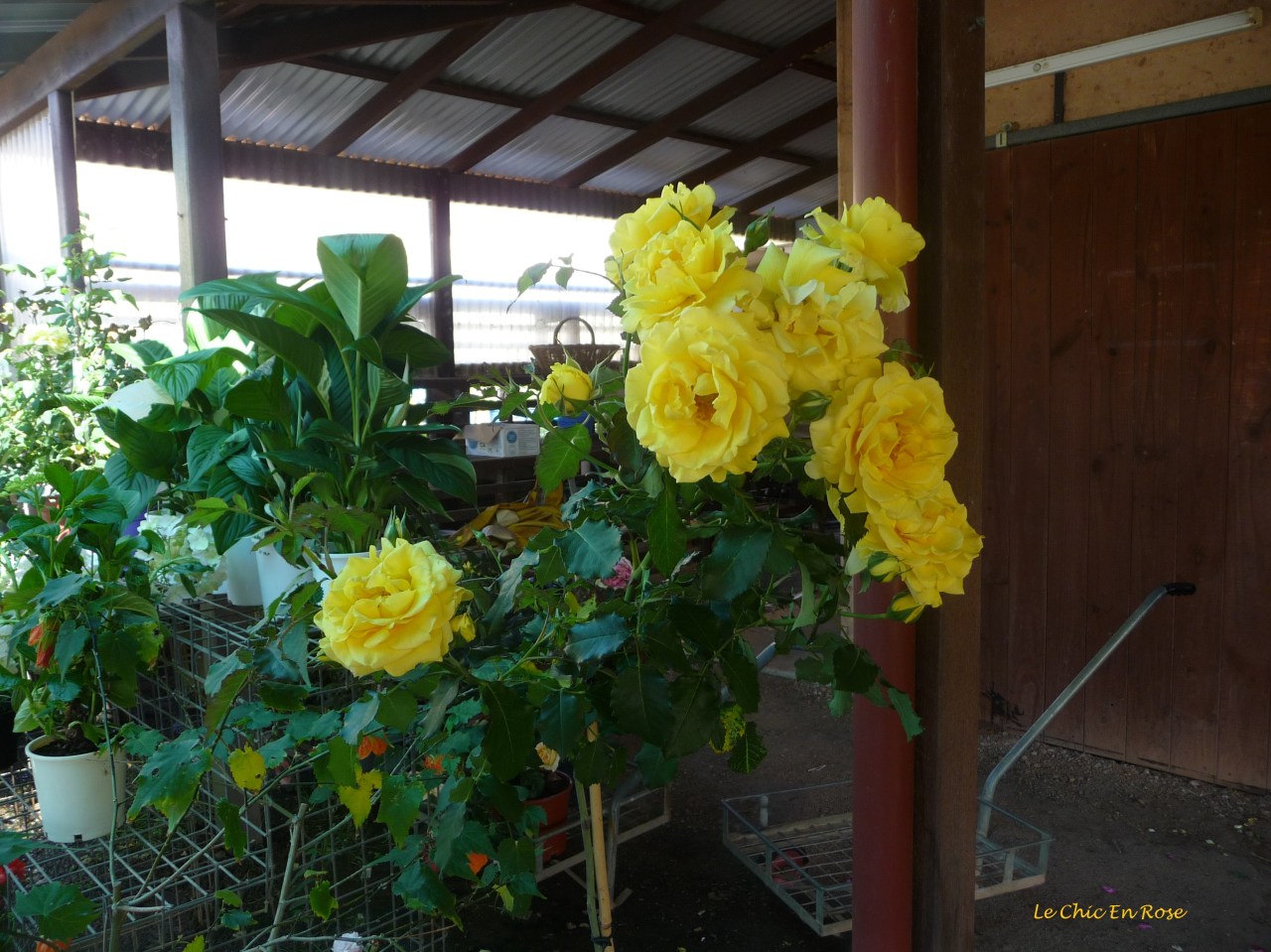
My camera did allow me to take a few photos a bit later –  a pity I can’t convey the scent through the photos. It was magnificent – the roses were in full “perfume”!


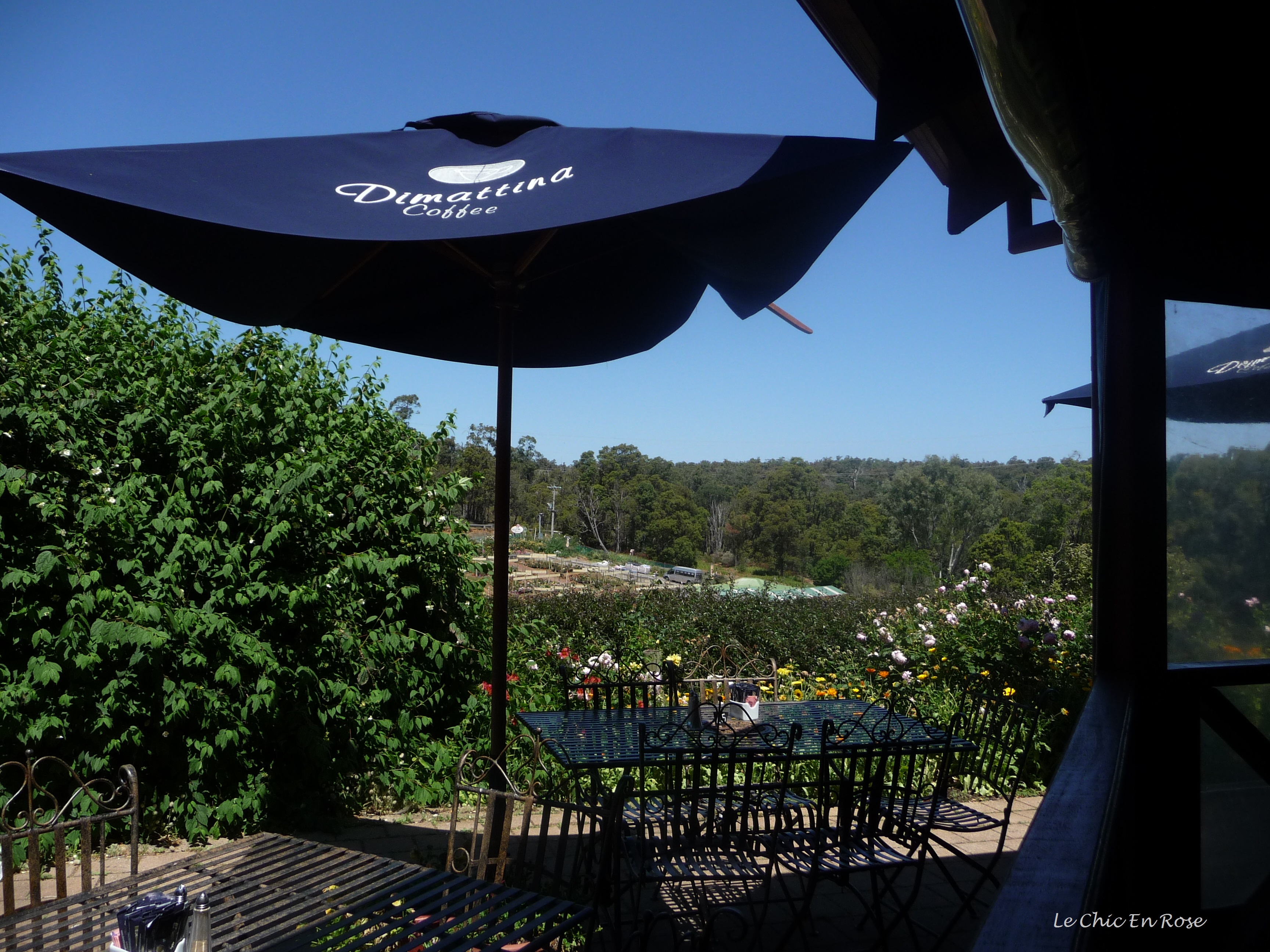
Fortunately we had made a reservation and had a lovely table out on the veranda with a good view across the rose bushes down to the nursery in the valley.


View towards Melville Nursery from the Rose Heritage Cafe

View towards Melville Nursery from the Rose Heritage Cafe


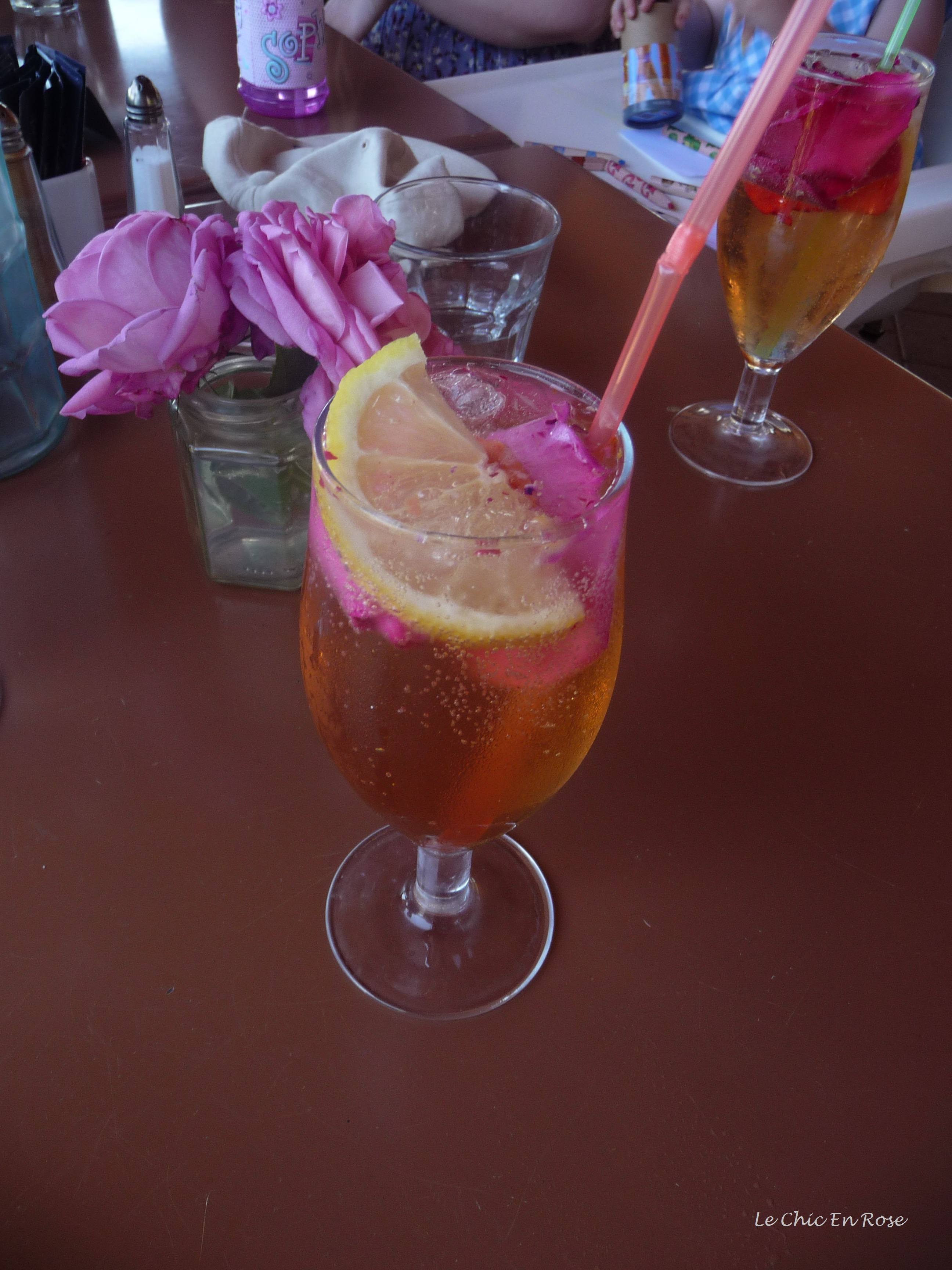
The cafe has recently been taken over by new owners who are enthusiastically revamping the place. They were very apologetic that they are still waiting for their liquor licence to come through, so are currently (though this should change in the near future) unable to serve alcoholic drinks. However in the meantime they have come up with a delicious alternative – rose petal lemonade served in cocktail glasses. This drink was not only extremely refreshing but a far more sensible choice given the heatwave conditions.


The delicious "Rose Petal Lemonade" served at the Rose Heritage Cafe

The delicious “Rose Petal Lemonade” served at the Rose Heritage Cafe


We had been hoping to do a walk around the gardens adjacent to the cafe (in addition to the roses there is a delightful French themed garden though this was marked as “closed” on the day). However it was still very hot and so we meandered at a rather gentle pace down to Melville Nursery. Up in the Perth Hills you don’t get the relief from the cooling sea breeze until later in the afternoon. Known colloquially as the Fremantle Doctor, this strong breeze (really a strong wind) is a wonderful benefit that we get here in the summertime in Perth. It helps considerably in making the hot summer months especially January and February more bearable.  Temperatures can plummet well over 10 degrees when the breeze comes in (generally around lunchtime). This refreshing breeze got its name owing to the fact that it usually hits land first at the port of Fremantle. The wind does blow inland eventually but the coastal suburbs get the greatest benefits.

By this stage my camera had recovered somewhat from its earlier hiatus and I was able to record our lazy stroll down to the rose nursery for posterity! Not surprisingly the Rose Heritage Cafe is a popular choice for weddings!


Now unsurprisingly roses are my favourite flower but I’ve never had any success in growing them. The secret is apparently in the root stock and here at Melville Nursery they have perfected one that is ideally suited to the hot dry West Australian summers and sandy soils. Hence they offer a superb array of roses that all appeared to be flourishing despite the oppressive weather. I am very tempted to go back and get some for our back garden though I will probably keep them in pots as I think they might have more than a fighting chance of surviving my gardening attempts that way!

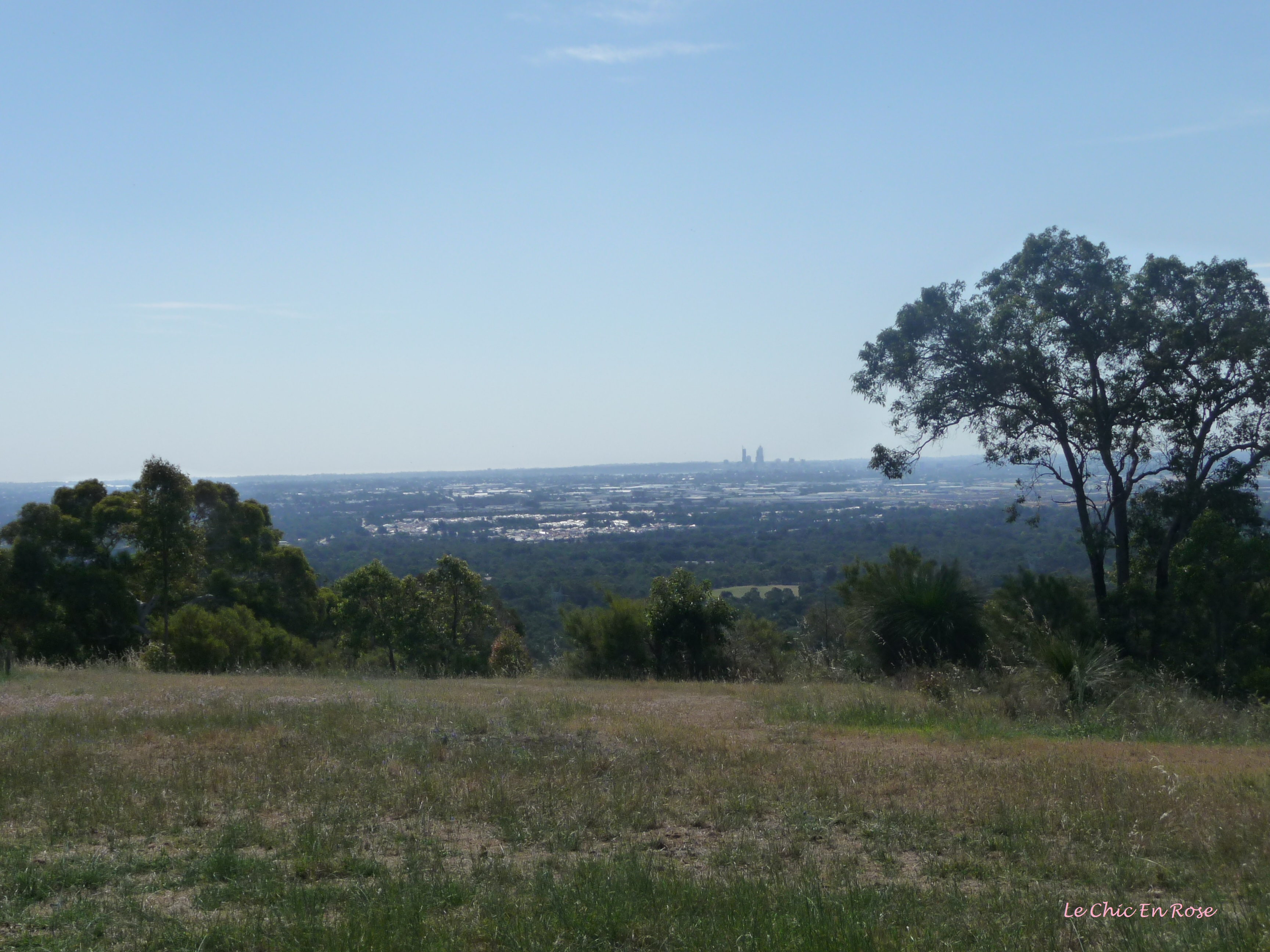
On our way home we paused at the lookout halfway down the escarpment. Here you get a wonderful view back towards the Perth metropolitan area, the skyscrapers of the city in the distance and on a clear day a distant view of the Indian Ocean. On this warm late spring day though it was a slightly misty view as the city was bathed in a heat haze. The next day the temperature plummeted (it went down to 8 degrees overnight, quite cold, for spring here) and we were back in warmer clothing. Such is the topsy turvy nature of the weather on the edge of the Indian Ocean!

View back towards Perth from the Darling Scarp

View back towards Perth from the Darling Scarp

If anyone has any tips on growing roses in a Mediterranean climate I’d love to hear about them!

Copyright © 2014 Rosemary Thomas Le Chic En Rose. All rights reserved

Many people associate Perth with its beautiful coastline, pristine beaches and the clear blue waters of the Indian Ocean. Visitors often head to Kings Park on the edge of the city centre or down the Swan River to the port of Fremantle, both of which are well worth visiting. However just 45 minutes drive from the city centre you find yourself at the foot of the Darling Scarp, which takes you up into the Perth Hills. The Darling Ranges are home to unspoilt bushland, national parks and fertile farmland. Pretty little settlements are dotted around (including outlying suburbs of Perth). It is a wonderful escape from the metropolitan area and a very manageable full or half day trip depending on your preference. We are not talking Alps here – the high point Mount Cooke near Jarrahdale rises to 582 metres (1,909 feet) – but it is a welcome change of scenery from the flat Swan Coastal Plain in which Perth lies.

We had a thoroughly enjoyable Sunday lunch and lazy afternoon the other weekend at the Core Cider House in Pickering Brook.  Pickering Brook got its name from Captain Edward Picking (aka Pickering) who was one of the first land grantees in the Helena River area and settled here in the 1830s. The Core Cider House is an award winning restaurant – it has just taken out the WA Tourism Industry’s award for “Best Winery, Brewery or Distillery” for the second year in a row and has an excellent a la carte restaurant to boot. We went once before, deep in the winter, on a wild and wet day when we were huddled under blankets on the veranda (although the cafe blinds were down it was still chilly) so we were keen to experience the ambience in the spring. We went a very scenic route which included an unscheduled detour into the State Forest (caused by a slight difference of opinion between Monsieur Le Chic and our daughter and designated driver, La Chic Maman, over the correct turning)! Fortunately we got our bearings again and the Core Cider House came into view set in a picturesque hollow amongst undulating fields and orchards.


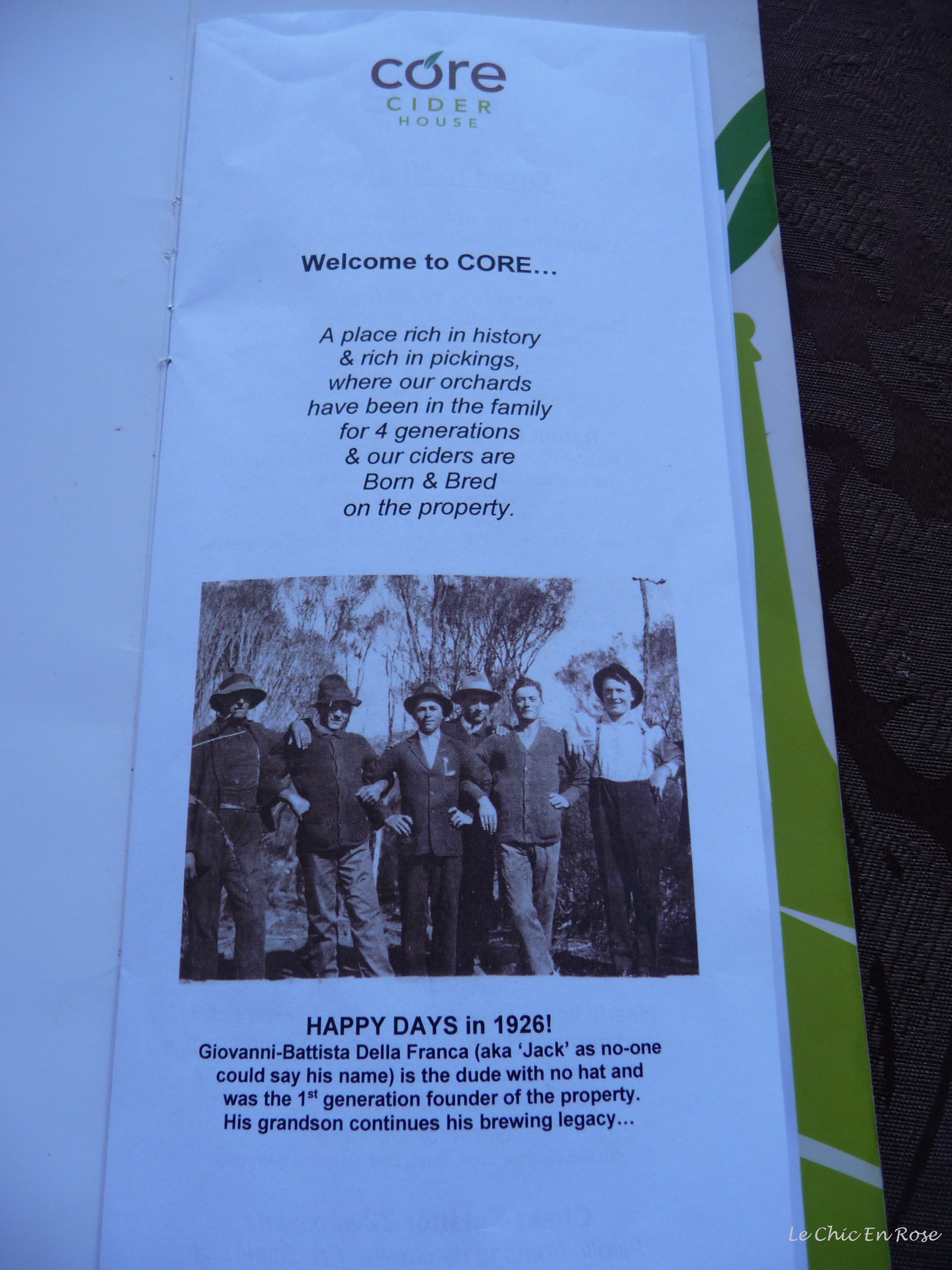
The waitress who took our order gave us a full history of the place – the Core Cider staff are very proud of the heritage. It is a 3rd generation family run business which dates back to 1939 when Giovanni-Batista Della Franca (aka Jack as no one could pronounce his name!) arrived from Italy and planted the first of his apple orchards at High Vale, Pickering Brook. His great grandchildren make up the fourth generation and will, hopefully, continue the business in future years! The family still grow all their own fruit in the orchards adjacent to the restaurant, which they use to brew the delicious ciders and make many of the tasty products that are on the daily menu. Talking of the menu this also gives you the low-down on the Cider House and its history!

The family history behind the Core Cider House Pickering Brook

The family history behind the Core Cider House Pickering Brook

Highly recommended are the “Tasting Paddles” – a tasting plate for cider – where you can sample a small glass of each of their brews starting from the driest to the sweetest. Then you can decide which one you prefer and order a more substantial half or full pint! A word of warning though – the ciders are considerably stronger than most and you need to factor this in (La Chic Maman was the designated driver on this occasion)! Less is definitely more – you need to savour the beautiful fresh taste! The ciders are in fact a mixture of ones made entirely with apples and also “perry” made from pears. My personal favourite was the “Core Reactor” which combined the two fruits. It was superb – you can really taste the fruit!

Cider Tasting Paddle at the Core Cider House Pickering Brook

Cider Tasting Paddle at the Core Cider House Pickering Brook

The food is equally delicious and they do serve a lot of tasting plates almost tapas style, which is probably the best option as you get a wider selection of food that way.

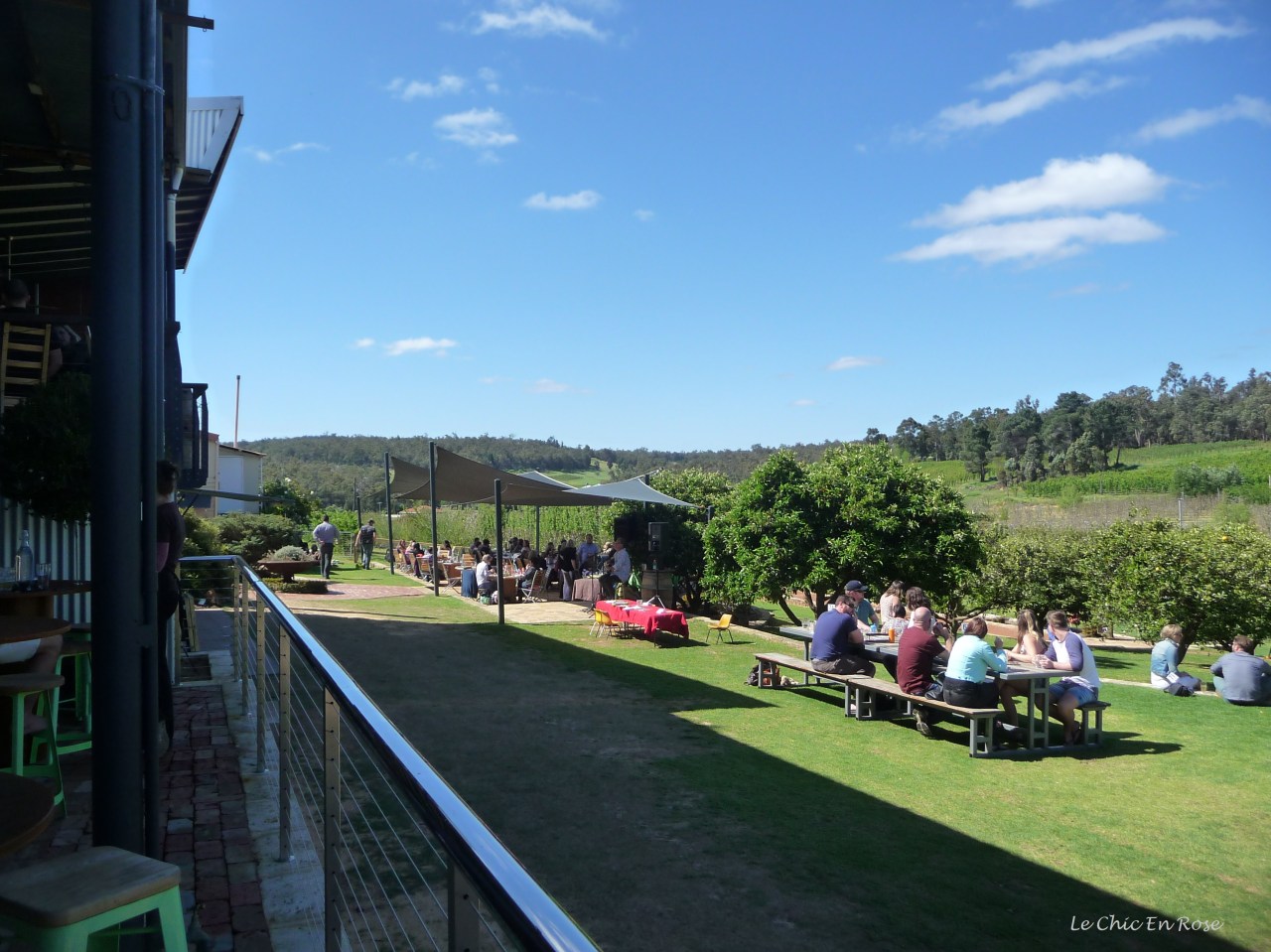
We were entertained too by a local band (not obtrusively just pleasantly in the background) and apart from the magnificent setting looking out to the orchards, there are also plenty of activities to keep the entire family occupied. We had our young granddaughter, La Petite, with us and she had a lovely time running around the lawns, finding fruit that had dropped onto the ground and also having a turn on the old tractor that was a great drawcard for all the children. The Core also provide toys for the children to play with as their parents and grandparents eat – a great idea we thought! Not that La Petite stayed still for too long!

For older children and adults alike you can always have a game of Bocce if you feel so inclined. All you need to do is ask at the bar for the balls and then you can play on the Bocce court marked out in the grounds.

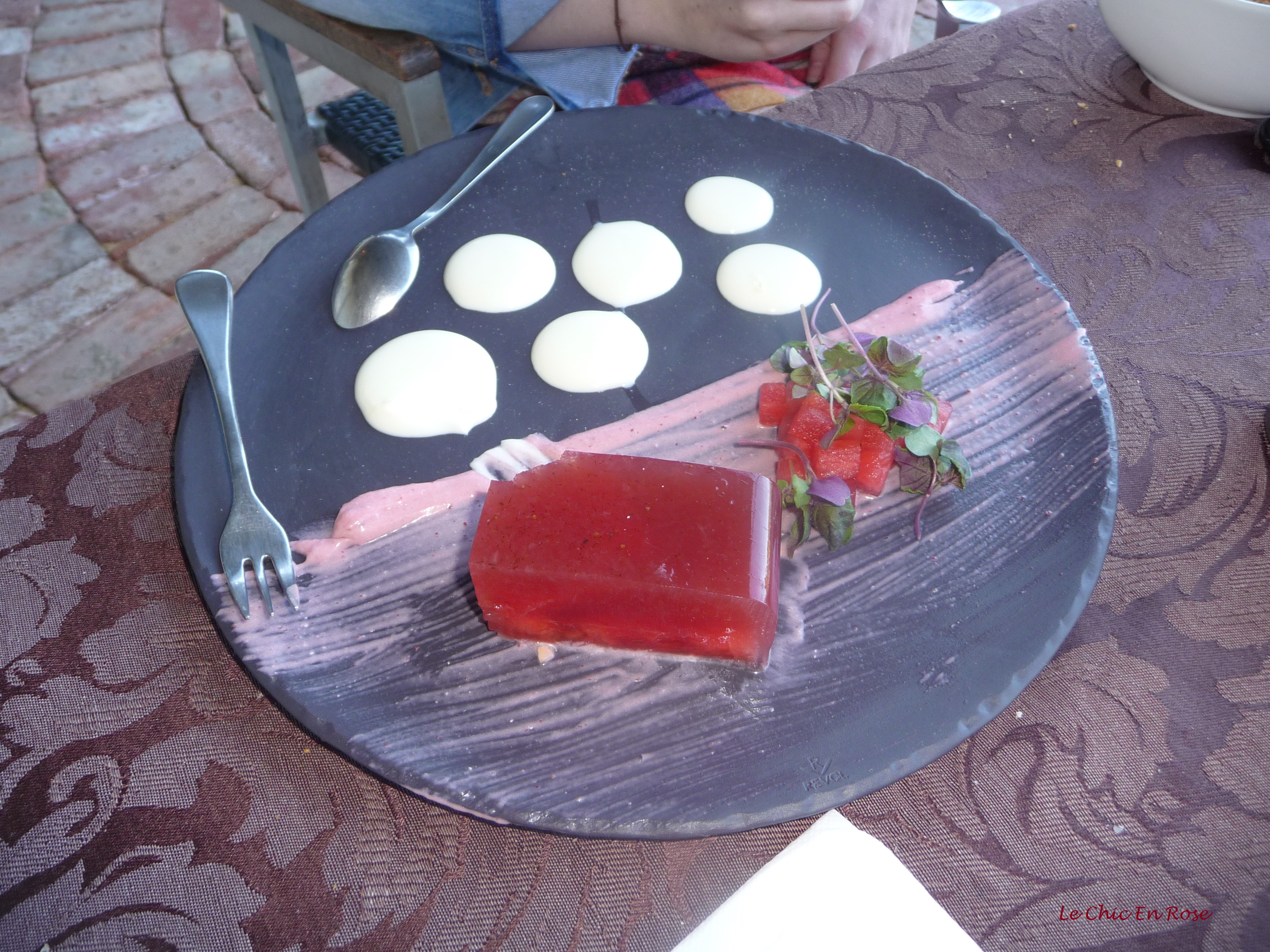
Finally La Chic Maman and yours truly couldn’t resist sharing a plate of the dessert special of the day, watermelon jelly with strawberry coulis. It tasted as sublime as it looks in the picture!

Dessert of the day Core Cider House!

Dessert of the day Core Cider House!

If you are planning a visit, weekend lunch bookings are essential! You can get all the information you need here about opening times, menus, special events and function options.

Salute and Ciao for now!


Copyright © 2014 Rosemary Thomas Le Chic En Rose. All rights reserved

The view from atop the Buda Castle Hill is superb! Having covered its history and role in the life of Buda last week, I wanted to show you more of the beautiful Castle District. The area along the Danube, which contains the Buda Castle District and the Houses Of Parliament on the Pest side, is part of a UNESCO World Heritage Site.

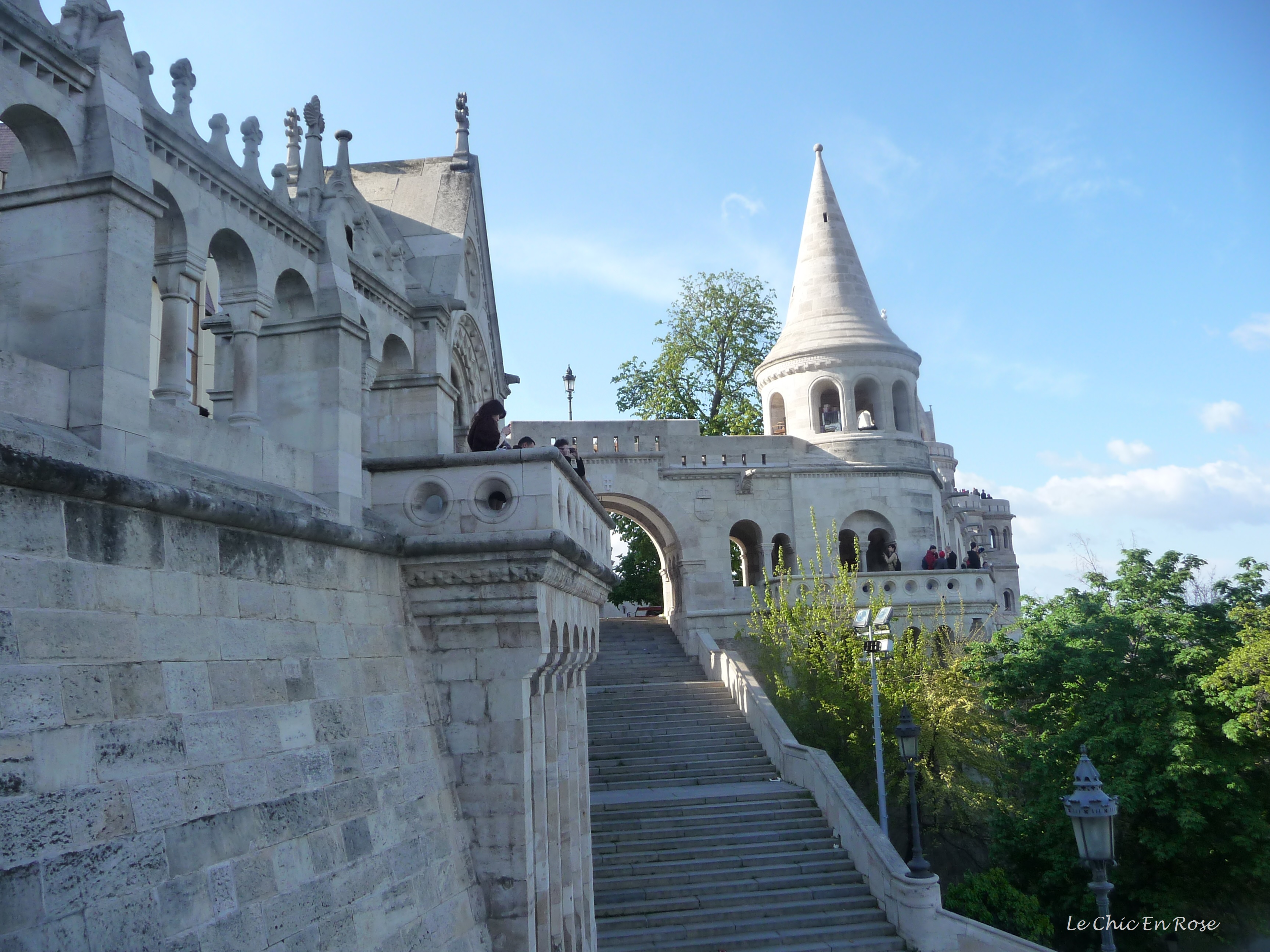
If you remember Monsieur Le Chic and I were initially confused when we got off the funicular, as to whether we were in fact at the Castle!  Hence we wandered off along the pretty narrow streets of Buda, which led us to yet another lookout point – this time at Fisherman’s Bastion. Just as well that by this stage I’d purchased a local guide book!  With it’s pretty pale grey turrets and towers it would have been quite easy to think that this was the real Buda Castle!


Pale grey stone walls, turrets and towers all part of the beautiful Fisherman's Bastion at Buda

Pale grey stone walls, turrets and towers all part of the beautiful Fisherman’s Bastion at Buda

Fortunately by reading the guidebook we had purchased from the tourist centre and also by taking a guided walking tour round the whole district, we were able to put everything into context! The Bastion in its current form is actually quite a modern construction, not the fairytale medieval castle that it first appears to be, but nevertheless enchanting! It was built between 1895 and 1902 from plans drawn up by Frigyes Schulek. Due to the terrible destruction wrought on the area during World War II it had to be comprehensively restored. This restoration was carried out under the direction of Frigyes’s son, János, in 1947-48. Its seven towers represent the Magyar (Hungarian) tribes that first settled in the Carpathian Basin in 896. According to local legend, there was a stronghold here, which was protected in medieval times by the guild of fishermen and that is how it came to be known as “Fisherman’s Bastion” (Halászbástya in Hungarian!).

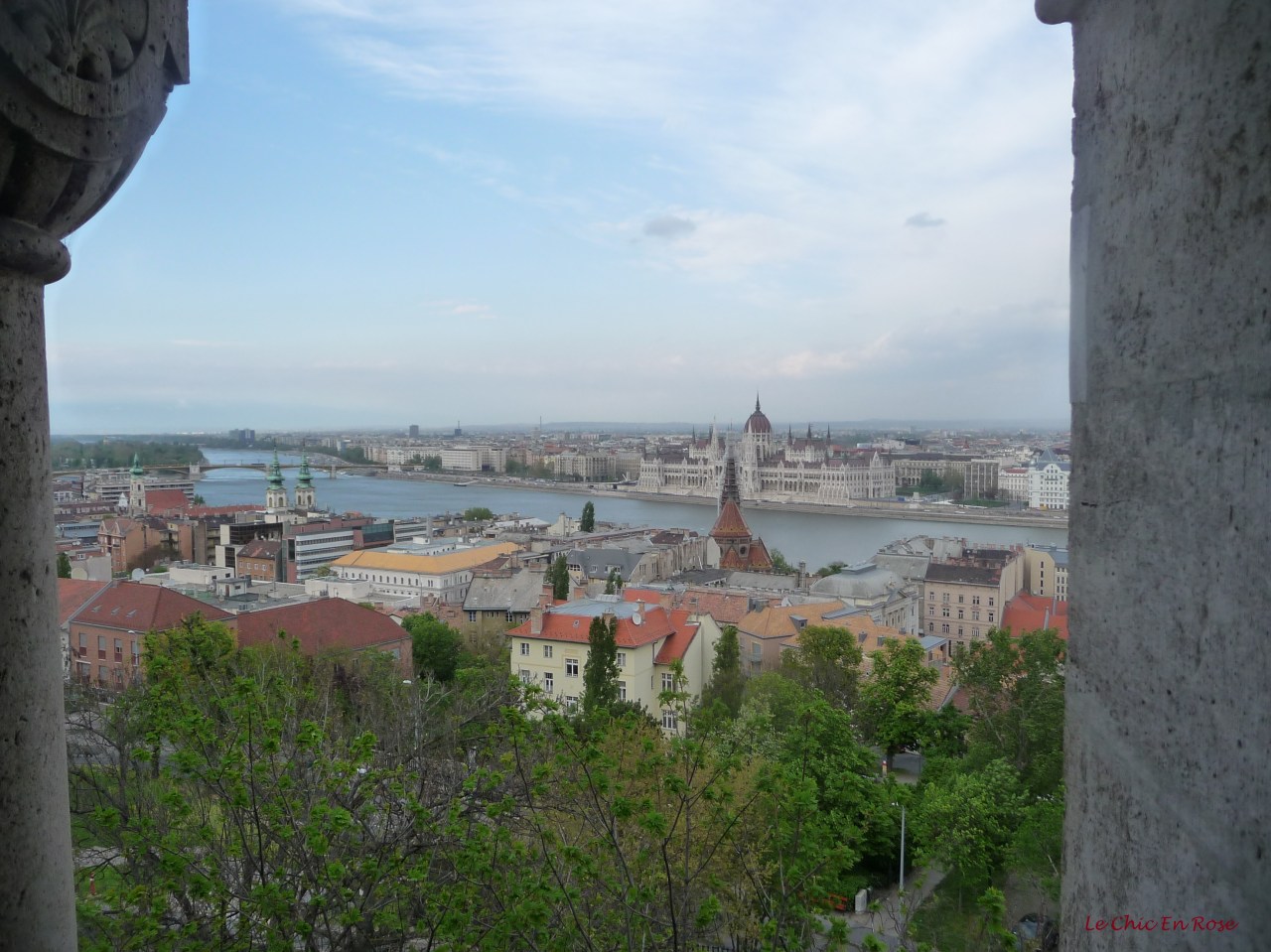
As the Bastion is situated a little further along the Danube from the site of the old Buda Castle and Royal Palace, you get even better panoramic views than from the Buda Castle Lookout (if that were possible)! Not only can you gaze across the Danube towards the Houses Of Parliament and over the roofs of Pest, you can also see far into the distance towards the vast flat plains stretching out beyond Pest and up the Danube river in the direction of Bratislava and Vienna.


The only drawback is the popularity of the area with tourists, although as we were visiting on a particularly crisp and chilly spring day, it wasn’t especially crowded. I would imagine that it would be a very different story during the Christmas Market season and the summer months though.


Nearby in Holy Trinity Square is the magnificently restored Matthias Church (officially the Church Of Our Lady in Buda Castle). It was originally founded in the 13th century and has had a colourful history over many centuries. The “Matthias” in question is in fact the Hungarian King, Matthias Corvinus (King Of Hungary and Croatia from 1458-1490), who held both his weddings here. In 1541 when the Turks occupied Buda it was turned into a mosque and later destroyed in the wars to liberate Buda. After the reconquest of Buda in 1686, it was rebuilt in a Baroque style. For six centuries it was used as the Coronation Church for Hungarian Kings, including in 1867 when Franz Joseph 1 was crowned King Of Hungary and his wife Elisabeth (Sisi), the Queen.  It was remodelled in its present neo gothic style for the Millenium celebrations in Hungary in 1896. Reconstruction after World War II was partially carried out in the 1950s and 60s and then between 2006 and 2013 a major restoration project was undertaken with assistance from funds provided by the Hungarian Government. The church has a unique charm about it and there is still a feeling of oriental influences amidst the gothic towers.

In addition to the funicular (or Shank’s pony route if you fancy the walk up the hill) you can can reach the Castle District by public transport. If you are going to start off your visit at the Matthias Church/Fisherman’s Bastion end of the Castle District, this might well be the best option.

Now finding your way around by public transport might seem a little confusing at first but once you get the hang of it it is quite straightforward (although admittedly Monsieur Le Chic did work most of it out so I mustn’t take all the credit)!

Metro Line 2 (the Red Line) will take you to Szell Kalman Ter (formerly known as Moszkva Ter) from central Pest.

Metro Station for Buda Castle District Szell Kalman Ter. Exit here to catch buses 16, 16A or 116 to Buda Castle District.

Metro Station for Buda Castle District Szell Kalman Ter. Exit here to catch buses 16, 16A or 116 to Buda Castle District.

Once you exit the station, walk up the steps to the road above on the hill. You are looking for bus numbers 16, 16A or 116 – all of which take you up into Old Buda and the Castle District. It’s fairly straightforward and takes about 10 minutes from the metro station to Matthias Church. You should see the church appearing and then you know to get off the bus. If you do get off a stop or two too early or late, you are very close by and walking won’t be a problem! The streets are all so pretty too with cobblestones and old buildings so it’s pleasant to stroll round anywhere in this district.

Just a further note on the Metro system. There are now 4 metro lines: Metro 1 (Yellow), Metro 2 (Red), Metro 3 (Blue) and Metro 4 (Green and only opened this year 2014). Metro lines 1 to 3 all intersect at Deak Ferenc Ter, which is the major transport hub in Central Pest. From here, you can catch the number 16 bus all the way to the Castle District too without having to get the metro at all if you prefer. Metro line 4 doesn’t meet the others at Deak Ferenc Ter. Its primary role is to link Keleti Railway Station in Pest with Kelenfold Railway Station in Buda (stopping along the way at Gellert Ter, the stop for the famous Gellert Baths).

Now we have all the transport sorted, back to Fisherman’s Bastion. Since there was a bitter north wind blowing we needed some warming refreshments so although it’s not the cheapest place we popped into the cafe situated within the Bastion. With the wind whistling through the unglazed stone windows, it was freezing – though we did have a magnificent view! As we were leaving we realised that adjoining the cafe was another restaurant – part of the same complex we subsequently found out – which had fully glazed windows, was warm and afforded shelter from the wind. We went back there the next day to enjoy the view in the warmth! You don’t have to eat a large meal here either; it’s perfectly fine to order drinks or just a coffee! There are many cheaper eateries and cafes down the little side streets in the Castle District but they don’t have quite the same view, although the ones we went to were very pleasant!

Fisherman’s Bastion is open every day and night all year round. It’s free to walk around, apart from a fee to go up to the top turrets. We didn’t pay the fee and were quite happy wandering around and taking photos without going right up to the top!

If you want to know more about the history of the Castle District there is an obelisk near Fisherman’s Bastion, which explains a bit about the area. It’s helpfully written in English too!

Obelisk in Buda Castle District displaying some of the area's history

Obelisk in Buda Castle District displaying some of the area’s history


Viszontlatasra! “Goodbye” for now (the only word I know in Hungarian!)


Copyright © 2014 Rosemary Thomas Le Chic En Rose. All rights reserved

Whenever I travel I always seem to collect a large array of books and brochures as I go along, which then come home with me! I finally got round to sorting out some of the mementos last week from our Hungarian Travels in April.


Mementos from our trip to Budapest

Mementos from our trip to Budapest

I thoroughly enjoyed our four days in Budapest once I’d settled into the city. It did take a day or so to get our bearings perhaps because of the language barrier or the real social divide that you sense here. Maybe it was our strange arrival at the airport where I’d arranged to have a car transfer to our hotel in the city. We were met by three people holding up white placards, two with unpronounceable names on them and the other a man with a sign saying “Mrs Puma”. Since there didn’t seem to be anyone else there who could possibly be our car driver, Monsieur Le Chic decided we had to approach this guy and ask him if he was expecting to take two guests to the Boscolo Hotel. The answer was “yes”! For some reason our surname “Thomas” had been lost in translation as “Puma”. And yes “puma” is the same word in Hungarian as in English – no wonder the poor man was a little confused (the driver I mean!).

So refreshed and revived, we set off the next day to explore the city of Budapest (or cities as Buda and Pest are distinctly different). We were keen to go up to Buda first and one of the “must do” things was to see Buda Castle.


Buda Castle Hill area viewed from the Chain Bridge crossing the River Danube

Buda Castle Hill area viewed from the Chain Bridge crossing the River Danube


Crossing the Danube via the Chain Bridge, which was the first bridge to link the two cities of Buda and Pest, we caught the Funicular Railway up to Buda Castle.


The bottom station of  the Funicular Of Buda Castle

The bottom station of the Funicular Of Buda Castle


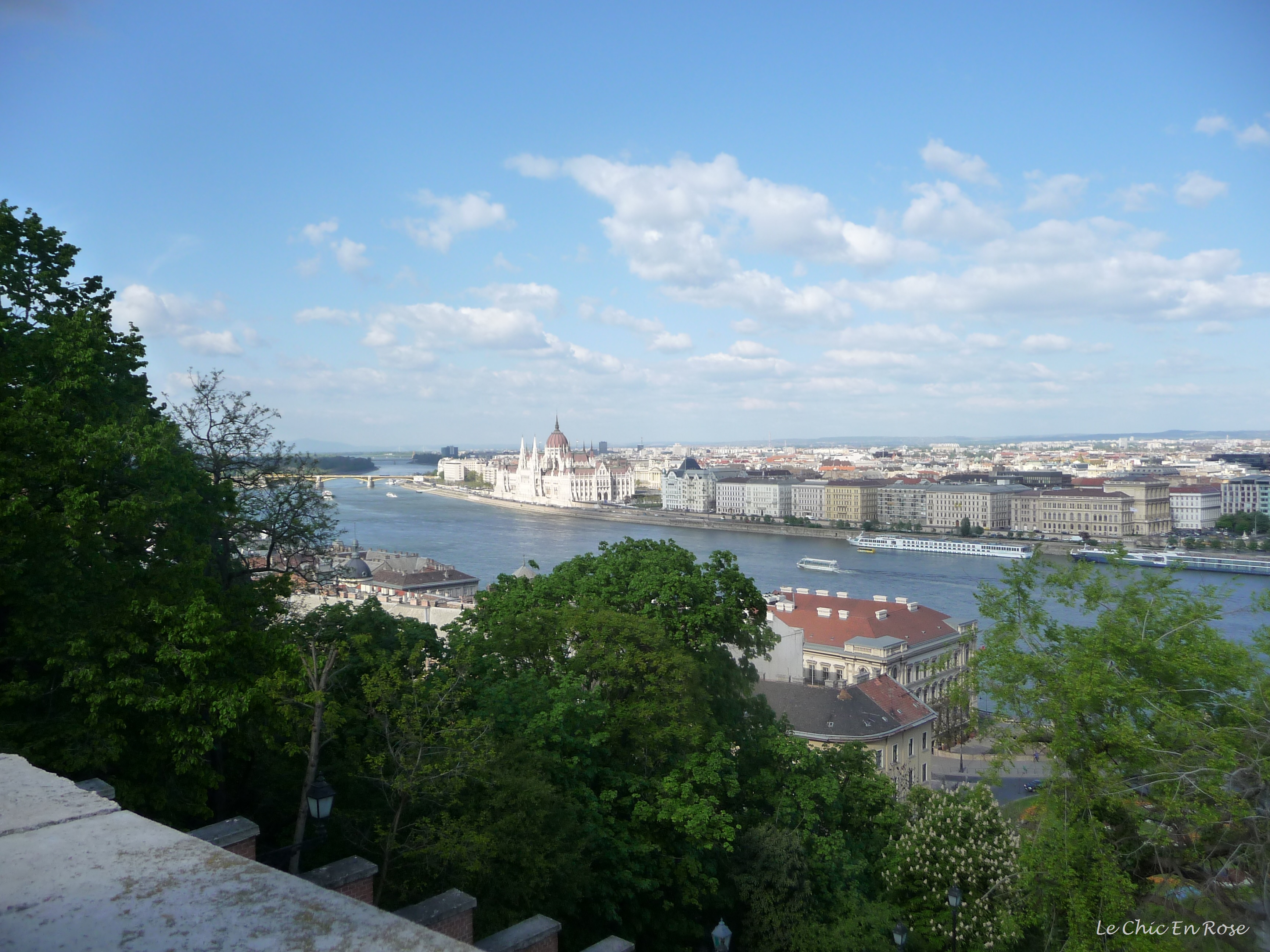
The view from the top is amazing and we stopped to admire the scene and take some photos too.


View across the Danube and The Chain Bridge back towards Pest from Buda Castle Lookout

View across the Danube and The Chain Bridge back towards Pest from Buda Castle Lookout

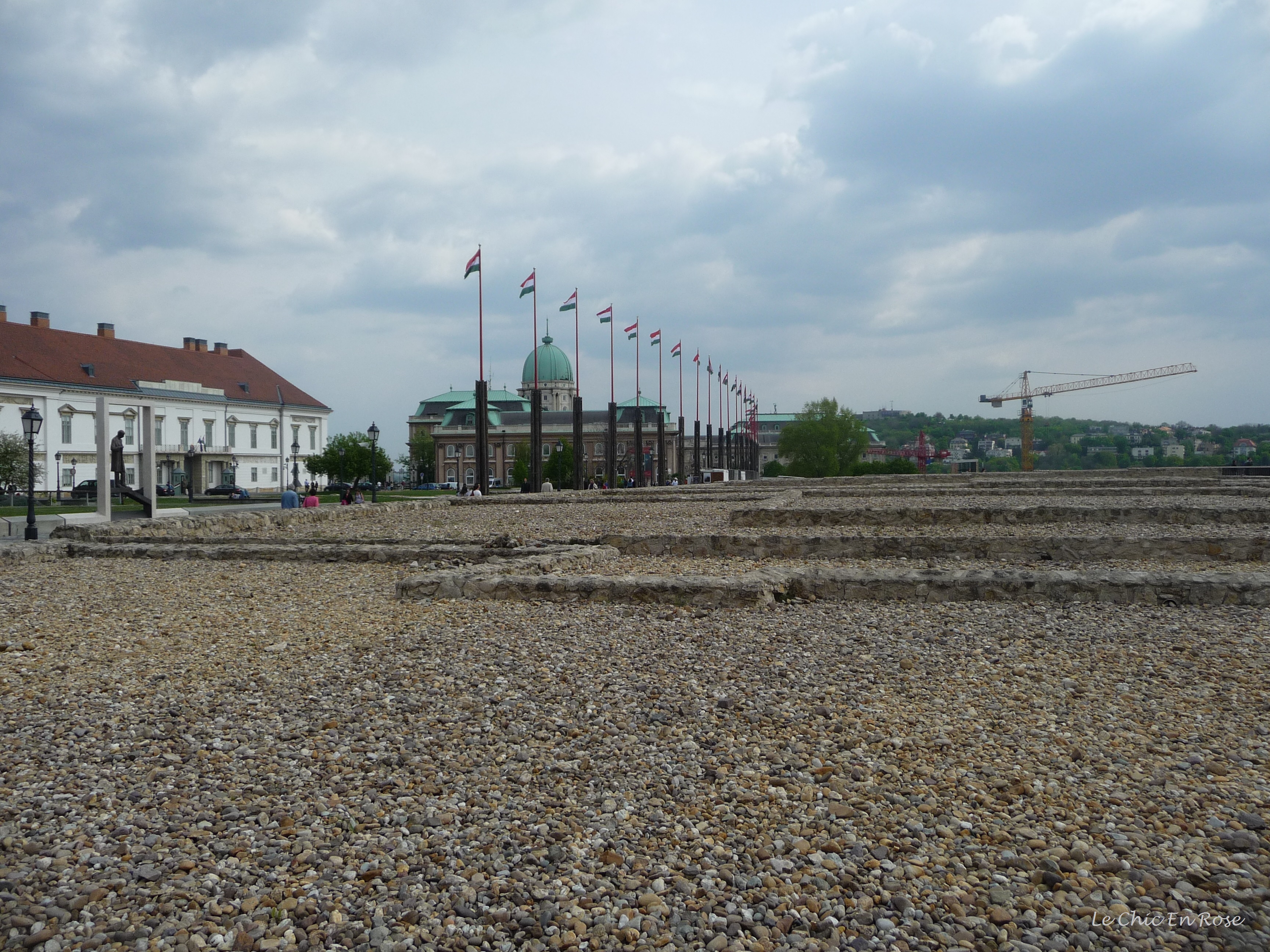
From here on we were keen to wander round the castle and soak in the atmosphere of “Old Buda”. We hit a bit of snag as despite walking around for some time we couldn’t actually locate the castle even though it was marked on our maps. After a stop for refreshments and a process of deduction the penny dropped – Buda Castle as it would have been in medieval times doesn’t in fact exist anymore.  Having purchased a couple more guide books (written by locals and translated into English) we began to make some sense of the complicated Hungarian history! The hill on the Buda side of the river was a natural stronghold for defence of the town in ancient times. A whole complex of buildings grew up here surrounded by fortifications. It was like a town within a castle. The Royal Palace of the Hungarian Kings stood here from the 12th century onwards but over the centuries there were many changes. Buda was subjected to repeated invasions such as the Mongol invasion in the 13th century. By the reign of King Matthias in the 15th century, it had become the setting for a magnificent renaissance palace. However the city was occupied by Turkish troops in 1541 and they ruled the city for the next century and a half, eventually being driven out in 1686 by troops of the Holy League (The Holy Roman Empire, the Polish-Lithuanian Commonwealth, the Venetian Republic and the Tsardom of Russia). Unfortunately though the city was destroyed in the process.  Hapsburg rulers followed later in the 18th and 19th centuries and built themselves yet another spectacular royal palace that sat in spendour on Castle Hill but much of this was destroyed by World War II bombing.


Remains of the Old Castle on Buda Hill

Remains of the Old Castle on Buda Hill


However the Castle Hill area is still home to this day to a complex of buildings some of which have been reconstructed from the ruins and is well worth visiting. The Budapest History Museum is now housed in the former Hapsburg Royal Palace (not all of it was destroyed by the bombs) and provides a fascinating insight into the often turbulent and chequered history of the Hungarian nation. It has many exhibits and artefacts found during excavations of the Castle Hill area and helps to put it all into context (though don’t expect to take it all in at once there is a lot to see!). The front section of the Royal Palace now contains the Hungarian National Gallery  and showcases an extensive collection of works by Hungarian artists. I had a very pleasant morning here looking around whilst Monsieur Le Chic took himself off over to the Pest side of the river to visit the House Of Terror (I didn’t have time to do everything!).


We were so enchanted with the “castle” on the hill that we visited a few times during our stay in Budapest. On our last full day we joined in a walking tour with Free Budapest Tours with an English speaking guide. One of the highlights was seeing the ceremony of the “Changing of the Guards” in front of the presidential palace (known as Alexander Palace or Sandor Palota). The palace is situated just on your right as you exit the funicular railway at the top of the hill. The ceremony according to our guide, takes place every day on the hour from 9am to 5pm. We were lucky that we were in the right place at the right time as we wouldn’t have known about this if it hadn’t been for Adam the guide – he was a walking encyclopedia of information about Budapest and passionate about his homeland and its history!


If you are planning to visit Budapest you’ll read in the travel guides about Buda Castle, the Royal Palace or the Castle Hill area and they all refer to the picturesque area situated on the hill overlooking the Danube which you can access by foot (if you’re feeling energetic) or by funicular from the bottom. Either way it is worth the climb for the view alone!


View from Buda Castle Hill Lookout at the top of the Funicular Railway

View from Buda Castle Hill Lookout at the top of the Funicular Railway

Viszontlatasra for now (which according to my Hungarian phrase book means goodbye though I’ve not been able to replicate the Hungarian accents!).

Copyright © 2014 Rosemary Thomas Le Chic En Rose. All rights reserved

Oktoberfest is renowned world wide and is held annually in the German city of Munich, Bavaria,  for a fun-packed 16 days. Despite its name it starts in mid September though it does “spill over” (literally I would imagine) to the first weekend of October!

I haven’t actually been to Munich or the Oktoberfest celebrations there though we are planning to remedy the former by visiting Munich and Bavaria next April. We won’t be there at the right time to experience the festivities of Oktoberfest though and I can’t honestly say I’m too disappointed by this! However I did have the opportunity to go along to the Oktoberfest evening at the Rhein – Donau Club  in Perth last week along with my  German Language Class Group. 

The Rhein-Donau Club (Inc.) was established in Perth in the late 1950’s and has been based at its present premises in the southern suburb of Myaree since 1959. The idea was to provide a facility and meeting place for people of German speaking backgrounds in Perth (that includes Germany, Austria and Switzerland) plus anyone else interested in German heritage, culture, cuisine and traditions. Hence the name is a combination of the two major central European rivers the Rhein (Rhine) and the Danube (Donau).

Now I knew that I had a family connection by marriage to the Rhein – Donau Club as my son-in-law’s grandfather (or Opa) was an active member for many years. I didn’t realise until last week however, through talking to my daughter’s mother-in-law (and Opa’s daughter – with me?) that her father was actually a founding member of the club. He emigrated to Perth with his wife after the Second World War from Austria. For many years he and his wife and family were an integral part of the Rhein – Donau community. He was on many committees and even managed the bar there for a while! They practically lived at the club at weekends and his daughters all had their wedding receptions there. So it was rather a happy coincidence that I found myself at the Rhein – Donau Club  for their annual Oktoberfest celebrations this year. Since my son -in-law’s “Opa” sadly passed away a few years ago this is a pictorial tribute to Oktoberfest in Perth which I hope would have done him proud!


First things first, food and drink! I was slightly apprehensive as I’m not a huge fan of traditional German fayre such as bratwurst nor do I like beer. I had heard that at the Munich festival a request for a glass of wine or even worse, water,  was likely to be met with horror. However I’m pleased to report that here in Perth, the catering committee of the Rhein Donau Club had thought of everyone and there was a good selection of both food and beverages on offer.

We had been told to expect traditional entertainment so were a little puzzled when we were treated to a local duo (admittedly dressed the part in traditional Bavarian hats) belting out cover versions of old rock songs: “Rockin All Over The World” by Status Quo, “I’m A Believer” by the Monkees and even “Que Sera, Sera”, which was an interesting choice of language to say the least. However according to the promotional blurb they do have a Germanic name “Die Lustigen Jungs” which translates into English as “the funny guys” so I think it was all very much tongue in cheek!

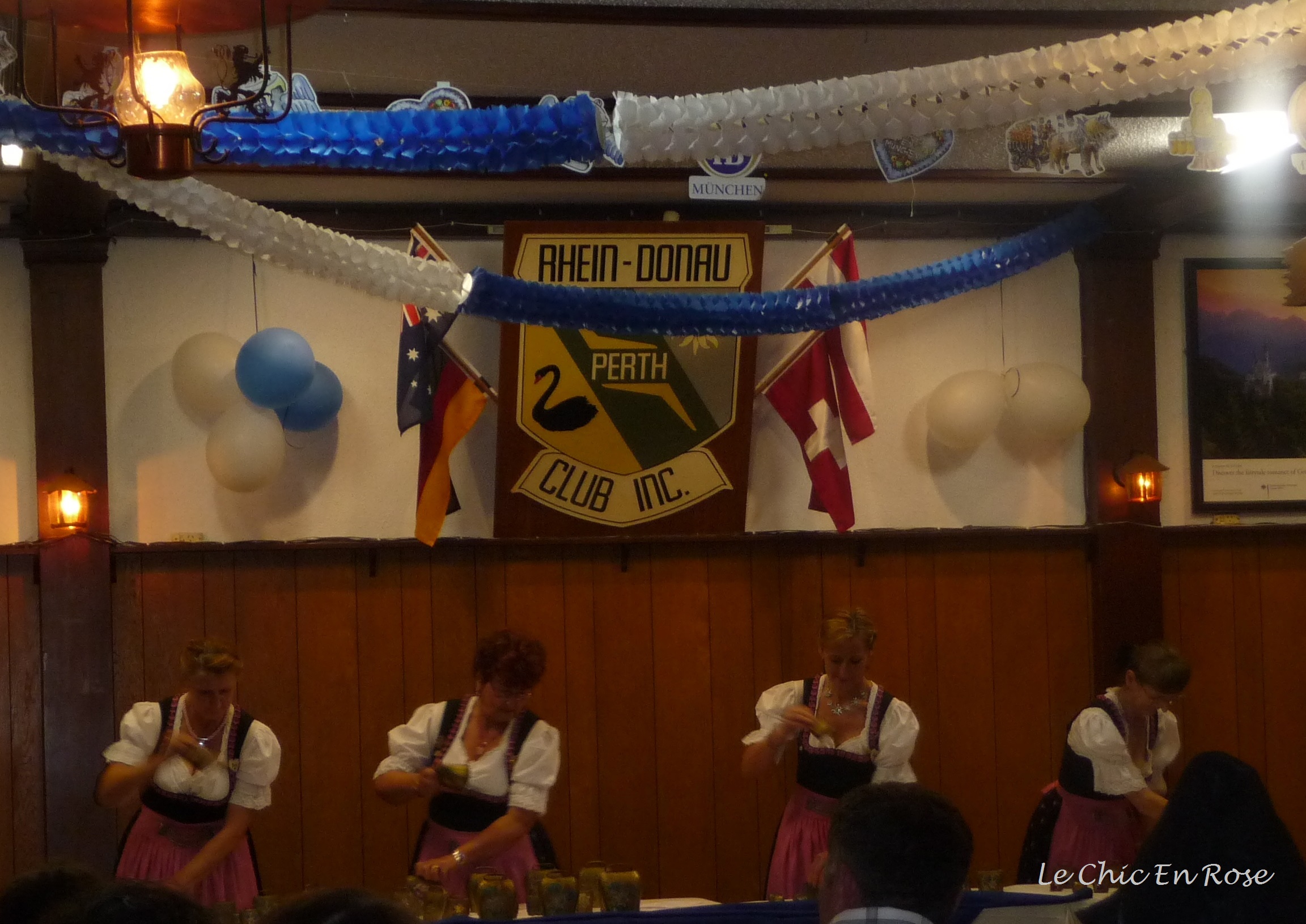
In due course the Master Of Ceremonies announced the traditional entertainment and the dirndl clad ladies of the “Echo der Berge” or Bell Ringers began with renditions of various traditional German songs such as “Edelweiss” culminating in a wonderful performance of “Waltzing Matilda” (a symbolic gesture to Oktoberfest in Australia). Though they made it look easy, I think it would actually take hours of practice and a good deal of skill to play the bells as well as they did!

The Echo der Berge bell ringing group performing as part of the Oktoberfest celebrations in Perth

The Echo der Berge bell ringing group performing as part of the Oktoberfest celebrations in Perth

Next came the Edelweiss Dance Group which included some vigorous thigh slapping by the male dancers (all above board!).

And a “best dressed” dirndl parade with some interesting costumes and participants!

The winner was chosen by the audience!

Winner of the best dressed dirndl competition!

Winner of the best dressed dirndl competition!

Finally there was the “Stein” holding contest which requires considerable strength! The rules are as follows: Contestants must hold a 1-litre glass stein (half litre for the ladies) filled to the top with beer with their arm outstretched for as long as possible. The arm cannot be bent and must (hopefully) remain parallel to the floor. Any beer spillage results in disqualification. The winner is the last man and woman still standing, with their arm straight out ahead and their stein still full. Incredible to think that the waiters and waitresses in Munich are expected to be able to carry a few of these all at once. Although I didn’t take part in the competition I am reliably told each stein is very heavy even when empty!

My audience participation was limited to linking arms and swaying along (schunkeln) to the traditional beer songs!

Stein holding contest Oktoberfest

Stein holding contest Oktoberfest


The Rhein Donau Club holds Oktoberfest evenings every Friday and Saturday throughout October and the beginning of November culminating this year with an Oktoberfest Family Day on Sunday November 2nd 2014 with free admission from 2 – 6 pm. The rest of the evenings cost $10 admission for members and $15 per person for guests.

In addition to the food and entertainment, some of the groups that meet regularly at the club,  put on exhibitions. The Rhein Donau European Model Railway Group’s was outstanding!

The Schuetzengruppe (Air Rifle Group) had organised a shooting gallery round the back (with blanks only)!

And there you have it – Oktoberfest “Down Under”! I thoroughly enjoyed my experience and would definitely go again next year. How about everyone else? Has anyone got any interesting Oktoberfest experiences to share and if you’ve been to the actual festival in Munich how did you find it?

Bis naechste Woche! Auf wiedersehen! Tschuess!

Copyright © 2014 Rosemary Thomas Le Chic En Rose. All rights reserved

One of the most civilised Italian customs is their love of the late afternoon/early evening aperitif. Both in the Italian speaking part of southern Switzerland and in northern Italy at 5pm on the dot (sometimes 6pm depending on where you are) their version of “Happy Hour” begins. We found when staying there, however, that the emphasis was as much on the food as the drink (though it was admirably washed down with a glass or two of prosecco or pinot grigio). Aperitivos, as they are called in Italian, always constitute an opportunity for food and plates of olives, prosciutto, bruschetta and even small salads and grilled meats would appear along with our drinks. Although meant to be served as an appetiser before dinner, we felt quite full afterwards and almost skipped dinner altogether sometimes (but we couldn’t miss the opportunity of sampling more delicious food)!

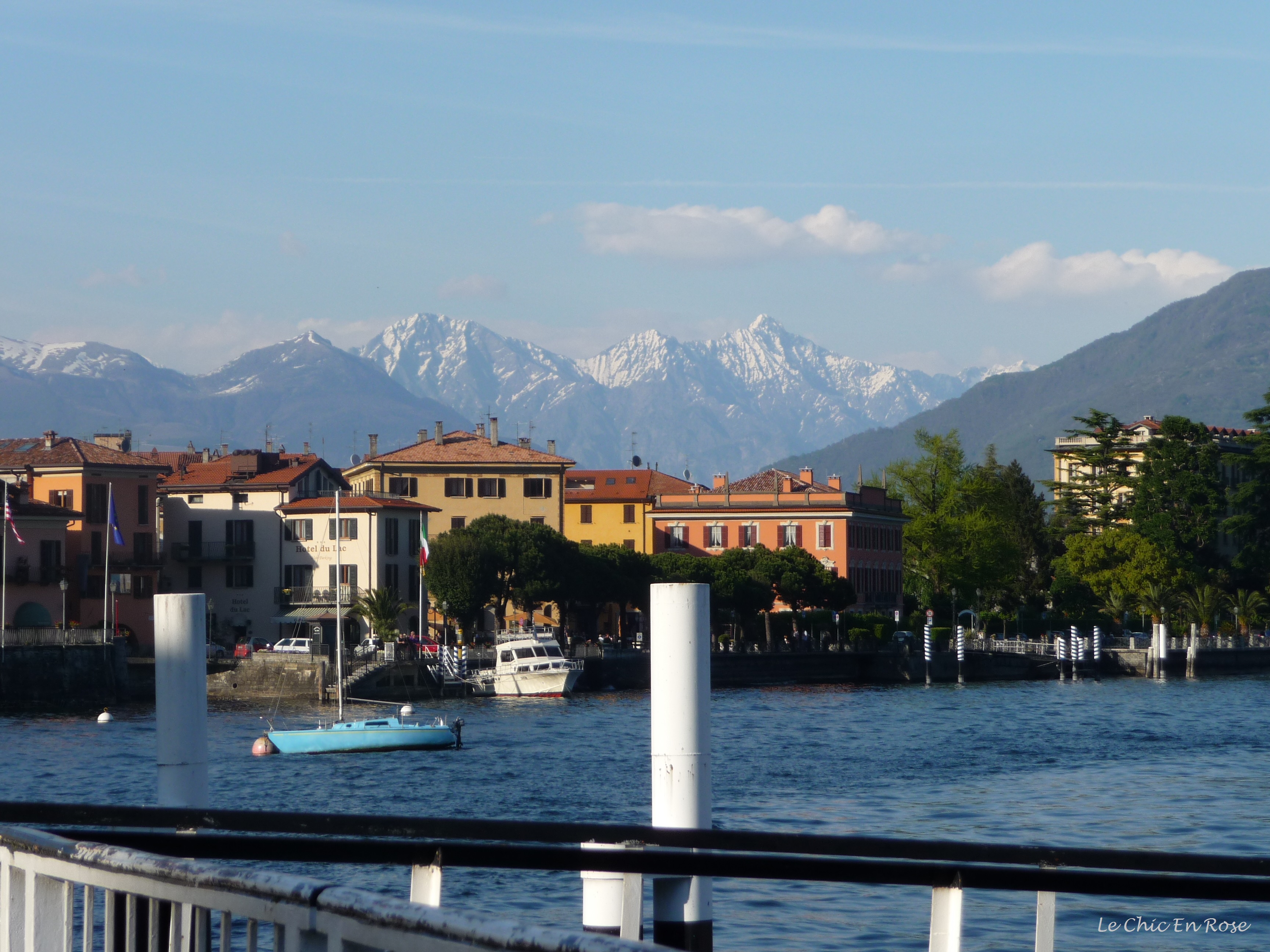
“Aperitivo Hour” is pleasant anywhere but one of the most memorable settings was on our last night in Italy on Lake Como. We were spending just 3 nights there to unwind before the long flight back home to Australia. We’d caught the morning ferry from the quay at Piazza Cavour in Como City, where we were based and had spent a delightful day cruising up the lake towards Bellagio calling in at several pretty towns en route. After a very pleasant few hours lunching and wandering around Bellagio itself, we decided late in the afternoon to head across the lake to check out Menaggio before heading back to Como for the night.


It was one of those fortunate decisions that will live on in our memories for a very long time. A few minutes leisurely stroll from the harbour found us in the heart of the old town in the Piazza Garibaldi.


It’s not a big place and we were there before the start of the summer season so it wasn’t at all crowded. It had been a beautifully sunny spring day and locals and a few tourists were lingering in the piazza to admire the views and generally watch the world go by. It had such a relaxing and peaceful feel and above all no one seemed to be in a hurry. I decided to pop into one of the shops off the piazza to get some postcards and was mildly concerned when Monsieur Le Chic, who had taken himself off to explore, failed to reappear after a few minutes. Eventually 20 minutes or so later I spotted him emerging from the church at the top of the street. It turned out he’d gone inside to have a look round and found himself in the middle of a Latin Mass being conducted by an elderly nun. The congregation numbered only a handful and Monsieur Le Chic reduced the average age by about 30 years. Not wishing to be disrespectful he thought it best to stay a while before slipping away as quietly as possible out the back door.


Main street Menaggio with the church at the end

Main street Menaggio with the church at the end


After that unexpected experience, it was definitely time for “Aperitivos”  and so we settled down at one of the pretty table settings outside Hotel Du Lac to soak in the atmosphere and toast our last night on Lake Como. As its name suggests the Hotel Du Lac enjoys an excellent location at the lakeside end of the Piazza Garibaldi.  We sat on our chairs looking out over the lake, which was softly highlighted by the early evening sun.  It was simply idyllic! One notable feature was the family atmosphere around the square; elderly people chatted away, young children played as their parents watched on nearby and we didn’t feel hassled in any way.


We began to wish we had stayed further up the lake rather than opting for the larger base of Como City. Transport with heavy baggage was a consideration although Menaggio is well served by not only ferries but plenty of buses too, which go all the way up the western side of the lake from Como towards Colico near the head of the lake. You can also get to Menaggio on the Bernina Express if you are coming from the direction of St Moritz in Switzerland and vice versa. Menaggio is also linked to Lugano in southern Switzerland by buses but it may be more practical and comfortable to get the fast ferry back into Como and link up with the train (28 minutes to Lugano from Como San Giovanni Station and 40 minutes the other way to Milan). There is also another route via the Maloja Pass which connects St Moritz with Lake Como by both road and bus subject to seasonal timetable changes and weather conditions!

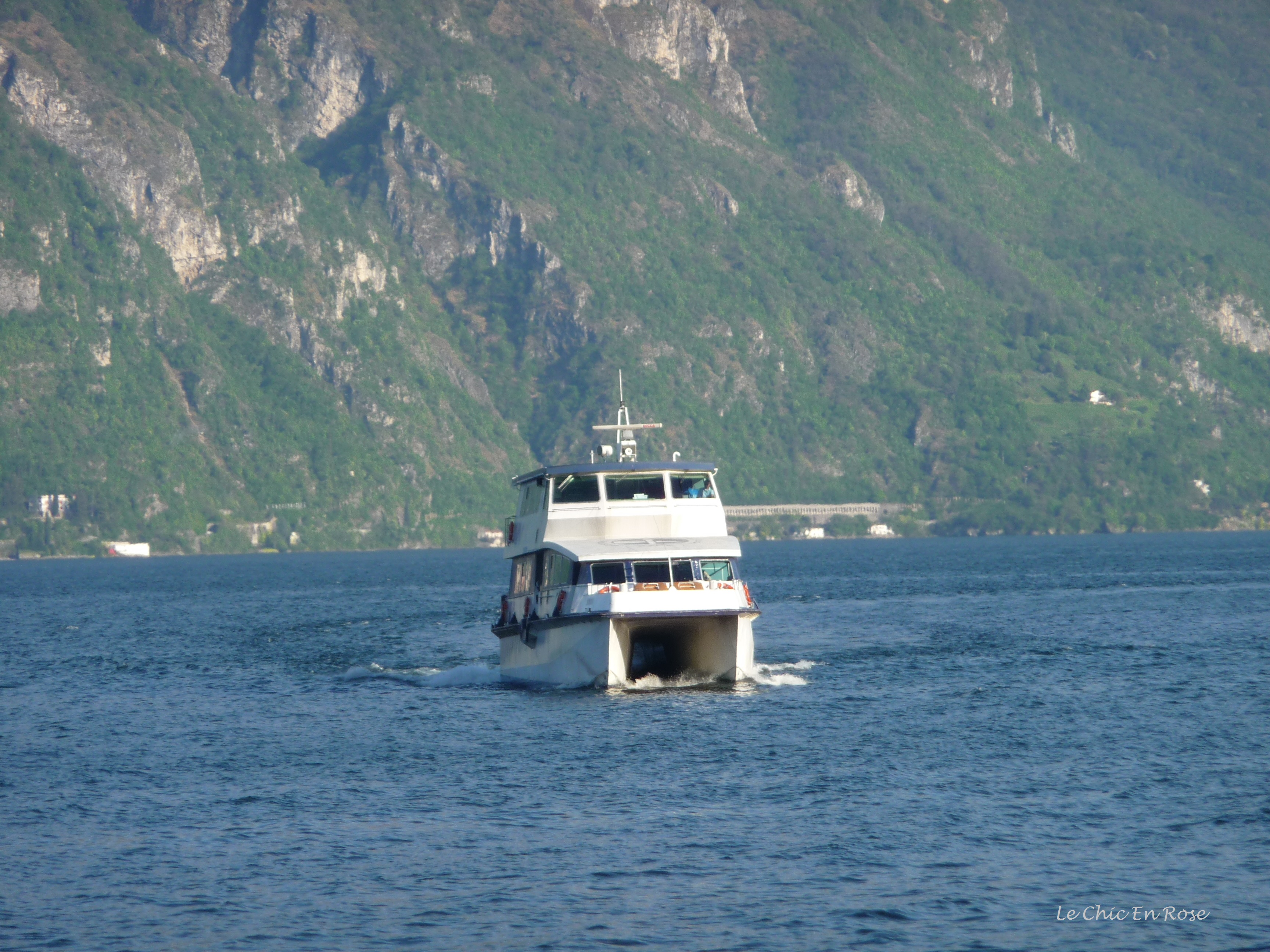
Time was starting to slip away and we needed to get back to Como by nightfall. We wanted to catch the hydrofoil ferry as this halves the travel time (usually about 2 hours on the slower boats).


Hydrofoil approaching Menaggio Harbour to take us back to Como City

Hydrofoil approaching Menaggio Harbour to take us back to Como City


We timed our departure just perfectly to give us the maximum amount of time to savour the experience at Hotel Du Lac and then with lingering glances and vows to come back one day, we boarded the boat for the trip back to Como.


View boarding the boat at Menaggio Harbour looking back to the town with the Alps in the background

View boarding the boat at Menaggio Harbour looking back to the town with the Alps in the background


Caio and arrivederci Menaggio!


Copyright © 2014 Rosemary Thomas Le Chic En Rose. All rights reserved


Inspired by Restless Jo I’ve decided to share a favourite walk of Le Chic family this week. Jo has had the wonderful idea of sharing her passion for walking by not only writing a weekly post “Jo’s Monday Walks” on her own blog but asking for contributions from bloggers around the world. The result is a weekly collection of a wide variety of walks that span different continents, countries, towns, cities, wilderness areas – a truly eclectic mix!

Now I’m aware that as dog owners we are supposed to be the pack leaders but Winston Le Schnoodle, our exuberant 4 year old schnauzer/poodle cross has been rather over indulged (I won’t say by who) and as a result likes to set his own agenda for walking. He has his preferences and this is one of his current favourites. It does involve a 5 minute drive from home and Winston is not a car lover but he cheers up when we arrive at our destination.

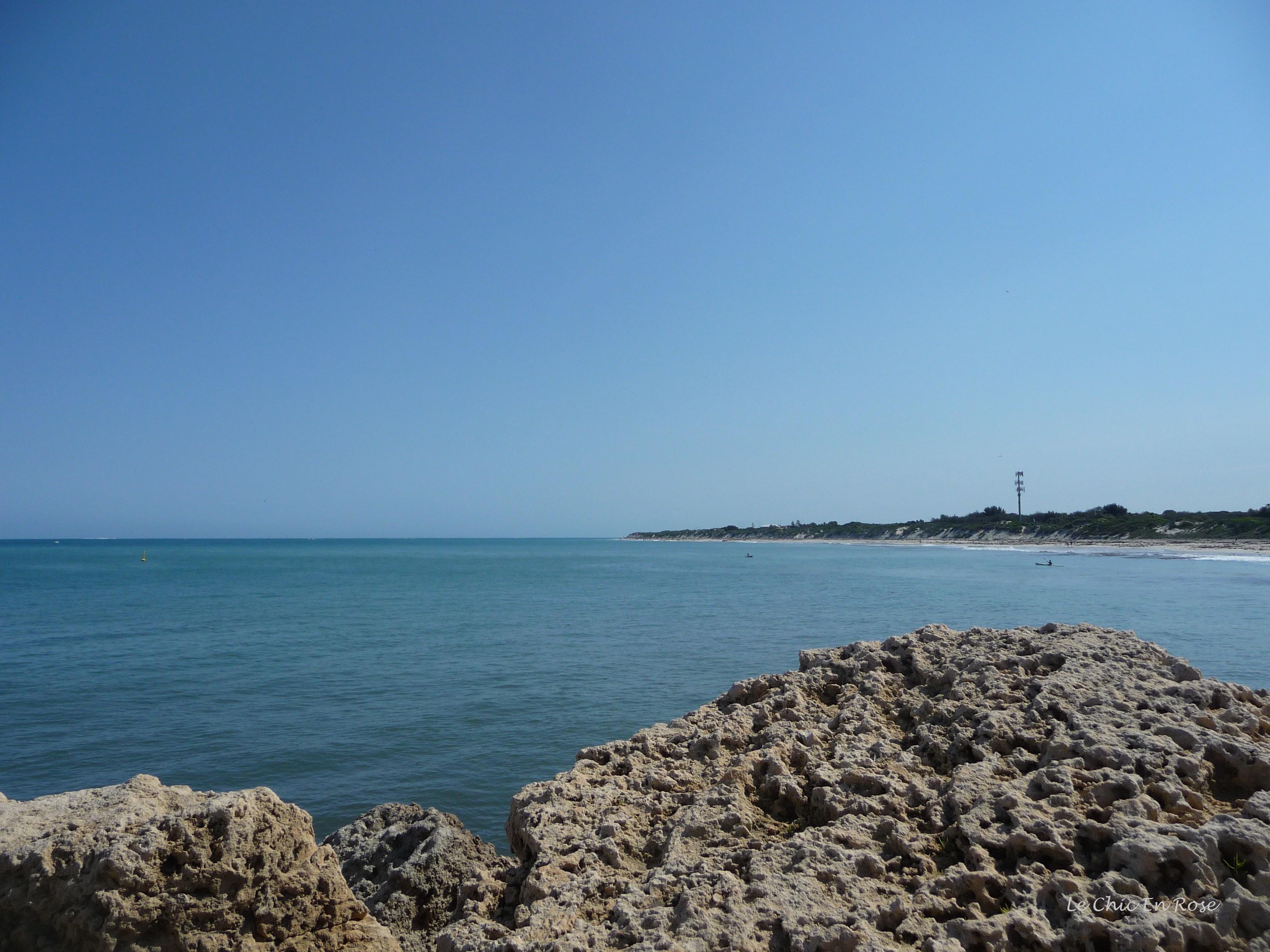
View north along the coast from the breakwater at Hillarys Marina, Perth Western Australia

View north along the coast from the breakwater at Hillarys Marina, Perth Western Australia

Tourists and locals alike often head up the coast, about a 20 minute drive from the Perth city centre, to Hillarys Boat Harbour (also referred to as Hillarys Marina or Sorrento Quay). It’s a man-made marina and boardwalk complex which has become one of Perth’s most popular recreational destinations. There is a safe beach area popular with families, countless cafes, restaurants, a myriad of shops (selling clothing, souvenirs and fishing gear amongst other things) and a number of attractions such as The Great Escape (featuring a giant water slide), Harley Davidson tours, and AQWA (the Aquarium Of Western Australia). Visit hillarysboatharbour.com.au for further information.

Sadly for Winston, however, dogs are not permitted in most of the complex. This may not be a bad thing as quite frankly it is often packed and teeming with people especially at weekends and public holidays. However if you walk or drive round to the north side of the Quay, which will only take you a few minutes, you find yourself out on the breakwater with glorious views in every direction and a welcome feeling of space. We begin our walk in the car park at the end of Northside Drive in the Spinnakers Cafe car park (more of that later). Our initial route takes us along the breakwater past the Hillarys Yacht Club, Naturaliste Marine Discovery Centre, Perth Diving Academy and Dive Shop on one side and the turquoise waters of the Indian Ocean on the other.

From here we turn due north and join up with the coastal walking and cycling path, which extends from South Fremantle up to Burns Beach in the north. Should you wish to walk or cycle the path in its entirety the distance is just over 50 kilometres. The native bushland has been preserved and incorporated into the Hillarys Beach Park, which provides a range of recreational and picnic facilities. It’s a safe walking area well away from the road though you do need to be mindful of passing cyclists especially if you have an easily excited dog!

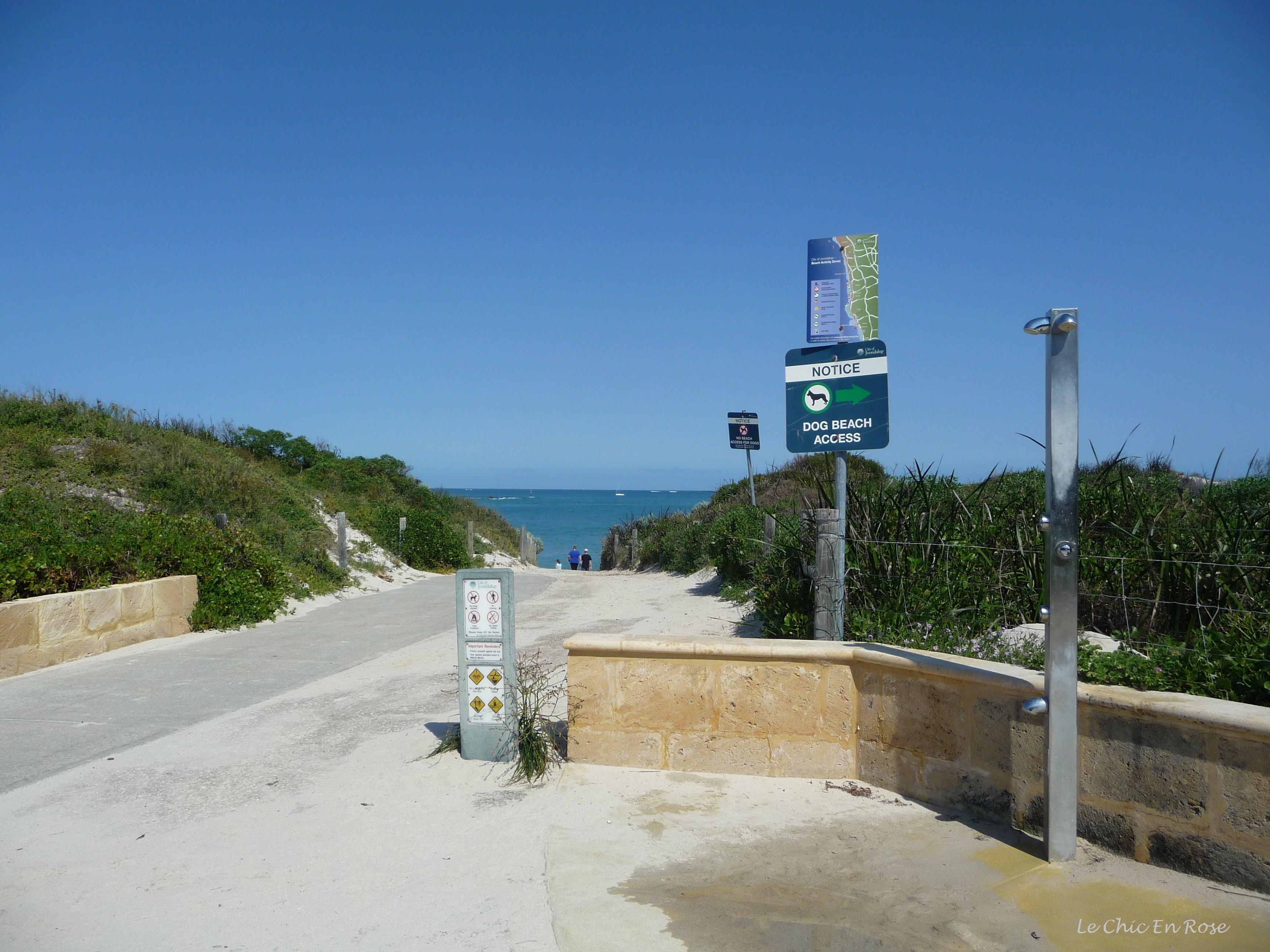
We come to a turning leading down to the beach but alas dogs are not permitted there!

Pathway down to Hillarys Beach dog free zone!

Pathway down to Hillarys Beach dog free zone!

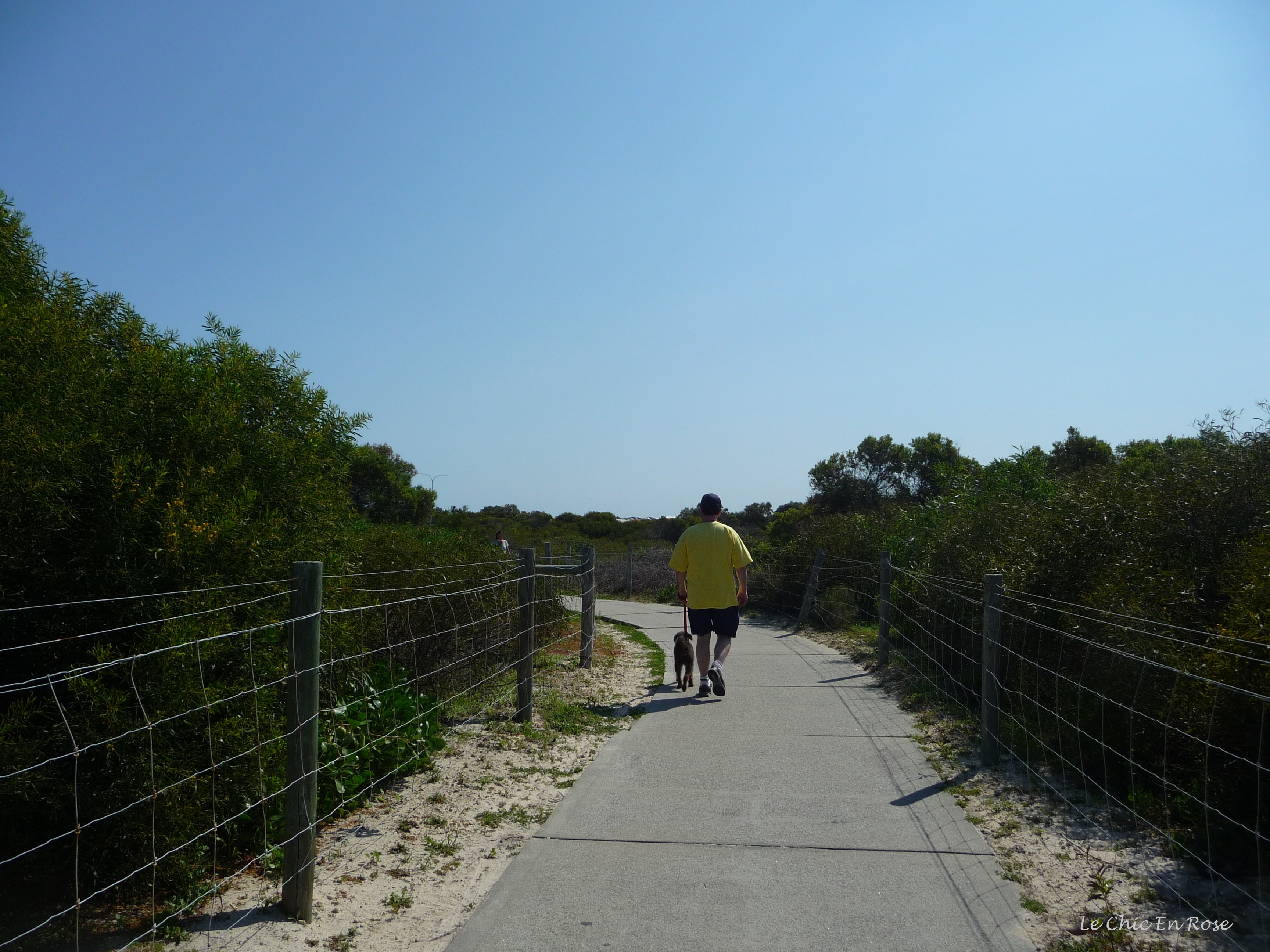
Winston doesn’t seem too perturbed and after a quick drink we set off again.

Winston Le Schnoodle walking along the coastal path near Hillarys Beach

Winston Le Schnoodle walking along the coastal path near Hillarys Beach

A few minutes further along we reach the designated dog beach zone where dogs are permitted to exercise off-leash after midday Monday to Saturday and all day Sunday. I was also interested to read on the City Of Joondalup website, joondalup.wa.gov.au, that the beach is also used as a horse beach exercise area, which is presumably why there are certain restrictions involving dogs. Horses are allowed at the northern end and dogs at the southern point.

Although this freedom is seen by many dogs as a chance to frolic in the waves, Winston is not a water-loving schnoodle (he hates getting wet!) so after a few minutes of sniffing around (Winston that is!) we retrace our steps all the way back to the car park. Here you have a superb view of the marina complex. Whilst not quite Monaco or St Tropez there are a large number of boats moored here, which would not look out of place on the Cote D’Azur itself.

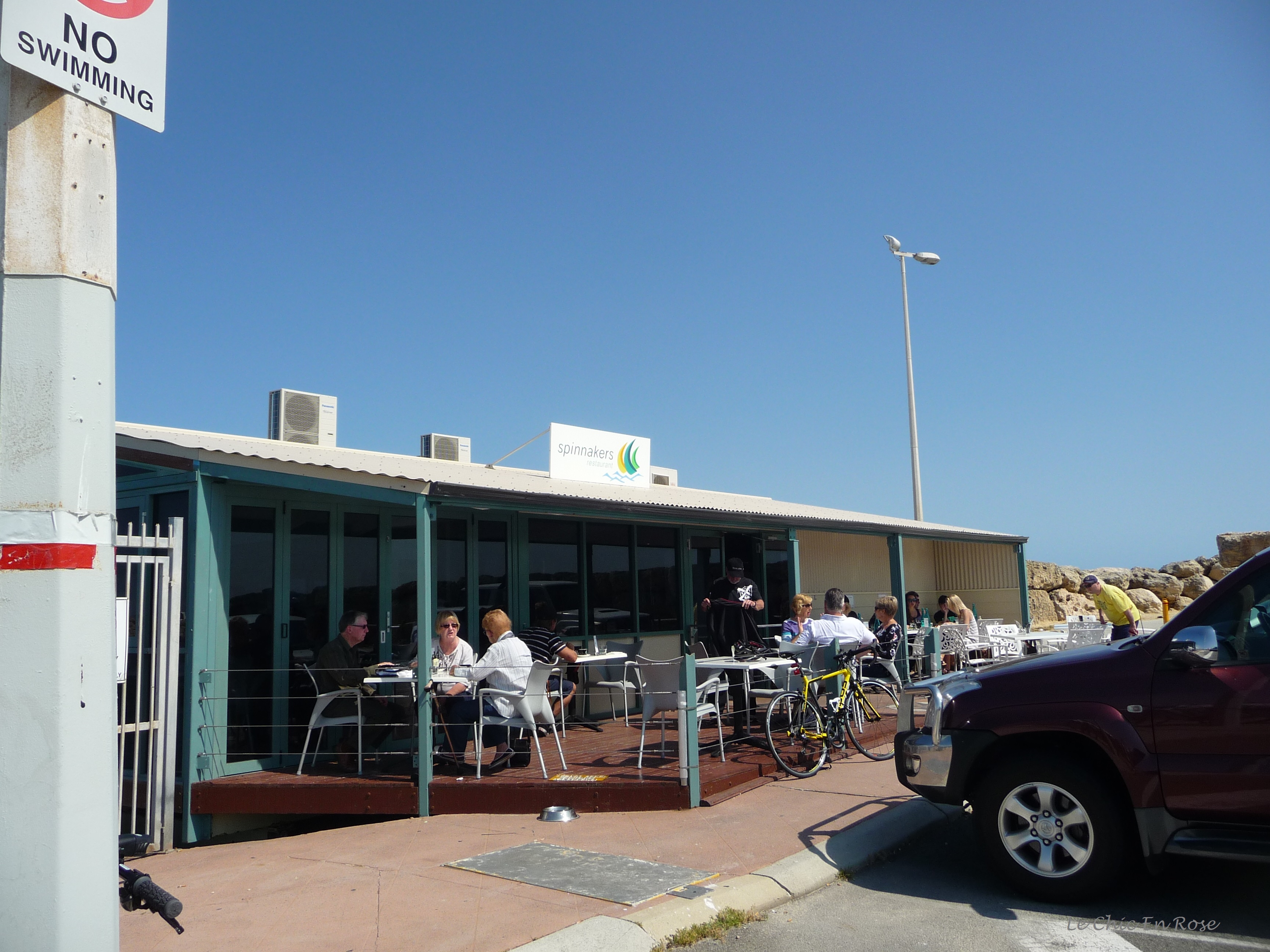
All that exercise has left us needing refreshments and we always enjoy morning coffee, or lunch or both on the veranda of Spinnakers Cafe (95 Northside Drive Hillarys). Whilst there is a gorgeous view over the water from inside the cafe, as we have Winston with us we must sit outside but unless it happens to be raining this is no bother at all.

Spinnakers Cafe Hillarys

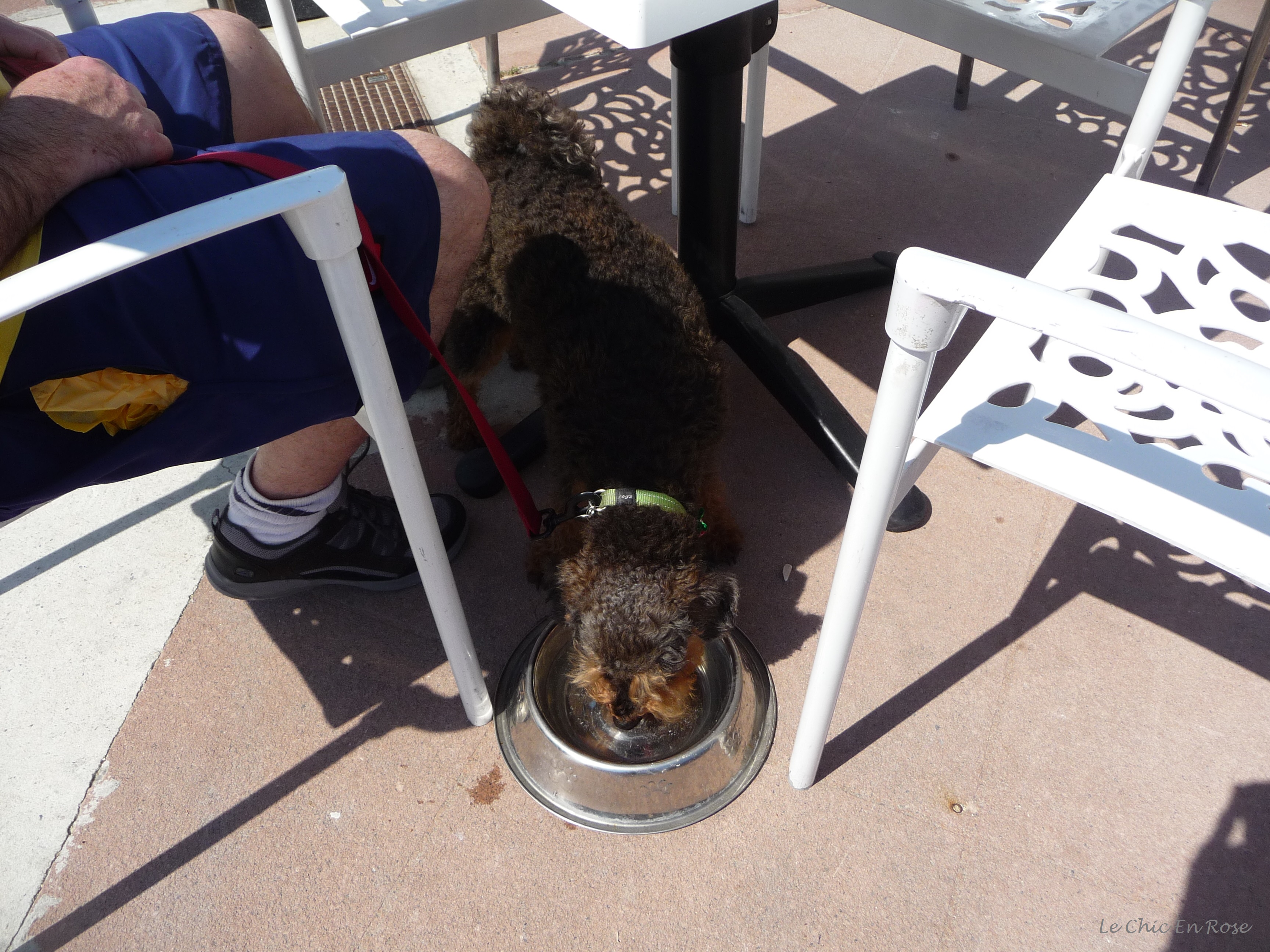
Winston enjoys it as he is well catered for….

Winston enjoying a drink at Spinnakers Cafe Hillarys

Winston enjoying a drink at Spinnakers Cafe Hillarys

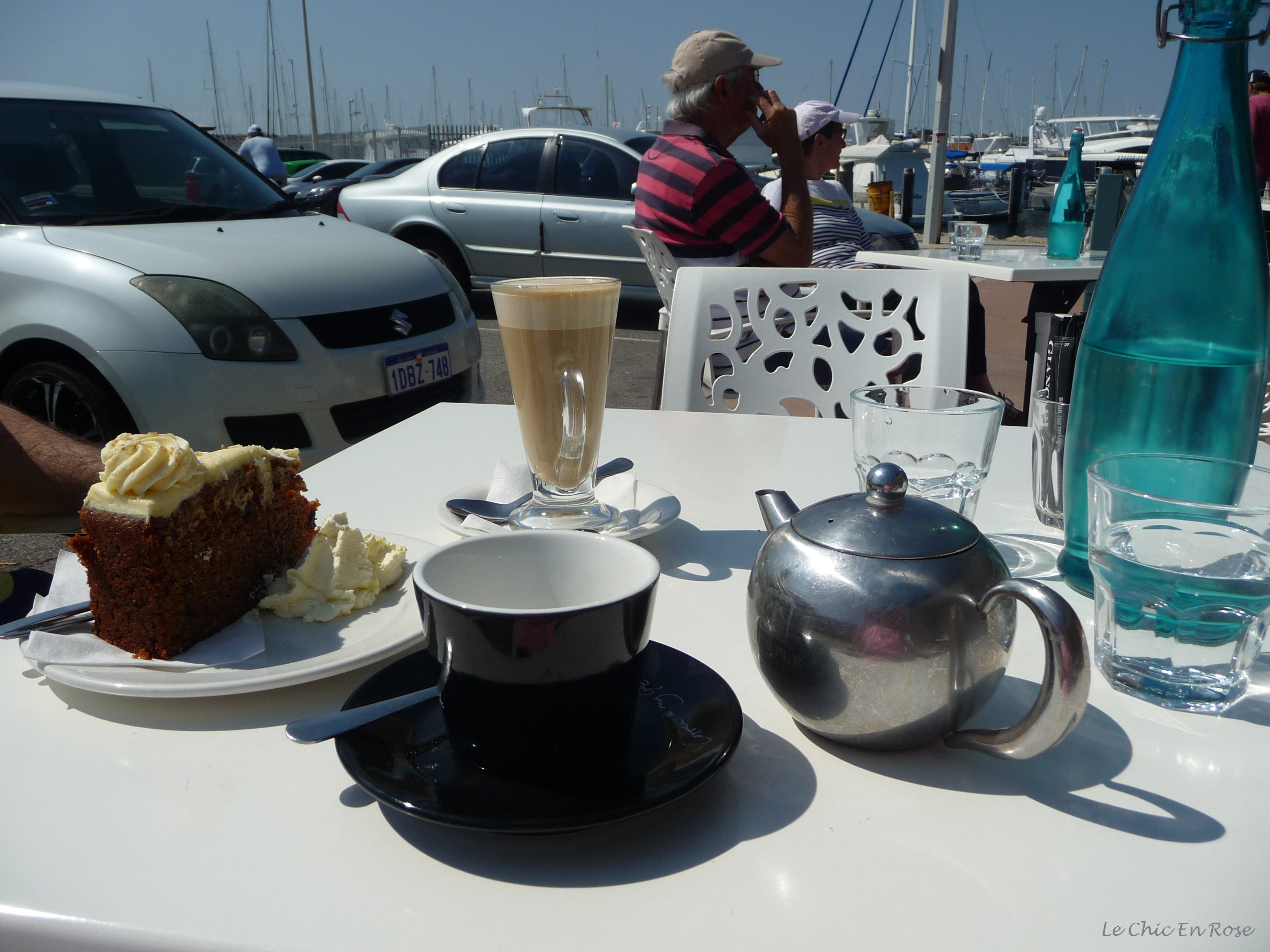
And Monsieur Le Chic and I are partial to the house carrot cake….

Morning Coffee Time at Spinnakers Cafe Hillarys

Morning Coffee Time at Spinnakers Cafe Hillarys

We can sit back, admire the views and watch the world go by……

Did you spot the feral cat? You’ll have to click on the photo of the breakwater to see it peeping out from the rocks. There are many such cats living wild down by the sea presumably runaways or abandoned cats and their offspring. Although I’m sure they get by on the fishermen’s cast offs, it always makes me feel rather sad for them especially when I think of La Duchesse, our extremely pampered feline back home who would no doubt be quite horrified by feline living conditions at the breakwater!

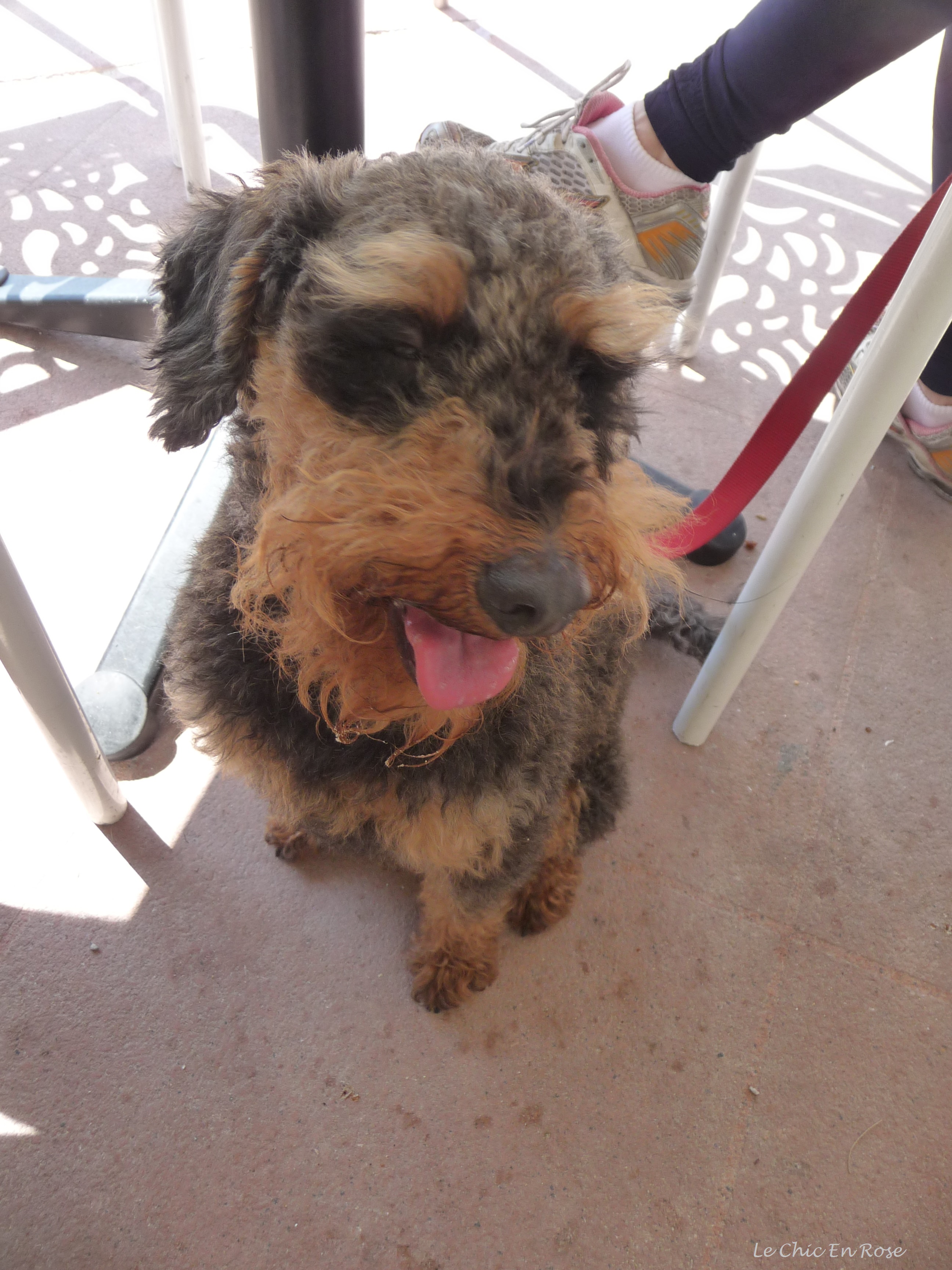
Finally we must leave and make our way home – some of us for a long rest!

Winston Le Schnoodle thinks it's time for a rest!

Winston Le Schnoodle thinks it’s time for a rest!

Copyright © 2014 Rosemary Thomas Le Chic En Rose. All rights reserved