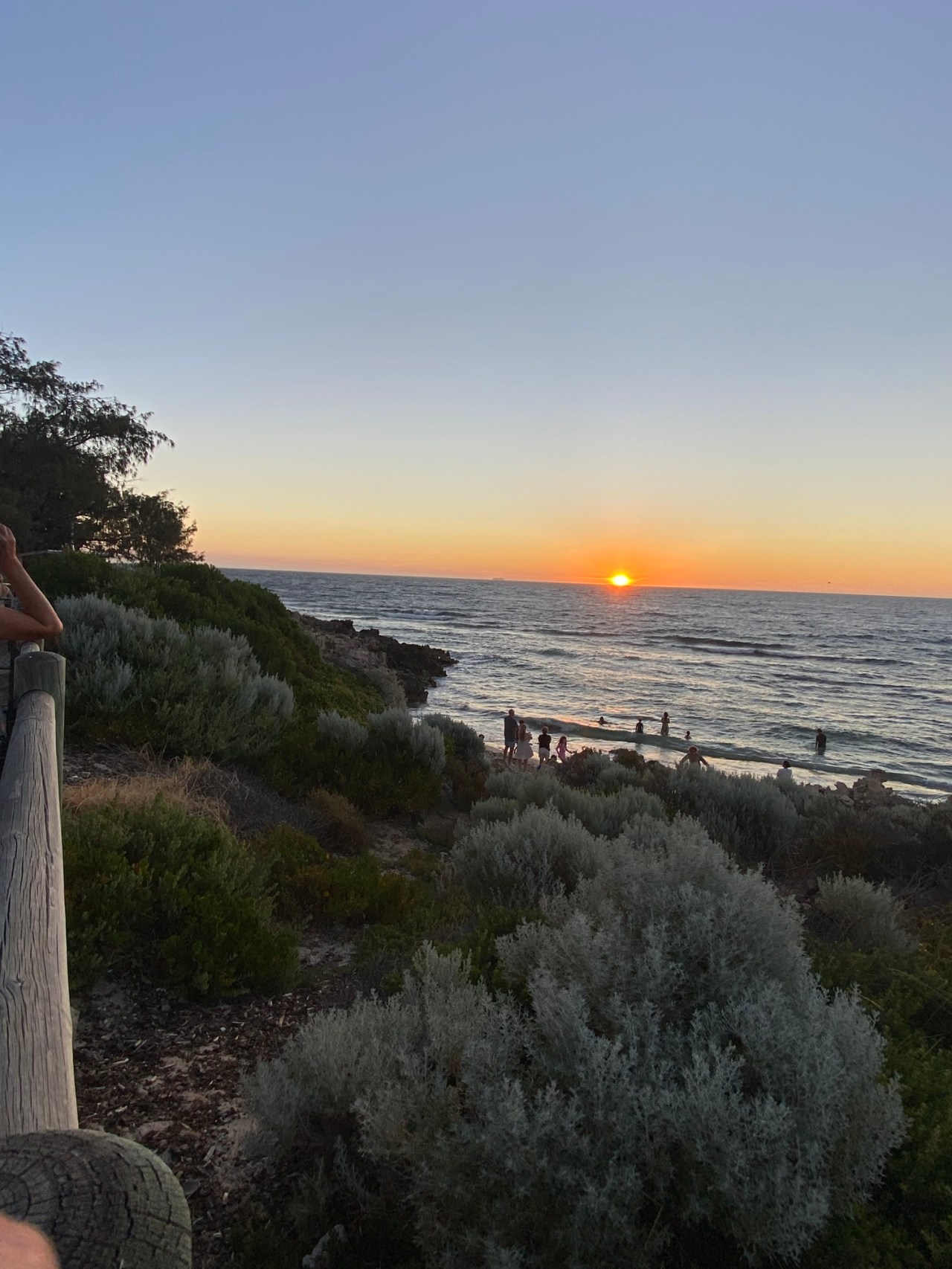
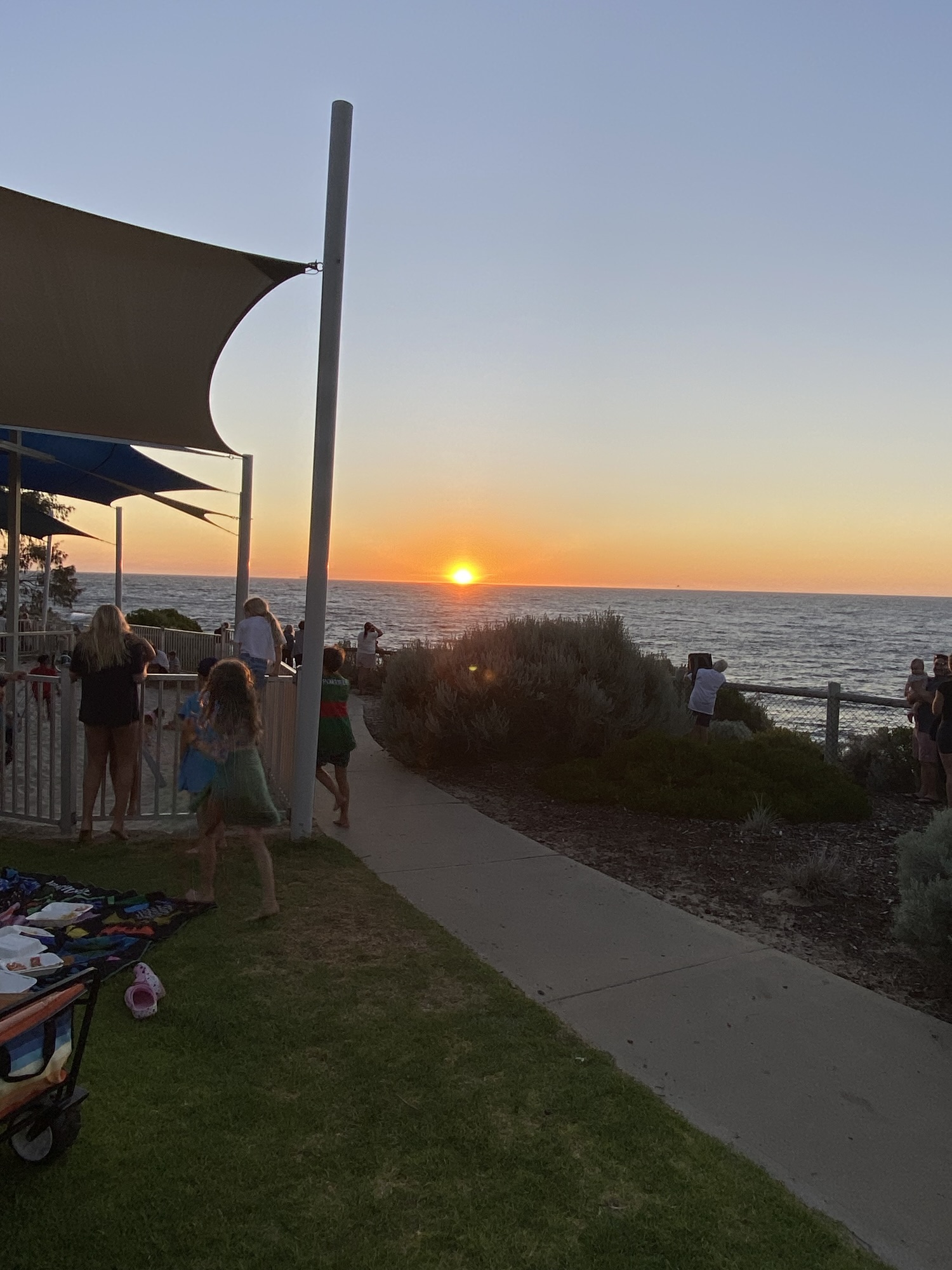
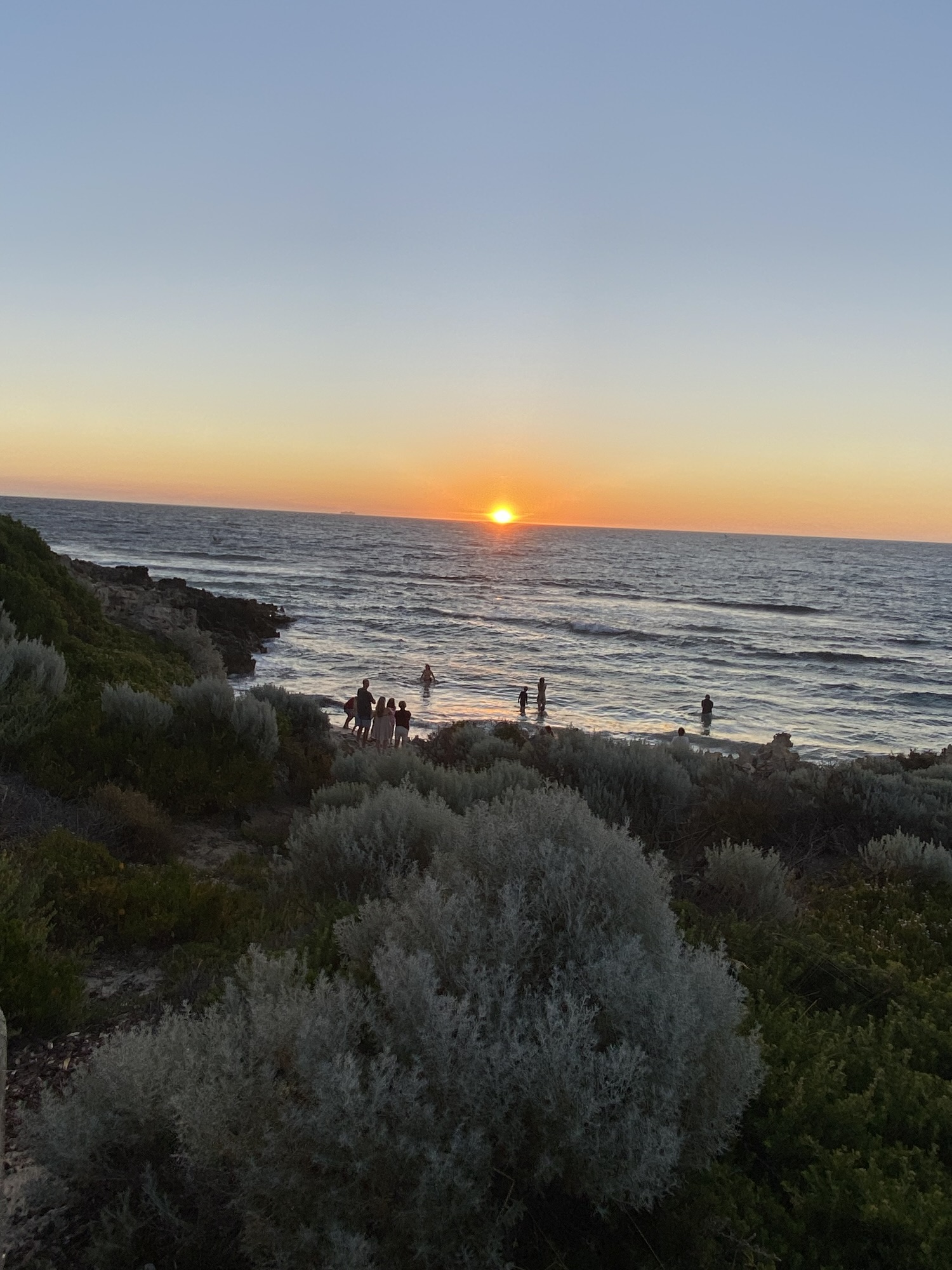
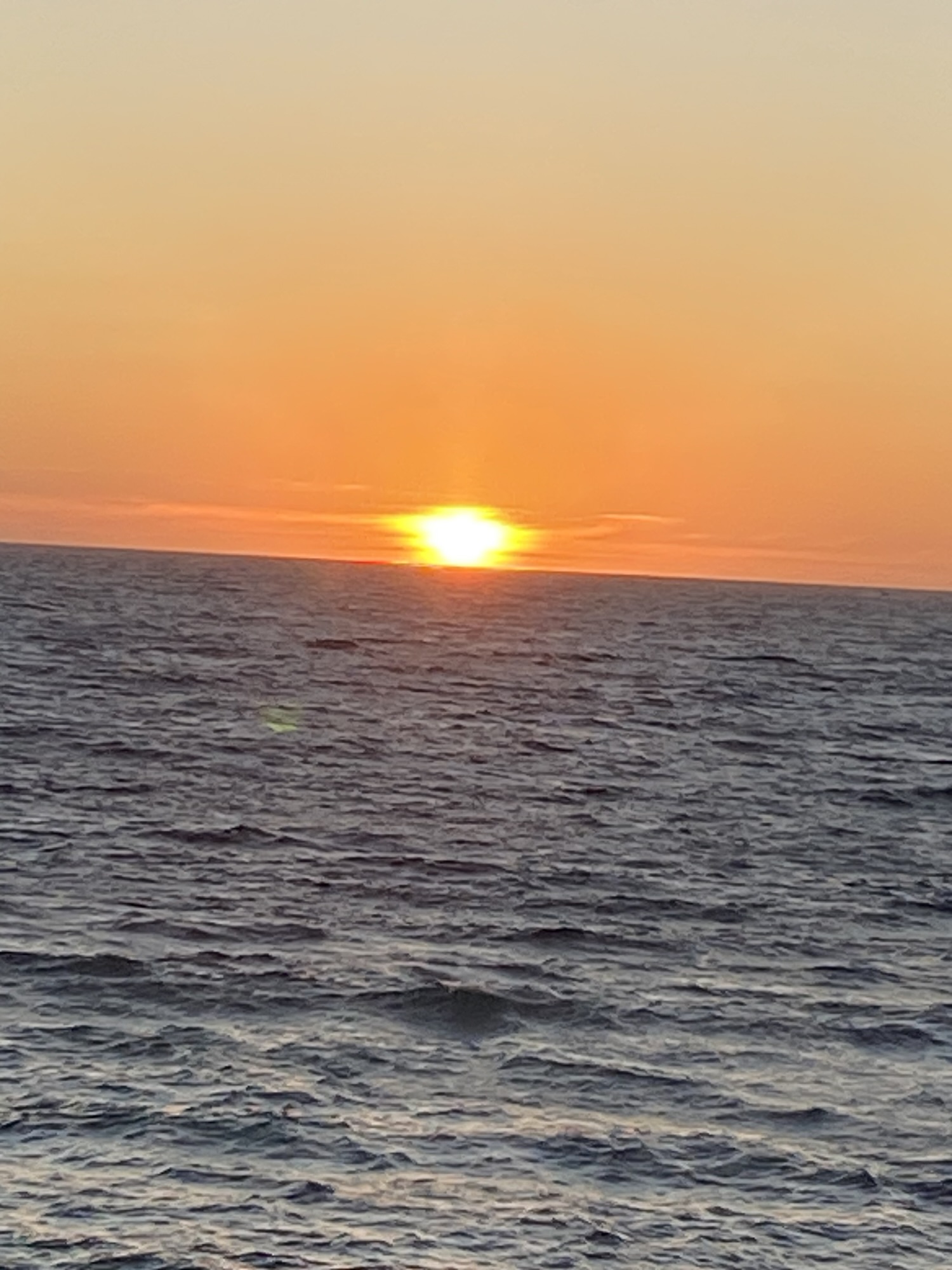
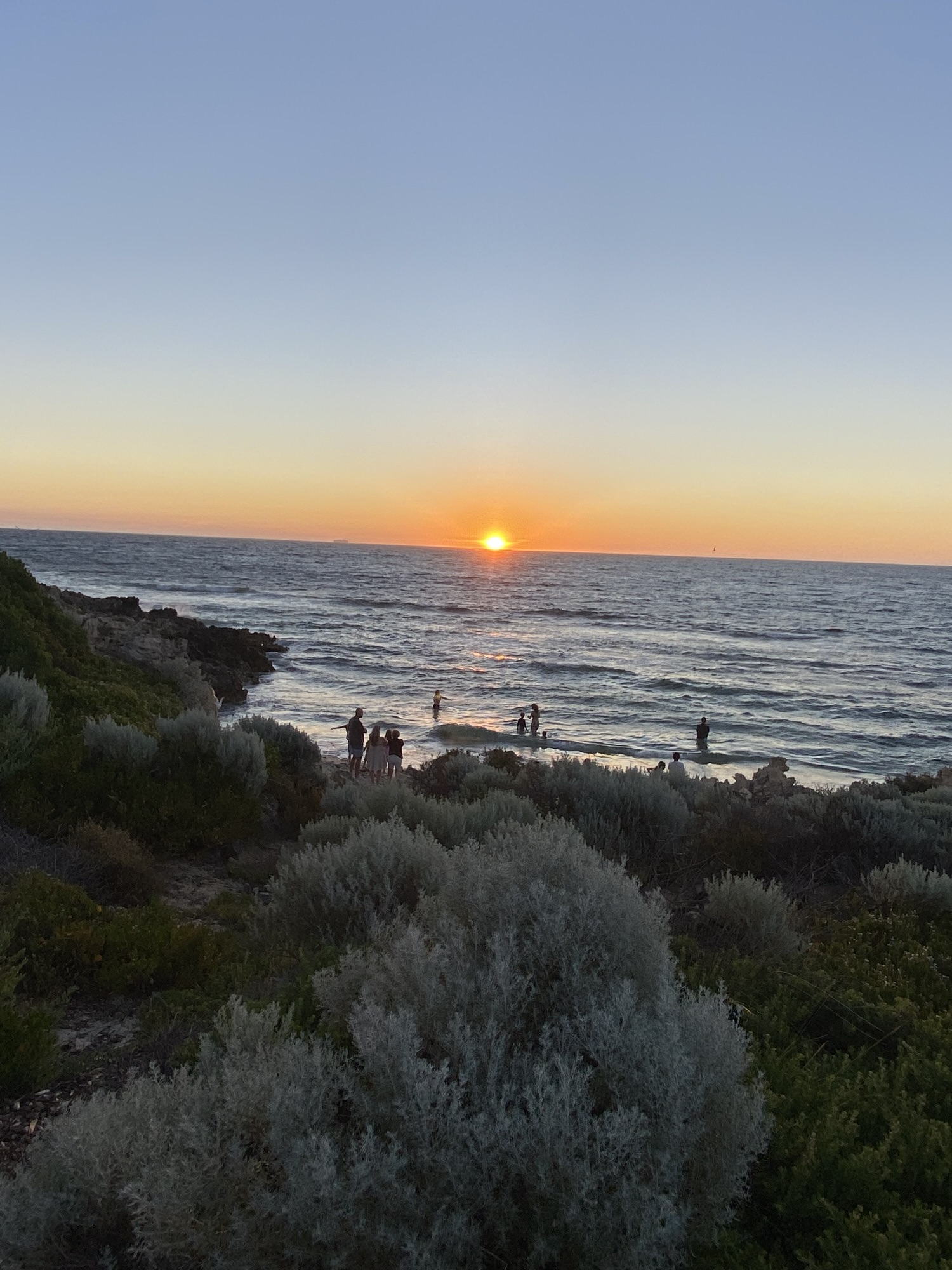
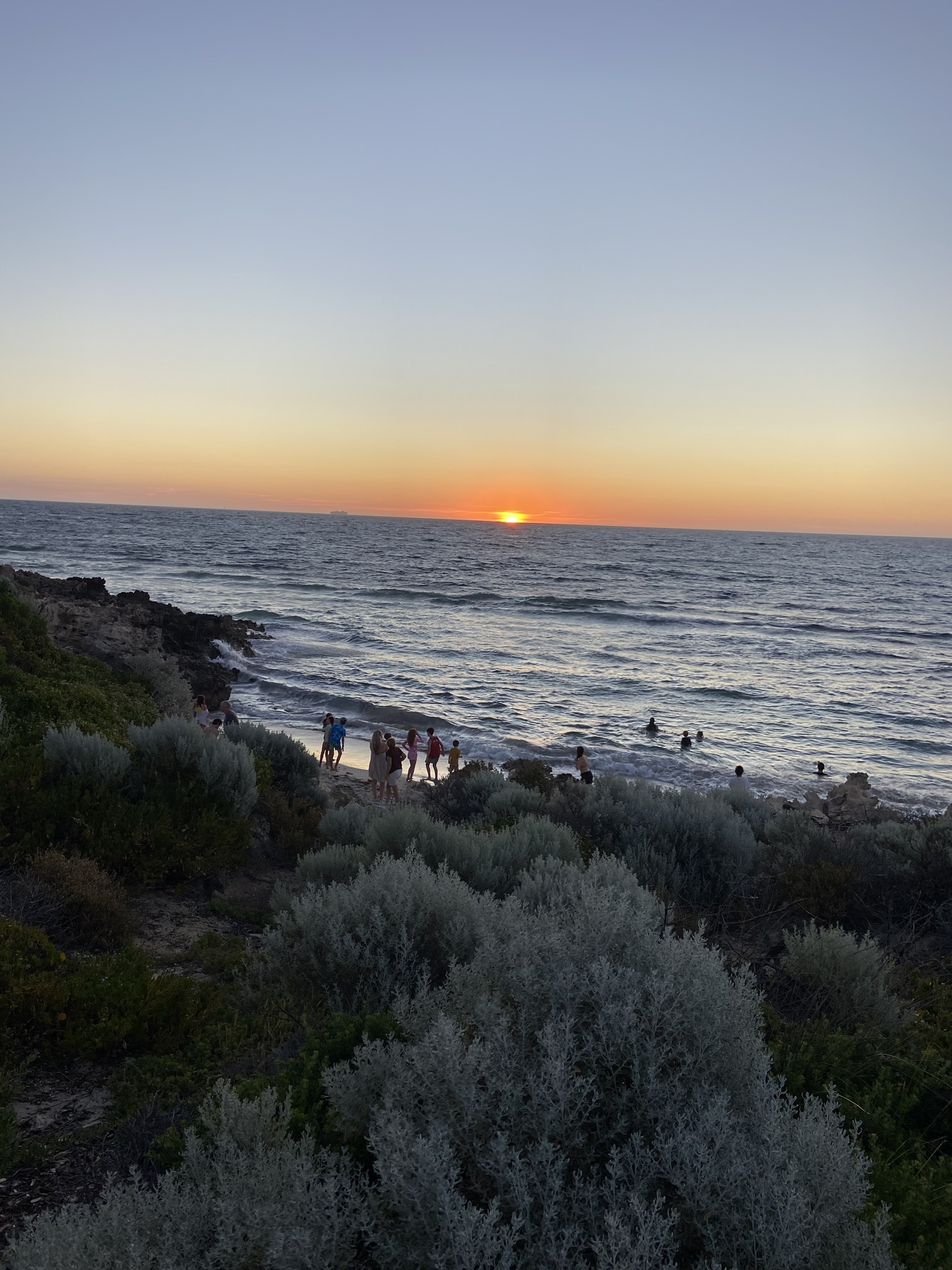
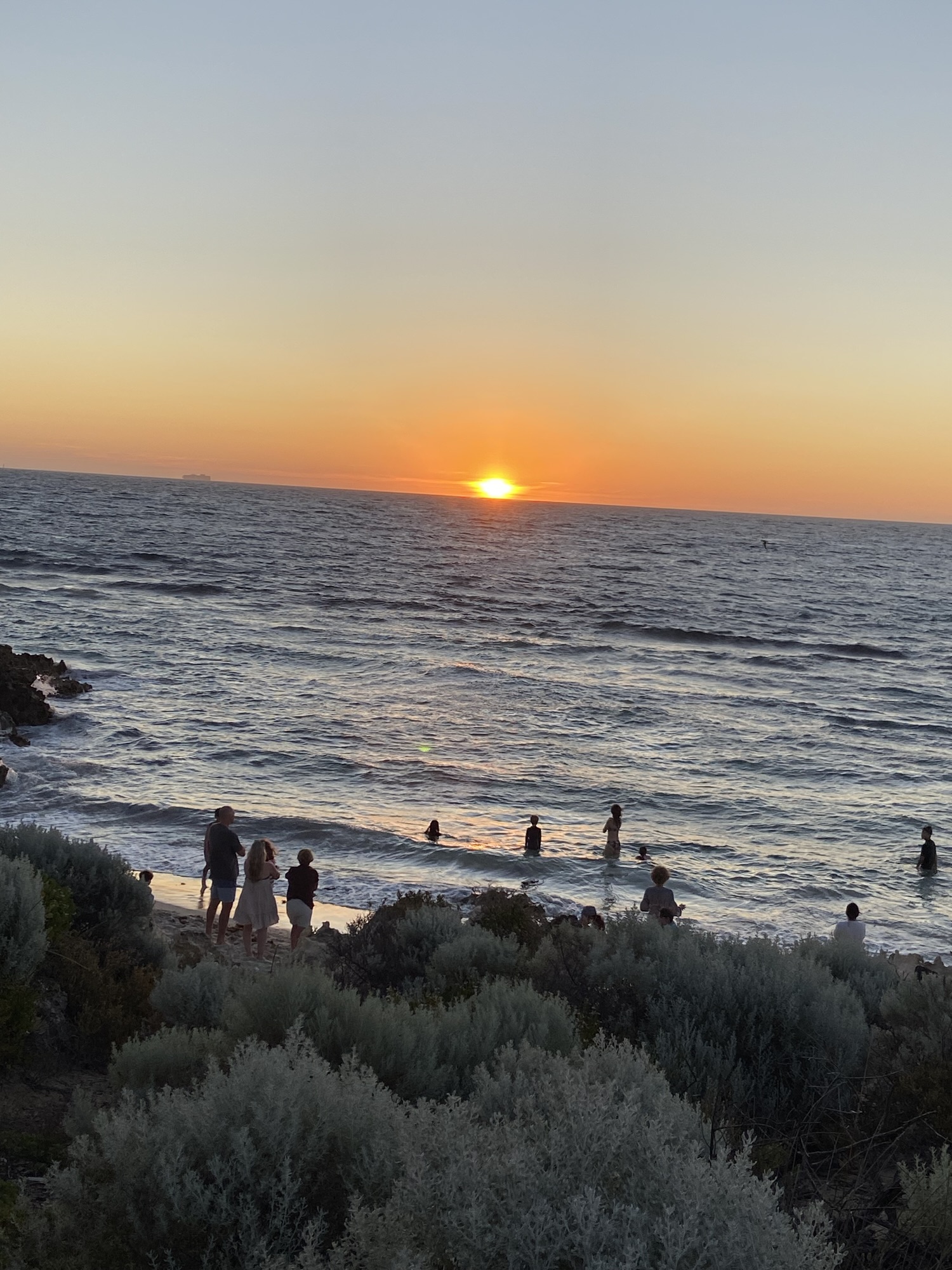
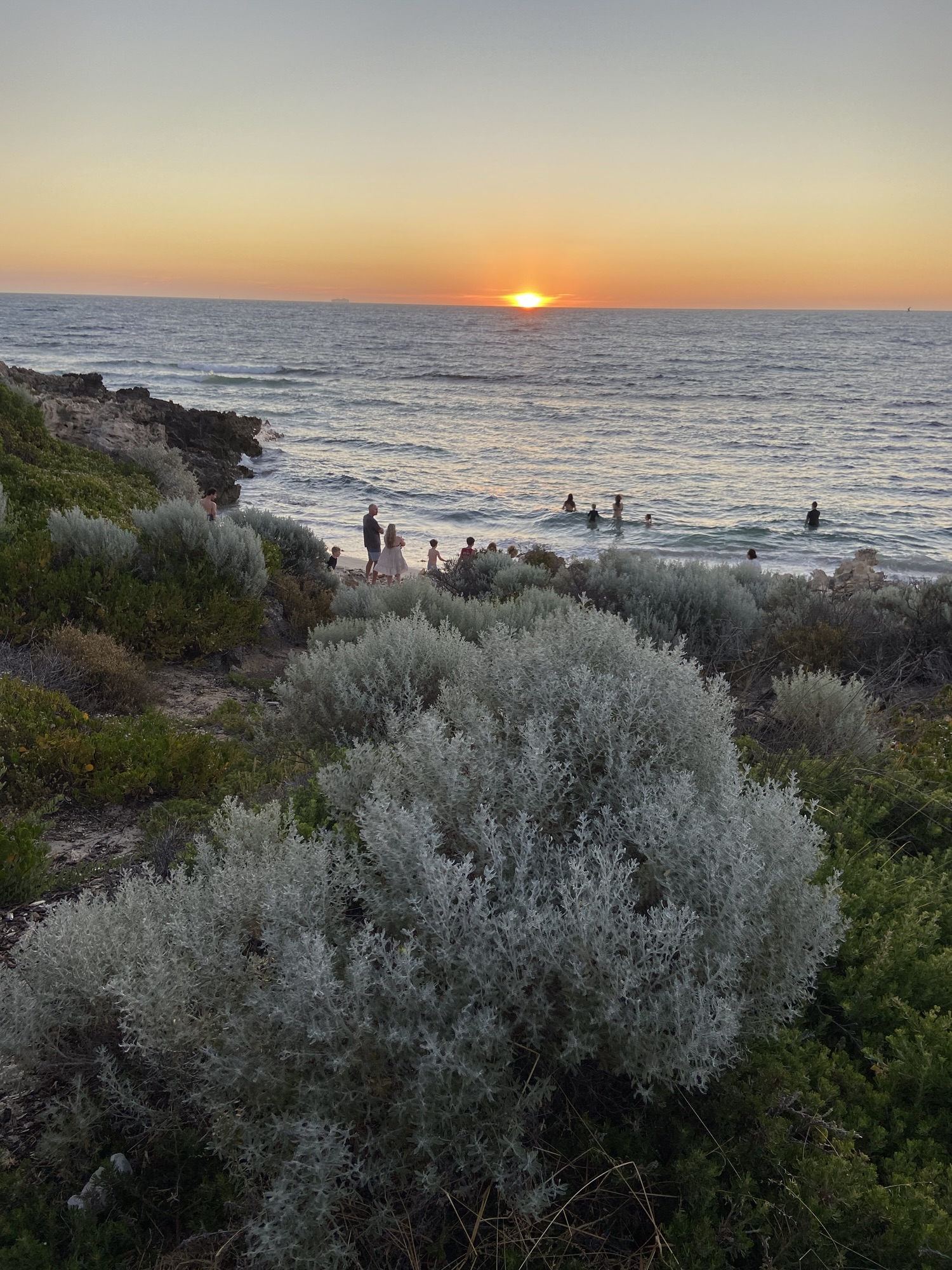
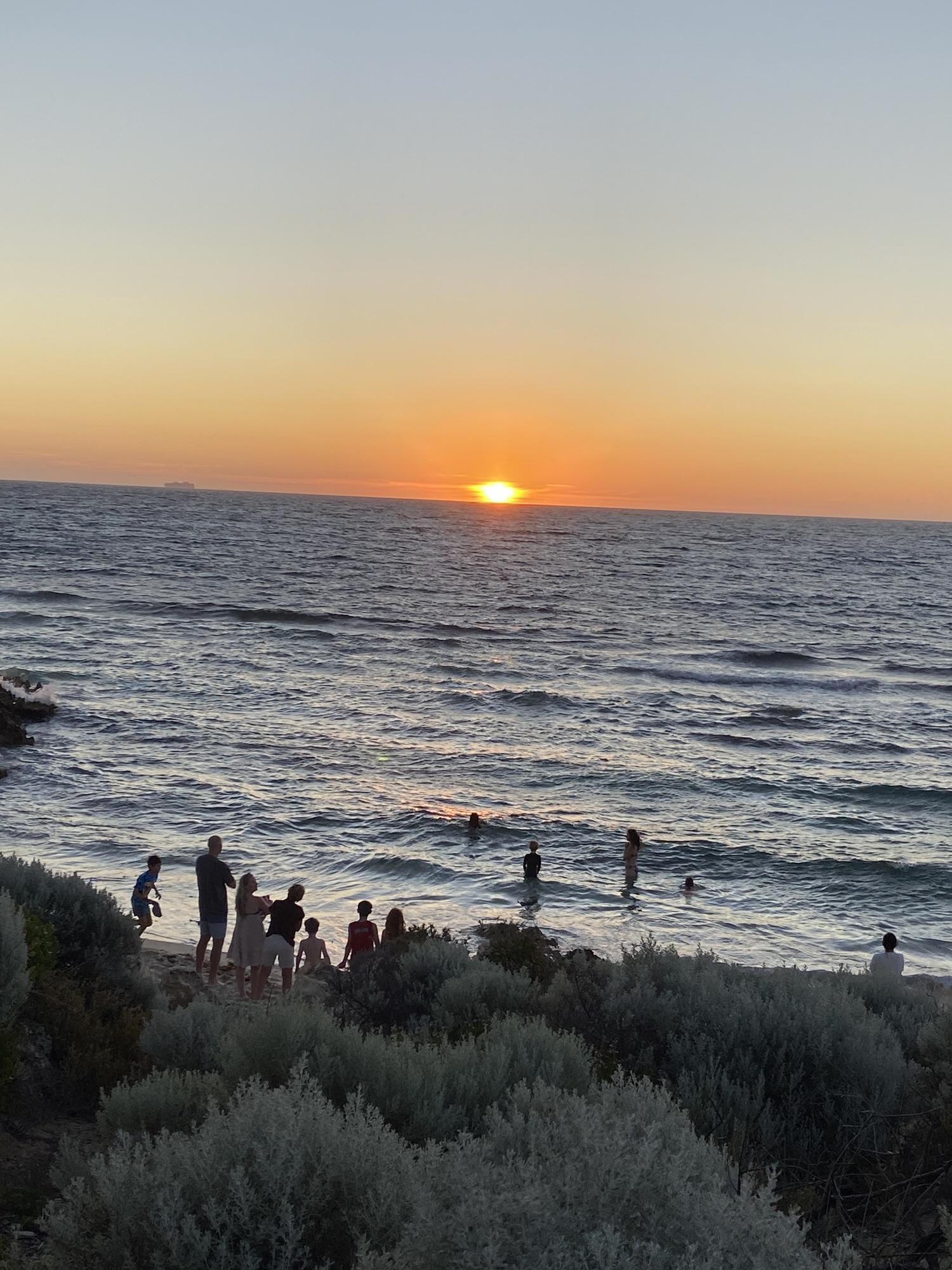
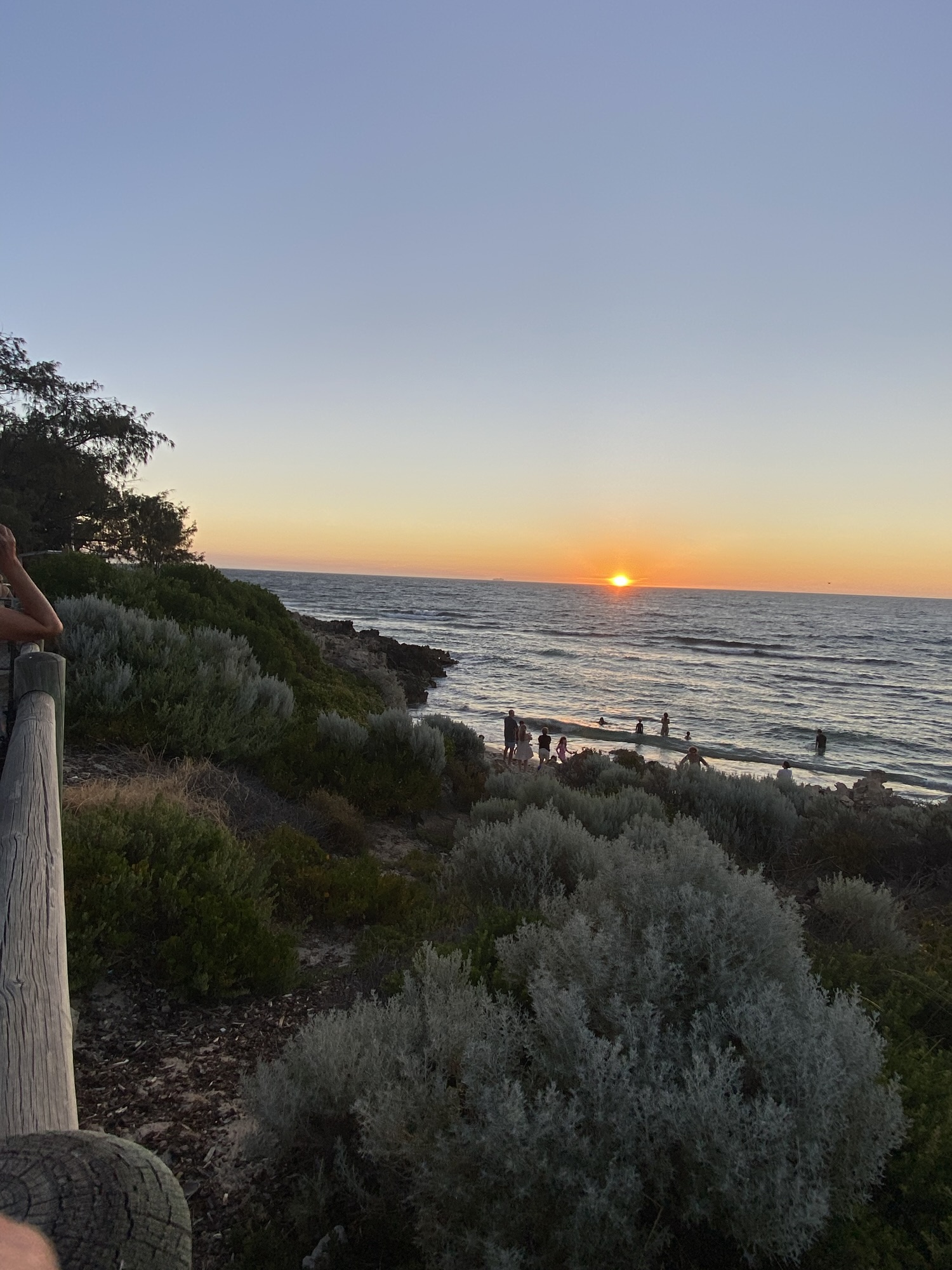
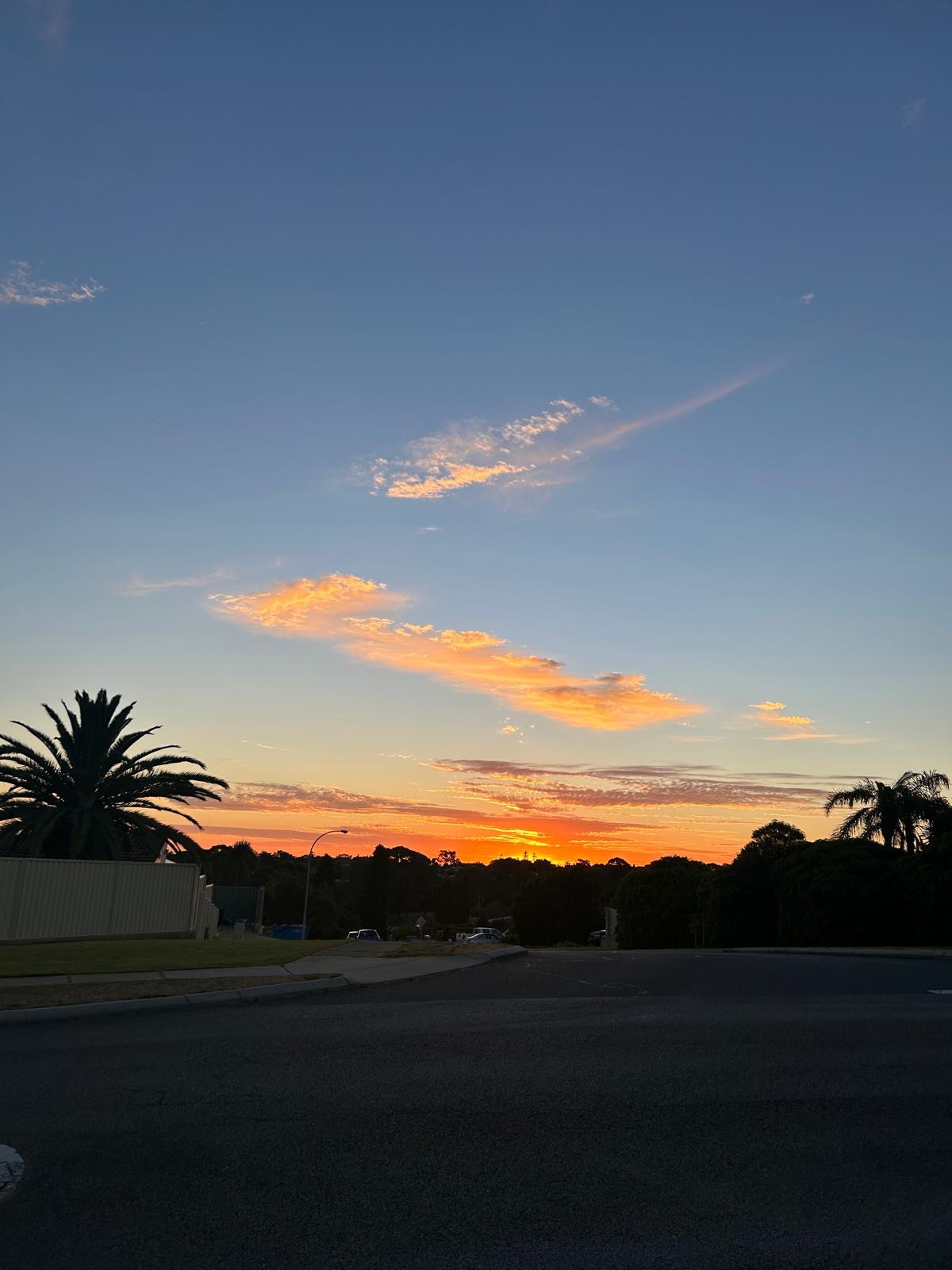
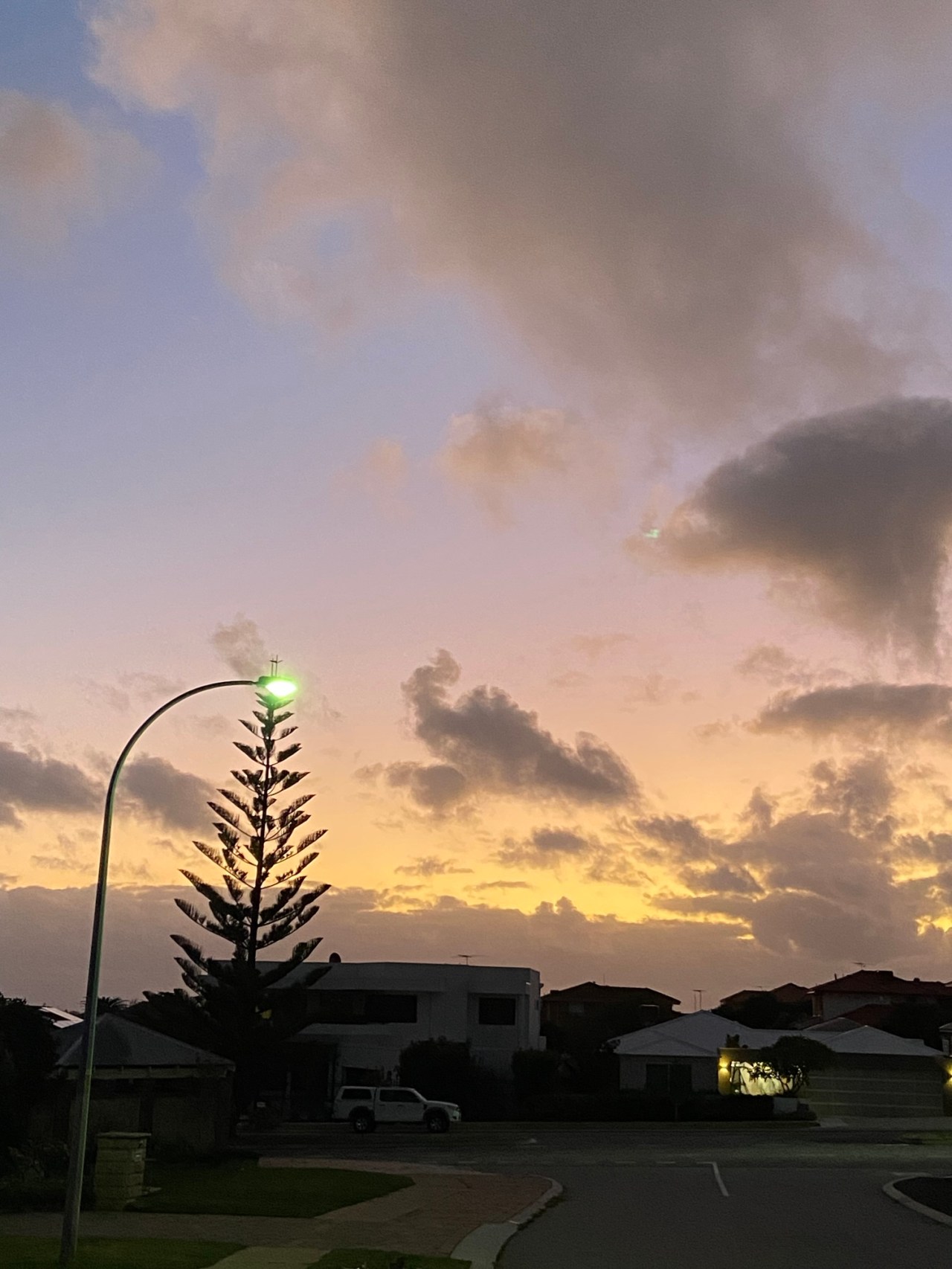
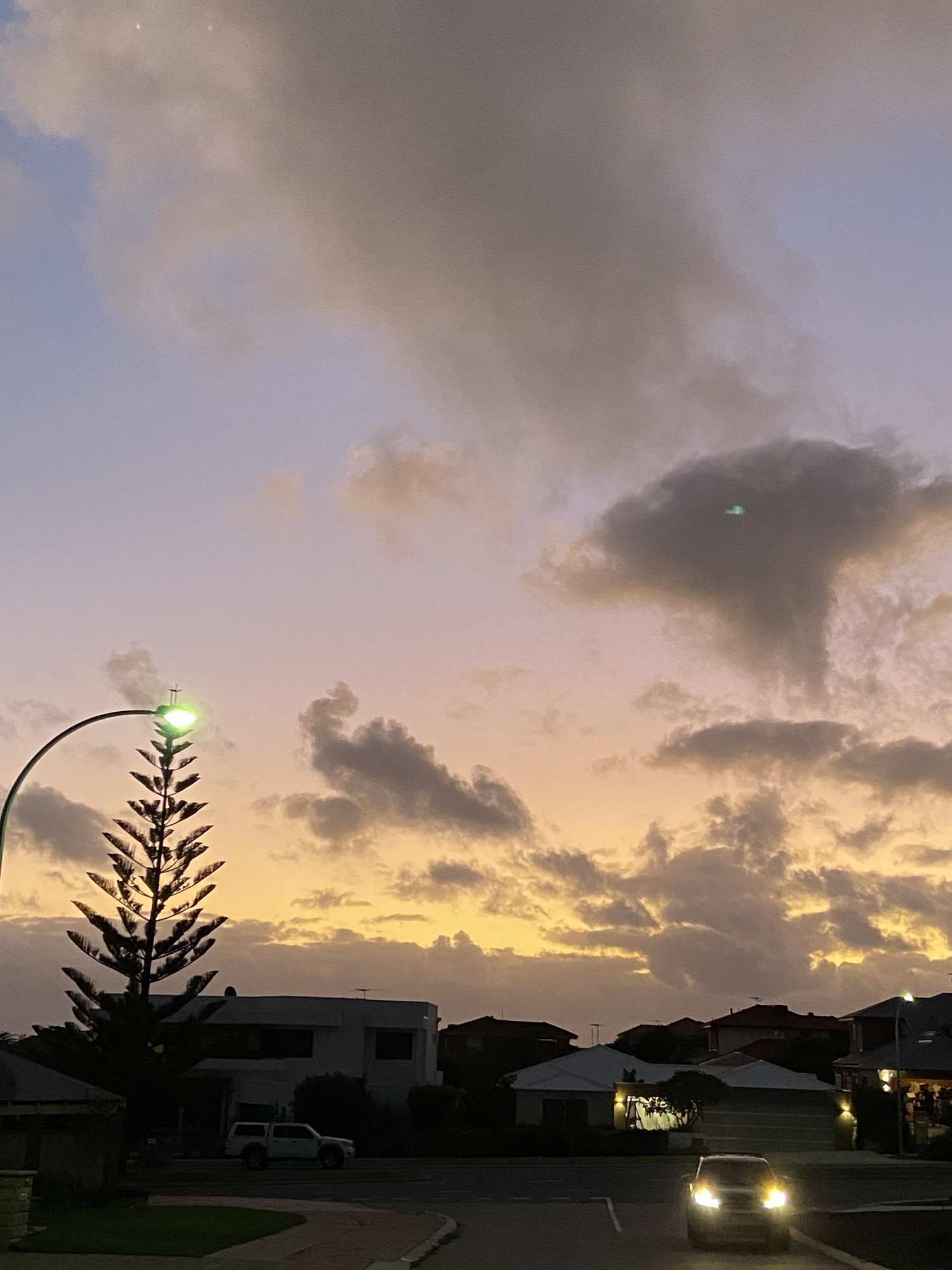
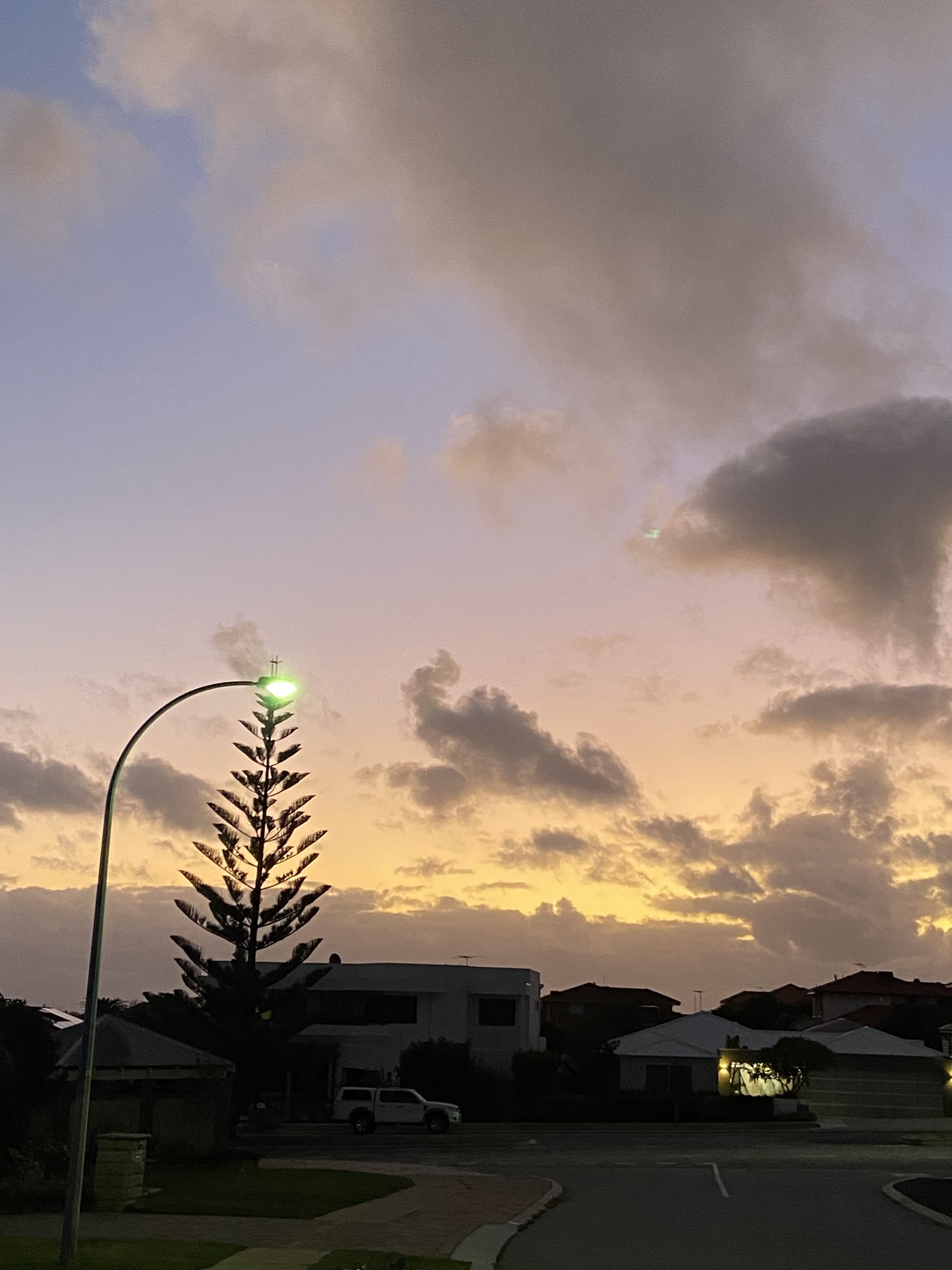
A few photos from the last sunset of 2025 taken down at our local beach, Waterman’s Bay. We enjoyed fish and chips with close friends looking out across the Indian Ocean and watching the sun slowly dip below the horizon.
Sending very best wishes to everyone for a happy, healthy and peaceful 2026.
After our overnight stay in Adelaide (see last week’s post here), we headed out to our accommodation for the next 3 nights in the Adelaide Hills.
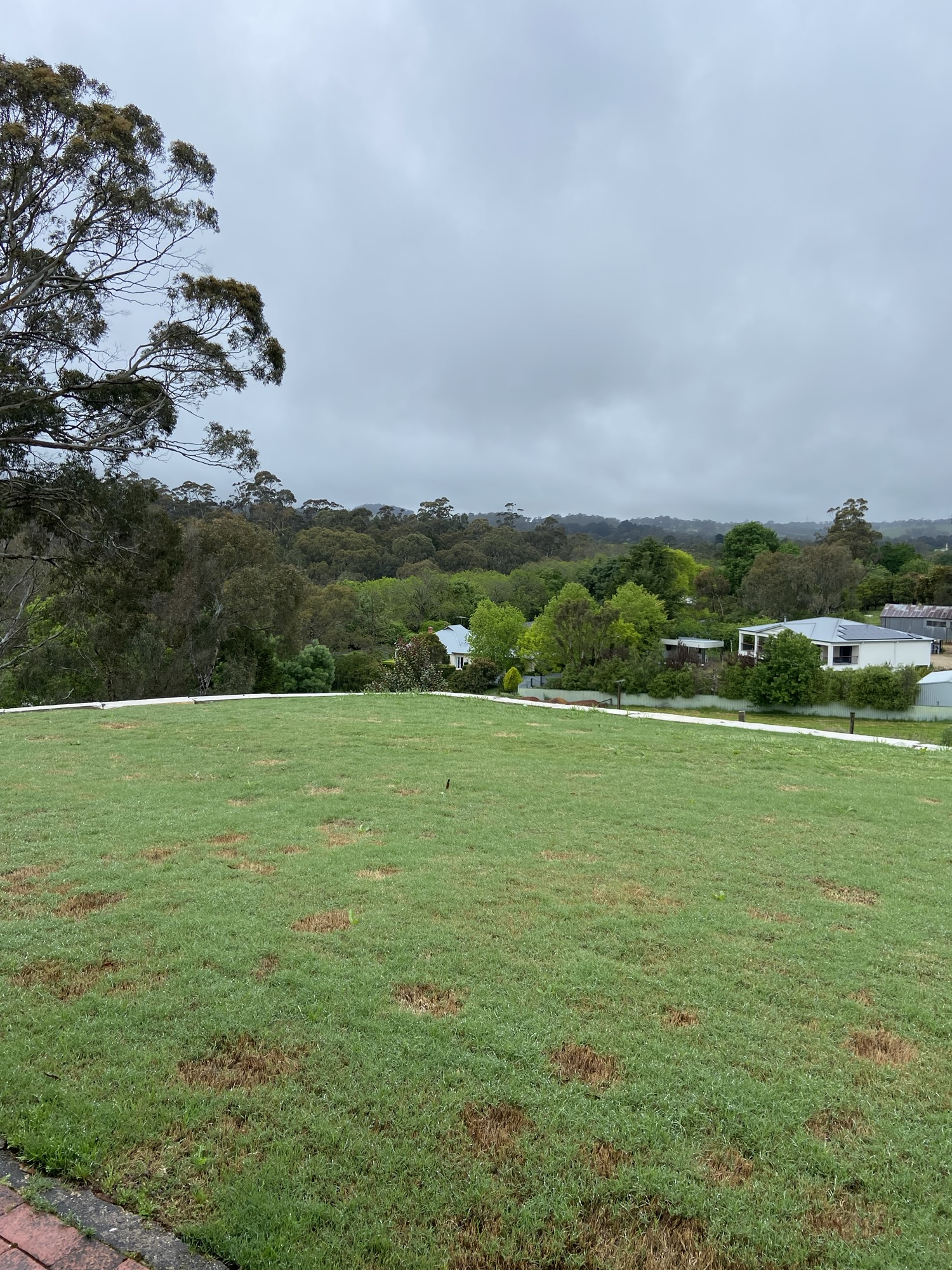
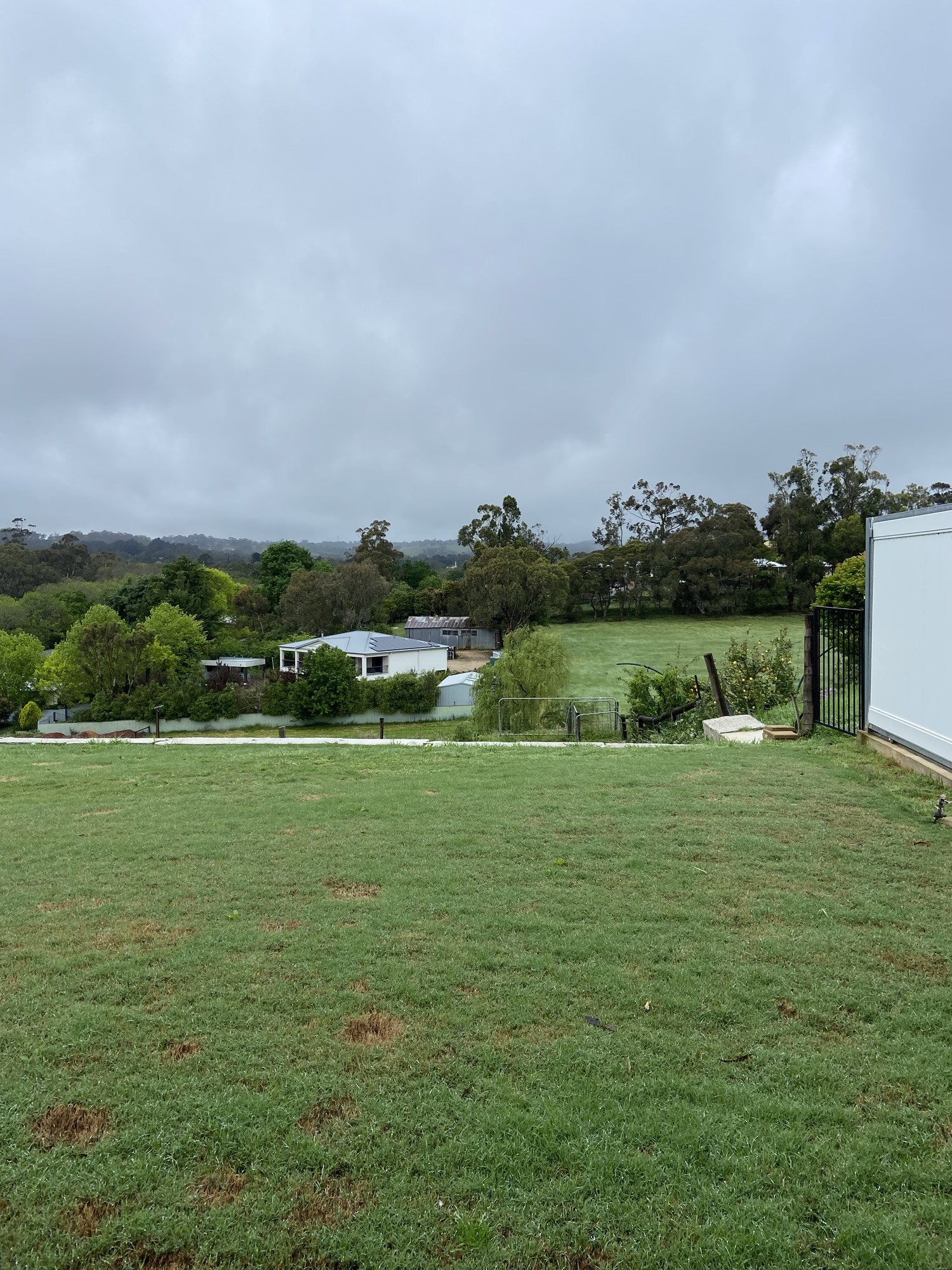
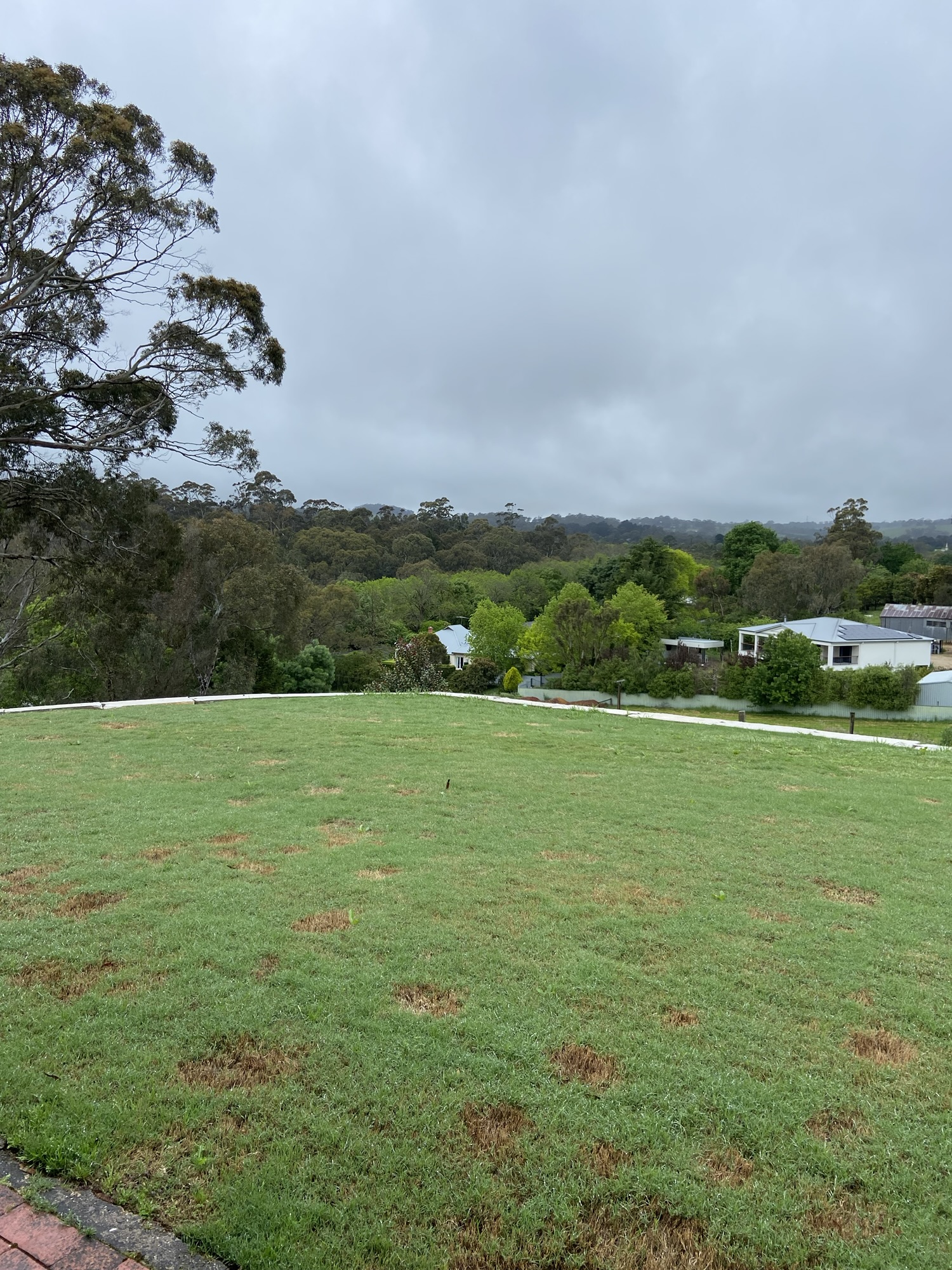
We had rented a lovely Airbnb house with a wrap around veranda and expansive views across the valley towards rolling hills and vineyards.
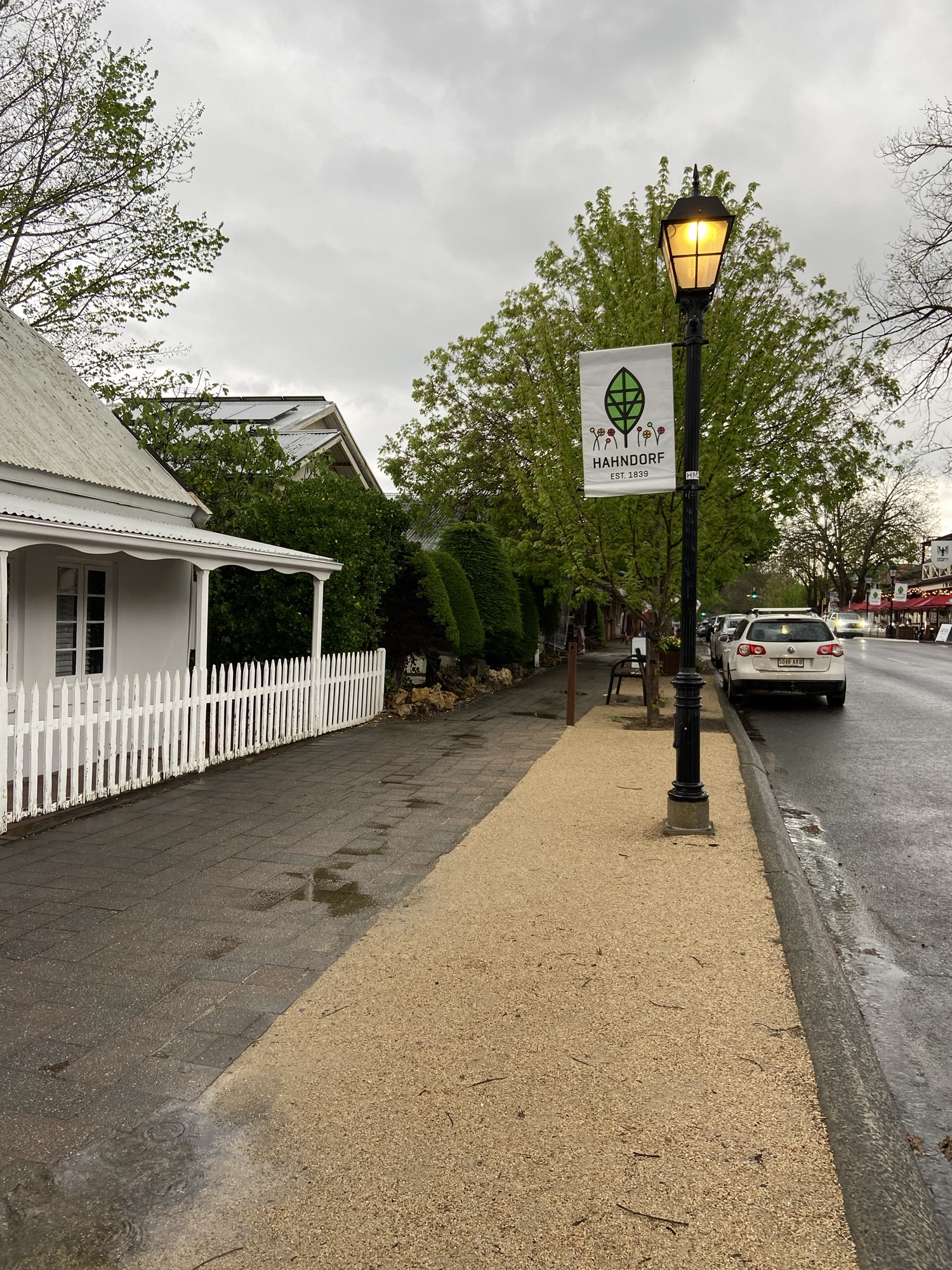
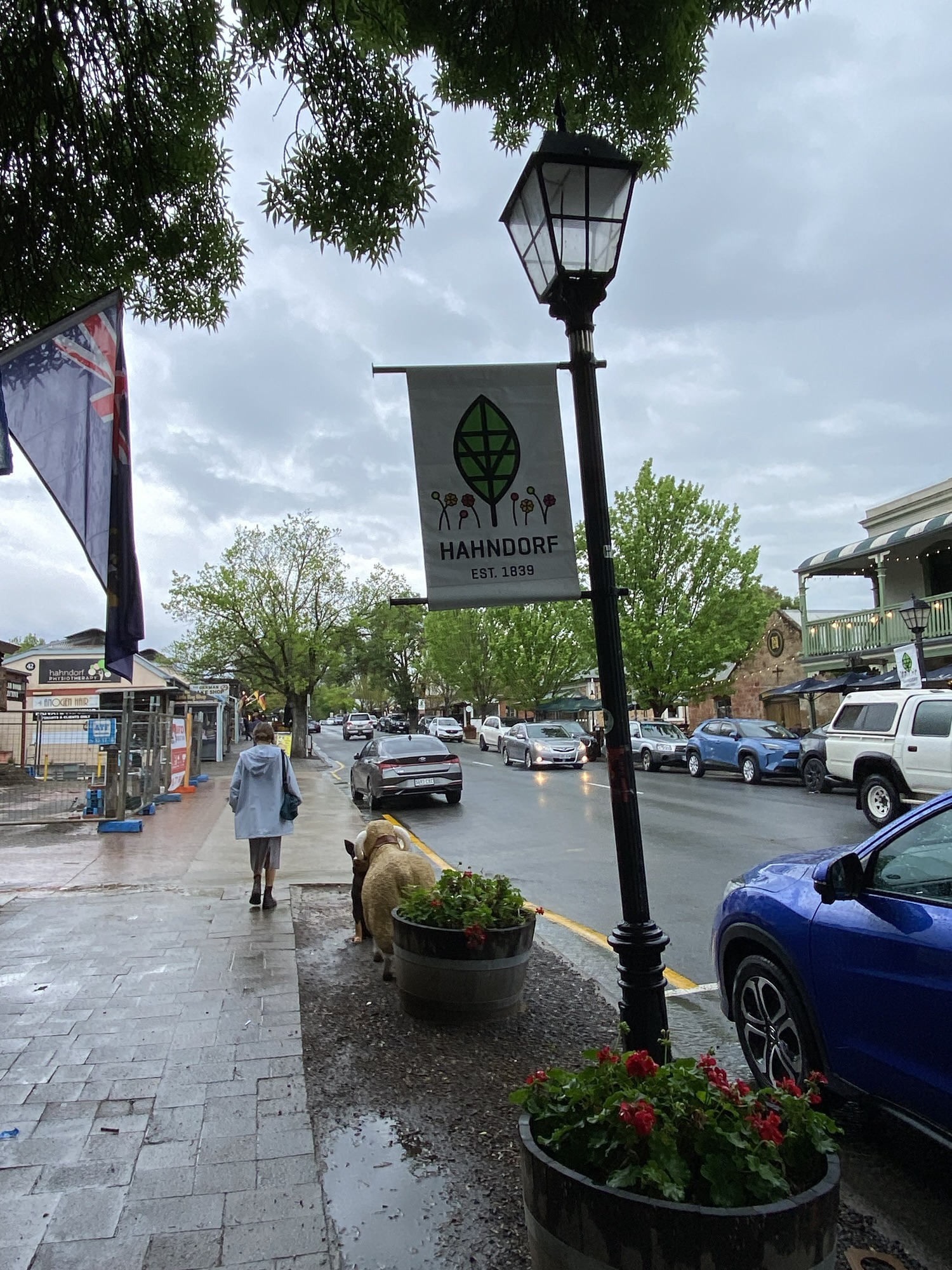
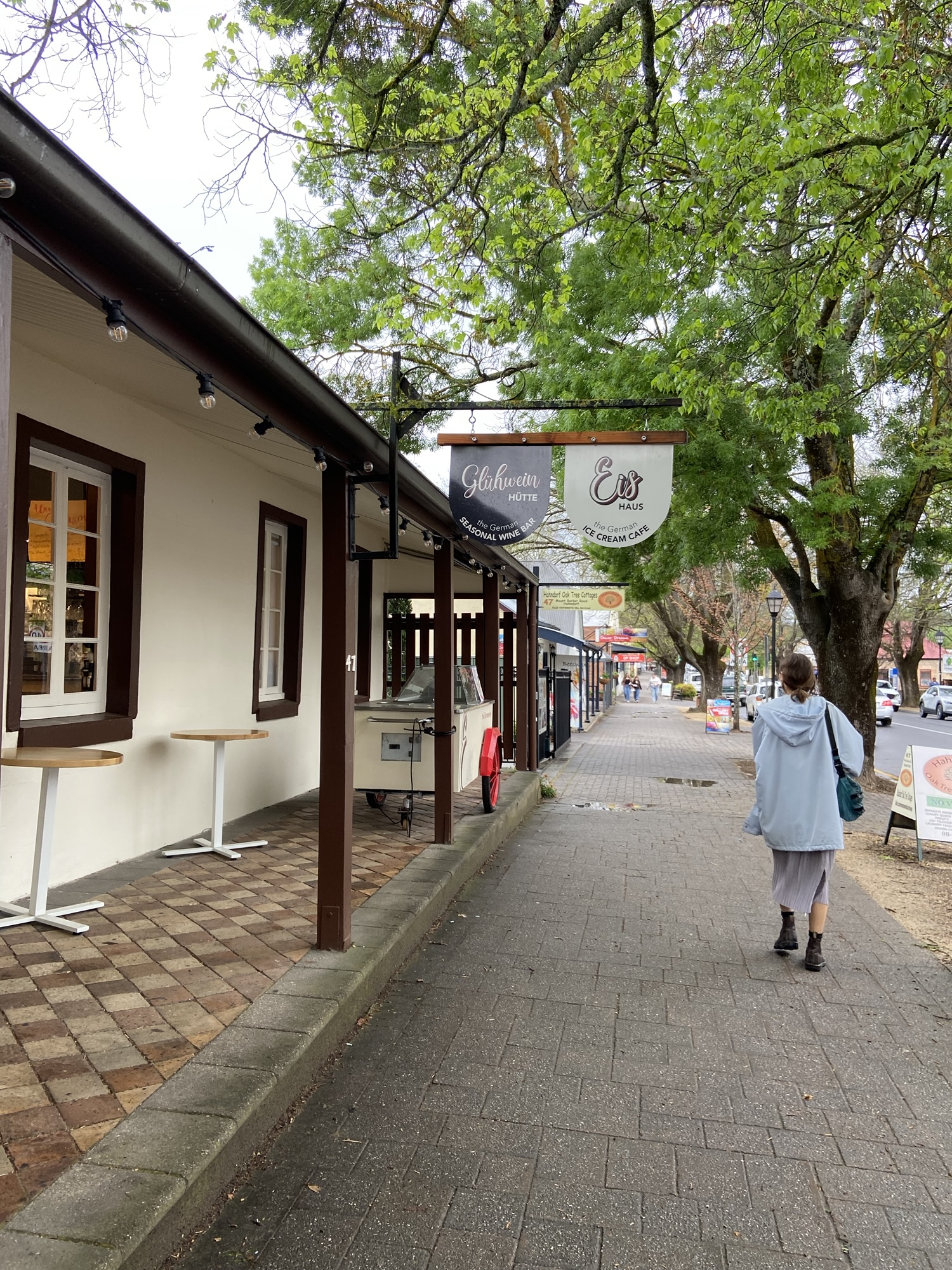
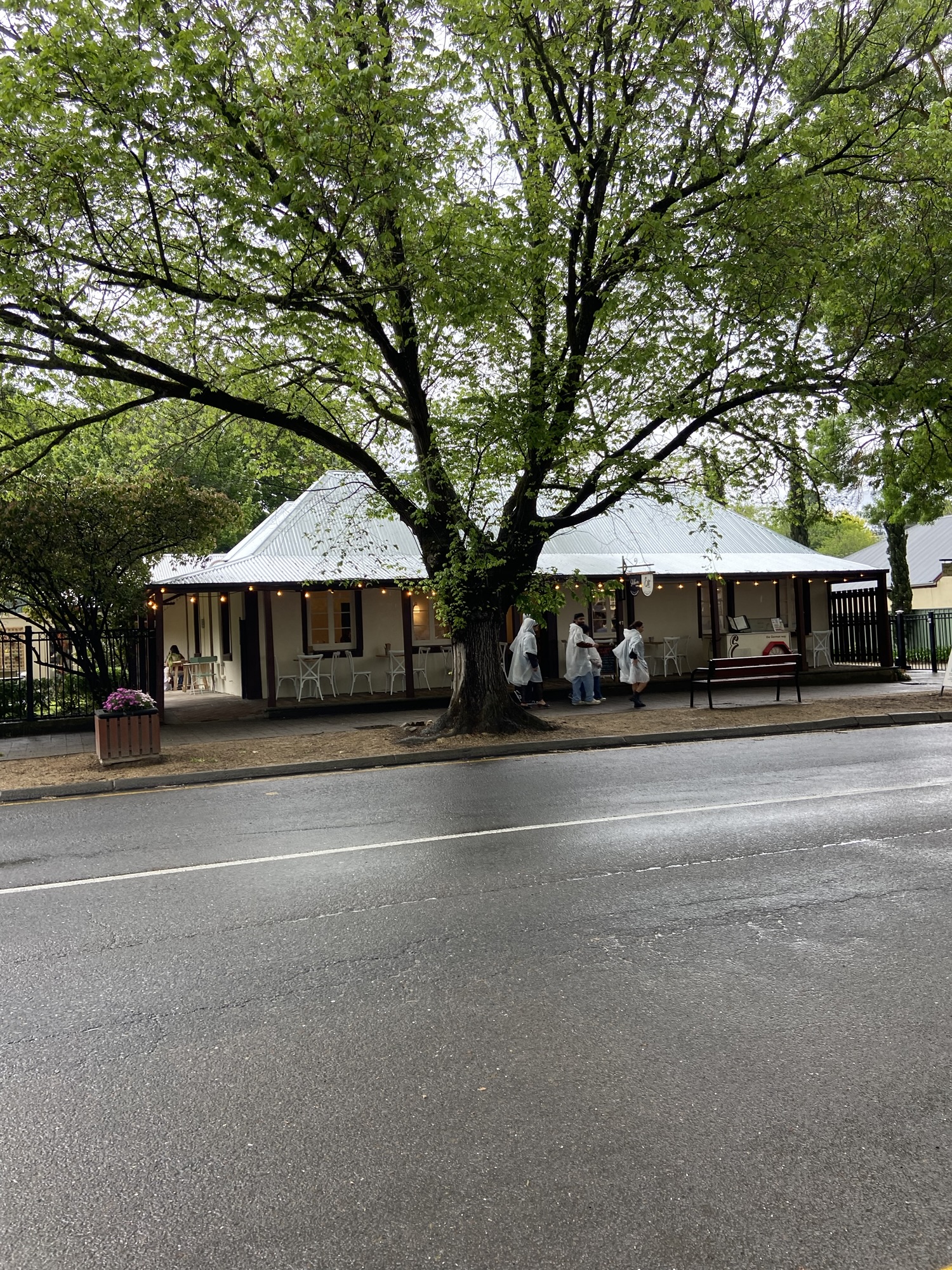
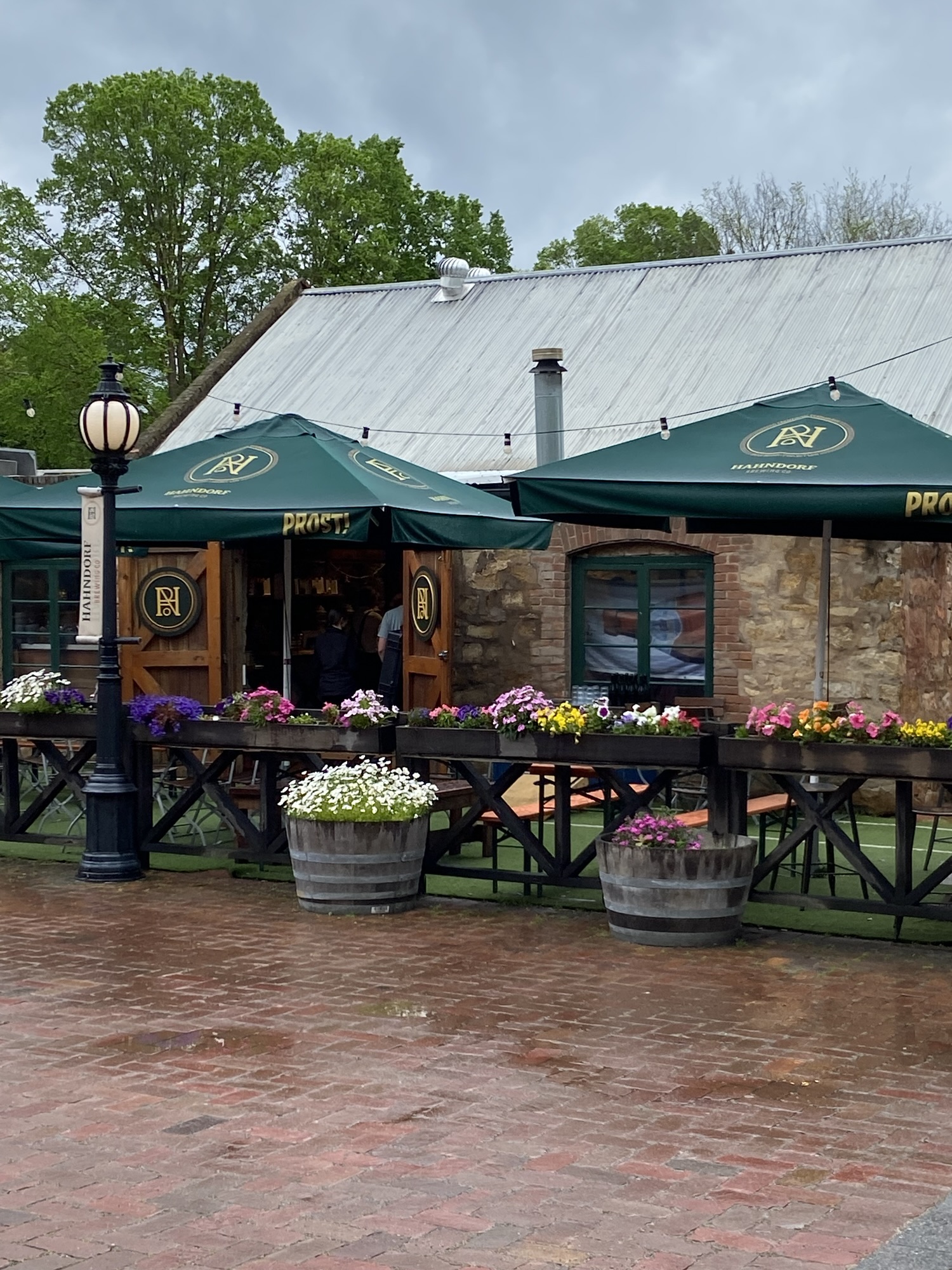
Hahndorf is a very pretty settlement in the Adelaide Hills, about a 30-minute drive from Adelaide City Centre.
Acknowledged as Australia’s oldest surviving German settlement, it was zoned as a state heritage area in 1988 by the Government of South Australia. You can read more about the historical background here.
Many moons before the arrival of the German settlers in 1839, from about 2400 years ago, the area was populated by the Peramangk Aboriginal people who had named the area ‘Bukartilla’ in reference to the swimming hole, which was created by several creeks emptying into the nearby Onkaparinga River.
Unfortunately, the numbers of Peramangk declined with the arrival of the settlers but there are still descendants living today.
From the Adelaide Hills Information site ( see here),
“There are still many descendants living today in South Australia. There are nearly 600 residents in the Adelaide Hills region who identify as Aboriginal and/or Torres Strait Islander (2016 Census, 220 Adelaide Hills Council, 360 Mount Barker District Council). The whole language of these people has not survived, but there are still many words, names of places and names of the Clans that made up the Peramangk Nation.”
The German connection first came about in 1838 when a director of a South Australian company, George Fife Angas, made a trip to London and encountered a Lutheran pastor named Kavel, who was trying to find a place of refuge for German Lutherans being persecuted for their beliefs by the King of Prussia.
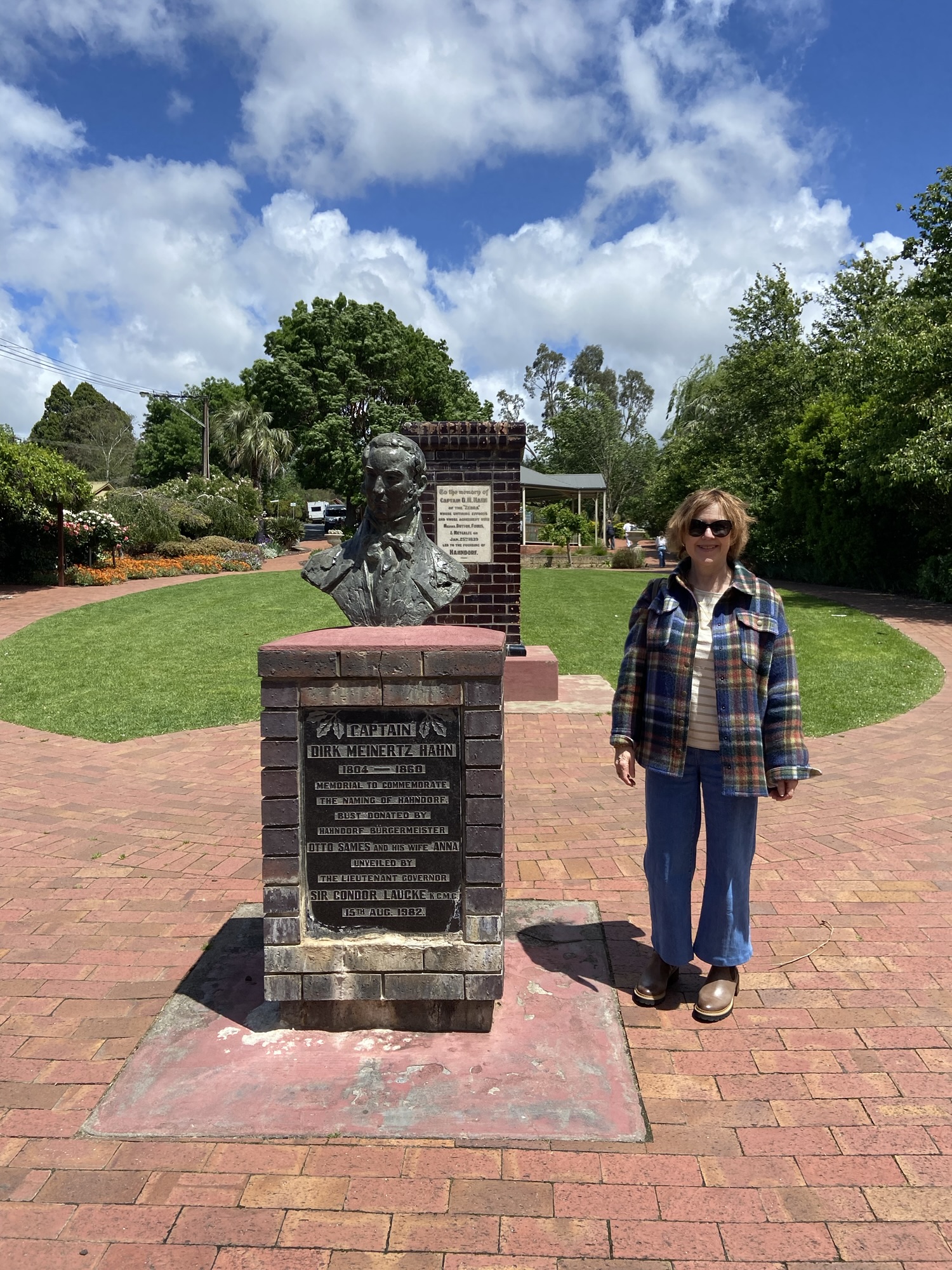
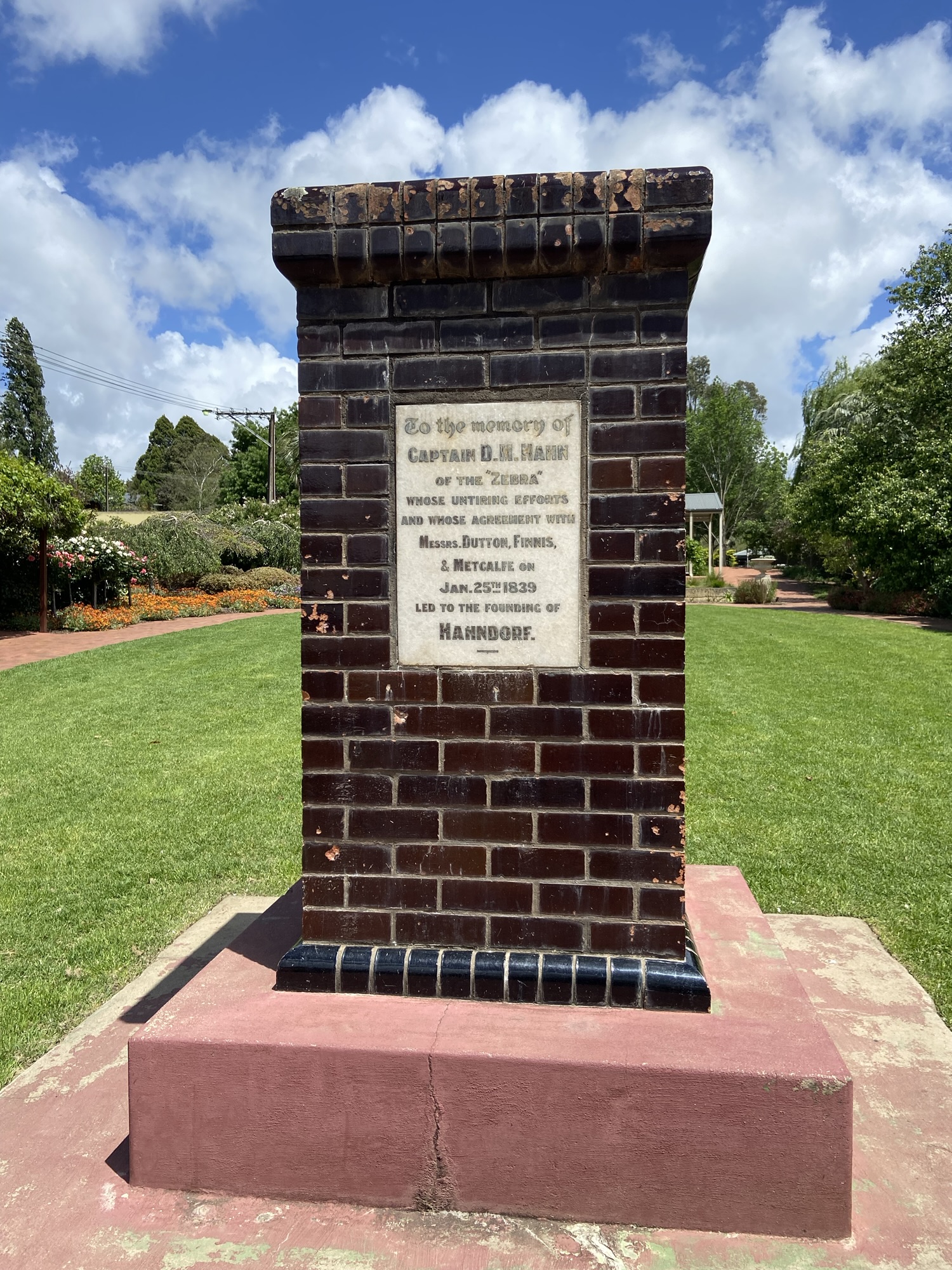
The name Hahndorf comes in fact from Dirk Hahn, the Danish Captain of the boat carrying the first settlers/refugees, which landed at Port Adelaide on 2nd January 1839.
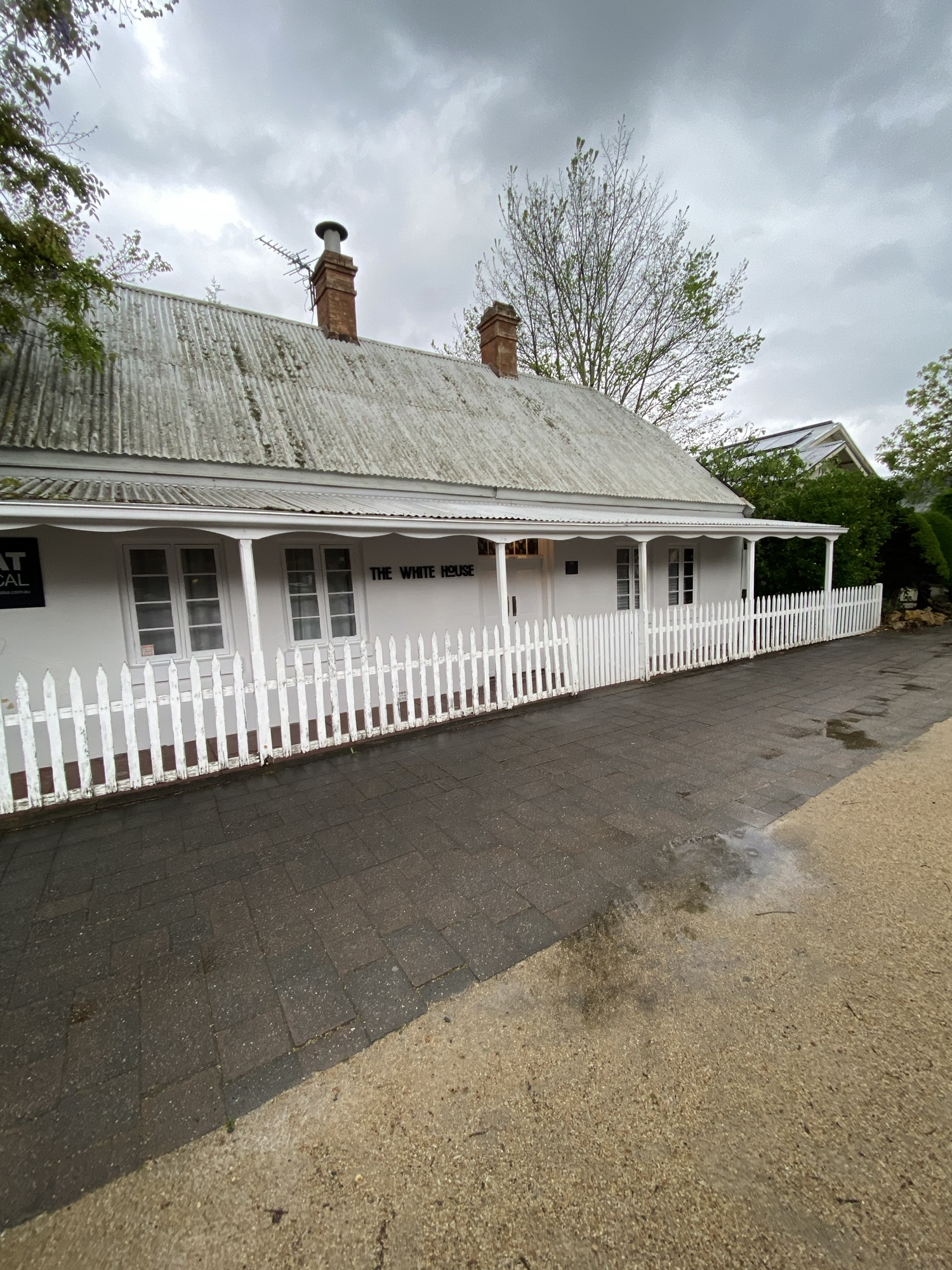
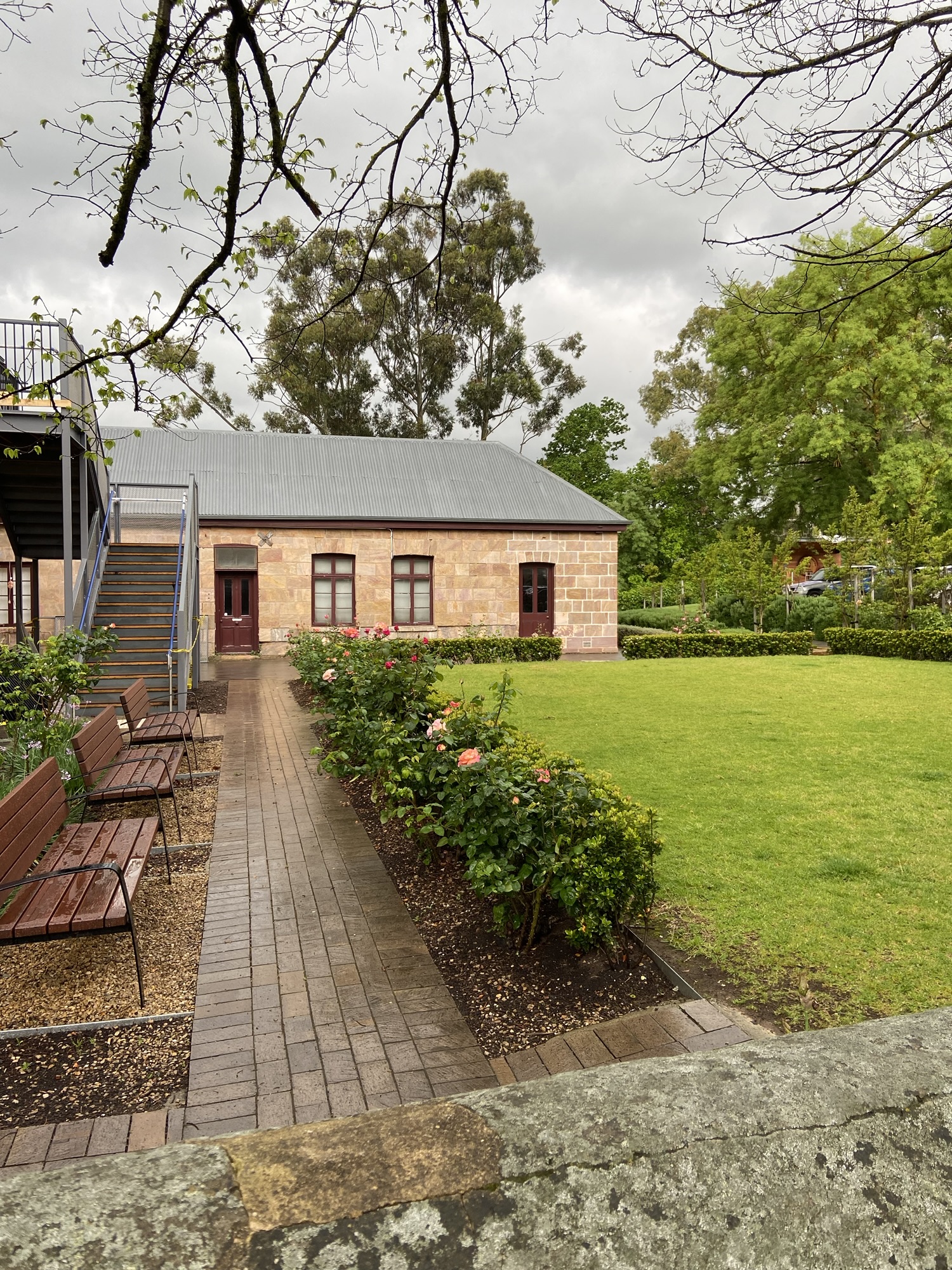
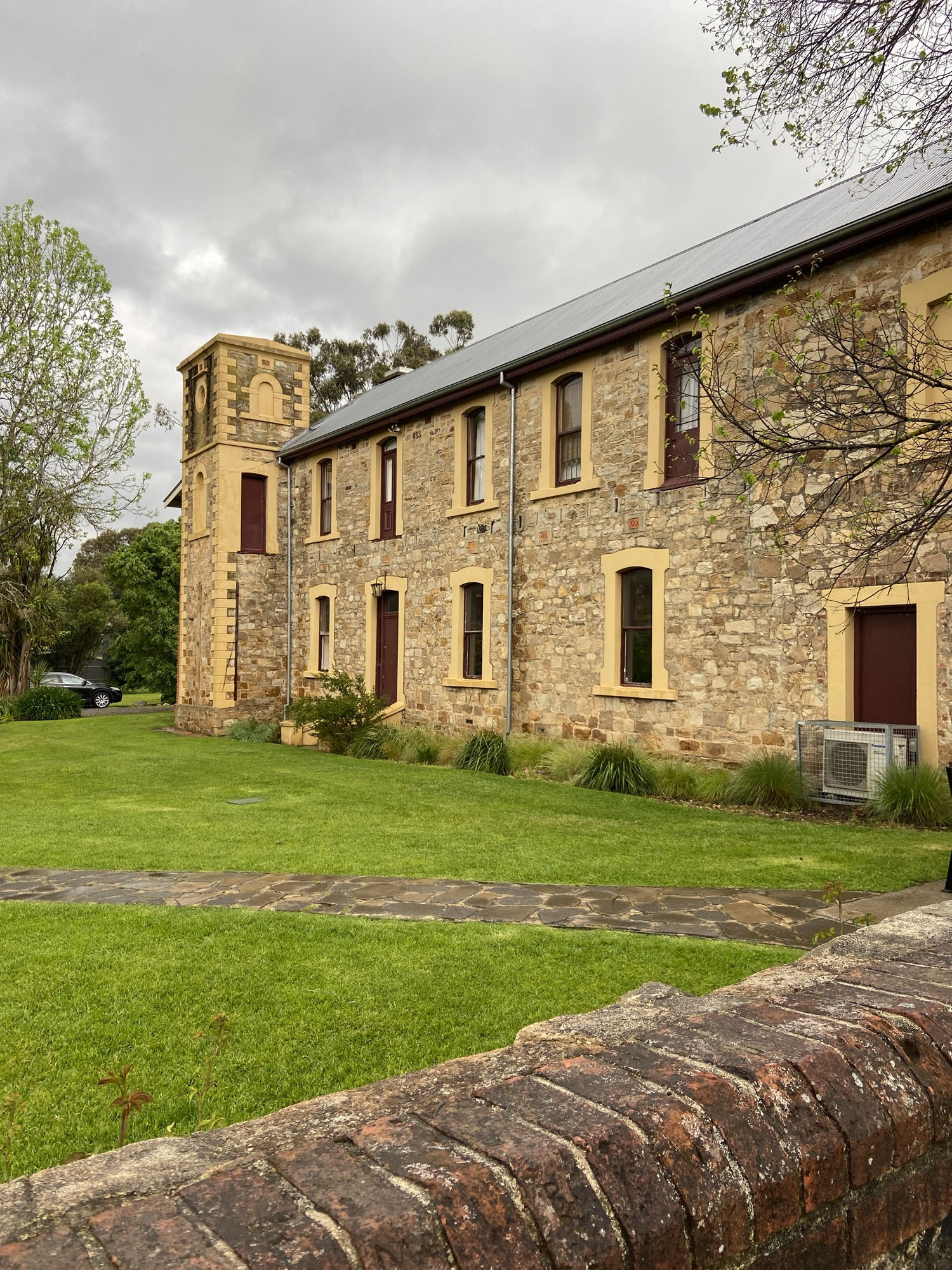
The current village was set out surrounded by small farmsteads and the Lutheran Church of St Michael’s. The church and many of the original buildings remain to this day, giving Hahndorf a unique appearance and a sense of a throwback in time to a small German village.
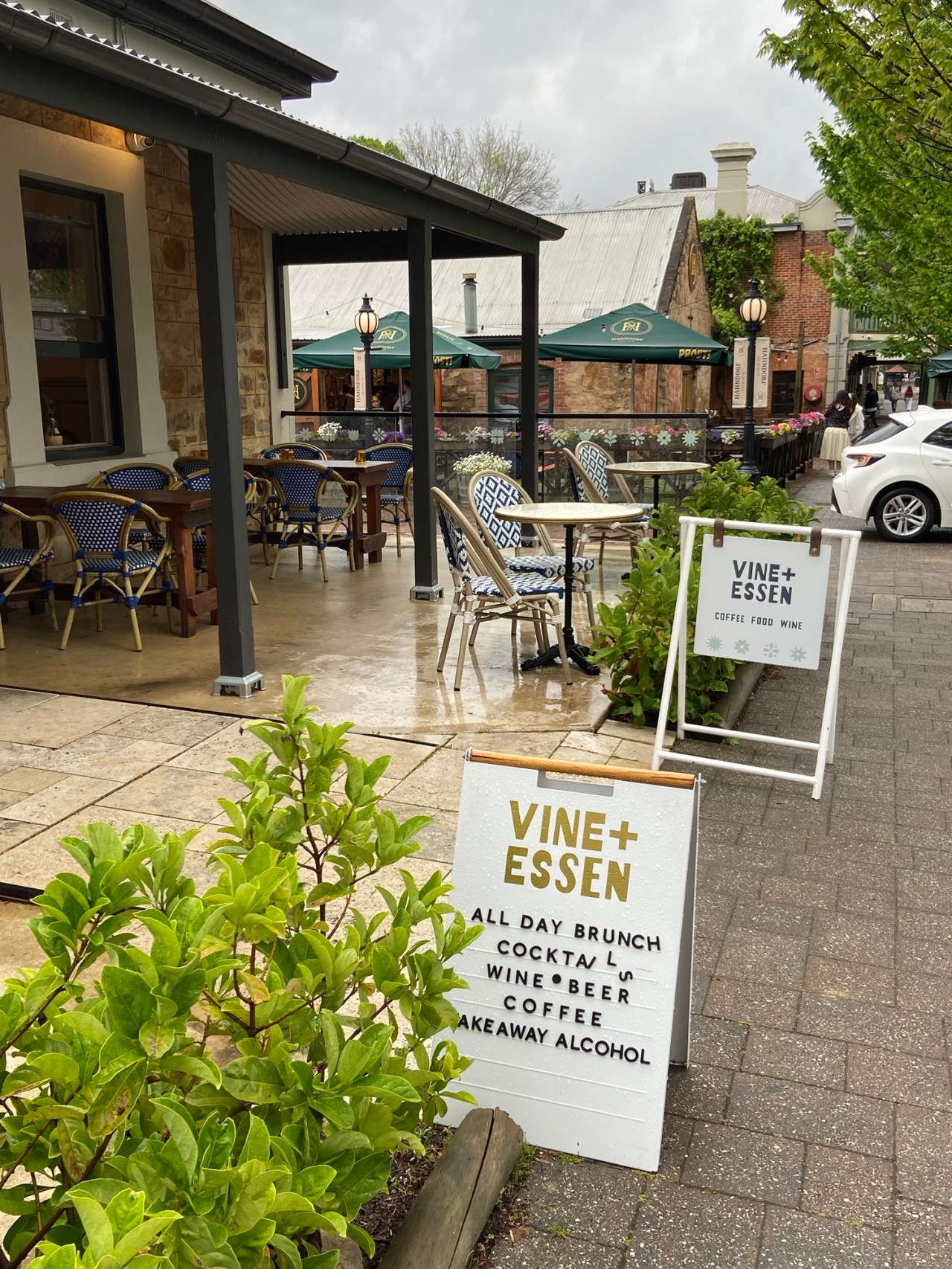
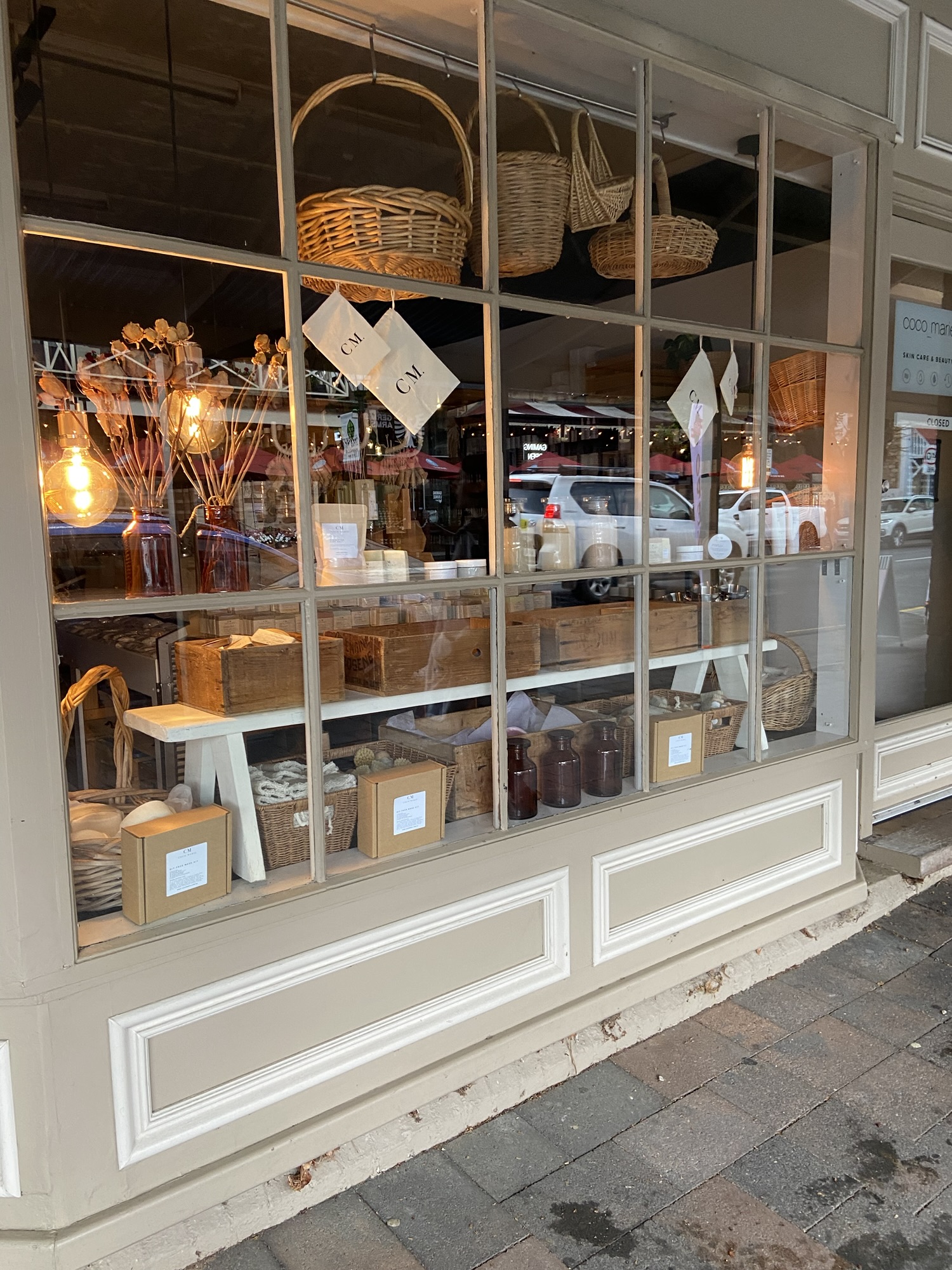
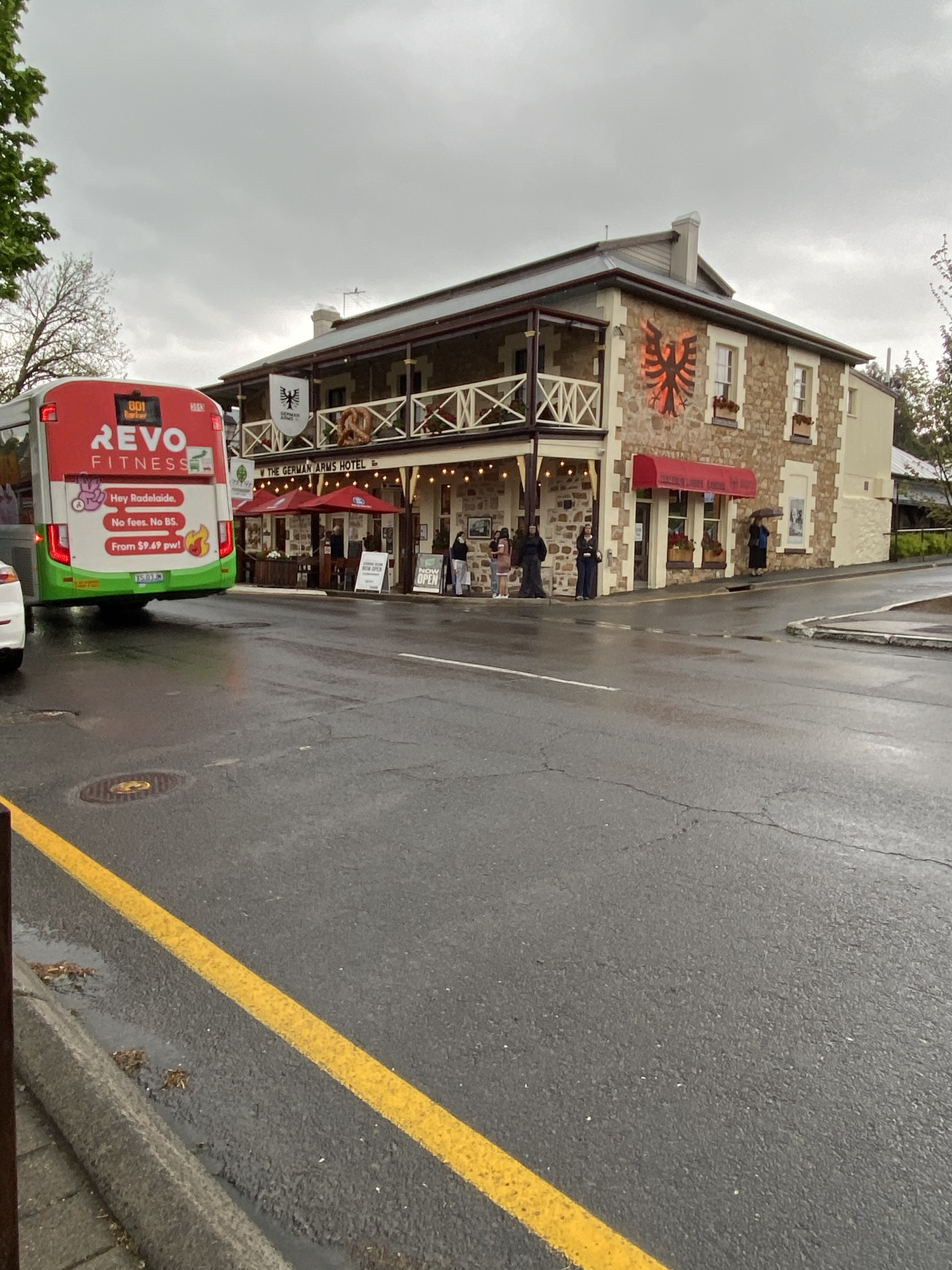
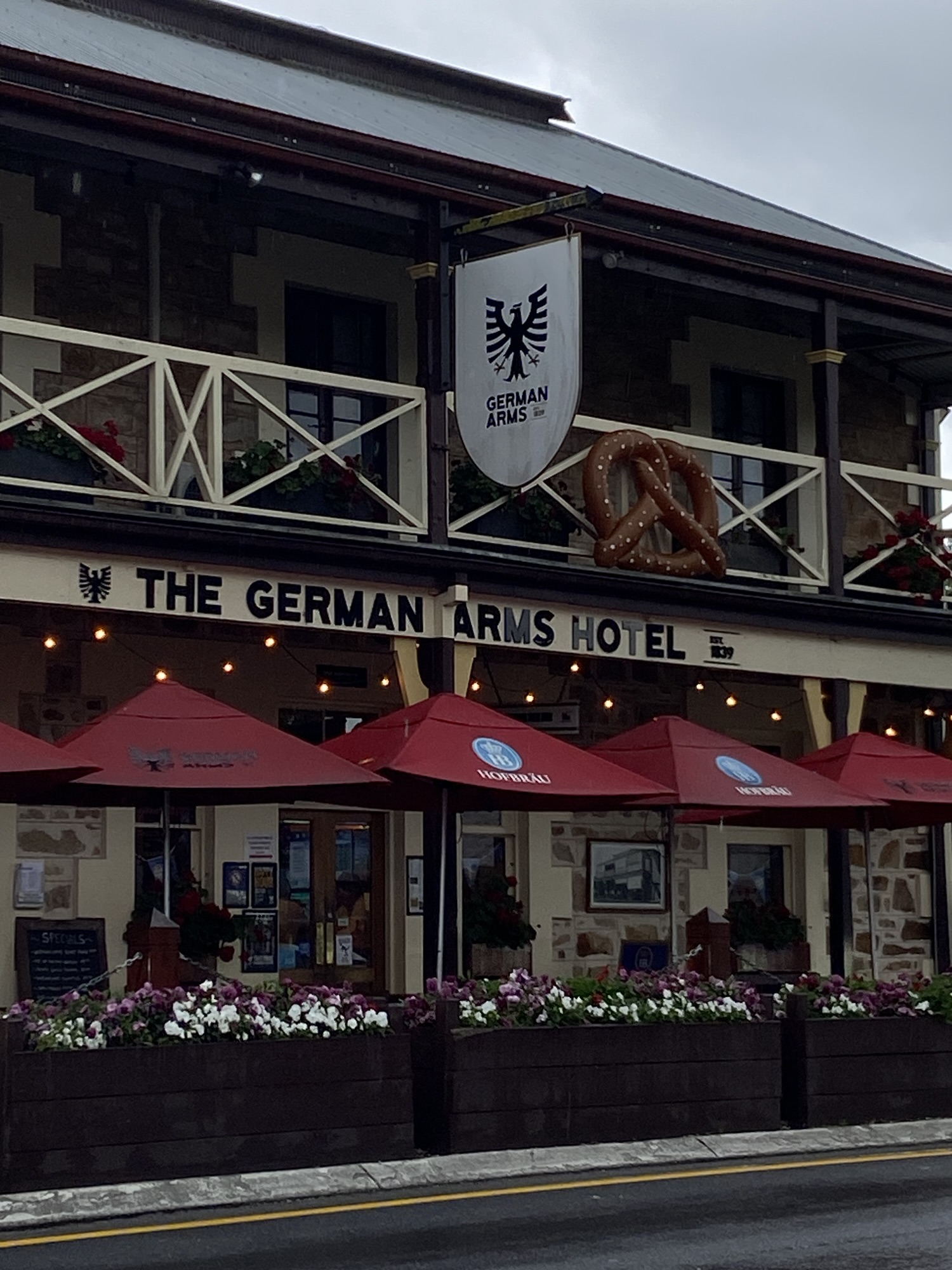
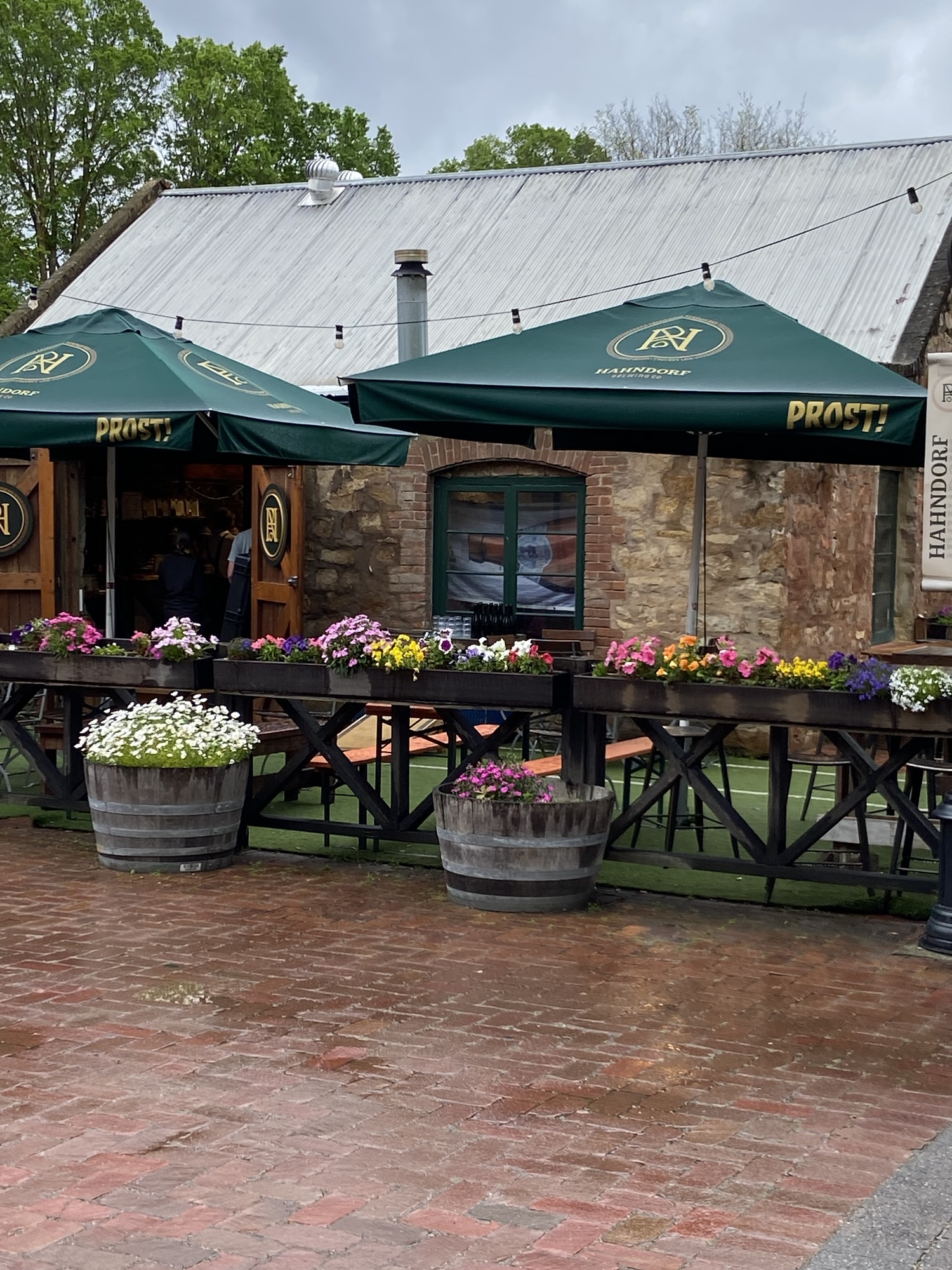
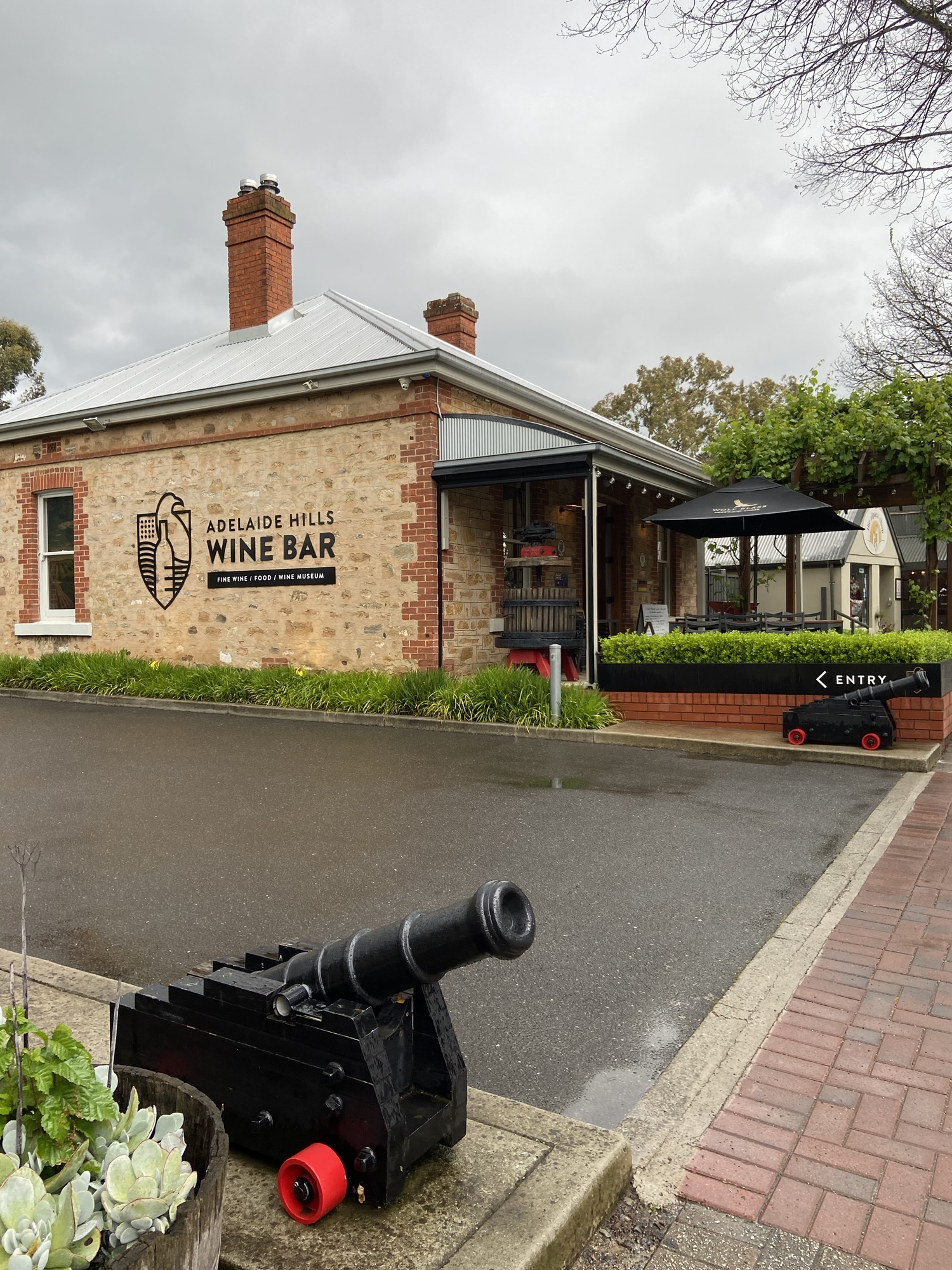
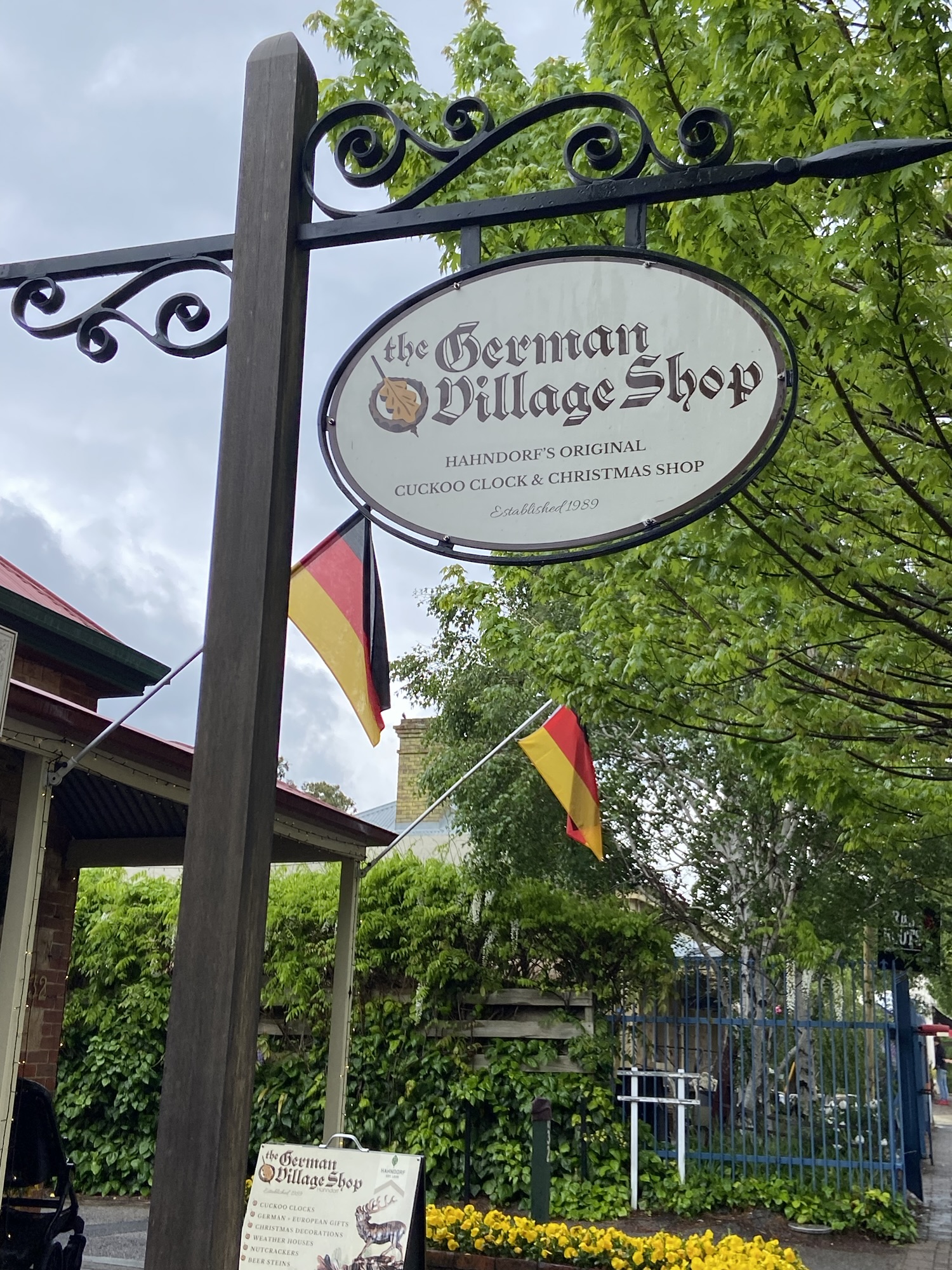
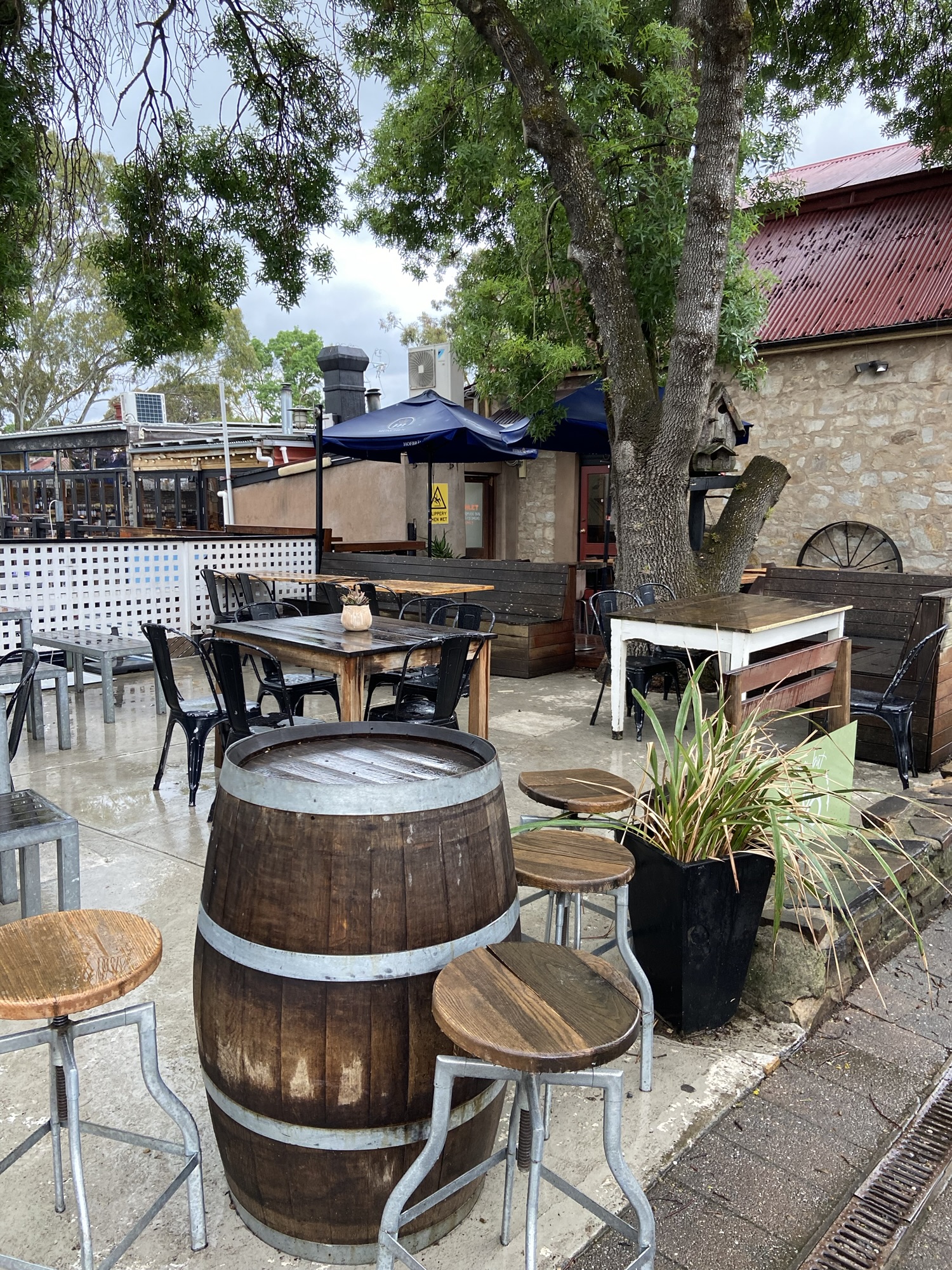
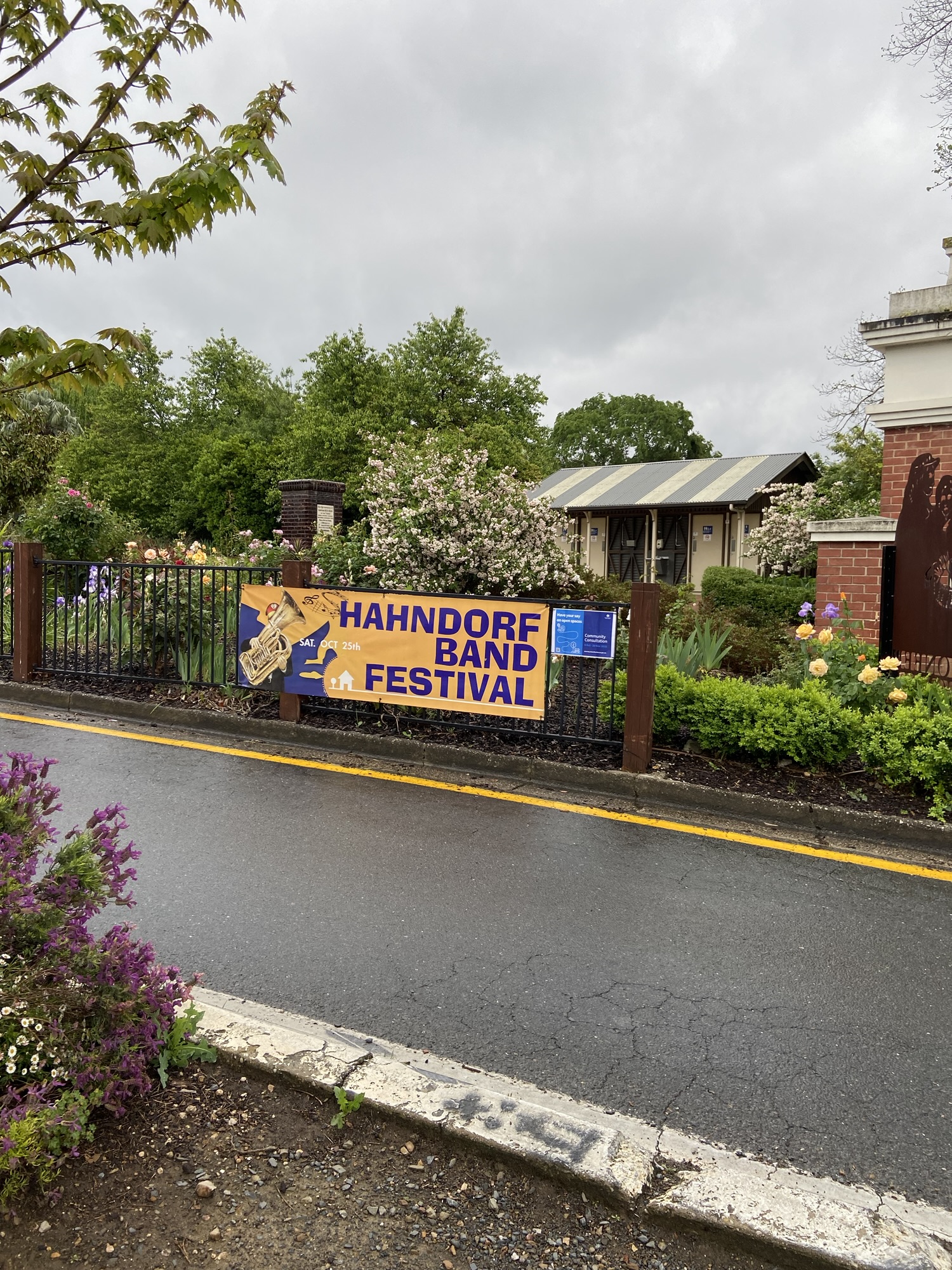
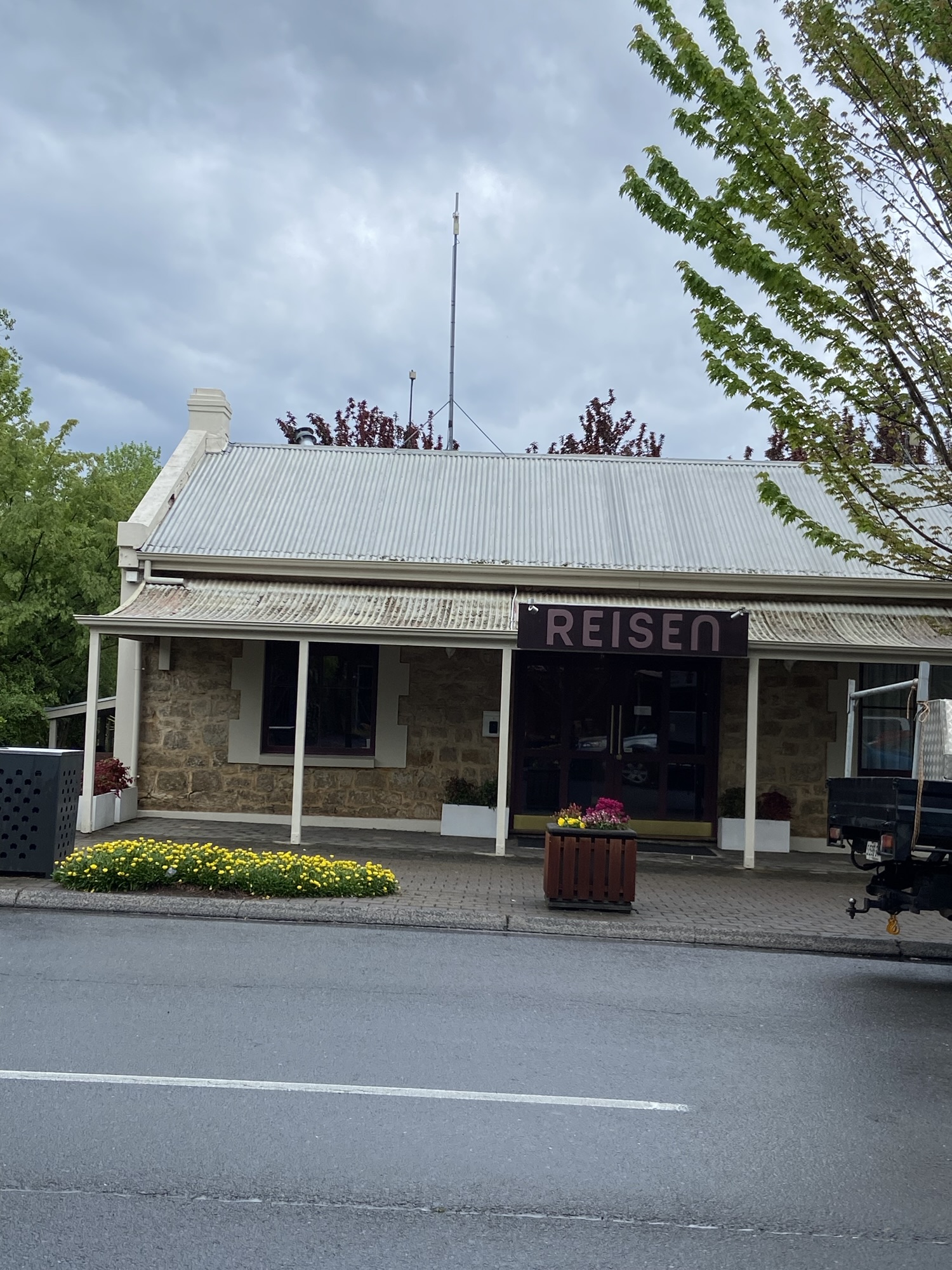
The high street is lined with quaint buildings, a myriad of shops, eateries and at least a couple of pubs. Whilst sometimes a bit kitsch in flavour, the artisan craft shops sell traditional German handicrafts such as Christmas decorations and there is a curious blend of anglicised German names mingled with the original high German.
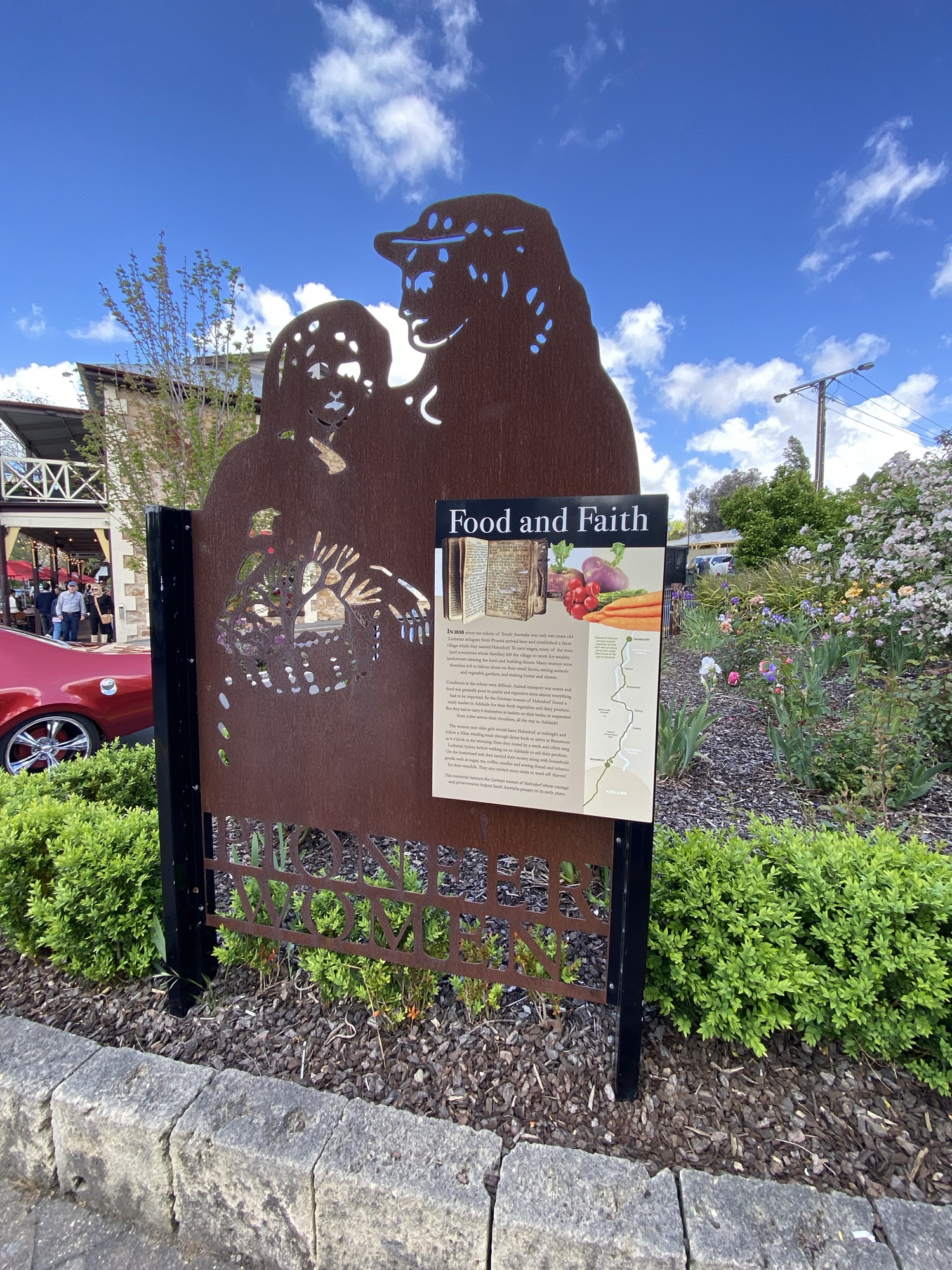
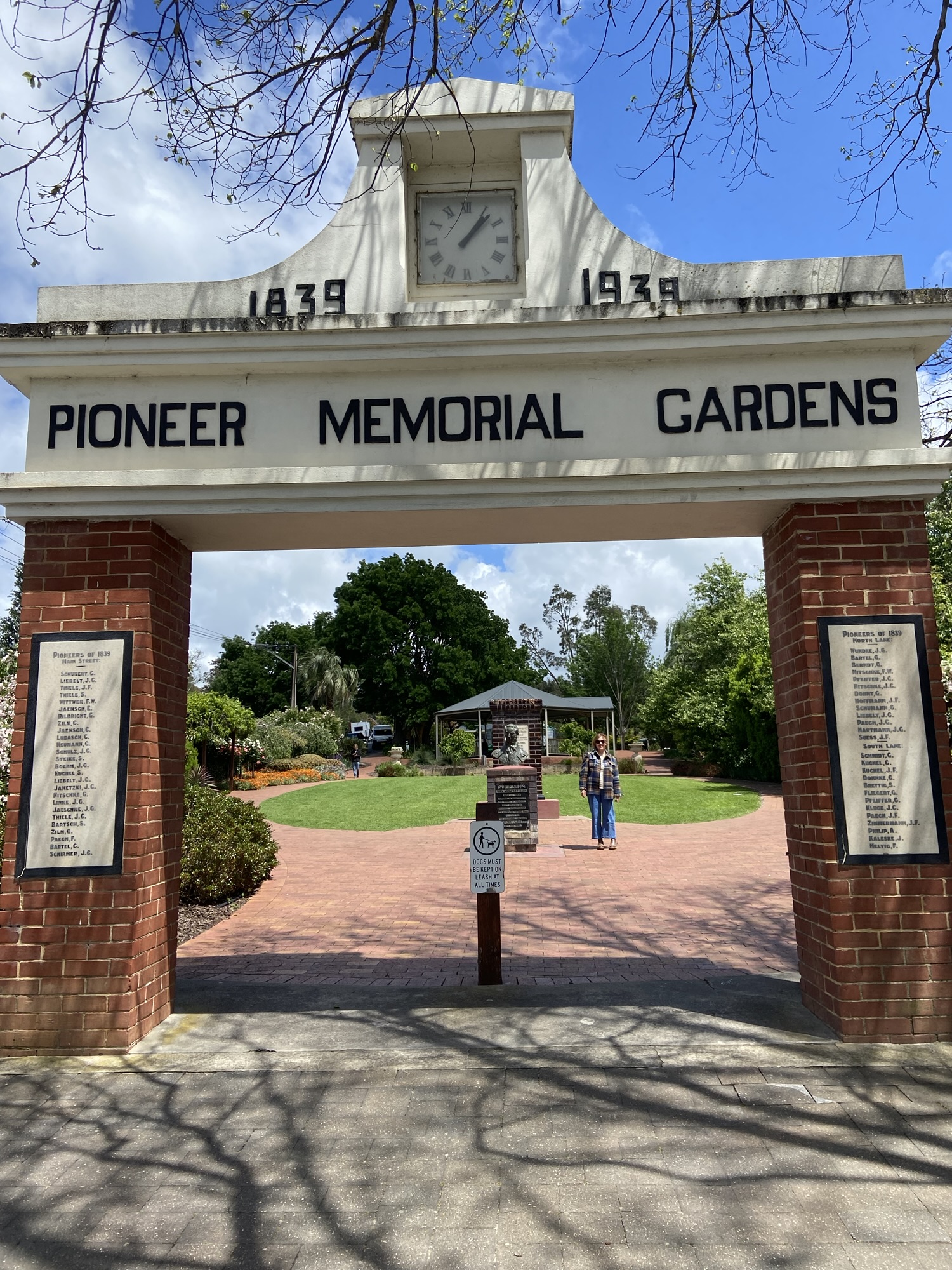
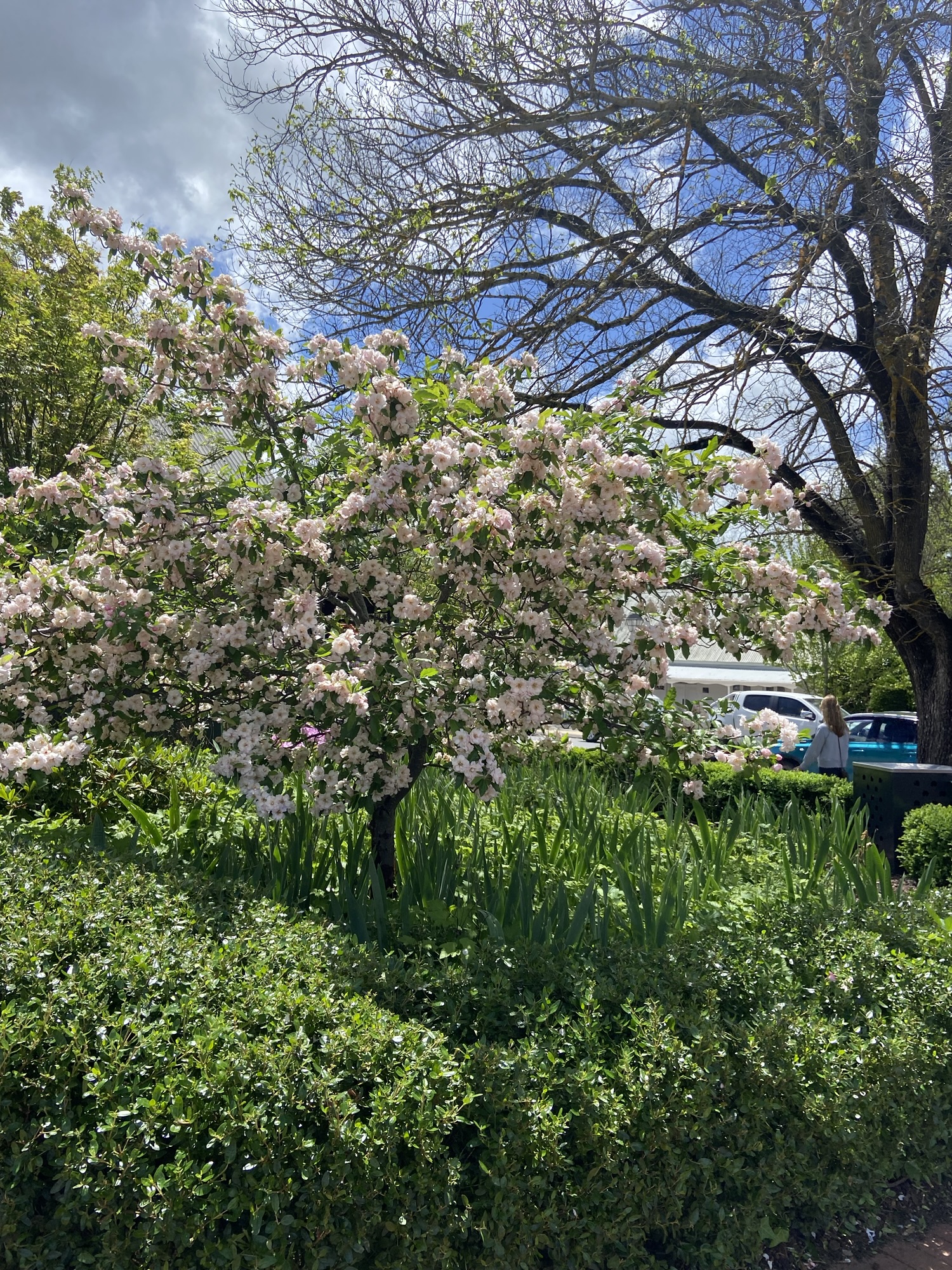
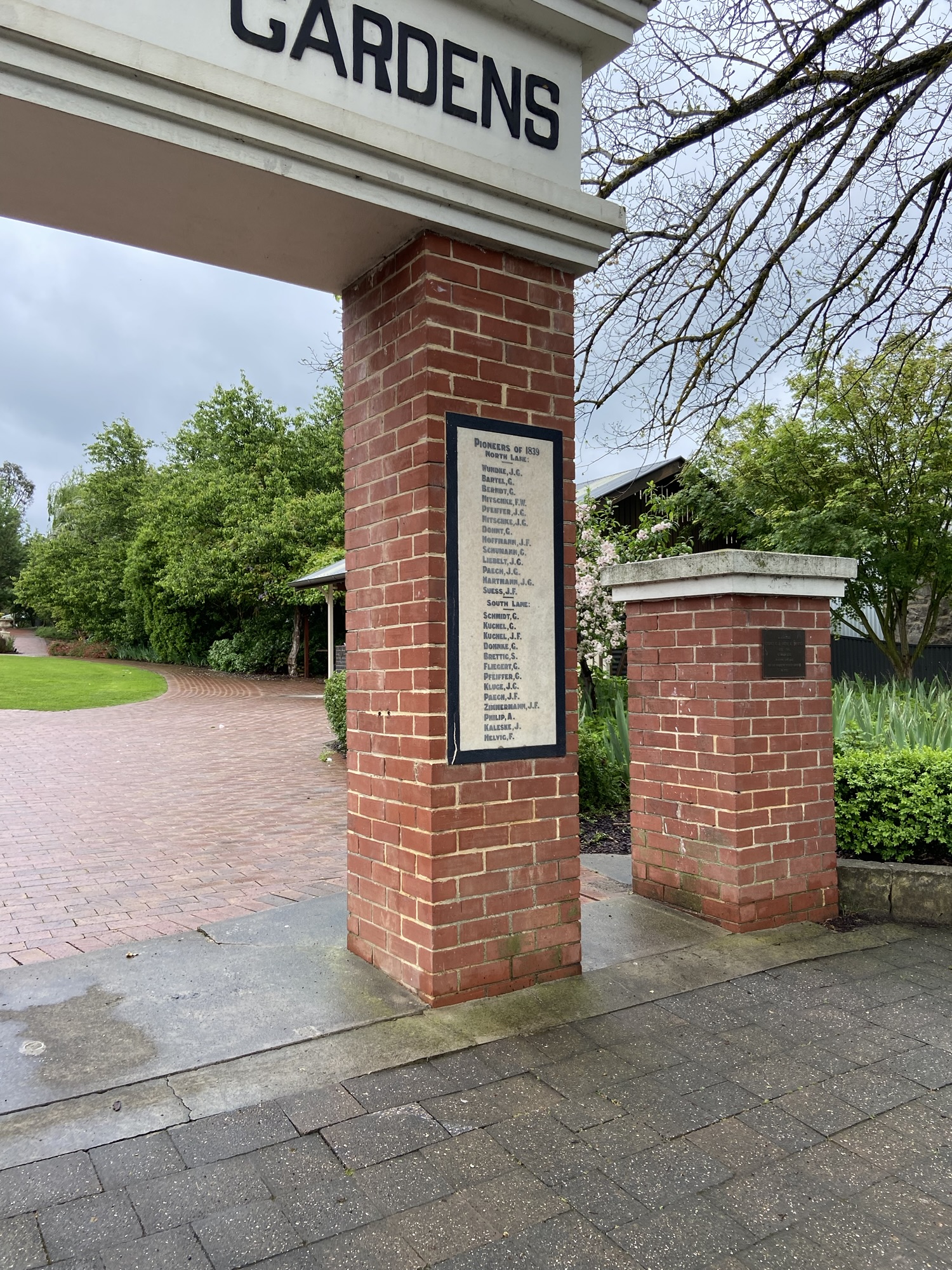
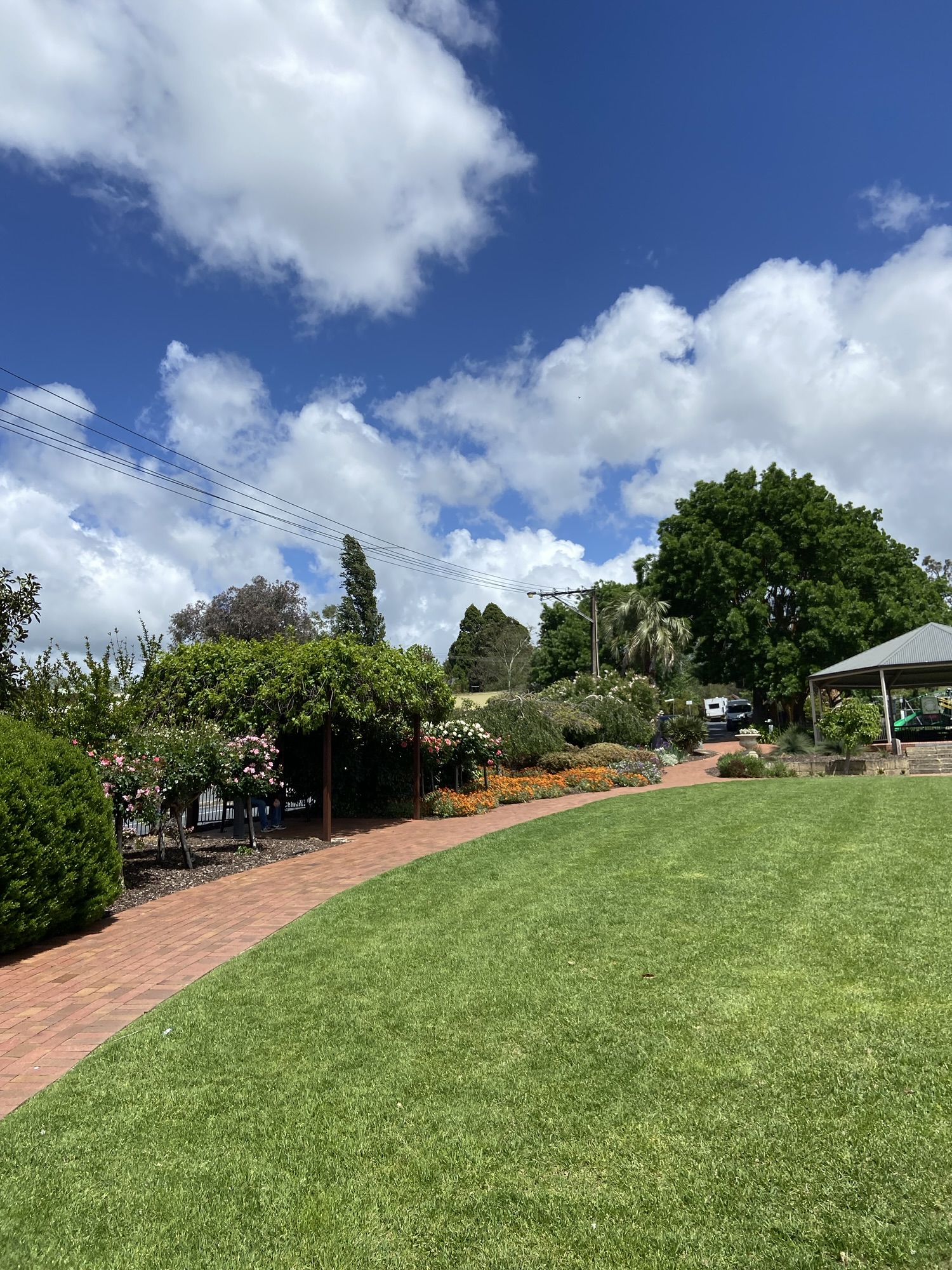
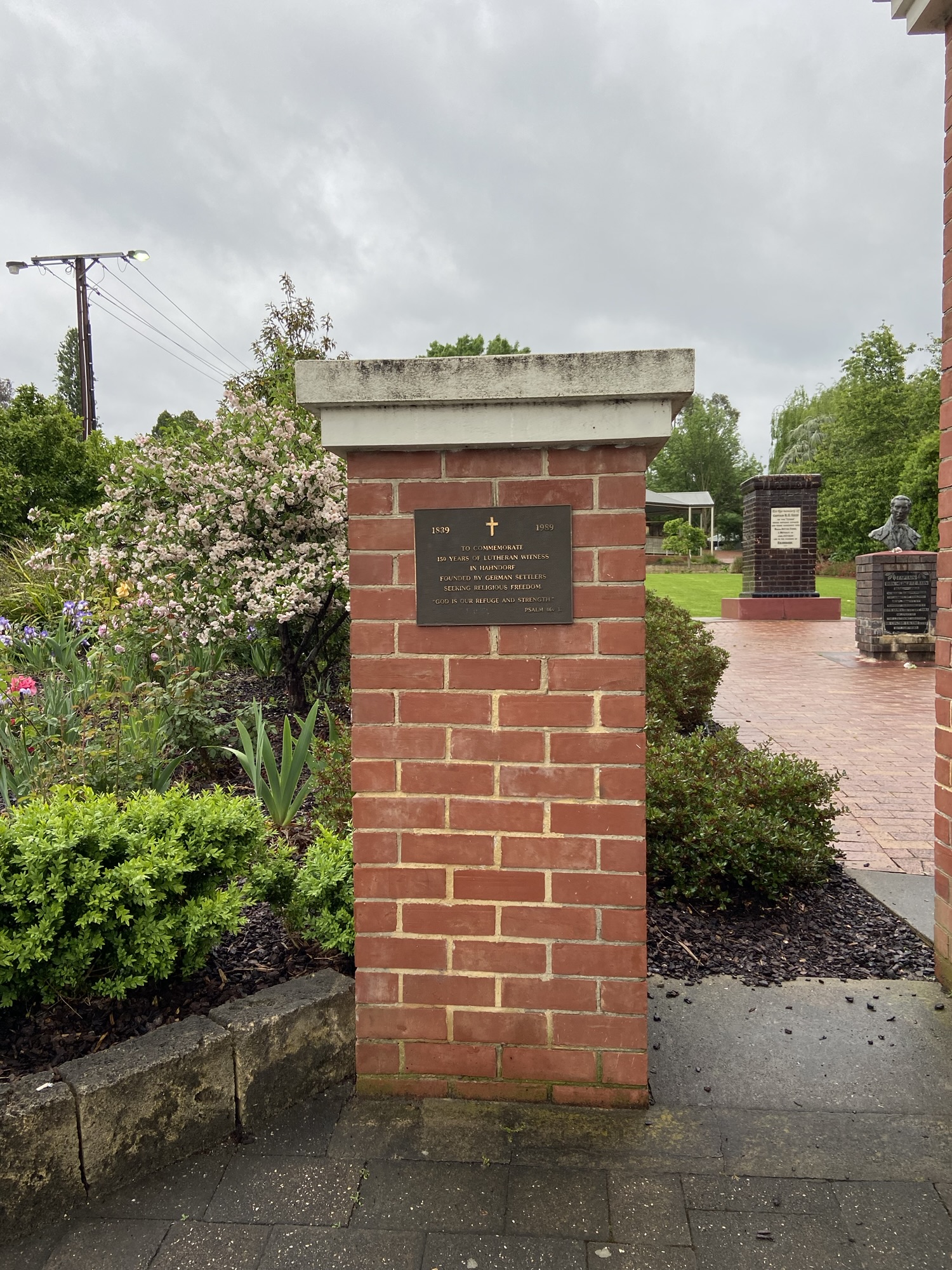
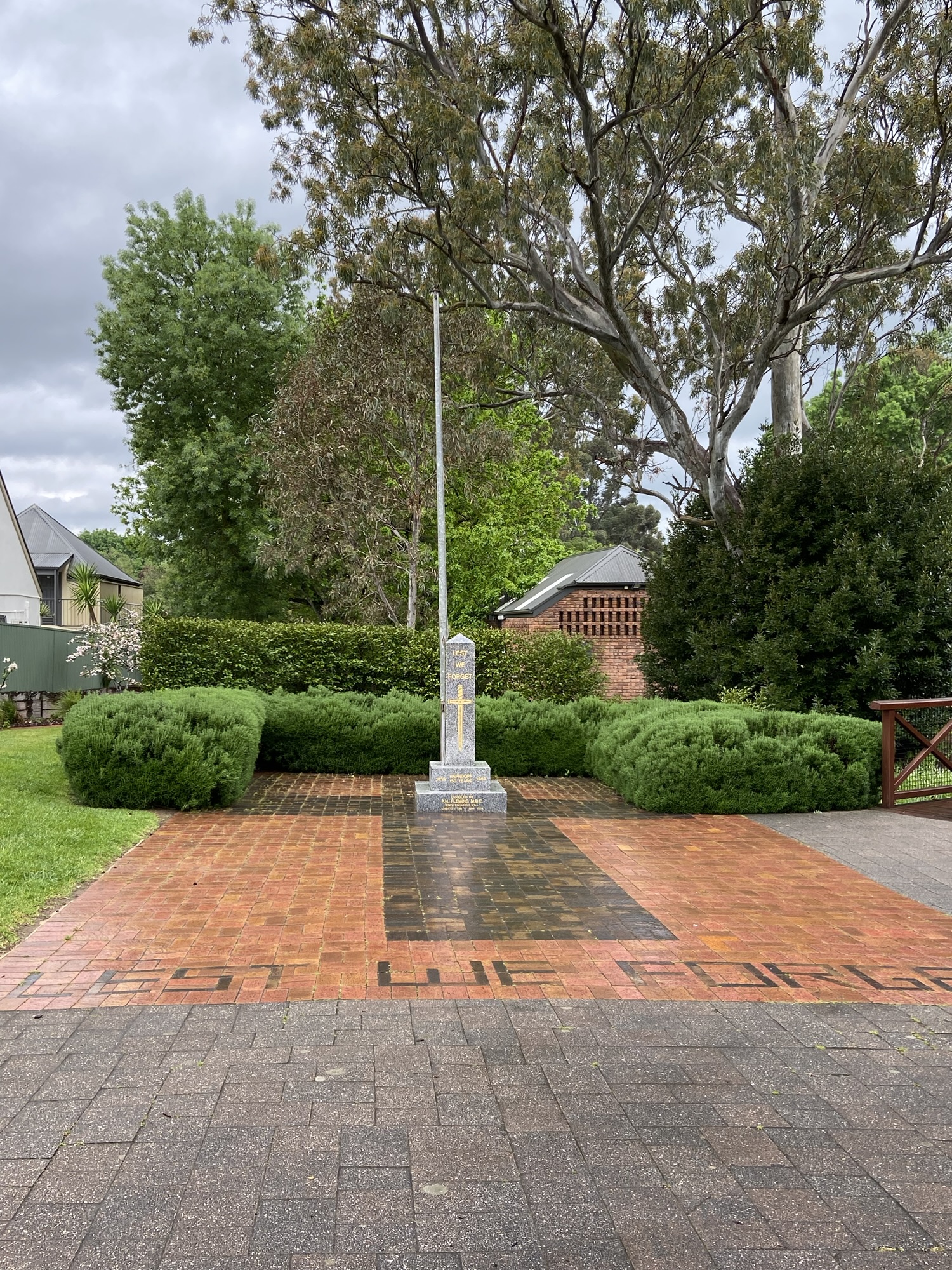
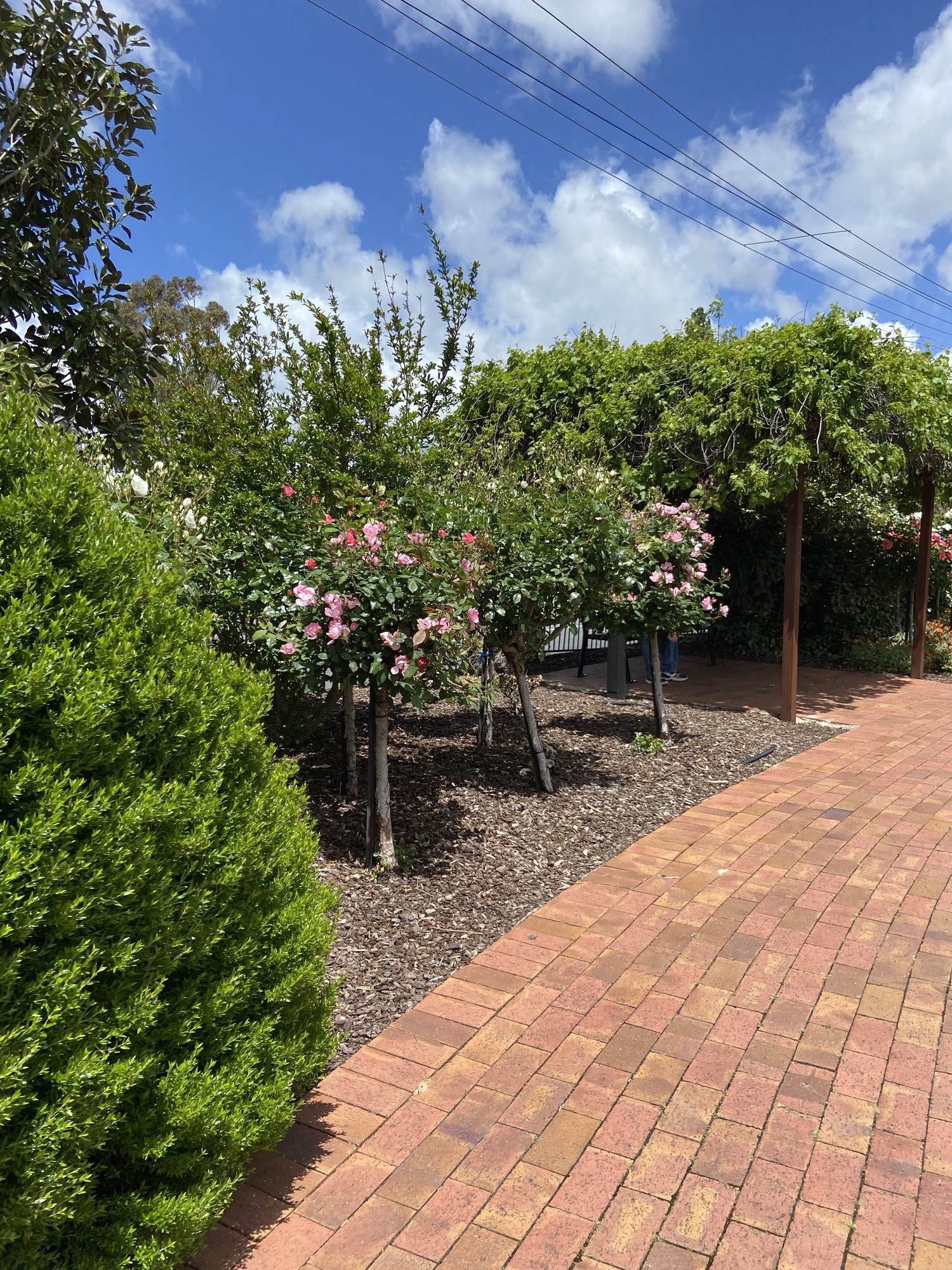
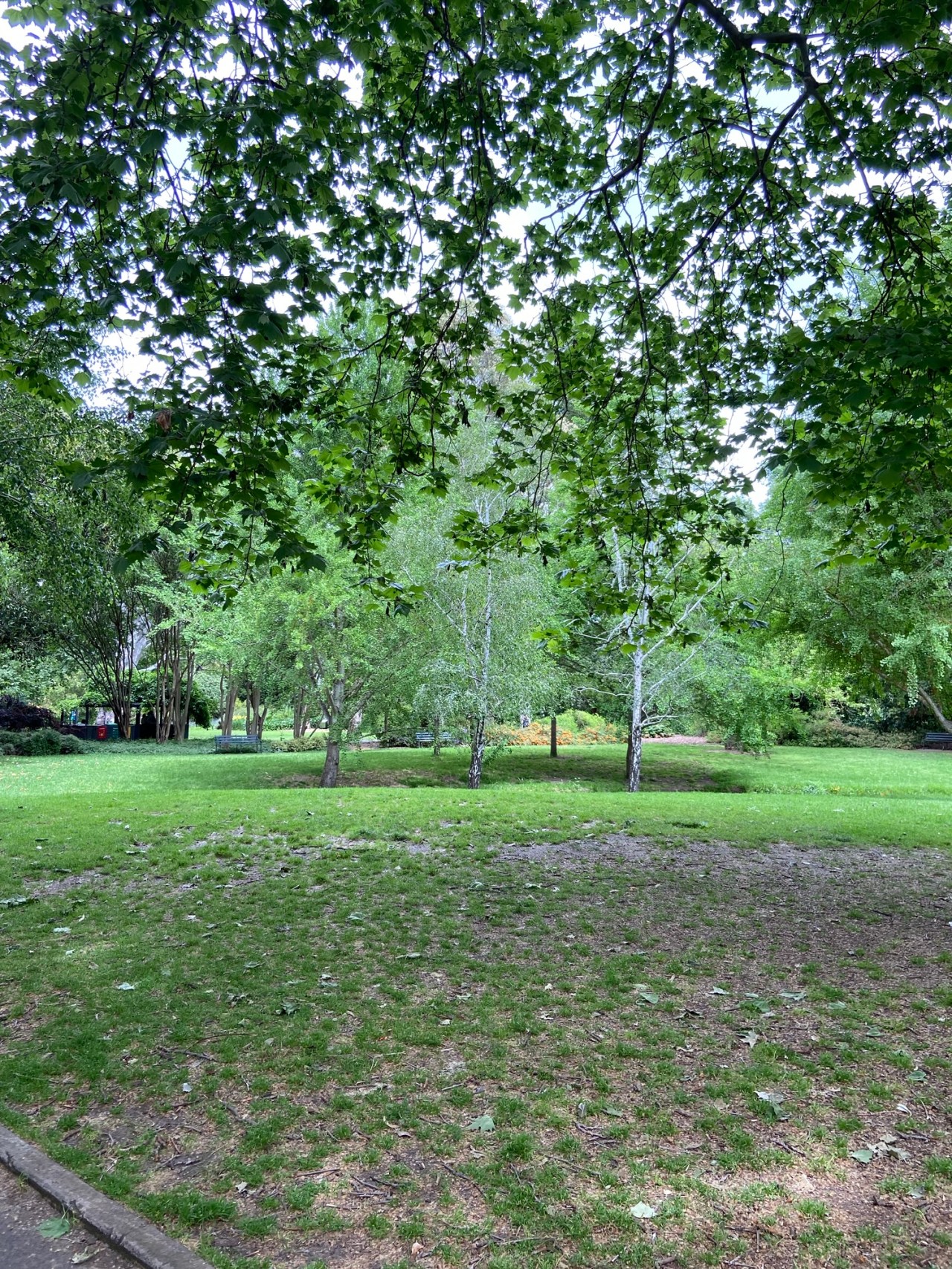
Pioneer Memorial Gardens is a park just off the main street. Free to enter (including for dogs) it has beautiful maintained gardens and a children’s play area. As its name suggests, it is a memorial to the 1839 German settlers (all the family names are written on plaques either side of the entrance). We walked round the pretty grounds a couple of times, once in rainy weather and the other in beautiful spring sunshine.
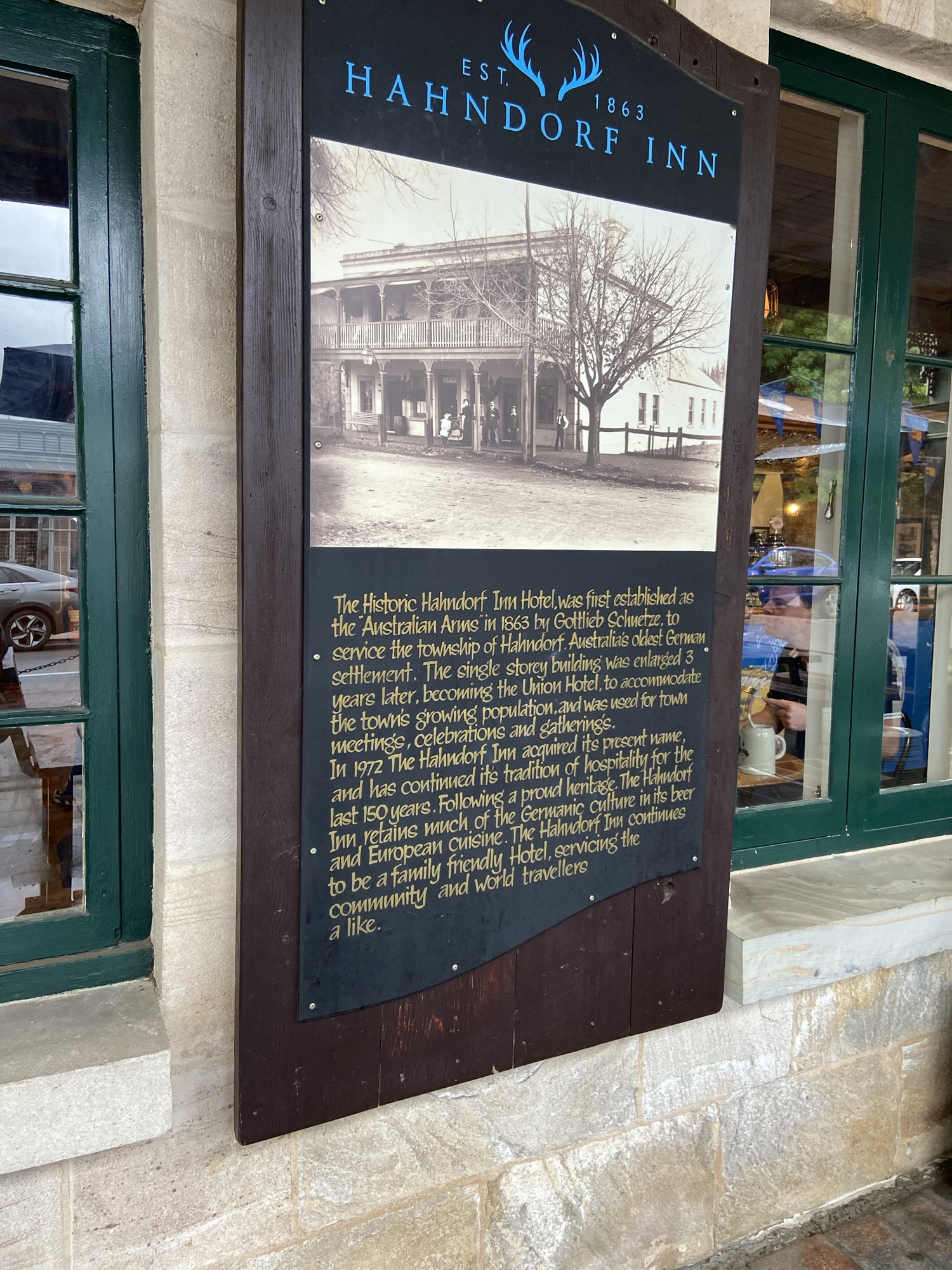
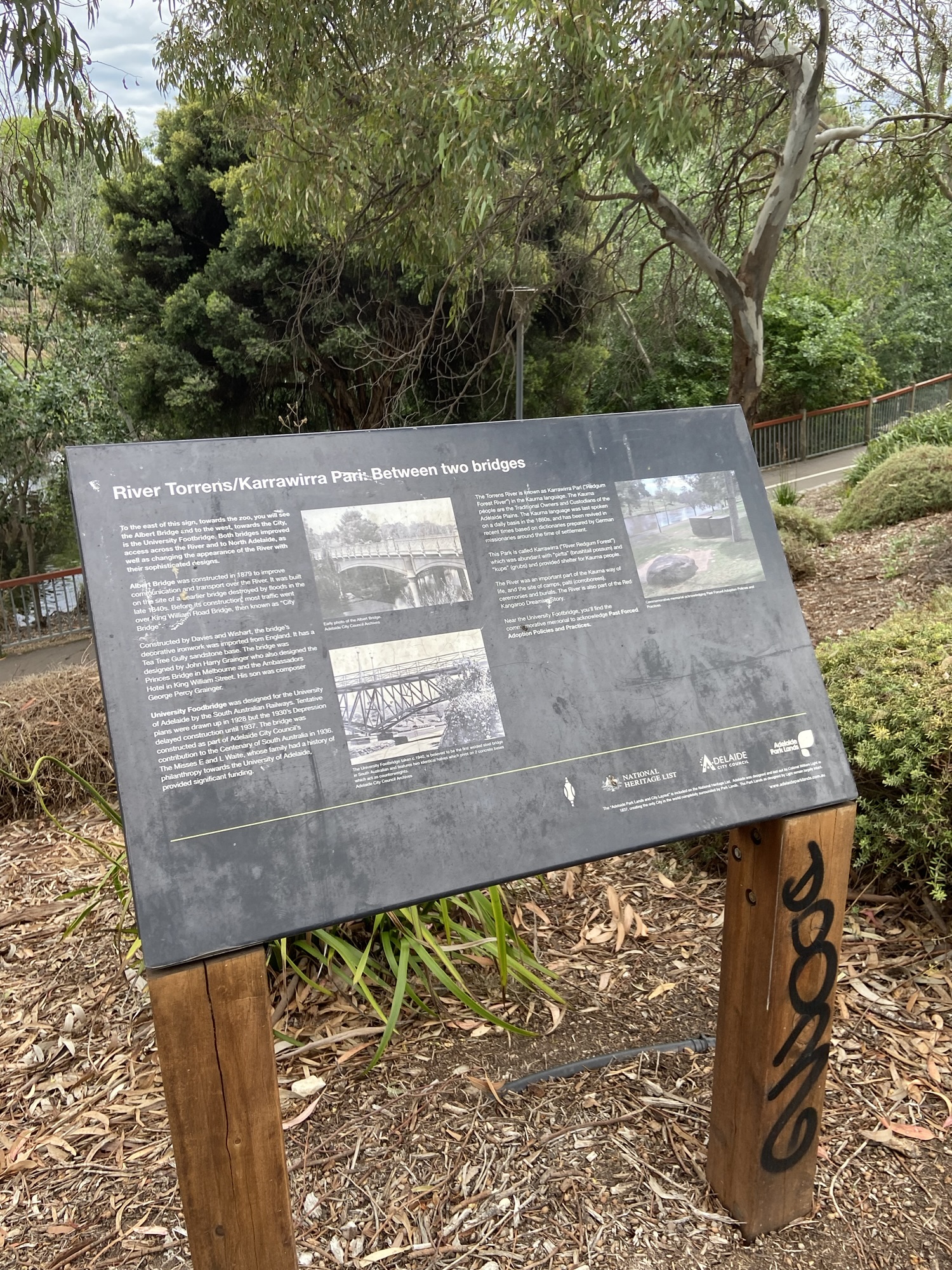
There are plenty of information boards dotted about the town. Hahndorf Academy, along the main street, houses a museum displaying artefacts and stories about the First Nations Peramangk people, German settlers and the life and times of the early 19th century. Unfortunately, we didn’t have time to do more than take a quick glance inside. It definitely would be a place I’d check out if I’m ever in Hahndorf again.
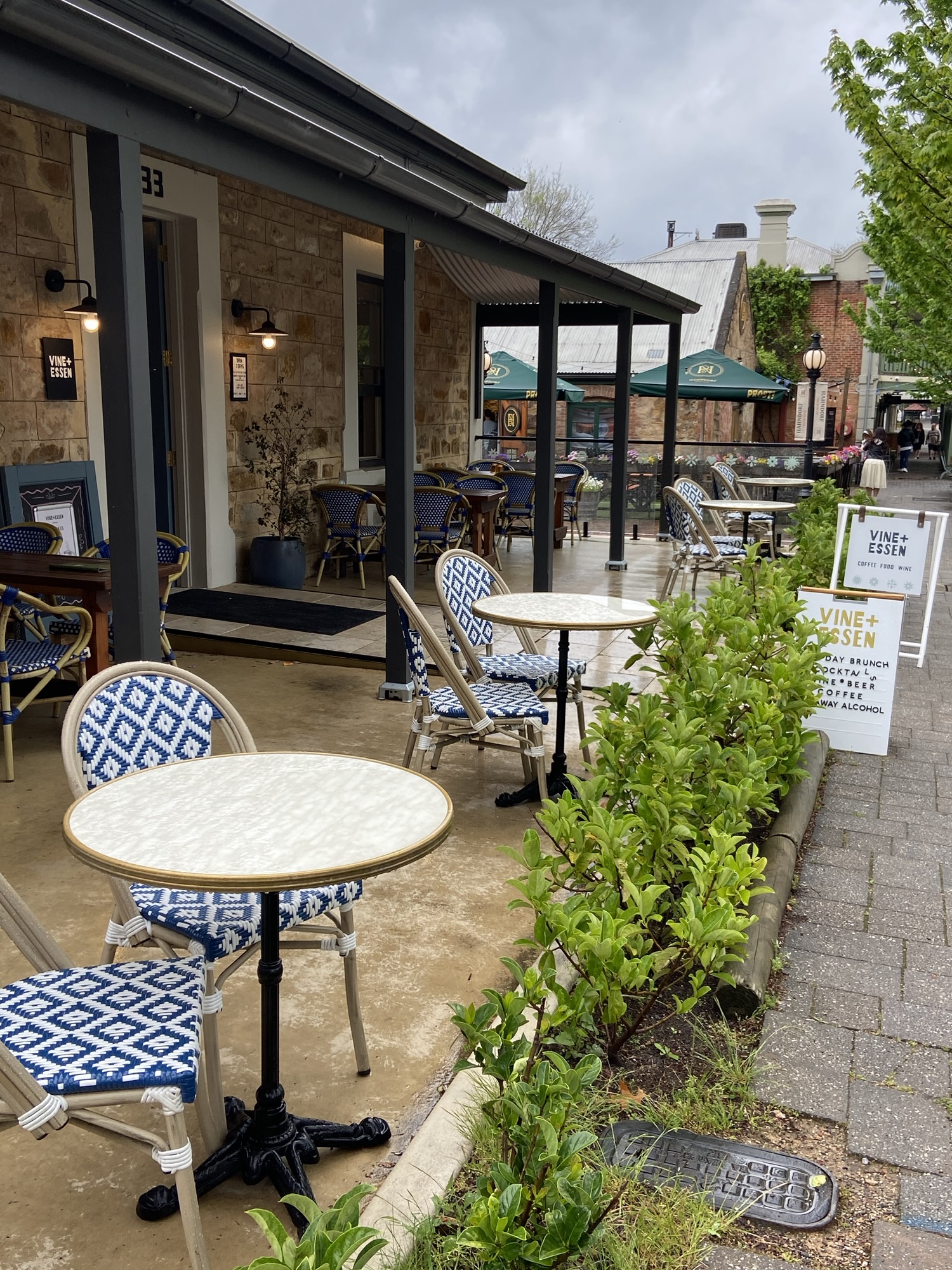
Next time I’ll cover a few more of the eateries we went to in a little more depth but overall I can highly recommend a visit or stay in Hahndorf. There is a sense of a bygone era and it was an excellent place in which to relax and unwind.
I came back from a long weekend in South Australia with my daughters a couple of weeks ago. The trip was partly for my birthday (which was in March!) and partly for my elder daughter’s birthday at the end of last month. Thanks to Monsieur and my son-in-law for holding the fort back in Perth with pets, children etc.
We flew into Adelaide arriving late on the Friday evening (Adelaide is two and a half hours ahead of Perth WST) so we opted to stay at one of the airport hotels overnight before picking up a hire car and heading into the city after breakfast.
We were actually staying the next 3 nights about half an hour’s drive outside of the city in the pretty settlement of Hahndorf in the Adelaide Hills. However, we had half a day before we could check in to our Airbnb house and wanted to explore the South Australian capital first. It was uncomfortably hot and humid as there was a large storm front approaching so we were hoping the weather wouldn’t break too soon.
I’ve been to Adelaide a couple of times way back in the 1990s when we were living in Melbourne. It’s smaller than Perth now though this hasn’t always been the case. Whereas Perth has expanded since we first came to Australia in 1990 (current population is just under 2.2 million), Adelaide’s population now sits at just under 1.4 million.
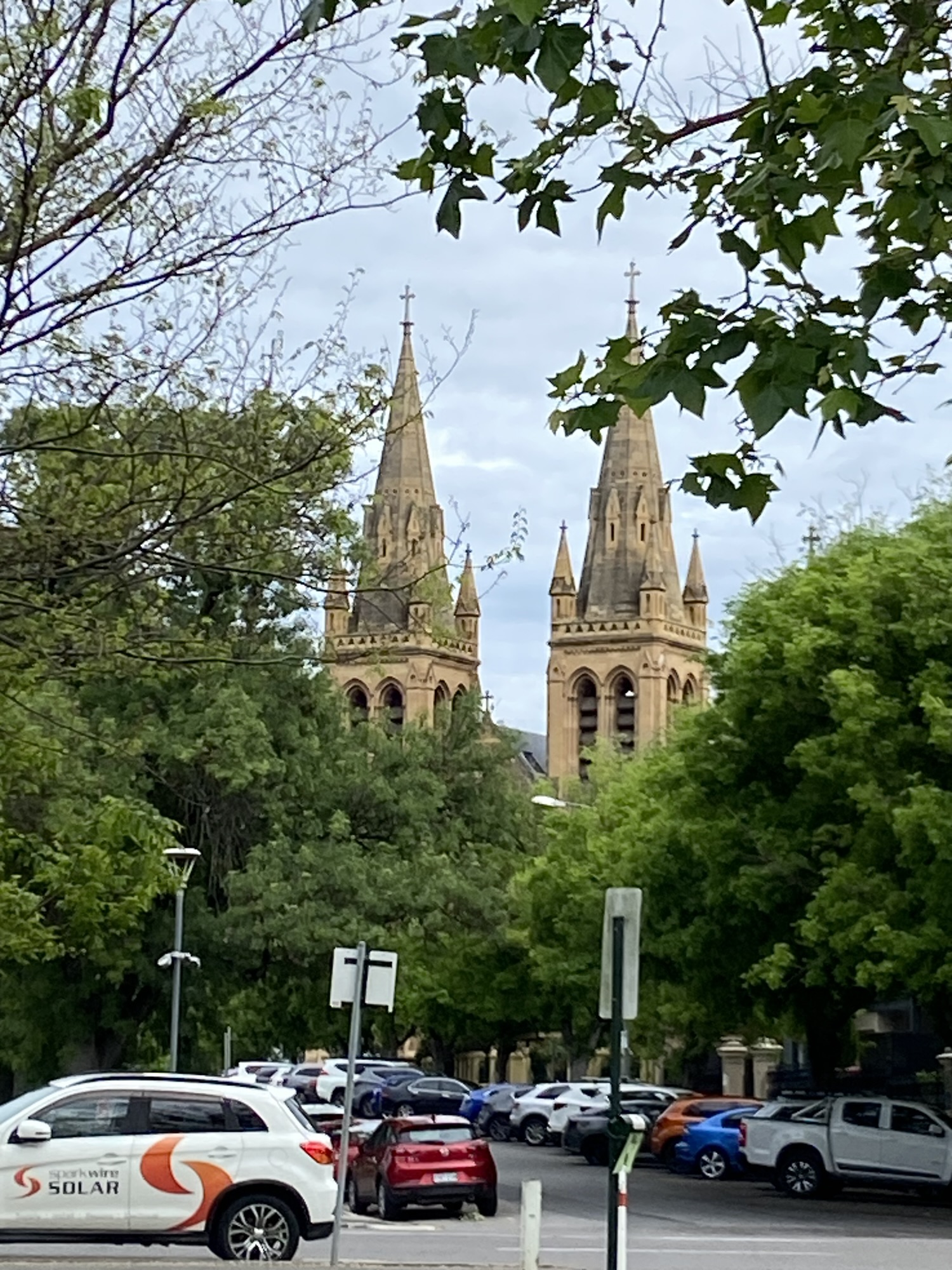
The traditional owners of the land are the Kaurna people. The Europeans arrived in the 1830s and named their new settlement after the then Queen of England, Adelaide of Saxe-Meiningen, wife of King William IV. It is notable that Adelaide is the only Australian capital city that was a free colony and not a place to transport convicts from the British Isles! One of its founding principles was that it was to be a place of religious freedom for its settlers. Diverse groups were encouraged to settle there and this led to its nickname of the “City of Churches”.
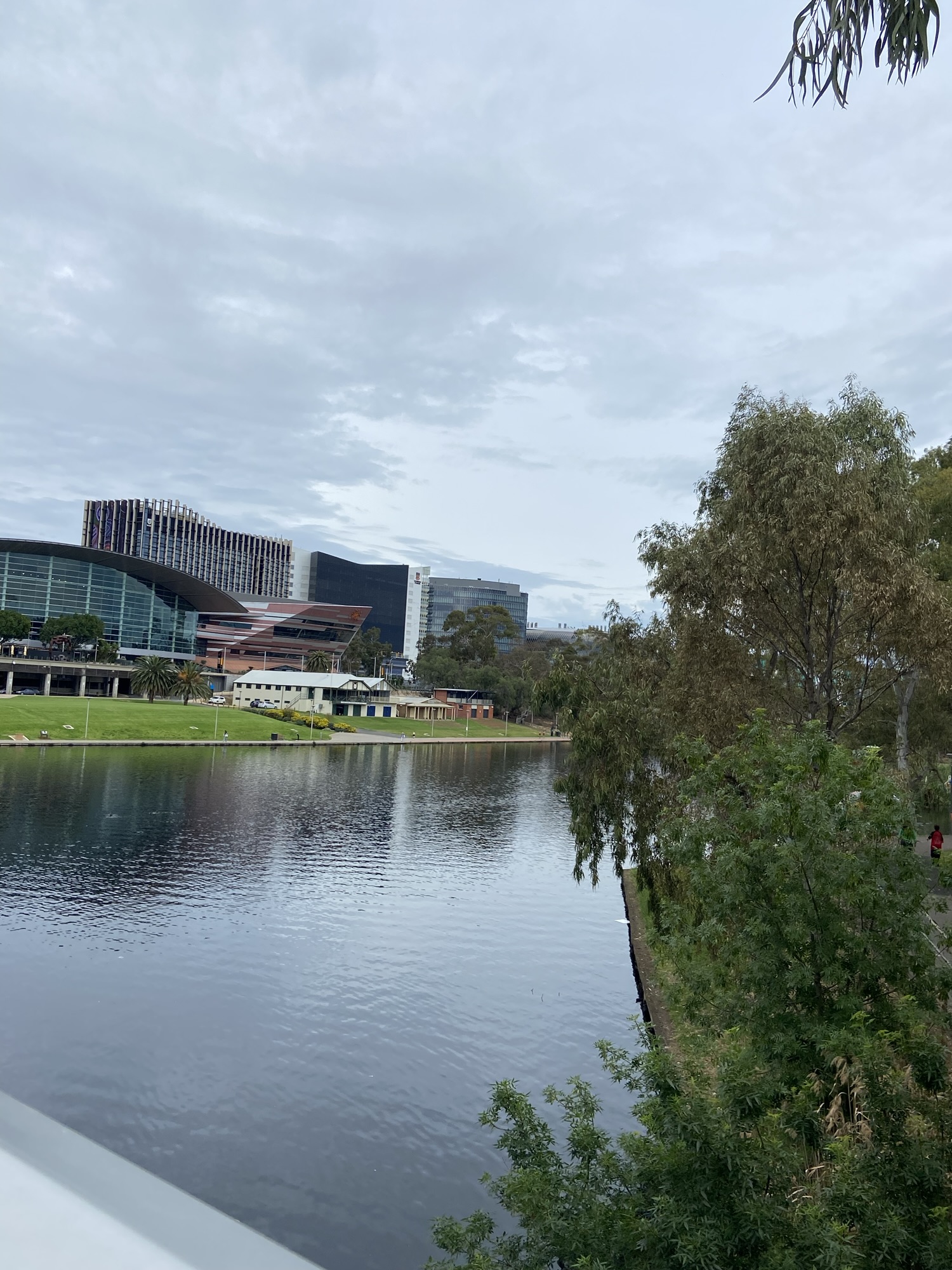
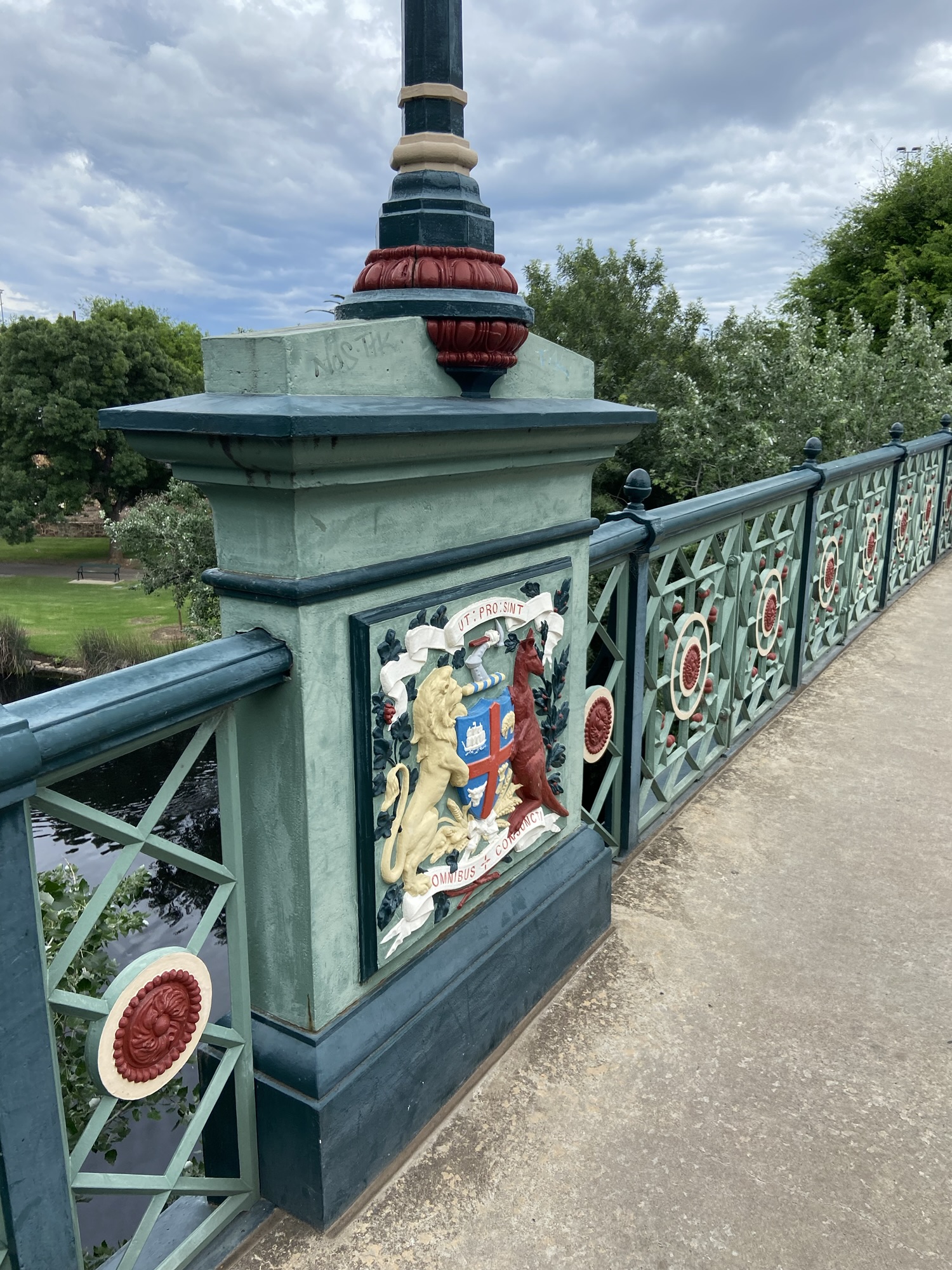
The city centre sits on the River Torrens surrounded by beautiful spacious parklands. It is the centre of the South Australian government and is a lively cosmopolitan city hosting many sporting and cultural events and festivals. The town planning is in a grid-like formation known as “Light’s Vision” after Colonel William Light, one of the city’s founding fathers who designed the layout and chose the location by the River Torrens.
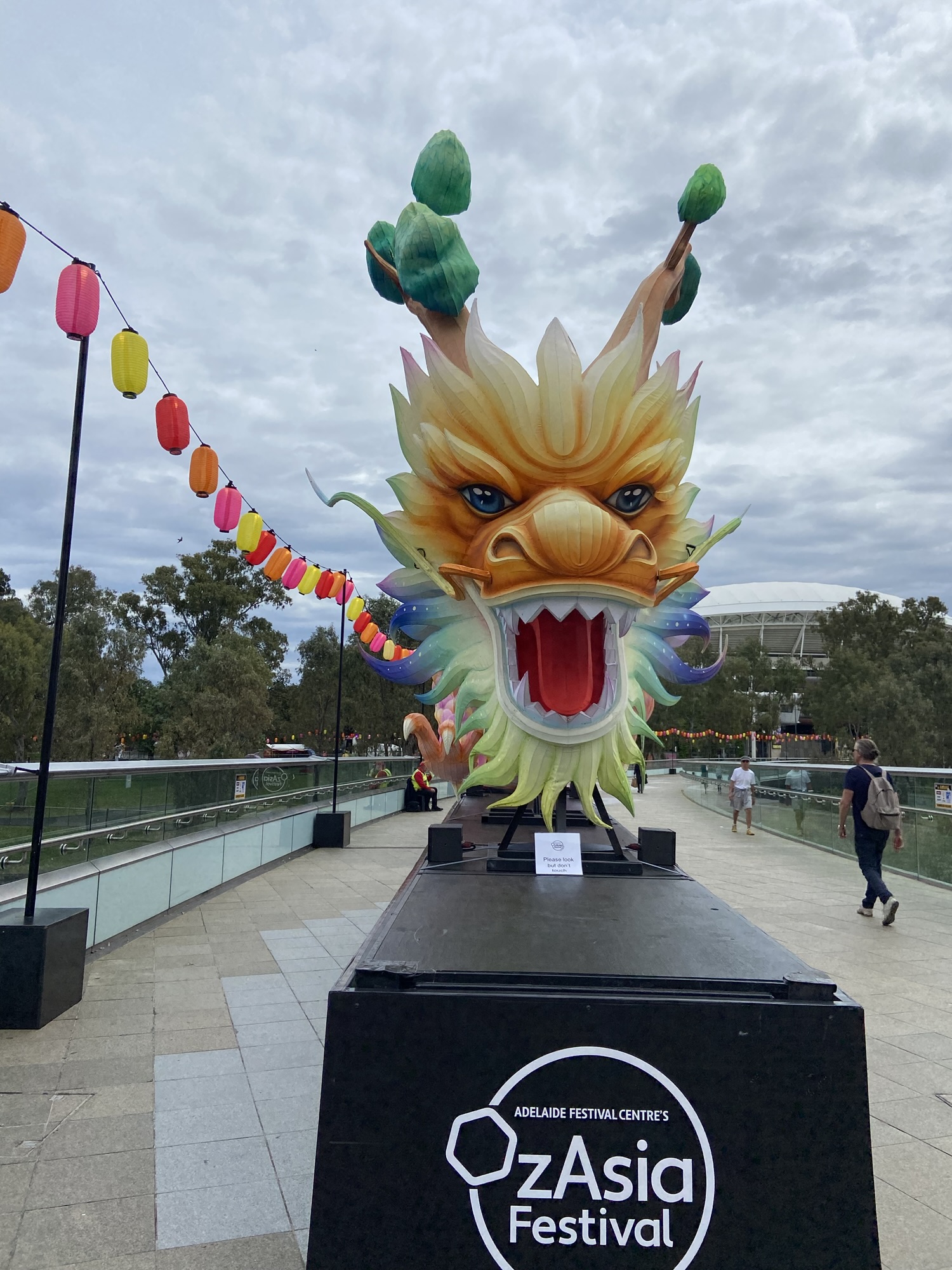
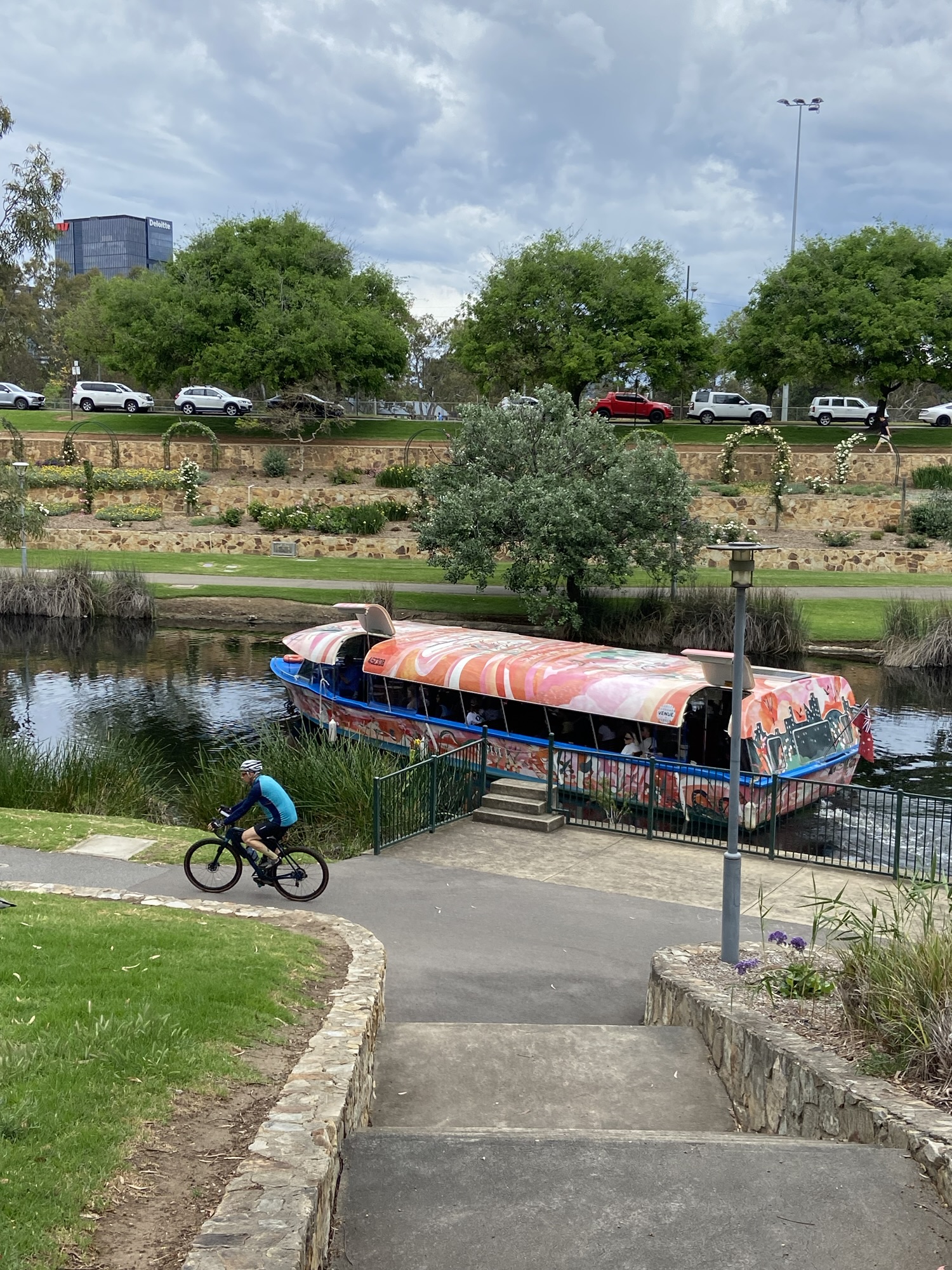
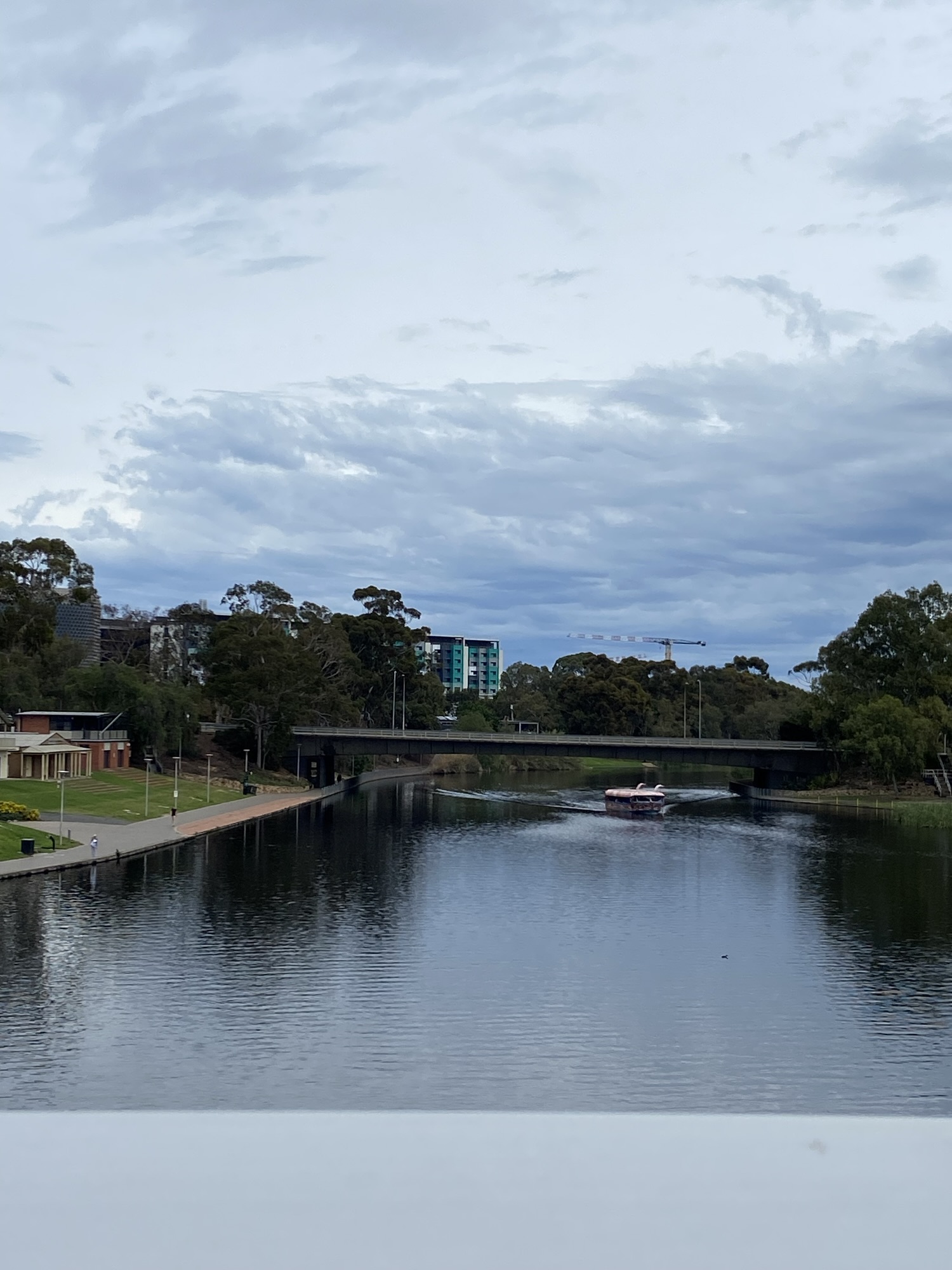
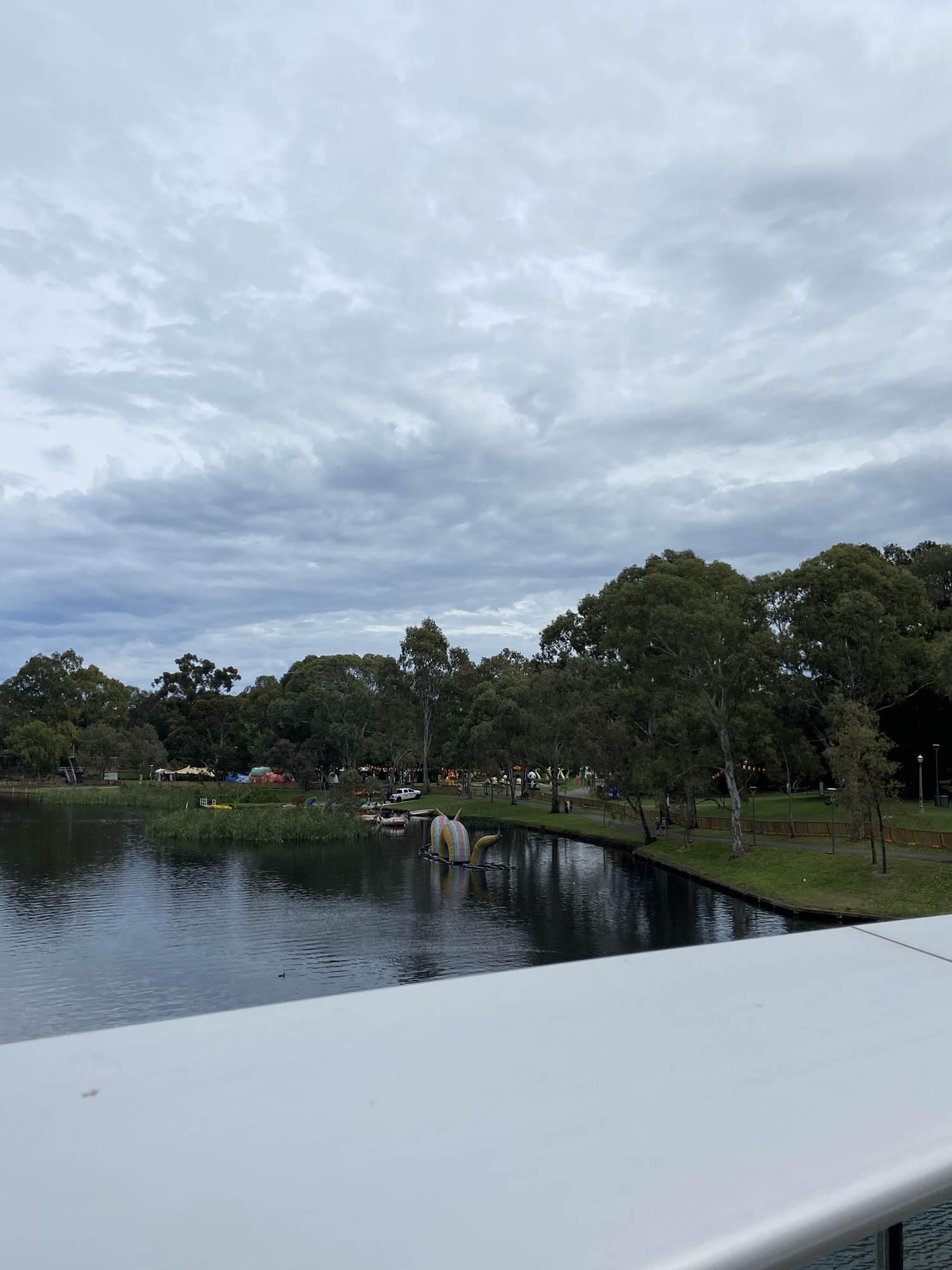
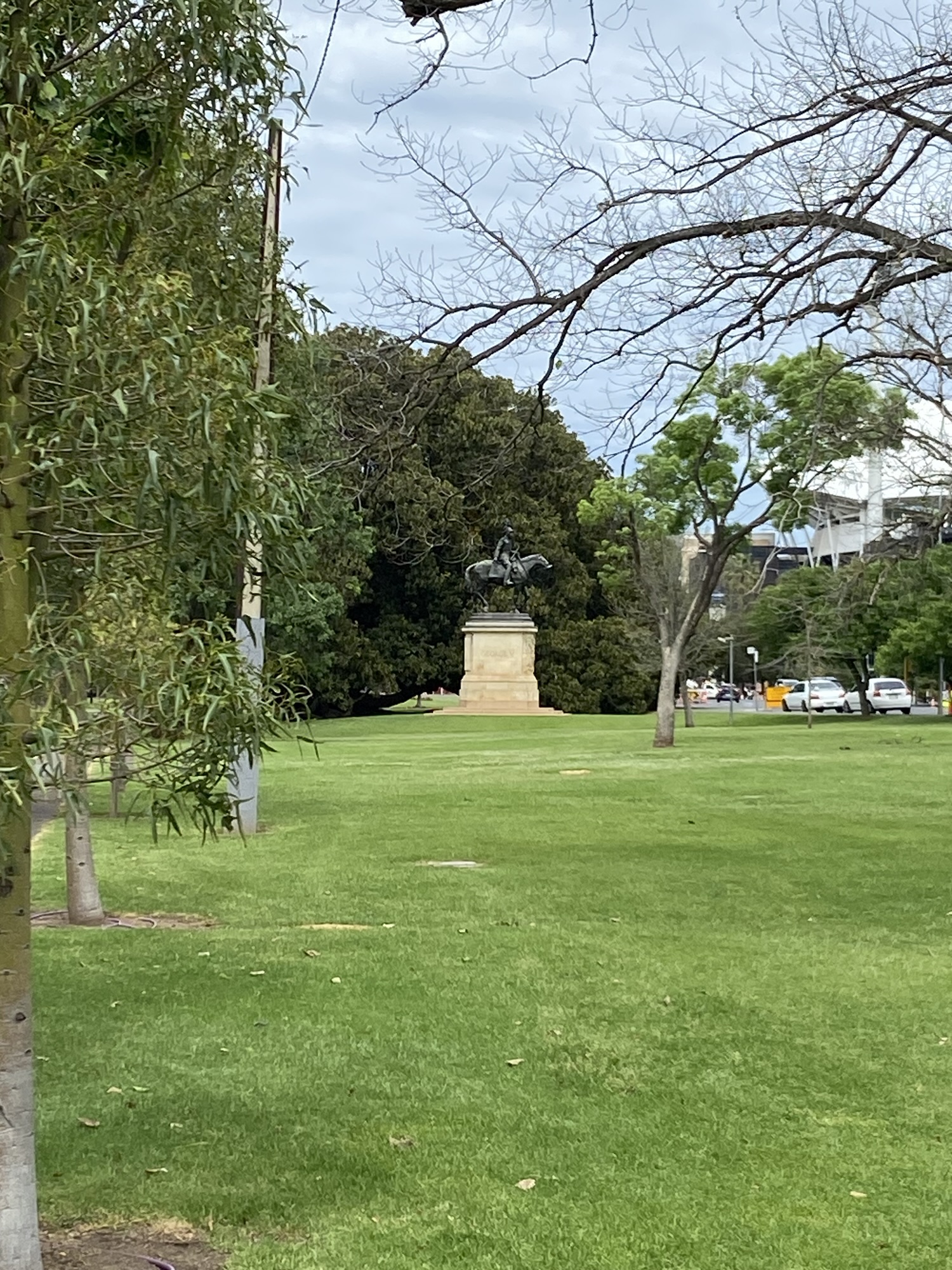
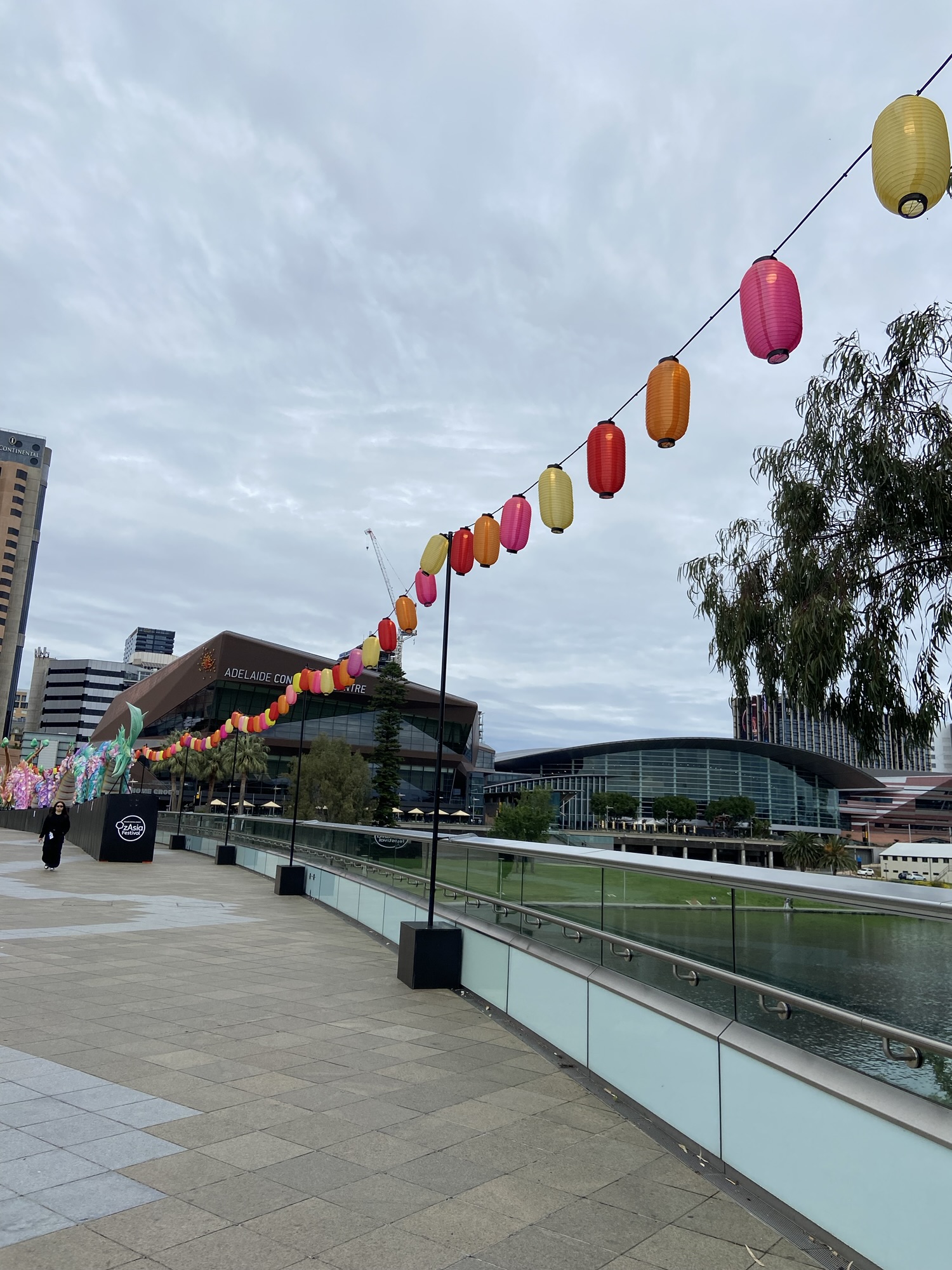
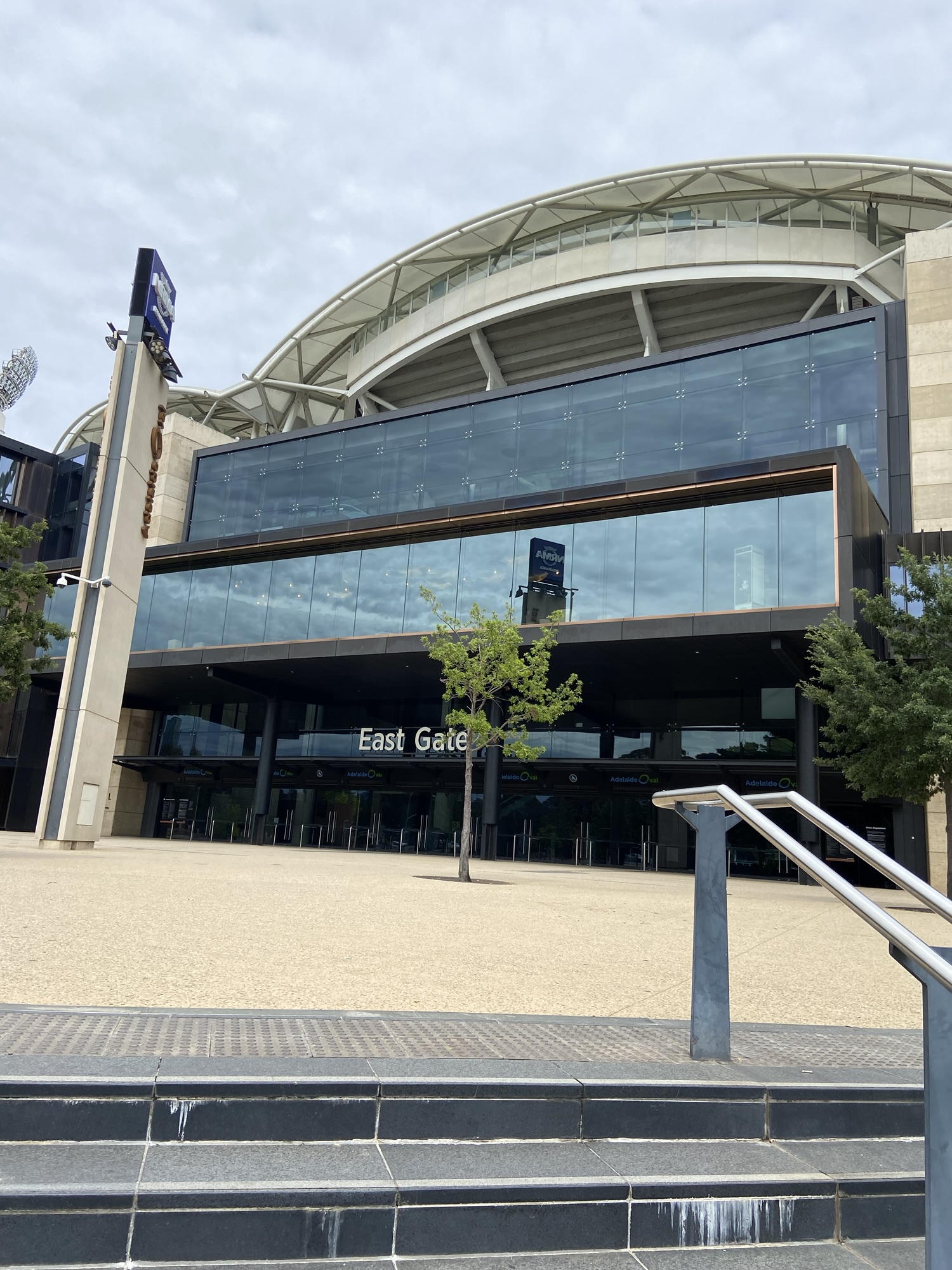
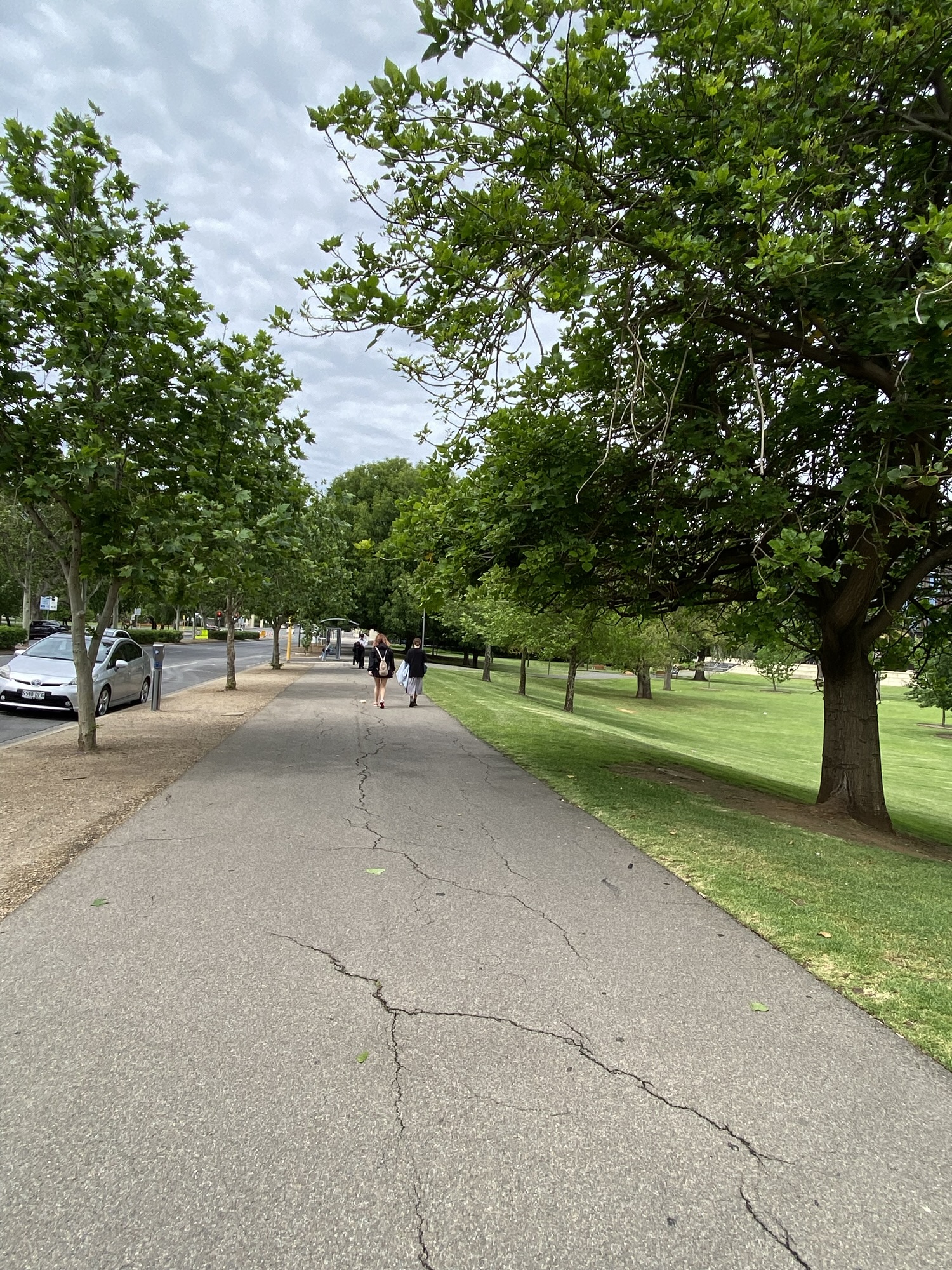
We parked on one of the beautiful tree-lined avenues halfway between the river and the Botanic Gardens. Walking past the impressive Adelaide Oval stadium where both Australian Rules Football and cricket are played, we heard music playing along the river banks. It turned out there was an Asian food and cultural festival taking place that weekend though unfortunately we didn’t have time to visit. I can highly recommend the 40 minute cruise along the River Torrens that we took with Popeye Cruises. It was a great way to orientate ourselves and find out more about Adelaide and its history.
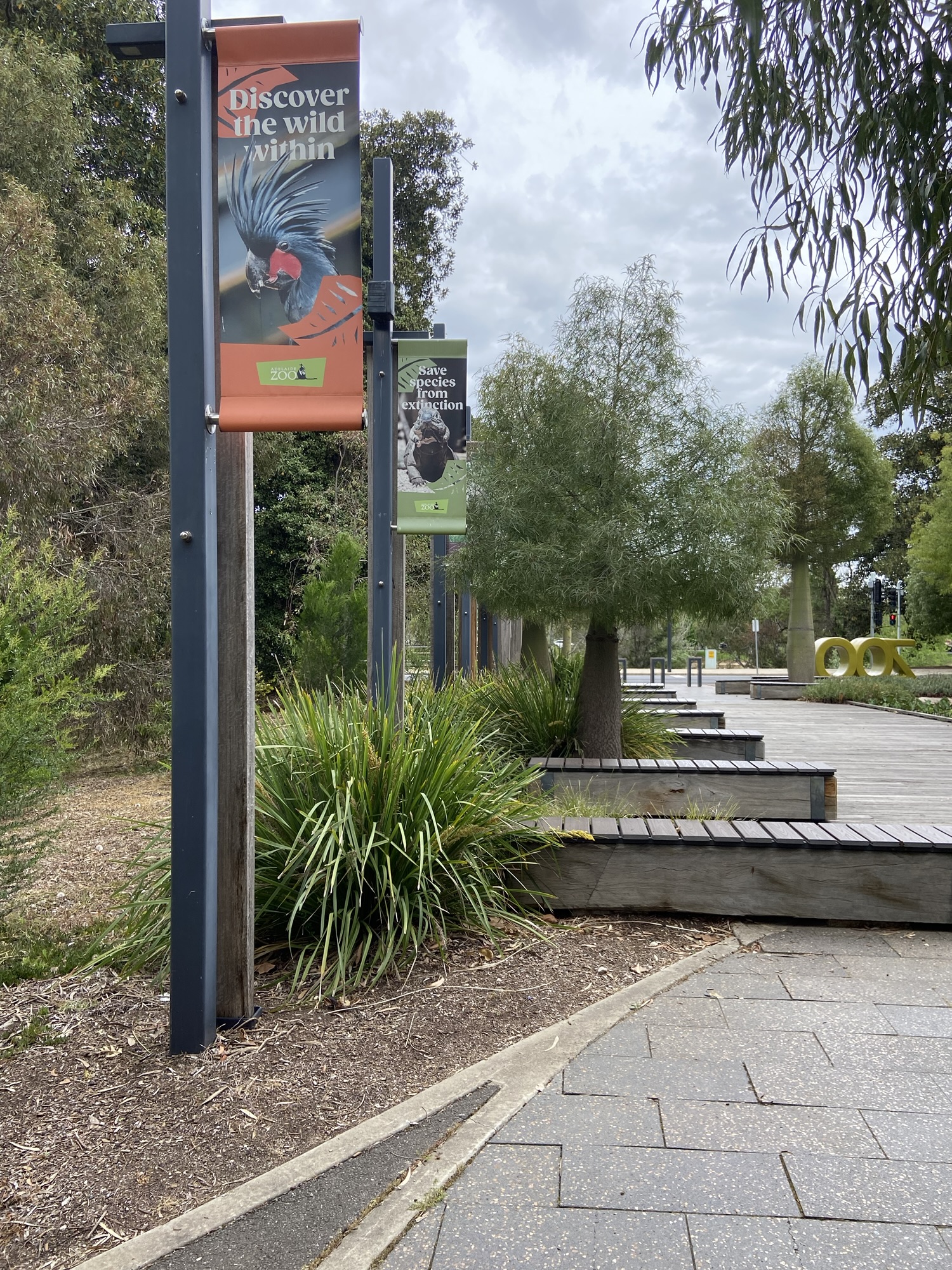
We had the option of going back to the cruise starting point near the Adelaide Convention Centre or getting off at the jetty near Adelaide Zoo and the Botanical Gardens about 10 minutes early. We chose the latter option as by this time the storm clouds were starting to gather and we really wanted to have time to explore the gardens and get a light lunch.
We walked past the zoo and then assumed we must already be in the gardens as everywhere was so green!
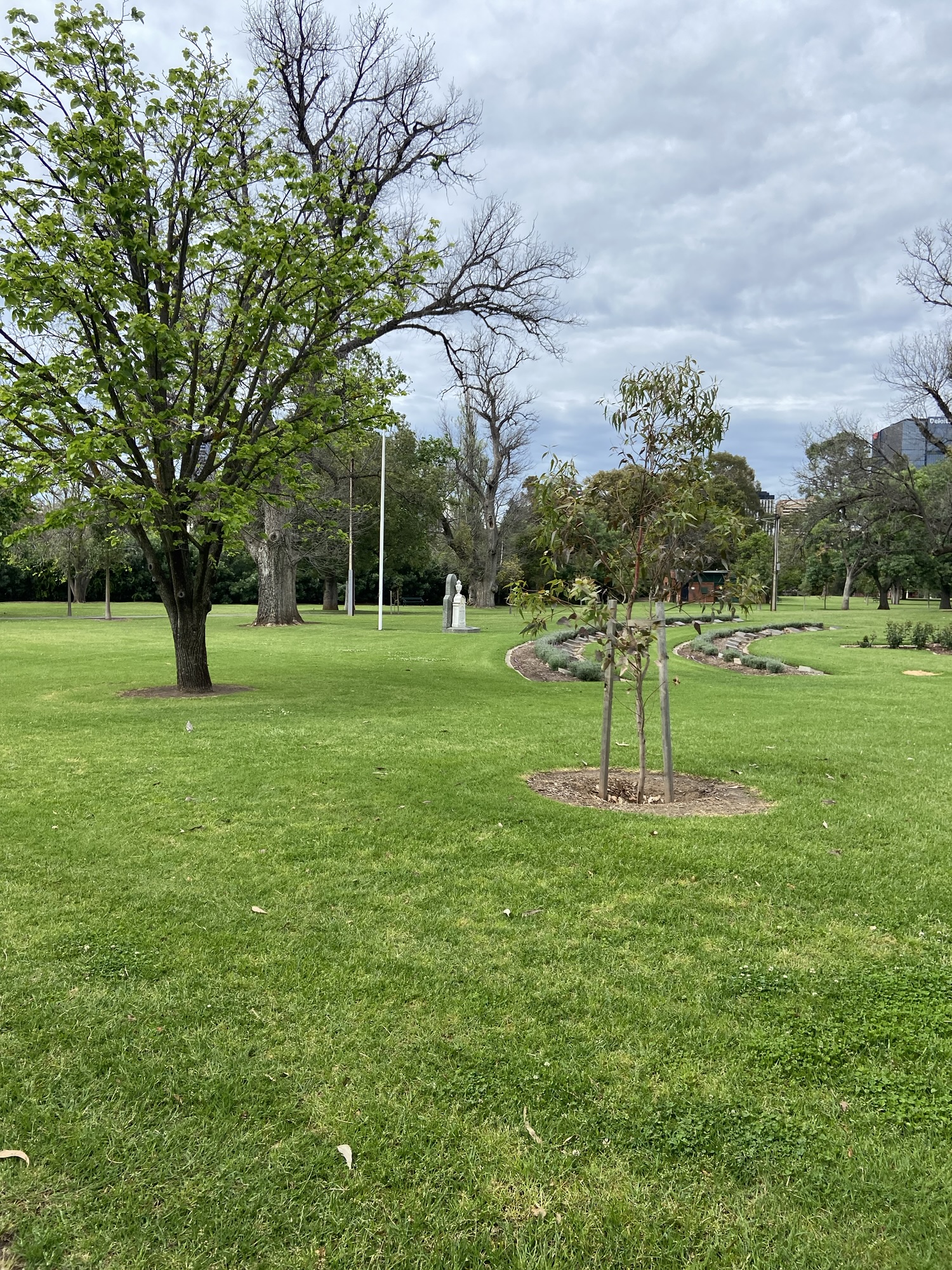
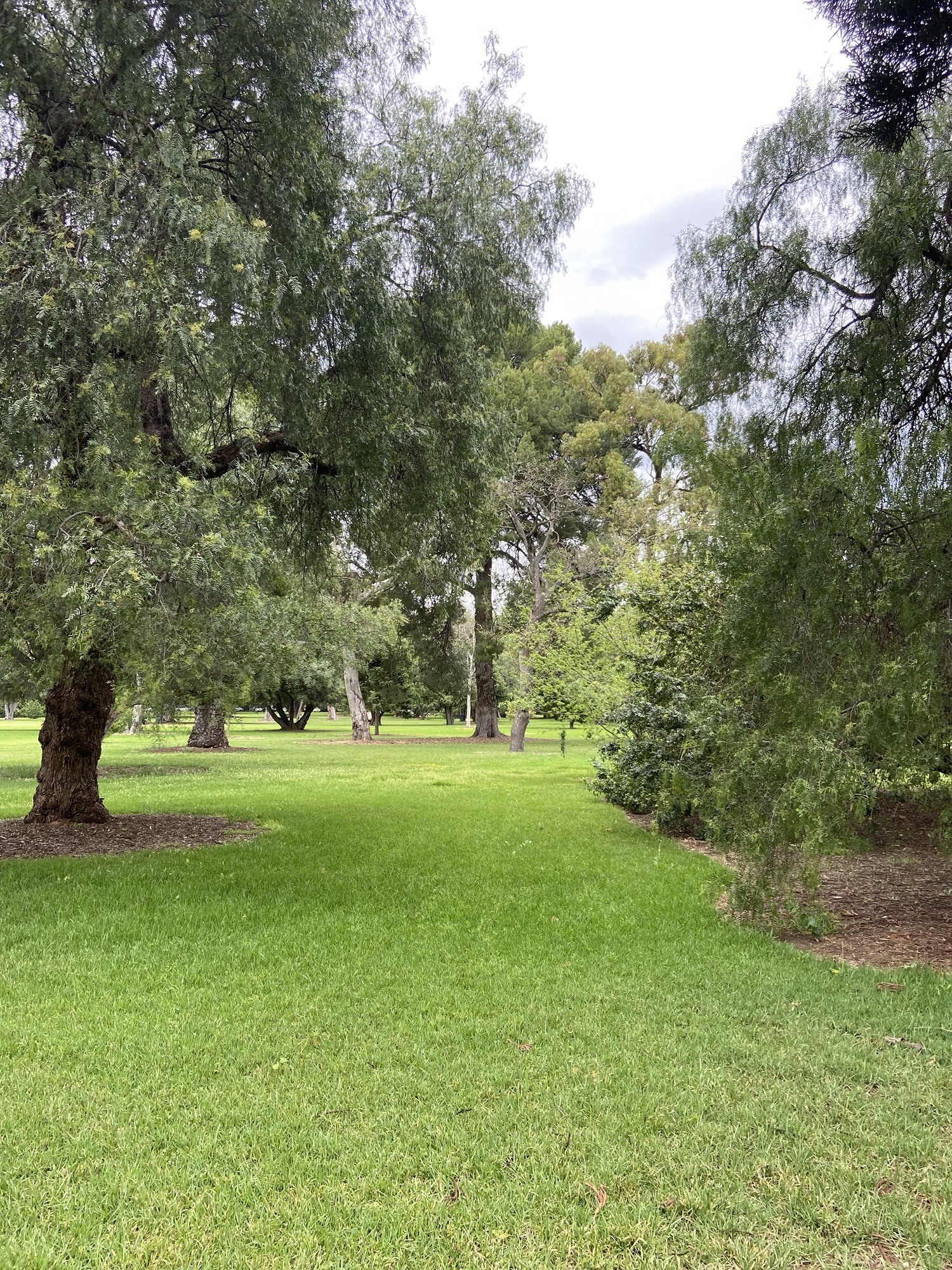
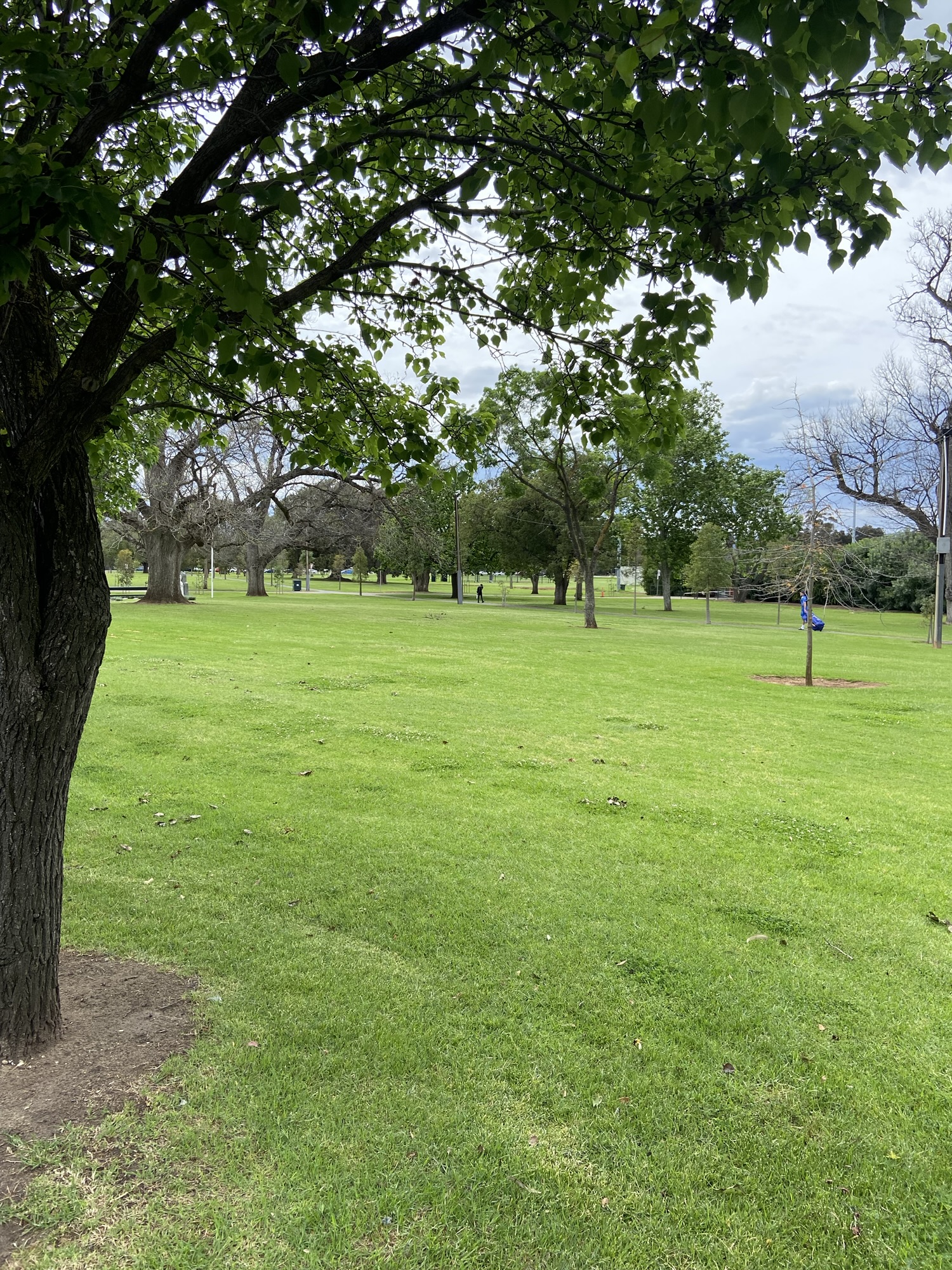
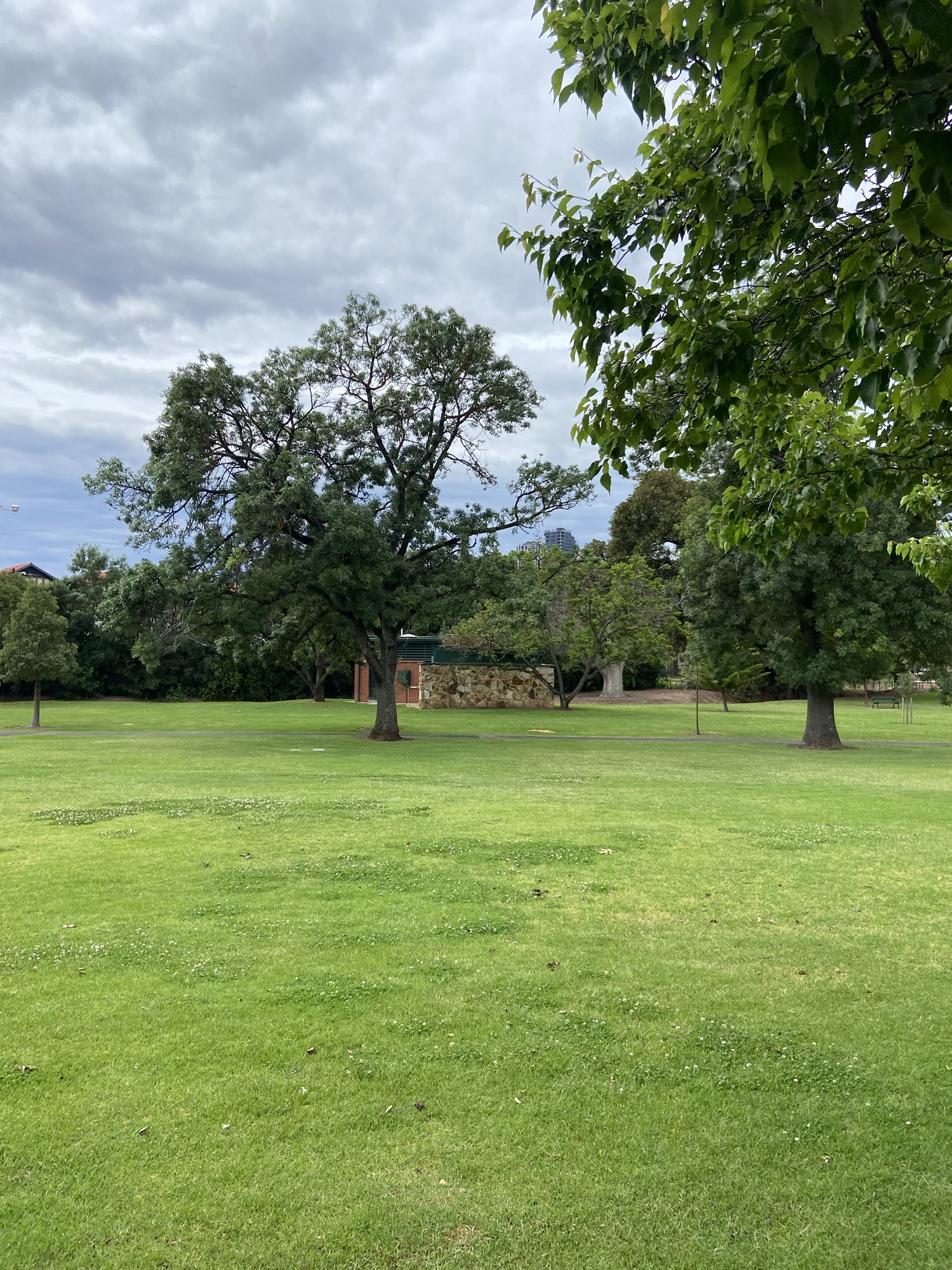
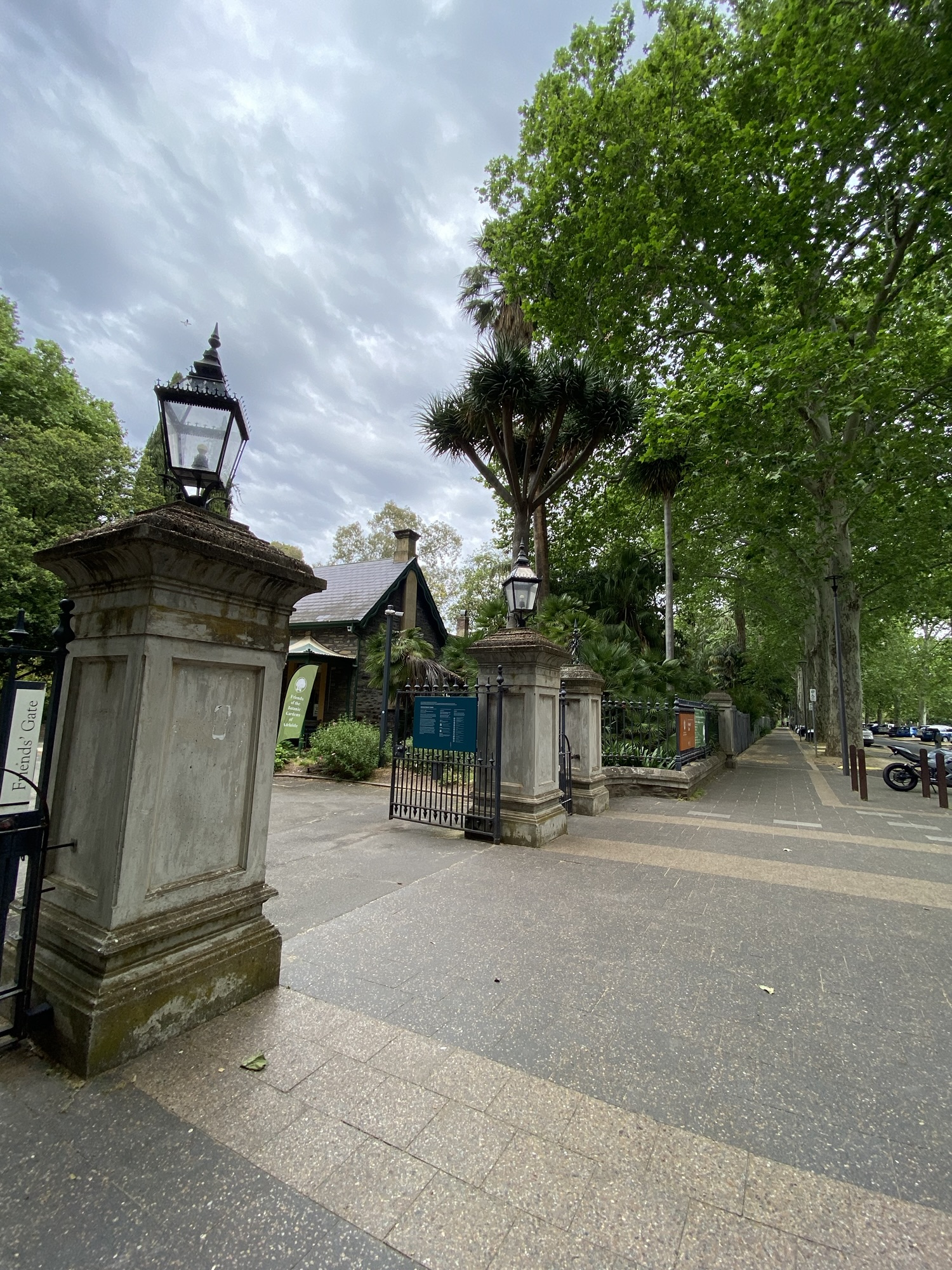
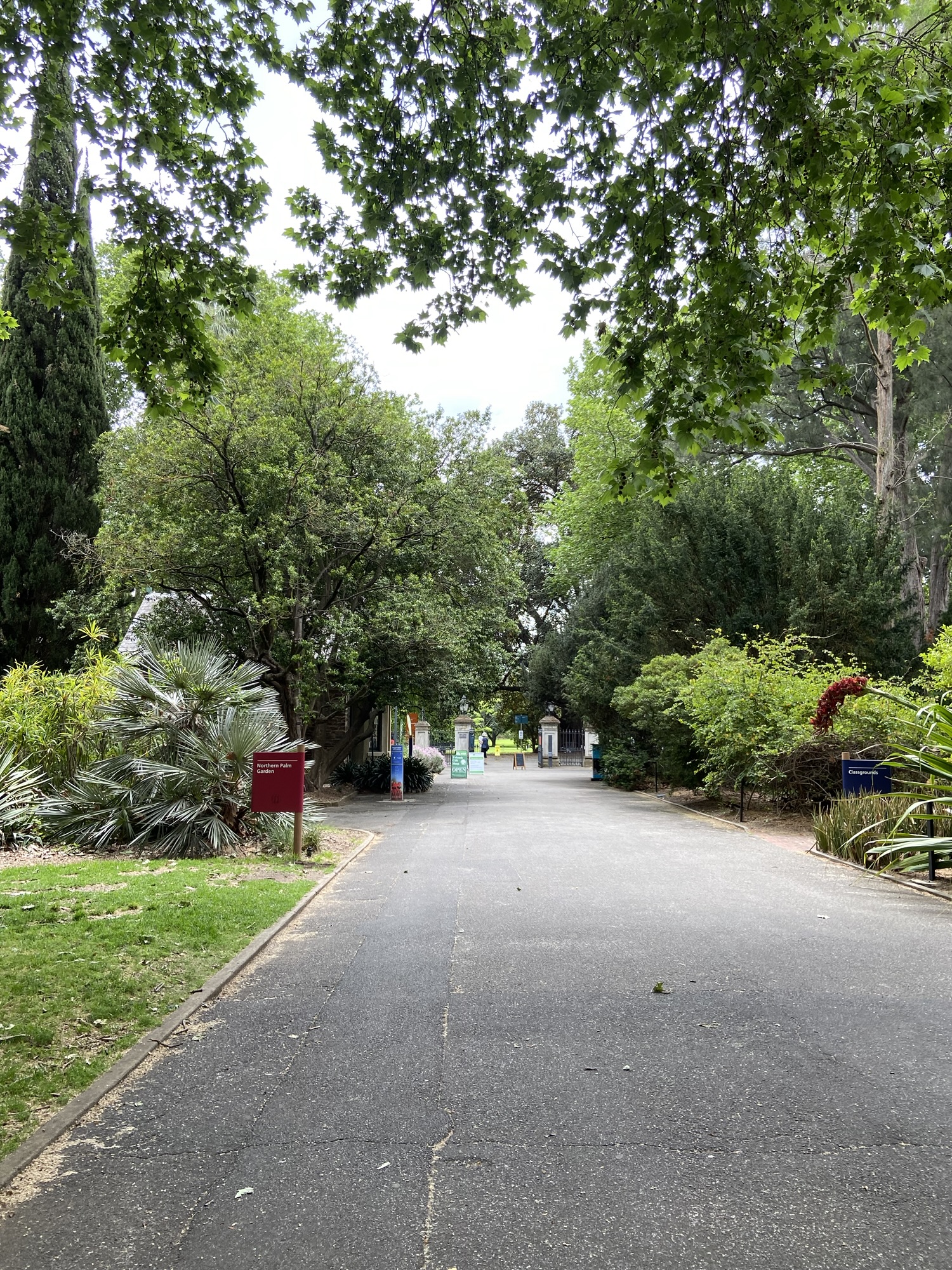
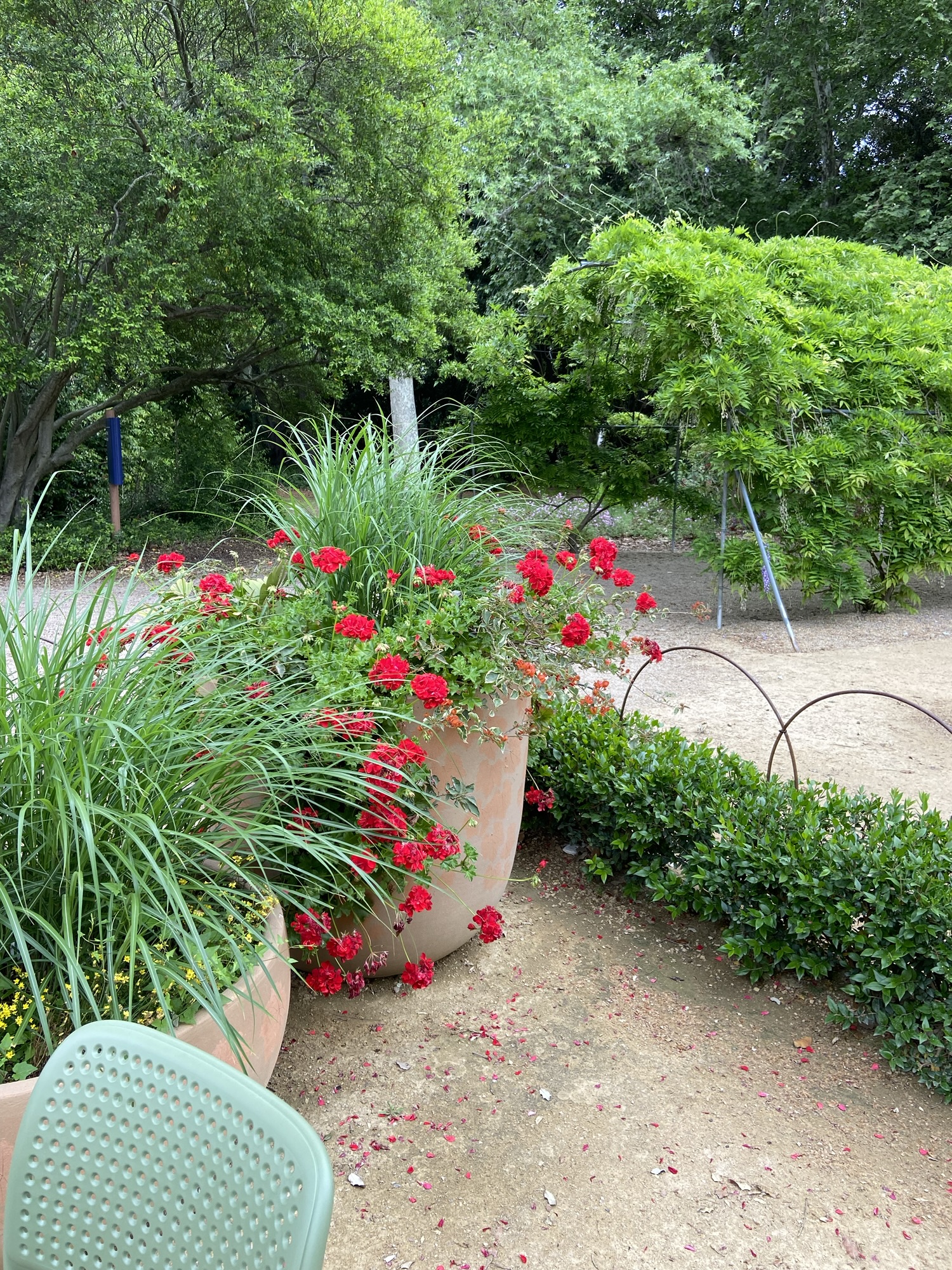
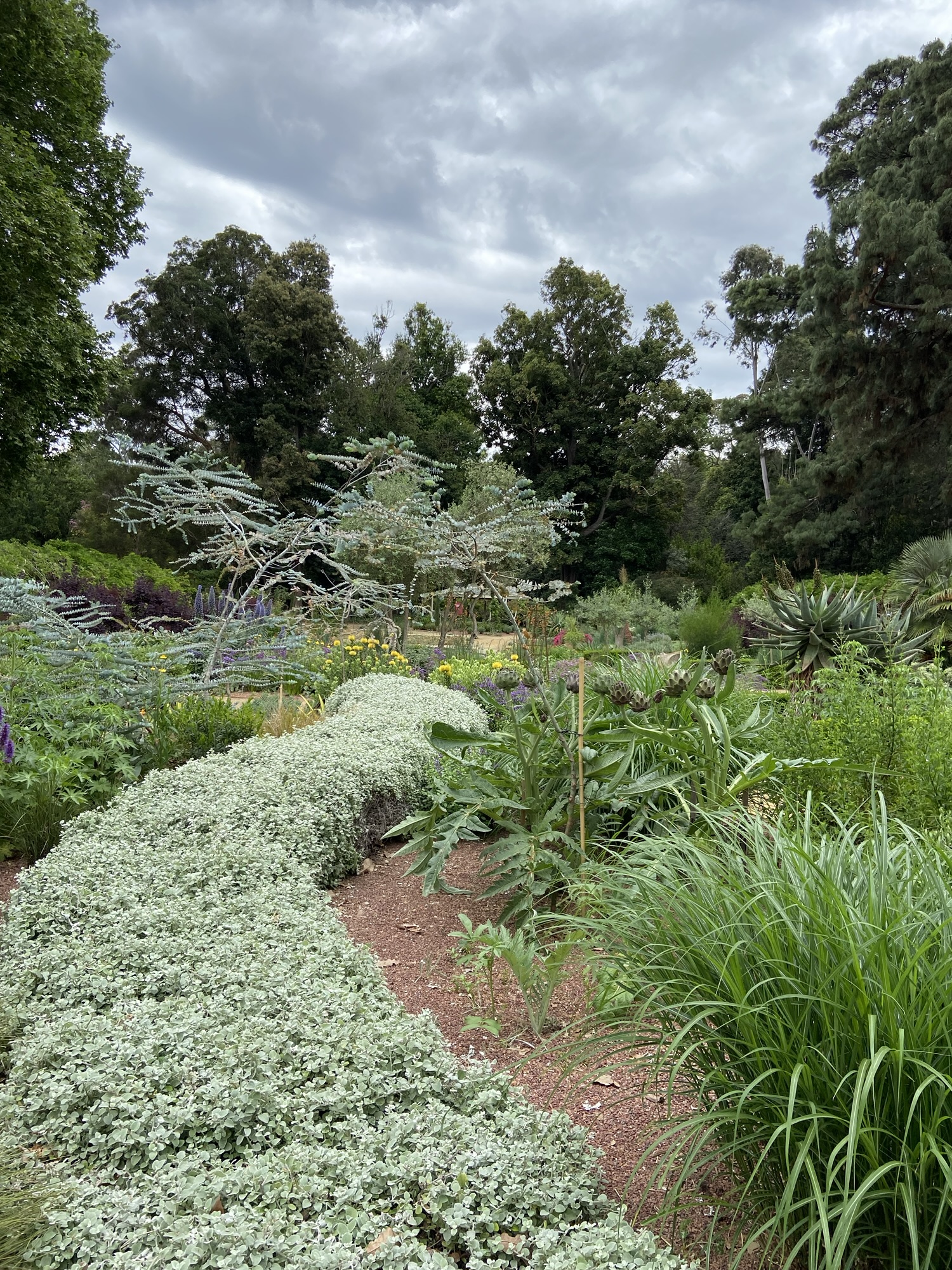
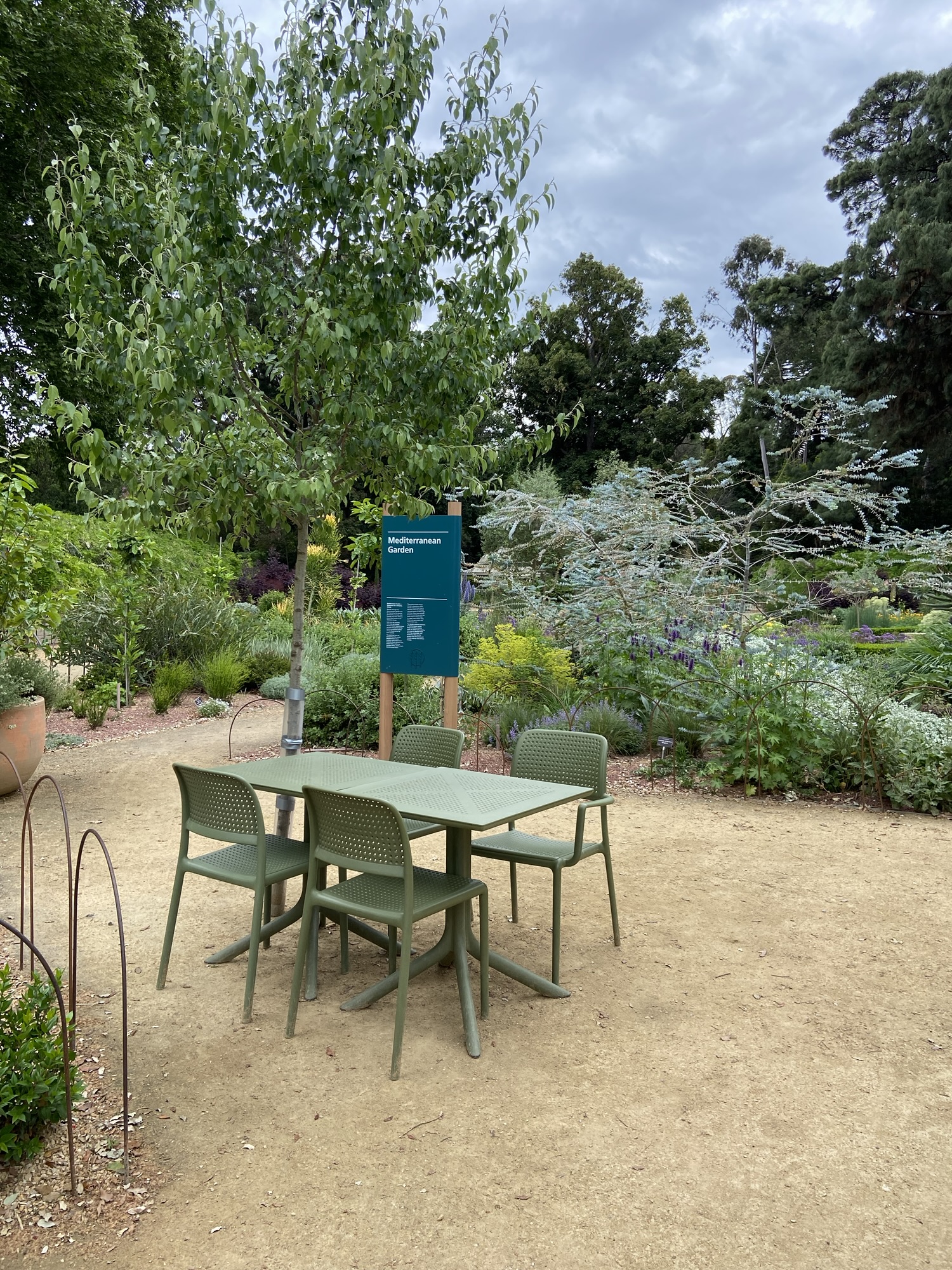
Officially called the Adelaide Botanic Garden, you feel transported into a beautiful world of nature far removed from the hustle and bustle of a modern city. Open daily with free entry (the hours do vary according to the seasons) there are a myriad of beautiful pathways, tree lined avenues and many diverse plants from Australia and around the world. This small gallery of photos doesn’t do it justice at all!
We had a delicious light lunch from the aptly named Evergreen Deli, which we ate in their adjacent outdoor area. Our leisurely lunch was abruptly disturbed when the distinct rumbling of thunder startled us followed by lightning flashes. A few minutes later the rain started and soon became a deluge. We managed to retrace our steps back to our car in between the torrential rain and headed out of Adelaide, up to our destination of Hahndorf.
Next episode Hahndorf though in between Monsieur and I are heading down to Yallingup (see here for a previous post) in south west Australia for a short break. After South Australia, I’ll resume my very delayed French travel write up series from May 2024!
I’ll be continuing my French travel series soon moving further south to Burgundy, Lyon, Provence and the Cote d’Azur. However, since I have quite a collection of unpublished photos taken in Paris, I thought would be a nice idea to share some short vignettes from time to time in between other posts.
The online Oxford Languages Dictionary gives one of the definitions of vignette as: “a brief evocative description, account, or episode” which fits perfectly.
I’m starting off with a stroll through the beautiful neo-classical shopping arcade of Galerie Vivienne. I once saw a travel show, which showcased some of the beautiful historical arcades and passageways hidden in the various Parisian quartiers. This Parisian Guide (see here) goes into greater detail.
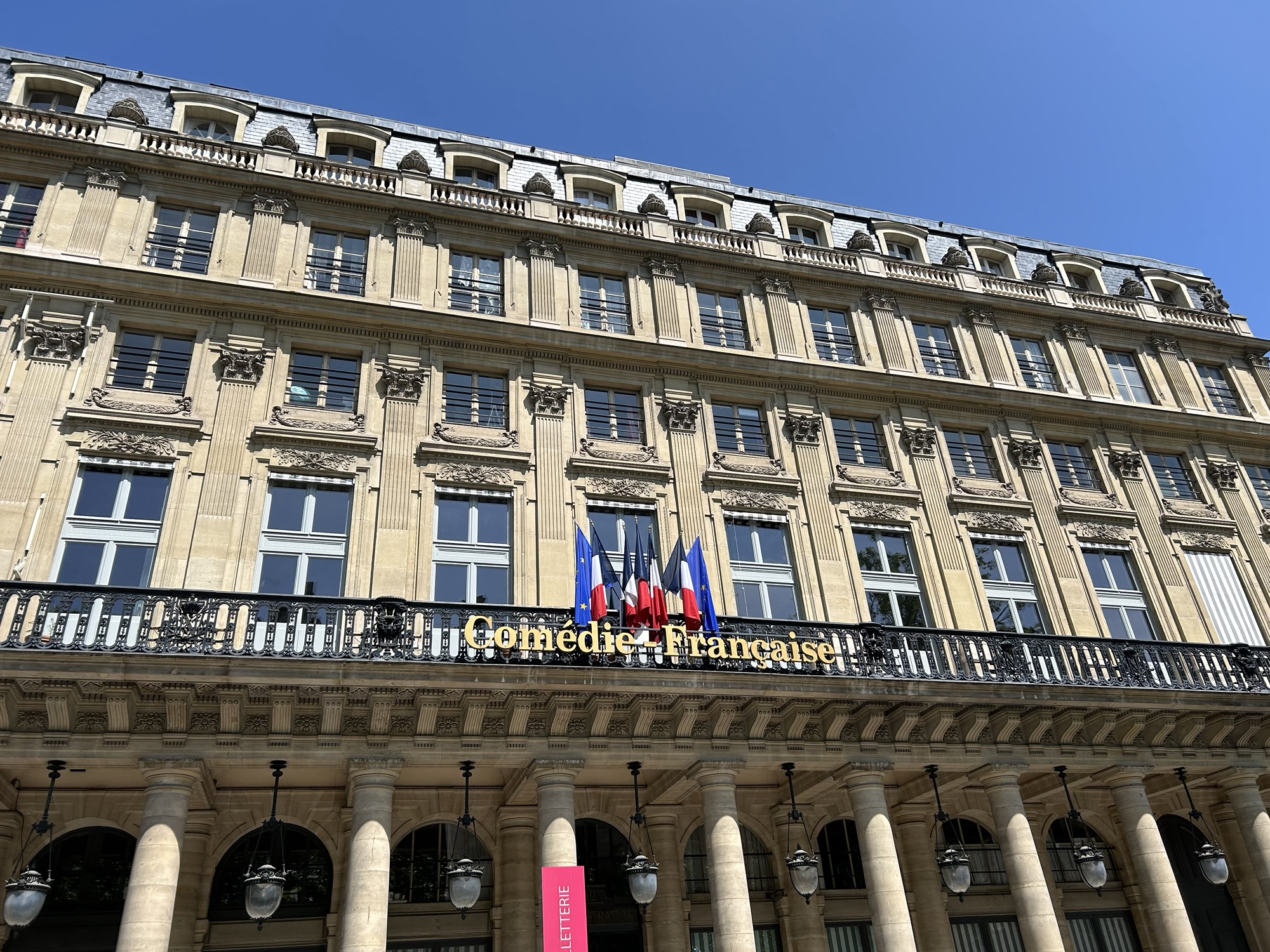
It was by chance, however, rather than design that we discovered this beautiful arcade en route from the Place de la Bourse to the Jardin du Palais Royal after doing some shopping in the 2nd arrondissement.
The Galerie Vivienne, is one of the most well-known of the historic surviving shopping arcades in Paris. There used to be many more back in their heyday in the 19th century (around 183 in 1867 according to estimates). These covered passageways were a popular meeting place and allowed the fashionable Parisian bourgeosie to promenade and do their shopping in style whilst being protected from the elements. Unfortunately, many were demolished during Baron Haussmann’s renovations of Paris in the mid 19th century and only about 25 now survive, mostly in the arrondissements of the Right Bank.
Galerie Vivienne was originally built in 1823 by Louis-Auguste Marchoux (President of the Chamber of Notaries) to plans drawn up by the architect François-Jacques Delannoy. It has been listed as a historic monument since 1974.
Co-owned by the The Académie des beaux-arts since 1870, it has been restored and refurbished after falling into a rather neglected state. As you wander round you can read about its history on information boards.
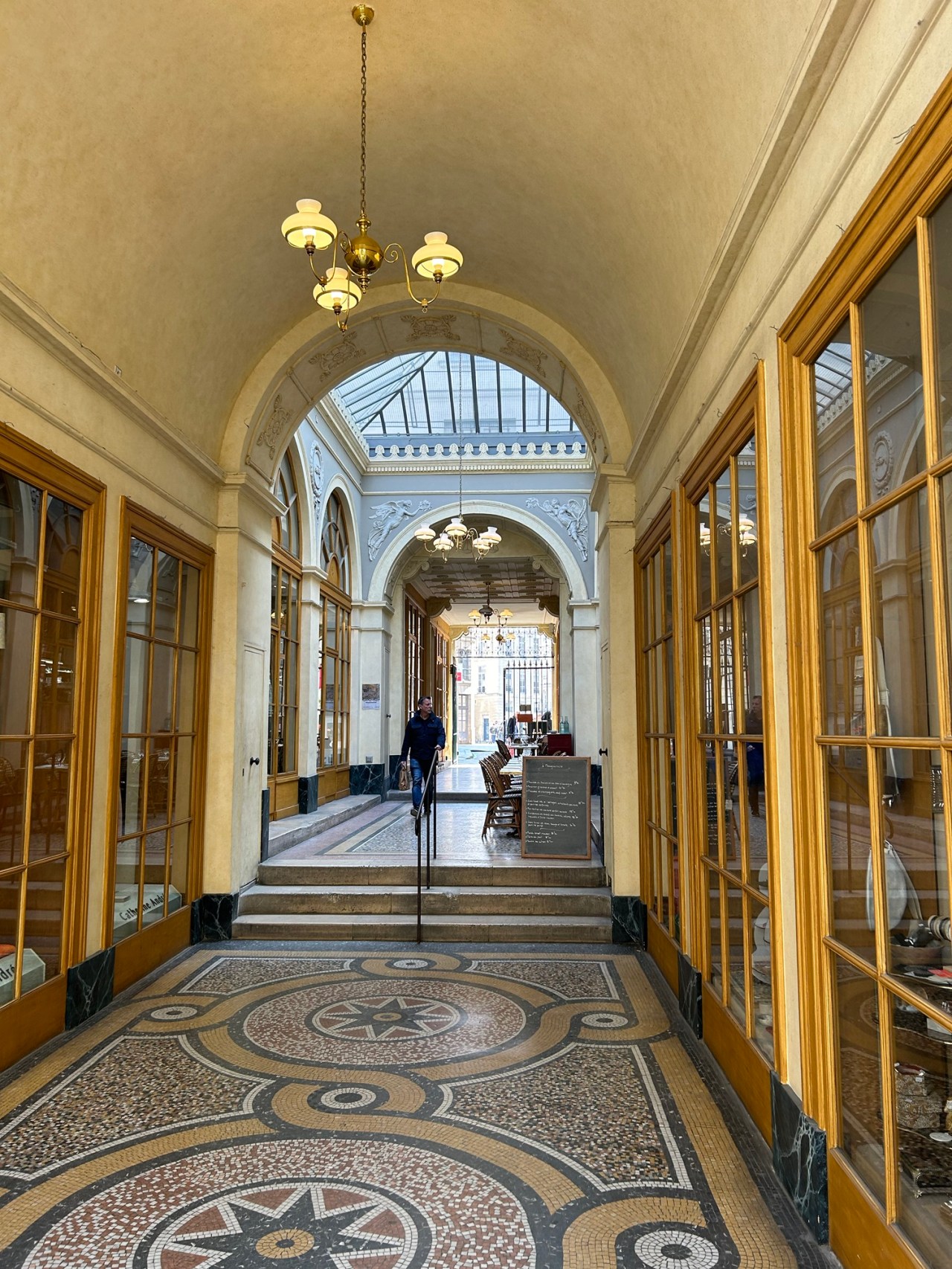
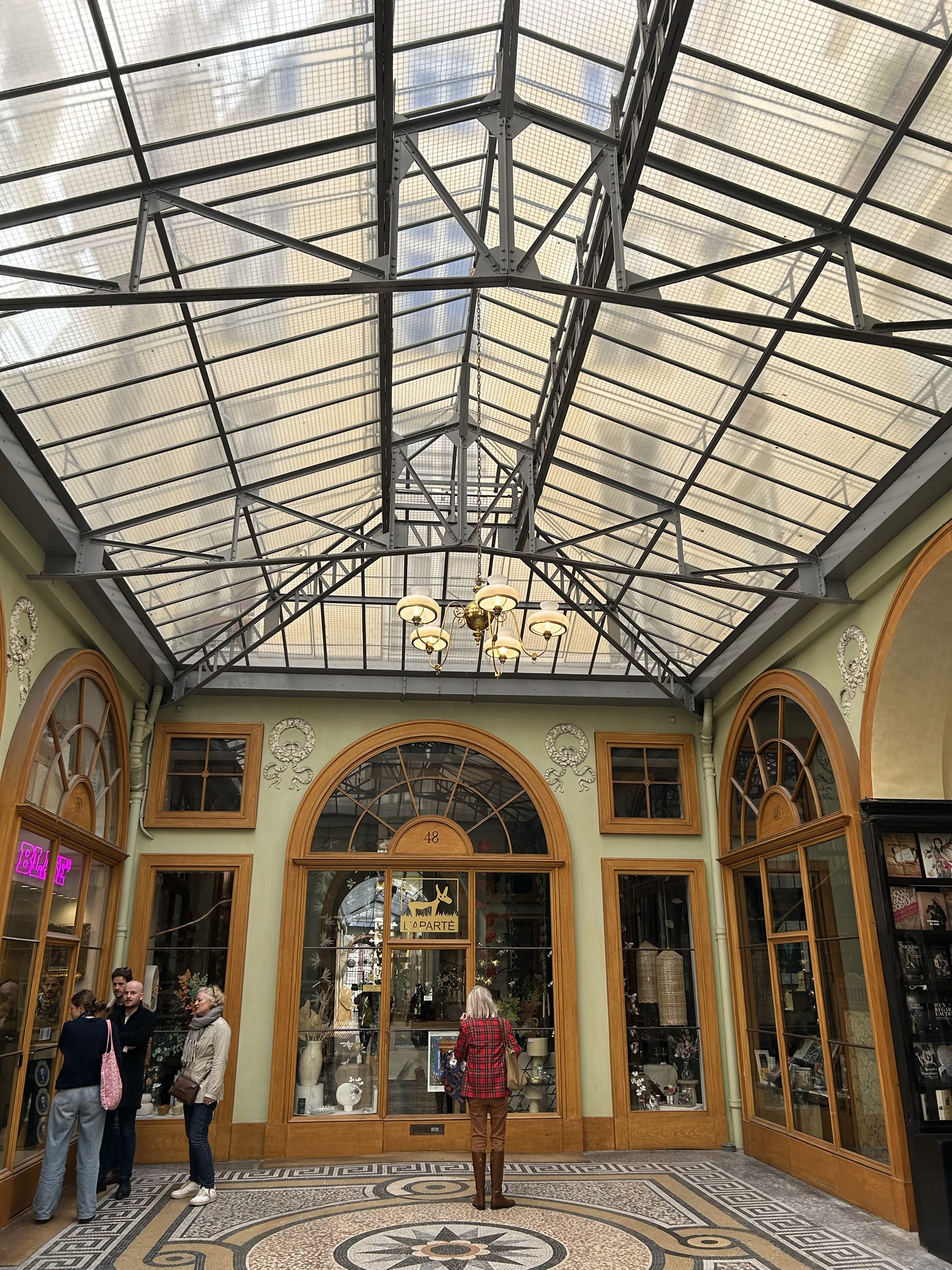
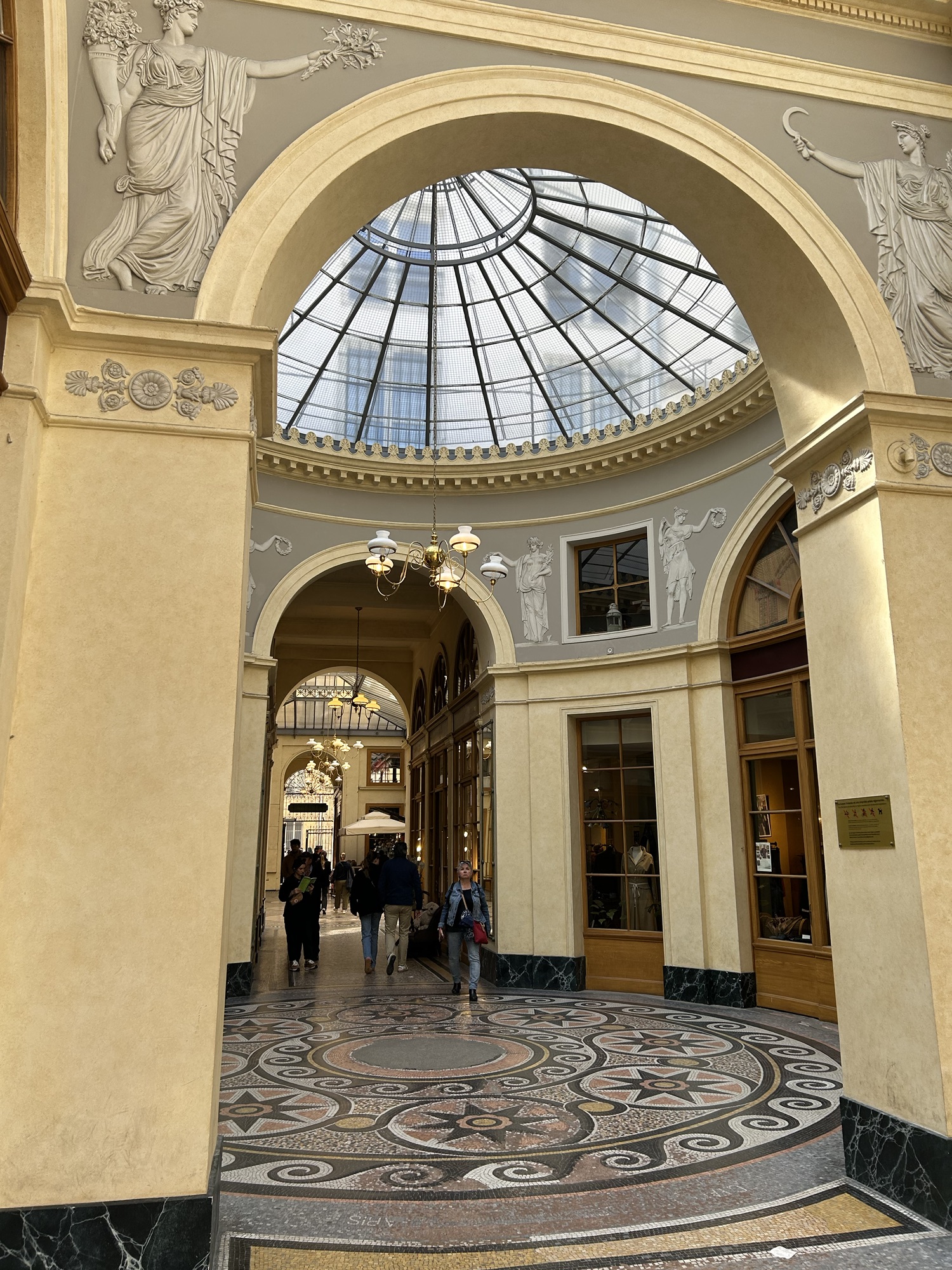
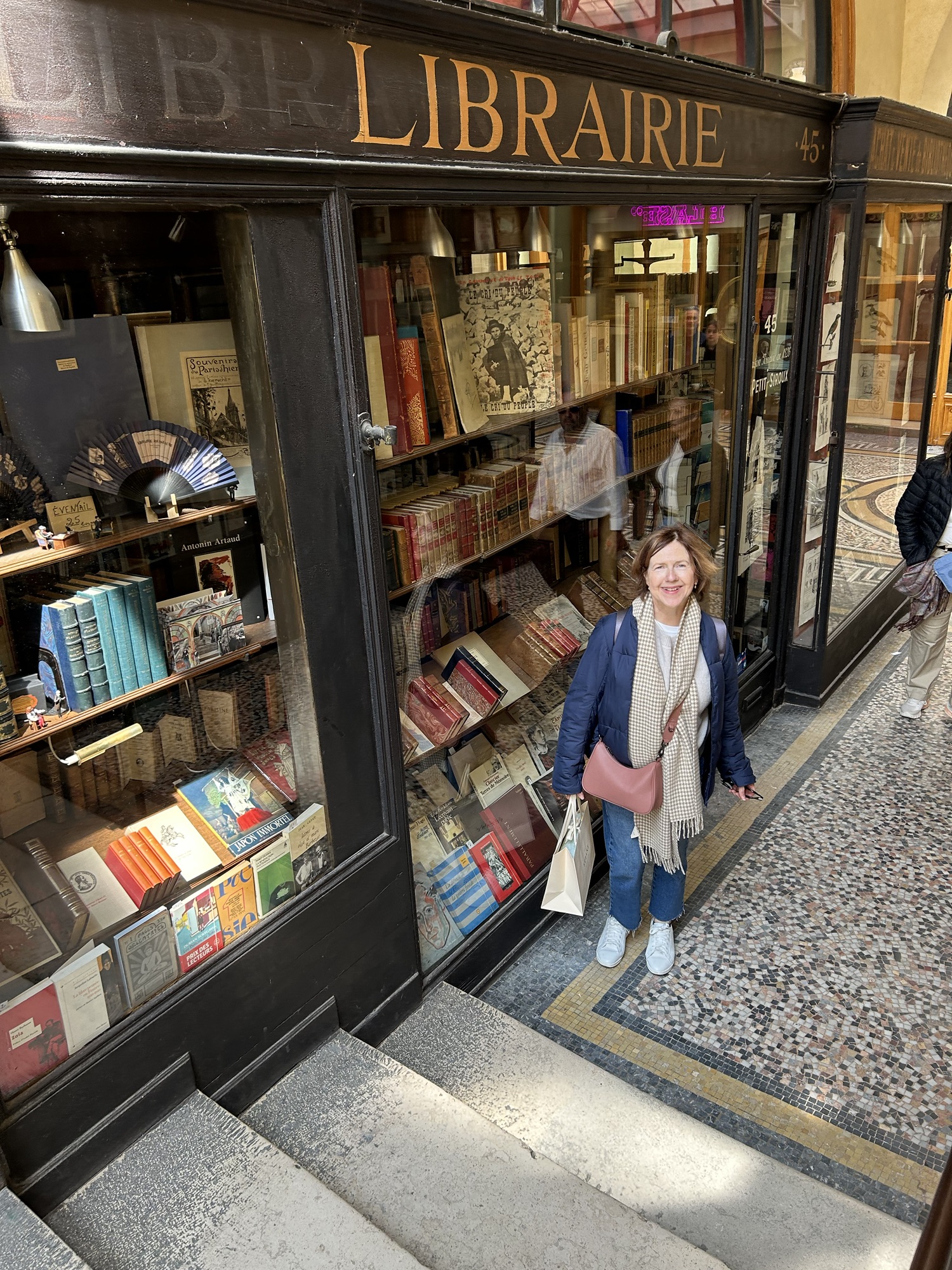
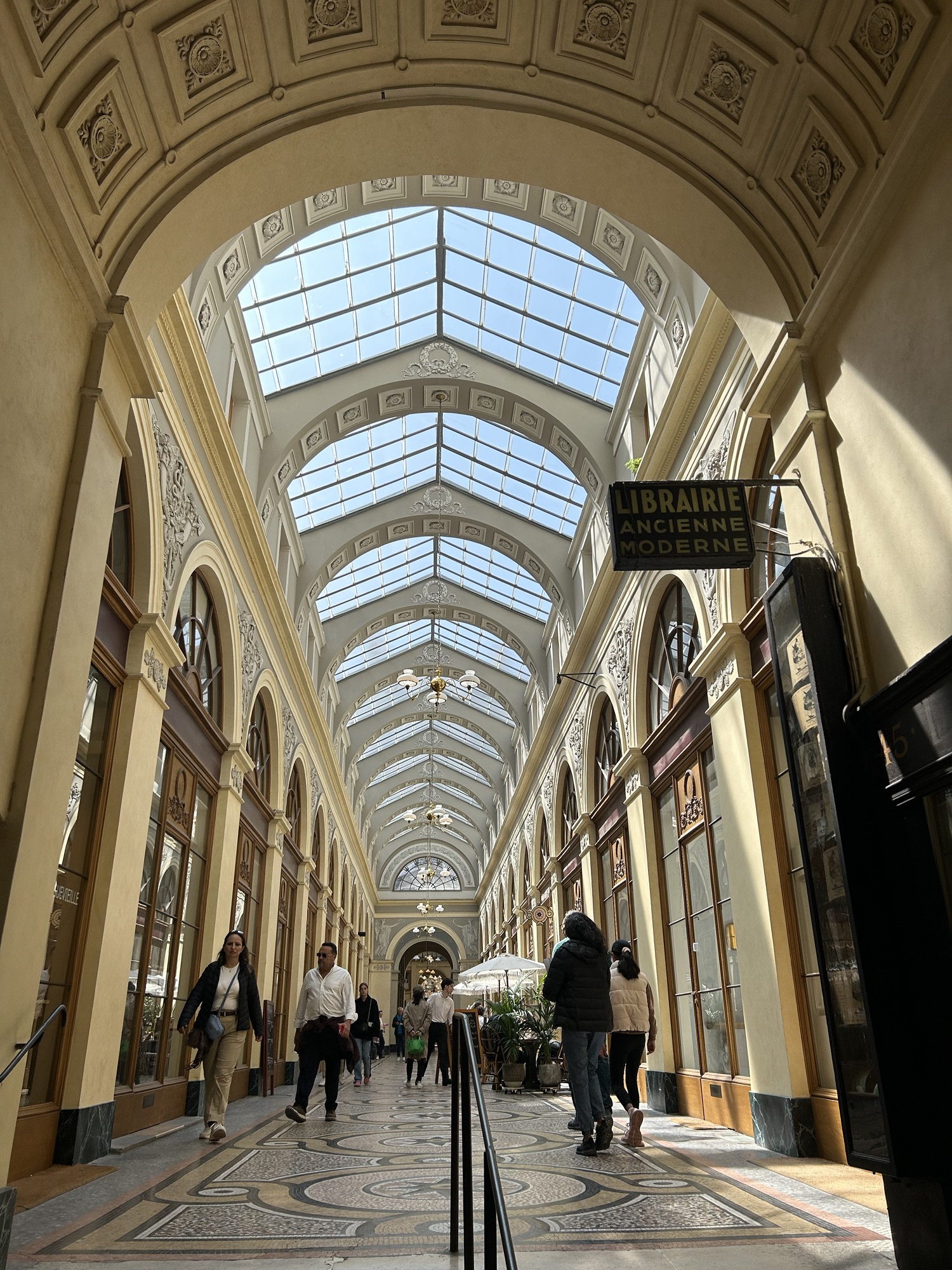
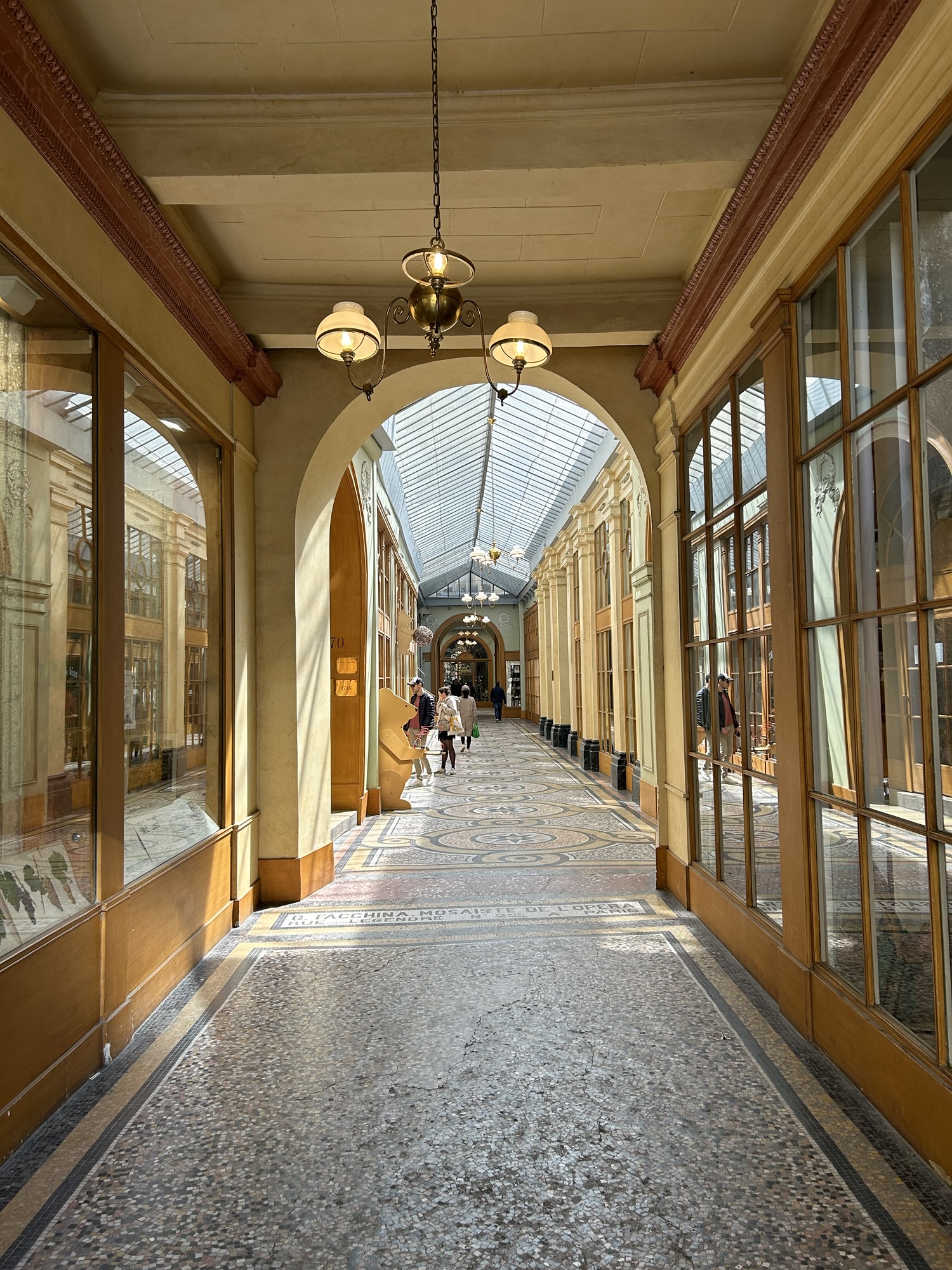
The architecture is magnificent! The arcade was constructed in a neo-classical Pompeian style with large glass vaulted ceilings throwing light onto the intricate tiled mosaic floor created by Giandomenico Facchina and Mazzioli.
With artisan shops, bookstores, paintings and high end fashion boutiques it was a beautiful place to wander through and admire the craftmanship of a bygone era.
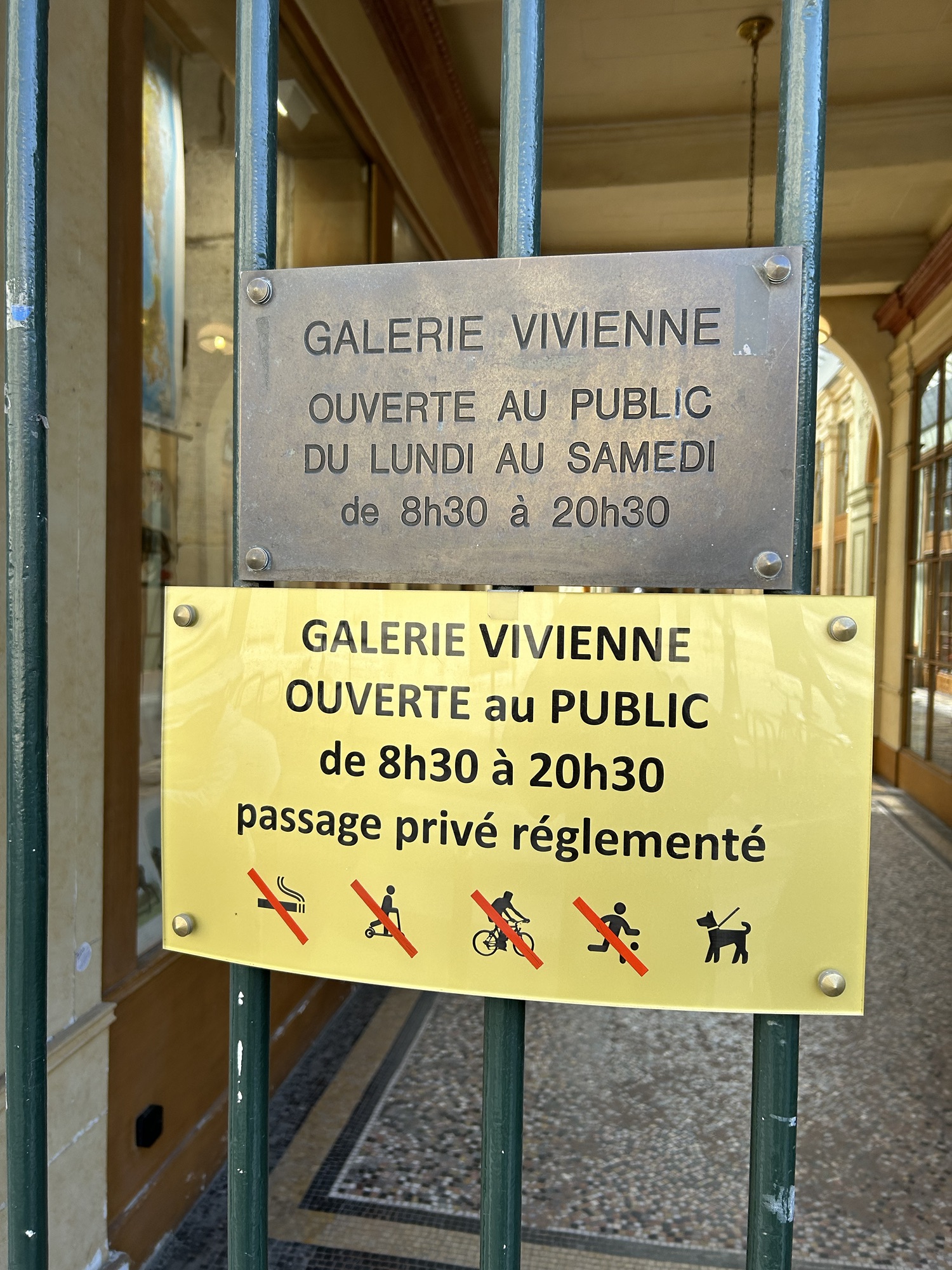
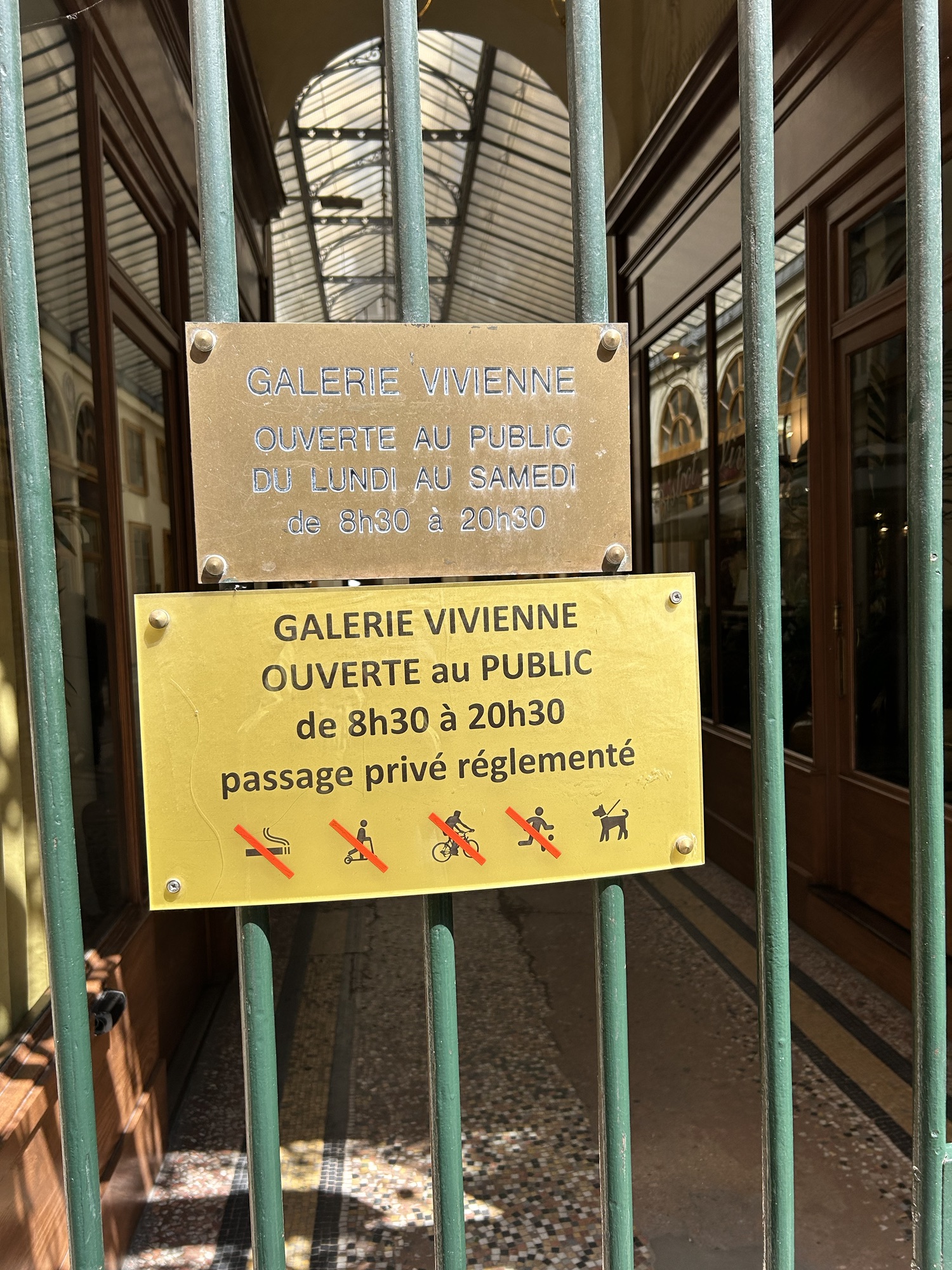
Open to the public from Monday to Saturdays 8.30 – 20.30 it has free admission. Galerie Vivienne is well worth a visit – next time I’m lucky enough to find myself in Paris, I’ll be looking to explore a few other of these beautiful arcades.
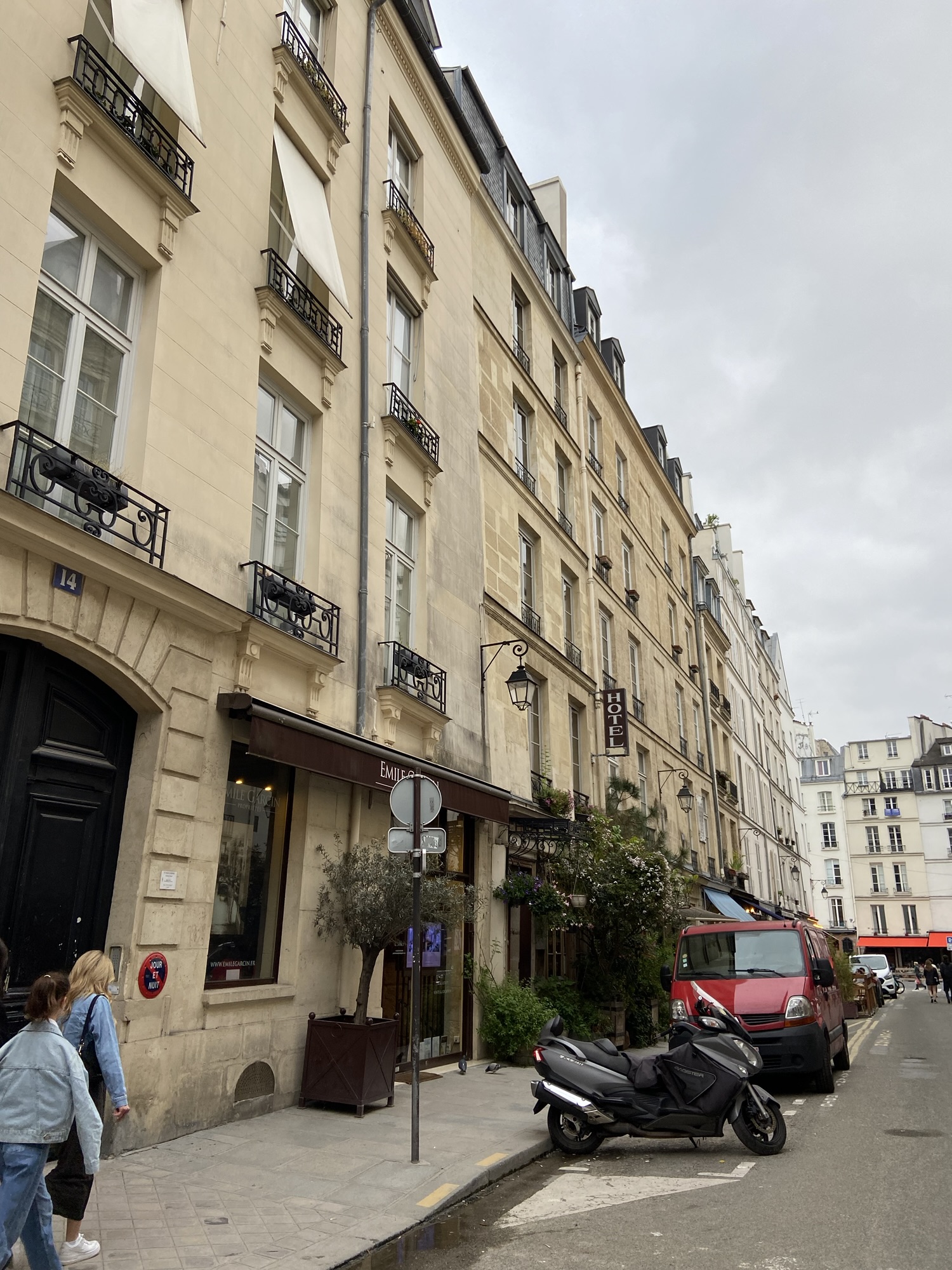
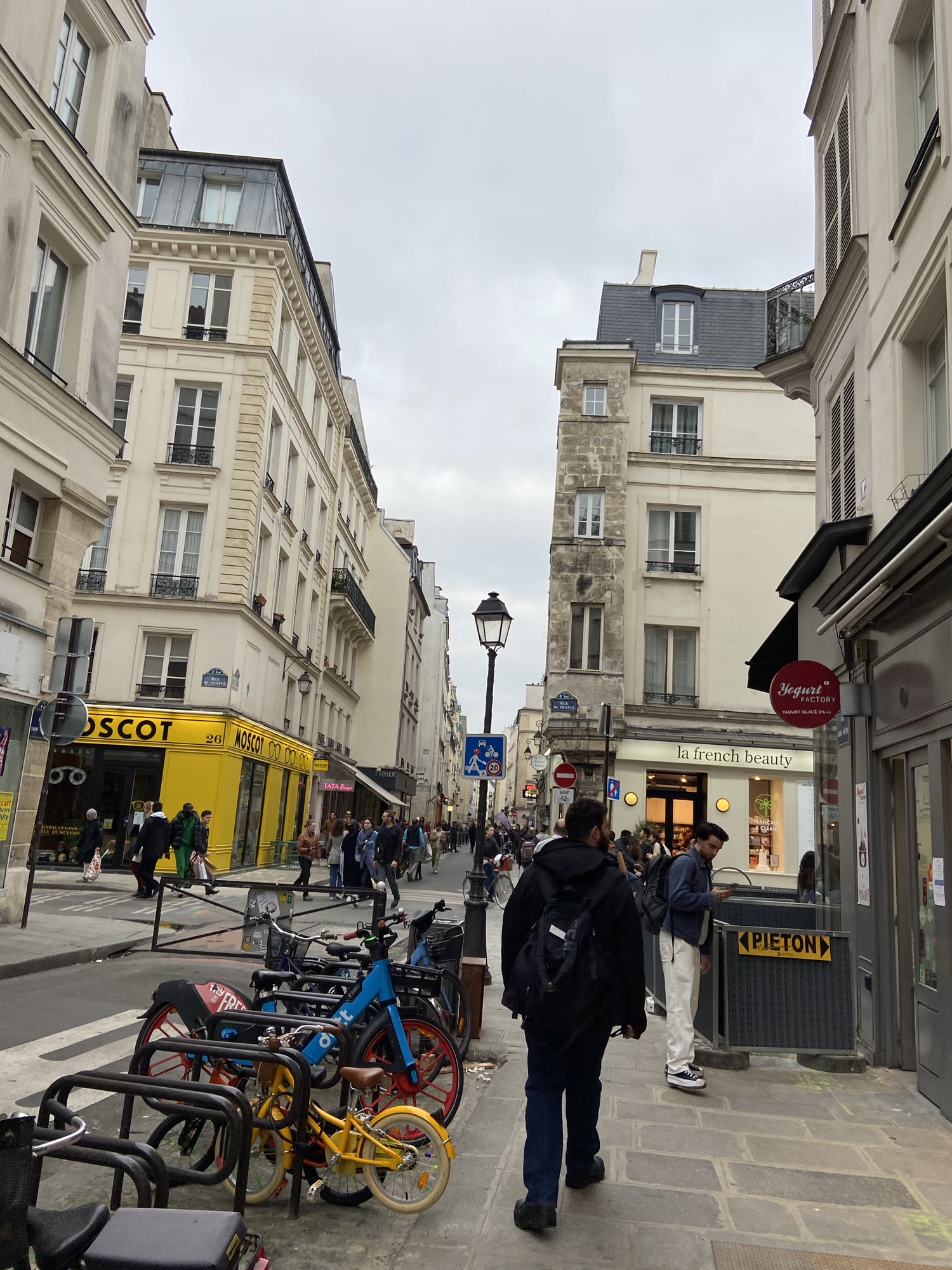
Here’s another instalment of our wanderings round the charming streets of Le Marais district of Paris. I wrote quite a bit about the historical context in my last post here.
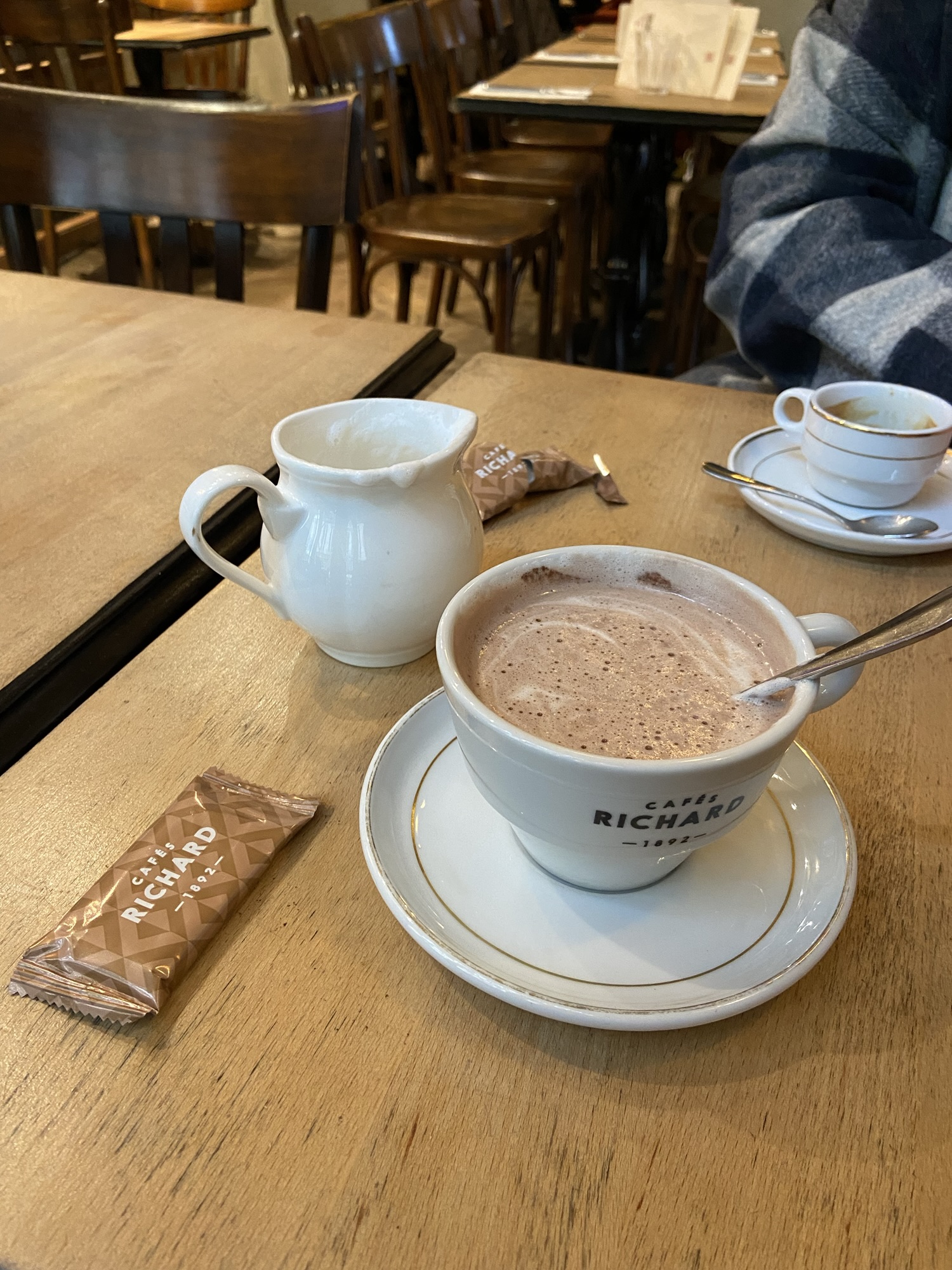
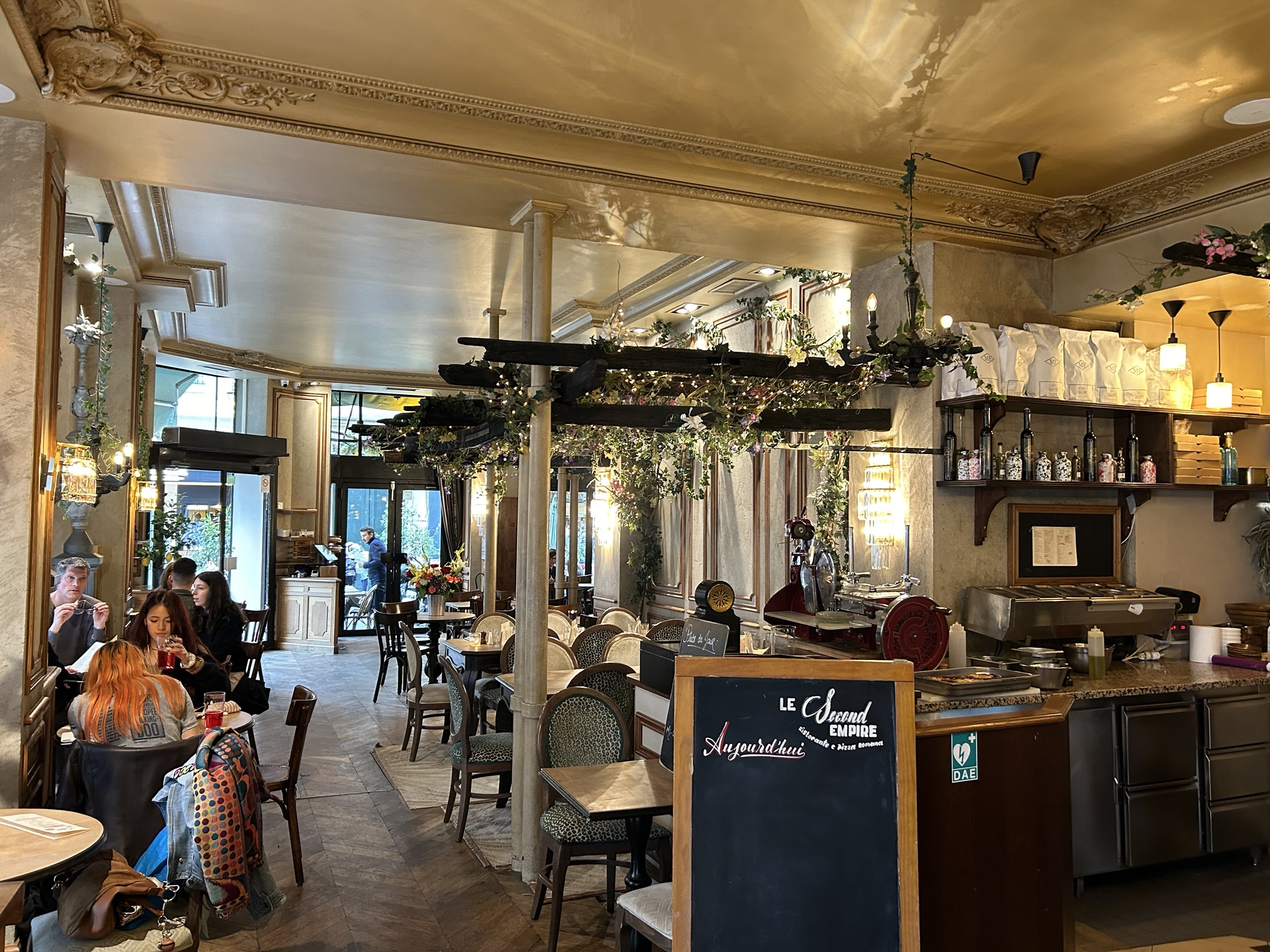
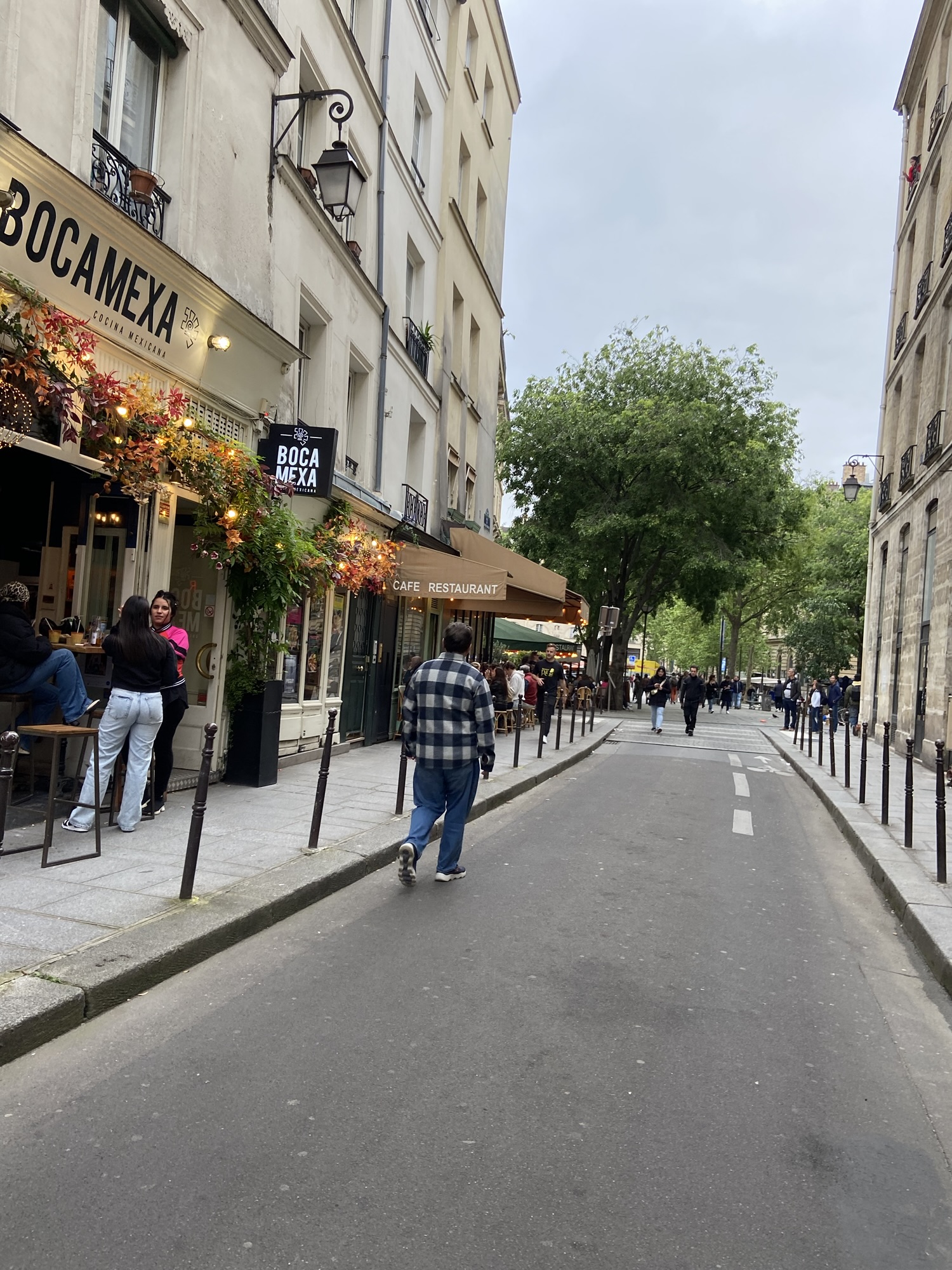
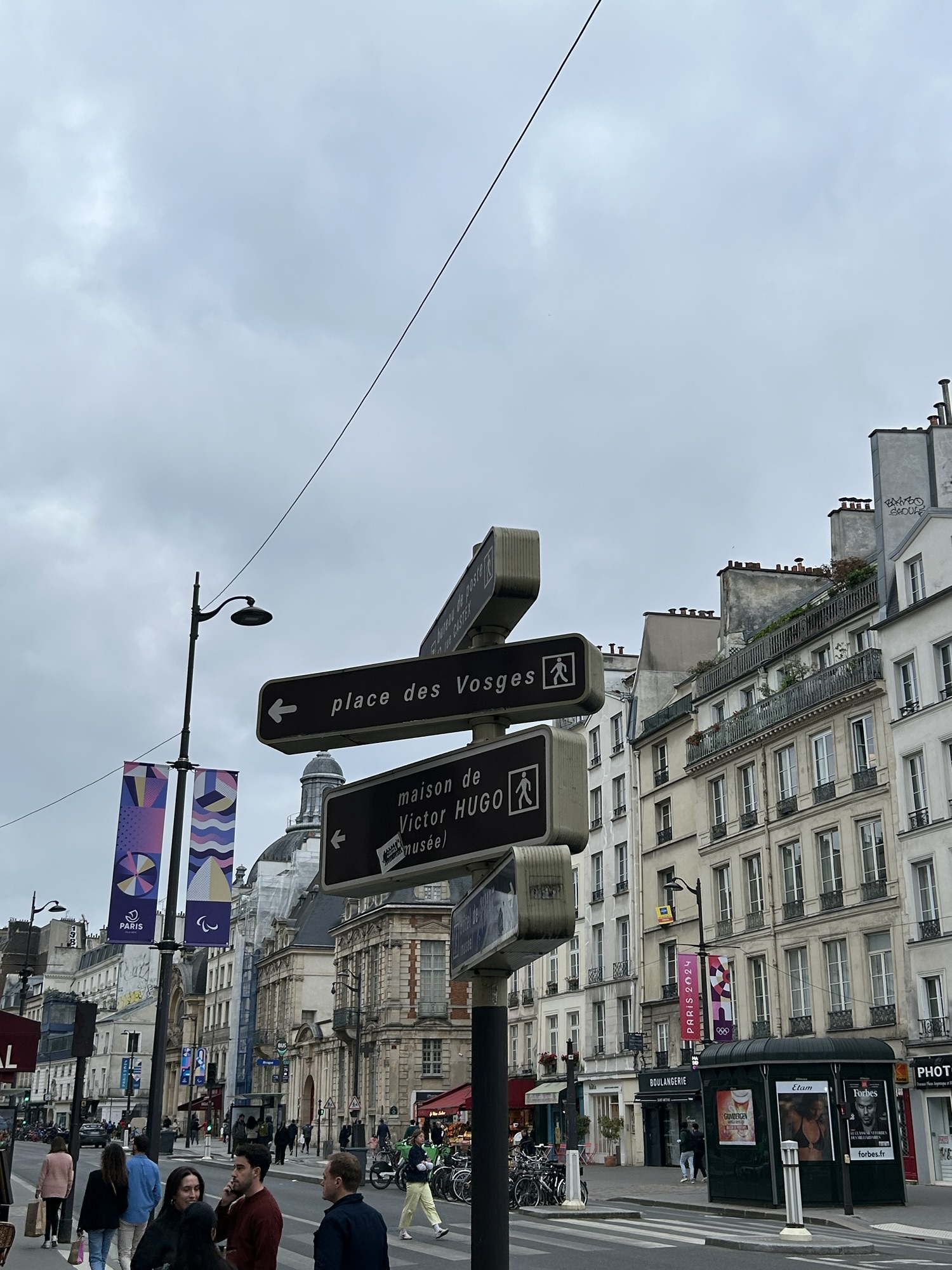
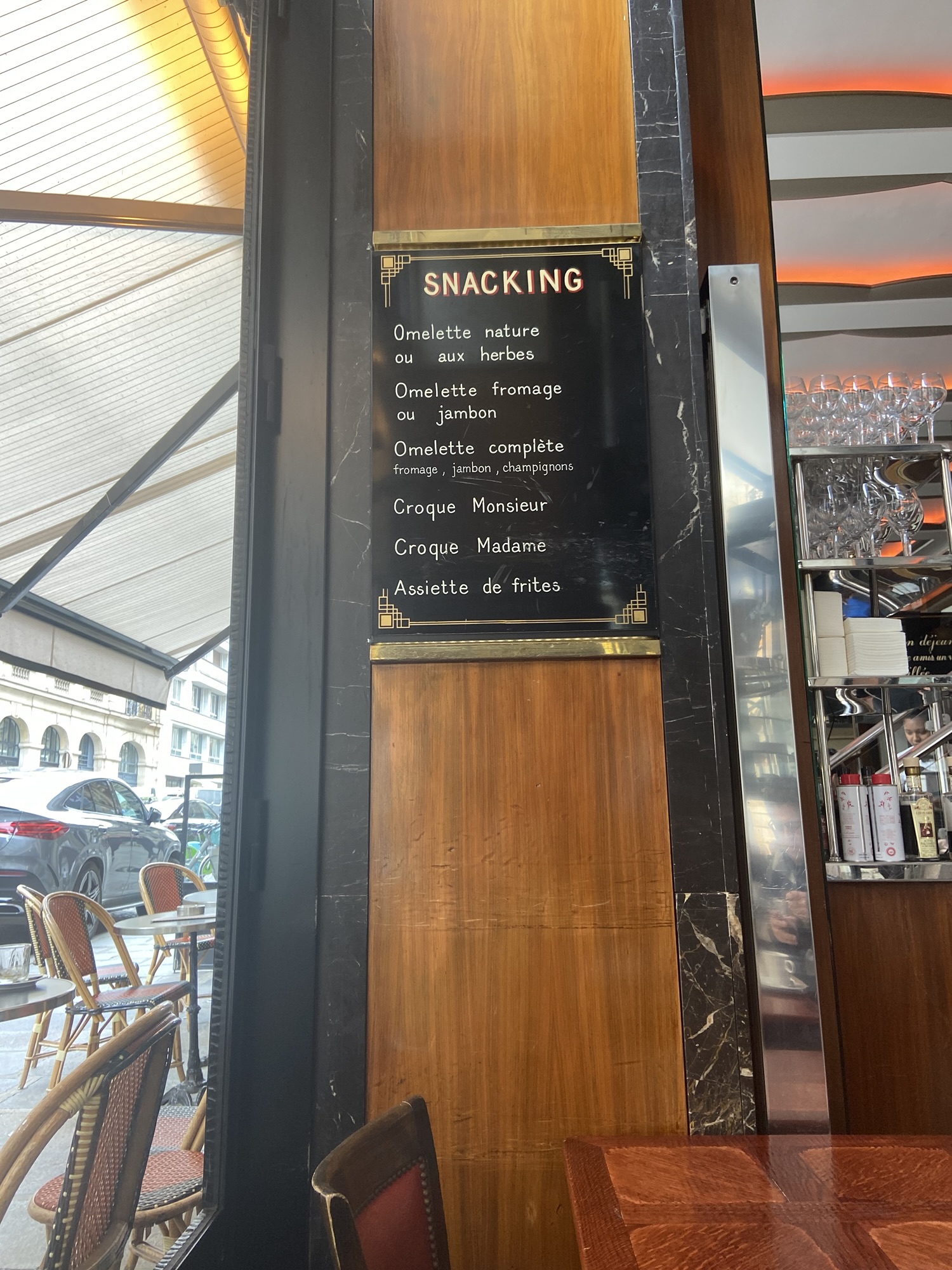
We headed away from the Rue St Martin down the Rue de la Verrerie in the direction of the Place des Vosges. By this stage our early start and snack lunch were getting the better of us so we stopped by “Le Second Empire” cafe for a late lunch or very early dinner – there always seems to be a cafe/bar/restaurant serving food and beverages on every street corner in Paris! You can read more about the epoque of the French Second Empire (1852-1870) here.
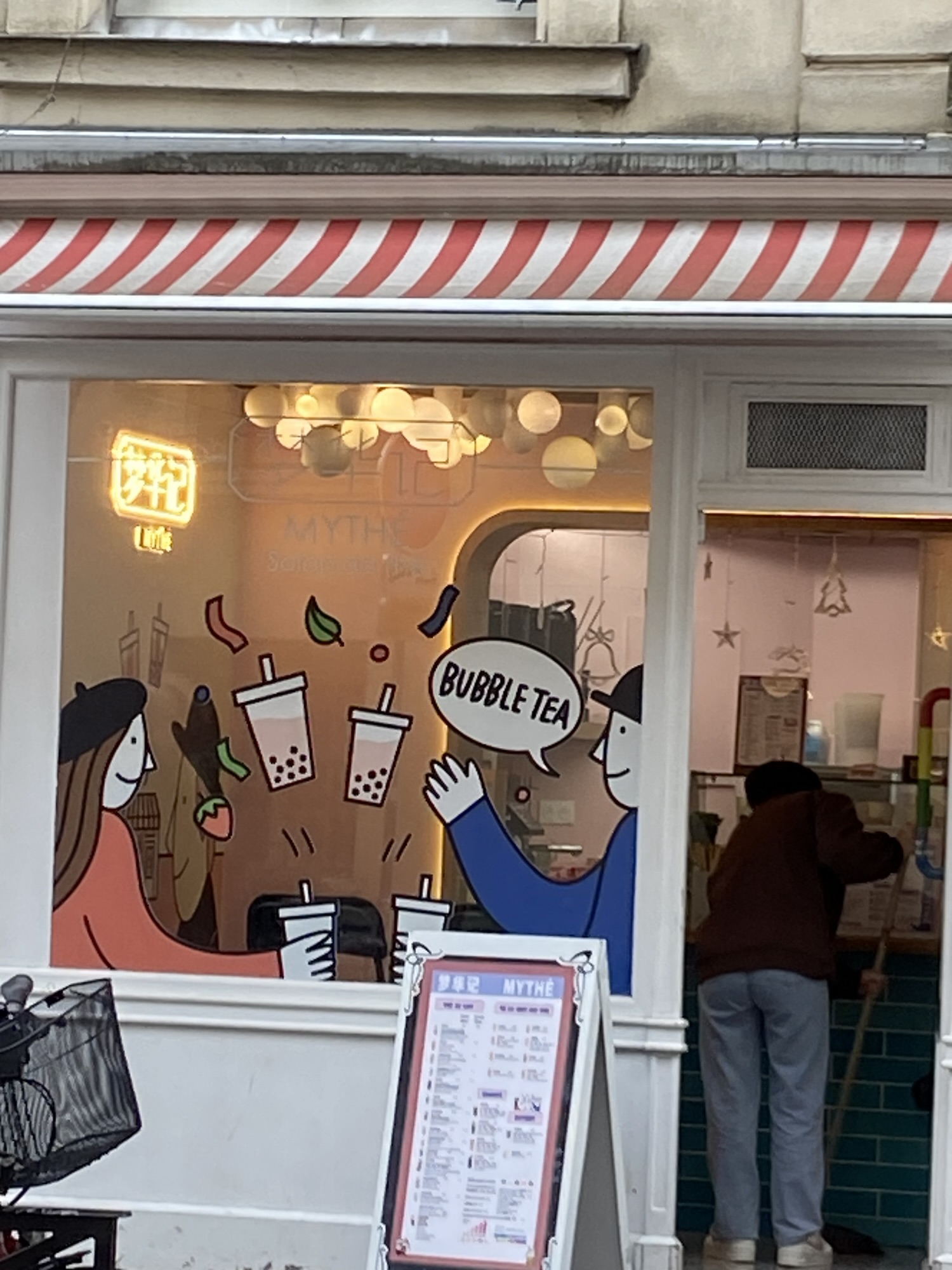
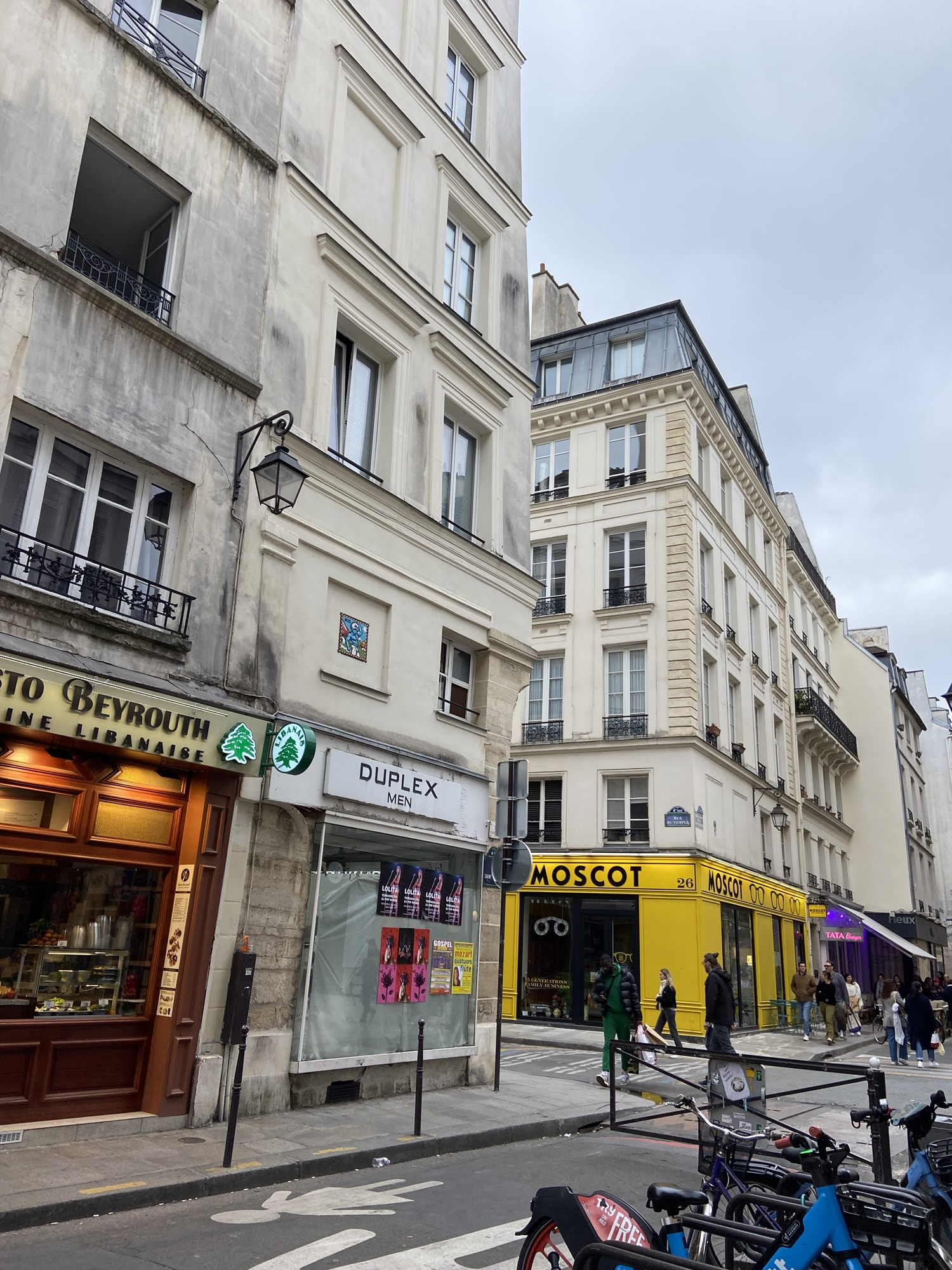
The area is multicultural and diverse. We walked past an old synagogue, kebab & felafel shops, vintage clothing boutiques and, if we’d had time, could have gone to one of the many art galleries and museums in the area. You can find more information about the cultural diversity in the different Parisian neighbourhoods here.
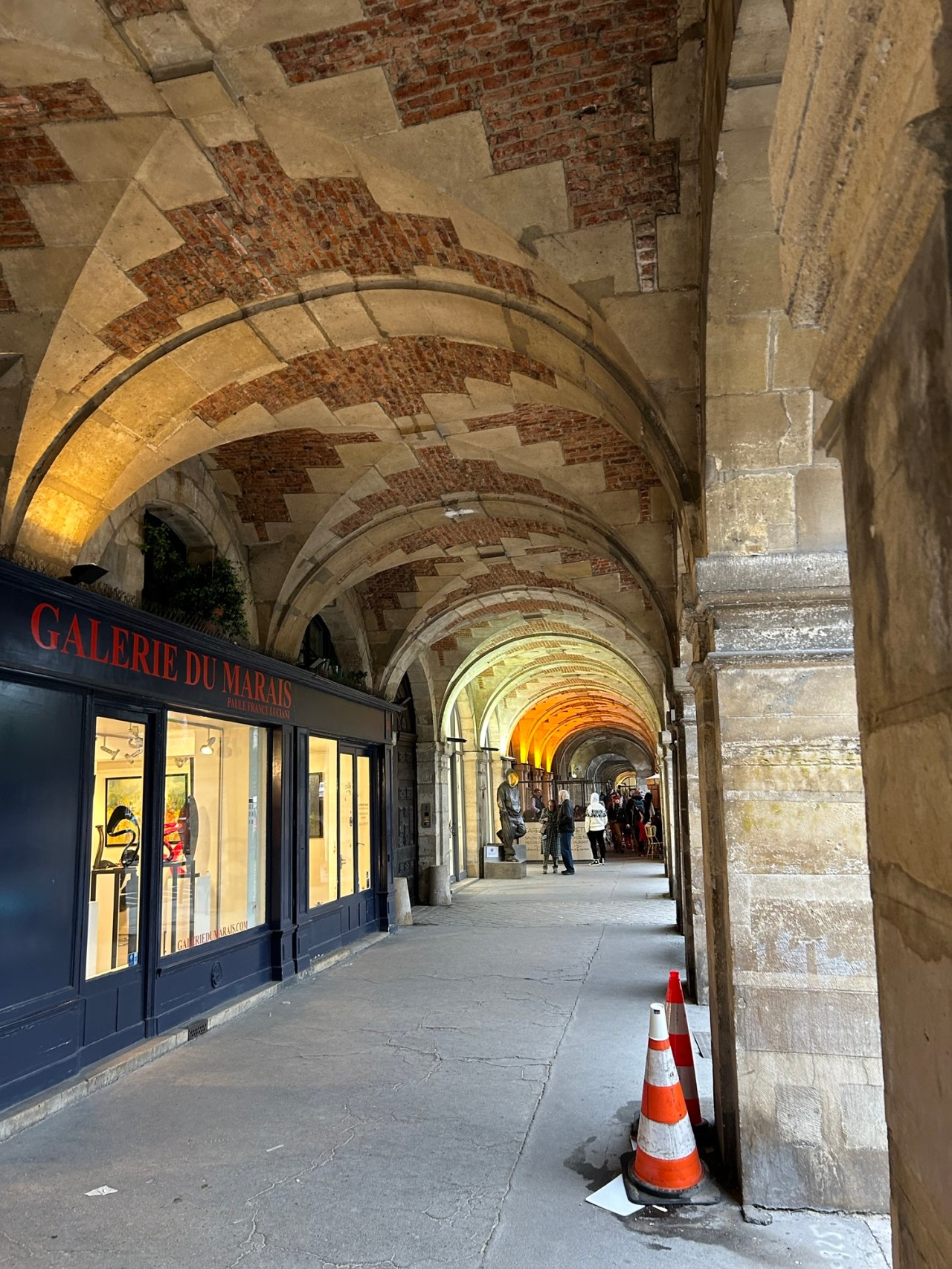
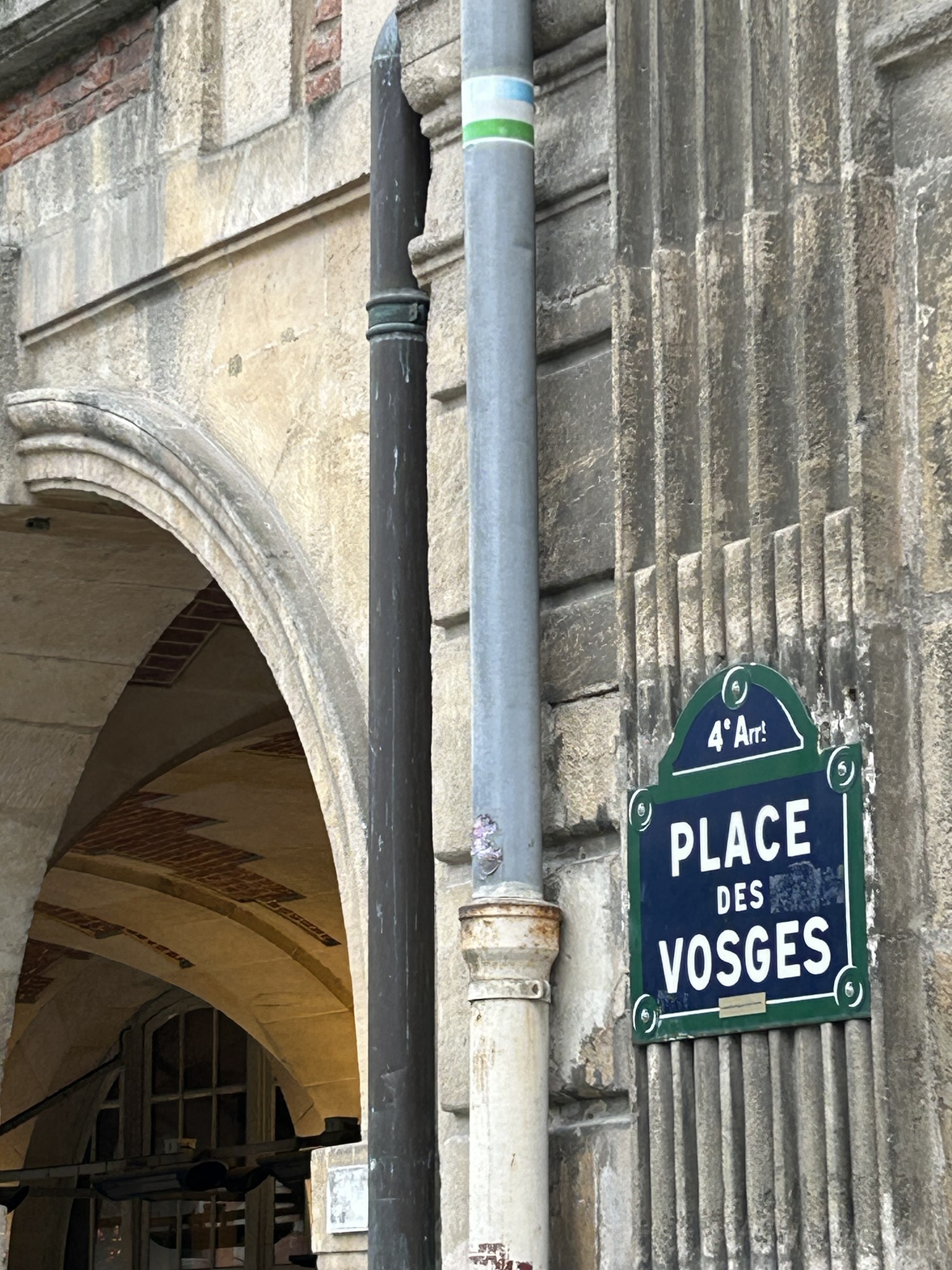
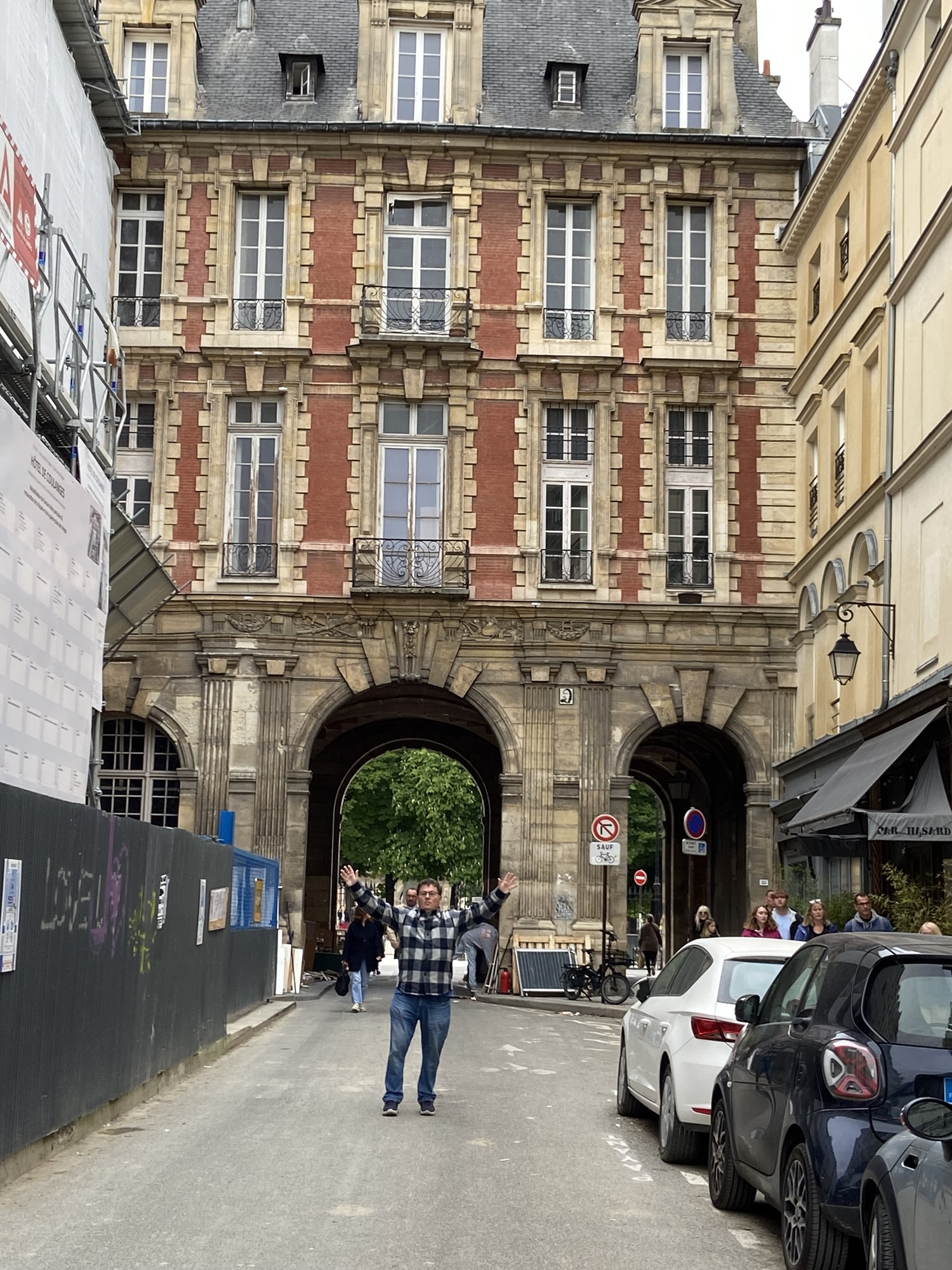
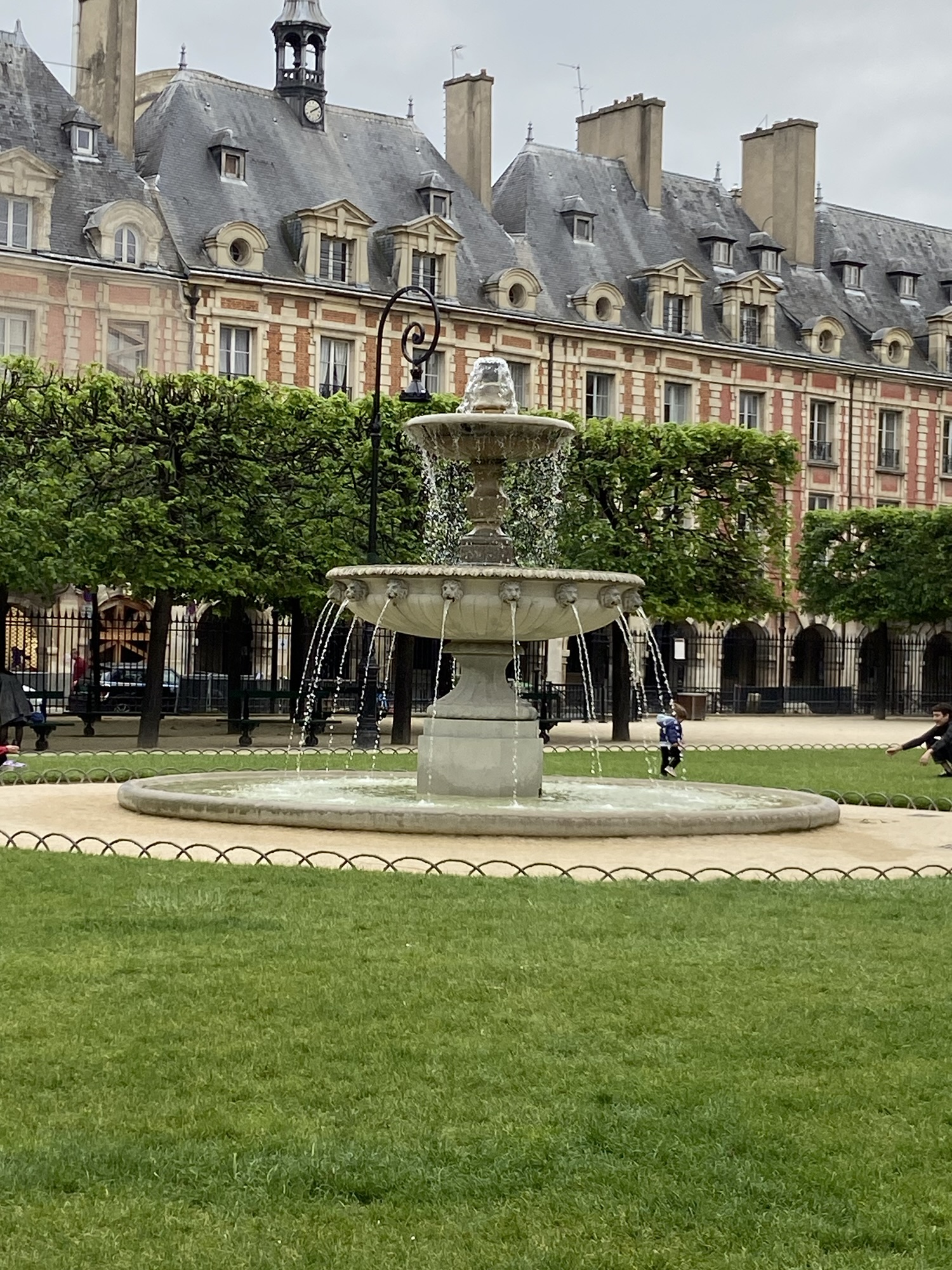
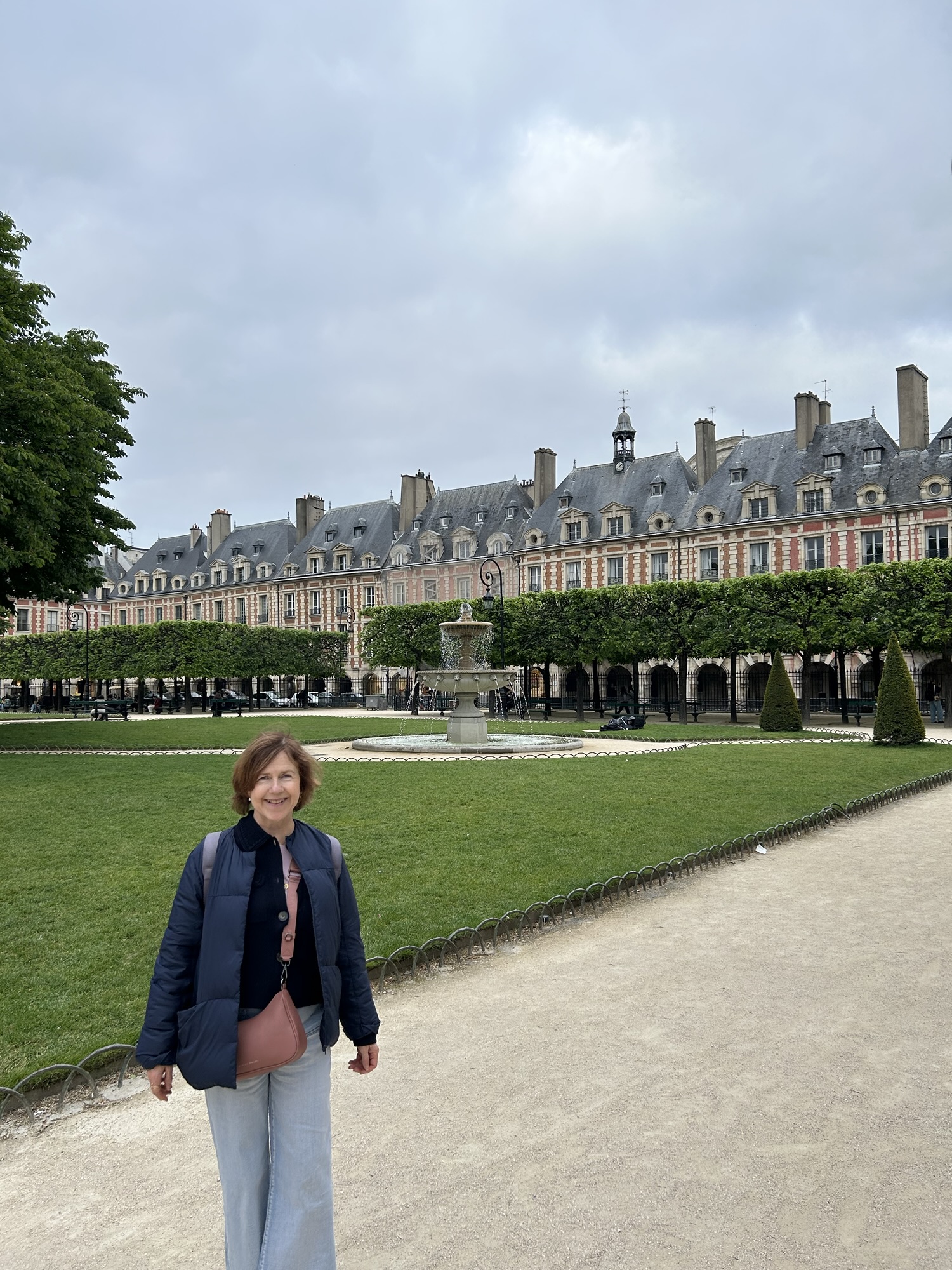
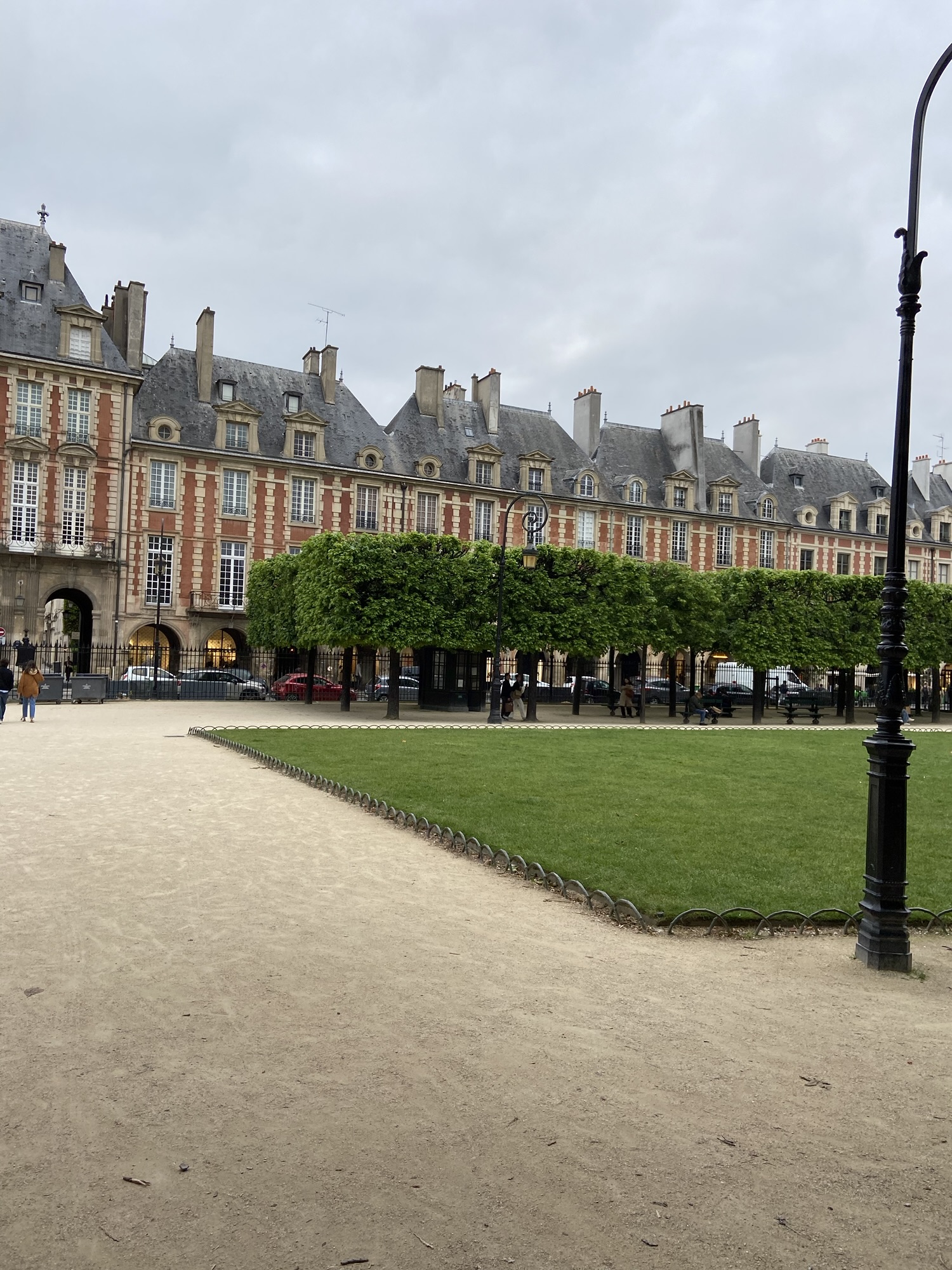
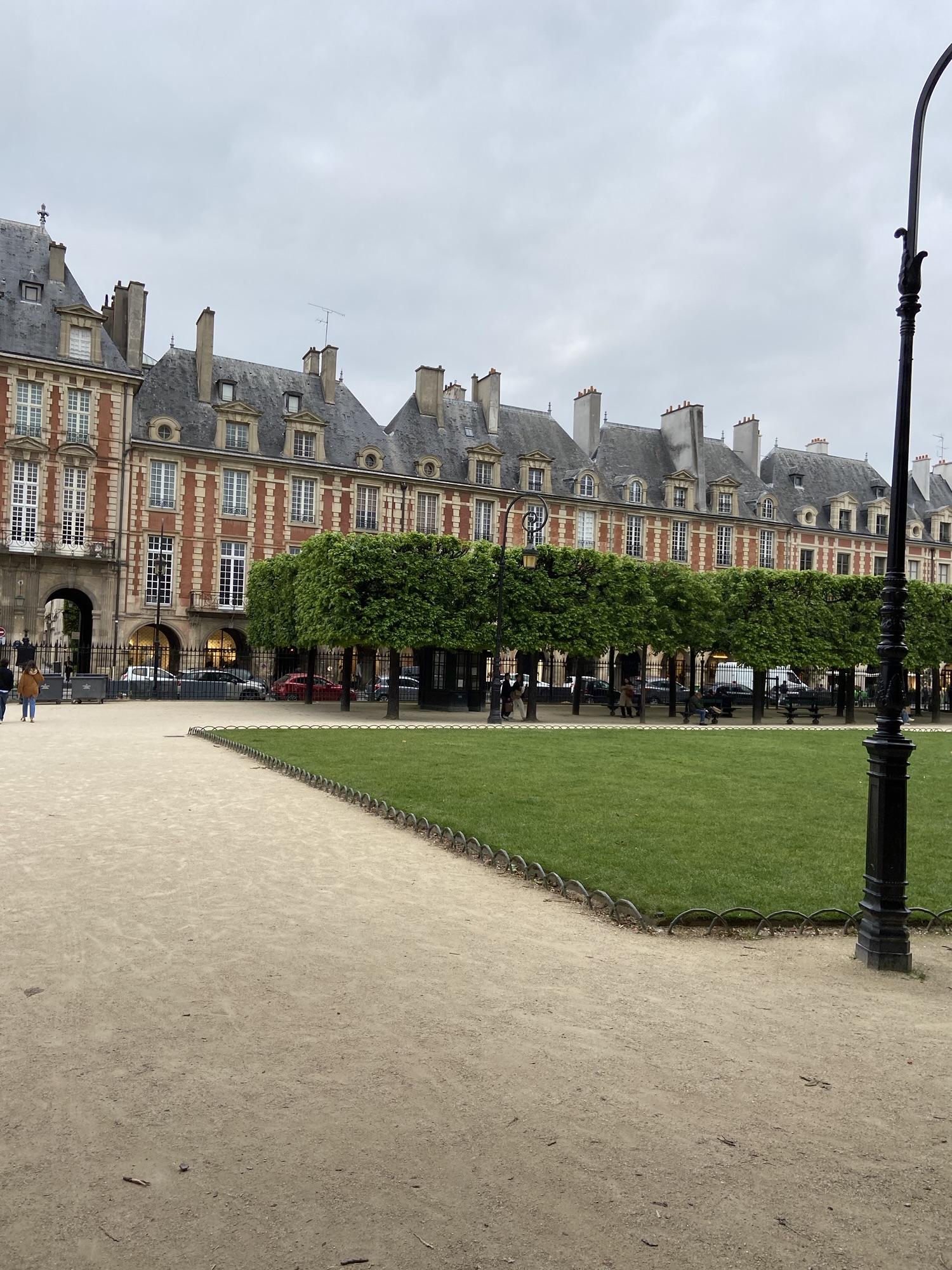
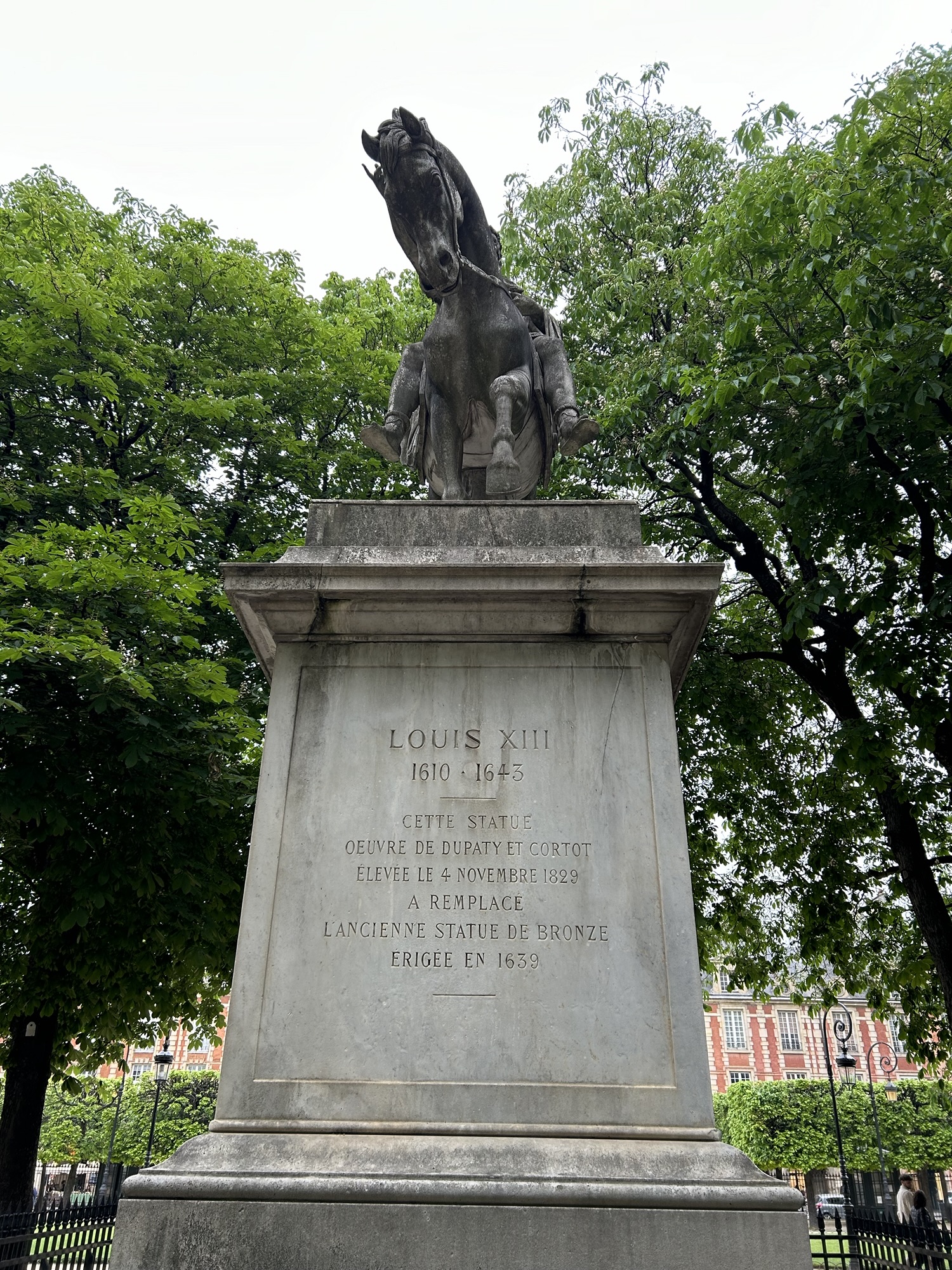
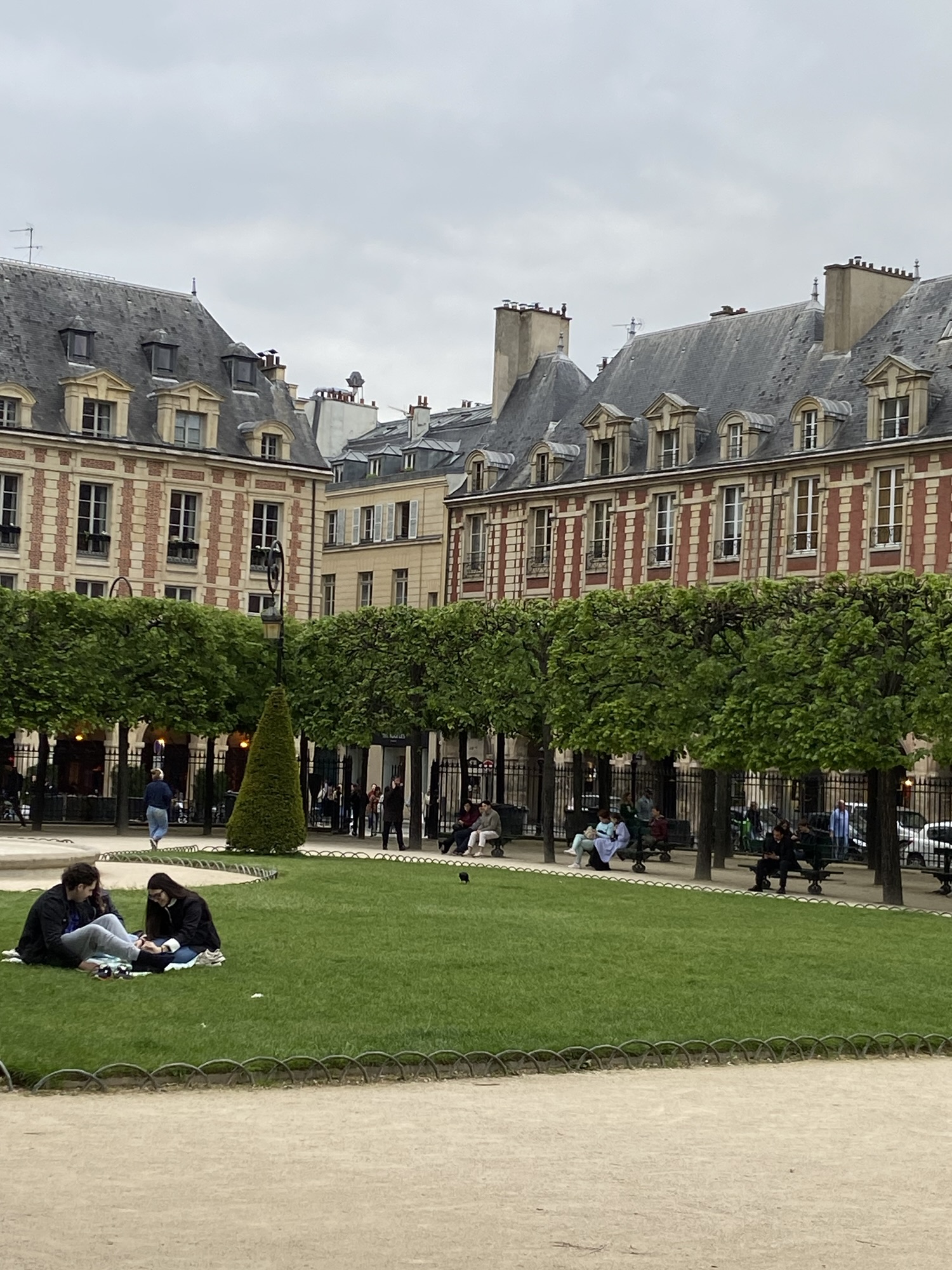
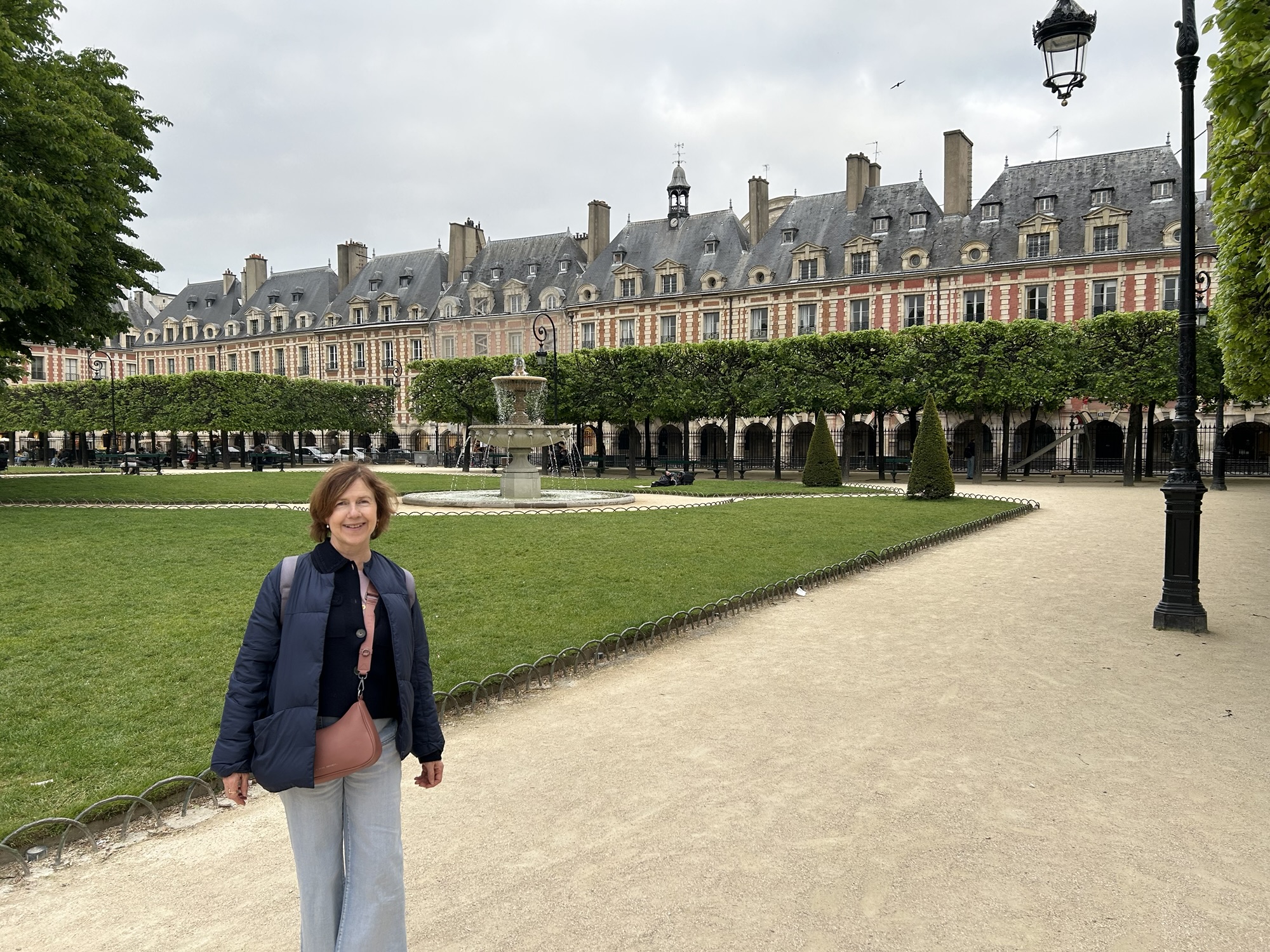
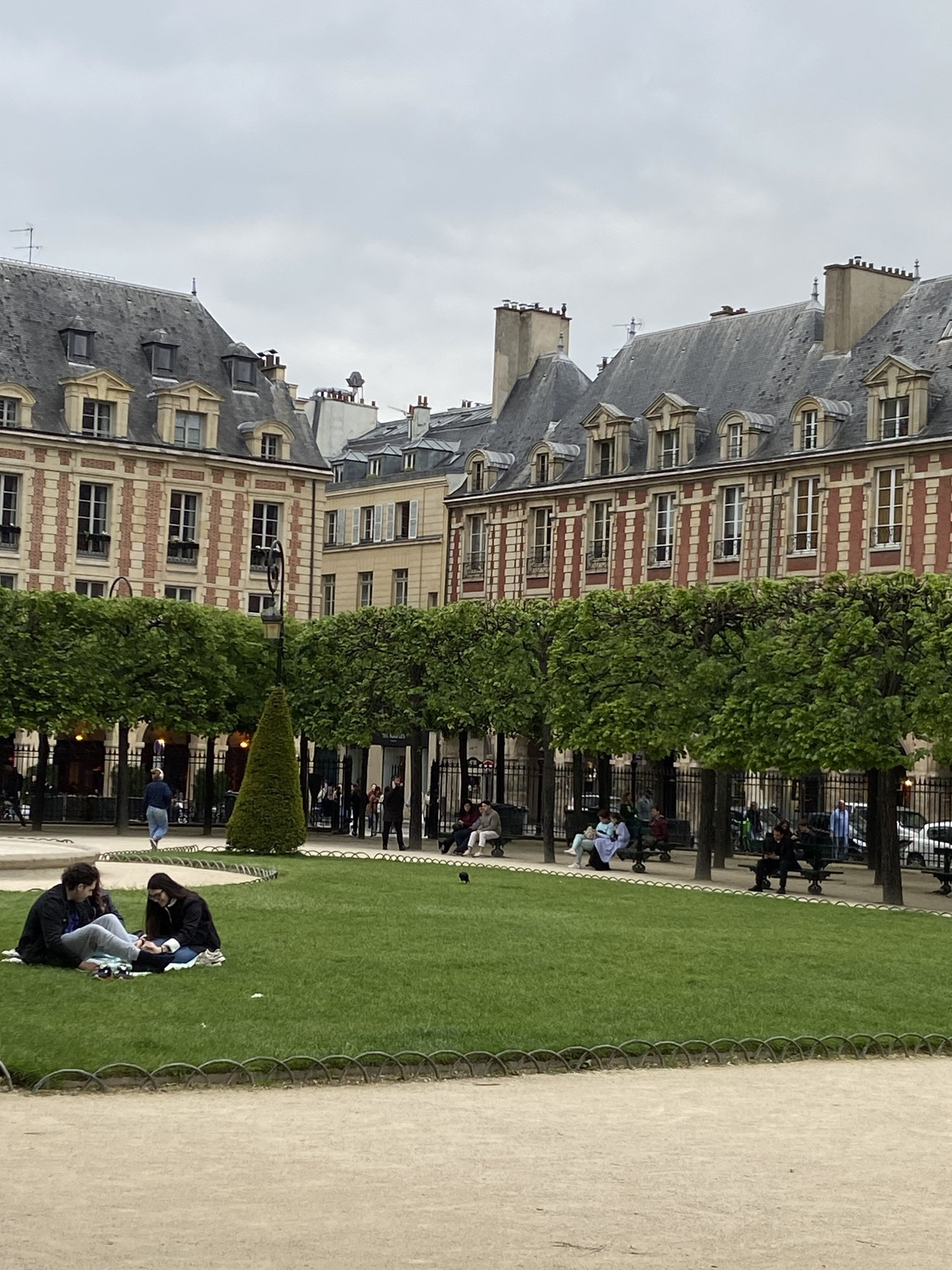
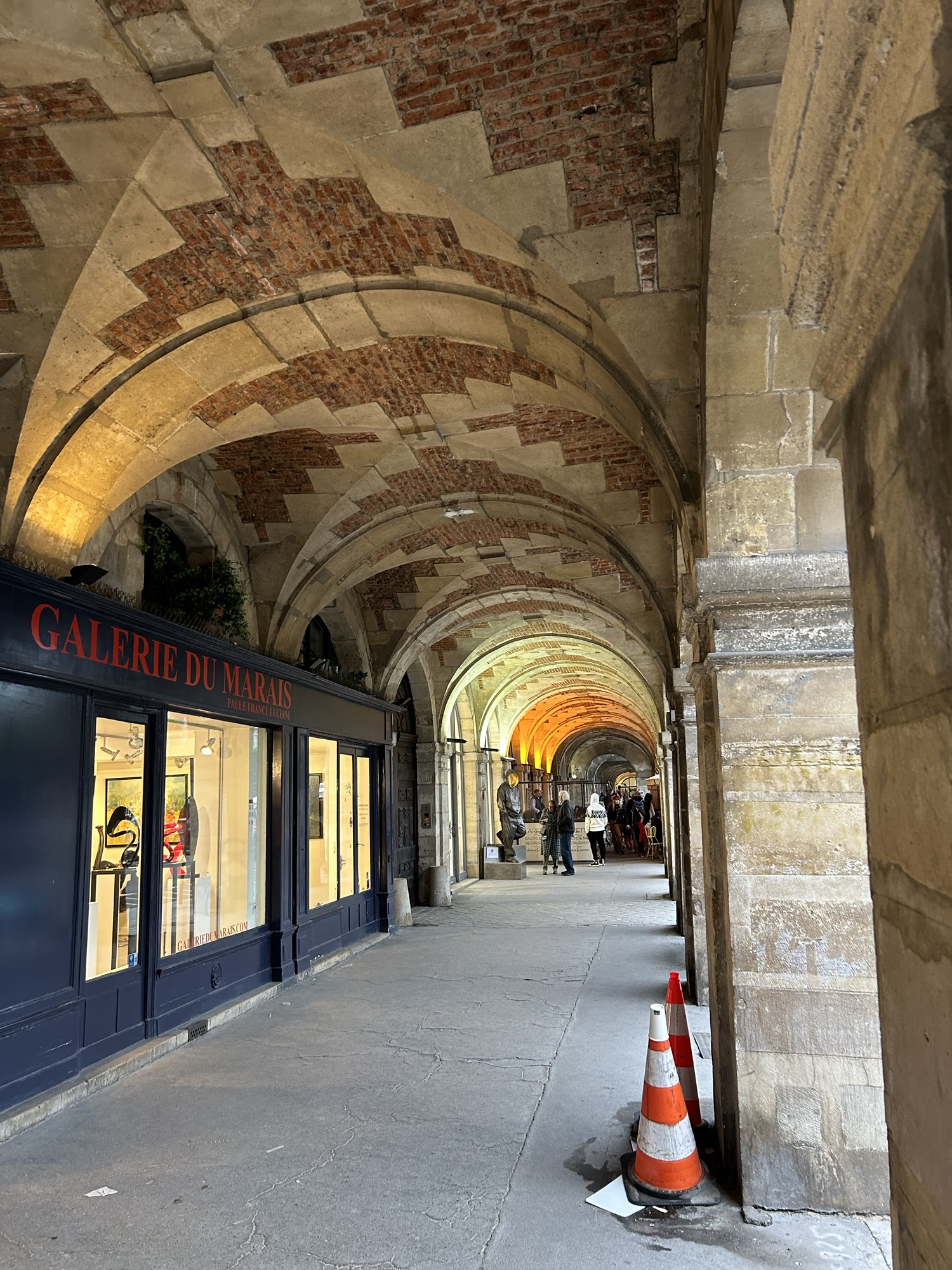
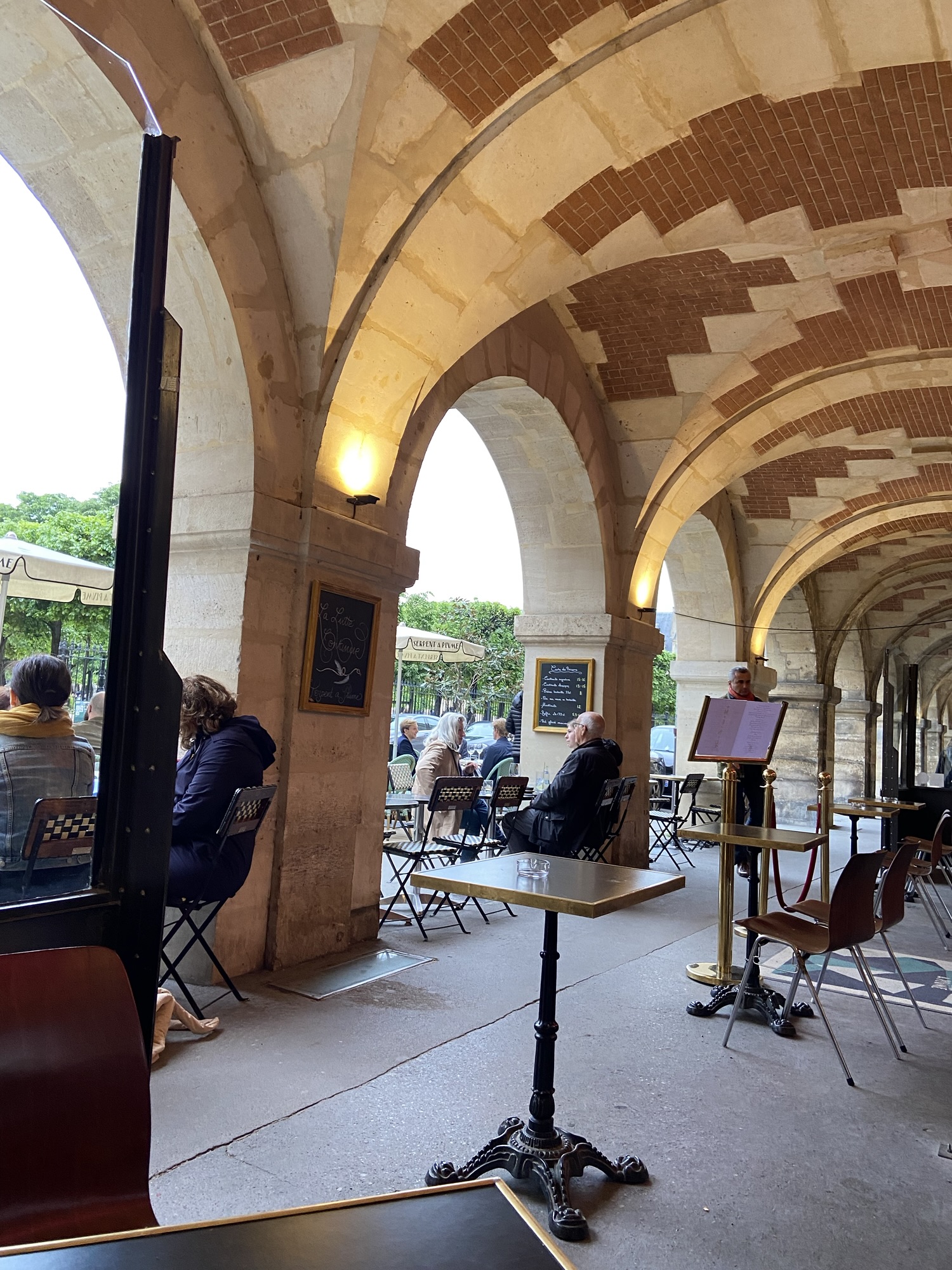
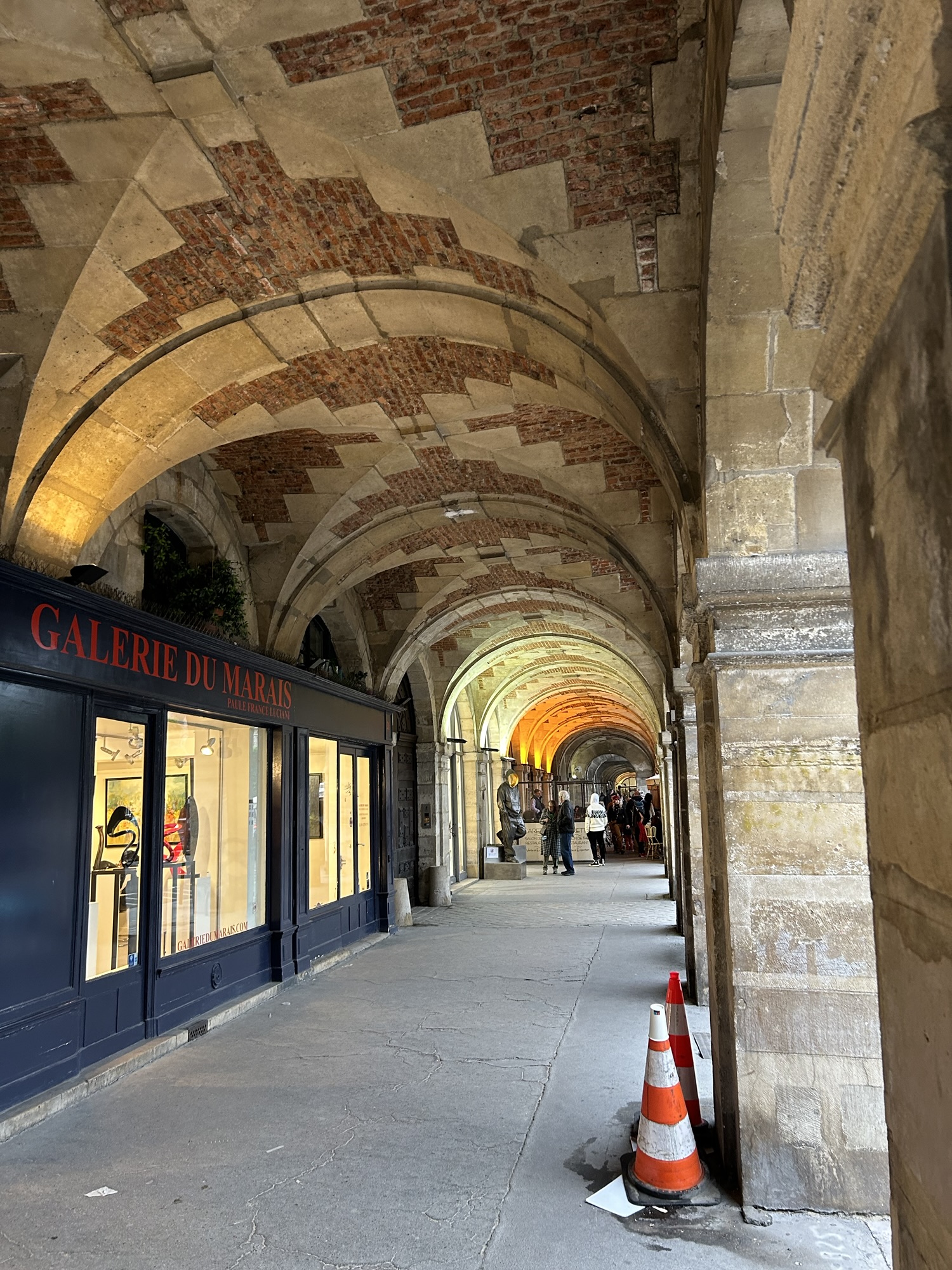
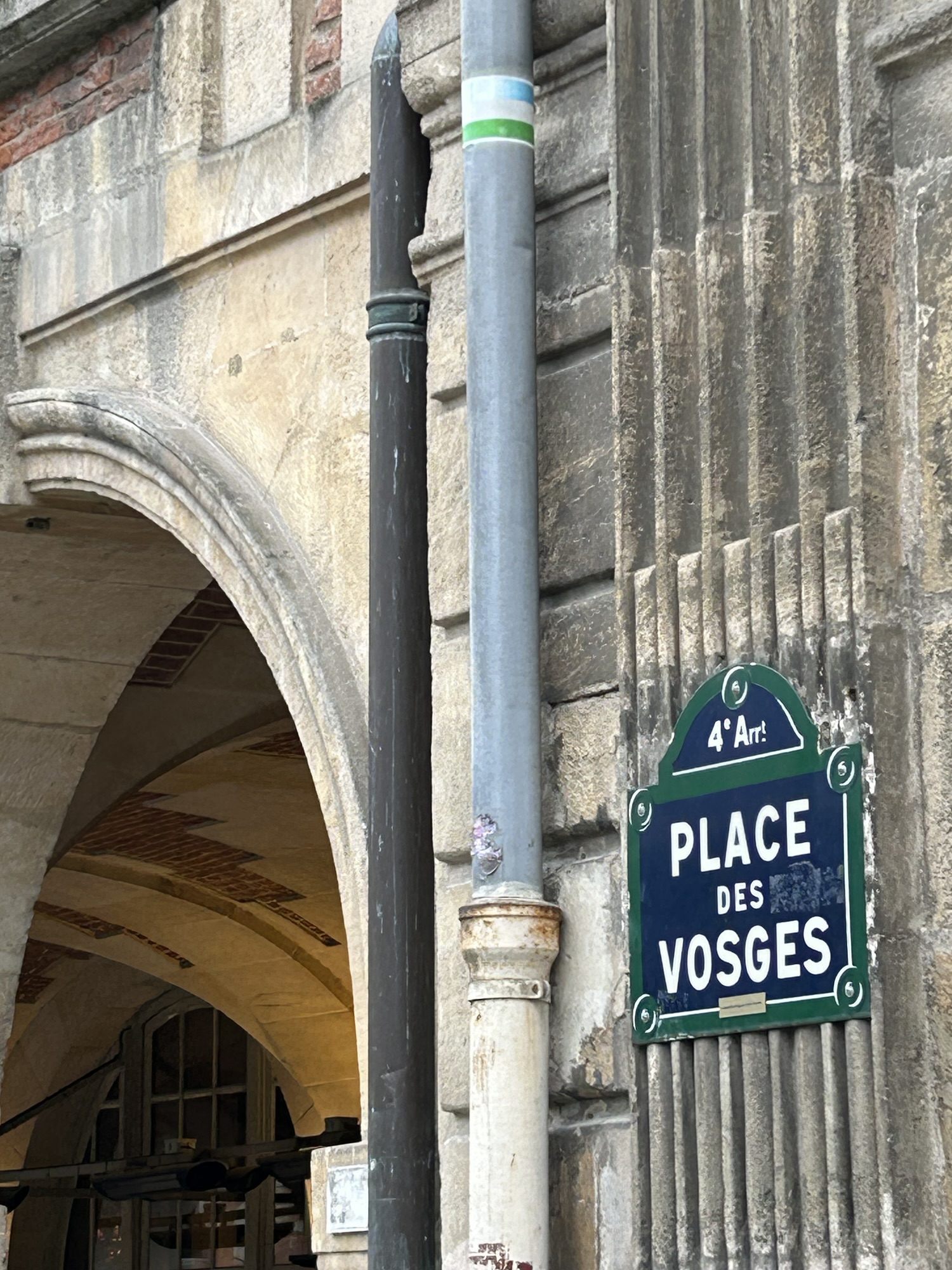
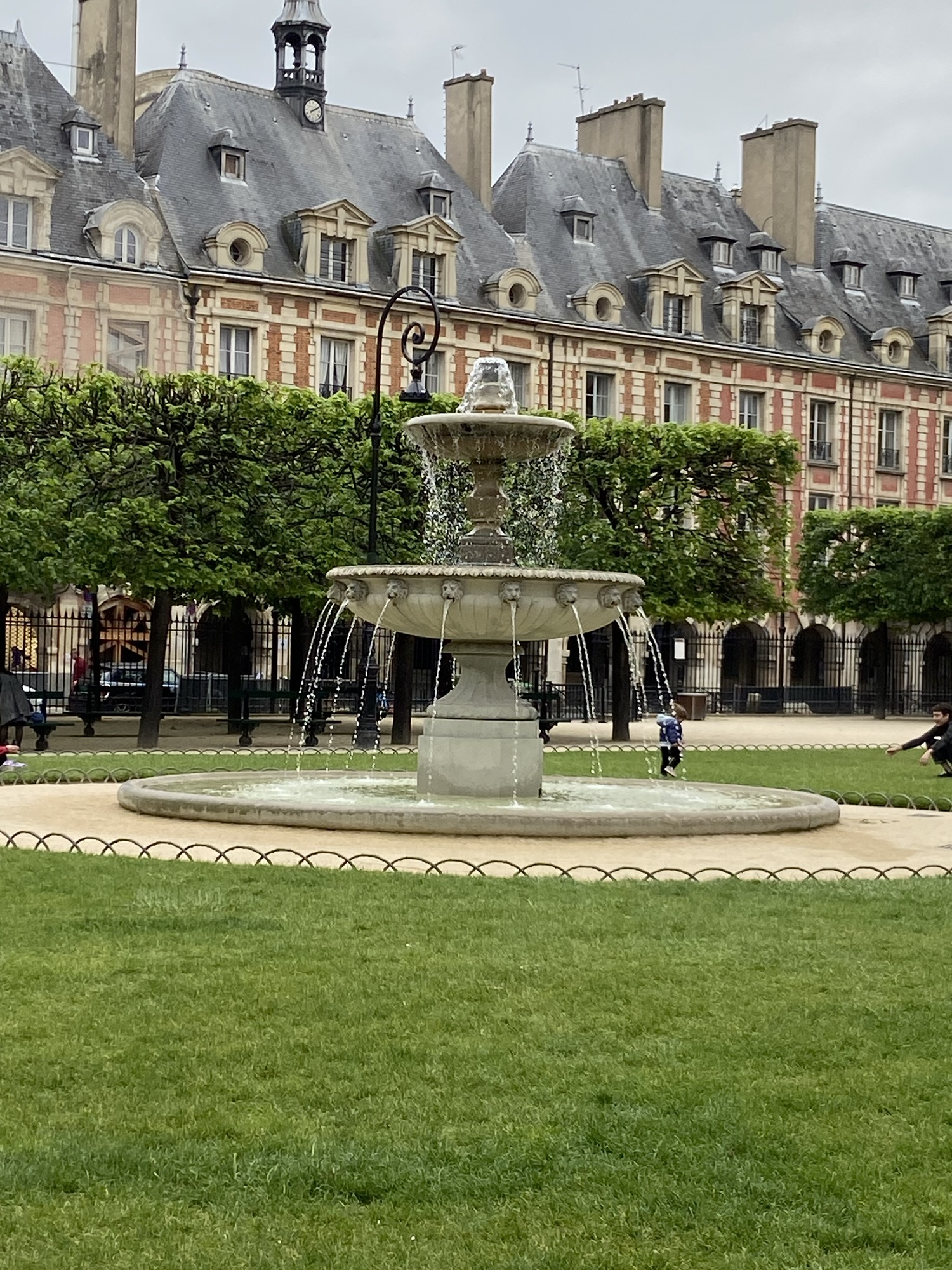
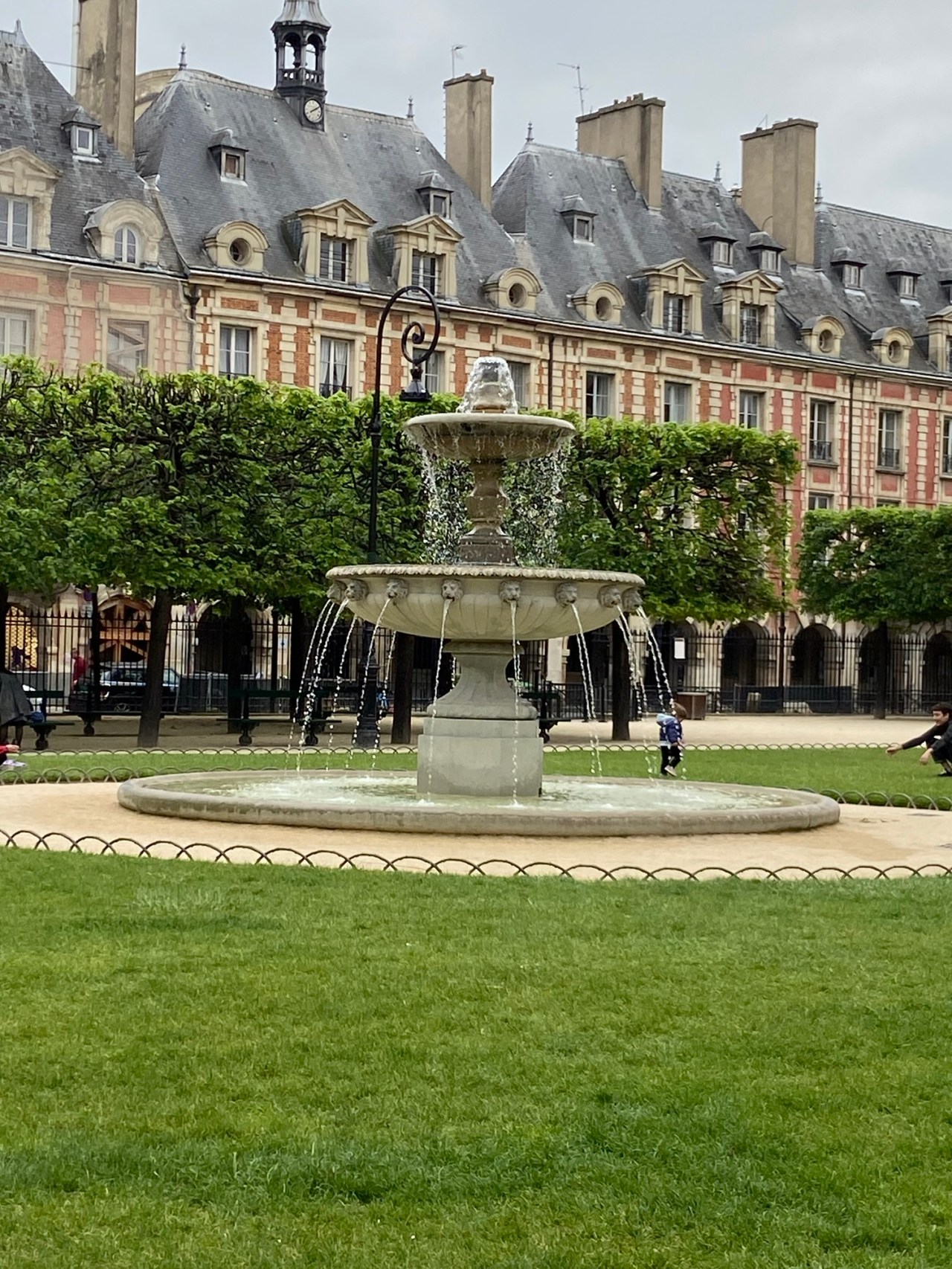
We ended up at the elegant Place des Vosges, the oldest planned square in Paris. Originally known as the Place Royale, it was built by Henri IV of France from 1605-1612. It’s a beautiful and impressive piece of architecture and built as a true square,
“It is an enclosed square, accessible via a main street on one of its four sides and two streets running beneath pavilions“
The square and its environs became a favoured place of residence during 17th- and 18th-centuries for the French nobility. Some of their beautiful mansions now house museums and art collections such as the Musee Picasso Paris, the Musee Carnavalet and Maison de Victor Hugo.
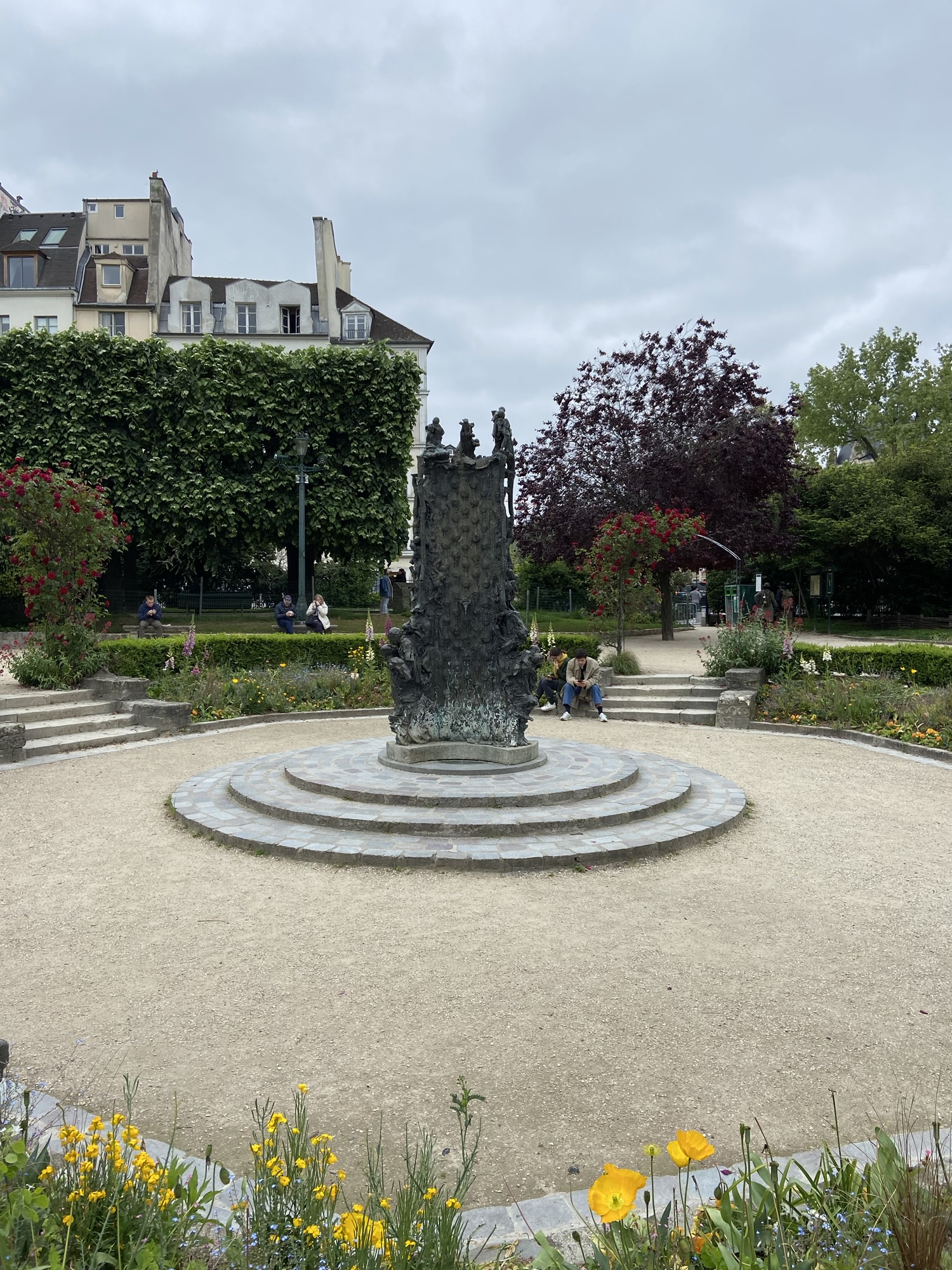
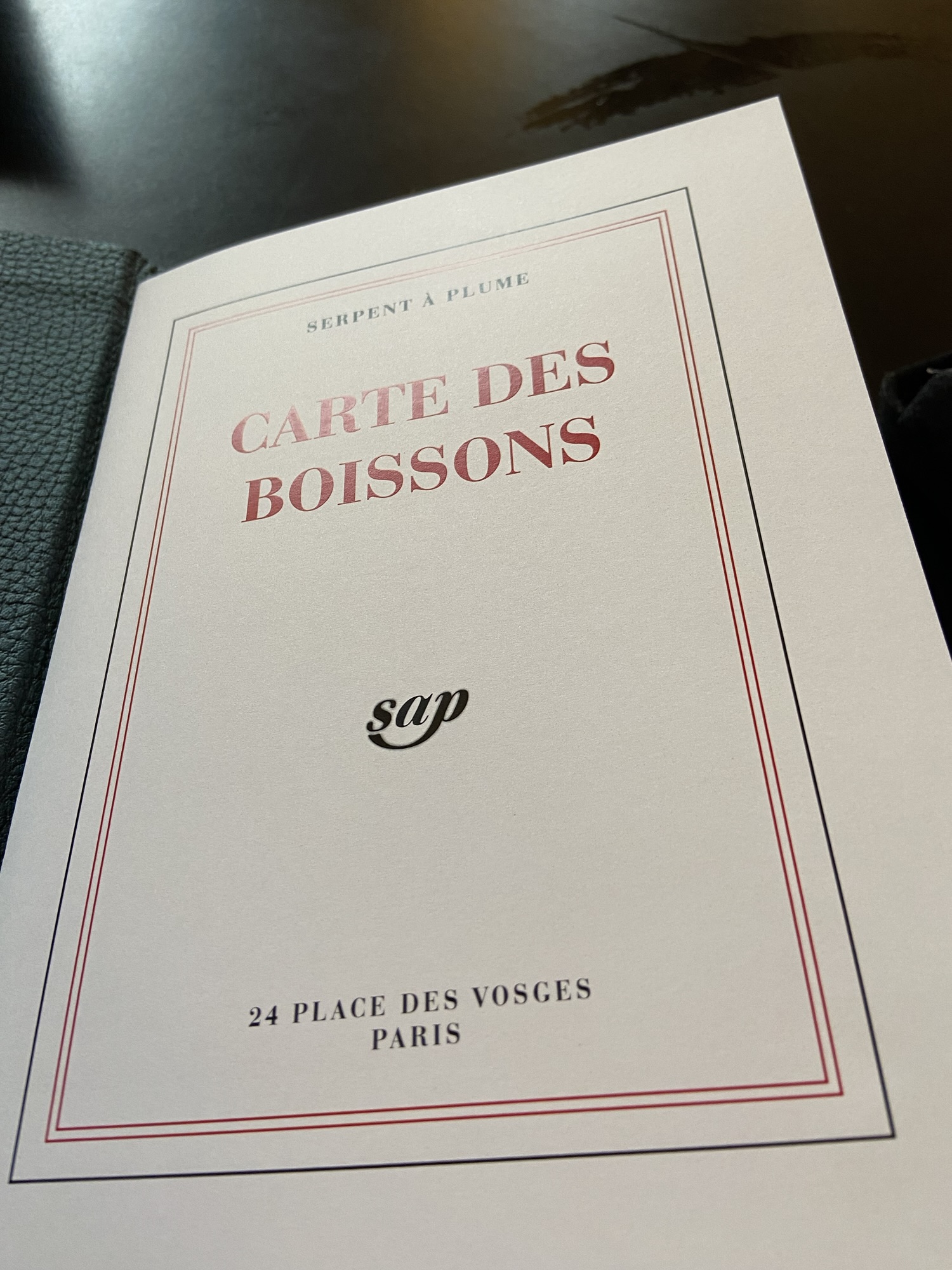
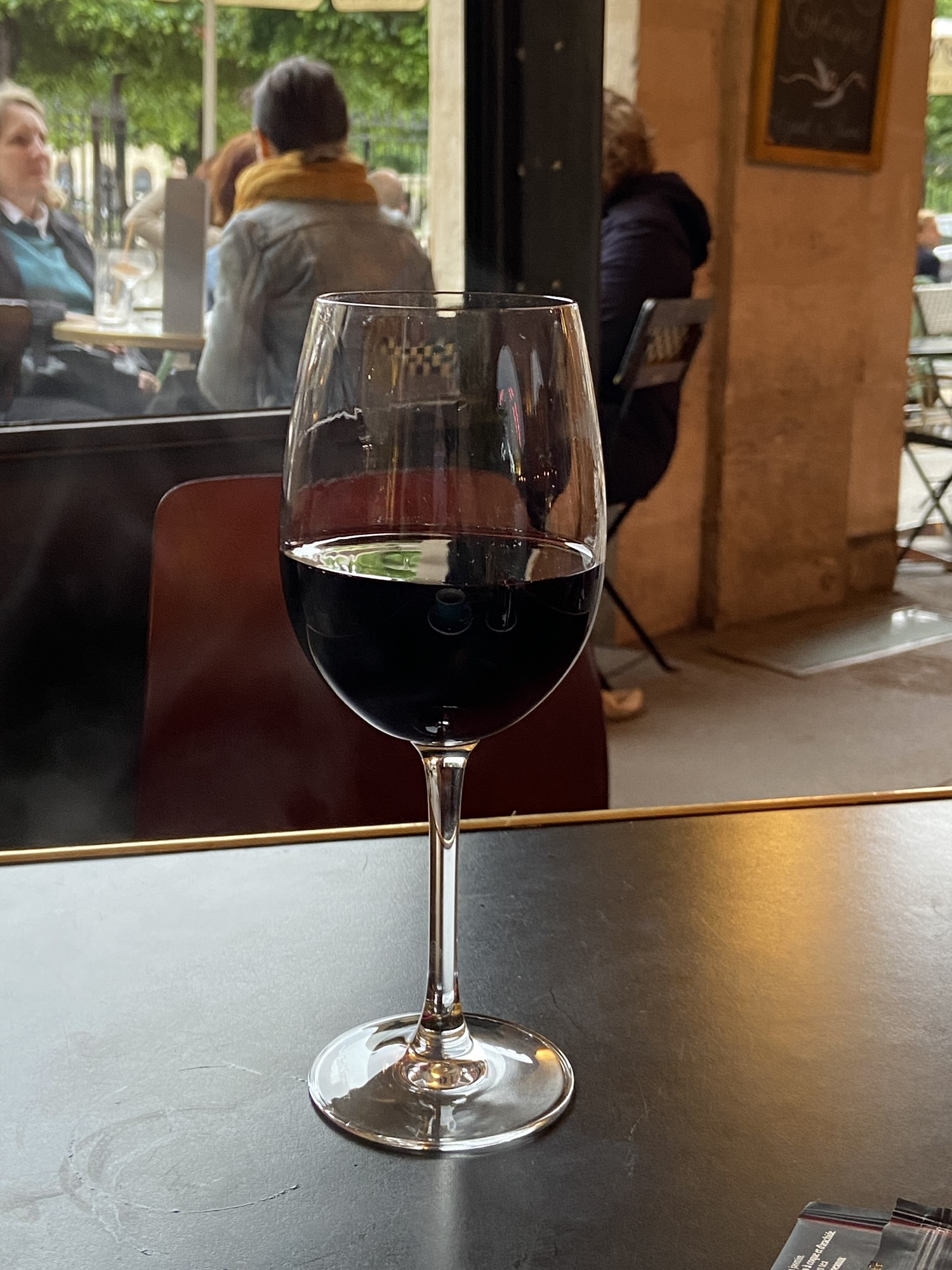
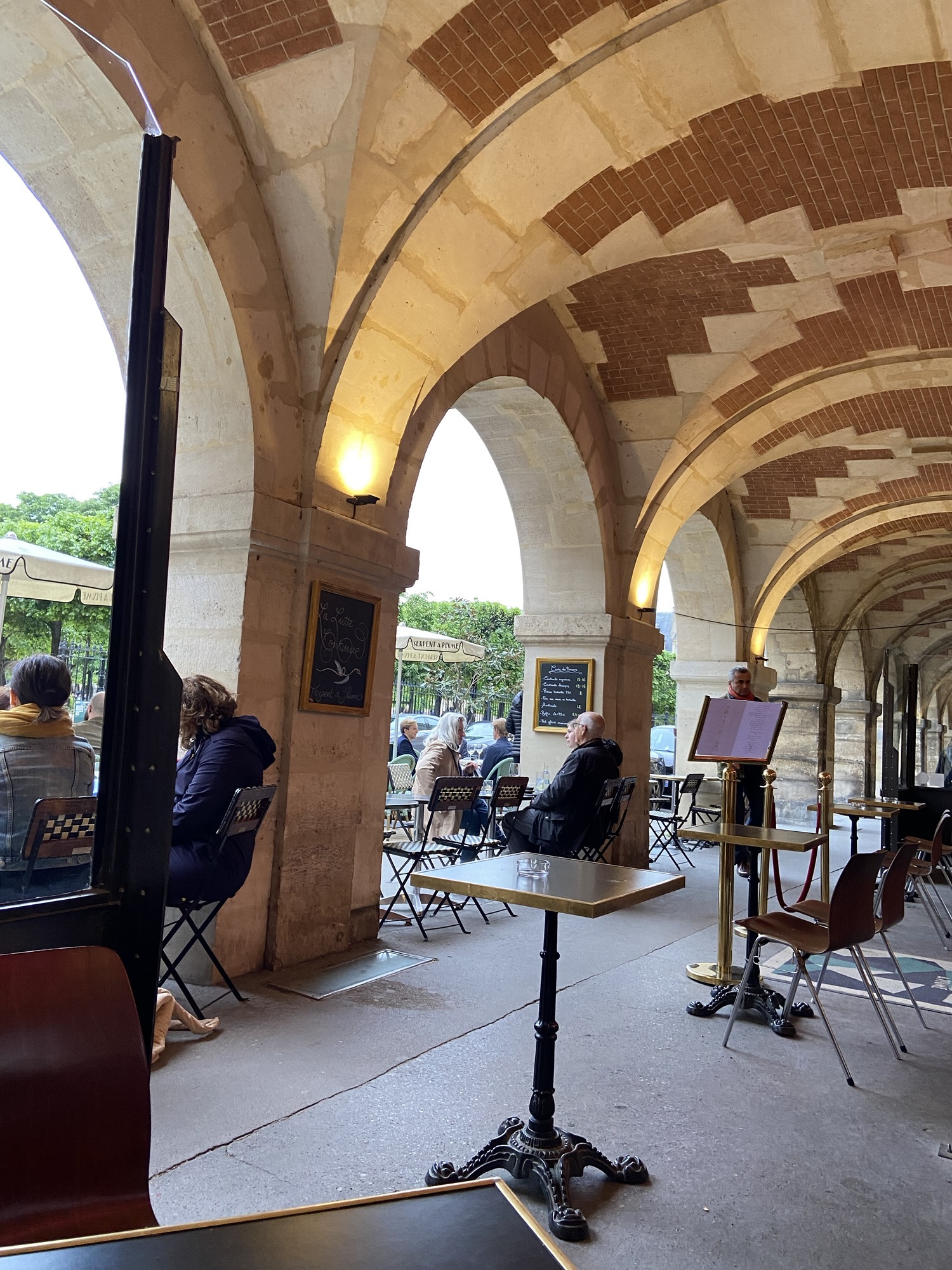
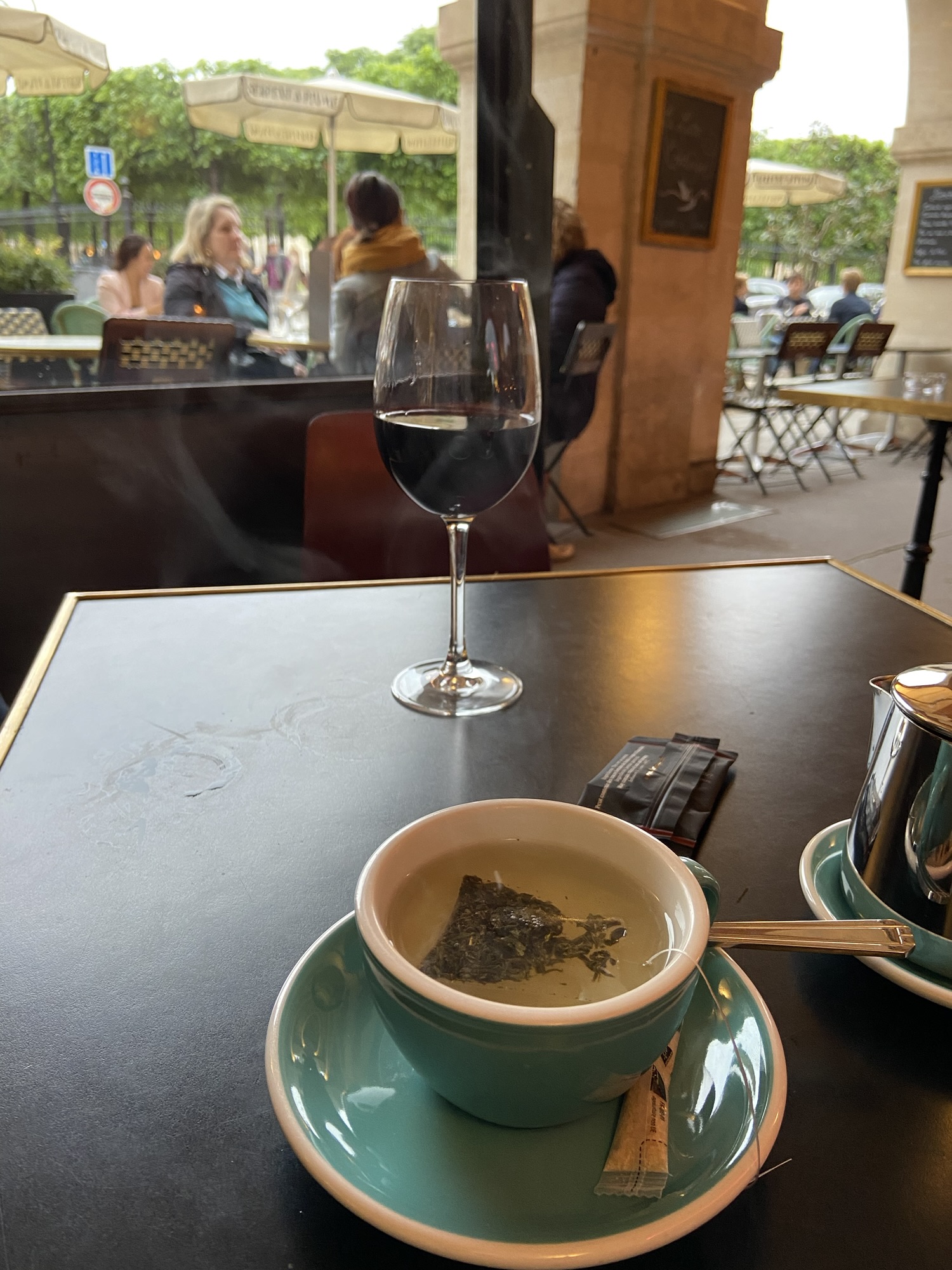
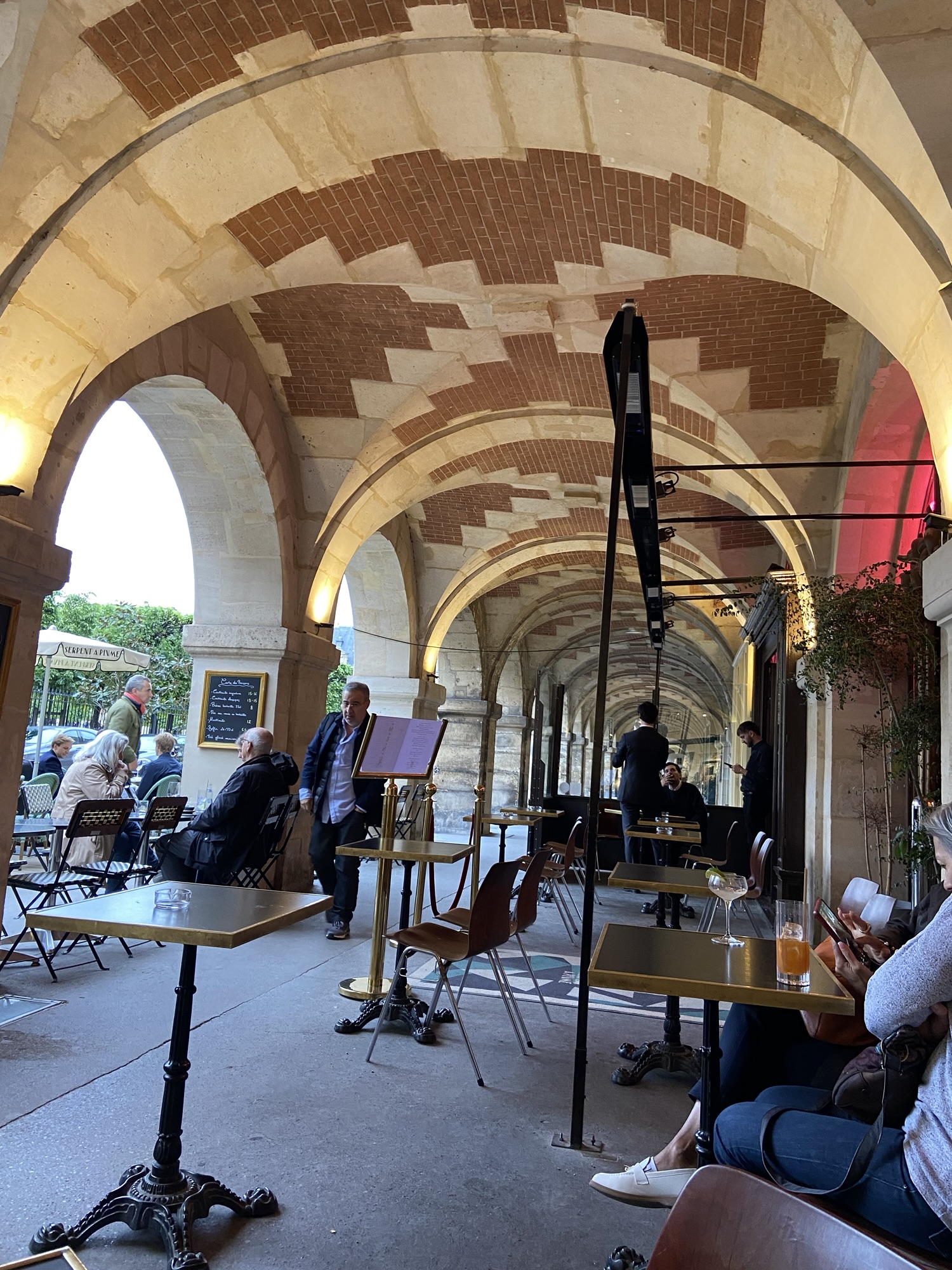
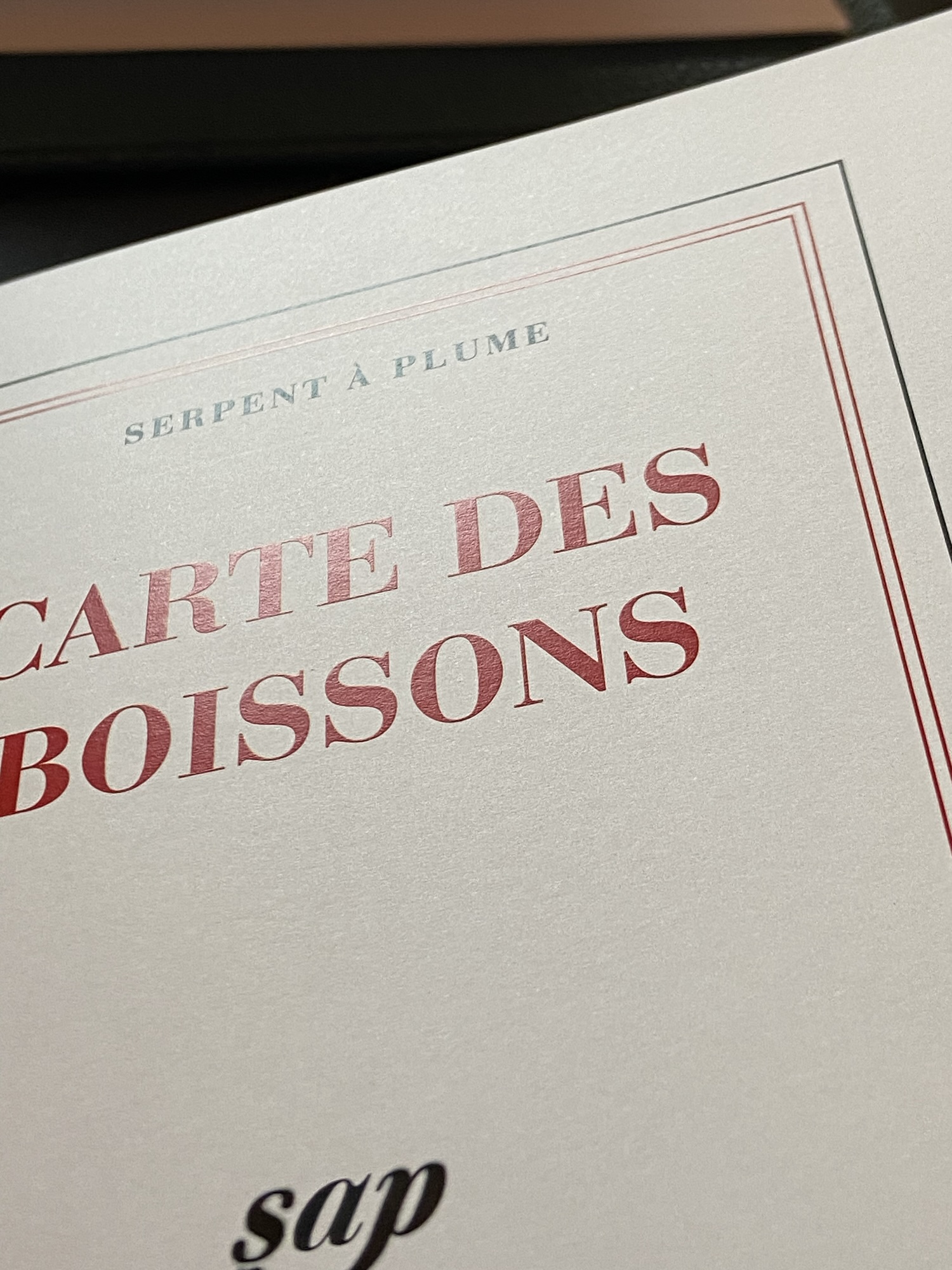
After a pleasant stroll round the beautful gardens in the square we found a spare table on the terrace of the Serpent a Plume bar and restaurant, which in fact is best known as a very trendy jazz club. It was quite quiet when we were there but it was an excellent spot in which to enjoy an early evening aperitif before heading back to our hotel across the river.
I’ve explored the charming Parisian right bank neighbourhood of Le Marais on previous visits to the French capital, but always rather fleetingly en route somewhere else. This historic part of Paris is brimming with history, bustling streets, quaint buildings and charming cafes. Spanning parts of the 3rd and 4th arrondissements, it’s really worthwhile spending a couple of hours or more here.
Le Marais actually means “marsh” in English and was originally an area of swampy land situated on a tributary of the River Seine. In 1240, the Knights Templar built a fortified church just outside the walls of Paris. This area in the north of Le Marais became known as the Temple Quarter and many religious institutions grew up nearby. The Knights and monks from the Abbey of Saint-Martin-des-Champs played big roles in draining the marshes and making the area suitable for settlement. From its marshy beginnings, it later became associated with kings and nobility. In 1361, King Charles V of France, for example built a mansion called Hôtel Saint-Pol, which became the seat of the Royal Court. Later in the 17th century when Henri IV designed the Palais Royale (now the Place des Vosges), Le Marais became the favoured place of residence for the French nobility. There is so much history in this district of Paris that I couldn’t possibly write it all down here, so if interested please follow the links that I’ve highlighted.
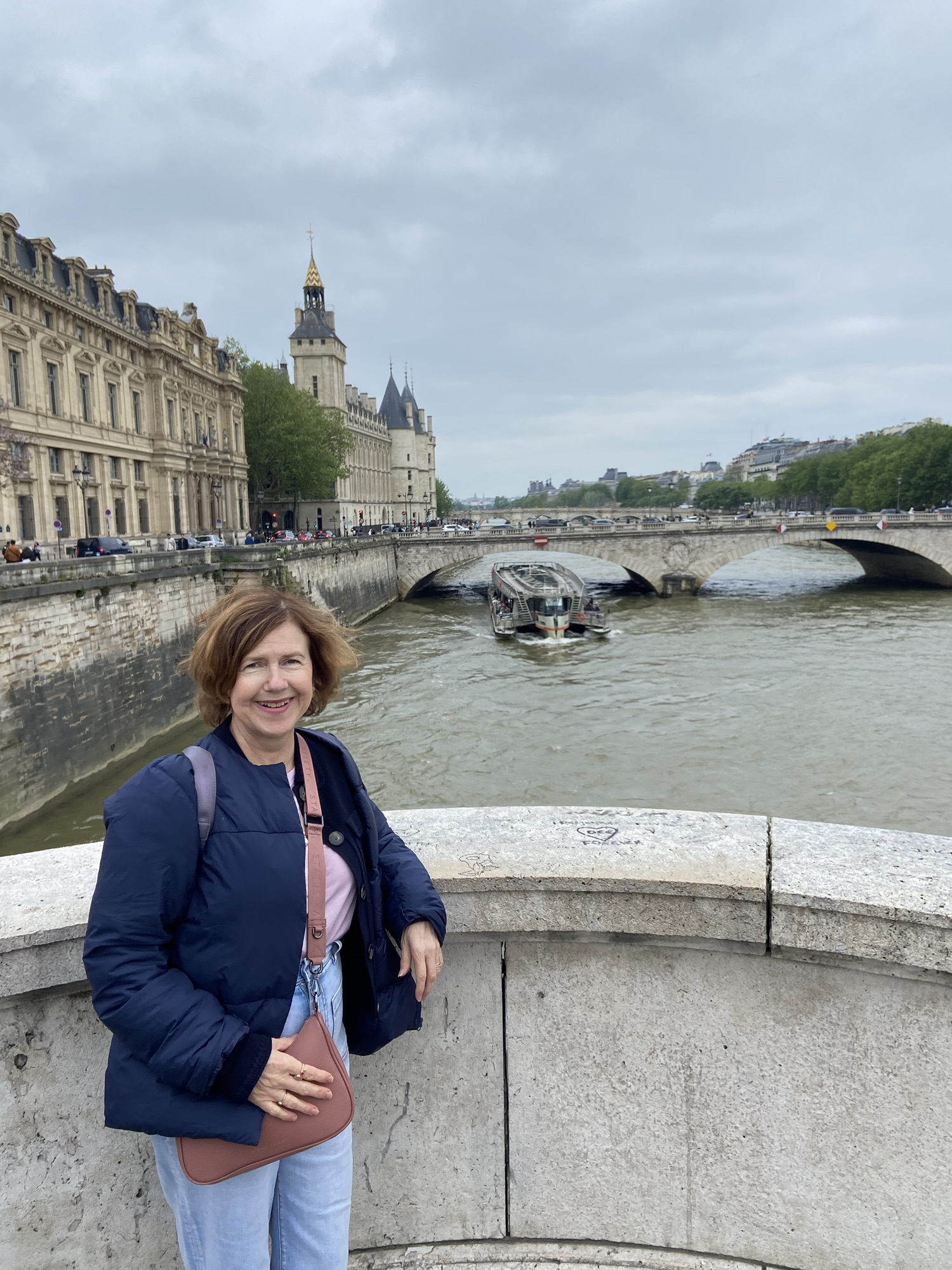
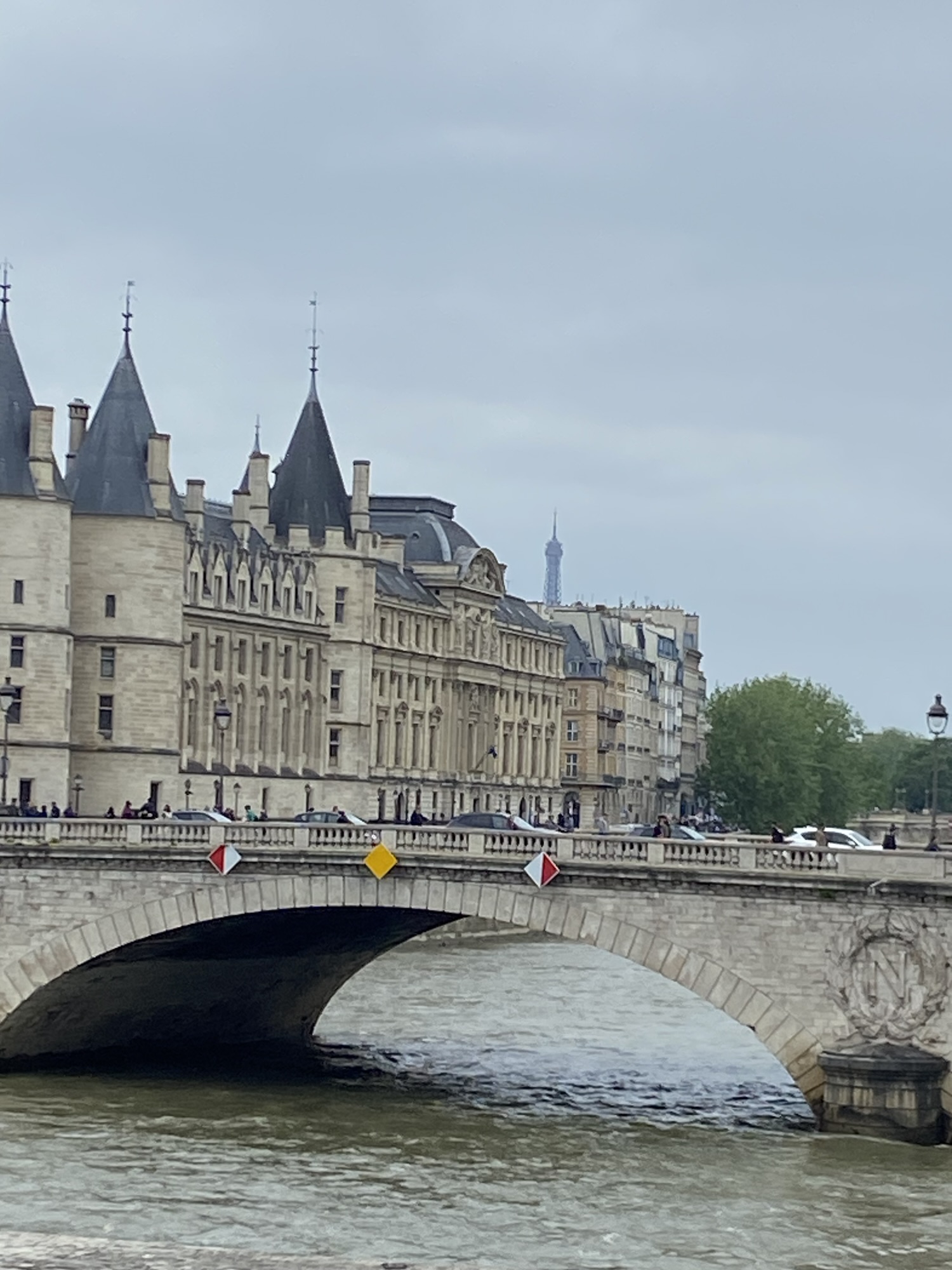
Going back to May 2024, crossing the Pont d’Arcole from Notre Dame Square we headed over the Seine, which marks the entrance point to the fascinating Le Marais locality.
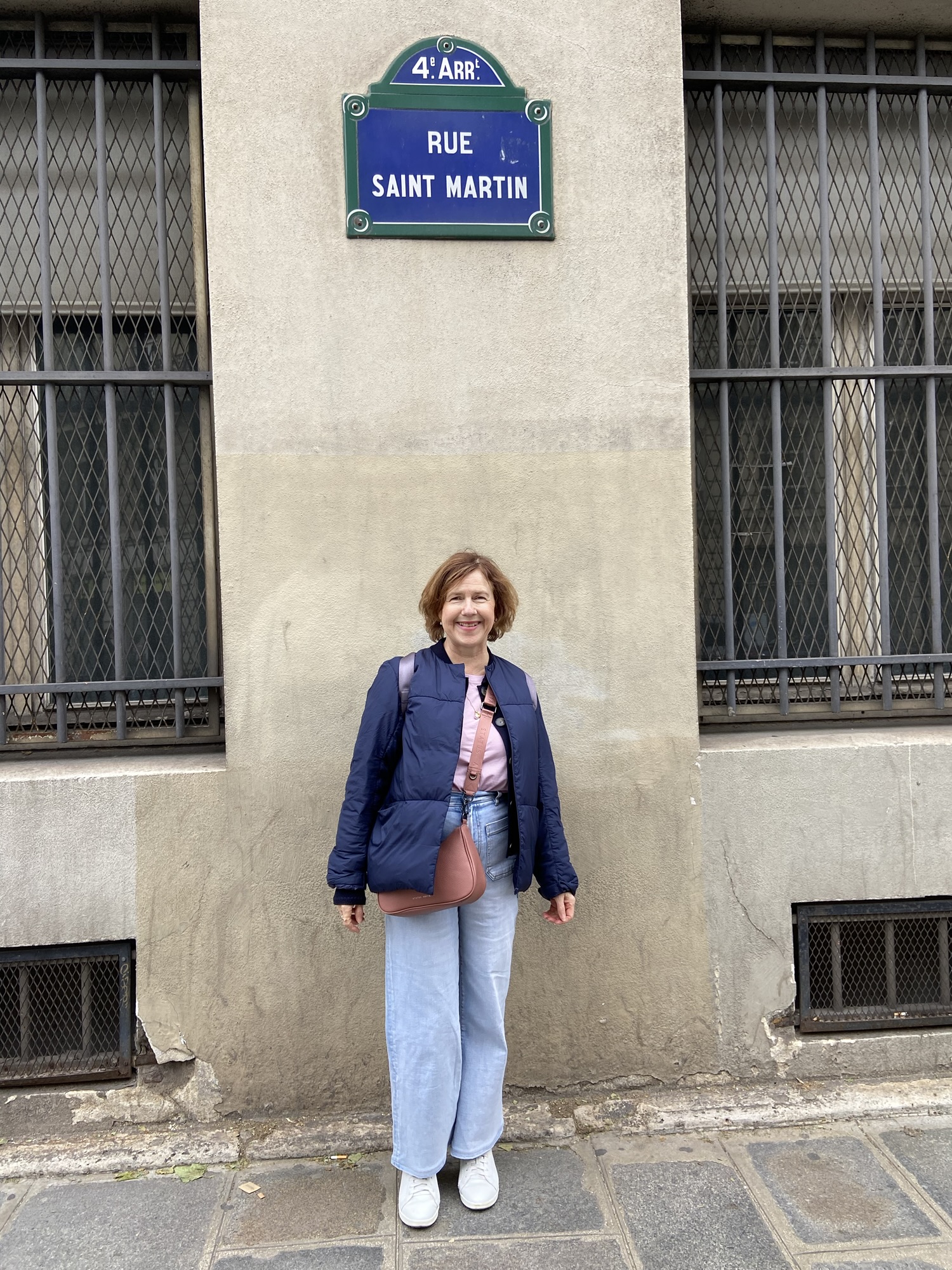
I was retracing my steps. Whilst visiting Paris with my daughter Mlle in 2022, we had wandered up Rue St Martin as I have a family connection with the area (see here for that post). My 3rd great grandfather’s family had a family transportation business in the 1820s and 1830s. Hamberg-Levistal operated out of Number 51 Rue St Martin in Le Marais but we couldn’t quite find the exact location on our last visit. This time Monsieur and I (after checking out several buildings) realised that number 51 has been demolished (most probably in the Baron Haussmann era) and would now stand where the Rue St Martin intersects with the Rue des Lombards.
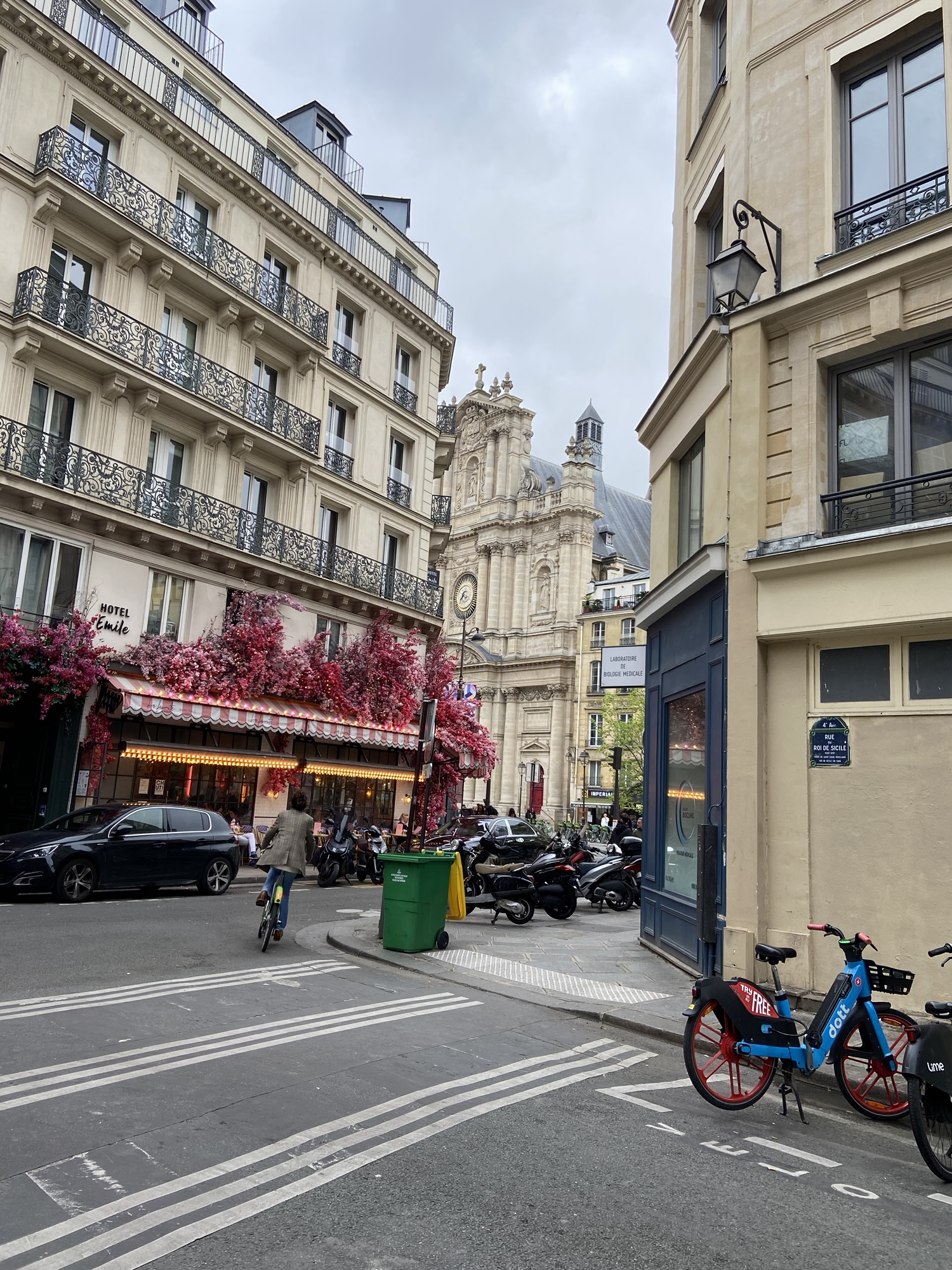
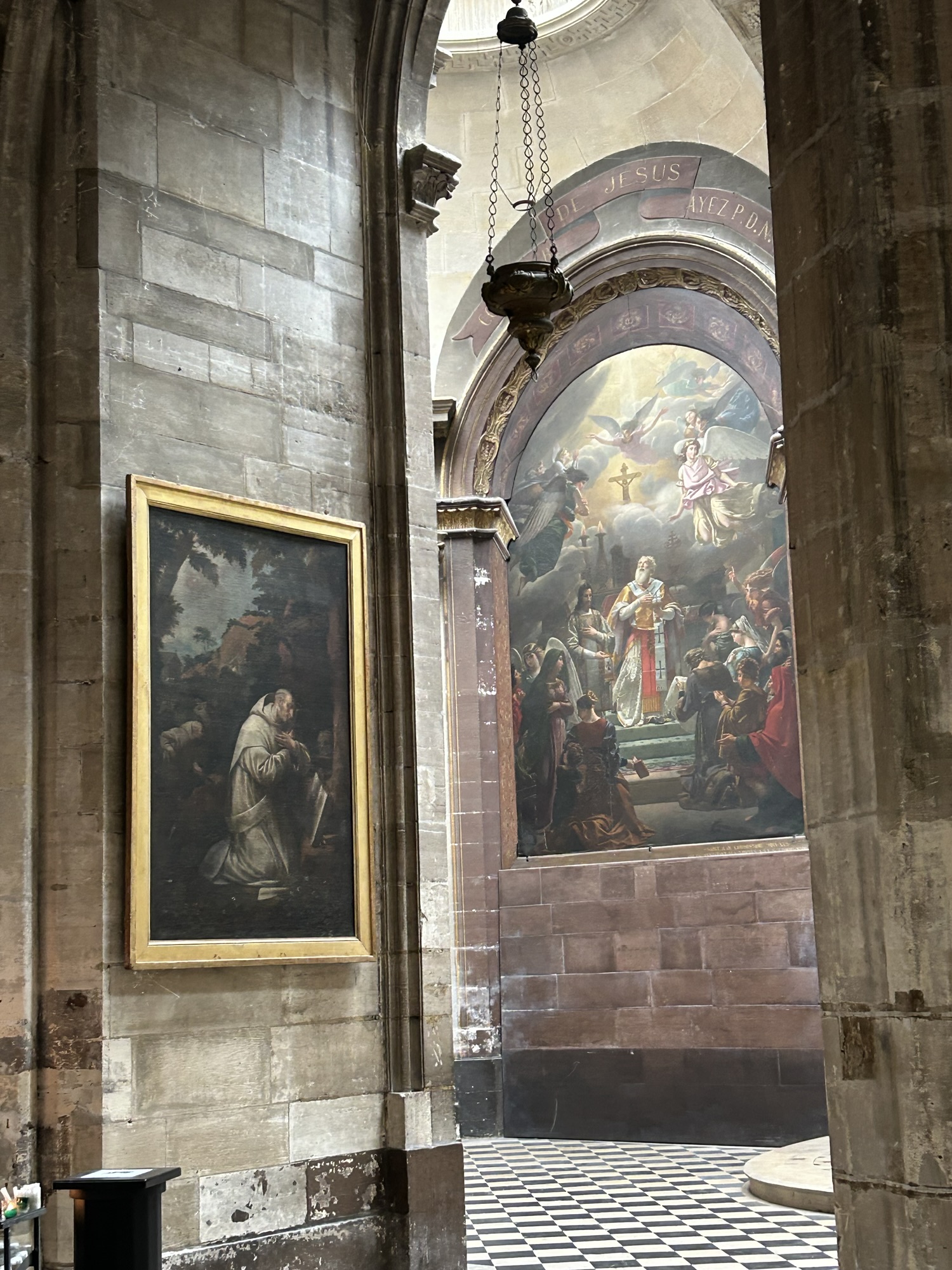
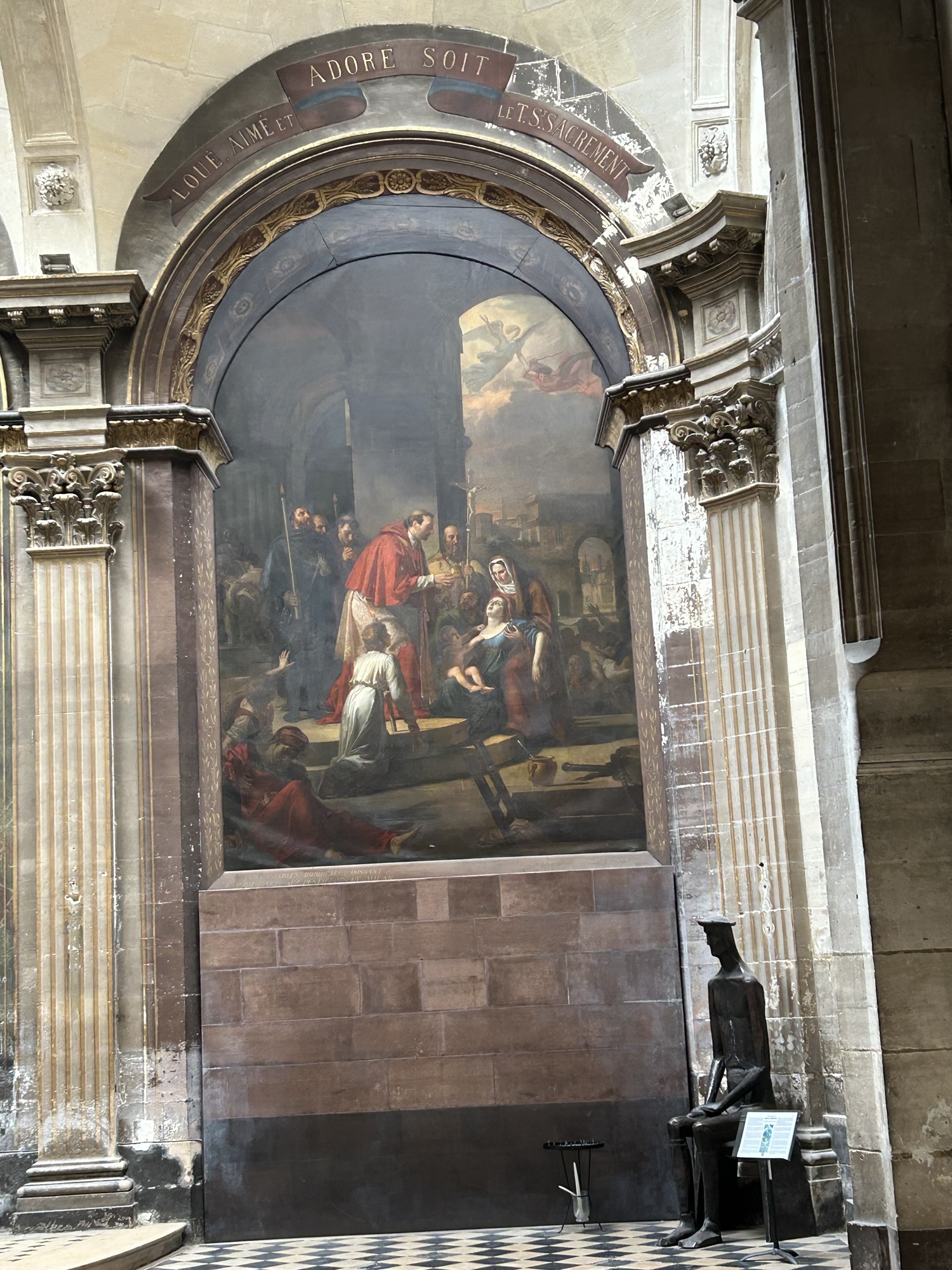
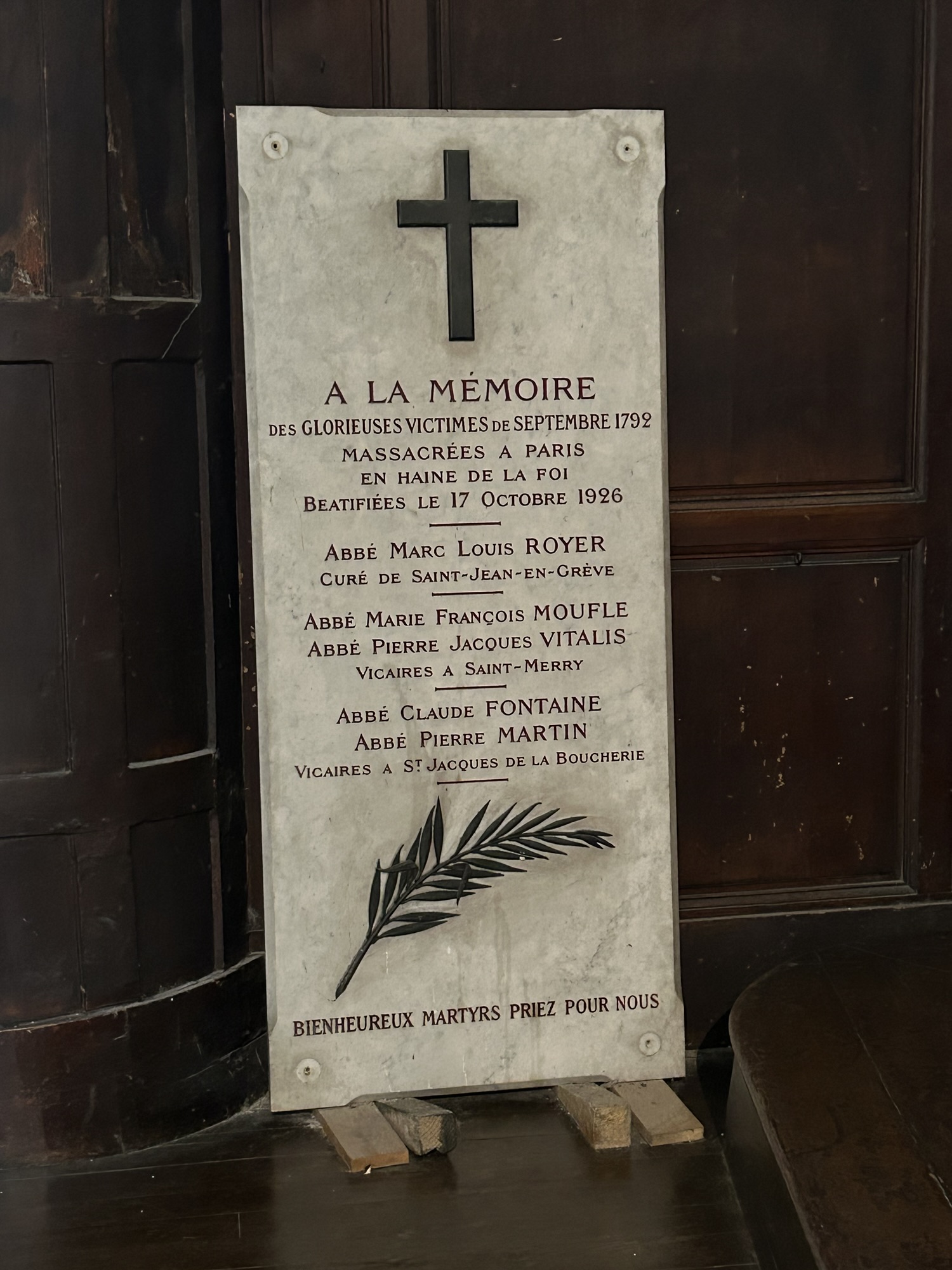
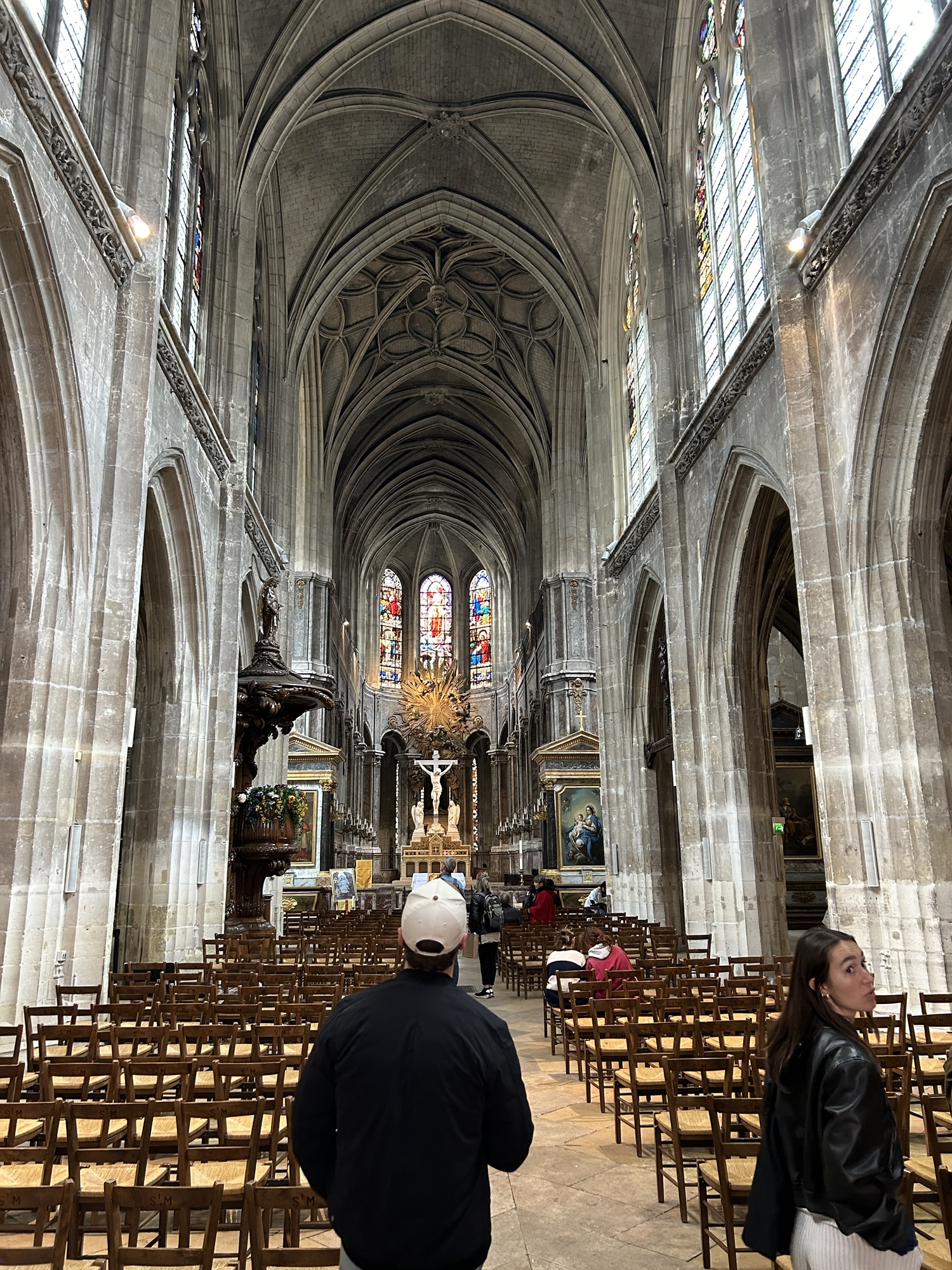
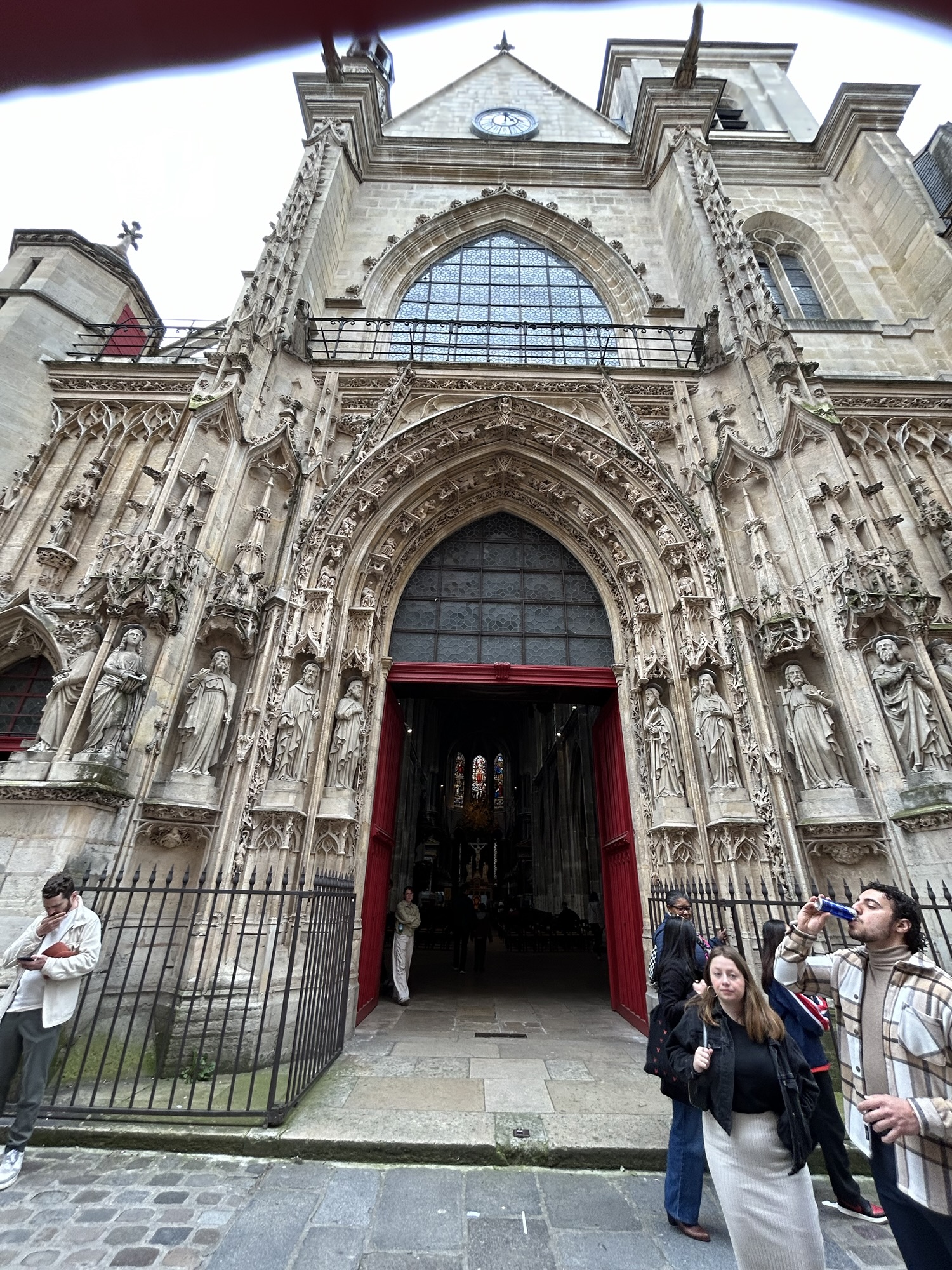
Wandering a bit further up the Rue St Martin, we came across a beautiful old church, L’Eglise Saint-Merry. Like so many other old churches in Paris, it has a fascinating history. Its name comes from Saint Mederic who was buried on the site about 700 AD but had originally come from Autun in Burgundy. In 884 he was chosen as the patron saint of the Right Bank of Paris. The church of Saint-Merry (sometimes spelt Merri) has been rebuilt at least a couple of times with the current building dating from 1520 (finished in 1560) and built in the “Flamboyant” or late Gothic style. It certainly lives up to its architectural name and also contains some poignant memorials to victims of the French Revolution in the late 18th century.
I feel Le Marais deserves another post as there is too much to cover here, so next week we’ll wander further into this beautiful area including a visit to the Place des Vosges and some well deserved refreshments – à bientôt!
I’m finally getting around to writing up our two week trip to France in May last year. I’m reversing the order as we went to the UK first – I’ll do some posts about that part of trip later.
In general, I’ll be trying to focus on places that I haven’t visited or written about before. However, I can’t bypass the start of our French holiday in Paris. We had a couple of nights en route there before heading down to Lyon to join friends for a week-long river cruise and a few days of independent travel.
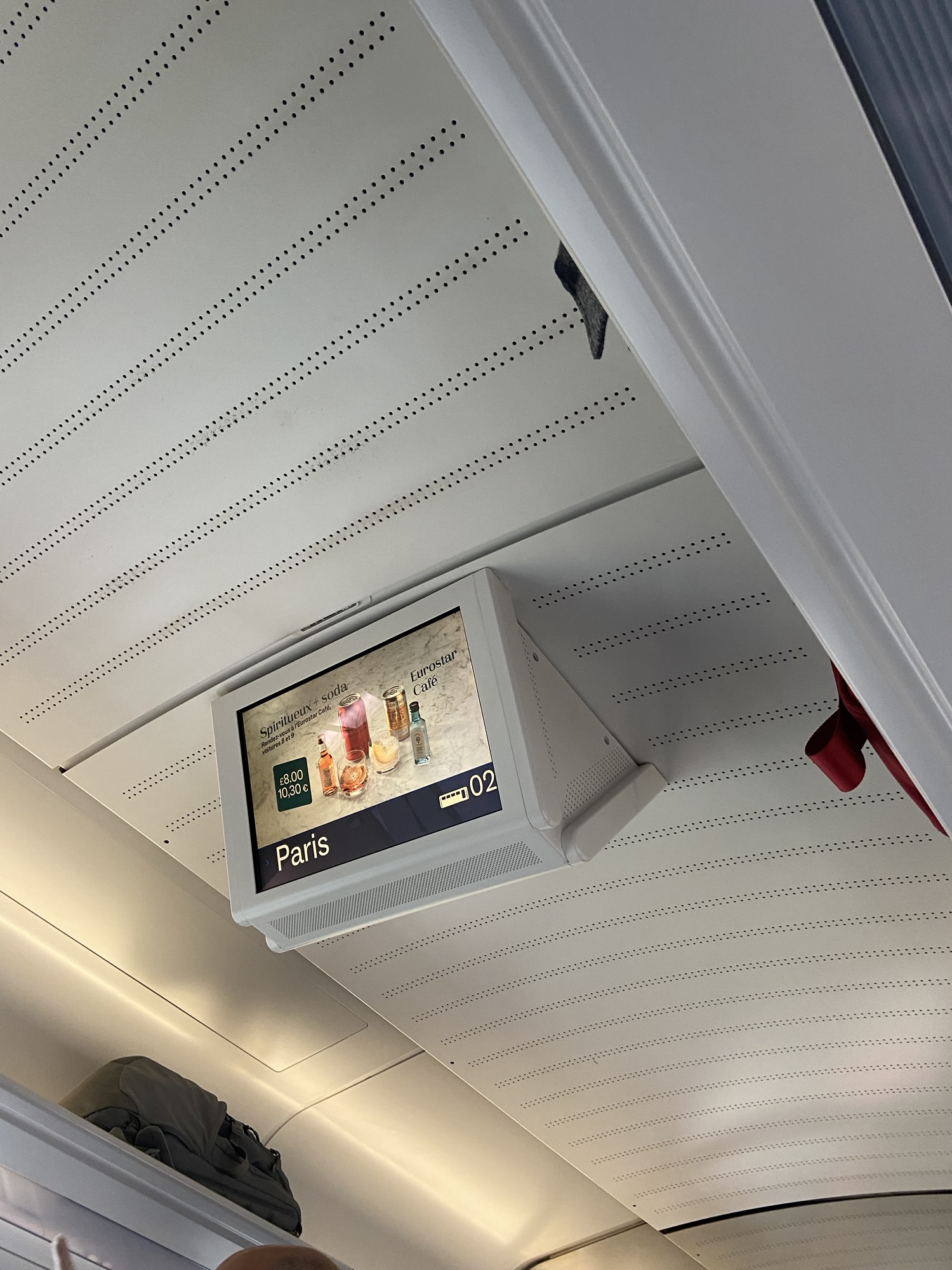
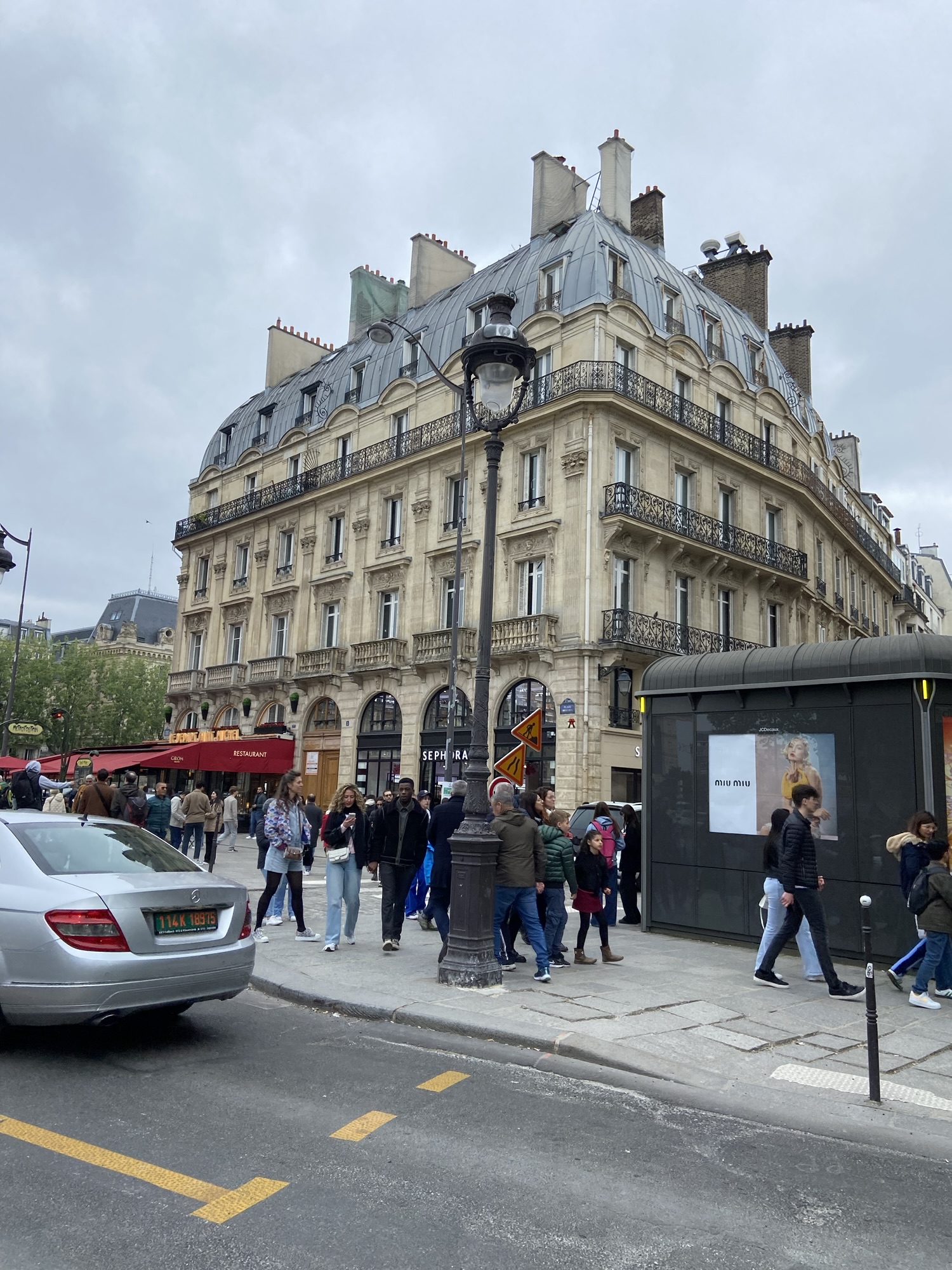
As our preferred form of transport, we took the Eurostar train from London St Pancras to Paris Gare du Nord followed by a taxi ride to our accommodation in the 6th arrondissement. Just a word of caution, always head straight to the official taxi rank when exiting the Gare du Nord as there are plenty of scams involving unofficial taxi or Uber drivers who mill about the exits hassling travellers for custom. Taking up one of their offers can lead to fleecing unsuspecting tourists of money e.g. driving out of their way instead of directly to the correct address. It does help to keep your wits and your luggage about you!
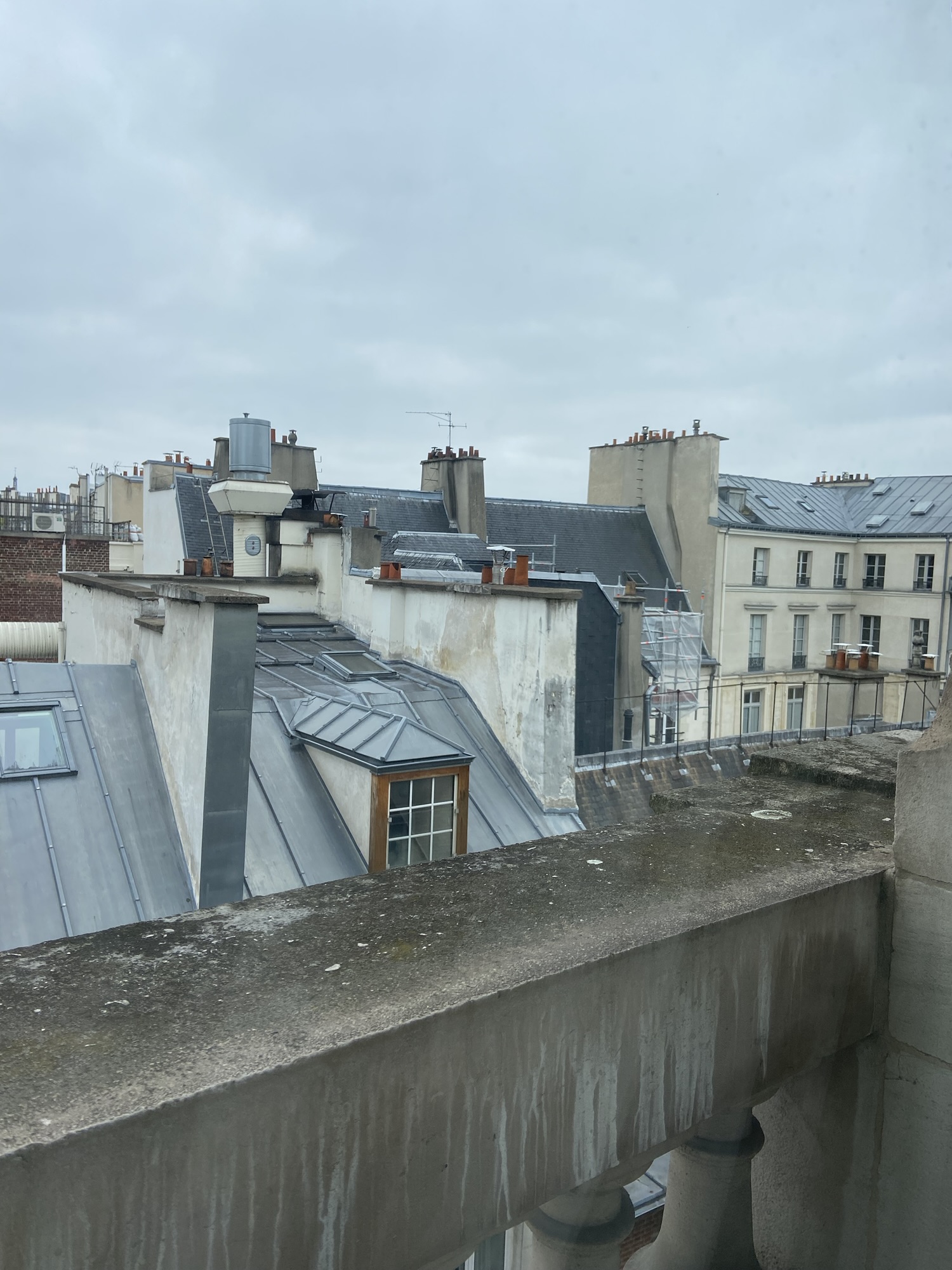
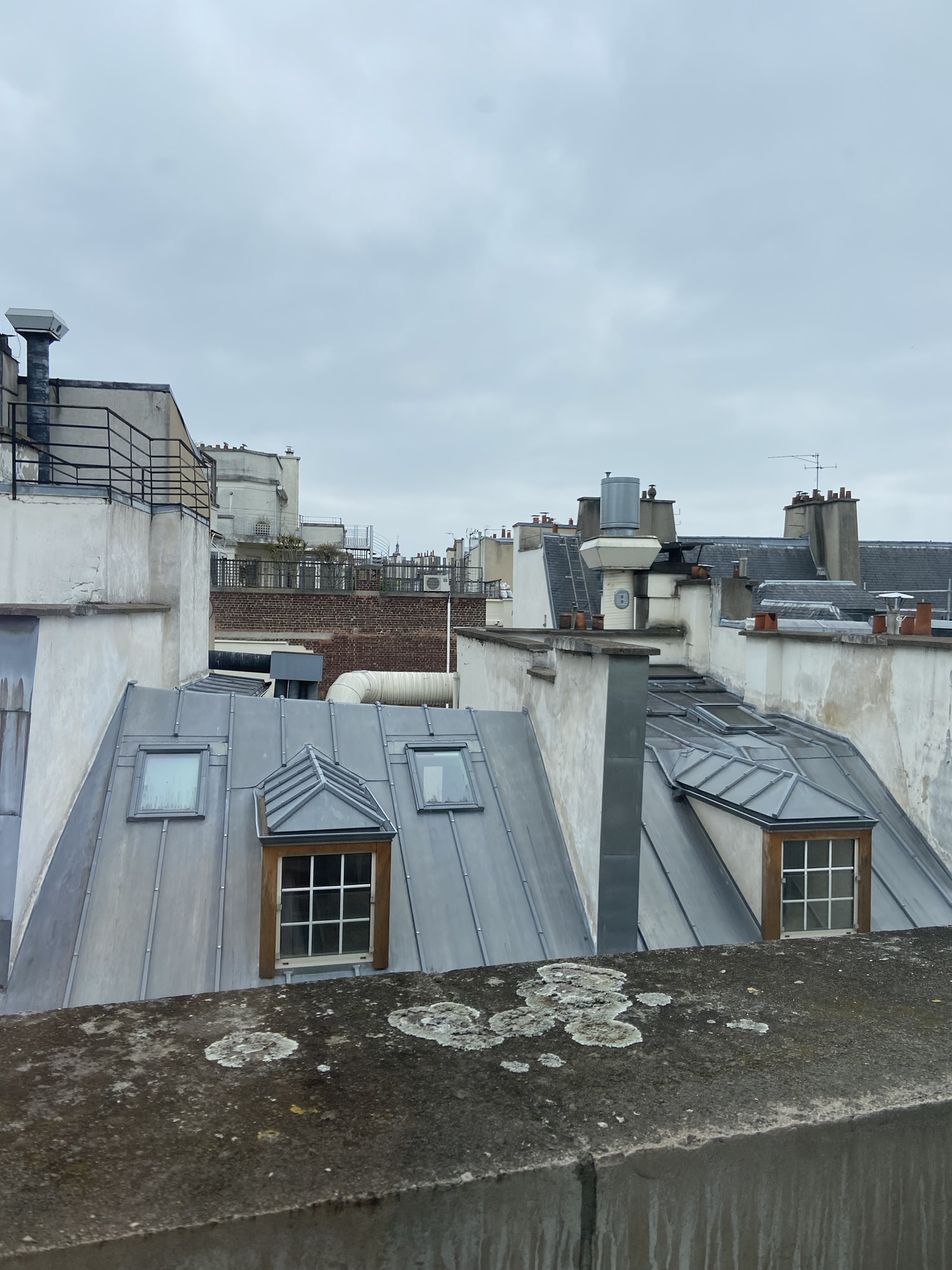
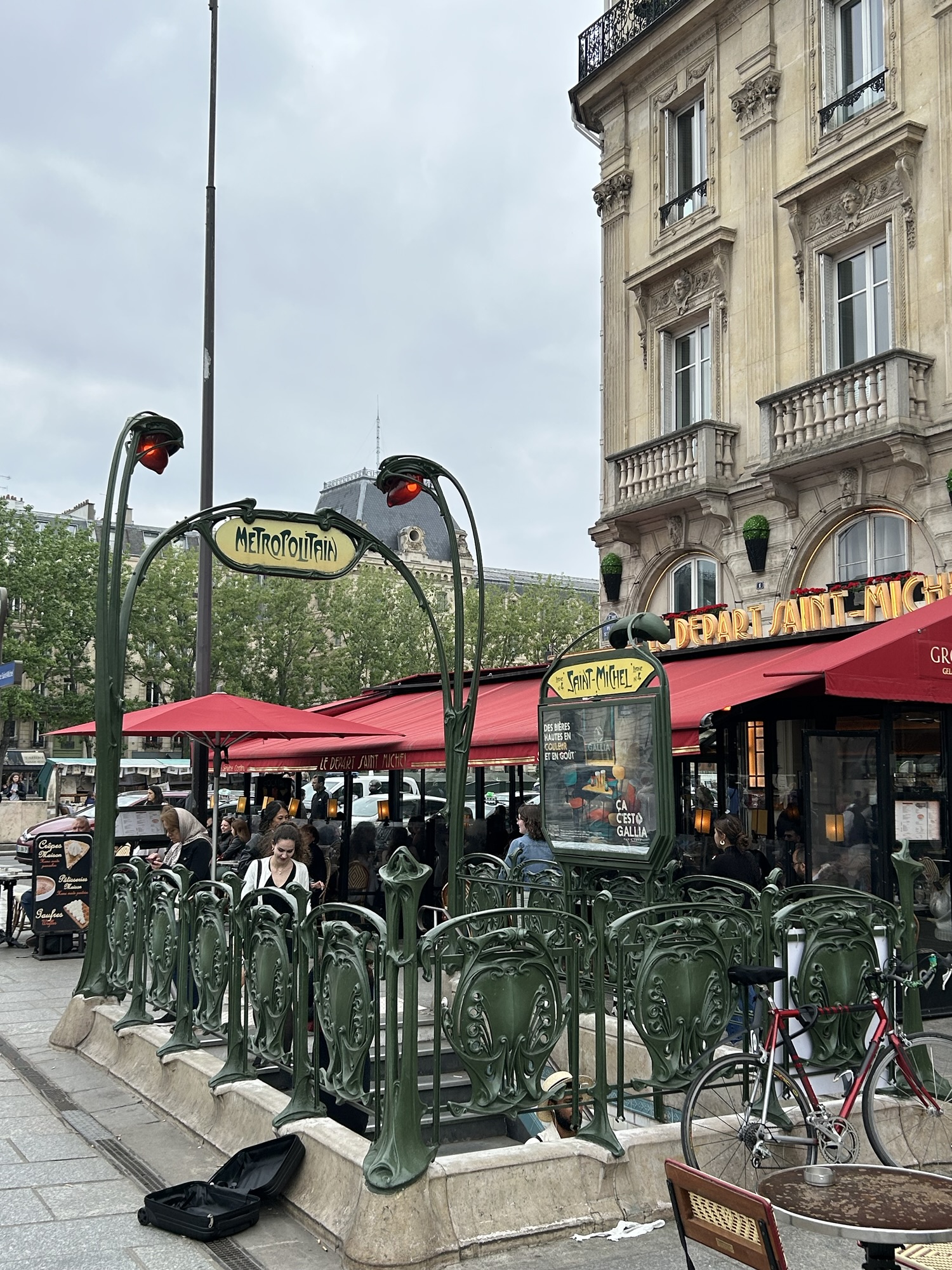
We had booked a couple of nights at the Citadines Saint-Germain-des-Prés Paris on The Quai de Grands Augustins on the left bank of the River Seine. The details are here – I’m not being sponsored by Booking.com or anything! We first discovered this hotel apartment 20 years ago during a bitterly cold snap in January 2004 when we were visiting Paris with our daughters. It’s the perfect spot for a city break being a few minutes walk from St Michel Metro, Notre Dame and the trendy 5th and 6th arrondissements. There is a traditional French feel about the Citadines here in Paris (it’s part of a chain of similar hotels). If you like very modern state of the art hotel rooms, this wouldn’t be the place for you but it’s very comfortable, tastefully decorated and with good amenities. You can self cater or use the residents cafe for breakfast (which we did each day). There are also plenty of cafes and restaurants in the vicinity, so you don’t need to wander too far to find a good meal (this is France after all!).
“The 8th May is a bank holiday in France to celebrate Victory Day, which marks the formal acceptance by the Allies of Nazi Germany’s surrender in 1945, consequently ending World War II in Europe. The first act was signed in Reims, France, on the 7th May and the final act on the 8th May in Berlin”
It explained why the streets seemed strangely quiet in the business districts and most of the shops were shut. Interestingly, for many years the commemoration held in France in May 1945 wasn’t observed and it was only on 2nd October 1981 that President Mitterand restored the commemoration of victory and in 1982, the 8th May became an official national holiday. Each year there is a parade held along the Champs Elysées as well as many other commemorative ceremonies across France.
Our taxi driver helpfully explained things to us in French, which we mostly understood. Once we reached the streets around the Palais Royale and the Musée du Louvre, the area was packed with throngs of tourists, which was actually a bit of a relief as we knew then that cafes and restaurants must still be open (it was lunchtime by this point).
We dropped our bags, freshened up and after a quick cuppa headed out to explore the area.
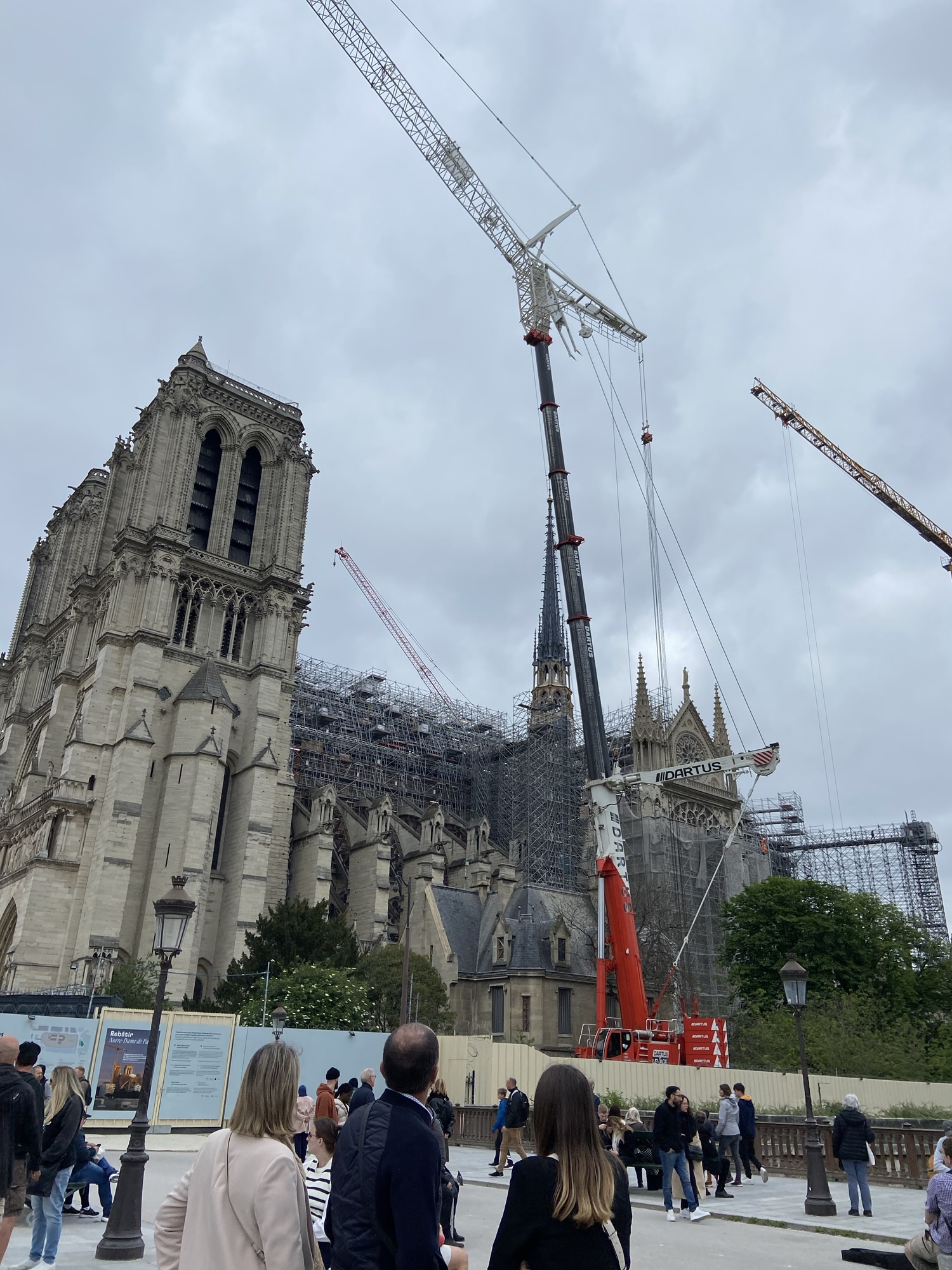
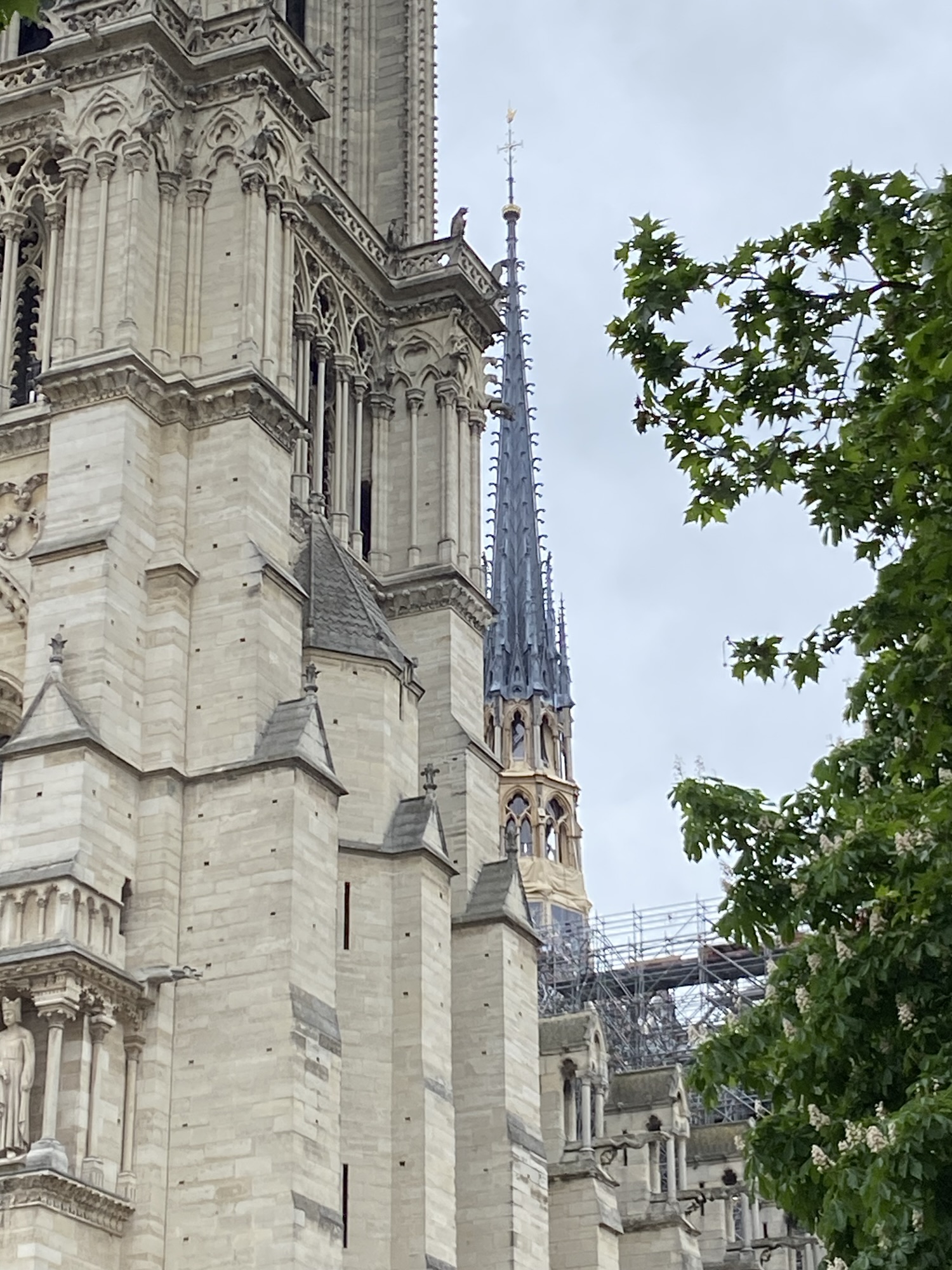
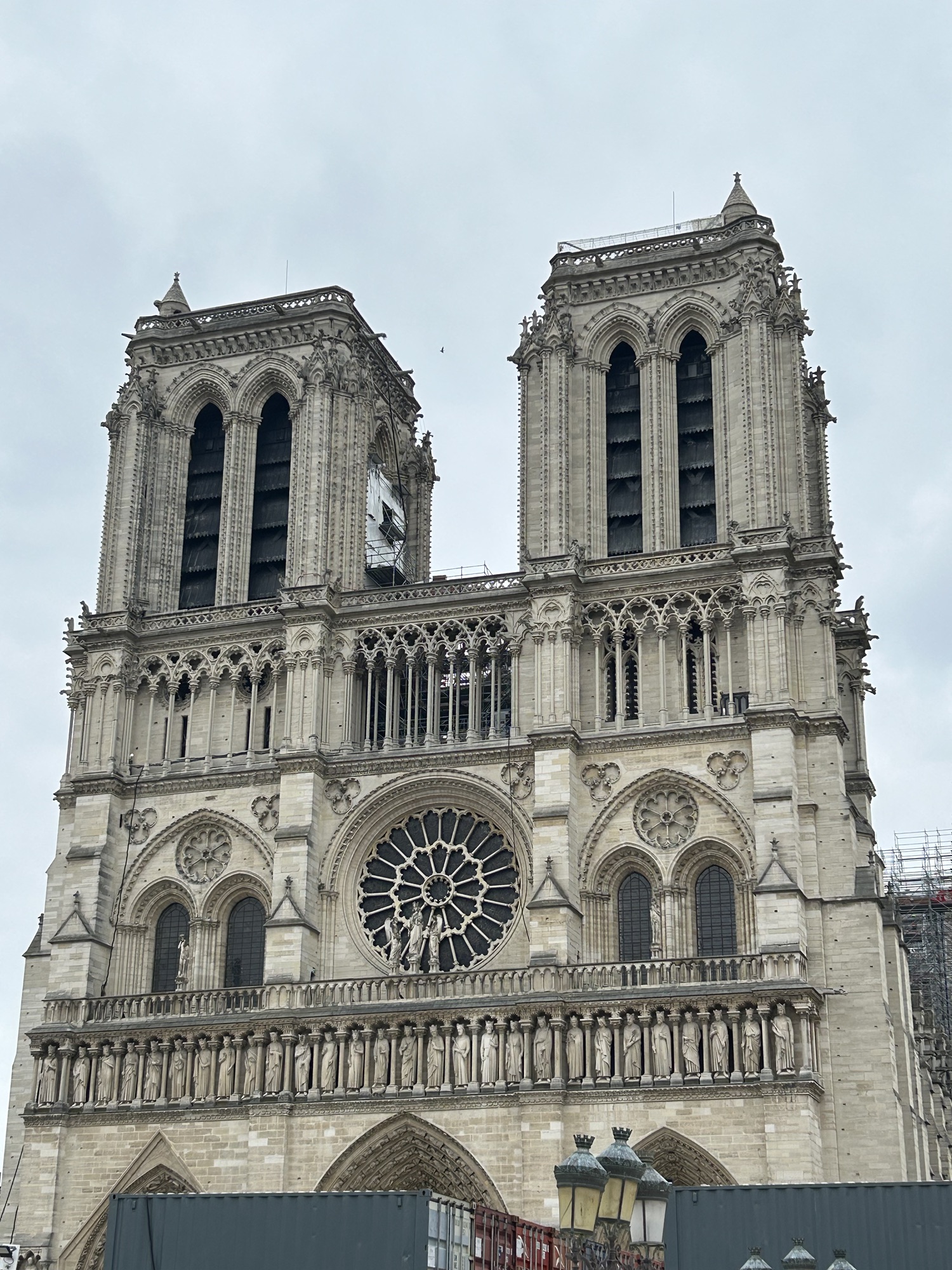
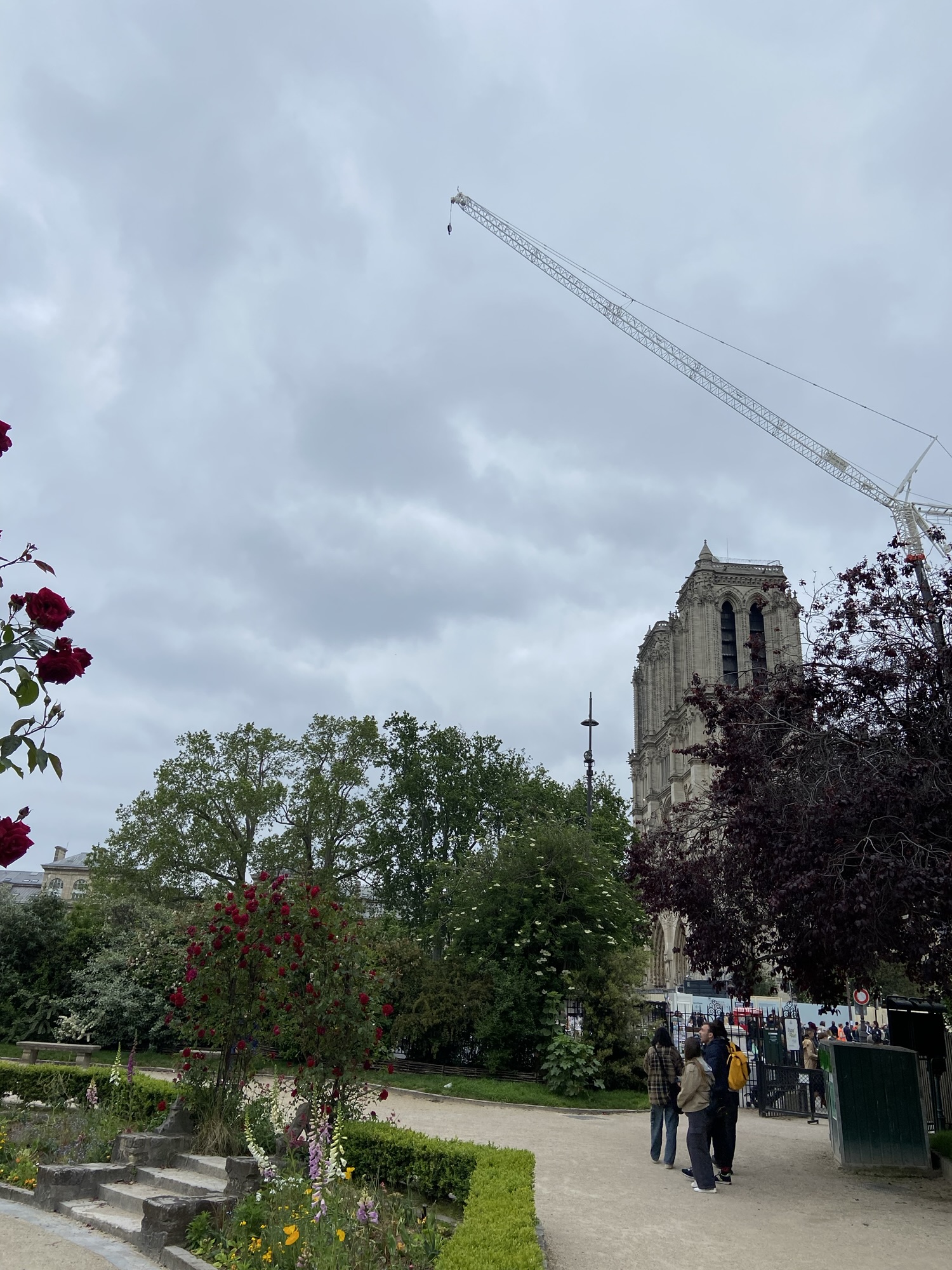
I wrote quite a bit about this same part of Paris and in particular the restoration of Notre Dame in my previous Paris series here, whilst on a trip with my daughter, Mlle, in August 2022. On last year’s visit, it was just a short stroll down the street to see the iconic cathedral. Still clad in scaffolding, it wasn’t due to reopen till later in the year. I would love to revisit to see for myself what the remodelled interior looks like now – a far cry from the rather dark and gloomy interior I remember from previous years (you can see some pictures of the renovated building here).
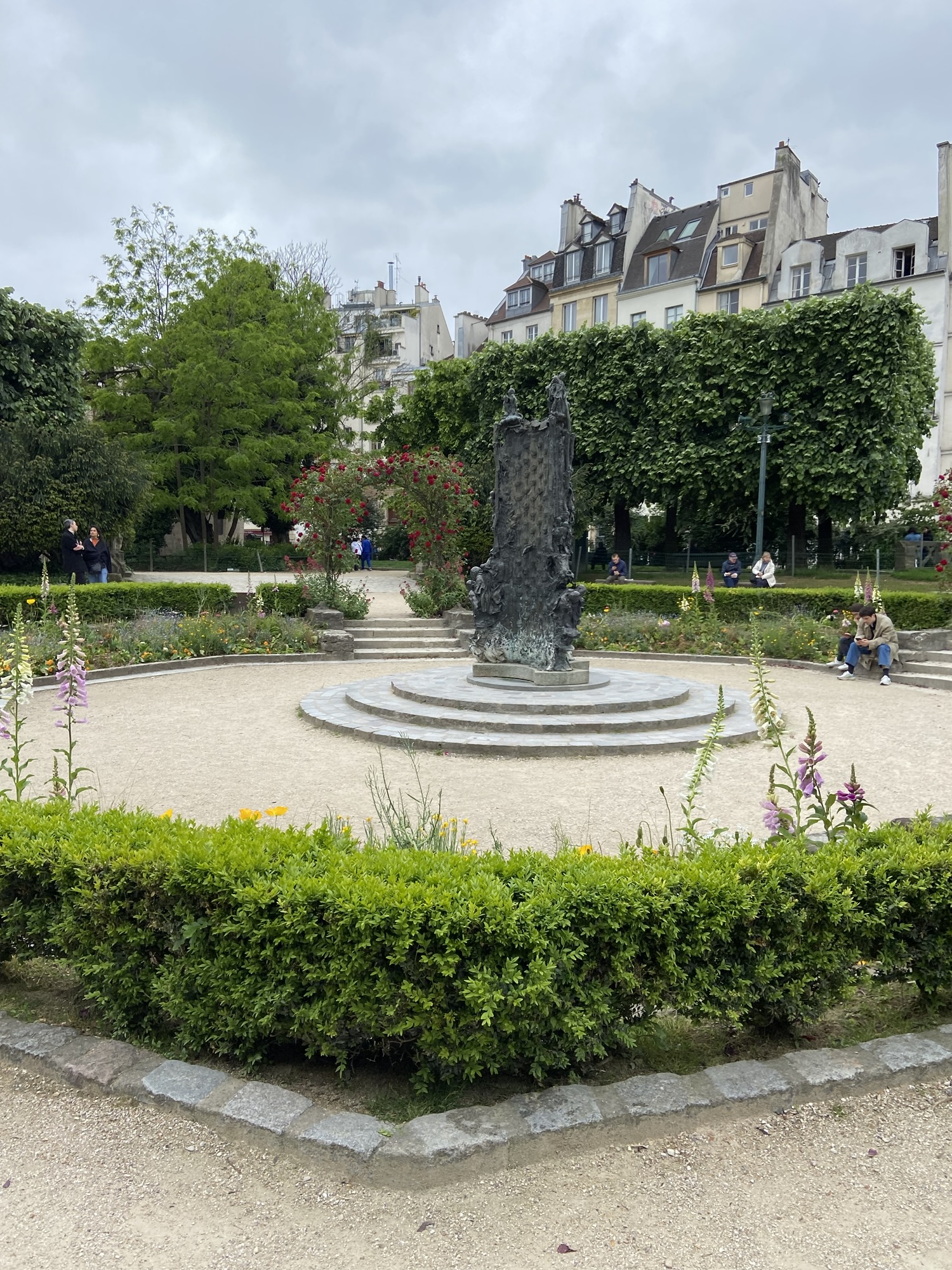
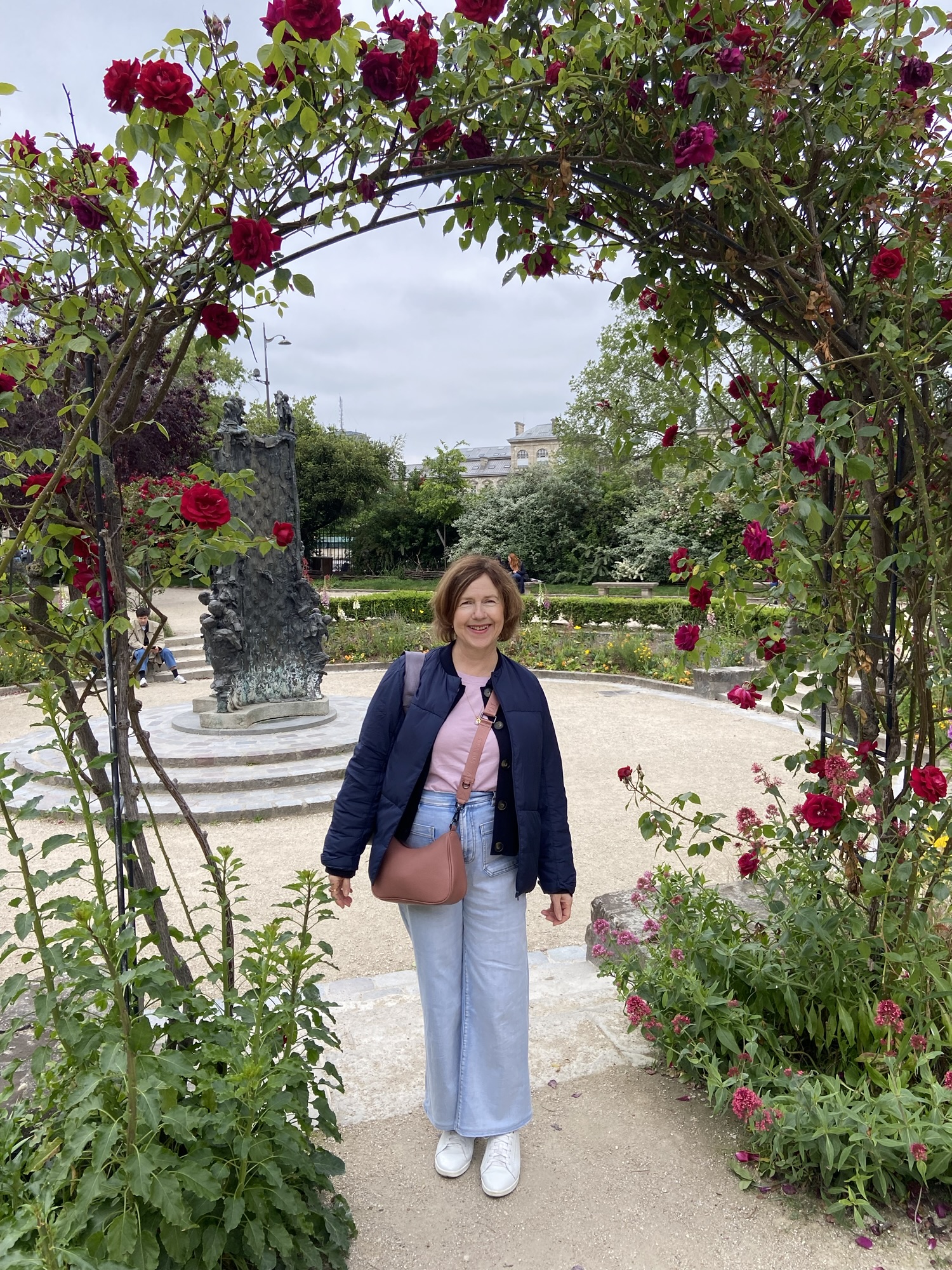
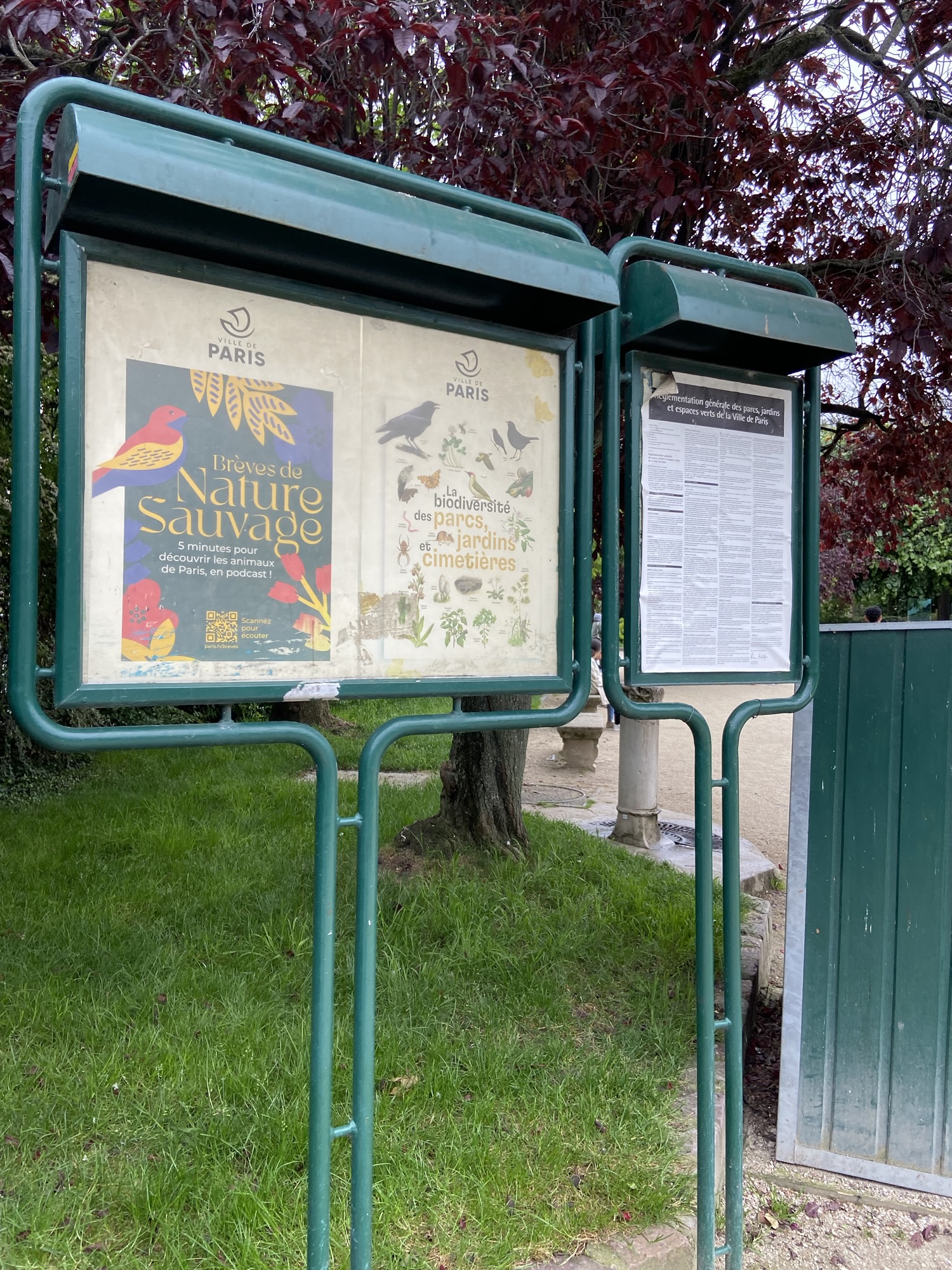
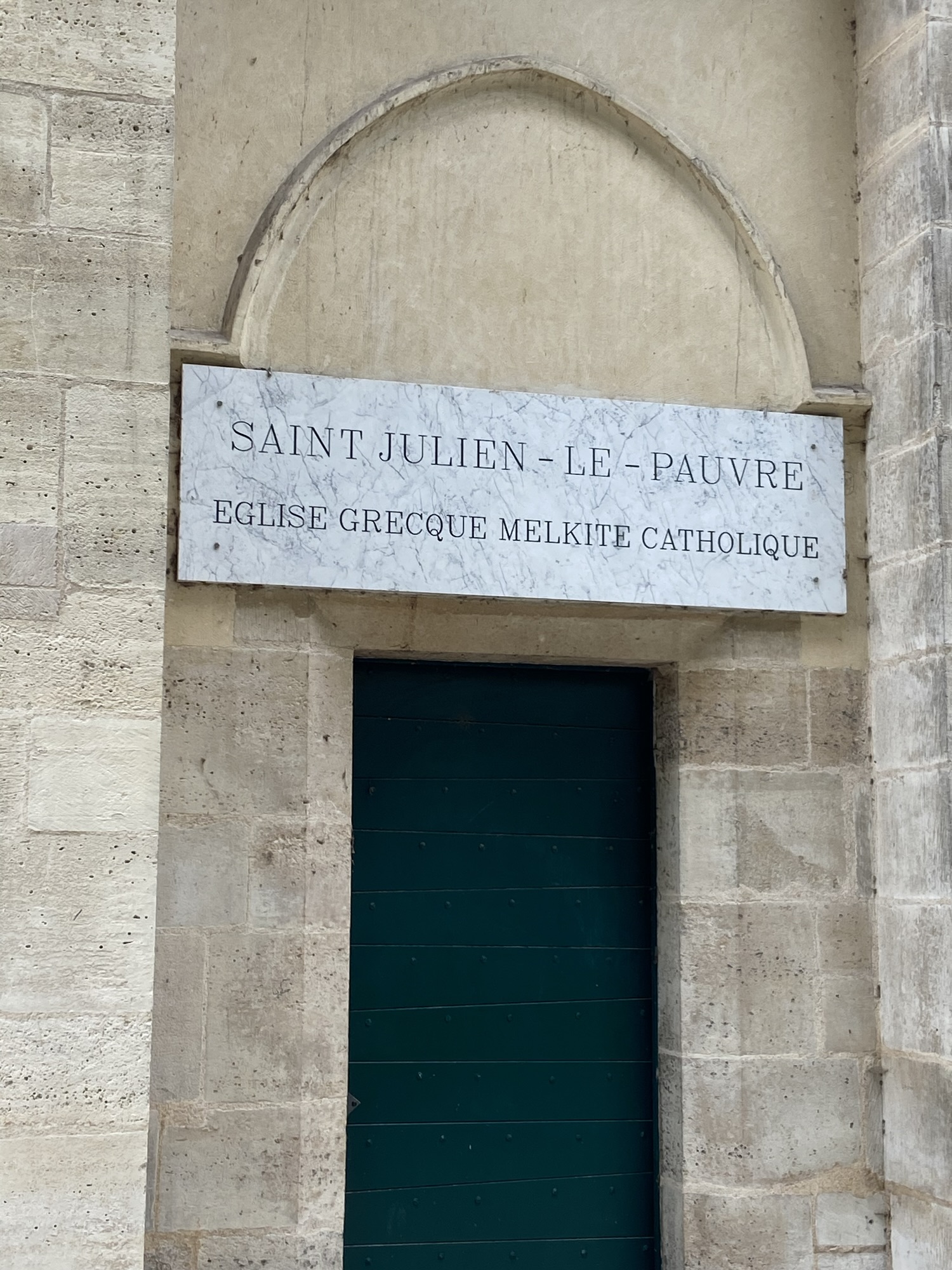
Having wandered around Notre Dame Square, we crossed the road and discovered (as one often does in Paris) a delightful public park, The Square René Viviani and strolled round enjoying the relative solitude in comparison to the crowds in the cathedral square. Beautifully maintained (with warnings about not littering to avoid encouraging the local rats!) the gardens are situated to the north of the old Gothic church of Saint-Julien-le-Pauvre, built at the same time as Notre Dame and one of Paris’s oldest churches. Having fallen into disrepair and ruin, the church was taken over by the Greek Melchite Church and is now the centre of that community in Paris.
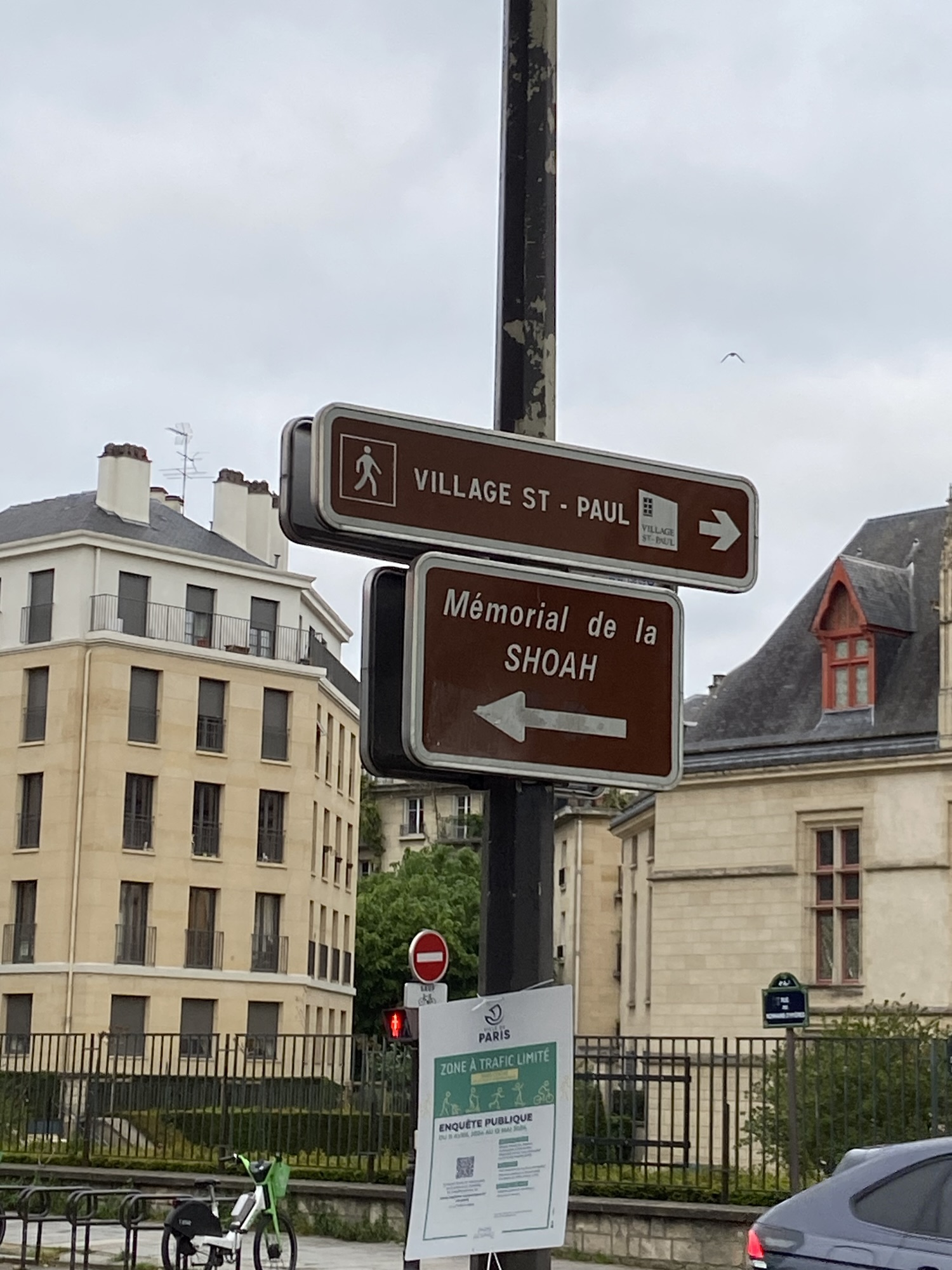
The Square René Vivian is adjacent to the Rue de la Bûcherie where you can find the famous bookshop Shakespeare and Company plus the restaurant, Le Petit Châtelet, that Mlle and I visited in 2022 (see here for that post). Monsieur and I checked to make sure it was still open (it was and we went there the following evening) and then headed across the Seine up to Le Marais district in the 4th arrondissement, which I’ll write about in the next post.
I’ve collated all the Paris posts I’ve previously done on the blog here.
Having had a hiatus from the blog, I’ve got a lot of photos stored up from home and abroad.
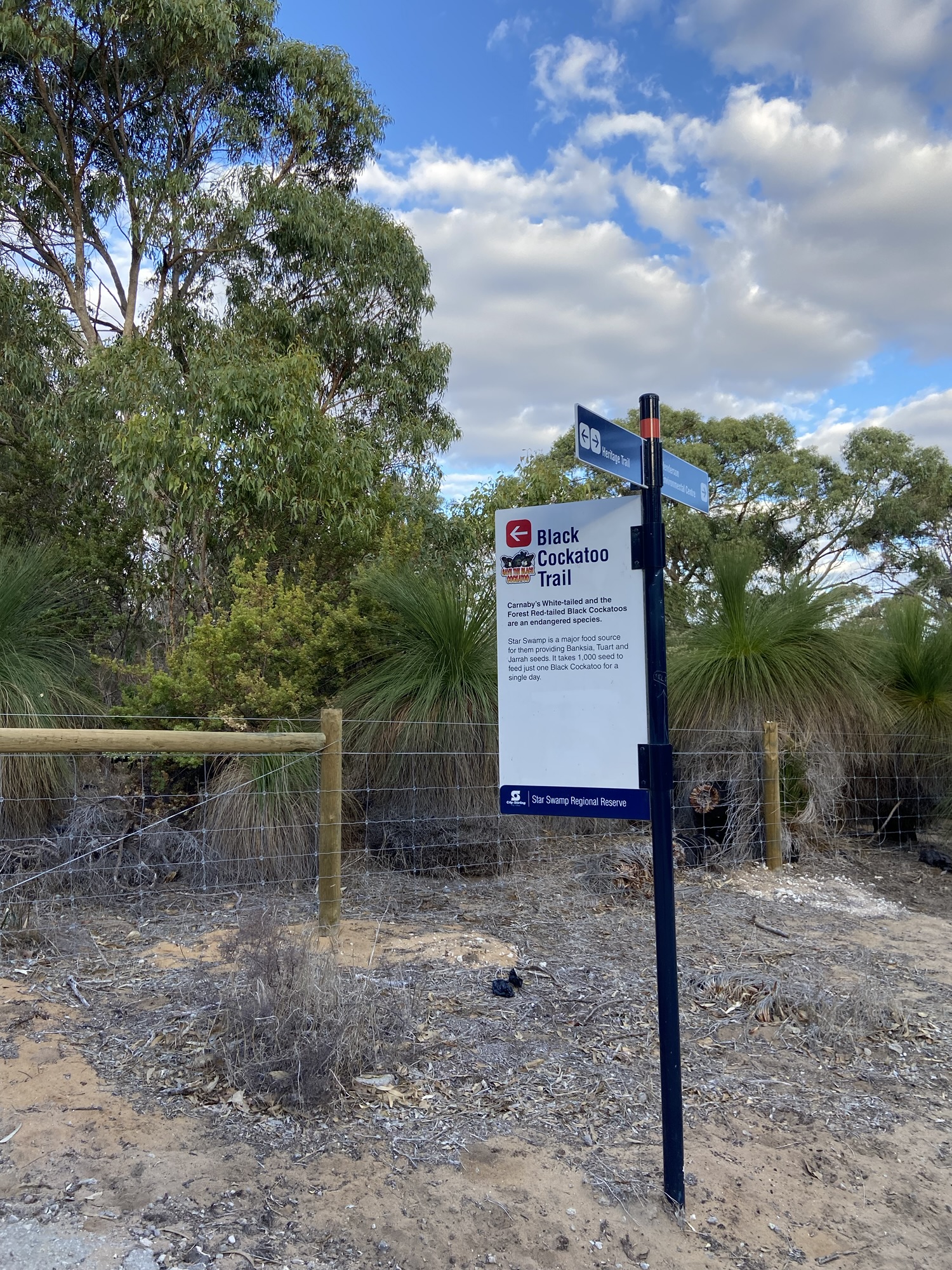
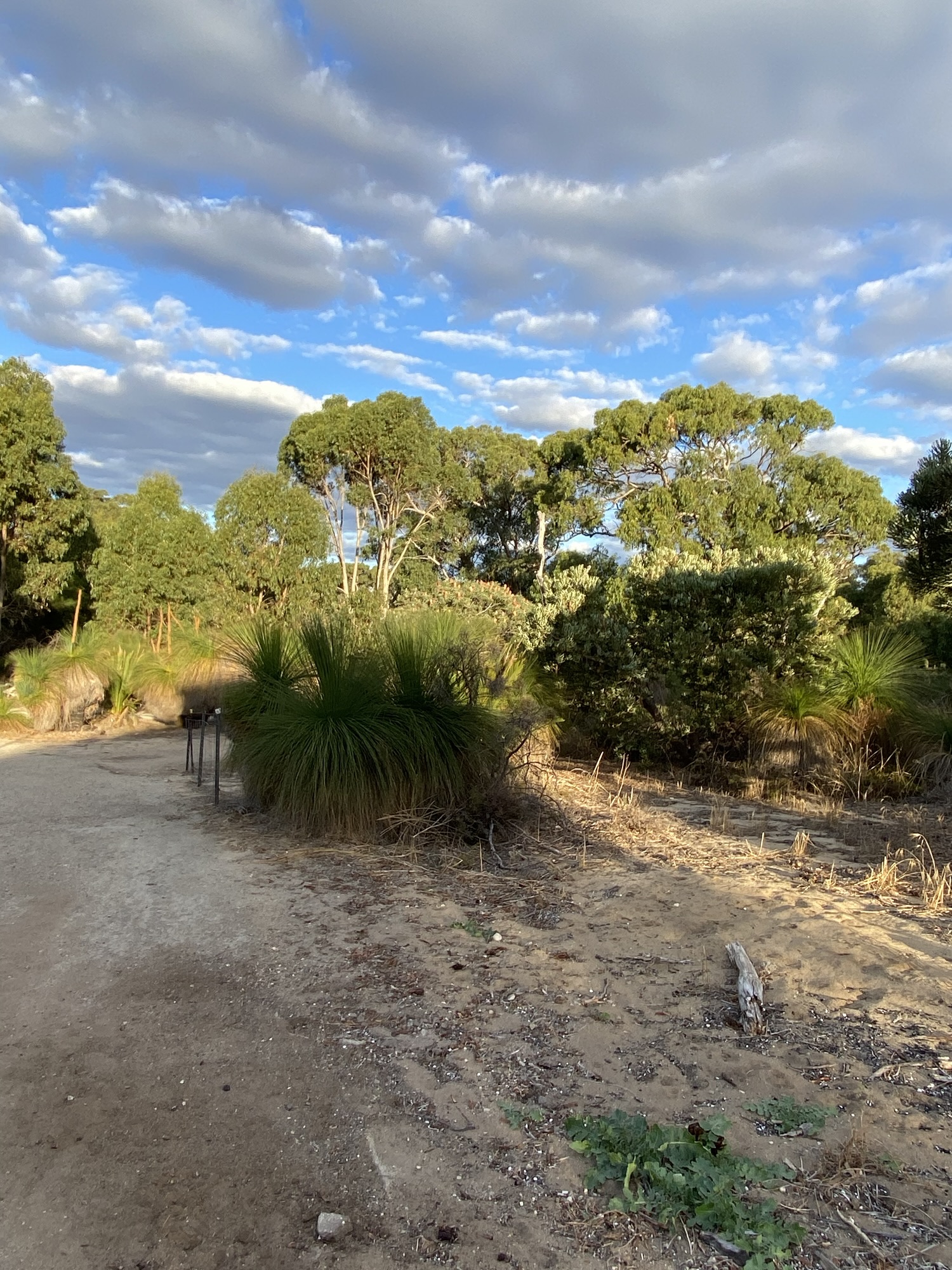
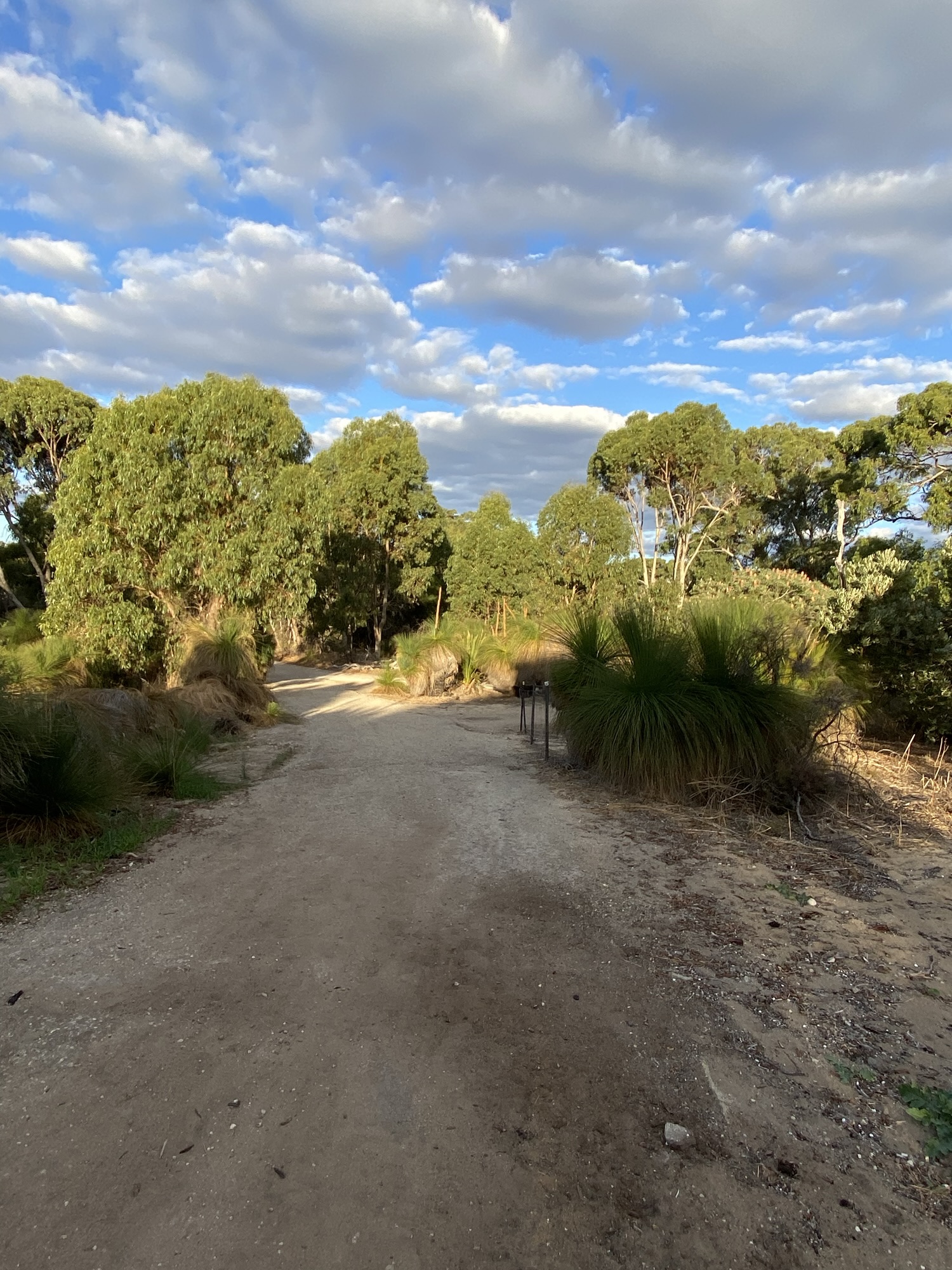
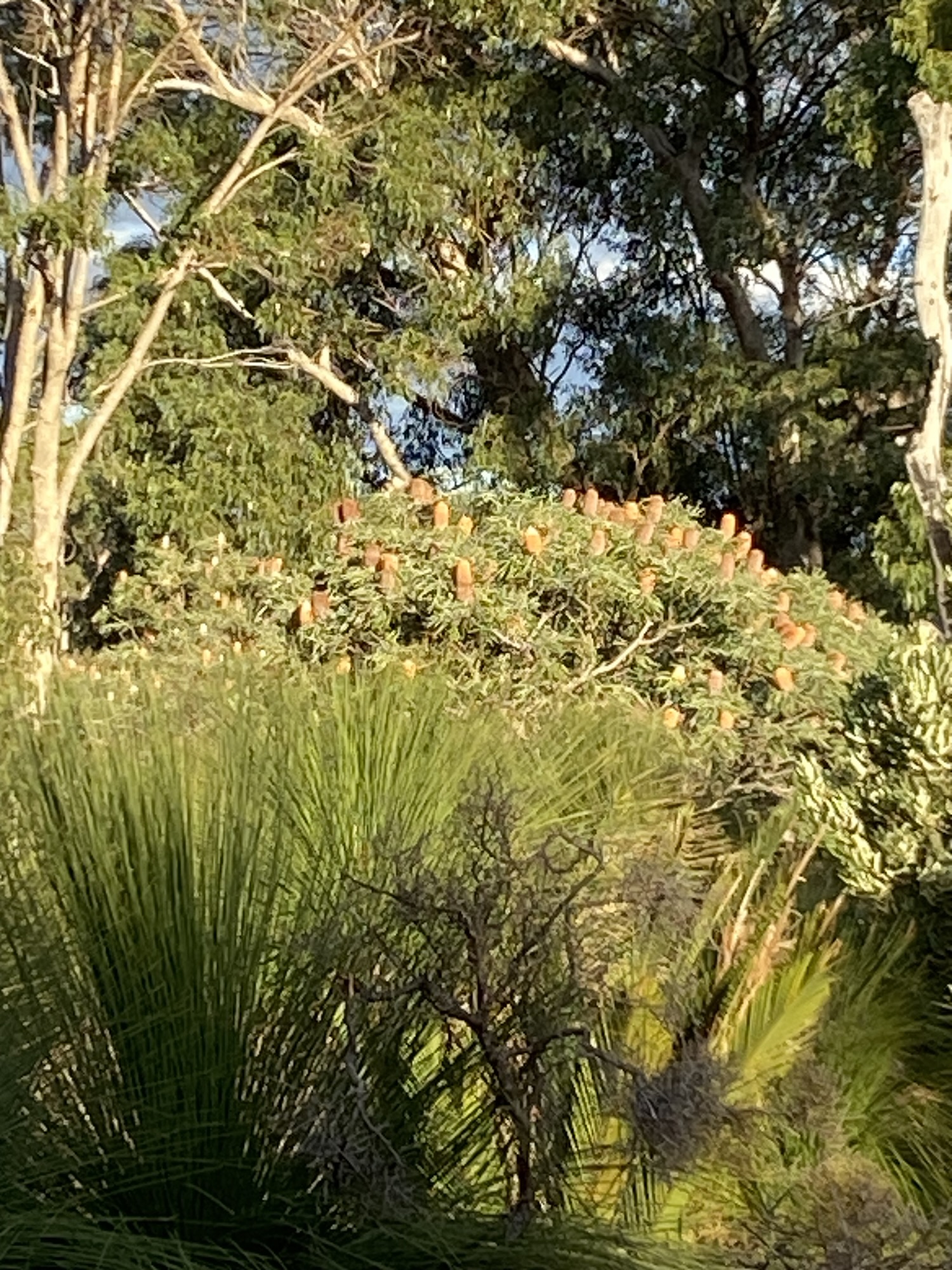
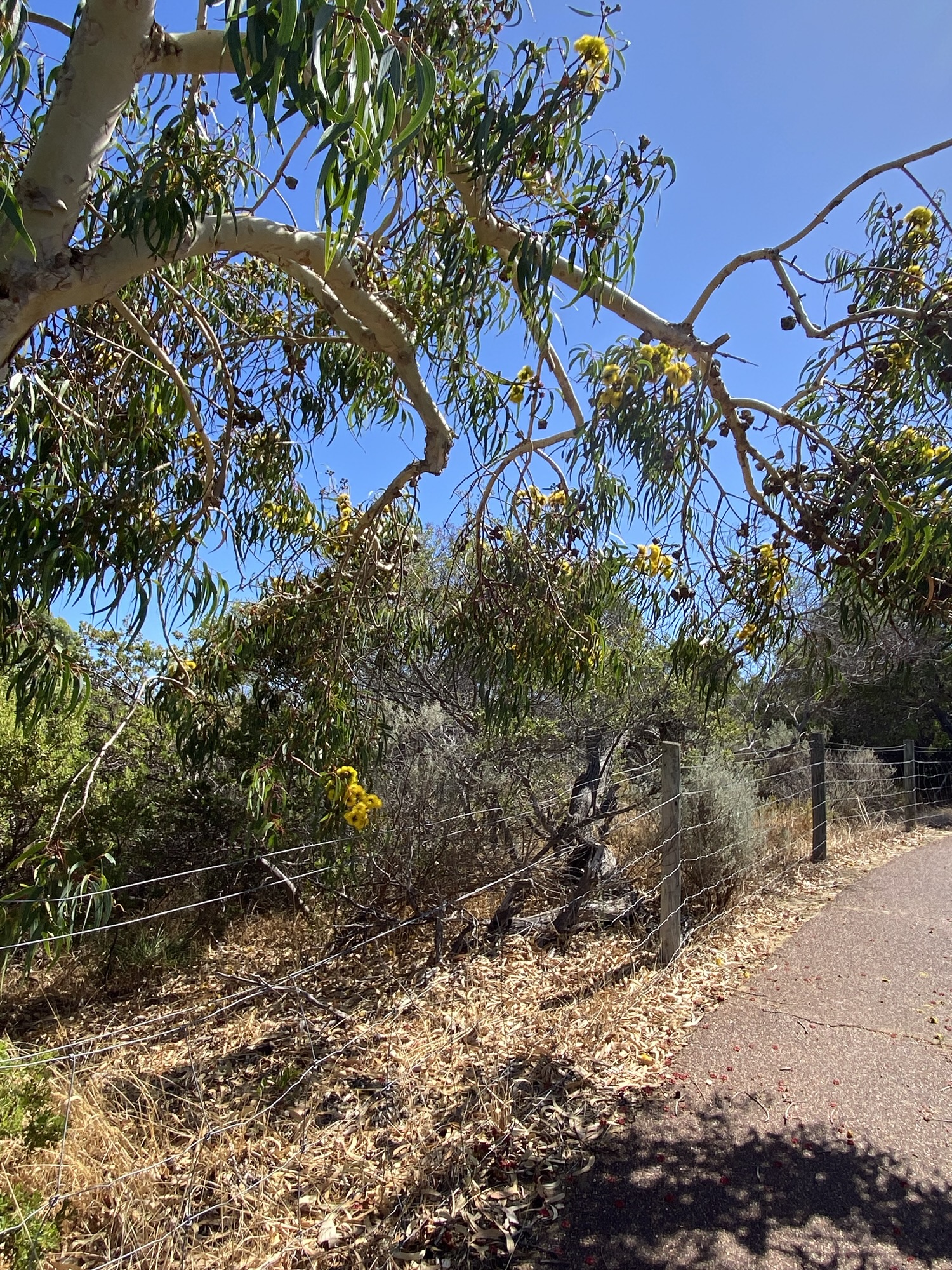
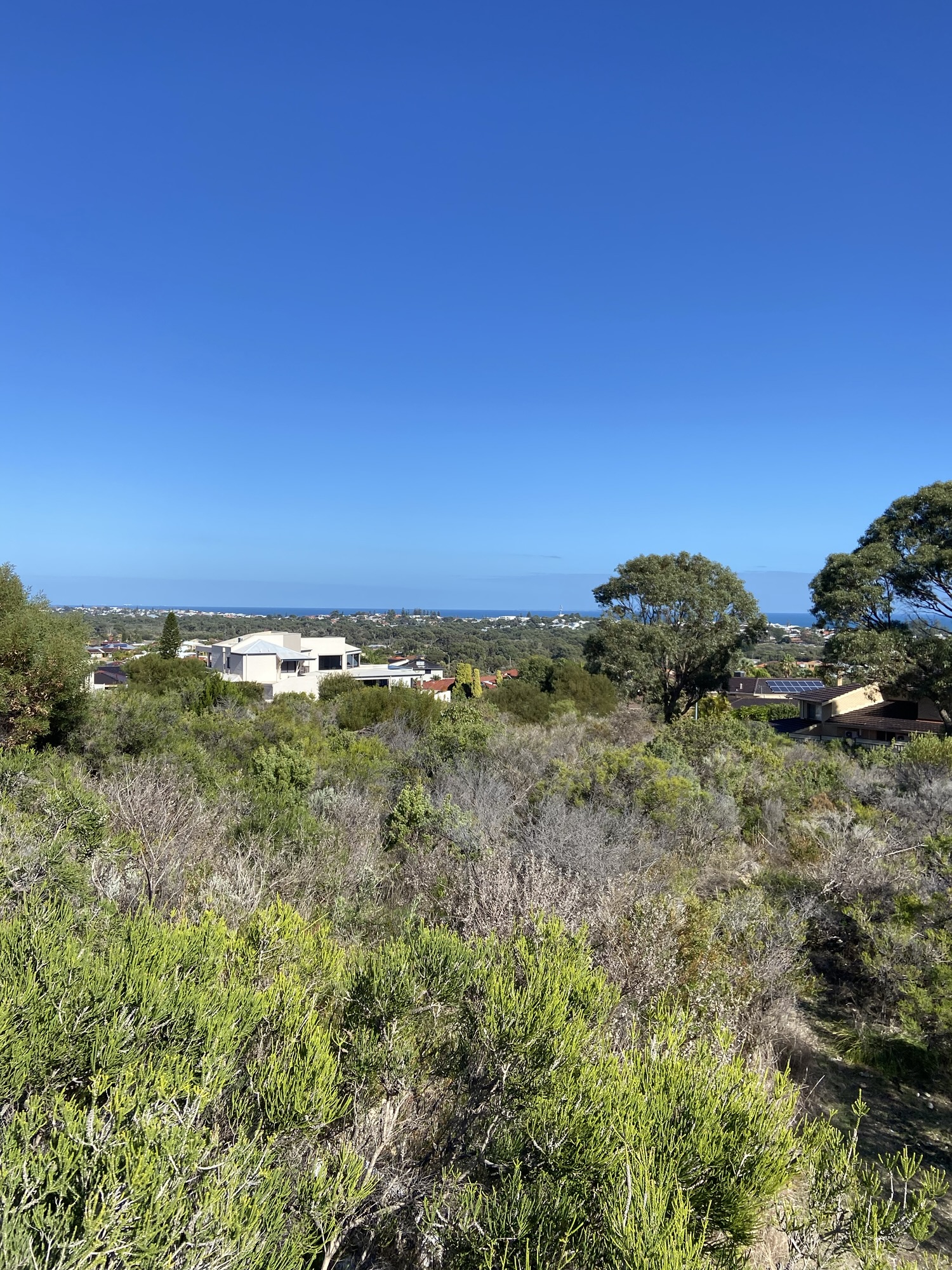
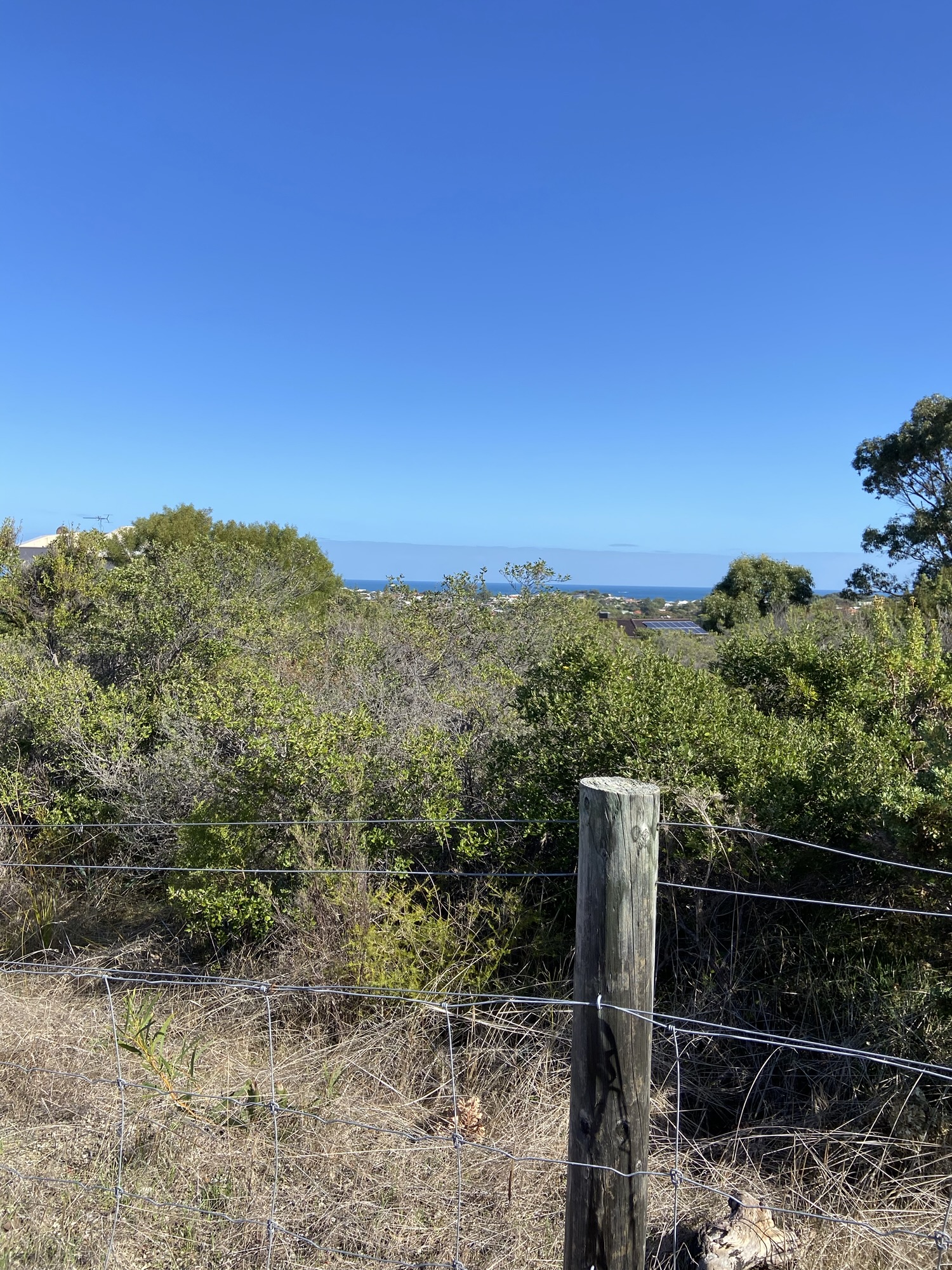
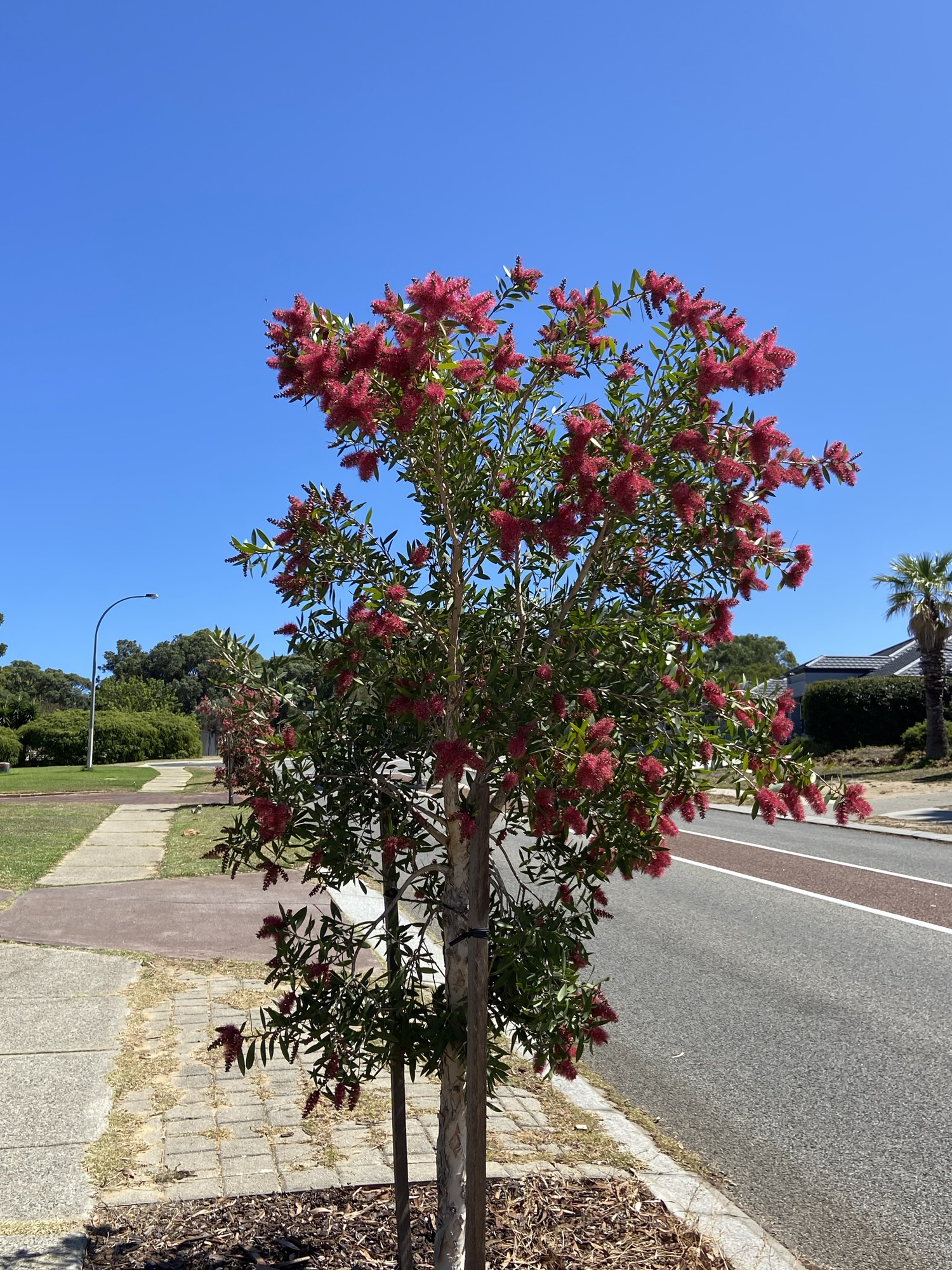
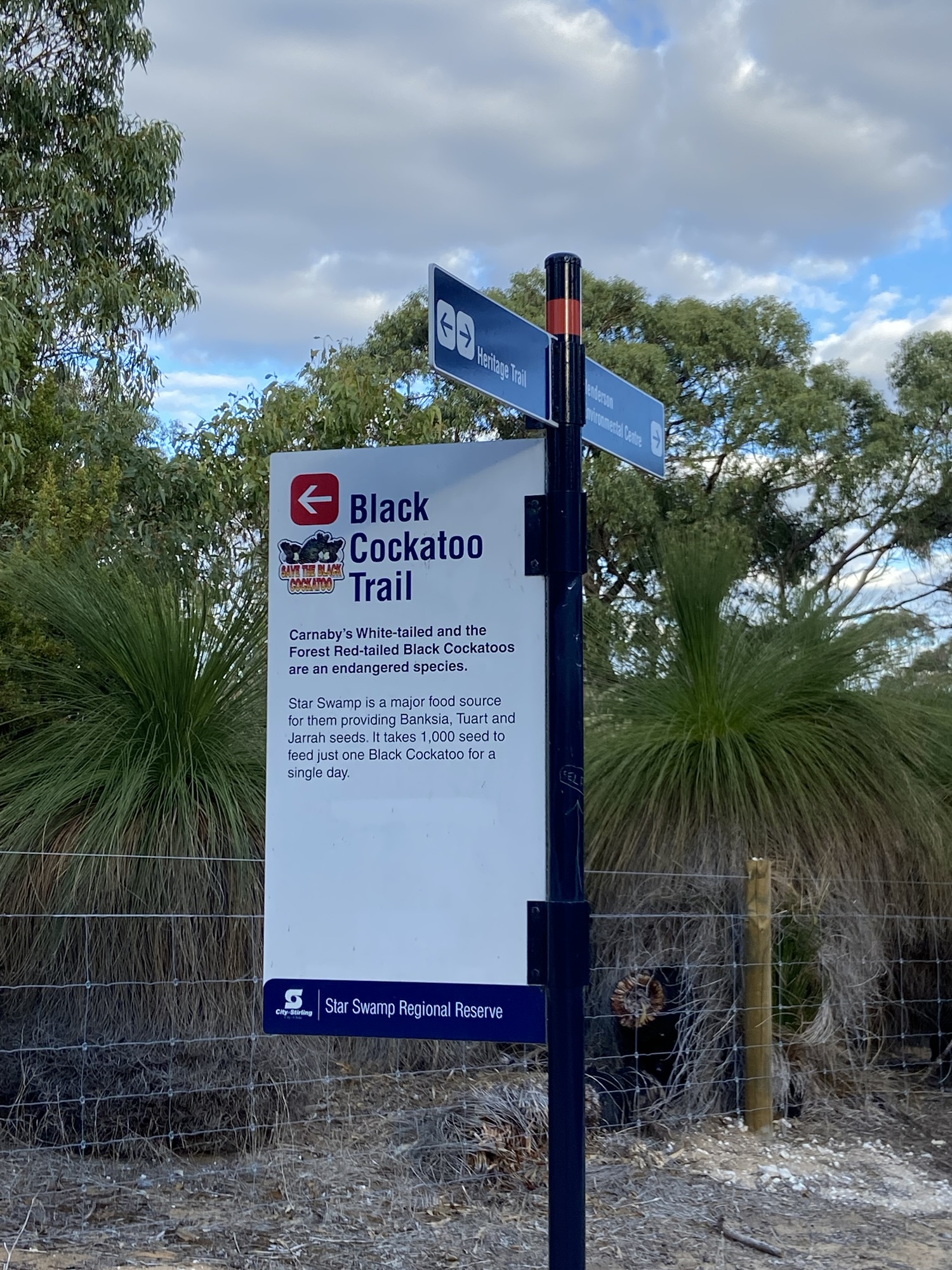
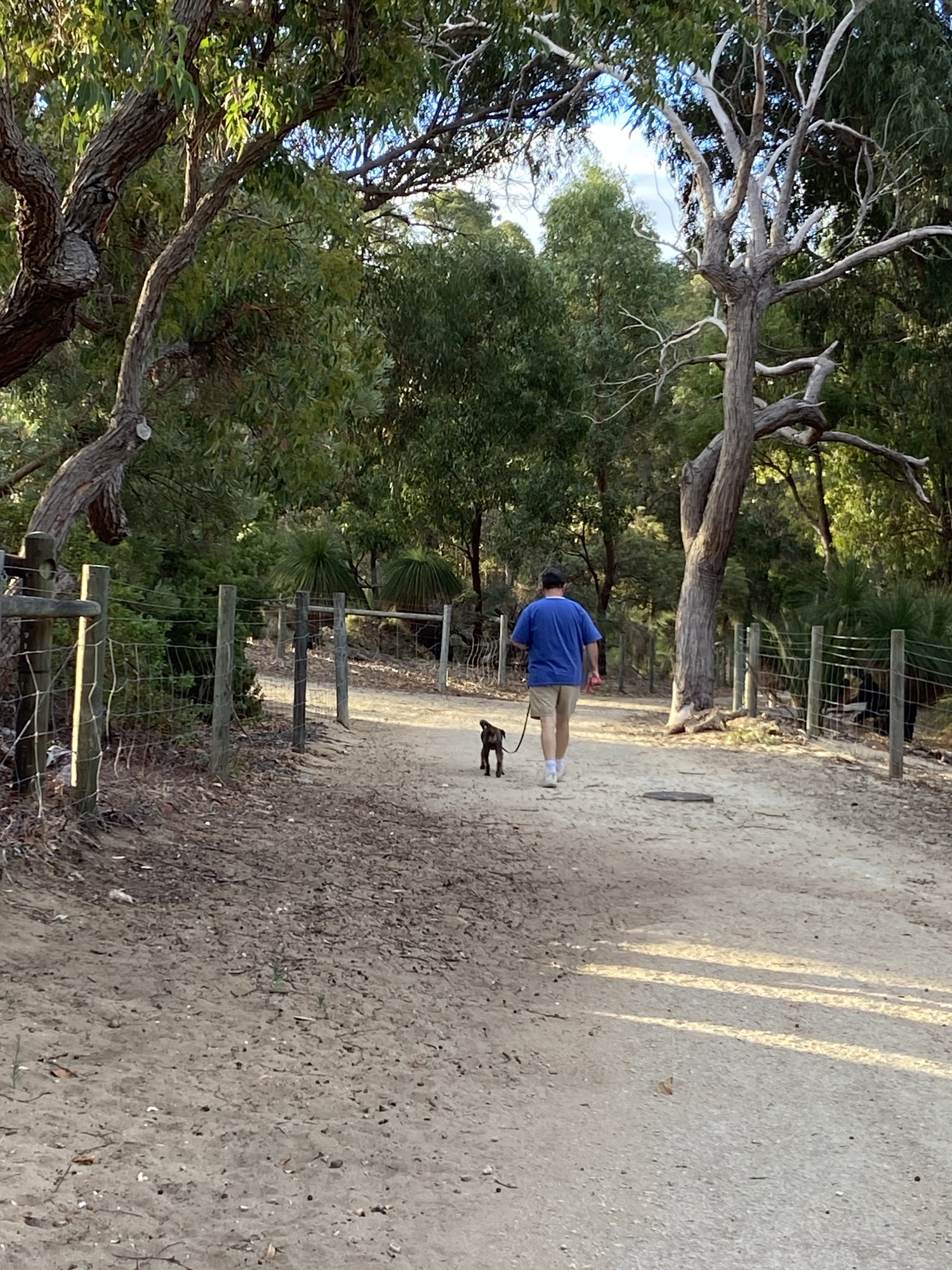
Before getting on with my long overdue writing up of the past year’s travels, I thought I’d do a photo gallery of Djeran season – my favourite time of the year here. I’ve written posts about this season in previous years (see Djeran Season – Star Swamp Walk and Banksias and Djeran Season South West WA).
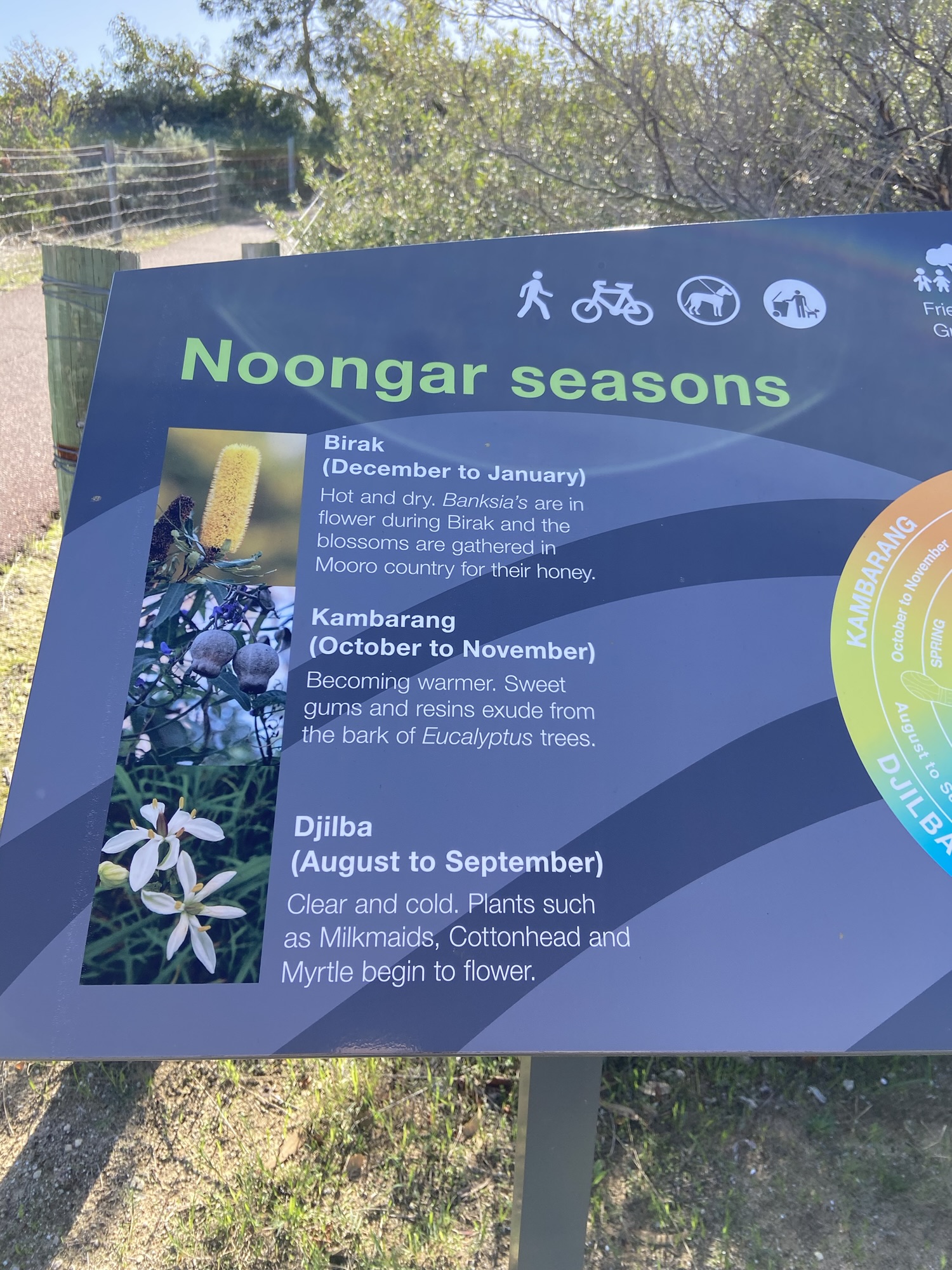
Here is a quick recap: Although we talk about the traditional 4 European seasons, the indigenous Noongar people of South Western Australia have a close connection to the land and weather cycles and chart the changing seasons differently.Their way of life for so many generations has depended on the understanding of the weather patterns at the various times of the year and their influence on nature. This understanding helped them to know the best times to hunt, gather or migrate to other areas. They divided the annual cycle into 6 distinct periods namely Birak (December to January), Bunuru (February to March), Djeran (April to May), Makaru (June to July), Djilba (August to September) amd Kambarang (October to November). You can find more information from the link here.
The start of one of our local walks at Trigonometric Park has the following information board.
Djeran is a beautiful time of the year as it signals the end of the really intense heat. You can start to feel a slight coolness in the air in the early mornings and evenings, the breezes are light & gentle and the banksia trees start to bloom. Non-native trees such as the plane trees turn soft shades of gold, then red and brown as the leaves begin to shed.The weather is topsy turvy with showers starting to arrive more regularly – a hopeful harbinger of the rainy winter season (we certainly need plenty of rain here!).
Unbelievably it’s now June, which here in Perth represents the official start of winter or Makuru (June and July) in the Noongar calendar.
A quick update about this year – I had to go over to the UK in January to help clear out my dad’s flat because, following a health crisis last year, he went into full time residential aged care in the autumn. My brother and I needed to get the flat prepared to go onto the market.
I was there (in Harrogate, North Yorkshire) for a couple of weeks in the midst of snow, ice and freezing temperatures, which was quite an adjustment coming off a hot Perth summer!
It was also an introduction to the vagaries of the UK aged care system, not to mention the unbelievable costs of social care. The situation is still ongoing but fingers crossed we now have a keen buyer and offer for Dad’s flat. It will certainly be a welcome relief when it is sold.
So to get back into my much neglected blog, I thought I’d share an interesting outing we did last weekend. There’s nothing like playing tourist in your own town/city.
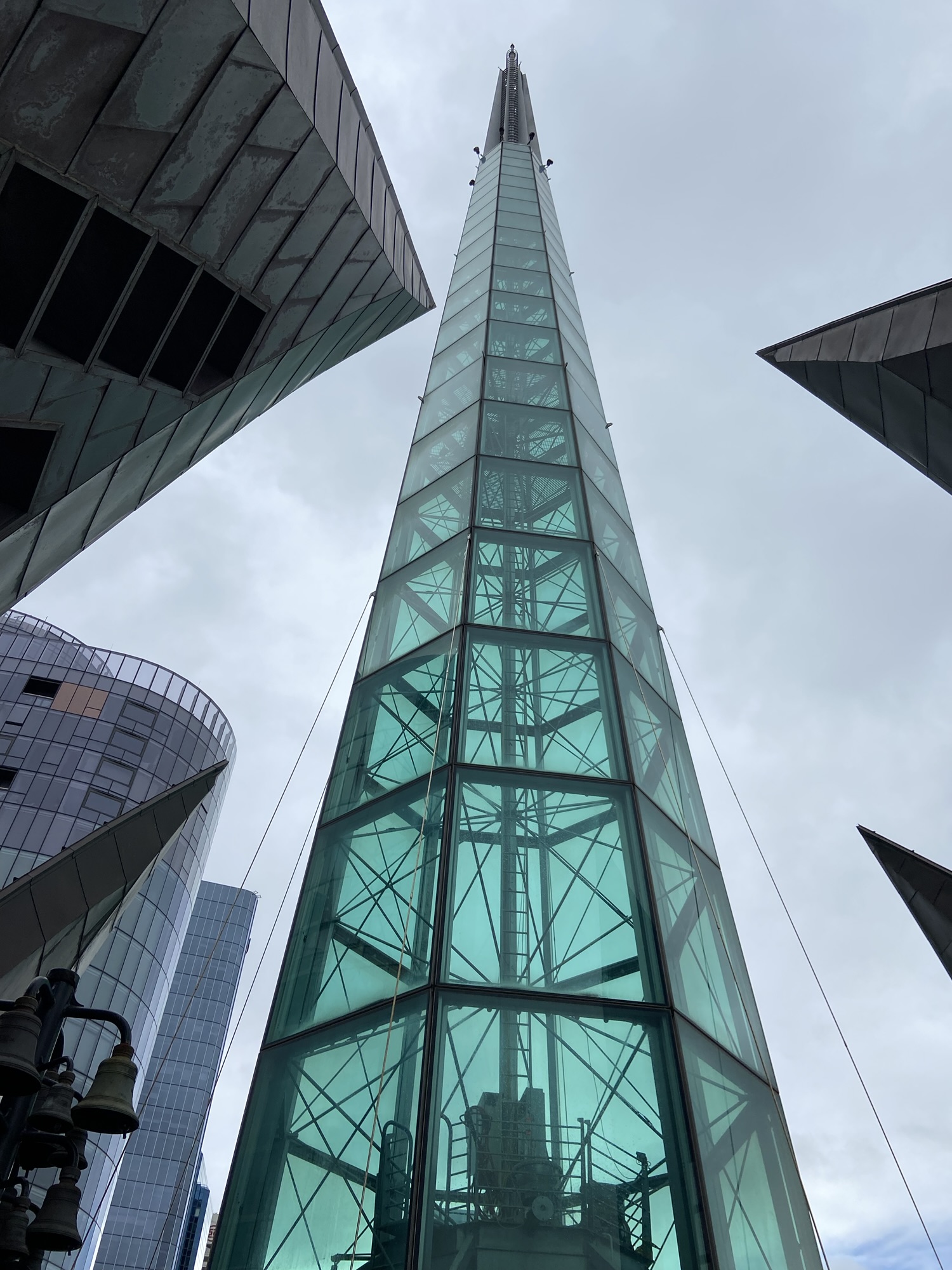
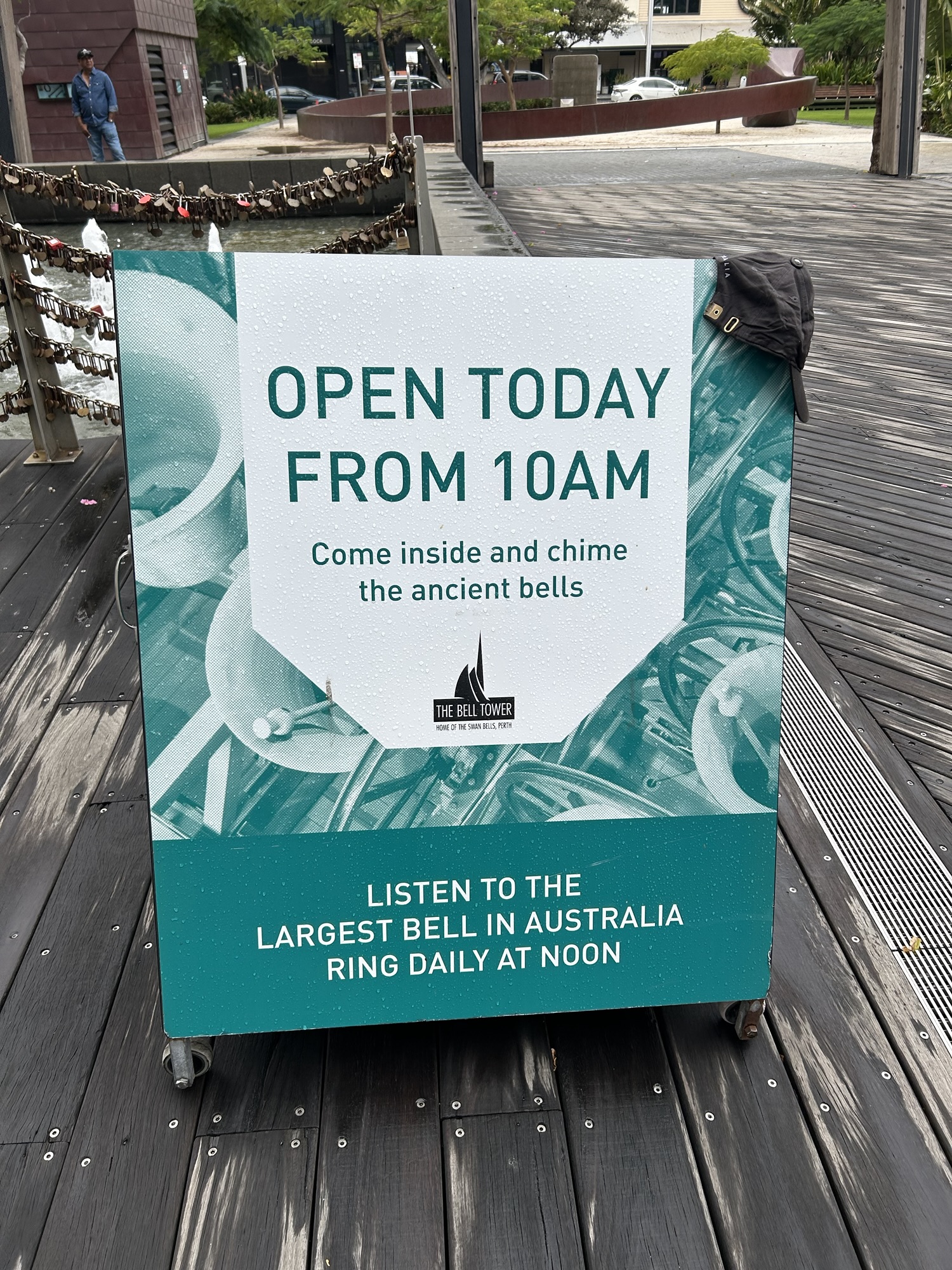
Monsieur had been given a voucher for a tour around the The Perth Bell Tower, a landmark on the Swan River foreshore, which we’ve walked or driven past many times. Monsieur had been to a work function there several years ago but I’d never been inside before so it was an opportunity to find out more about the history of the bells housed within. We had booked for the 11.30am Anzac Bell Tour, which gives you a fascinating insight into the history of the bells, an opportunity to try ringing them (I didn’t know that in advance!) and finally the chance to see and hear up close the midday chiming of the Anzac bell, the most recent addition to the collection.
Our guide Iliana, from the City of Perth, was excellent – entertaining and informative. Housed in an impressive glass spire, we learnt (well I did anyway as Monsieur already knew) that 12 of the Swan Bells are in fact the original bells (dating back to the 14th century) of St. Martin-in-the-Fields Church in Trafalgar Square, London.
Having lived in London for 9 years and enjoyed visits to the Cafe in the Crypt on trips back there, it is strange to think that the original church bells have now also found their home in Perth on the other side of the world. They were presented to the State of Western Australia as part of the Australian Bicentenary celebrations. Six more bells were later cast by the Whitechapel Bell Foundry to complete the set. It’s fascinating to see the inner workings of the Bell Tower close up – for more technical information please read the link here.
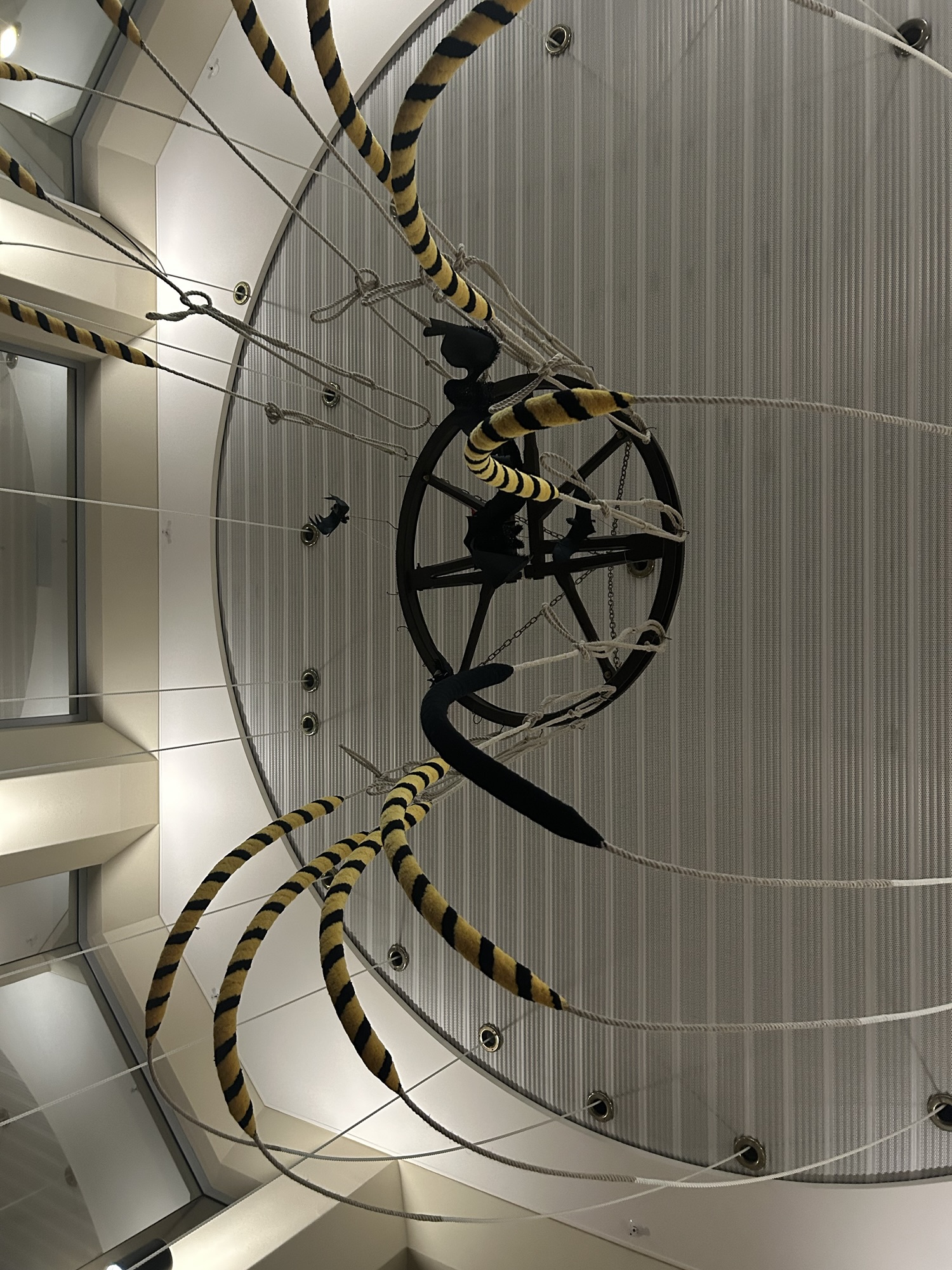
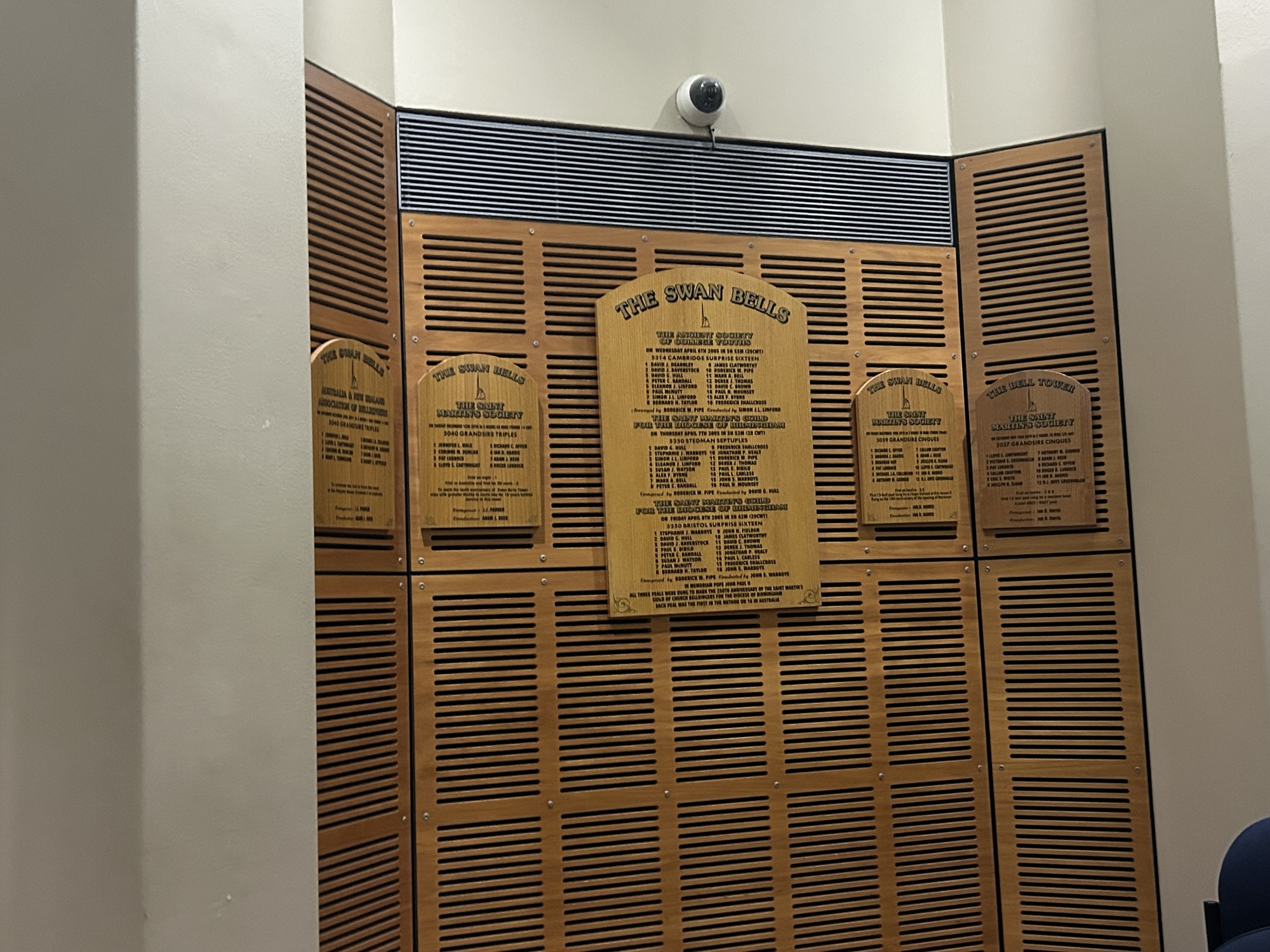
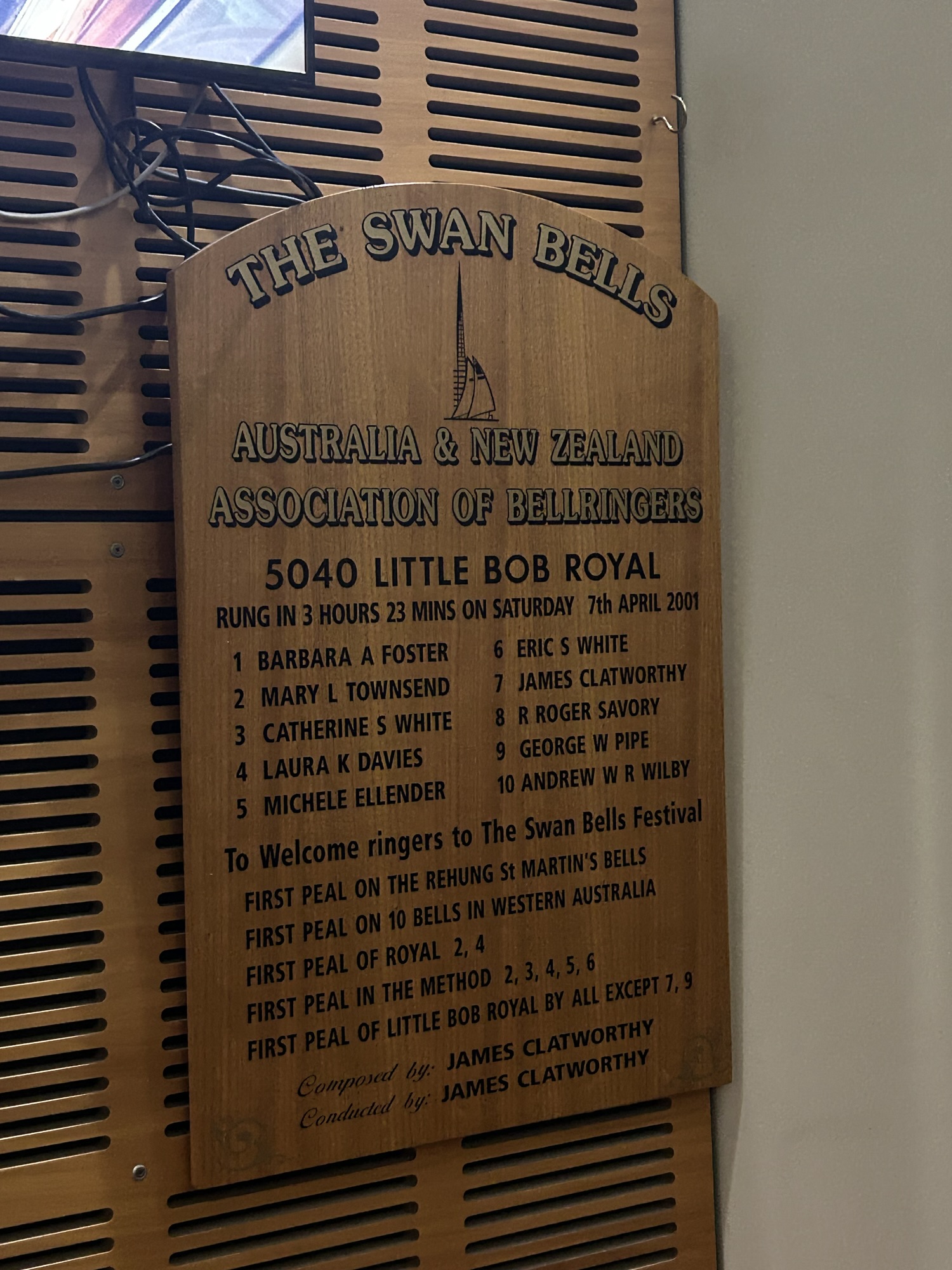
Having learnt about the art of “change ringing” the bells, we got a chance to try out the technique ourselves. It’s definitely harder than it looks! Fortunately I didn’t end up on the ceiling or anything like that but don’t think I’m cut out to be a bell ringer. It’s a fine musical art and there is a dedicated group of St Martin’s Society of Change Ringers who meet regularly to practice and take part in special peels at various times. You can also book lessons and visiting bell ringers are welcome (see here for more info).
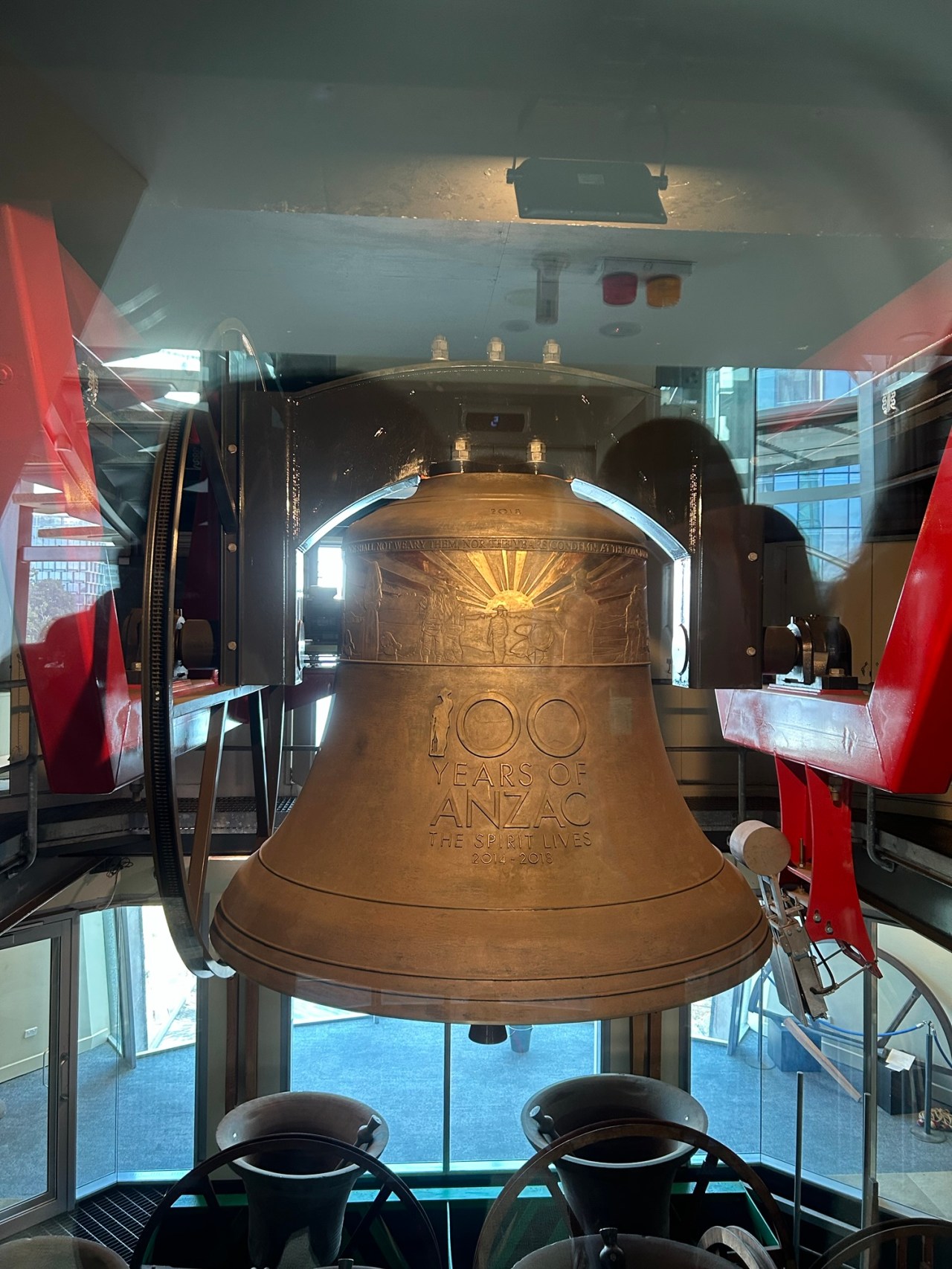
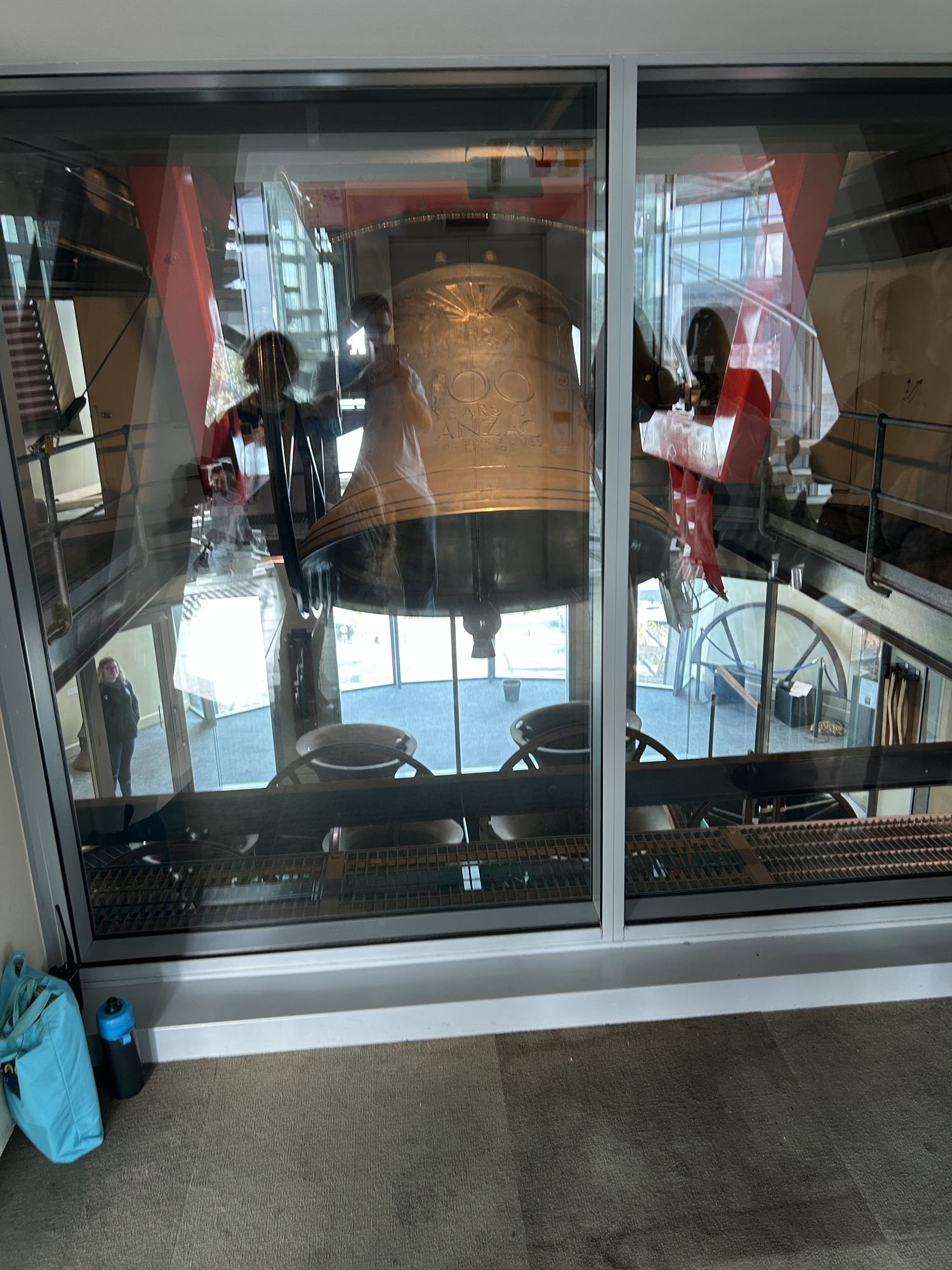
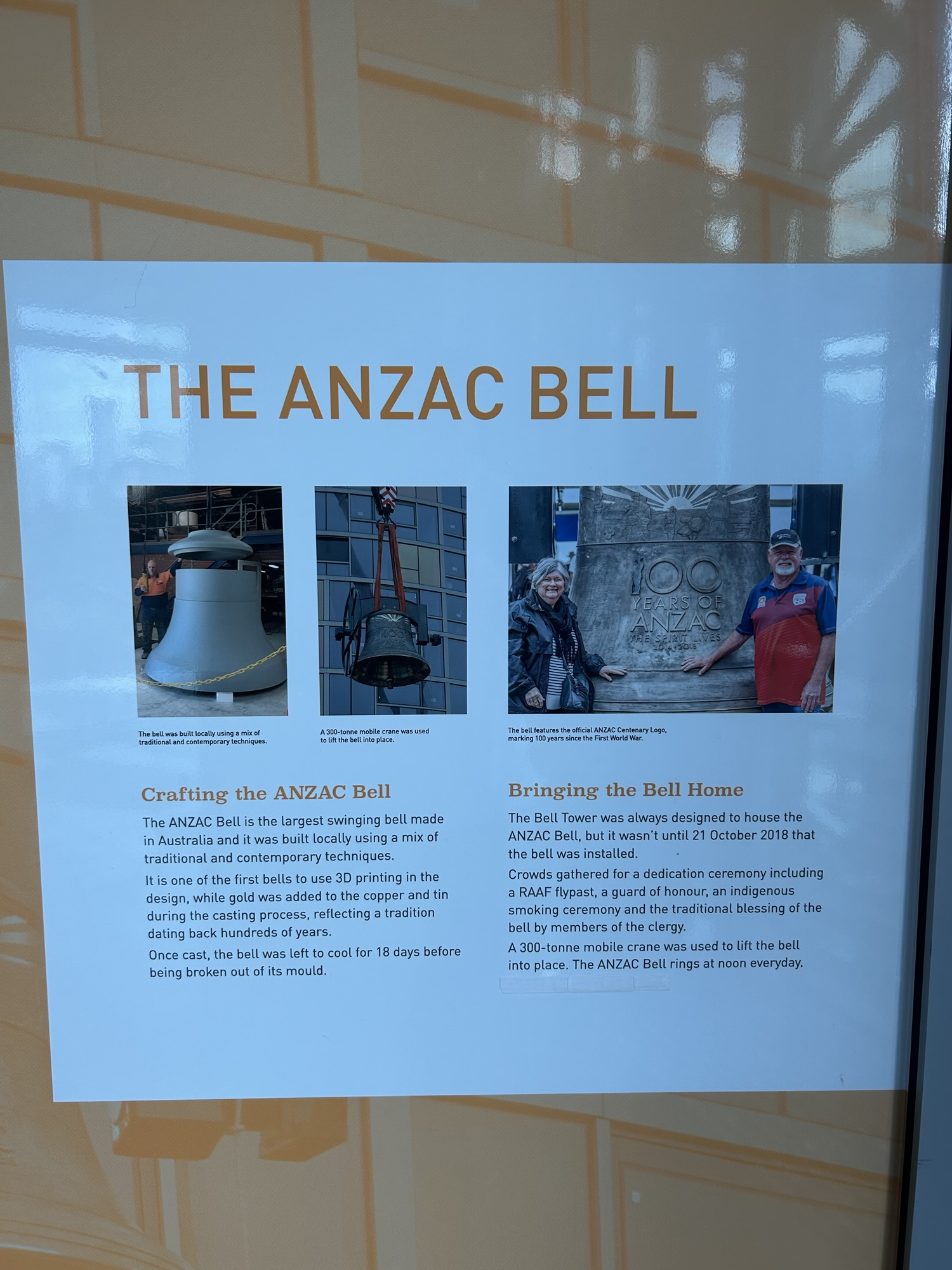
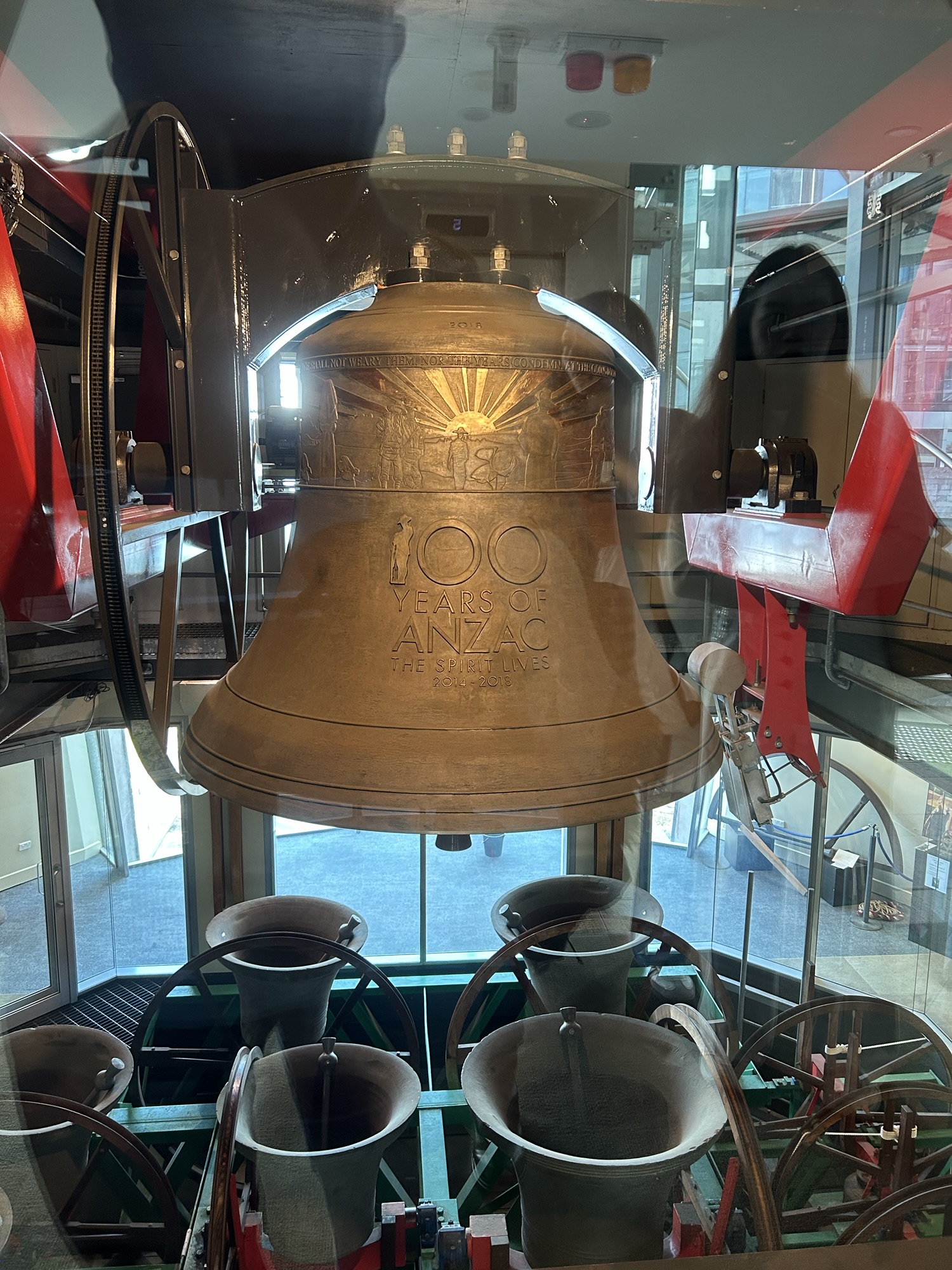
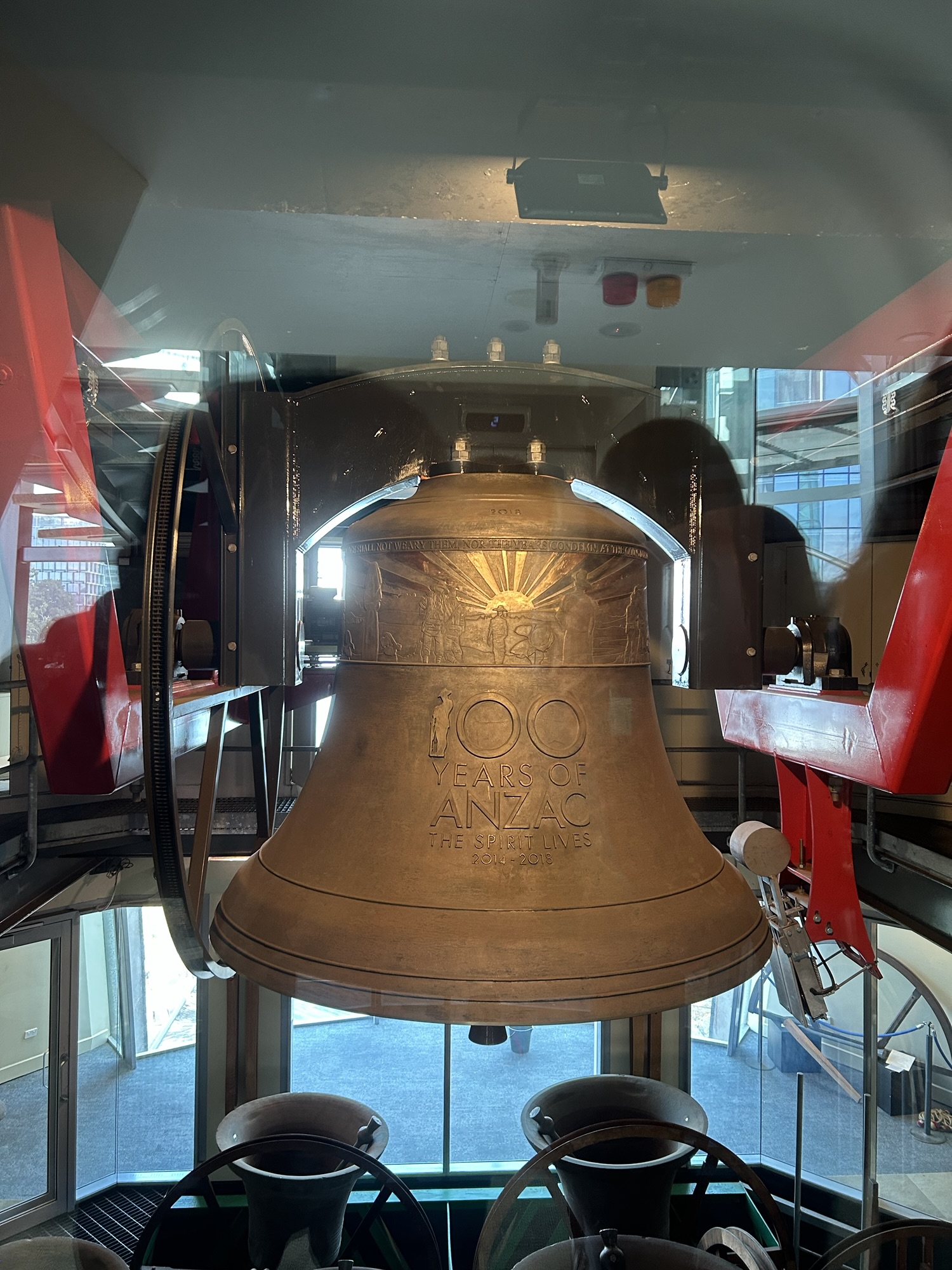
Finally we moved up to the 5th floor for the ringing of the huge ANZAC Centenary Bell(this is done mechanically each day at 12 noon).
“The ANZAC Bell is the largest swinging bell in Australia and is a lasting memorial to Australian and New Zealand servicemen and women involved in wars, conflicts and peacekeeping operations around the world”.
It was commissioned in 2018, cast in Canning Vale WA and was first rung on the 100th anniversary of Armistice Day, 11th November 2018. The bell is impressive, beautifully engraved with images of the past such as poppies and servicemen and women. For reference it weighs 6,500 kgs! Upon completion of the tour we were all presented with a special certificate and a commemorative coin, which we can have engraved for free if we want at the nearby Perth Mint (see here for a previous visit).
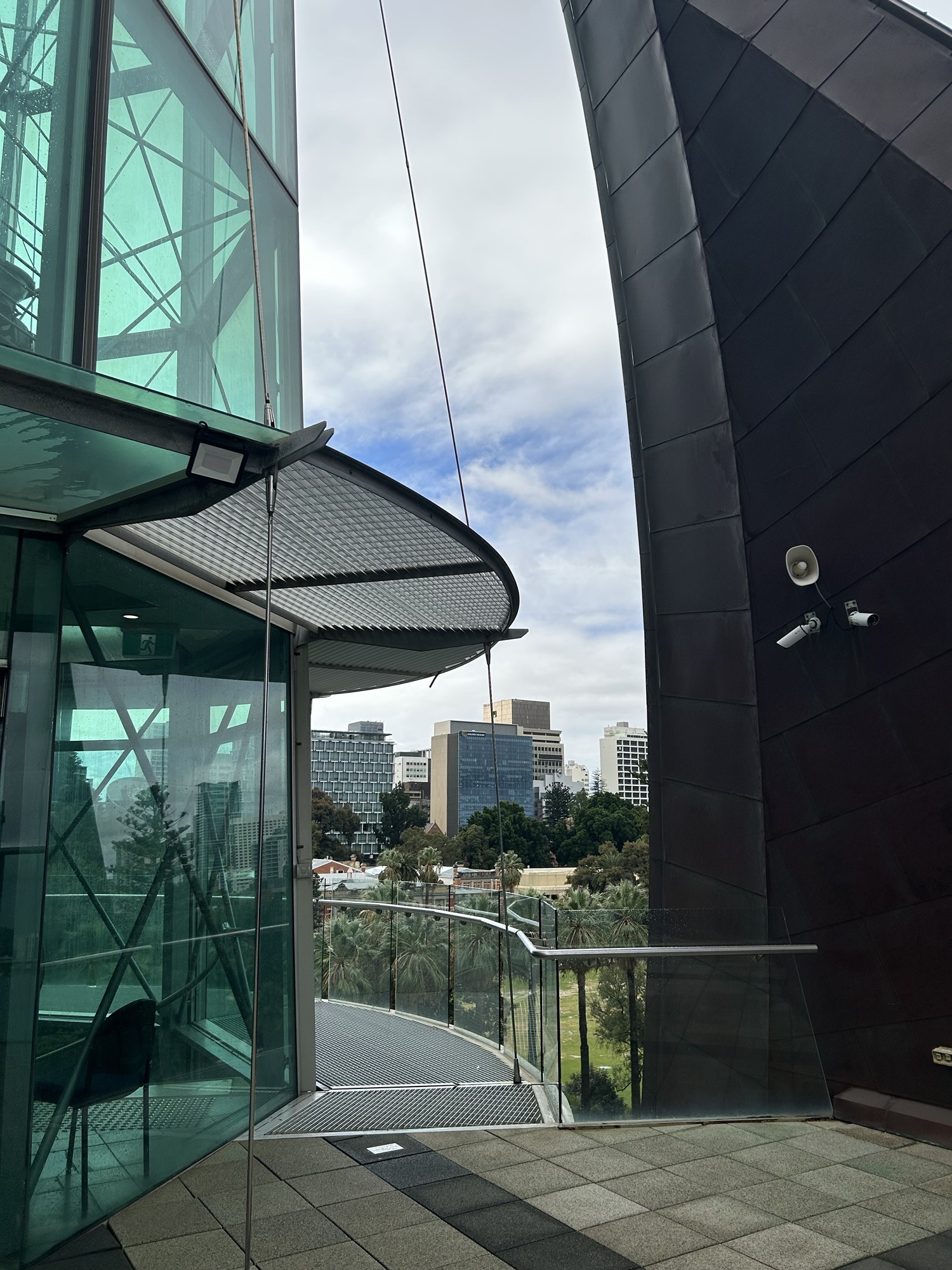
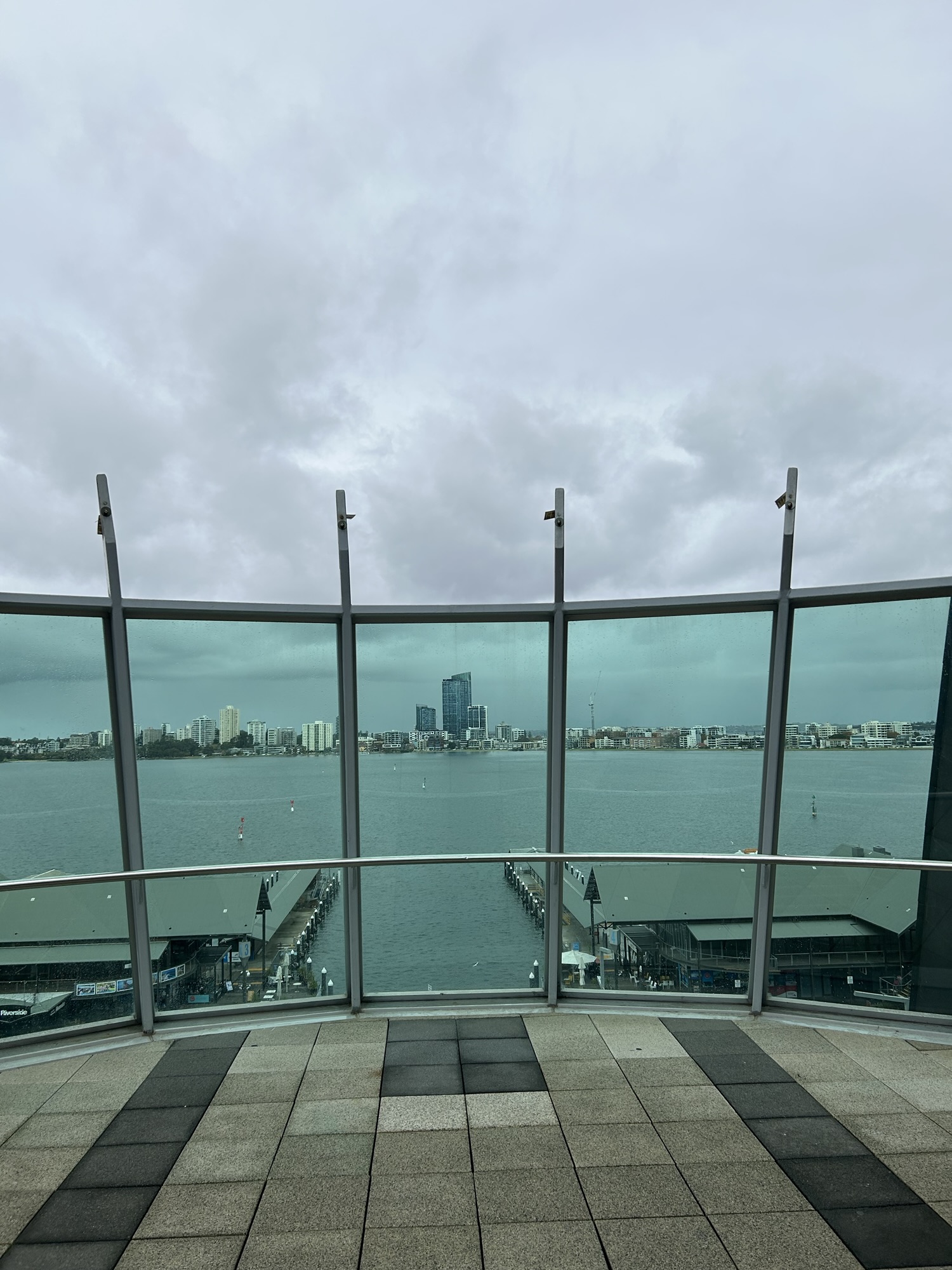
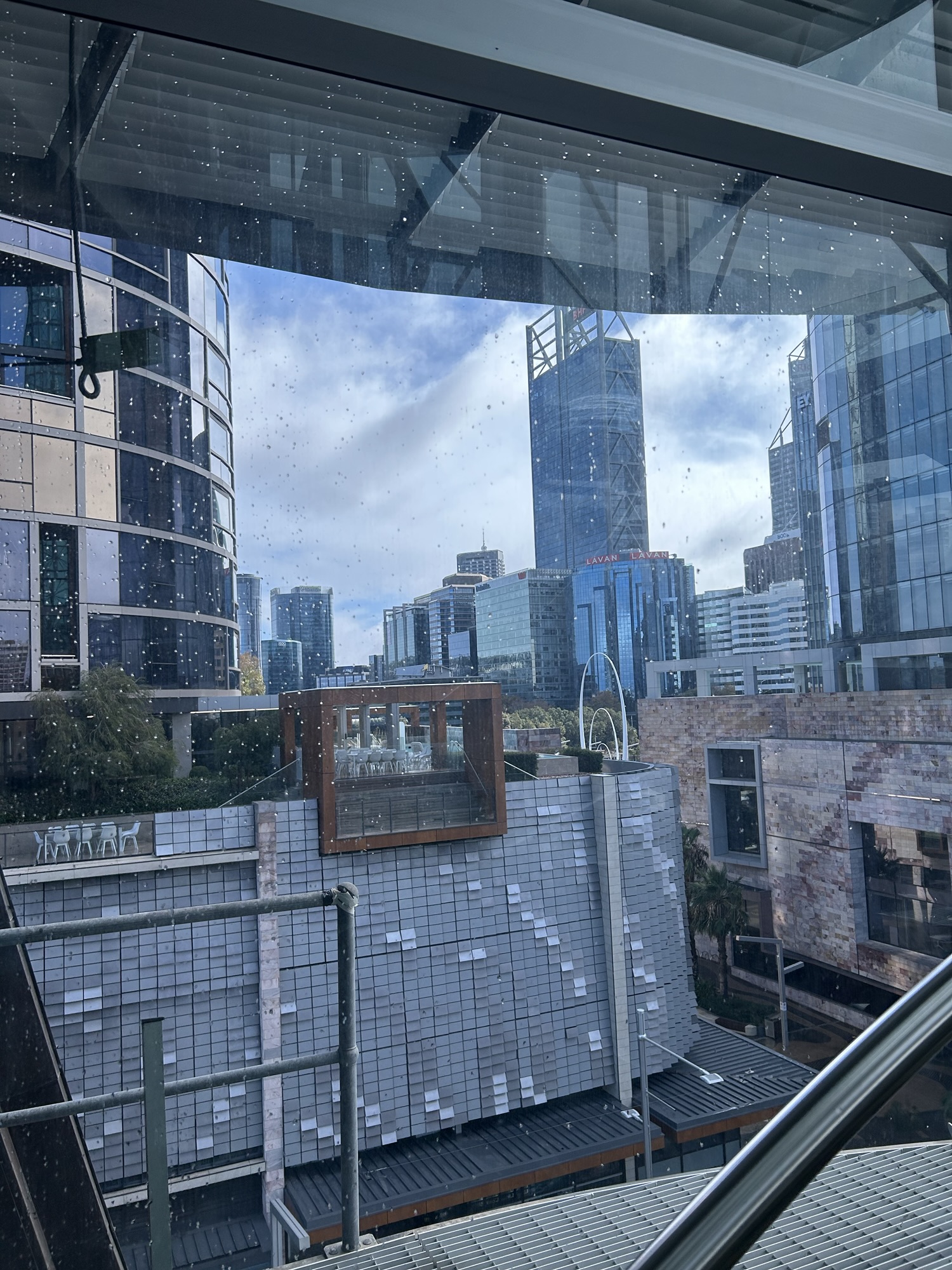
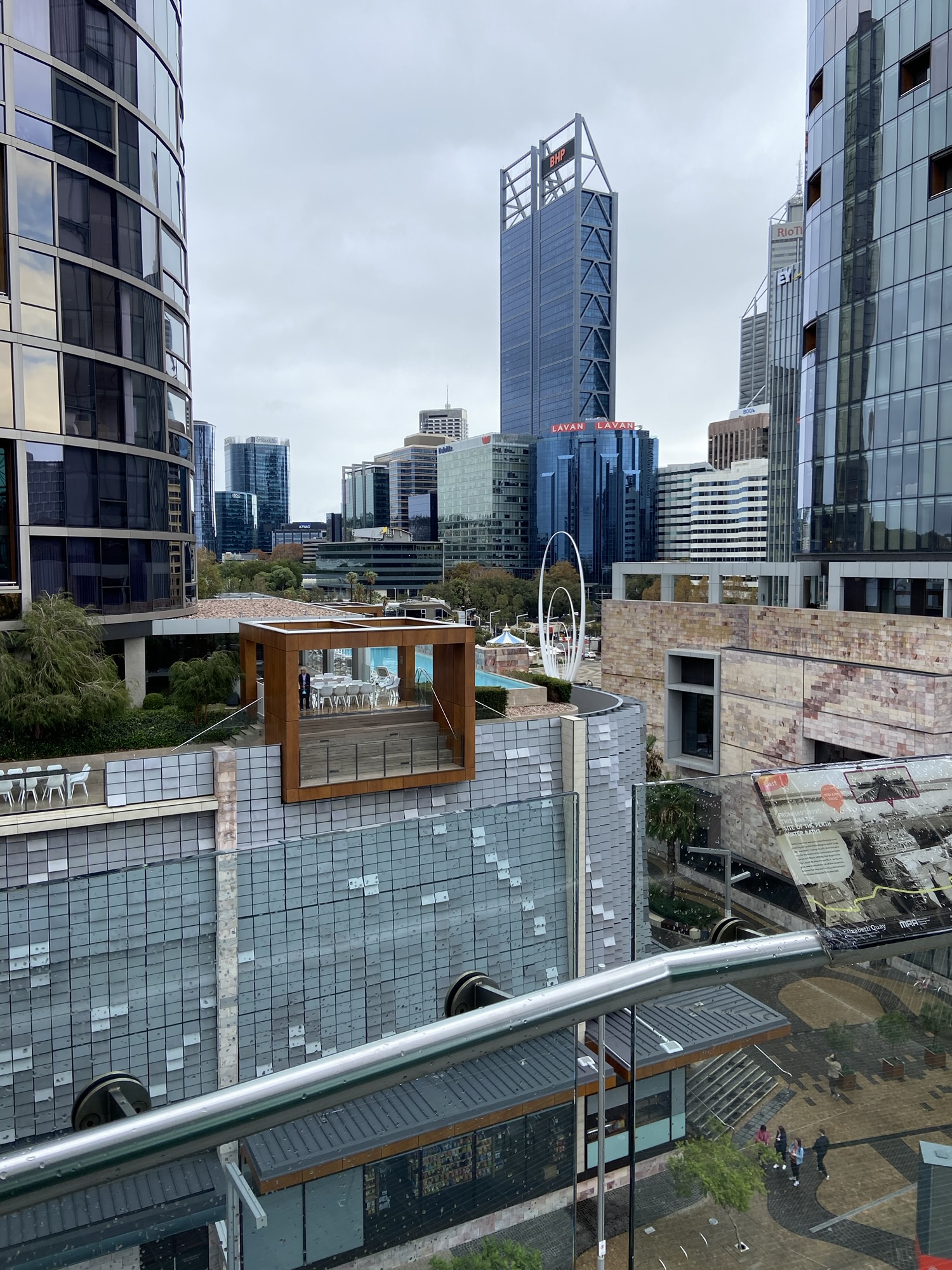
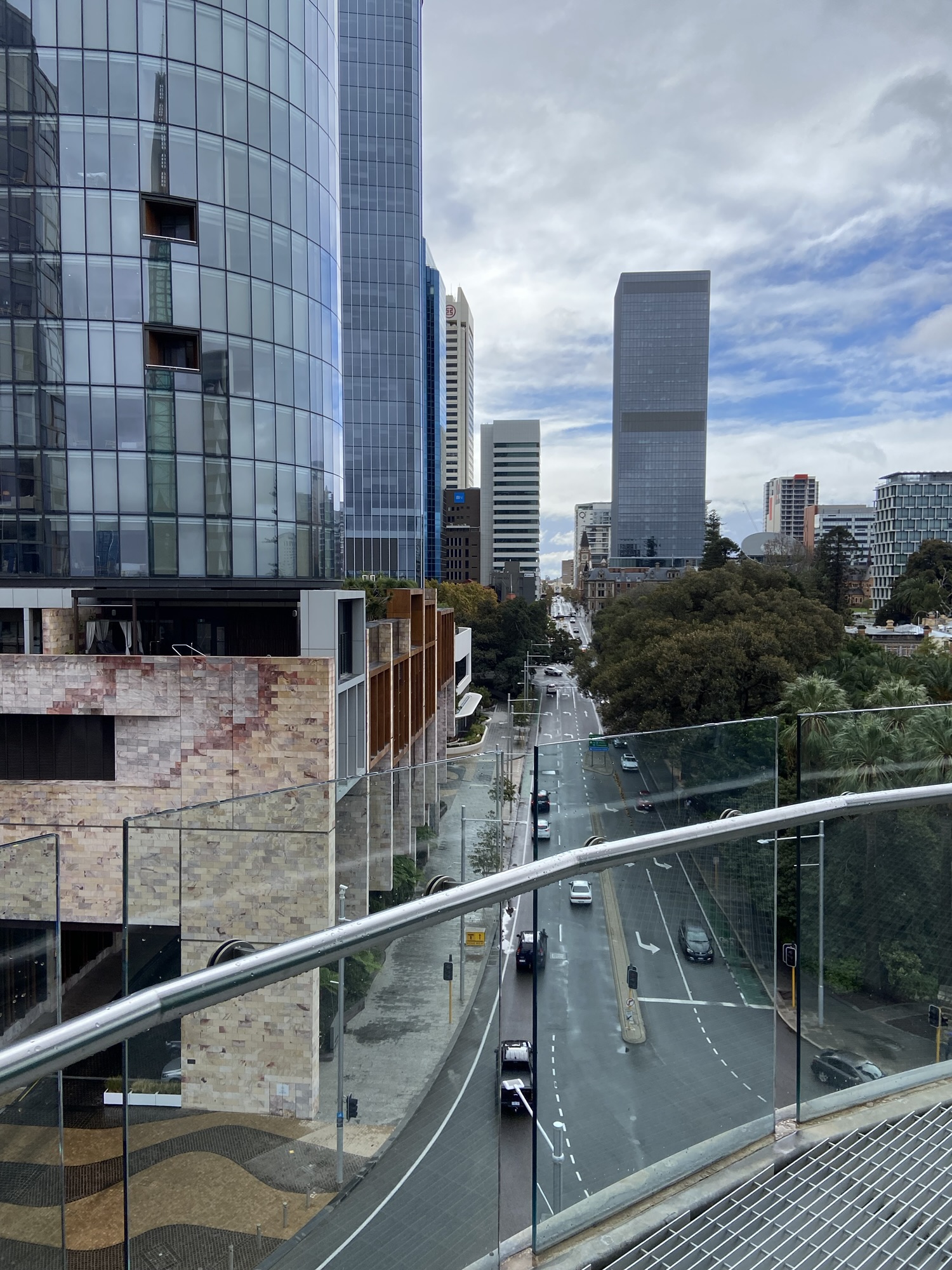
It was a very grey and windy late autumnal day in Perth but we made time to wander round the observation deck at the top of the Bell Tower. I did manage to get a few photos walking round the metal path at the edge of the tower though it was a tad nerve wracking. It was more relaxing to wander around the observation concourse and the views towards the river are stunning, even on a gloomy day.
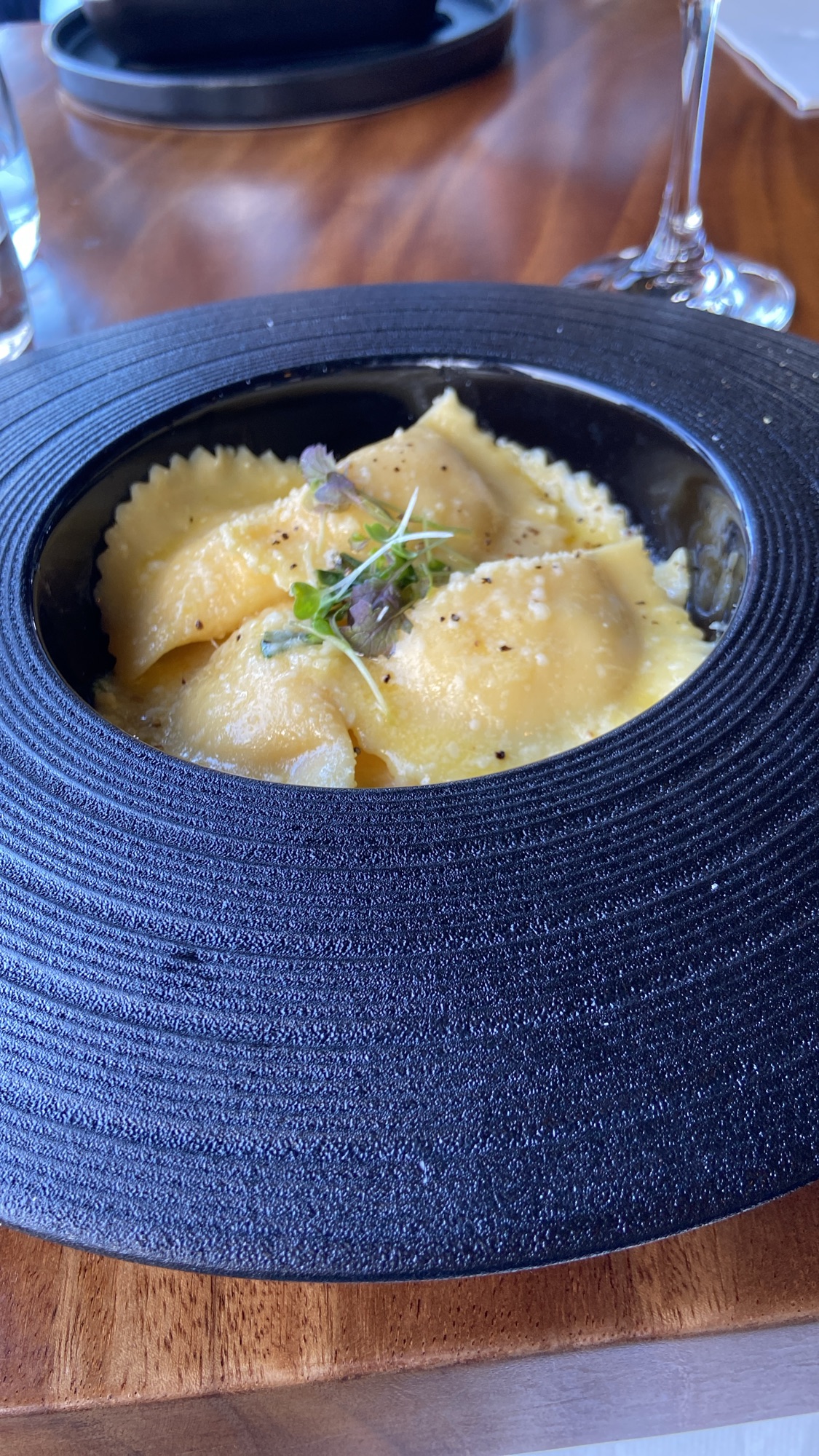
Having worked up an appetite (bell ringing is hard work!) we discovered a relatively new restaurant called Simple Italian nearby and enjoyed a delicious lunch overlooking the river.
Highly recommend a visit to the Perth Bell Tower if you ever find yourself in this corner of the world!


























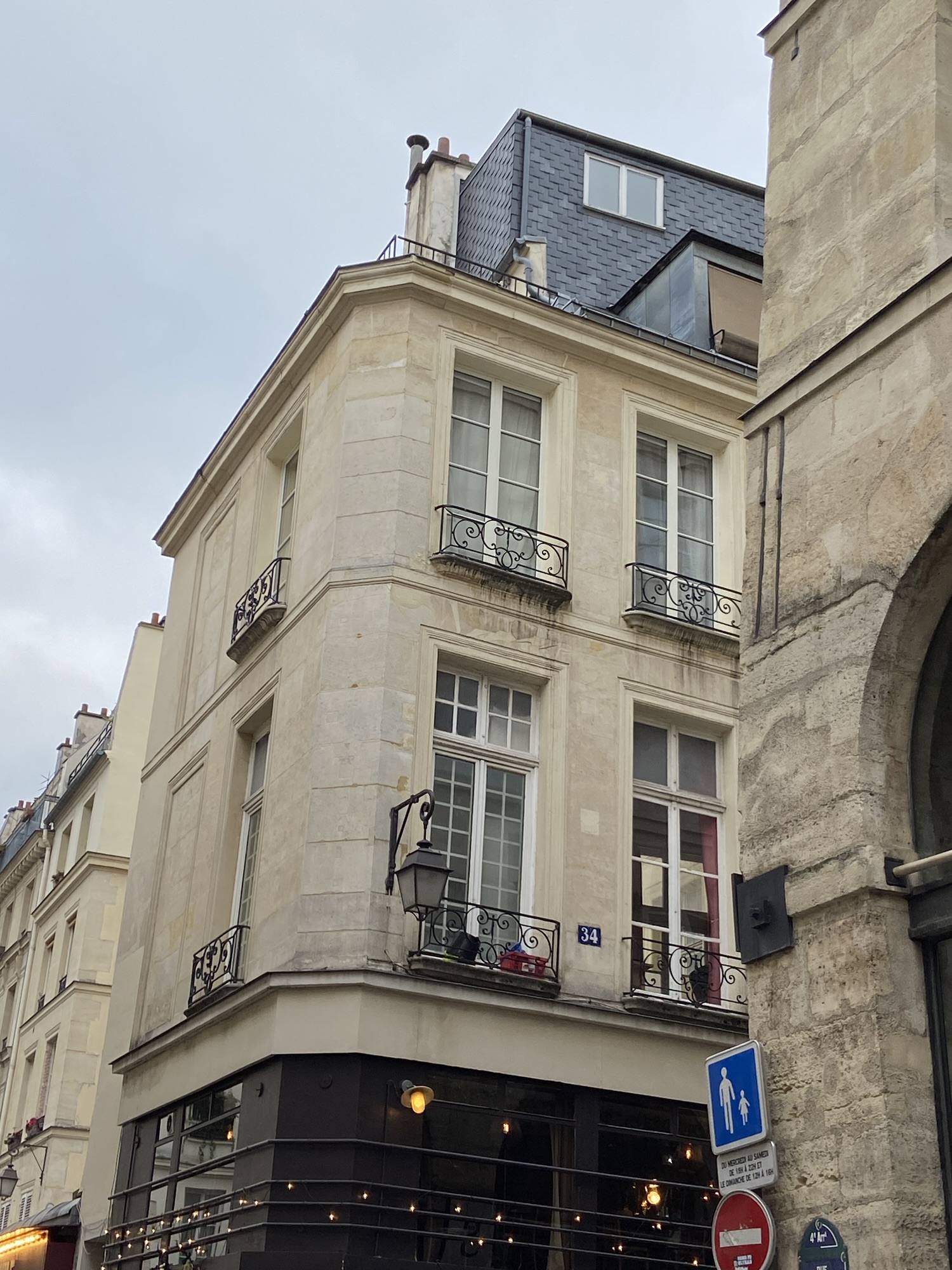
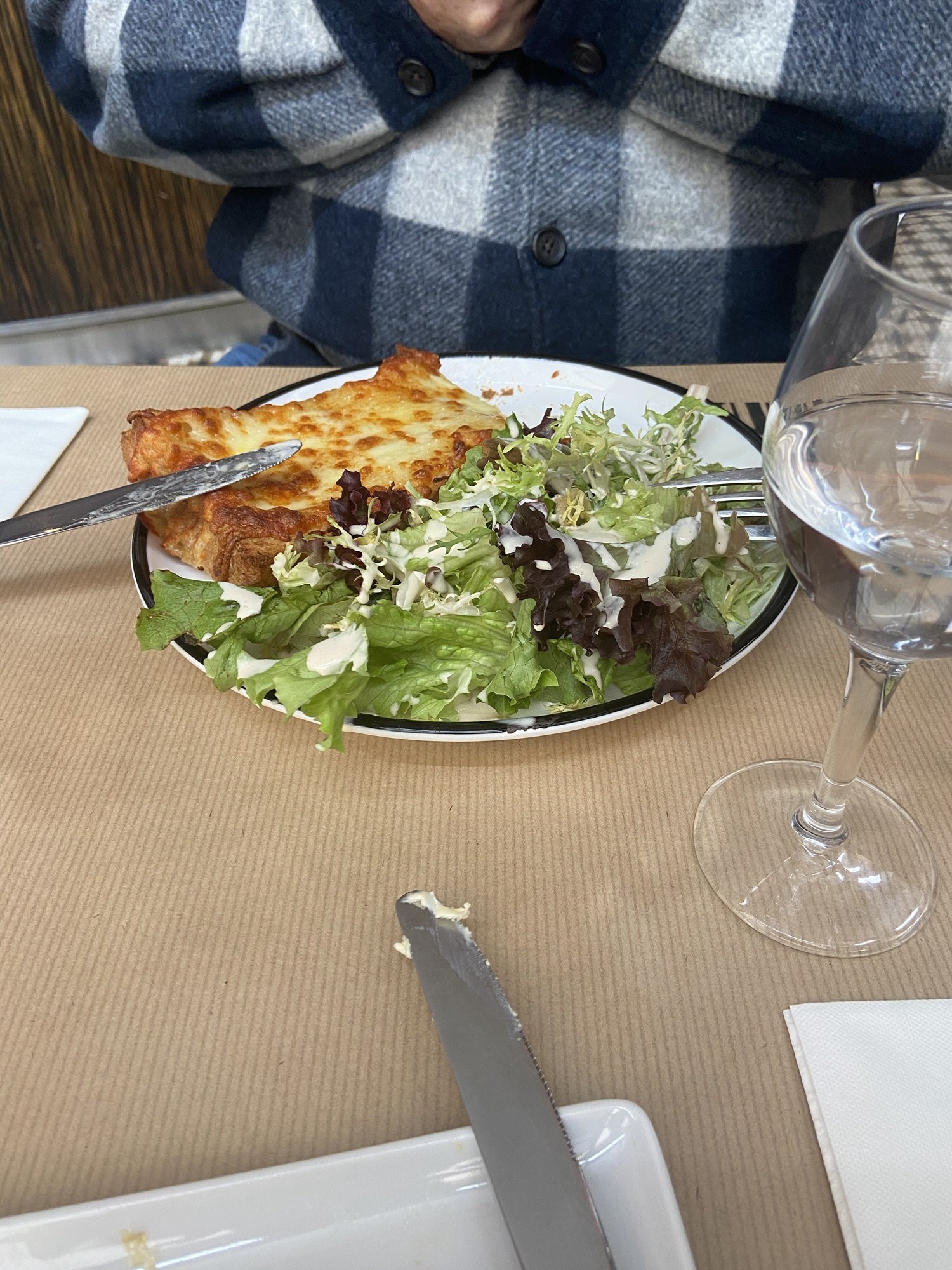
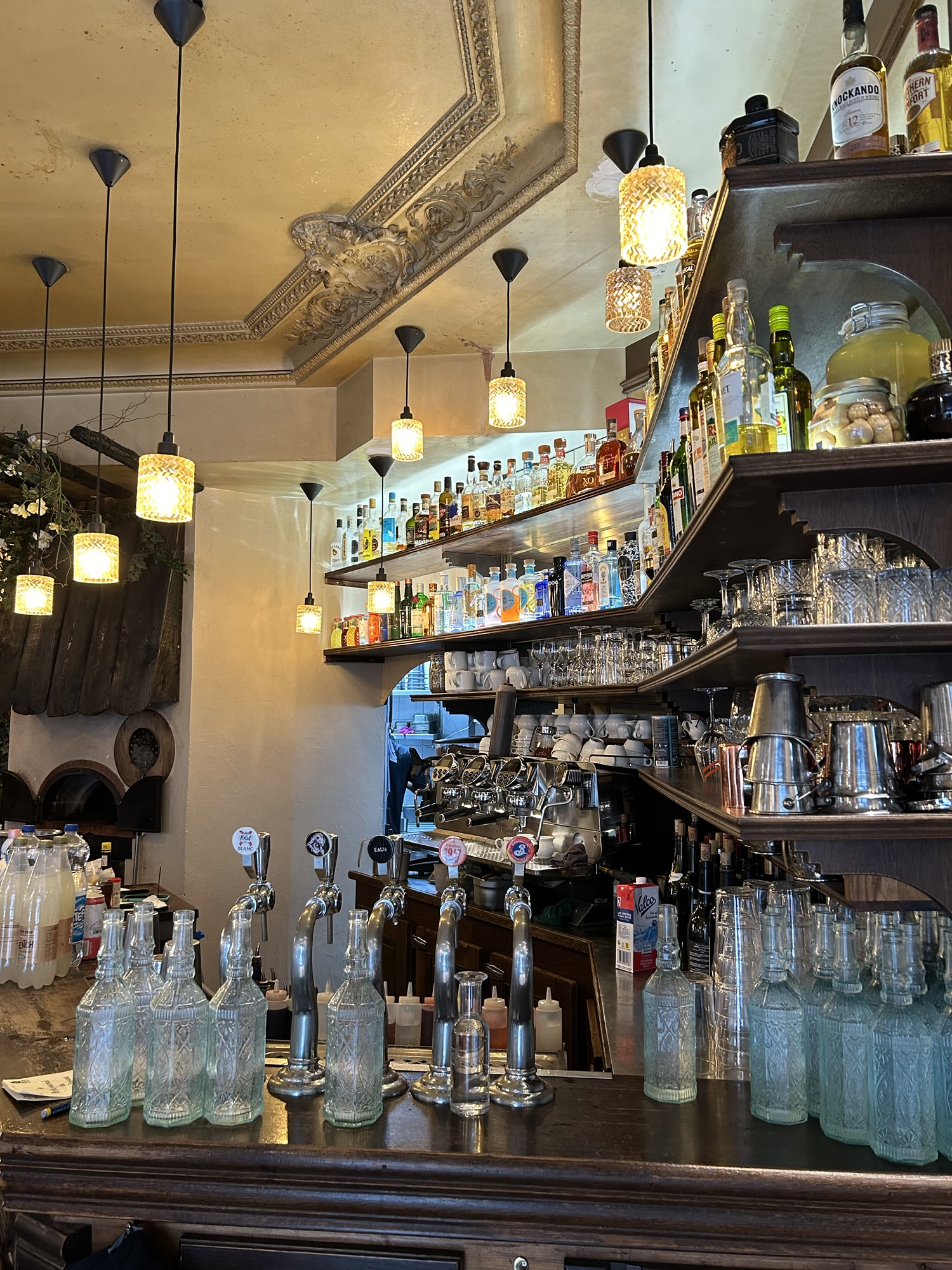
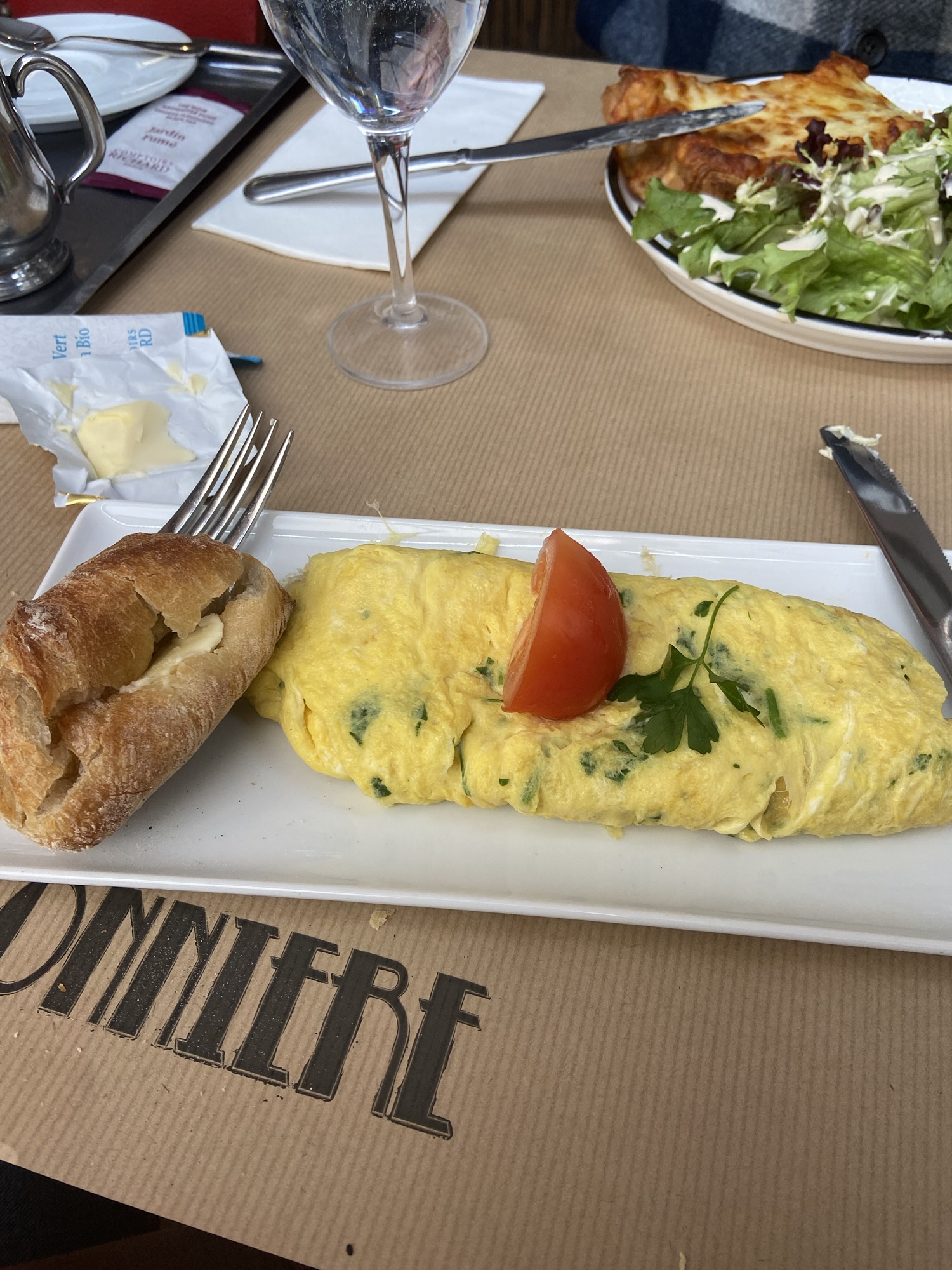










































 Le Chic En Rose