Le Chic En Rose

Diaries of an independent traveller

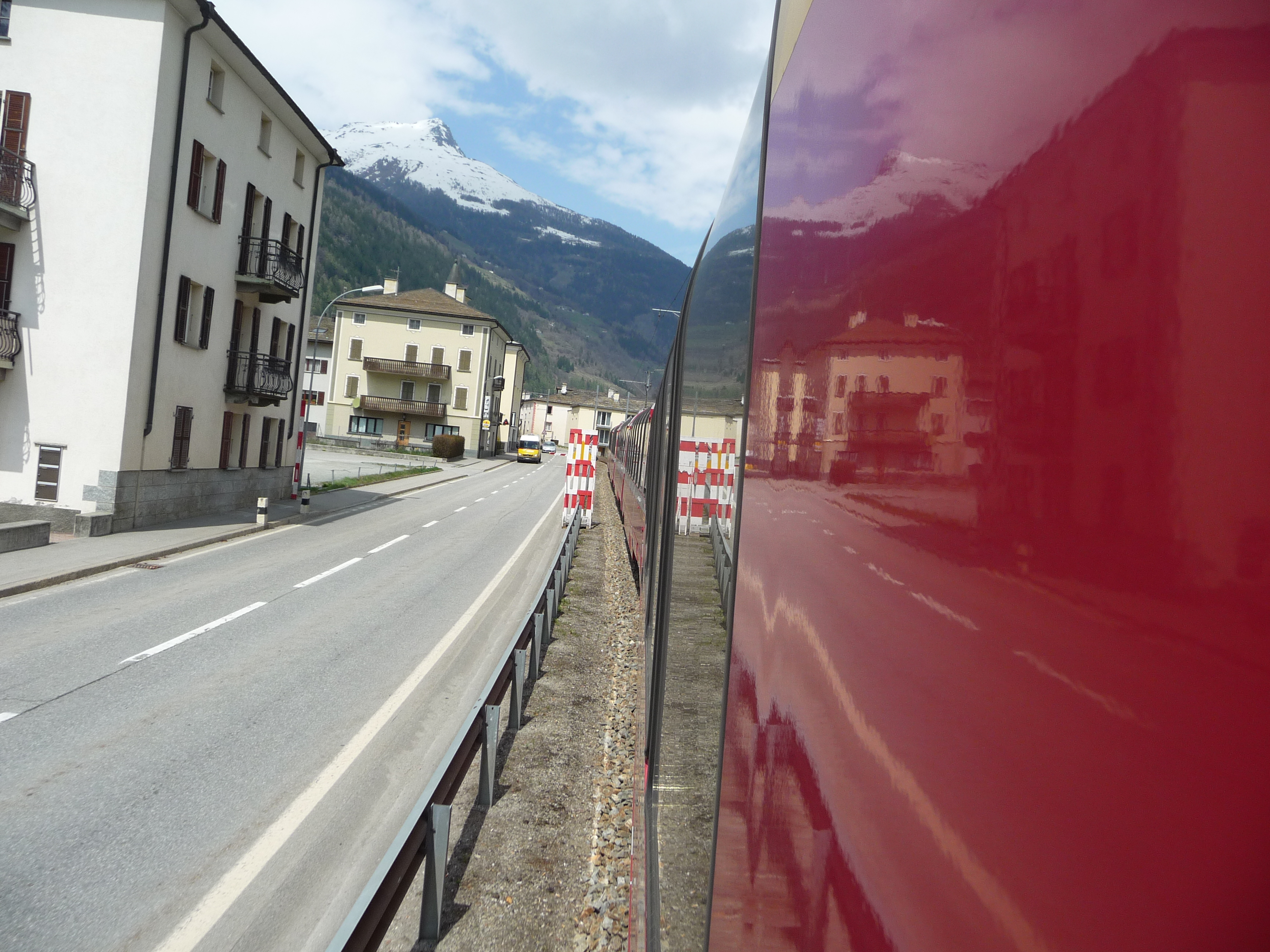
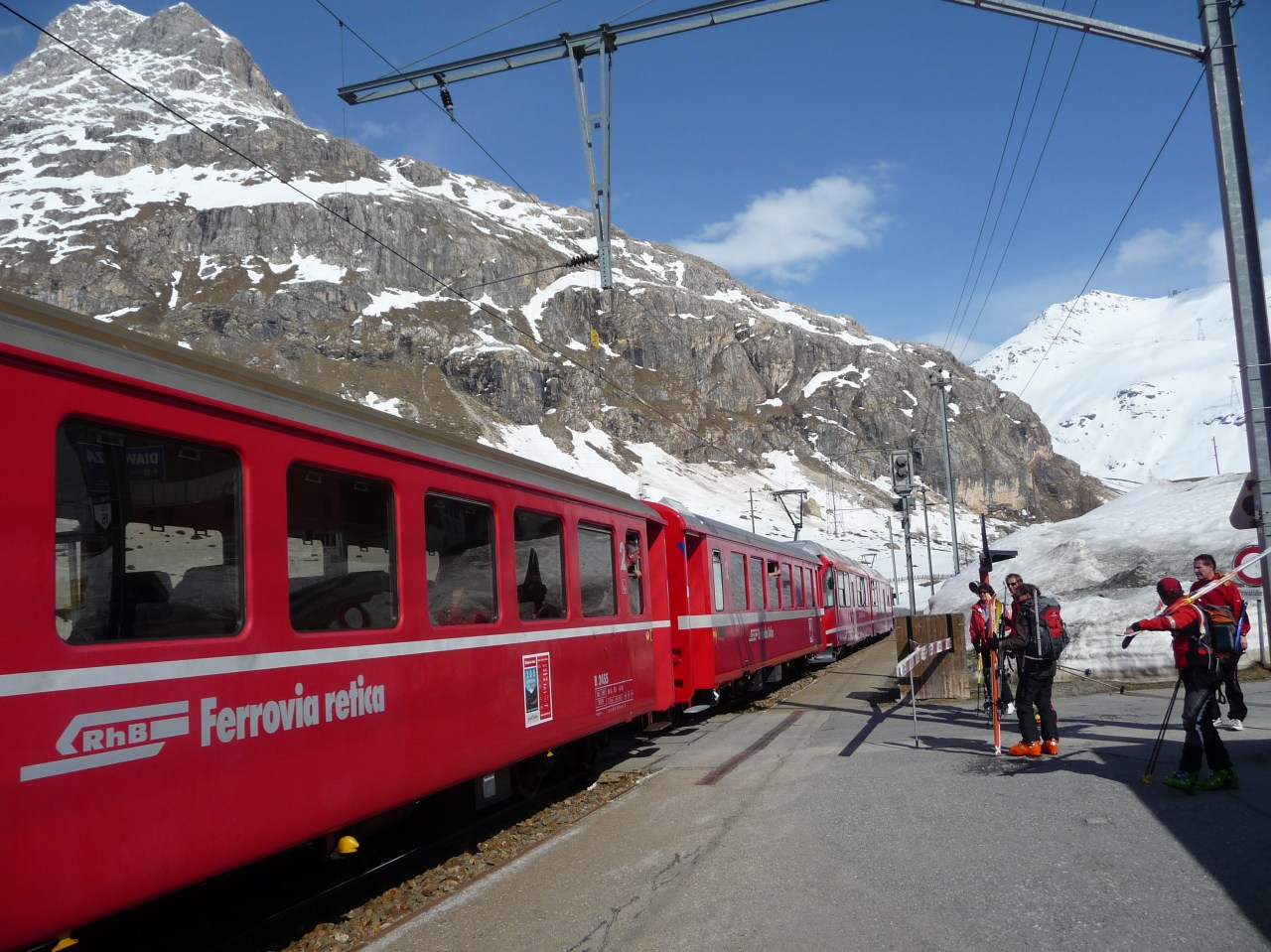
Disentis/Mustér is the delightfully named town that we passed through on our way up to St Moritz on the Glacier Express!

The charming railway sign in the little Swiss town of Disentis Muster in the heart of the Romansh speaking area of south east Switzerland

The charming railway sign in the little Swiss town of Disentis Muster in the heart of the Romansh speaking area of south east Switzerland

The scenery is as delightful as the name and it nestles prettily, high up in the upper Rhine (Vorderrhein) Valley in the south eastern Swiss canton of Graubuenden. The Swiss have wonderful train announcements spoken in several languages in a clearly enunciated female voice but there was one language that we didn’t immediately recognise and it turned out that we were in its heartland in this picturesque corner of the world. Disentis/Mustér is a bastion of the ancient language of Romansh. The name itself is a combination of Disentis in German and Mustér in the Romansh language.

Now I knew about Schwyzerdeutsch, the variant on the German language, which is incomprehensible to outsiders, even to most Germans! It’s a spoken language only and has many regional variations so if you live in Bern for example you’ll speak one dialect but an hour away in Zurich you’ll hear a different dialect altogether. I also knew about the “Roestigraben”, which is the colloquial term for the division between the west (French speaking) and north and east (German speaking) Swiss linguistic and cultural divide. I even knew about the Italian speaking parts in the cantons of Ticino and parts of Graubuenden (the Poschiavo and Mesolcina Valleys). However the Romansh story was one I was very vague about and it got even more confusing when we made our way up into the Lower and Engadin Valleys towards St Moritz. Here too Romansh is spoken but with a different dialect to the Disentis area!

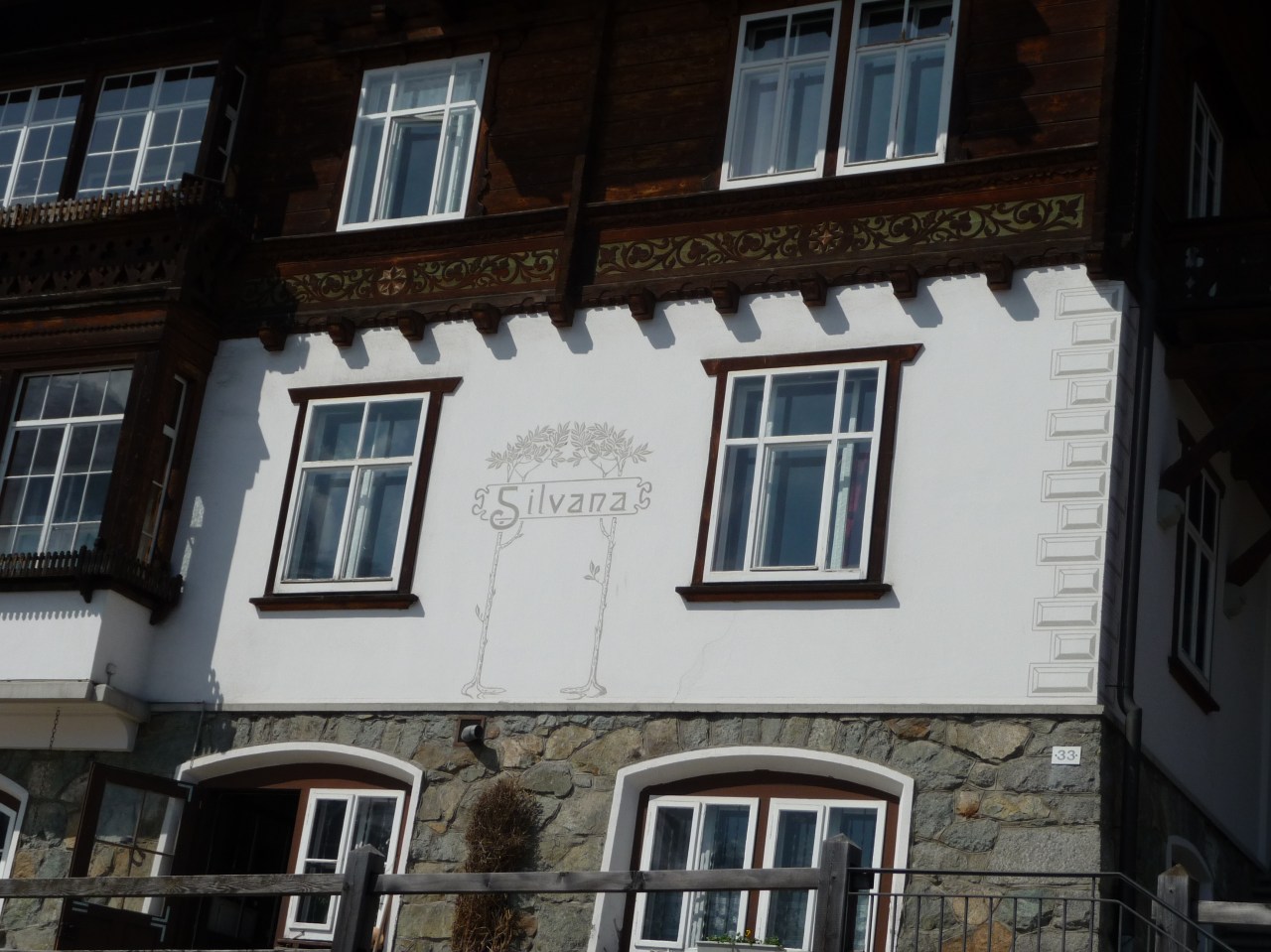
Typical house of the Upper Engadin Valley Switzerland

Typical house of the Upper Engadin Valley Switzerland

Romansh is actually a group of closely related languages which derive from Latin (the spoken form). Back in the days around 15 BC this part of Switzerland was called Raetia, a province of the Roman Empire. Originally these Romansh languages were spoken by people as far north as Lake Constance (on the modern German/Swiss border) but gradually German took over from Romansh in the north and Italian took over in the south. The ancient languages were preserved in the remote mountain areas and valleys with their lack of accessibility to the outside world, especially in the long dark months of alpine winters. Just to add to the confusion there remain to this day many different Romansh dialects including Sursilvan, Sutsilvan, Surmiran, Puter and Vallader. Hope you’re all following me! Whilst only 0.9% of Switzerland’s population of 7.7 million state in census records that they speak Romansh, in the Surselva region (of which Disentis/Mustér is the main town) the figure goes up to 78.5% of the population. Even in the better known tourist areas of the Upper Engadin just over 30% of the population list Romansh as their preferred language.

If you’re travelling in the region you’ll notice how all the place names are written in both German and Romansh; St Moritz/San Murezzan, Sils/Segl and Celerina/Schlarigna. Romansh is one of the 3 official languages of the Graubuenden Canton (the others being German and Italian) and it is also one of the 4 federal languages of the Swiss Confederation (French makes up the 4th but by no means the least!).

Another unique feature of the area are the wonderfully decorated buildings.

At first glance they look to be decorated with pretty paintings. In actual fact it is a form of plasterwork called sgraffito which has an Italian influence. The houses are made from thick stone or masonry and layers of plaster, tinted in contrasting colours are applied to the walls. Afterwards the upper layers are scratched away to reveal the layer underneath and a “drawing” is created – very clever!

Sgraffito around window at Hotel Steffani St Moritz

Sgraffito around window at Hotel Steffani St Moritz

Although the Swiss are excellent linguists, there are parts of the remote valleys where English isn’t always spoken or understood. Monsieur Le Chic was able to bluff our way onto the Glacier Express at Andermatt on one occasion by dusting off his schoolboy German (he actually speaks it quite well!). After that I joined a local German class back home in Perth as I’d forgotten most of what I’d been “taught” at school. It definitely pays off to know even a few words of French, German or Italian in these rugged parts of the world and is always appreciated by the locals. Here you can go into a tunnel where everything is written in one language and come out the other side where the signs are written in a completely different language, even though you are still in the same country.

Therefore in case anyone should be caught short in the middle of a remote Swiss mountain valley or pass, the following is a list of key phrases in Romansh taken from Omniglot, the online encyclopedia (www.omniglot.com):

Welcome Bainvegni

Hello Ciao/Tgau/Allegra

Good morning Bien di/Bun di

Good afternoon/evening Buna sera/Buna saira

My name is….. Jeu hai num……..

What’s your name?…. Co haveis vus num?

Pleased to meet you Fa plaschair

Do you understand? Chapeschas ti?

Do you speak English Discurra ti englais?

Where’s the toilet? Nua e tualette?

Please Per plaschair

Thank you Grazia/Grazia fitg/Engraziel

Of course I don’t know which particular dialect of Romansh the above refers to but hopefully they are similar in most respects! If all else fails hand gestures or pointing usually work and a smile goes a long way in any language!

“Goodbye” for now or in Romansh “Chau / Sin seveser / A revair / A pli tard” (shades of Italian and French with a unique twist!).

Copyright © 2014 Rosemary Thomas Le Chic En Rose. All rights reserved
I first went to Switzerland as an 18 year old backpacker with a couple of friends when we could just about afford to get by on bread and cheese from the local Migros. It is certainly not the cheapest destination by any stretch of the imagination! If you are planning on visiting then the Swiss Pass is a must. If you get the timing right you can often get good deals at low season (such as April between the winter skiing and summer hiking seasons). The pass gives you unlimited rail (and bus) travel for 4, 8, 15, 22 days or one month, “free” travel on the boat services on the lakes and admission to 470 Swiss museums. We have been able to get first class passes for the price of second class on more than one occasion too! Swiss trains are meticulously punctual, as one would expect from a nation famous for its precision watch-making, spotlessly clean and give you a fabulous vantage point from which to take in the divine scenery. If you are a resident of Switzerland or Liechtenstein, however, you don’t qualify – it’s purely to encourage tourists!

Whilst the famous Glacier Express is undoubtedly a fantastic experience, you can get to many little towns and villages just by using the day to day Swiss trains. In a country of spectacular scenery, the Engadin Valley which twists and turns its way up to St Moritz is simply breath taking! So it was after taking the Glacier Express from Zermatt, we found ourself in St Moritz post Easter in what was definitely the “quiet season”. Que faire?

The weather was glorious, still snowy with the frozen lake just starting to thaw. As St Moritz was bathed in sunshine, we decided to take the funicular railway up to Corviglia where according to the guide books there were excellent views across the mountains and a highly recommended restaurant. Unfortunately we arrived at the entrance to find the little railway was shut. We were there between seasons, which is why we paid only 30% of the full price on our hotel room, and the funicular was now undergoing maintenance in time for the summer season which was due to begin in early June. The best laid plans…. However we also met there an equally disappointed lady by the name of Barbara from Munich who asked us if we’d be interested in sharing a taxi with her out to a little place called Diavolezza . Here she was sure the cable car would still be open and we could get up into the mountains. This “short ride” turned out to be about a half hour journey during which time the taxi meter clocked up a not inconsiderable sum and we began to ponder whether we’d have to hike back to St Moritz as the bill (even shared with Barbara) was likely to use up most of our disposable cash for the day. It was only after we arrived at the foot of the little ski field that we spied a railway station out in the middle of nowhere and this is when we discovered the Bernina Express.

Out in the wilderness of the Piz Bernina, the Rhaetian Railway, part of the extensive SBB network run trains! In fact they run them all the way over the mountains and down the other side into Northern Italy. The Swiss Pass covers your tickets and if you wish to upgrade to the panoramic cars then you pay a small supplement of 5 Swiss francs per person.

The next day we decided to do the trip in full – it was a quiet Sunday and was clearly a popular outing for locals and tourists alike, but the train was not unpleasantly crowded. It would have to be just about one of the most incredible journeys we have ever taken and not surprisingly the Bernina Express line has UNESCO World Heritage Status (from Thusis to Tirano). It technically starts from Chur, the regional capital of the Graubuenden canton, though of course you can join at any point along the way as it is a scheduled train service and not only for tourists, unlike the Glacier Express. From Chur the train gradually winds its way up to the top of the Bernina Pass. It is not a rack railway as you might expect but is one of the steepest “adhesion” trains in the world and we were very glad it adhered to the line as there are steep inclines and jaw-dropping ascents and descents along the way. The Upper Engadin Valley is ruggedly beautiful. You pass through pretty little alpine towns such as Celerina and Pontresina before coming into sight of the Bernina Alps and the magnificent Piz Bernina, the highest peak in the area at 4049 metres and indeed the highest peak in the whole Eastern Alps. If you have time and have made an early enough start you could get off at Diavolezza, as we had done the previous day and head up 3000 metres by the cable car to marvel at the scenery and breathe in the therapeutic mountain air (or have a Swiss hot chocolate at the restaurant)!

From Diavolezza the train (certainly not an express by this stage!) slowly climbs its way past glaciers, mountains and lakes, such as the strangely beautiful Lago Bianco, to reach its highpoint of 2,253 near Ospizio Bernina. Then it begins its dramatic descent into the Poschiavo Valley. Here there is a change, imperceptible at first but you gradually realise you’re coming into warmer climes with a distinct Italian feel. Indeed this valley, although part of Switzerland, was for many centuries cut off during the long winter months from the rest of civilisation so the Italian language, traditions and customs have all survived intact to this day.

As you come into the little town of Poschiavo itself the train actually runs along down the centre of the main street.

Train running through Poschiavo

We had been through many tunnels and across many bridges on our journey but just before we reached our final destination at Tirano, there was another surprise by way of the impressive Brusio spiral viaduct. This feat of engineering helps to overcome the problem of the steep incline and enables the trains to weave their way seamlessly up and down the valley.

Two and a half hours after we had set out we drew into the little station at Tirano. The locals have certainly taken full advantage of the business opportunity afforded by the arrival of hungry travellers needing refreshments! You step out from the sleepy station into a small piazza brimming with pizzerias and gelati shops. We enjoyed a very pleasant lunch sitting out in the warm Italian sun, accompanied by a couple of glasses of the local vino and walked it off with a stroll around the town before heading back to catch the return train to St Moritz. If you wish to travel on further into Italy, the Red Bernina Express Bus, connects Tirano via Valtellina, a valley famous for its wines, to Lake Como and then back into Switzerland and Lugano. Whilst the Bernina Express trains run all year round, the buses only run during the summer months so check the times before planning a trip!

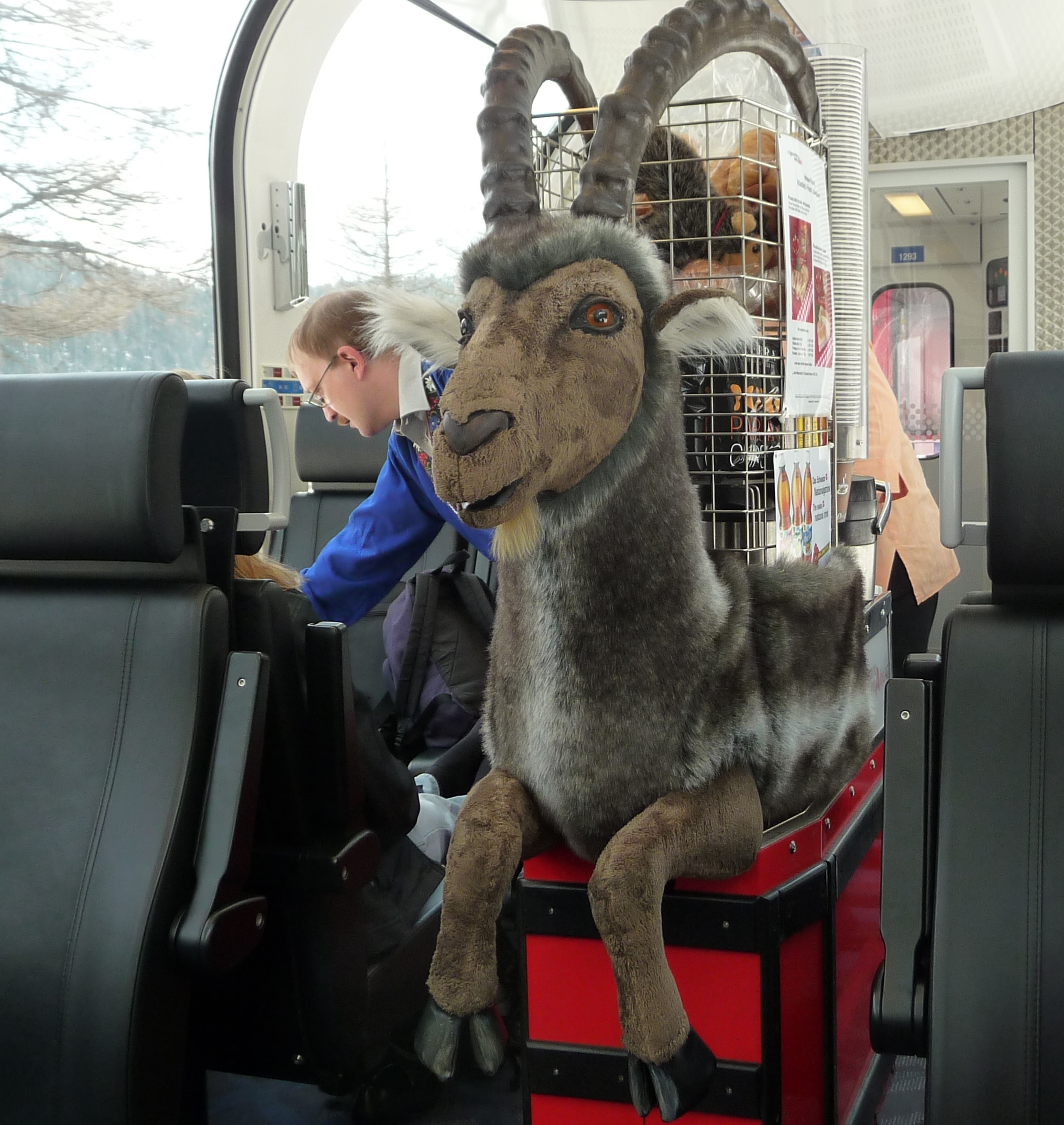
The Bernina Express takes you through many changes of scenery, languages and cuisine in such a relatively small time and is currently celebrating its 125th anniversary year. The languages of southern Switzerland merit a post in themselves and will be coming up on the blog soon! In the meantime we spent a very relaxing return trip trying to spot marmots, which we had been told were a feature of the area and could usually be seen on warmer days “snuggling in the sun”. Alas we failed to see any but we did come across an ibex on the train …well in a manner of speaking!

The min bar on the Bernina Express

Packing my Suitcase

Copyright © 2014 Rosemary Thomas Le Chic En Rose. All rights reserved

With Mlle Chic Fille setting off on her travels life has in many way come full circle.

I too set off wide eyed and overwhelmed with excitement as an 18 year old, off to start uni in the big metropolis.

The family connection with central London was stronger than we thought at the time. We knew my paternal great grandmother was a cockney but nothing more about that side of the family – it was rather a mystery. However with the wonders of modern day research, I was recently able to trace back my father’s grandmother’s maternal line (with me so far?) and discovered that my great great great grandparents, John James Powell and Elizabeth Mott, were married on 28th May 1826 in St Botolph’s Church Aldgate. After trawling through old census records and the like I found that the aforesaid John James was a trunk maker by trade and that the family moved from the eastern end of the City of London, via the parish of St James Westminster before finally settling in Paddington Street Marylebone. This research was subsequently corroborated by a distant cousin, (which would have saved me hours of online research but it was fun playing family detective).

What intrigued me was how so many members of the family were involved in the dressmaking and trunk making trades. Later some of them were more elegantly described as portmanteau makers. I love the idea of portmanteaus – a posh word for a piece of luggage that was usually used for carrying clothes (presumably a little smaller than a trunk) and used by the leisured classes on their travels. With my own love of fashion and travel it seemed rather appropriate that I should be a descendent of such a family line. I even discovered that the Powell’s youngest son, Joseph, (who I think was my 3rd great uncle), owned a house in Gower Street, Central London, which is where University College London, (of which I am an alumna), is situated. How interesting that I should have been drawn here to study many decades later (and no I don’t believe that property is still in the family well certainly not our branch of the family)!

And so it was that I persuaded Monsieur Le Chic to come with me on my search to locate St Botolph’s Aldgate during our flying trip to London last year. Since it was a glorious spring day we decided to walk from the Mall (near our accommodation) up to the eastern end of the city.

The walk took us from St James Park and the Mall via Trafalgar Square and Covent Garden and along the Strand. We paused to have a quick look at the beautiful church of St Clement Danes, rebuilt from 1680 to 1682 by Sir Christopher Wren and re-consecrated on 19 October 1958 as the Central Church of the Royal Air Force. We went up Fleet Street, where newspaper offices have long since made way for shops and other offices still interspersed with quaint old traditional pubs. Finally by the time we got to St Paul’s Cathedral we were getting a little tired (we had had rather a late night catching up with old uni friends in Covent Garden the night before so did have a reasonable excuse).

Just as we were starting to doubt the map we caught sight of a signpost pointing the way to St Botolph’s Aldersgate (spot the deliberate mistake?). I vaguely thought it sounded a bit different from my research notes, (which I hadn’t brought with me). It turned out to be rather a nondescript 19th century church built only a few years before my great great great grandparents married. The church was closed and did not look very inviting but there was a beautiful little park next door – a peaceful oasis from the office blocks which towered nearby.

After a pleasant interlude we set off in search of dinner and thought no more about it until I decided to do a bit more online research back at our hotel. I discovered to my dismay that the actual church I should have been looking for was St Botolph’s Aldgate – well it does sound rather similar to St Botolph’s Aldersgate! How curious I thought – St Botolph is not a very common name! I discovered that there were no less than four churches dedicated to St Botolph in medieval London. According to the website of St Botolph Without Bishopsgate, St Botolph was a young Saxon noble who was born in East Anglia, educated at a Benedictine Monastery in France and then founded a monastery back in his native land. He died in 680 AD and his work was carried on by other monks but when the monastery was overrun by the Danish Viking invaders in 870 AD, his relics were retrieved and brought to London for safekeeping at Westminster Abbey, passing through the four City gates of Aldersgate, Aldgate, Billingsgate and Bishopsgate. The churches at the sites of these gates were named after him. Apart from Billingsgate, destroyed in the Great Fire of London in 1666 and never rebuilt, they all survive in one form or another today. St Botolph became known as the patron saint of wayfarers and travellers. I had always thought St Christopher was the patron saint of travellers but now I had found out that St Botolph was too!

Fast forward a year and I was finally able to complete my thwarted mission of the previous year and visit St Botolph’s Without Aldgate to give it its official name. This time Monsieur le Chic couldn’t be there but I took my 81 year dad along with me for the day trip up to London – after all it was his family history too! The church is literally right by Aldgate Tube Station, dwarfed by large office blocks and surrounded by modern shops – a beautiful historical building in the heart of the City Of London (the present church dates from 1744 and since 1950 has been a designated Grade 1 listed building). Moreover it was open, welcoming and heated (it was rather a brisk spring day this time).

It was quite surreal walking up the aisle and imagining what it would have been like on the day my 3 times great grandparents were married there nearly 200 years ago. I wondered what had brought them to this part of the world. Elizabeth was 18 and from all the records I could find her family were farmers in Odiham Hampshire. What was she doing in the Big Smoke? Her husband John James was 26, no doubt working for one of the many tradesmen who had businesses in the area, (St Botolph’s Aldgate was known as a church where artisans and merchants mingled; a meeting point of the very rich and the very poor). Later in the late nineteenth century, it became infamous in the times of Jack the Ripper, as the Church Of The Prostitutes but I’m sure it was more salubrious in my great great great grandparents day! Alas I can’t get John James’s family history back any further so one day when I have a little more time, I’ll have to spend a day going through the parish records at the London Metropolitan Archives to see what I can unearth.

Even if you have no family connection with London a walk through the streets of the City is absolutely fascinating – there are surprises around every corner and it’s well worth going off the tourist trail to explore the side streets and uncover ghosts of the past!

Copyright © 2014 Rosemary Thomas Le Chic En Rose. All rights reserved

Feeling a little bereft as we adjusted to being “empty nesters” following the departure of Mlle Chic Fille on her big adventure, Monsieur Le Chic and I took ourselves off to the the Araluen Botanic Park last weekend. This beautiful park is situated to the south of Perth in the Darling Ranges and we fortuitously, (more by accident than design), found ourselves in the midst of their Spring Festival! More to the point we were in the midst of tulips and they were absolutely glorious!

P1110052

We were probably a week or so late for the absolute peak of tulip perfection but they were still magnificent nevertheless and we wandered round feeling better for the fresh air and beautiful surroundings.

P1100999

P1110048

P1110068

After a while we began to wonder why most of the food stalls were serving Turkish food and why there was a performance by a troupe of Turkish dancers. In my ignorance I had always associated tulips with Holland and this is true – they have become synonymous with the Dutch. However originally they were introduced to Turkey from Central Asia, (possibly Persia no one really knows their exact origin) and they were extremely popular in the times of the Ottoman Empire in the mid 1500’s. The organisers of the festival had put on an excellent exhibition which explained the Turkish (and later the Dutch) heritage of the tulip.

P1110102

Indeed the Turkish Sultans seem to have become quite obsessed with these lovely flowers. On the “Tesselaar Gardening At Its Best” website (https://www.tesselaar.net.au/), it describes how during the reign of Sultan Suleiman 1 (1494 – 1566), tulips became highly prized and were cultivated for the pleasure of the Sultan and his retinue. By the reign of Sultan Ahmed 111 (1703 -30), in what became known as the “Age Of The Tulips”, you could be exiled if you bought or sold tulips outside of the capital. It was also around this time that Tulip Festivals began – these were held at night during a full moon.

The Dutch did of course develop their own brand of “Tulip Mania” but later on and only after the tulip was first introduced to Europe by the impressively named Ogier de Busbecq, the ambassador of Ferdinand 1 Holy Roman Emperor, to the Sultan of Turkey. In the Netherlands the Flemish botanist, Carolus Clusius, is generally credited with encouraging the cultivation of the tulip from around 1593, when he took up a post at the University of Leiden. Because it was such an unusual flower compared to anything previously seen in Europe and with such intense and beautiful colours, it kicked off quite an obsession. Tulips became a status symbol – affluent merchants had flower gardens planted to show off their beautiful tulip displays. There was also a school of thought promoted by Charles Mackay in his 1841 book, “Extraordinary Popular Delusions and The Madness Of Crowds”, which claimed that the tulip mania reached such a peak in March 1637, that it led to a huge crash in market value due to the over inflation of the prices. In effect a sort of “tulip bubble” which led to many investors suffering big financial losses. Whoever would have thought ….one learns something new each day!

Copyright © 2014 Rosemary Thomas Le Chic En Rose. All rights reserved

Restless Jo has nominated me as part of the booked.net challenge to list 5 places I’d be happy to go back to. Whilst I’m not going to enter the competition myself, I thought it was a very interesting idea for a blog post and I’d be happy for Jo if she was selected as the winner! For me the fun part has been to try and select out of the many wonderful and varied places I’ve been to, just 5 to return to!

I’ve cheated a bit and come up with 5 categories with close seconds listed first, my overall selection as a winner and a photo of the winning place that conjures up its essence so here goes:

European Capitals Close runners up Paris, Prague, Budapest, Vienna and London (and several others!)

“Winner” Berlin

Berlin by the River Spree and The Dom

This had been on my wishlist for ages and did not disappoint. There are prettier capitals and much of Unter Den Linden was a building site with cranes everywhere, interspersed amongst the reconstructed historical buildings. However the wonderful way Berlin has survived over the centuries is borne out in today’s modern city. The museums, the buildings, the arts and music scene, the way the city is reinventing itself after the end of the Berlin Wall era, make it a fascinating place to visit. We stayed 8 nights and only scratched the surface of what there is to see and do. Highlights included walking tours, a day out to Potsdam (a monument to the Hohenzollern monarchy with stunning palaces and beautiful parks and gardens), the Reichstag Tour (see here for my account) and exploring the many quaint cafes, bars and eateries dotted all over the city including our local favourites at Hackescher Markt. The Nazi era is not shied away from and the Holocaust Memorial and a trip out to the Sachsenhausen Concentration Camp are sobering and highly moving experiences. The impressive modern main railway station, the Hauptbahnhof, is worth a visit in its own right. The public transport system is excellent and it was very easy to find our way around. Berlin is definitely “a place to go back to”!

European Lakes and Lakeside Towns – Close runners up Lakes Como and Maggiore, Thunersee, Brienzsee and Lake Leman (Lake Geneva)

“Winner” Lucerne and Vierwalderstaettersee (Lake Lucerne)

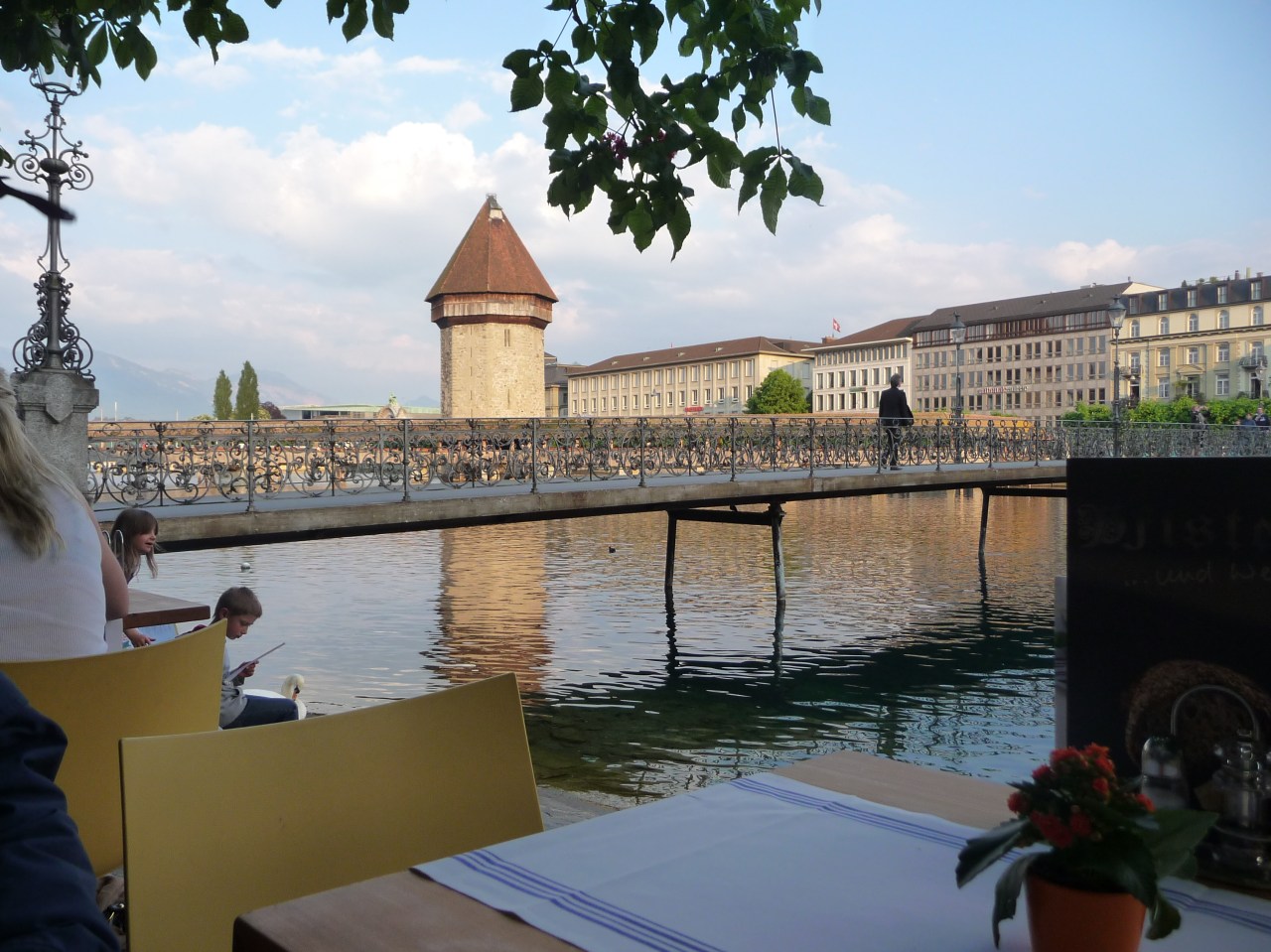
Lucerne

Lucerne is a simply beautiful part of the world and just keeps drawing me back. Sitting on the River Reuss, which flows rapidly through the old town, with a backdrop of mountains and at the head of Lake Lucerne (Vierwalderstaettersee), it is a magical place. There are mediaeval bridges, cobbled streets and beautiful little eateries clustered round the banks of the river. There are good walks around the ramparts of the “Old Town” walls, and attractions such as the famous Museum of Swiss Transport and the Lion Monument (the Loewendenkmal, which commemorates the massacre of Swiss Guards in 1792 during the French Revolution). The highlight for me though is cruising on the lake. There are many boats and ships that ply their way round, stopping at the little towns and villages that nestle along the shore. The scenery is breathtakingly beautiful and sitting on the deck, gazing out at the mountains and green meadows, is a wonderfully relaxing experience – I will keep coming back!

Regional Centre and Good Touring Base (a smaller city or large town that makes an excellent base for touring the surrounding areas and which is still small enough to retain the charm of a small town). Close runners up Koblenz in Germany, Thun and Interlaken in Switzerland, Bolzano/Bozen in northern Italy (see my post here) and Coutances in Normandy, northern France.

“Winner” Innsbruck

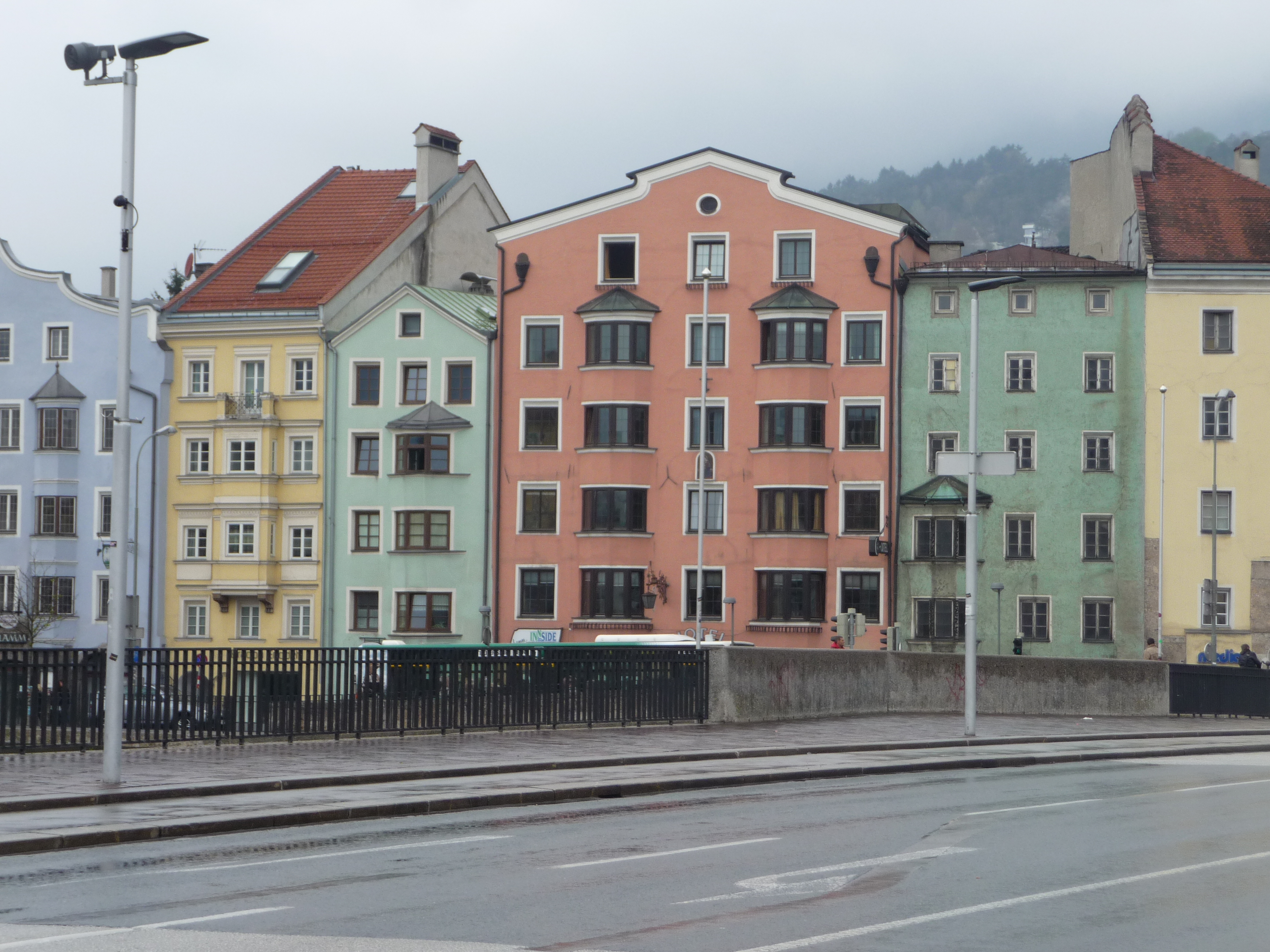
Innsbruck

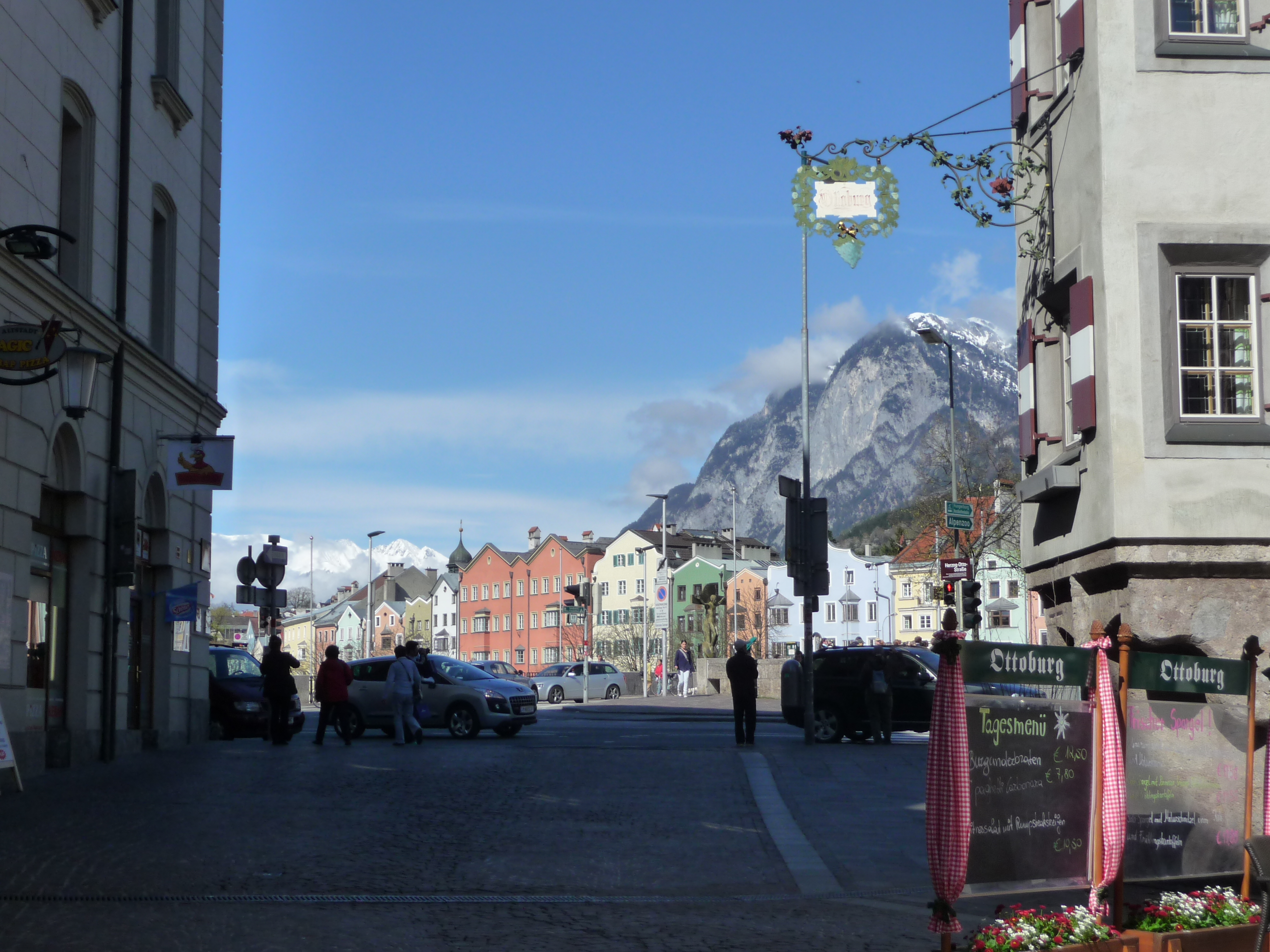
Innsbruck is a city with the charming feel of a small town. The capital of the Austrian Tyrol, it is set in a superb location with good transport links to just about everywhere (east/west and north/south). We took day trips up to Salzburg (2 hours away), across the border to Bavaria (only 40 minutes away) and into northern Italy and the South Tyrol (see here to read about our day trip over the Brenner Pass to Bolzano/Bozen). I loved the pretty painted houses that overlooked the River Inn – they had a unique charm. The Nordkette mountain dominates the scenery too and was well worth the trip up the “Nordkettenbahn” to get there. There are Hapsburg palaces – on a smaller scale than Vienna but no less impressive, a pretty Altstadt (Old Town), delicious Tyrolean food and friendly hospitality. I have already earmarked Innsbruck as a place to go back to – next time hopefully for the Christmas Markets one year – it would be a fairytale experience!

South Island New Zealand So beautiful! Akaroa, Greymouth via the Tranzalpin Express, Christchurch (regenerating after the devastating earthquakes) and Lyttleton.

“Winner” Queenstown (the land of the long white cloud)

Queenstown New Zealand

Excuse the date on the photo – this was taken with my old camera when I wasn’t experienced in the wonders of the digital world and I had no idea how to remove the date and time from the photos I took!

This was the view that greeted us when we drew the curtains back on our first morning in our Queenstown Hotel! It is the definitive photo to sum up the South Island of New Zealand – one of the most beautiful and remote parts of the world. The wild gales that sweep in from the Antarctic have helped to shape the rugged scenery; mountains, lakes and rivers. The Southern Alps form the backbone of the South Island and there is a thriving ski industry based in Queenstown and other resorts. There are numerous opportunities for adventure sports if you wish to partake (I don’t!). We took a cruise out along Milford Sound (one of the many inlets and fjords that abound along the coast) – simply breathtaking.

Earlier from our previous base in Christchurch, we had taken the TranzAlpine Express on its spectacular journey over Arthurs Pass and down the other side to the port of Greymouth in the west. It must rank as one of the great railway journeys of the world! Sample some of the many wines that are produced in the world famous Marlborough Region or take a day trip out to Akaroa, a little corner of France in New Zealand. In the early days of European colonisation, the French established a settlement at Akaroa in 1840 and the town still retains a strong French influence. The main street is Rue Lavaud with several other “Rues” nearby, Jolie, Balguerie and Benoit to name but a few. You can purchase provisions from La Boucherie and Deli and we enjoyed a superb lunch on the veranda of L’Hotel Boutique Hotel! The people of South Island are friendly and very resilient. I’d like to go back there someday to support the tourist industry which is rebuilding in Christchurch after the terrible earthquake in 2011; already according to my uncle who lives there, the city is flourishing again and rebuilding with a renewed vigour!

Australia – Rather a large category and the list is endless but apart from the obvious capital cities I’d recommend Tasmania (Hobart is wonderful – historic and charming) but also head out for a remote and beautiful escape from the stresses of modern life to the rugged west coast and the pretty little town of Strahan. Noosa on the Sunshine Coast of Queensland, Mollymook and Ulladulla on the southern New South Wales coast are all attractive towns that make wonderful holiday retreats. The Great Ocean Road Victoria and Barossa Valley in South Australia are a couple of other areas well worth exploring too.

“Winner” Margaret River Region Of South West Australia

Indian Ocean near Yallingup Western Australia

This is “must” place to visit if you’re ever lucky enough to find yourself in Western Australia. Only a couple of hours or so south of Perth (by car), the Margaret River Region is a stunning area of outstanding natural beauty and national parks. Geographe Bay is in the more sheltered northern part of the peninsula, dotted with pretty tranquil bays such as Meelup Beach and Eagle Bay. Once you round Cape Naturaliste point and lighthouse, it is a different story altogether and here the Indian Ocean thunders into the coast in the most spectacular way. Yallingup in the north west, is a pretty little coastal village and a beautiful spot in which to spend a long weekend away from Perth. The climate and soil are conducive to producing superb wines and the Margaret River wine region is now recognised world wide. Most of the wineries offer cellar door tastings and then you can stay on for a delicious meal afterwards. There are so many outstanding restaurants and cafes to choose from, which make good use of the excellent local produce. Many artisans have also been drawn here and have set up studios, galleries and craft shops. It is a place that I will always love going back to!

I’m not going to nominate anyone in particular to take part in the challenge, but if you are interested head out to http://www.booked.net for details

Booked.netTop Destinations to Go There

How about everyone else? I’d be interested to hear other people’s choices for their “5 Places To Go Back To”. Thanks Jo for the nomination and I wish you good luck for the competition and hope you win!

Copyright © 2014 Rosemary Thomas Le Chic En Rose. All rights reserved

Another very busy week in Le Chic Household! However to boost spirits, after an earlier than usual winter when temperatures dropped down rapidly in May and June, we have the beginnings of spring already. There is a warm feel in the air, the birds are nesting and blossoms and spring flowers abound.

Spring Flowers In Perth

Spring Flowers In Perth

Last weekend Monsieur Le Chic and I did our usual walk around the block, which is a wonderful stress relief and one we could easily take for granted. We took Winston Le Schnoodle, (our very friendly and exuberant schnauzer/poodle cross), for a walk up over the Top Of The World. This is not an expedition across the Himalayas or Alps but a path that takes us through an area of natural unspoilt bushland only about 20 minutes from the centre of Perth. Since we live a few minutes drive from the Indian Ocean, we are basically at sea level and this happens to be the only big hill for several kilometres around, so you get wonderful views across to the ocean in the west, the city of Perth to the south and the Darling Hills to the east.

We are so privileged to live no more than 5 minutes walk away from this beautiful unspoilt natural bush. The park’s official name is Trigonometric Park. This has a mathematical meaning, which Monsieur Le Chic has tried to explain to me on a number of occasions and which has totally gone over my head (the very mention of the word trigonometry reminds me of my struggles with geometry at school)! What I can relate to however, is the importance of conserving this precious bushland and as a result, the flora and fauna that live there. The Urban Bush Council of WA promotes conservation work in such areas and there is a local group, the Friends of Trigonometric/Glenbar Park who assist in this work. They are volunteers who work with the local council, the City Of Joondalup, in order to clean up rubbish, control the weeds and replant in areas where vegetation has died. They encourage local families to bring their children along so there is an educational purpose too, which is important if these areas are to survive. This will be a great activity to do with our little granddaughter, La Petite, when she is a bit older.

Local conservation group Friends Of Trigonometric Park and Glenbar Park Perth WA

Local conservation group Friends Of Trigonometric Park and Glenbar Park Perth WA

I had to look up what a “quenda” is and found that it is commonly called the “southern brown bandicoot”. It is found mostly in southern Australia including the south west corner of WA. It is a marsupial and its conservation status whilst not actually threatened is listed as “conservation dependent”, hence the need to preserve these bushland areas, its natural habitat. Unfortunately in the haste to build new homes quickly and cheaply, especially in the outer areas of Perth, trees and vegetation are bulldozed to make way for new developments. Another threat comes from domestic pets which is why Winston Le Schnoodle is always kept on a firm leash whilst walking over The Top Of The World and our cat, La Duchesse, is kept indoors (so far so good – she is still a kitten)!

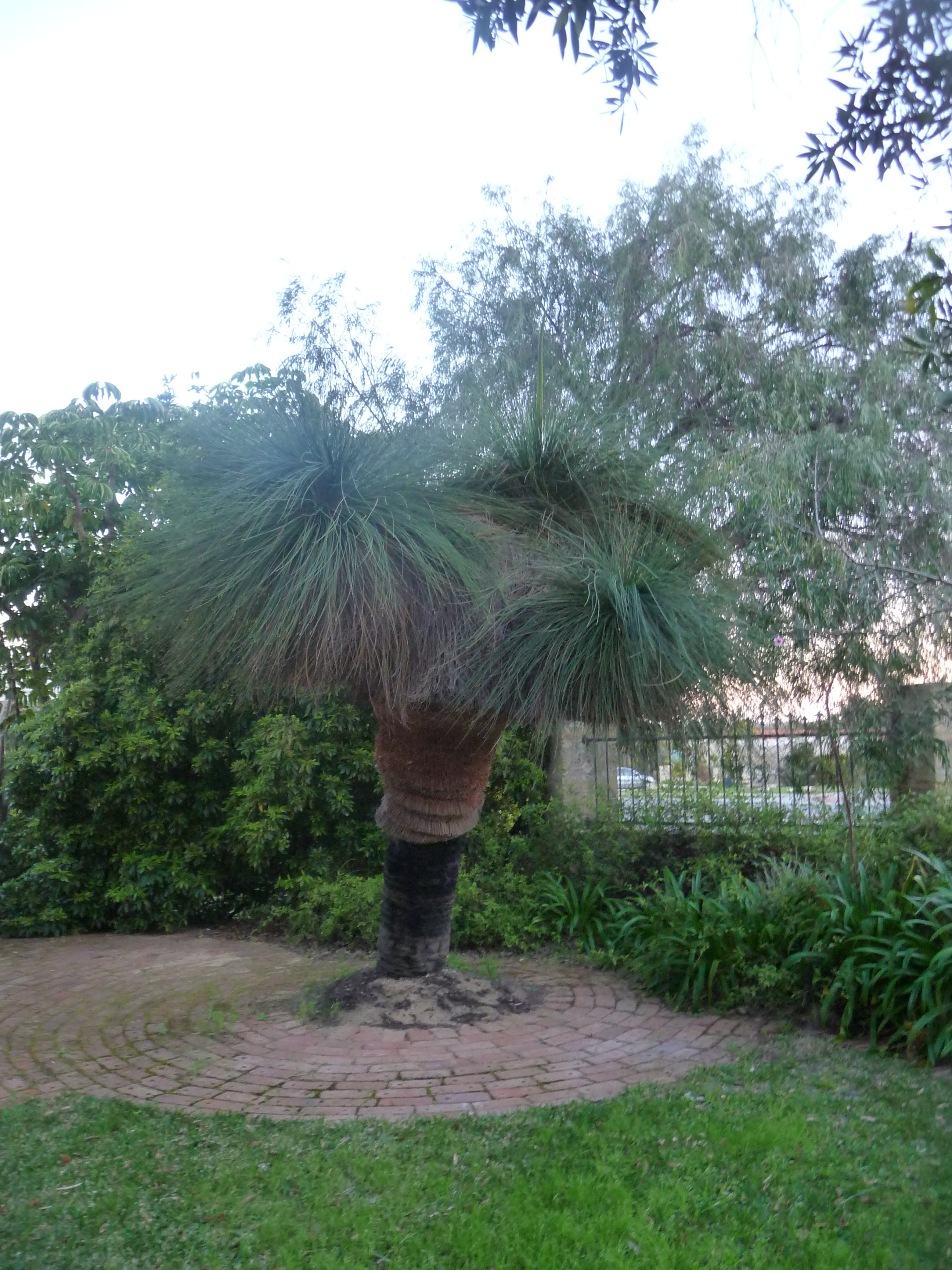
We have in our garden a couple of beautiful grass trees which must be over 100 years old. Nowadays they are usually removed when land is cleared for development and there is a thriving business in selling them for replanting. This all seems rather unnecessary if they were kept in situ in the first place. When our suburb was first developed around 40 years ago, they used to leave them exactly where they had always been!

Grass Tree In Our Front Garden Perth Western Australia

Grass Tree In Our Front Garden Perth Western Australia

On a final note I’ll leave you with a photo I took at the end of our walk just as the sun was setting over the Indian Ocean. This is another wonderful benefit we get from living in this part of the world on the western coast of Australia. We have some magnificent sunsets! Especially in the summer months watching the sun dip down over the horizon and finally disappear is a lovely way to end the day.

Sunset Over The Indian Ocean Perth

Sunset Over The Indian Ocean Perth

Copyright © 2014 Rosemary Thomas Le Chic En Rose. All rights reserved

Yesterday was a rather fraught day in Le Chic household. Due to an unfortunate accident which resulted in La Chic Maman badly wrenching her ankle and knee, Grand-maman Le Chic was called into action to babysit La Petite, my adorable 18 month old granddaughter. Suffice to say my intended blog post went by the wayside. I now have a new-found respect for all the “Mummy Bloggers” out there – I don’t know how they manage to write with one active toddler let alone two or three! La Petite is at such a delightful age however and her enthusiasm for everything is infectious. I have been introduced to the joys of CBeebies (The BBC’s children’s channel which fortunately we get here in Australia on Foxtel). I learnt about talking turnips and cabbages otherwise known as “The Veggies” and La Petite had a lovely time playing tea parties with “Dolly” and rearranging Grand-maman’s living room.

In between we have been busy editing Mlle Chic Fille’s wardrobe and deciding what to pack for her big adventure – she leaves for Europe “indefinitely” in 12 days time. My philosophy has always been to start with neutral base pieces (in black, navy, charcoal, cream or white and khaki) and then add colour by way of scarves and accessories. I have always loved the casual nonchalant way French women, in particular, wear scarves. They seem to make no effort at all and yet the effect is so chic and polished. Searching through bookshops for a birthday present for Monsieur le Chic this week, I was delighted to come across “Parisian Chic” A Style Guide by Ines de la Fressange with Sophie Gachet (Elle Fashion Journalist). No I did not, I hasten to add, purchase this for Monsieur Le Chic ( I found him plenty of other books much more suited to his tastes)! Ines is a well known French fashion icon and was for many years fashion designer Karl Lagerfeld’s muse until they parted ways. Since then she has gone into fashion design herself, owns a chain of fashion boutiques and acts as a fashion consultant. Her book is a surprisingly down to earth guide with plenty of common sense advice for women of all ages.

Parisian Chic by Ines de la Fressange

Parisian Chic by Ines de la Fressange

One of her tips for effortless style is to “hunt for vintage men’s scarves and wear them with everything” (perhaps there is something in here for Monsieur Le Chic after all). Despite my greatly improved packing efforts in recent years and my endeavours to travel lightly, I am always drawn to scarves and accessories when I’m “on the road”. Needless to say I end up adding a few extra pieces to my already rather numerous collection back home. I do however find this helps to alleviate any boredom I may be starting to feel after travelling for a few weeks and mixing and matching the same clothes day in day out – a new scarf and voila a new outfit! On our recent trip to Central Europe I was greatly impressed by the quantity and quality of scarves on offer. The markets had a wonderful selection and I could easily have bought twenty but sensibly restricted myself to a couple, one from Budapest and the other from Bratislava. Well I did sneak in another one purchased from the Accessorize Store at London Kings Cross Station too! Budapest in particular had some beautiful jewellery handcrafted by local artisans. One stall had a selection of intricately made rings one of which I bought for Mlle Chic Fille. There were bangles, bracelets, pendants and necklaces too all handmade and with their own distinct style – again they made wonderful presents for my girls (and myself!).

Just when I thought I knew everything there is to know about scarves, I had a very useful and timely lesson when I went in to my local Kookai store to pick up an all purpose scarf for Mlle to take on her travels. Since she’s going to Portugal, Spain and France first, she needs lighter weight clothes for that part of her trip. She returns to London just in time for the autumn by which time she’ll be needing to rug up. The helpful sales girls showed me how to turn a large square scarf into a cape, perfect for throwing over a tank or dress for summer travels, then convert it back to a scarf for cooler weather. Mlle will now model for me (like Ines who uses her daughter as the model for her designs in her book!):

This slideshow requires JavaScript.

Such a simple idea and very effective – a chic addition for Mlle’s travel wardrobe! And now to sort out the rest of the packing……à bientôt!

Copyright © 2014 Rosemary Thomas Le Chic En Rose. All rights reserved

It is now less than 3 weeks till our younger daughter, Mlle Chic Fille, sets off on new adventures – in her words “to give living in London a go”. Our household has become a hive of activity – sorting through old stuff, decluttering and that very important question of what to pack? We are just coming to the end of winter in Perth Western Australia. Today the sun is shining brightly and after a crisp start to the day it is around 20 degrees. Clearly our Perth winter attire will not suffice in a European winter! I have tended to come over to Europe around March/April in recent years and I still think it’s freezing then (despite living there for the first 27 years of my life I have obviously acclimatised well to life in the Antipodes). I think Mademoiselle will be doing a lot of shopping for new cold weather gear once she arrives in London!

There is no getting around the fact that if you live in Australia you will have to spend a long time on a plane in order to get anywhere further afield. Therefore I have developed a strategy for making the journey as comfortable as possible. I always take a few items that make me feel good and create my own little personal space on board the plane. With the restrictions on the quantity of liquids, aerosols and gels on international flights, I have had to pare back what I take with me in my hand luggage. Everything I take meets the regulations and the toiletries fit neatly into the small clear plastic bag that one has to show to the customs officials. Check with your travel agent or online before you leave to find out the latest regulations as they do change from time to time.

I’ve found that by having a travel routine I can pack more quickly and reduce the amount of luggage I take (it’s true – I hardly ever go over 20 kg these days with my check in suitcase and I have one carry on bag for the plane). Whatever I take I make sure that my carry on bag always contains a few “essential” items.

These are my “must have” 5 items:

Soft wool pashmina – cosy, comfortable can be a blanket or a scarf . My particular favourite is a beautiful deep red fringed scarf – I find the colour is uplifting too and it is so lovely to wrap around my shoulders.

Jurlique Rosewater Balancing Mist – a few spritzes of this are remarkably refreshing and the scent is beautiful.

Any Lancome Juicy Tubes lip gloss. I love the feel, the scent of these and they generally give me a boost when I apply them.

Mor Hand Cream especially Marshmallow scent.

Nutrimetics velvet finish mineral foundation powder. Just give your face a touch up before arrival to disguise any blemishes and complexion unevenness that results after many hours in an aircraft cabin.

I hope the people around me appreciate the lotions and potions I use as much as I do, as every couple of hours or so the scents will be wafting around the air near my seat!

Other common sense measures on a long haul flight are:

Drink loads of water.

Do the recommended foot circling exercises and stretches every so often.

Walk around every couple of hours or so unless you’re asleep! This is why I personally always request aisle seats; I feel “freer” that way and since I always drink copious amounts of water I don’t have to climb over people to get to the toilets.

I take a homoeopathic jet lag remedy that I get from a naturopath. There are also travel sickness sweets available (usually containing ginger) that you can buy from chemist/pharmacy shops if you think you’ll need them.

I also have a glass of wine if I’m going on an evening flight (this probably doesn’t count as a “common sense measure” but hey it works just 1 or 2 mind you!).

Watch tv shows or films on the in flight entertainment system that you don’t usually get a chance to back home.

Read a book that you’ve been meaning to for a while.

I didn’t mention a toothbrush and toothpaste as this is such an obvious essential. However certainly Emirates, with whom we normally fly, provide you with a little travel pack which contains them in case you have forgotten!

All this travel talk has set me off planning my next trip and with not only my extended family but Mlle Chic Fille soon to be European based, another trip in the next few months is definitely in order.

If anyone has their own ideas and tips on long haul travel essentials I’d love to hear from you about them! In the meantime “Bon Voyage” Mlle Chic Fille and fellow travellers everywhere!

Travel essentials (minus the flowers!)

Travel essentials (minus the flowers!)

Copyright © 2014 Rosemary Thomas Le Chic En Rose. All rights reserved

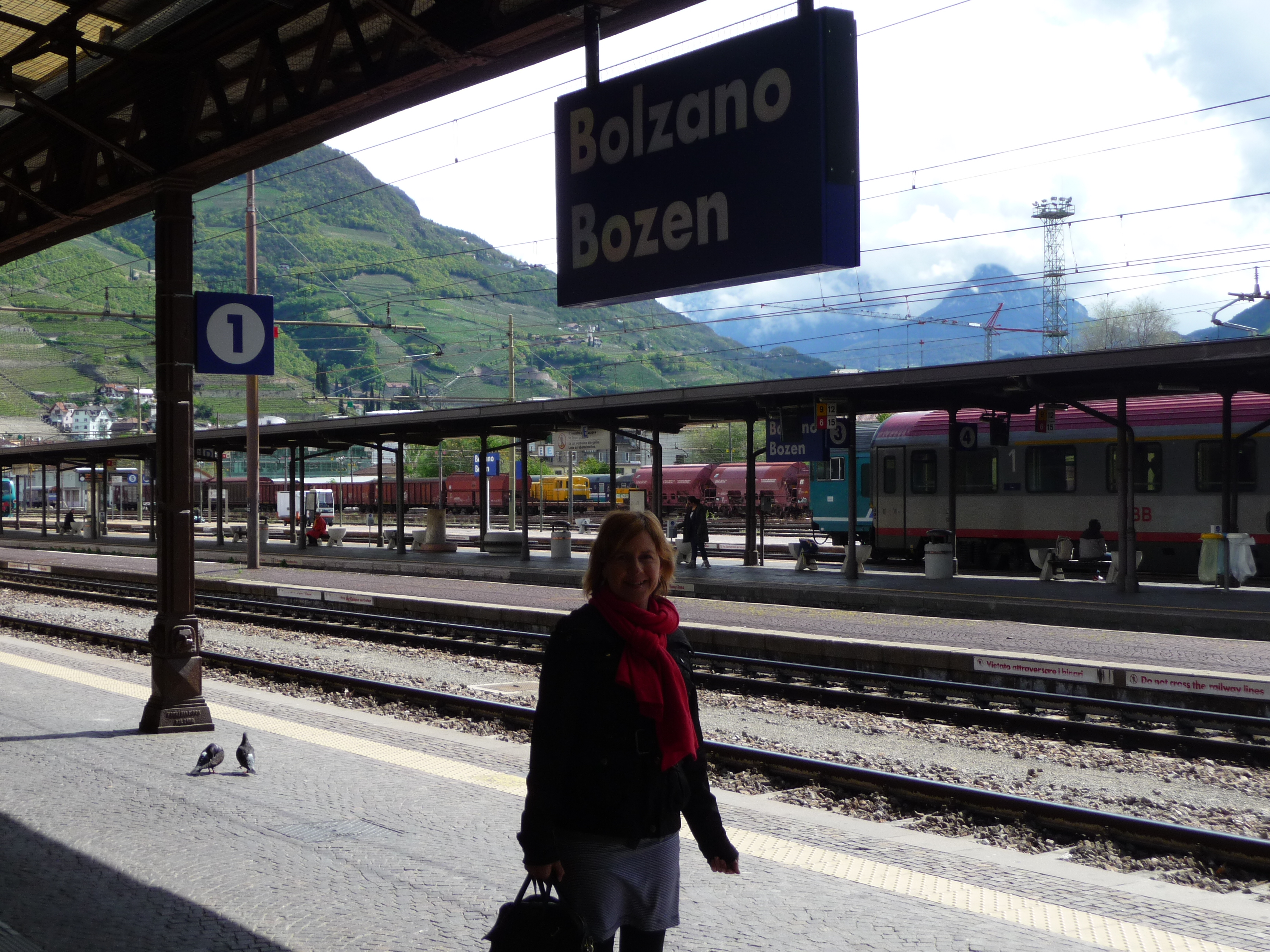
And so after our delightful train ride over the Brenner Pass (see Railway Adventures Part 1) we arrived in Bolzano/Bozen!

As we stepped out of the station our first impressions were that we were definitely south of the Alps – there was a distinct Italian flavour about the place! It was mild and sunny, the streets were busy with traffic and people were enjoying the sun and chatting in the nearby piazza. There was a cheerful and bustling vibe in the air. Apart from Monsieur Le Chic’s wish to go to the Archaeological Museum (more of that later), we had no definite plans, but having heard a lot about the Dolomites we found that we could easily access the mountains via a cable car, which started close to the station. With thoughts of lunch overlooking the valley we set off.

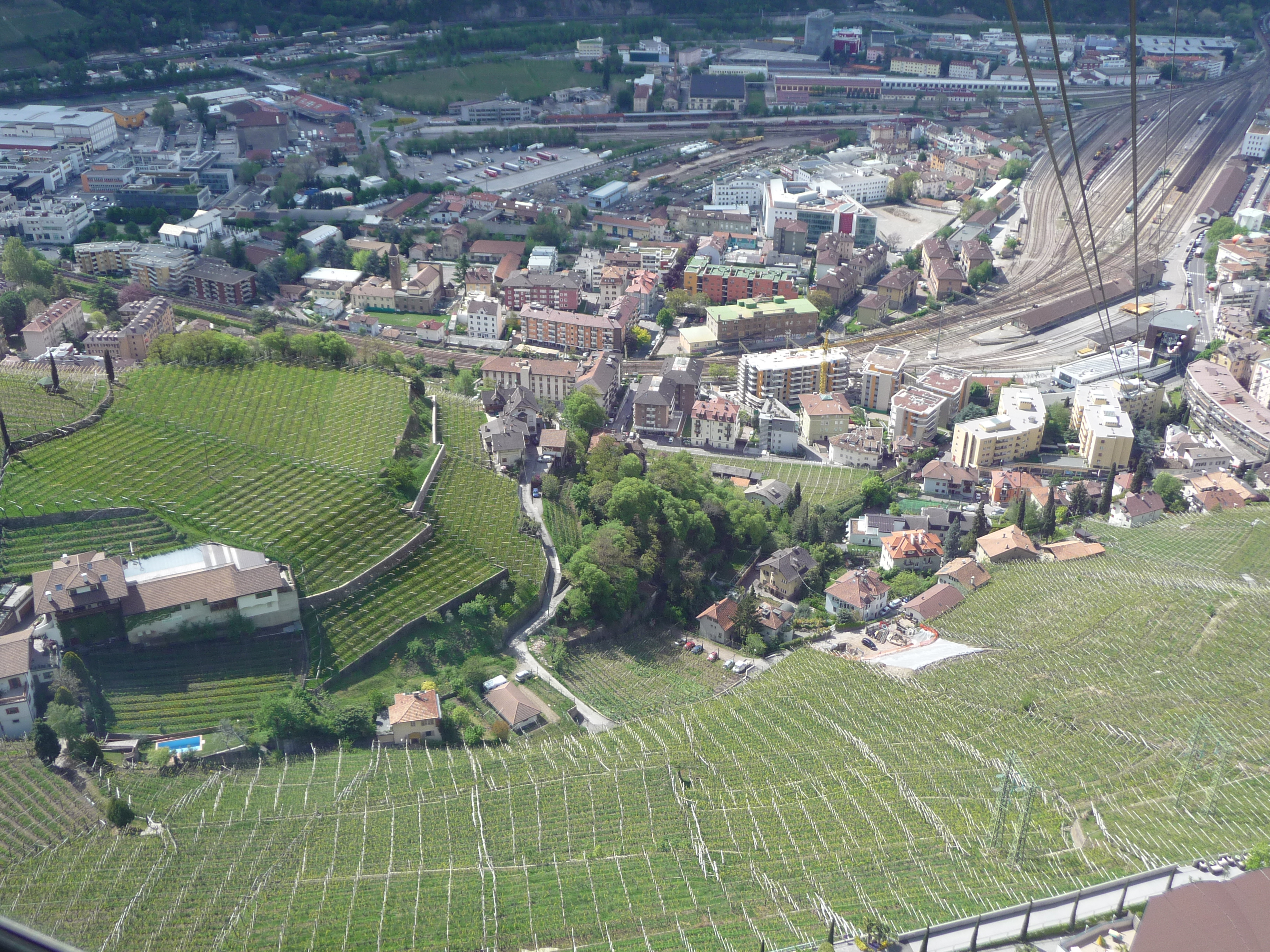
Just a word of warning. It was quite a long cable ride (well for those of us who don’t really like cable cars and I’m not talking about myself here!). Suffice to say I spent the next 12 and a half minutes taking photos whilst my “travelling companion” consulted his watch regularly and kept asking “are we nearly there yet”? It was worth it though – the views back towards Bolzano in the valley were magnificent. Soon Bolzano began to look like a miniature town from above.

Europe 2012 1345

Up and up we went…..

Europe 2012 1349

The hillsides were scattered with vines – they had been planted everywhere along the slopes.

Europe 2012 1348

The views across the Dolomites were stunning.

Europe 2012 1350

On and on we went…..

Europe 2012 1346

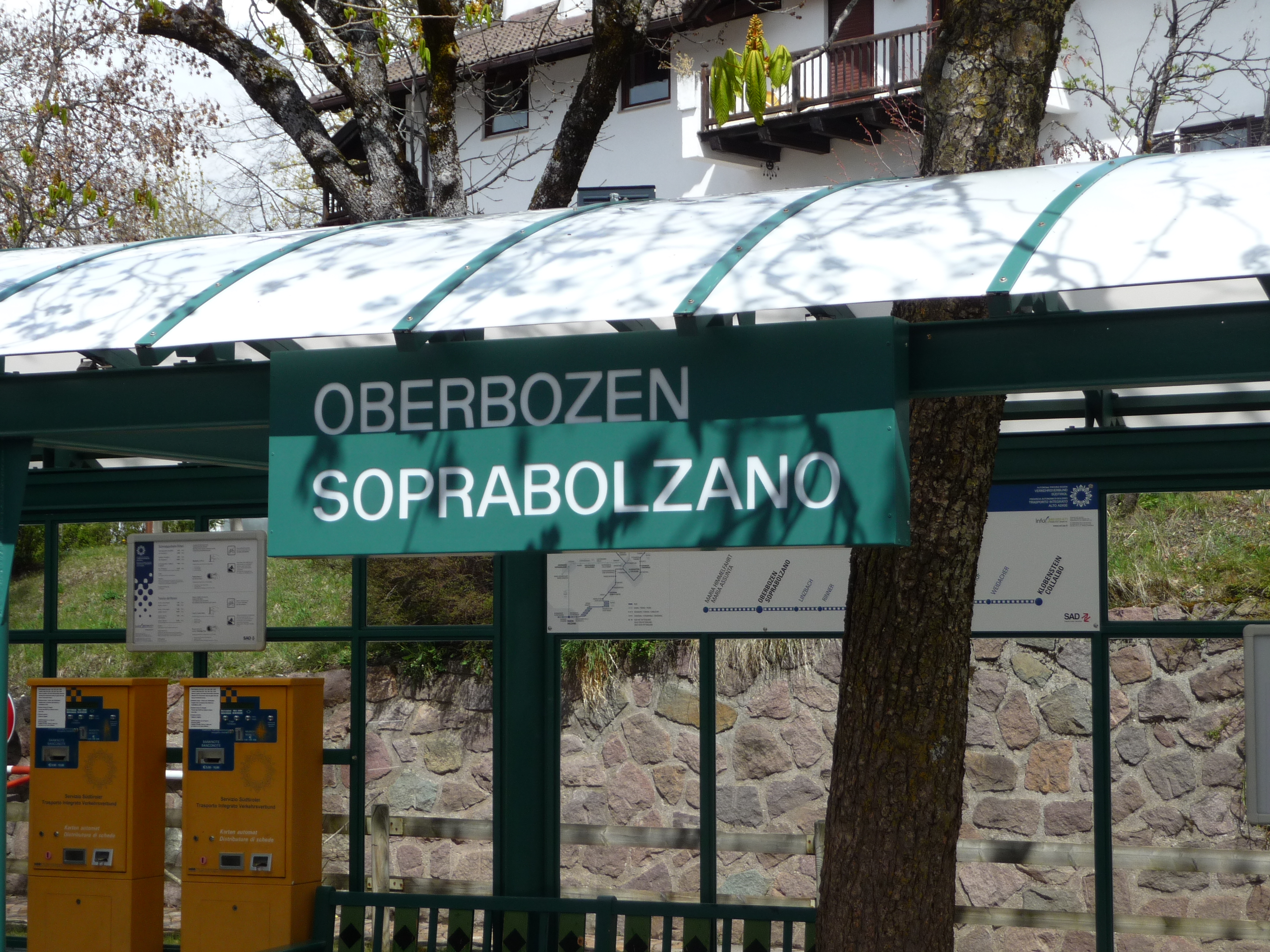
And then our destination came into view – the delightful little village of Oberbozen (or Soprabolzano in Italian). Here up in the mountains we noticed that the German words were usually written first.

Europe 2012 1355

We spotted a cafe/restaurant strategically situated overlooking the valley below but decided before indulging ourselves to take the little narrow guage railway, which wended its way along the escarpment stopping at several little villages en route. The train runs every half an hour and takes about 20 minutes one way. Once at the other end there are plenty of walking trails but we had not come dressed for a hike nor did we have any maps with us so instead we turned back and headed for the restaurant we had seen by Oberbozen Station. You would need to properly plan a day out hiking in the Dolomites but clearly there are lots of walking trails and villages, which would provide accommodation and refreshments. It’s an extremely popular pastime both with locals and tourists!

We had a wonderful lunch in the little cafe – when in Italy one must sample the gelati! However generally we found that the German traditions were stronger up in the mountains – in terms of the cuisine, the architecture and the language. The staff spoke German amongst themselves with an unusual accent (though clearly enunciated and we could understand some of it). Italian is of course also spoken and some English.

Gelati!

After lunch we made the descent back to Bolzano from our rural idyll as Monsieur Le Chic was keen to head off to the South Tyrol Museum of Archaeology. He had read before we set out about Oetzi the Iceman, a Copper Age “mummy” who was preserved in the museum. I had vaguely read about this in the news some years ago. It turned out to be a fascinating couple of hours! We saw Oetzi in his “glass coffin” which must be kept at a precise level of humidity and temperature to preserve it and read about life in the Copper Ages some 5000 years ago! For obvious reasons photos are not allowed. It is an amazing story though. He was discovered by a couple of German hikers in 1991 high up in the Oeztal Alps very close to the border with Austria. Indeed there were many discussions about who should “claim” Oetzi for their own but it was finally proven that he lay approximately 100 metres on the Italian side of the border so back to Bolzano he came from Innsbruck University. He has been on display at the South Tyrol Museum Of Archaeology since 1998. There has been cooperation though within the scientific community to try and solve the mystery of Oetzi; how he died, where he lived, what his status in society was. It is now generally thought that he was murdered so it has become a sort of ancient “whodunnit”! As a result of all the scientific investigations the museum provides a fascinating insight into life and times in Copper Age Europe.

After strolling through the pretty cobbled streets with their distinct colonnades and doing a bit of window shopping (such gorgeous clothes and accessories; snappy dressers everywhere!) we sat out in the main piazza basking in the spring sun and enjoying the highly civilised late afternoon Italian custom of drinks and nibbles.

Gradually the sun went in and storm clouds gathered. Hoping to outrun the approaching thunderstorm we quickly headed back to the station to catch our train back to Innsbruck. The rains came down with thunder and lightning but once we began the climb up the Brenner Pass the rain turned into snow and very quickly the roads looked increasingly impassable. One could appreciate the difficulties in living up in these high mountain passes. It was beautiful though from the warmth and comfort of the train!

We spent the journey back watching the ensuing snowstorm, enjoying a fine meal in the buffet car and having a pleasant chat with the restaurant steward who hailed from Klagenfurt in Southern Austria and who had been on the go all day so was looking forward to his rest day the following day.

The Tyrol both north and south is a beautiful part of the world! We had seen such variations in scenery, weather and architecture all in one day – it truly was a memorable day out!

Back in the "north" Tyrol Innsbruck

Back in the “north” Tyrol Innsbruck

Copyright © 2014 Rosemary Thomas Le Chic En Rose. All rights reserved

I’ve always loved rail travel. It just seems like such a civilised way to get about. No “driving” hassles trying to keep your eye on the road if you’re driving or ascertaining your whereabouts if you’re the passenger (map reading is not my forte nor is trying to work out a Sat Nav system). You can sit back in your seat on a train, relax and enjoy the passing scenery. No worries about airports, checking in bags, going through security queues (except for Eurostar and even then it’s very straightforward) – the list is endless. I must have watched just about every TV travel show imaginable and I always love the ones with railways in them : Michael Palin on his world circumnavigations and more lately the Michael Portillo series Great British Rail Journeys and Great Continental Rail Journeys. Hence this is the first in a series of posts entitled “Railway Adventures”!

Often when we travel we have no particular plan; we just look at a rail map and head off to a place on spec. Such was the day we decided to go off over the Brenner Pass from Innsbruck in Austria to Bolzano in Northern Italy. I’ve always been fascinated by border regions where cultures meet and mingle. Having studied history I knew that the northern part of Italy, the Suedtirol (South Tyrol), had been part of the former Austro Hungarian Empire but was separated from its northern cousins by the Treaty of Versailles in 1919. Hence it became a part of Italy where the majority of the population were native German speakers. I became even more interested as our son-in-law’s maternal grandfather had been brought up in Meran (Merano) on the Italian side of the Tyrol and then forcibly relocated to Innsbruck in the 1930s when the family refused to give up their German heritage under the Mussolini “Italianisation” plans for the area. Now it is an autonomous region of Italy (part of the impressively named Trentino-Alto Adige/Suedtirol) and an eclectic mix of Italian and German influences – definitely a place worth exploring.

We consulted maps, guidebooks and the internet and found that the capital of the Suedtirol is Bozen/Bolzano (the German and Italian names respectively) and that the journey by train took precisely 2 hours – definitely manageable in a day. The train was operated jointly by Deutsche Bahn and the OBB (Oesterreiche Bahn). We enquired at Innsbruck railway station whether we could just board using our Eurail passes and were told no problem. Once on the train we encountered a rather officious guard who told us we needed to pay a supplement of around 19 Euros each, which, to save further hassle, we did. On the way back however our passes were sufficient by themselves. I even asked the guard whether we should pay a supplement and he looked rather surprised! What I found out later is that the Italian train service Trenitalia do not cooperate with the German and Austrians over their rail services into and out of Italy via the Brenner Pass. Perhaps this lack of cooperation has led to anomalies in ticketing and pricing?

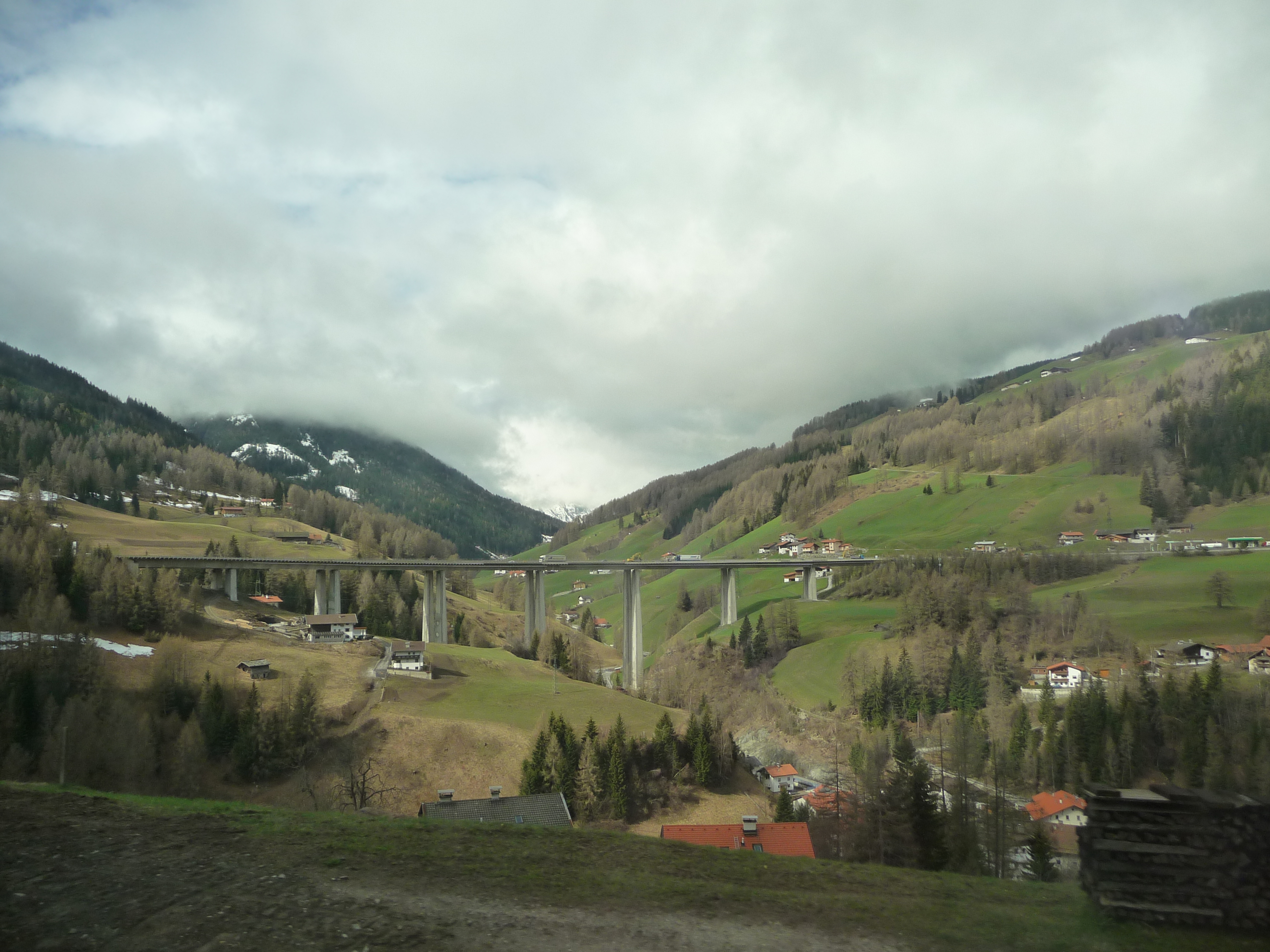
The rail line over the Brenner Pass is one of the most important north/south routes in Europe connecting northern Europe with Italy and especially the Lombardy-Venetia region. The highest point of the line at Brenner Station is relatively low by alpine Pass standards at 1371 meters but even so it was an extreme feat of engineering when the line was constructed in the 19th century. As the train winds up the slope towards the Italian border you get spectacular views of the mountains and valleys below and also a really good vantage point to see the magnificent Europa Bridge (Europabruecke) which spans 777 meters over the Wipp Valley just to the south of Innsbruck (the main road link between Austria and Italy).

Europa Bridge (Europabruecke) near  Innsbruck Austrai

Scenery wise, south of the border crossing point at Brenner Station, you could still be in Austria as you ride past mountain villages dotted with alpine chalets and heavy wooden shutters. Apart from Brixen Bressanone there are no major towns en route until you draw into the station at Bolzano. Another reminder that this is high alpine country – we enjoyed pleasant weather on the outbound journey yet on the way back visibility was reduced to virtually nothing by a heavy and sudden onset spring snowstorm. Although we were there in April we were told that the Brenner Pass had been impassable only a couple of weeks earlier owing to heavy snowfall and we did wonder for a minute if we’d end up stranded at Brenner Station (like the old Orient Express in eastern Europe perhaps!). It wasn’t easy to take photos from a fast moving train but I did capture some of the moments as the train sped by (albeit with camera reflections!).

If all goes according to plan most of the inter city trains will be re routed by 2026 via the new Brenner Base Tunnel currently under construction. This feat of engineering is aimed at easing congestion caused by the heavy build up of current traffic especially on the motorways. As the new tunnel will reduce the rail connection between Innsbruck and Bolzano from 2 hours to 50 minutes it is hoped that there will be a shift from road back to rail for freight transport thus easing pollution in the area. However for locals and visitors in less of a hurry, hopefully regional trains will still ply the beautiful scenic route over the tops of the mountains and down the other side – it is well worth the day out for the journey alone. Next time I’ll write about what we discovered in Bolzano/Bozen and its environs!

Bolzano Bozen Station Suedtirol Northern Italy

Bolzano Bozen Station Suedtirol Northern Italy

Copyright © 2014 Rosemary Thomas Le Chic En Rose. All rights reserved