
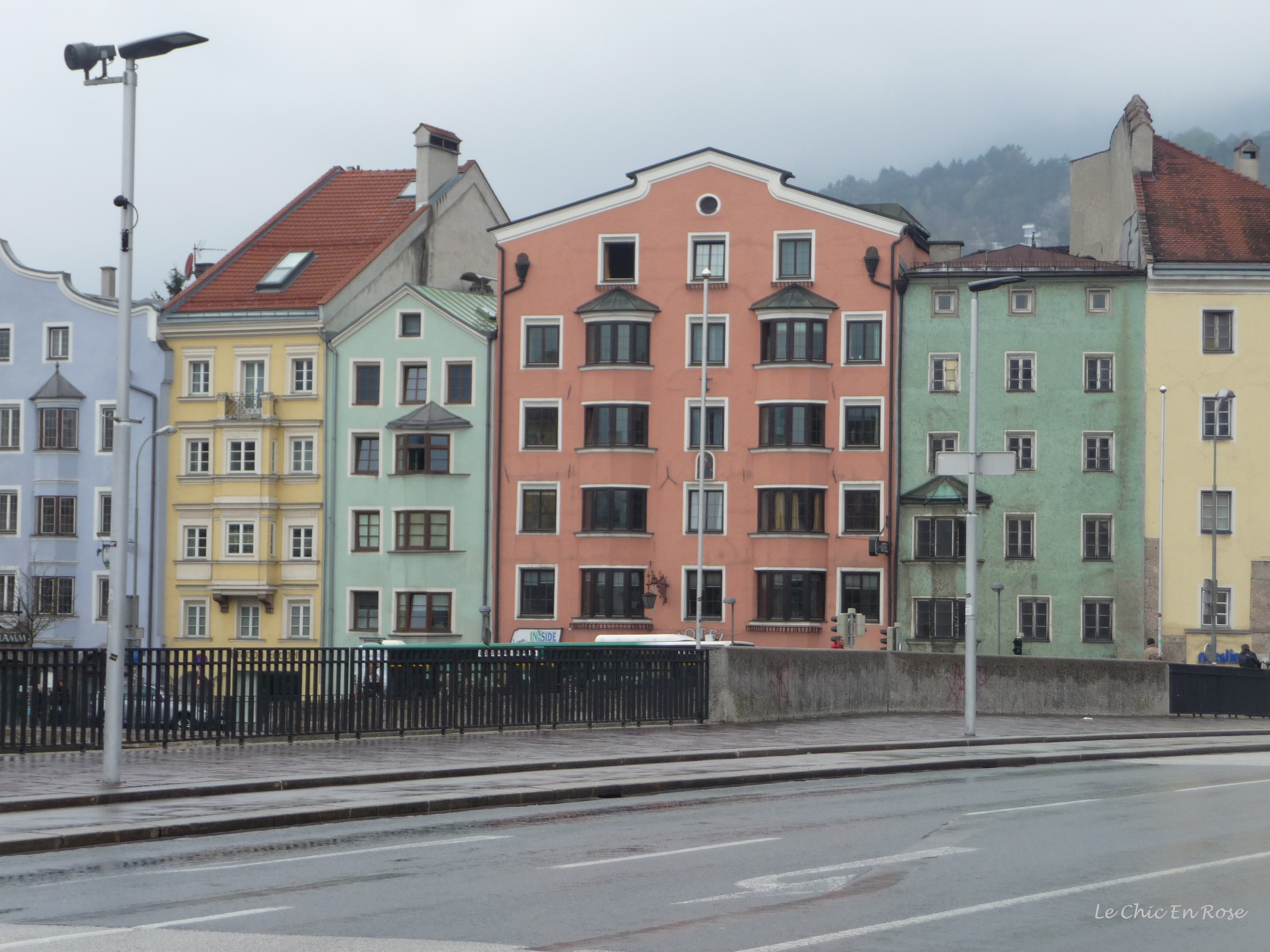
Nestling in the Inn Valley surrounded by mountains it is easy to see why Innsbruck, the capital of the Austrian Tyrol, is a major centre for winter sports enthusiasts and summer hikers alike. The Austrian Tourist Board describes Innsbruck as a place “where rugged Alpine nature meets modern lifestyle” and last week’s trip on the blog up to the Alpenzoo on the Nordkettenbahn well illustrates this. Back down in the city itself though we discovered just what a rich, colourful and sometimes turbulent history this charming city has had. Starting with my trusty Eyewitness Travel book on Austria I had done a reasonable amount of research before we arrived and one part of town that I was definitely keen to explore, given my love of history, was the Altstadt. We were fortunate enough to be staying at the Hotel Innsbruck (more on that later) on Innrain the street that runs along the south side of the River Inn. We literally stepped out of the front door, admired the painted buildings on the opposite side of the river and then turned right into the heart of the Altstadt.
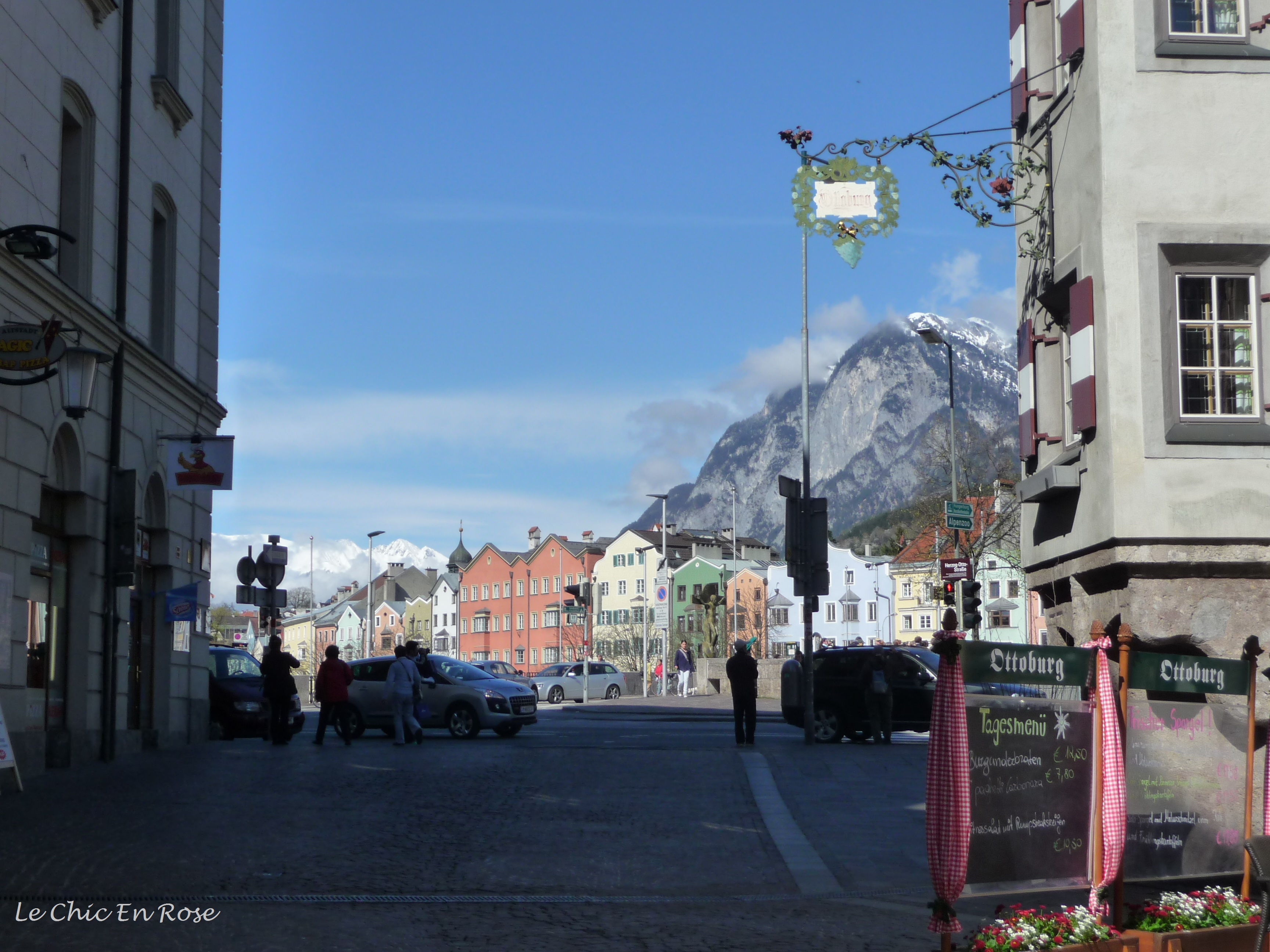
Innsbruck’s Altstadt – view back towards the River Inn.
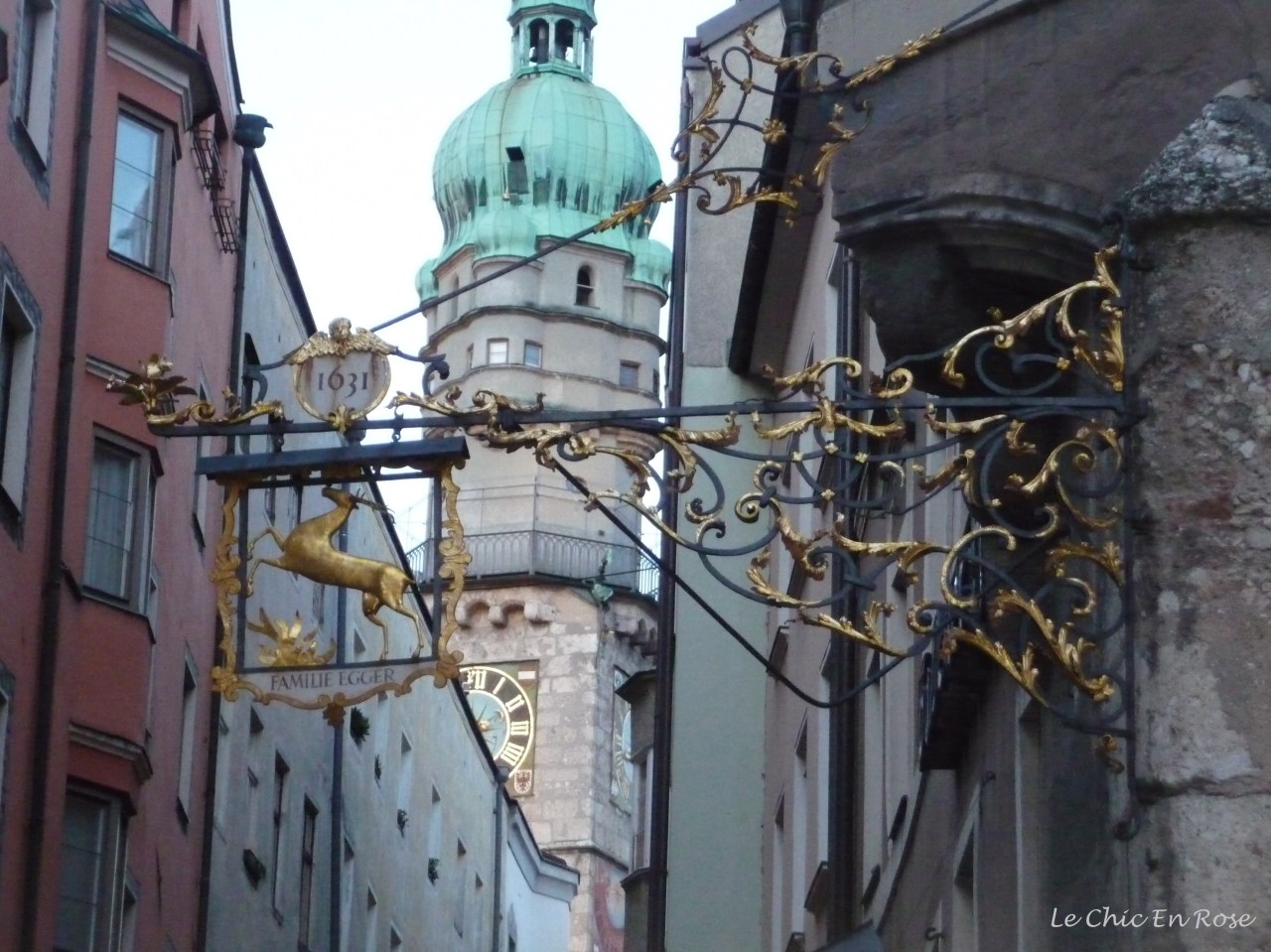
There has been a settlement in the Innsbruck area since ancient times. It was part of the Roman province of Raetia and in those days was called Veldidena. It developed at a major junction point where the road going north from modern day Verona in Italy via the Brenner Pass, met the road heading from west to east downstream along the River Inn. By the middle ages the Tyrol region was being disputed between 2 major dynasties, the Bavarians and the Hapsburgs. However in 1363 it was finally handed over to the Hapsburgs who controlled it for many centuries thereafter. It was actually a junior branch of the Hapsbrug family who ruled over the Tyrol and they carved out their own unique customs and traditions. Their heritage is very much in evidence today intermingled with all the shops and trappings of a modern city. The Altstadt is a veritable treasure trove of buildings dating from the Middle Ages with each generation seemingly adding its own individual touch. Unfortunately when we visited, the Goldenes Dachl (Golden Roof), possibly the most famous symbol of Innsbruck, was undergoing renovation works so seeing it in its full glory will have to wait for a future visit! At least the builders had tried to give an impression of what it should look like!

Goldenes Dachl undergoing renovation works!
Our disappointment and the inclement weather that persisted for most of our visit aside, we enjoyed our wanderings around the Altstadt (Old Town) Square the highlight of which is normally the Goldenes Dachl. It was an addition by Emperor Maximilian 1 to the residence of the Tyrolean sovereigns to mark the occasion of his marriage to Bianca Maria Sforza and was completed in 1500. The roof is not actually made of gold but rather gilded copper tiles of which there are over two and a half thousand! After their wedding the Emperor and his family apparently used the balcony as a vantage point from which to watch the festivals and tournaments that used to take place in the square below. Nowadays the Innsbruck Christmas Markets are held in the main square, which must be a magical spectacle!


There are a myriad of hotels and eateries in this part of town and during April, which is traditionally low season, we had our pick of places to go to. We never needed to wander too far from our hotel to find somewhere to eat each evening. We visited in spring when thoughts are turning from heavy winter stews to (slightly) lighter meals and one of the highlights were the dishes made from weiss spargel (white asparagus) that comes into season around then. This time of year is in fact known as Spargelzeit (Asparagus season) in many German speaking regions and usually starts around mid April. We tried soups, mousses and weiss spargel accompaniments to fish and meat and all were absolutely delicious. The Tyroleans are well known for their wonderful hospitality and we were greeted by friendly staff wherever we went in Innsbruck. We left feeling extremely well fed and watered!


The Dom St Jakob is a beautifully preserved Baroque Cathedral adorned with impressive artwork and frescoes. We were amazed by the intricate interior of the cathedral typical of the Hapsburg era and reminiscent of Viennese imperial buildings without (in April at least) the inconvenience of large crowds.


Another major drawcard of the Altstadt area is the Hapsburg Imperial Palace – the Hofburg. The original palace was constructed under Archduke Sigismund around 1460 and was gradually extended over the next 250 years before undergoing major renovations in the Rococo style under Empress Maria Theresa in the 18th century. It has a wonderful backdrop in the imposing form of the Nordkette alpine range and in fact Congress Station from where we started our journey up the mountains to Alpen Zoo and Hafelekar (see here) is close by the palace.


We did not have time in the end to tour round the Hofburg itself (too many other attractions taking priority) though we did fit in a visit to the imperial church, the Hofkirche. This Gothic church was built in 1553 by Emperor Ferdinand 1 (1503-1564) in honour of his grandfather Emperor Maximilian 1 (1459 -1519) and contains a mausoleum to Maximilian that can best be described as dark and oppressive although I’m sure that was not his grandson’s original intention. The tomb is surrounded by large marble statues which depict various ancestors, relatives and heroes of the deceased emperor. The irony is that it is in fact an empty tomb – in the end Maximilian was left to rest in peace in his original simple tomb in the castle chapel of the Wiener Neustadt!


Finally back to our hotel, the Hotel Innsbruck which was our home from home during our stay in Innsbruck. It was a comfortable blend of the old and the new, still retaining its old town charm along with the mod cons of the 21st century. The clientele from what we could see were a mixture of business people and local visitors and tourists alike. It all worked perfectly well – the business folk had their breakfast early and the visitors came along at a more leisurely pace later. We had our favourite spot by the window where we could look out to the old town streets until the final morning where we were beaten to it by a young family. Another nice touch were the photos mounted on canvas of Innsbruck past and present, which decorated the hotel lobby and the corridors on each floor showcasing Innsbruck to full effect in excellent weather!


Copyright © 2015 Rosemary Thomas Le Chic En Rose. All rights reserved














 Le Chic En Rose