Le Chic En Rose

Diaries of an independent traveller

A brief hiatus this week from my Bavarian travel series but still with a German theme. Winter has well and truly arrived here in Perth and temperatures have plummeted. It got down to 2 degrees on Tuesday morning, which makes the news here much like it does in the Uk when it climbs to 20 degrees or above! Last Sunday we headed in to the city centre for my weekly German evening class’s mid year social get-together. Naturally we went to a restaurant with a German theme namely, Brotzeit, a new bar and restaurant, which opened its doors in the CBD earlier this year.

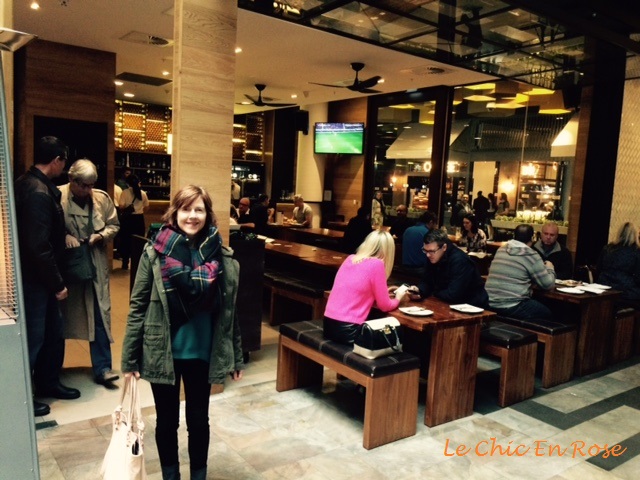
Le Chic En Rose outside Brotzeit in Perth CBD

Le Chic En Rose outside Brotzeit in Perth CBD


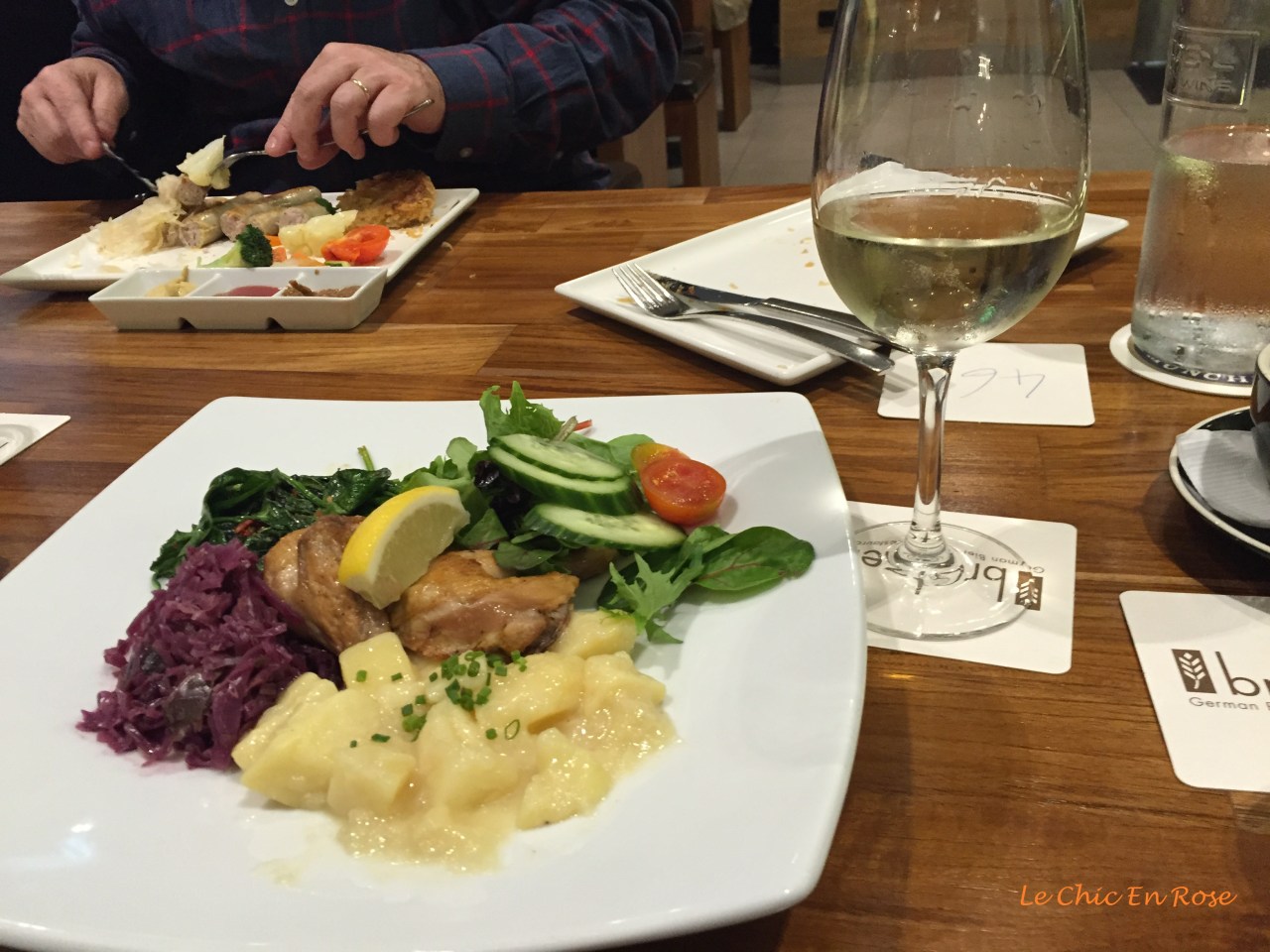
Brotzeit is part of an international chain currently based in the Asia Pacific region with the Perth city one being the first in Australia and I was uncertain what to expect. It turned out to be an excellent choice, especially on a wild and wet winter’s day. The food was authentic but toned down a bit for Australian tastes. Whereas in Bavaria I was served a quarter of a duck that must have come from the largest duck in Germany, here the portions were a bit more manageable – German with a modern twist. Monsieur Le Chic tucked into his Nuernberger sausages with sauerkraut, roesti and vegetable accompaniments whereas I went with the spatchcock (small chicken), potato salad and a simply delicious sauerkraut flavoured with orange and cranberry.

The beers were authentic – according to the Brotzeit’s web page :

“All beers served at Brotzeit® are brewed according to the German Purity Law of

1516, 100% natural, made with pure spring water and imported from Germany”

One of our party noted that the correct beer was served on the matching beer mat – all very organised!  Monsieur Le Chic sampled the dark wheat beer from Munich’s Paulaner brewery whereas I selected a glass of the Burg Layer Schlosskapelle Silvaner Kabinett wine, which according to the menu is “light bodied with a fresh, slightly floral nose, accompanied by subtle green apple, white peach, honey, tea and lime flavours”. I can’t say I noticed all these flavours but it was certainly tasty and packed a fruity punch!


You will find Brotzeit tucked away in a laneway off 140 Willian Street in the city centre (just behind Jamie’s Italian). If you’re coming in by train it’s just a couple of minutes’ walk from Perth city station taking the William Street exit. The atmosphere was convivial and the place was packed out – bookings are essential!

Certainly warming winter food has been the order of the day all this week. It was bitterly cold on my morning walks though you’d never believe it from the photos – Perth is simply beautiful on clear crisp winter days!


Perth Winter's Day

Perth Winter’s Day


Plus we have a warm wood fire to light up at night!


Le Chic En Rose - wood fire at home

Le Chic En Rose – wood fire at home


“Prost” until next week!


Copyright © 2015 Rosemary Thomas Le Chic En Rose. All rights reserved

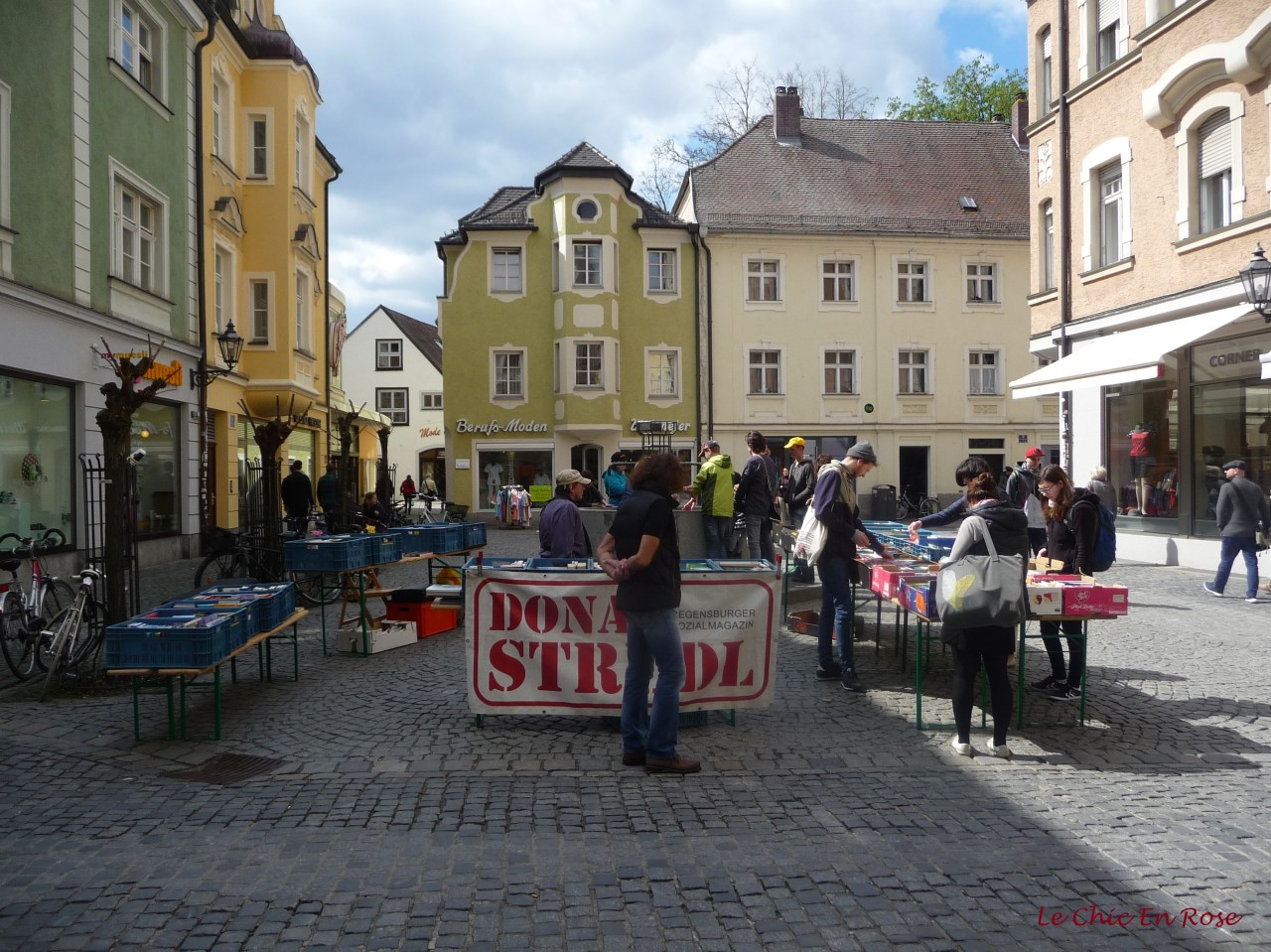
In the heart of Regensburg’s Altstadt you can find the Altes Rathaus building. It sounds rather amusing in English – the idea of lots of “rats” living here (and maybe there were in medieval times) . The word Rathaus like many others in German, is a combination of 2 words, “Rat” meaning council and “Haus” meaning house. Regensburg’s Altes Rathaus is quite close to the Old Stone Bridge that we visited in last week’s post on Regensburg (see here). It is actually a combination of 3 buildings fronting onto a quaint cobbled square dotted with little cafes and shops.


Altes Rathaus Regensburg and Rathausplatz

Altes Rathaus Regensburg and Rathausplatz


The complex, originally begun in the 13th century, consists of the Town Hall Tower, the Gothic Imperial Chamber Building (in which the Perpetual Imperial Diet met from 1663-1806) and the baroque Town Hall. Access is by guided tour only, which we didn’t have time to organise, but apparently the basement houses the dungeons with an original torture chamber (hopefully not in current use!). You will find Regensburg’s tourist office on the corner of Rathausplatz too.


Altstadts have such interesting characters and stories – the old stone walls must house so many secrets! We came across an impressive-looking statue of Juan Of Austria (Don John Of Austria).

Statue of the Spanish military commander, Don Juan Of Austria in Regensburg

Statue of the Spanish military commander, Don Juan Of Austria in Regensburg


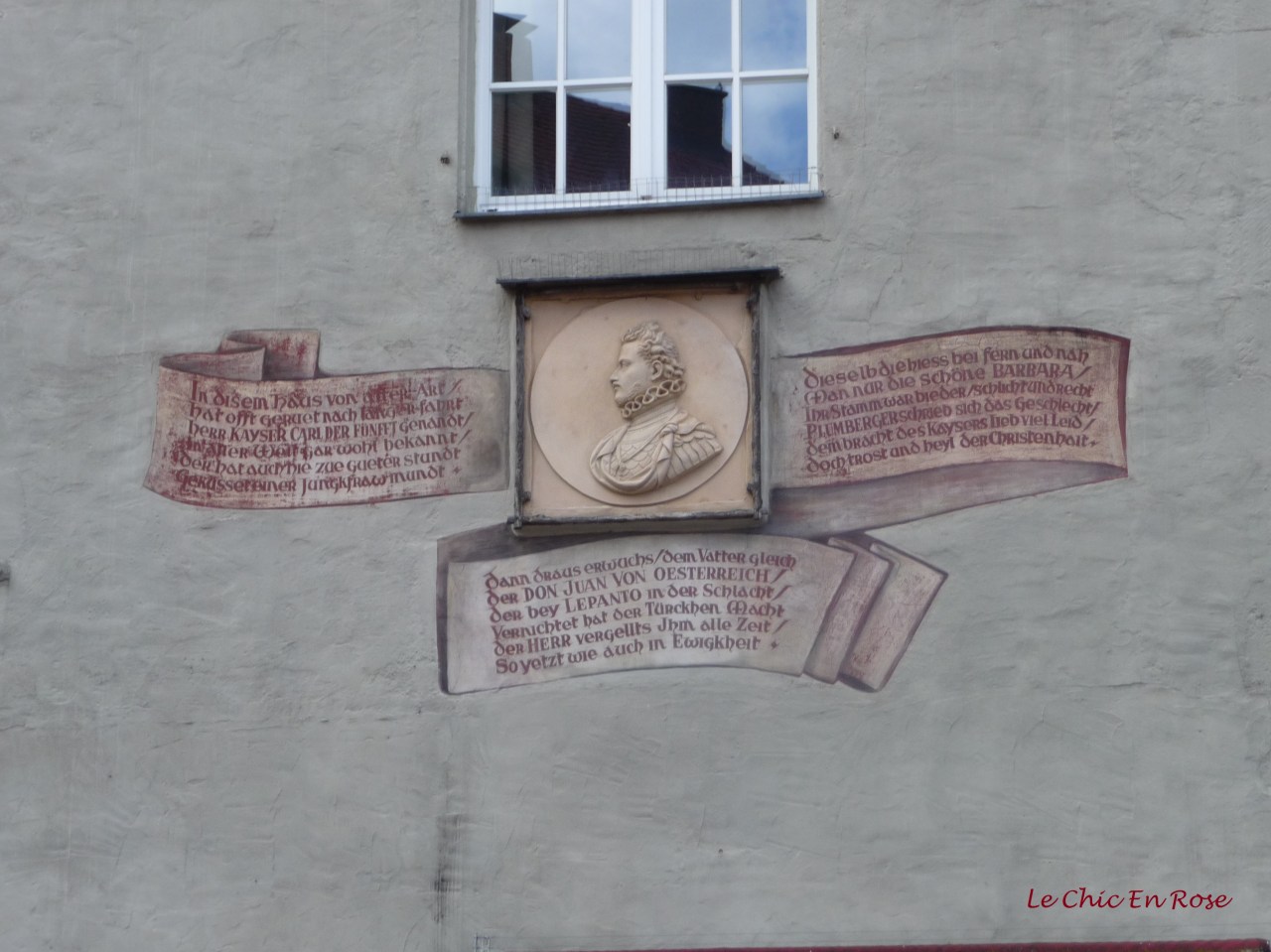
I later discovered Juan was the illegitimate son of the Holy Roman Emperor, Charles V and Barbara Blomberg, daughter of a Regensburg Burgher. Apparently she enjoyed a brief liaison with Charles when he was in town for the Imperial Diet one year and young Juan was the result. Sadly for her he was whisked off to Spain to be brought up in secrecy and later served his half brother, Philip II Of Spain, in the Spanish Army, becoming a renowned military commander. He was particularly noted for leading the Holy League of Spain, Venice and Papal forces in a naval battle against the Ottoman Turks, which resulted in their defeat at the Battle Of Lepanto in 1571 in the Eastern Mediterranean.

Another fine historical building is the Schloss Emmeram, which contains the former monastery of St Emmeram as well as the castle and family seat of the Thurn und Taxis family.  We only had time to skirt round the perimeter and peer through the entrance to the Fuerstliche Brauerei, which is housed in the old palace. With a museum and a shop too there looked to be enough to keep visitors occupied for a good half a day. The Thurn und Taxis family originated from Italy and made their fortune by effectively founding an international postal service. Franz Von Taxis had devised a well organised courier service in Italy and around the turn of the 16th century his system was expanded. In those days a letter could be transported from Innsbruck to Brussels in 5 and a half days! In 1615 as a reward Emperor Matthias awarded the family the hereditary right to be imperial postmasters general. Eventually by 1748 their fortunes had risen to the point where the Emperor Franz I made Prince Alexander Ferdinand Von Taxis the principal commissioner, the Emperor’s representative, at the Perpetual Diet in Regensburg with the proviso that the family relocate to the city! They certainly built themselves a magnificent palatial home there in the grounds of the old abbey!


From the Emmeram Palace, it is only short walk via St Peter’s Weg back to the Hauptbahnhof (main railway station) and the start of our day in Regensburg. We really enjoyed our time in this lovely old city with its winding streets, charming cafes and beautiful old buildings. There is so much more to see here – my little tour has really only touched on a few highlights!

Copyright © 2015 Rosemary Thomas Le Chic En Rose. All rights reserved

Following on from our enjoyable lunch at the historic Wurstkuchl in Regensburg, we set off explore more of the Altstadt (Old Town). Regensburg is a marvellous place to visit as the city escaped relatively unscathed from the ravages of the World War 2 bombing and thus most of the Altstadt has been preserved in its original state. It now enjoys UNESCO World Heritage listed status and is a major tourist attraction in this part of Bavaria (the Upper Palatinate).

Regensburg was known as Ratisbon in English until well into the 2oth century (Ratisbonne in French and Ratisbona in Spanish and Italian). Its strategic position at the confluence of 3 rivers, the Danube, Naab and Regen, led to the city becoming an important medieval trading route with powerful influences north of the Alps and trading connections spreading out to Italy, Bohemia and further afield to Russia and the Byzantium. It was also an important city within the Holy Roman Empire  and the location of many imperial assemblies in the High Middle Ages. The Perpetual Assembly of the Holy Roman Empire was held here between 1663 to 1806. All these influences have created a rich and colourful history, which today is reflected in the impressive buildings and character of the Altstadt. The UNESCO World Heritage website has further information on Regensburg’s history here.

There are many tours on offer and you can find details of some of these on the city of Regensburg’s web page here. However, although we have often done walking tours of new places, on this occasion Monsieur Le Chic and I preferred to wander round at our leisure taking in as much in as we could. Sometimes I find it can get a bit too much to take in all the historical information on an organised tour (or maybe I have a short attention span?!). I often find myself reading up in more detail about a place after I’ve been there – initially I like to get a feel for it myself! The history of Regensburg is complex and the old buildings date back from various eras. Romanesque, Gothic and Baroque styles all mingle together in the Old Town.

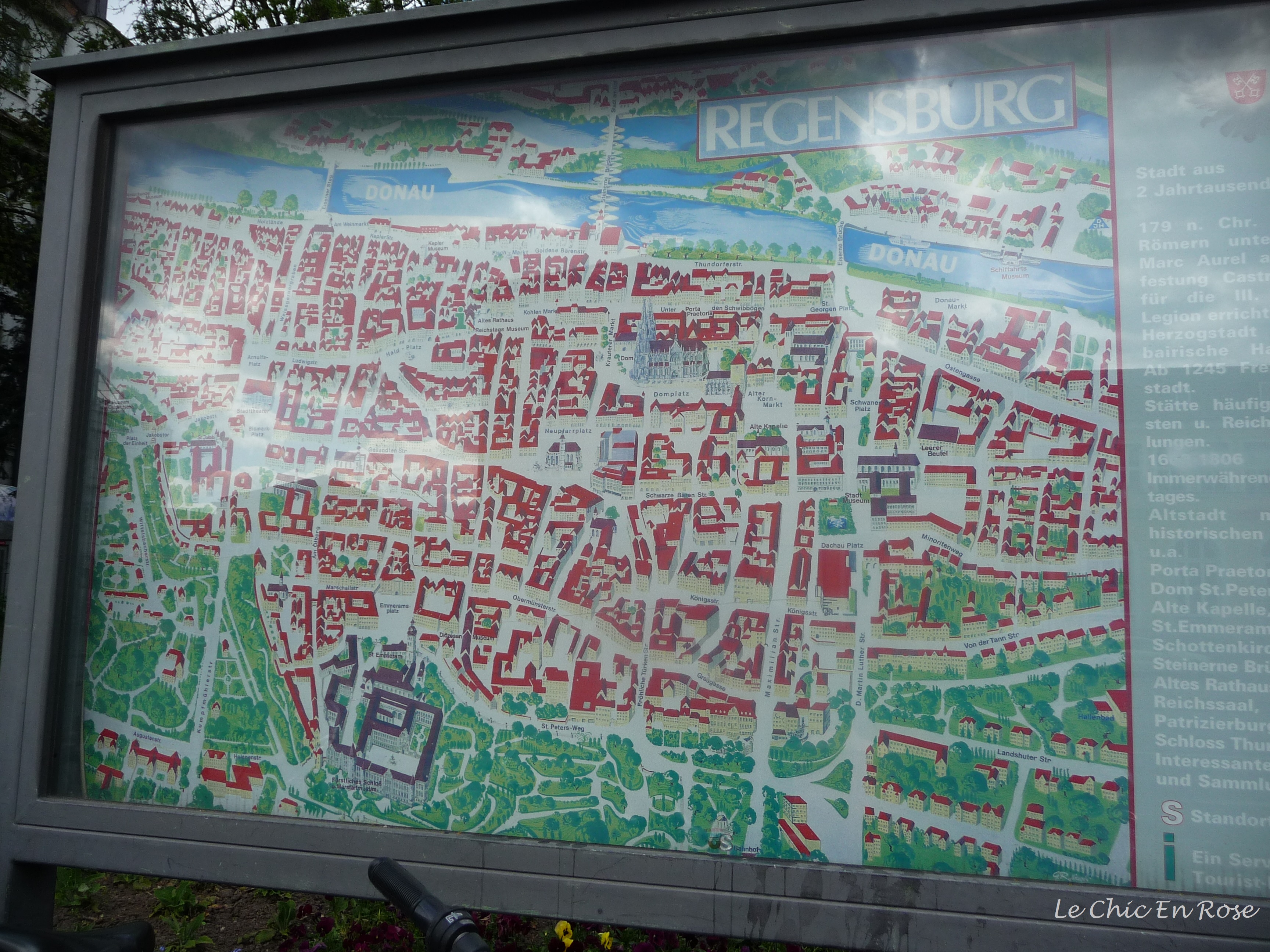
We had as our starting point a map helpfully situated on the opposite side of the road from our arrival point, the Hauptbahnhof.


Map of the Altstadt Regensburg

Map of the Altstadt Regensburg


The Altsadt is a bit like a maze, pretty meandering cobbled streets opening out at various points into larger squares. If in doubt following the church spires usually gets you to a central point! The central Domplatz is dominated by the imposing spire of St Peter’s Dom. The current cathedral was built in the 1300s on the site of previous buildings and is a magnificent example of Gothic architecture.


We went inside and wandered round but the light was not conducive to taking good photos so there are not as many as I would like. However the crypt is particularly interesting. It has quite a lot of detail about the history of the cathedral including a memorial stone wall plaque inscribed with the names of all the bishops of Regensburg. There is also a poignant memorial to Dr Johann Maier, a preacher at the cathedral and a victim of the Nazis who is buried here.


Not far away from Domplatz you reach the Danube. One of the major attractions here, right by our lunch venue the Wurstkuchl, is the Old Stone Bridge (Steinerne Bruecke). The bridge, which replaced an old wooden one was constructed in the 12th century to link the Old Town with Stadtamhof. For about 800 years it was the only bridge across the Danube and not unsurprisingly it started to erode. Centuries of heavy traffic including armies going off to fight in the crusades had taken its toll and for the time being you can only admire the Old Stone Bridge encased in scaffolding as it is undergoing major restoration work.


It was somewhat chilly by the river so we headed back up towards the Old Town Hall (the Altes Rathaus).


One of the many little streets and passageways in the Altstadt of Regensburg

One of the many little streets and passageways in the Altstadt of Regensburg


We did take a couple of wrong turns – the myriad of streets can get a little confusing but one way or another you usually end up back at a landmark and get your bearings again. Hopefully by next week I’ll have found my way to the Altes Rathaus! Join me then for Part 2 of exploring the Altstadt Regensburg!


Copyright © 2015 Rosemary Thomas Le Chic En Rose. All rights reserved


Once the wonderful lotions and potions we’d found at the local Munich Apotheke started to take effect, we were feeling a bit more like exploring and decided to take the advice of a German acquaintance, who had highly recommended Regensburg as a possible day trip from Munich. By train (we had German Rail Passes) it takes about an hour and a half to get there from Munich. Trains run regularly between the 2 cities and we happened to catch the morning one going to Prague, so had the added interest of travelling in Czech railway carriages. We found them very comfortable – just as well as it takes over 9 hours to get to Prague!

Back in Regensburg – we arrived around lunchtime and although keen to explore as much of the UNESCO listed Altstadt as possible, our thoughts were turning to lunch. Having crossed the pretty public park opposite the main station and wandered through the myriad of charming cobbled streets, we came to the river Danube. Regensburg is actually situated at the confluence of 3 rivers, the Danube, Naab and the Regen, but the one flowing through the vicinity of the Old Town is the Danube. Nestling in a little corner almost underneath but actually adjacent to the old Stone Bridge (Steinerne Bruecke) is the historic Wurstkuchl.


Wurstkuchl Regensburg

Wurstkuchl Regensburg


Die Historische Wurstkuchl (Historic Sausage Kitchen) of Regensburg is housed in an ancient building about 900 years old. It was originally used as a building office when the old Stone Bridge was being constructed across the Danube between 1135 to 1146. Afterwards the office was turned into a sausage kitchen feeding stonemasons working on the nearby cathedral and also dockers who worked in the port. Back in the Middle Ages the free city of Regensburg was a hugely important cultural and trading centre because of its strategic position on the Danube. You can find out in more detail about the Wurstkuchl’s history on its website here.

Back to the present and Monsieur Le Chic’s face was lighting up at the prospect of an endless selection of Wurst. I am not a great fan of sausages and was somewhat concerned as to what I would eat. However it was cold outside, we were still recovering from the flu and I didn’t want to wander round endlessly looking for somewhere to eat, so I agreed we’d go inside and take a look. I was won over by the cosy ambiance and charming decor – it was so warm and welcoming that I felt it would compensate for any sausages that I might be obliged to eat, (I’m not vegetarian but I don’t eat much red meat or Wurst!).


The restaurant as its name suggests, serves homemade pork sausages along with sauerkraut and mustard (made to their own special recipe). Monsieur chose one of their smaller plates….

Wurst from the Wurstkuchl

Wurst from the Wurstkuchl

Fortunately there was a wonderful homemade potato soup on the menu, which with hot crusty rolls was superb – flavoured with herbs and just creamy enough, it fitted the bill perfectly as far as I was concerned!

Creamy potato soup from the Wurstkuchl Regensburg

Creamy potato soup from the Wurstkuchl Regensburg

There is also an extensive seating area outside by the river, which hardier souls than us were favouring or should I say braving? Certainly one’s perceptions of cold varies depending on where you’re from. I checked the weather app on my phone and the temperature was around 14 degrees with a stiff breeze at lunchtime – not dining out weather in my book!

Being right on the Danube the Wurstkuchl will be popular, I would think, with passing tour boats. From the Tripadvisor reviews I read later quite a few of the tours do stop there for lunch, but it wasn’t unpleasantly crowded on the Saturday lunchtime in April when we were there. The staff were polite, friendly and the service highly efficient! Just note that you do have to pay for any bread rolls you eat – they put a basket on the table when you arrive and we assumed they were complimentary until we got the bill (not enough to break the bank though!).
The German word “gemütlich” sums up the Wurstkuchl perfectly! It doesn’t really have a direct English translation but means a cosy atmosphere, warm, welcoming –  somewhere you feel at home. We stepped out of the Wurstkuchl and found ourselves right in front of the fast flowing waters of the River Danube. Off we went to explore more of Regensburg and in particular its medieval Altstadt. More to come – Tschuss till then!


Down by the River Danube Regensburg with the old Stone Bridge in the background

Down by the River Danube Regensburg with the old Stone Bridge in the background

Copyright © 2015 Rosemary Thomas Le Chic En Rose. All rights reserved

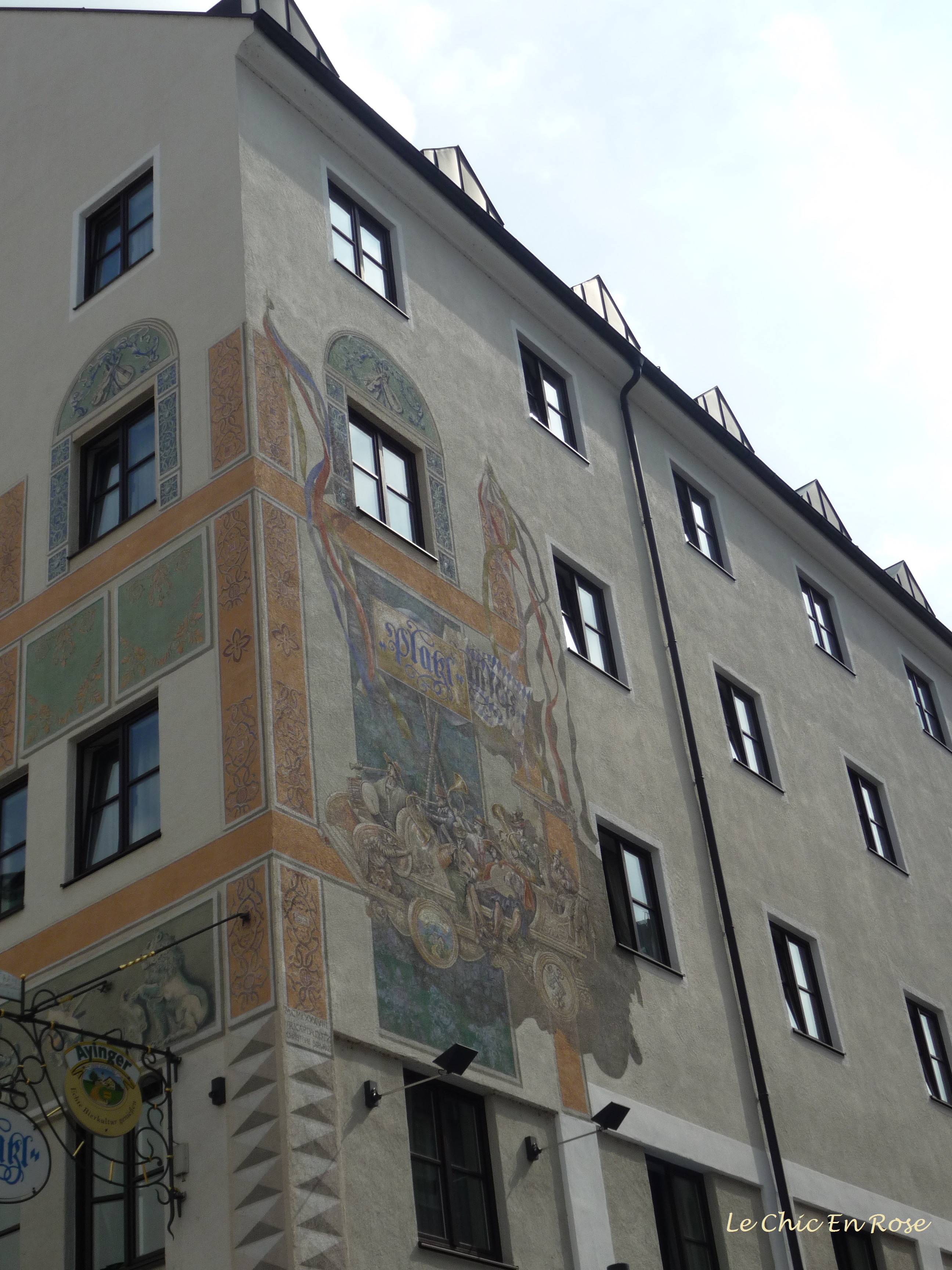
Our home from home whilst we were in Munich was the charming Platzl Hotel situated right in the heart of the Altstadt. We had debated whether to stay nearer the Hauptbahnhof as we planned to do several rail trips during our visit, but decided we’d much rather stay in the historic part of town near Marienplatz. It proved an excellent choice especially as we were laid low with the flu at the start of our trip and didn’t feel up to doing as much as we’d planned. We could go out and explore the old town for a while then pop back to the hotel for a rest!


The Platzl Hotel corner of Sparkassenstrasse and Muenzstrasse

The Platzl Hotel corner of Sparkassenstrasse and Muenzstrasse


The entrance lobby to the Platzl is on Sparkassenstrasse, which can be a little confusing as the street at the back of the hotel, on which you will find Wirsthaus Ayingers (owned by the hotel) and the famous Hofbrauhaus (owned separately), is actually called Platzl. This area is in one of the oldest parts of town and there are many little side streets and cobbled alleyways to explore. Sooner or later you will find your way back to the hotel!


The Platzl has a lovely Bavarian country feel but with all the mod cons you’d expect in a city hotel. It is family owned by the Inselkammer family and apart from the hotel itself they also own a couple of adjoining restaurants, the Pfistermuehle and the Wirsthaus Ayingers plus the Aying Brewery just outside Munich. The breakfast room is on the first floor of the hotel but if you want to dine in the restaurants you will need to go out in the street and round the corner.  All the room service food came from the Wirsthaus and we used that a few times early on in our trip when we still feeling the effects of the flu and didn’t want to go out in the evenings. Typical fayre were sausages of course or creamed mushrooms and seasoned dumplings, which was my particular favourite.

The light and spacious breakfast room was a very pleasant start to the day. We were served coffee and tea by traditionally dressed staff – well the waitresses anyway who were all in dirndl and tracht. The waiters had smart aprons though rather than lederhosen. You helped yourself to whatever you wanted from the buffet – there was so much to choose from it was hard to decide what to have! There were “Wurst” of course, cold meats, cheeses, cereals including the Platzl’s own muesli recipe, fruits, eggs, numerous varieties of breads, jams …the list goes on. They also cater for different dietary requirements including food allergies and vegan options.

Just off the foyer was the cosiest little bar, which served hot drinks throughout the day not just alcoholic ones! Our only gripe was that our room did not have tea or coffee making facilities even though we requested a kettle but we got round this by either getting room service or having a nice cuppa from the bar area. The foyer was rather like a large drawing room and a very convivial spot to take tea or coffee and people watch.

We had a Double Deluxe room on the 5th floor. Now “double” in this context actually means 2 double beds pushed together to create 1 large bed (very common in German hotels) so it is more spacious than the Classic Queen Bed Room that our daughter Mlle had on the floor below, which was a fair bit smaller. We splashed out because we were staying 9 nights and wanted the extra space. Another advantage we found over the smaller and cheaper rooms was the aspect: we looked out towards the old town and hotel courtyard whereas Mlle overlooked Platzl (the street) and the Hofbrauhaus, which was quite noisy at times! Mlle was quite happy though (we were paying!).

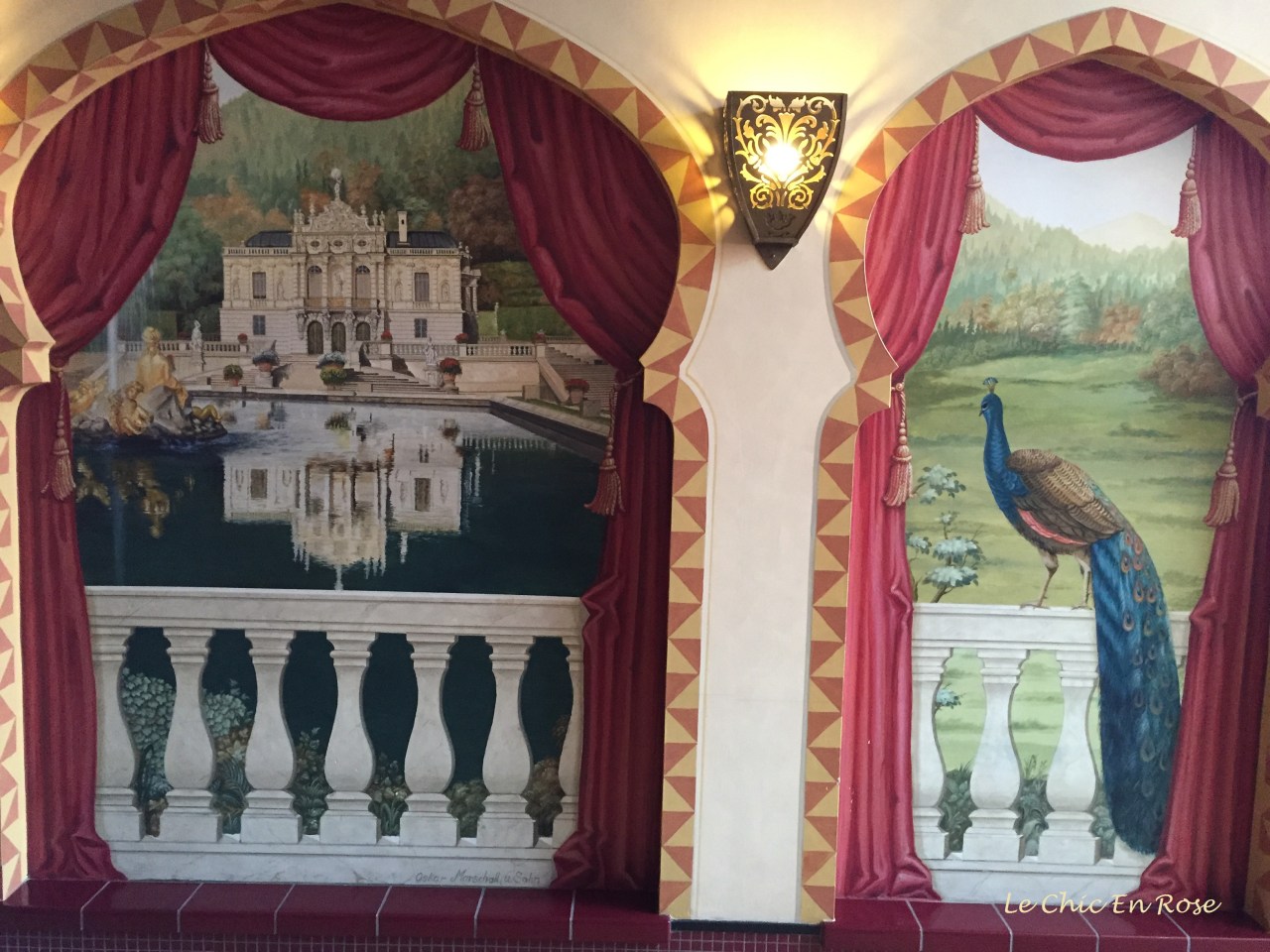
The other advantage we had on the 5th floor was that the hotel’s fitness centre was just along the corridor from our room. We had seen the signs to the “Maurischer Kiosk” and intrigued decided to investigate one day. It is a replica of one that King Ludwig II had installed in the grounds of one of his castles, the Linderhof Palace. He was apparently obsessed by the Orient and had purchased the Moorish Kiosk 9 years after first seeing it at the World Fair in Paris in 1876. Ludwig would dress up in Turkish robes and sit and read on cushions on the floor whilst being waited on by his servants in oriental attire too.

I did brave the steam bath a couple of times and found it very therapeutic for my lingering cough – it certainly opened up the airways! I wasn’t game for the sauna though Monsieur tried it out!

We felt very “at home” at the Platzl. Although they regularly hold business seminars and meetings here, it didn’t feel cold and corporate. On the contrary it had a very relaxed and welcoming vibe. Business people, tourists and families all mingled quite happily at breakfast. At night the lobby was lit up with candles and it made a lovely spot to have a nightcap before bed. Overall the Platzl was an excellent find and we’d be happy to stay here again should we be fortunate enough to return to Munich!


Copyright © 2015 Rosemary Thomas Le Chic En Rose. All rights reserved


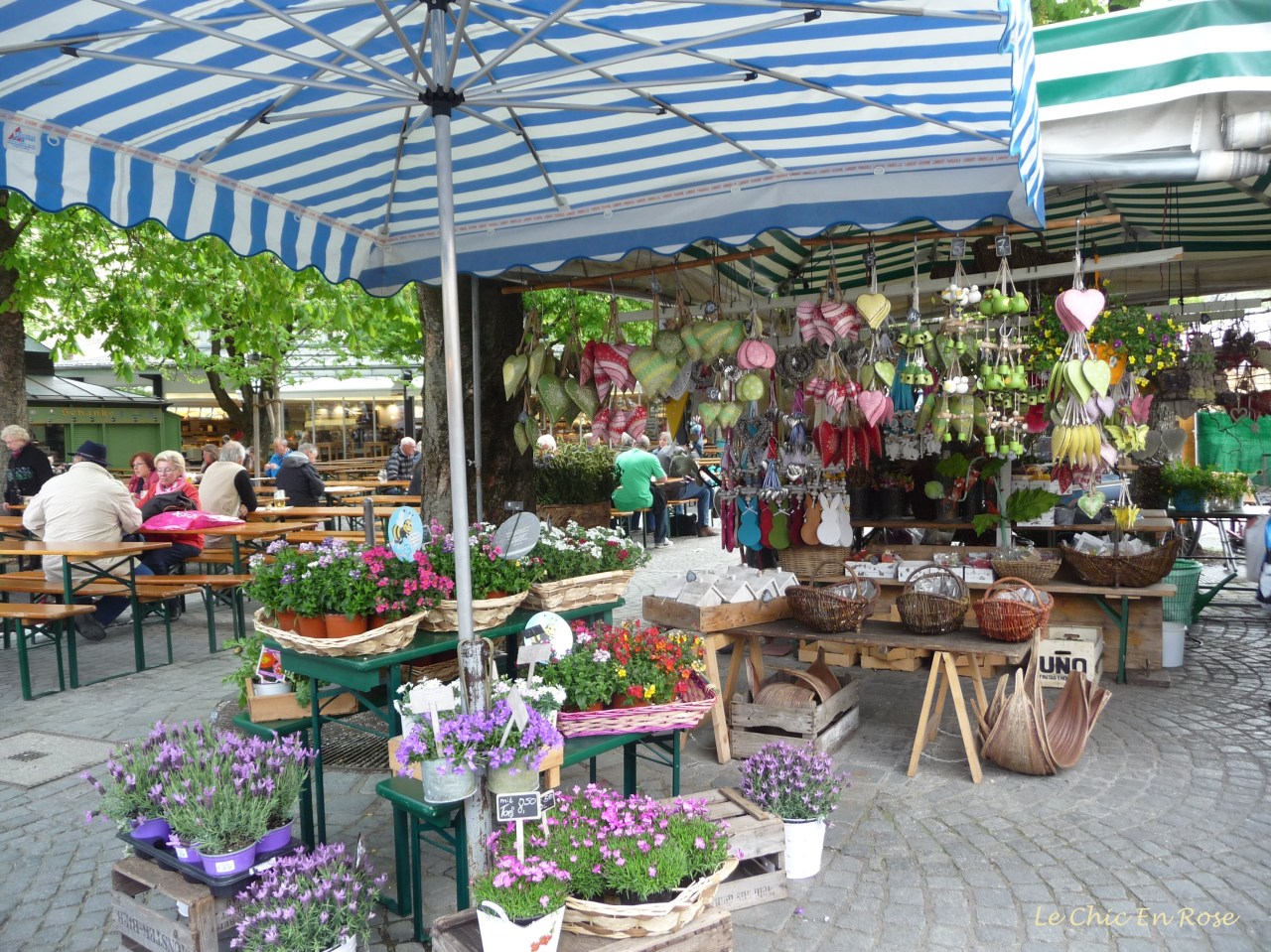
Whenever we’re travelling in Europe we always try and stay in the older parts of a town or city as we love the character and charm of the old streets and buildings. Our Munich hotel, the Platzl (which deserves a post of its own so will tell you more then) is at the end of Sparkassenstrasse, just a couple of minutes walk from the Marienplatz.  Straight down the road from the Platzl, we found ourselves at the entrance to the Viktualienmarkt (victuals market). The colours of the pretty stalls, not to mention the assortment of delicious produce, brightened up a rather dull Munich morning when we went in search of some souvenirs.

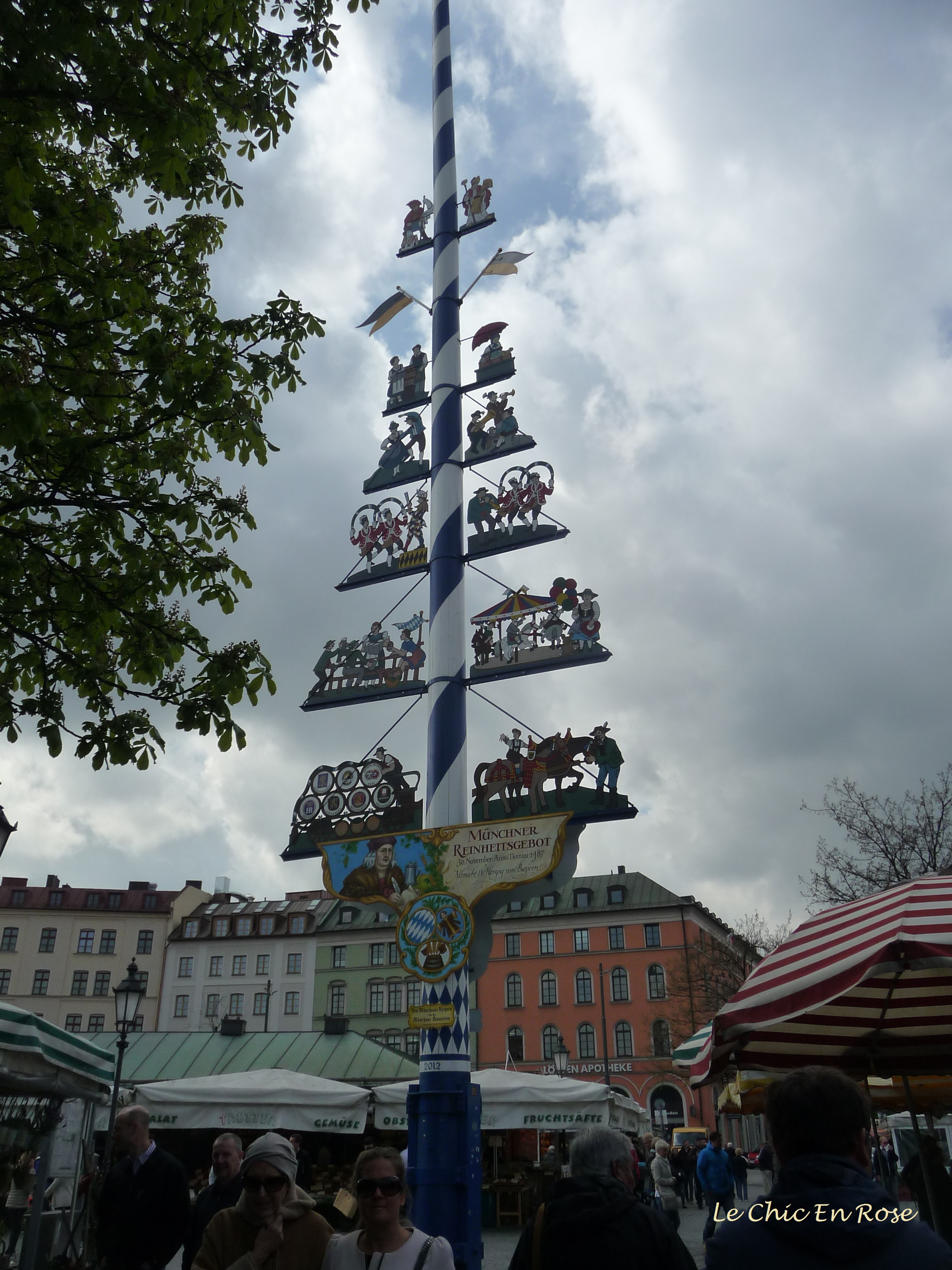
If you’re coming from the direction of the Marienplatz you’ll find the markets behind St Peter’s Church. You can spot it from a distance by following the distinctive maypole in the centre of the market.

Maypole in the centre of the Viktualienmarkt Munich

Maypole in the centre of the Viktualienmarkt Munich

The maypole displays figurettes of the trades and crafts in this part of Bavaria. Originally the Viktualienmarkt, which dates back to the Middle Ages, was held in the nearby Marienplatz (main town square). However by 1807 it had become so big that King Maximilian 1 issued a decree to have it moved a little further south east to its present location (just a stone’s throw from the Marienplatz though). There are now about 140 stalls, which sell the most delicious looking local produce from fruits, vegetables, cold meats to luxurious looking chocolates and all manner of condiments! Fresh flowers, wines, beers and pretty ornaments and decorations – you will find a great array of things here!

Honighaus Viktualienmarkt Munich

Honighaus Viktualienmarkt Munich

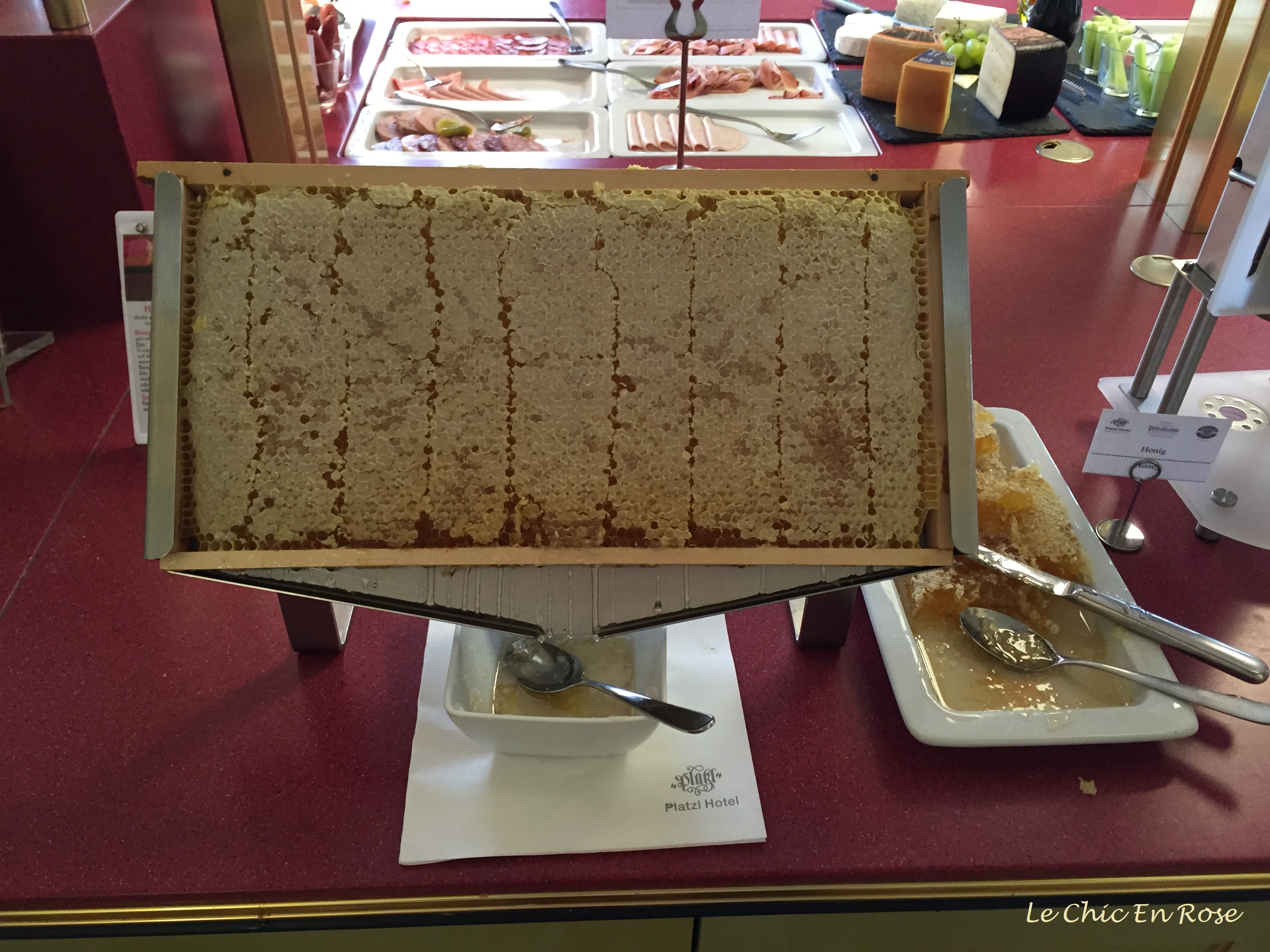
We loved the idea of the Honighaus, even the name sounds delicious, and debated long and hard whether to risk taking some honey back home to Australia with us. However the thought of a mishap with a jar of honey on a long plane trip was too awful to contemplate and we didn’t fancy lengthy explanations to Australian customs officials either, so sadly had to give it a miss. Monsieur Le Chic particularly enjoyed the fresh honey cut from a honeycomb every morning at the Platzl breakfast buffet, which the chef probably got from the market just down the road!

The honeycomb was a daily feature on the breakfast buffet at the Platzl Hotel

The honeycomb was a daily feature on the breakfast buffet at the Platzl Hotel

Fortunately a little further on, we found a lovely stall selling all manner of chocolates, sweets and nougat so made some purchases here! Monsieur Le Chic loved the idea of the beer glasses filled with orange lollies and topped with marshmallows for froth – they did look quite realistic. In the end Monsieur settled on a miniature one to bring home.

If we had been staying in an apartment in central Munich rather than a hotel, we would have bought a lot of our daily produce from the markets. The range and quality looked excellent.

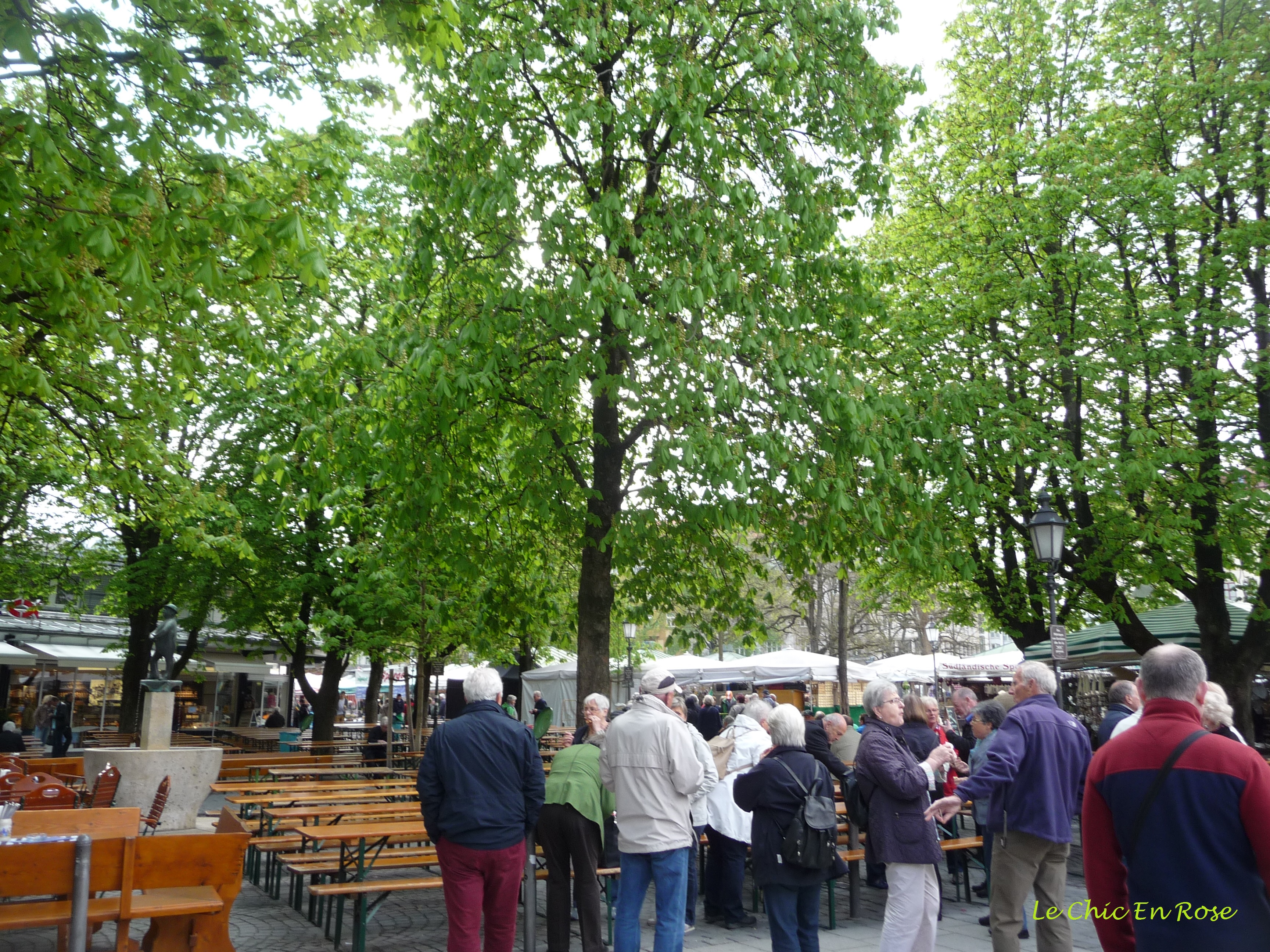
The Viktualienmarkt opens Monday to Fridays from 10 am to 6 pm and on Saturdays from 10 am to 3 pm. It is closed on Sundays. There is also a beer garden set amongst the cobbled stones of the market, which is a popular meeting spot and a good place to sample some of the local Bavarian fayre. The beer garden opens each day, except Sundays, from 9 am to 10 pm. Adjacent are a number of stalls and fast food outlets selling typical Bavarian dishes such as ubiquitous “Wurst” (Sausage) or Schweinebraten (roast pork).

Beer Garden Viktualienmarkt

Beer Garden Viktualienmarkt

We had a wonderful time wandering round the Viktualienmarkt at a leisurely pace and browsing through the various stalls. If you enjoy exploring markets, the Viktualienmarkt is a must do in Munich!


Copyright © 2015 Rosemary Thomas Le Chic En Rose. All rights reserved

Perth, Western Australia

May 18, 2015


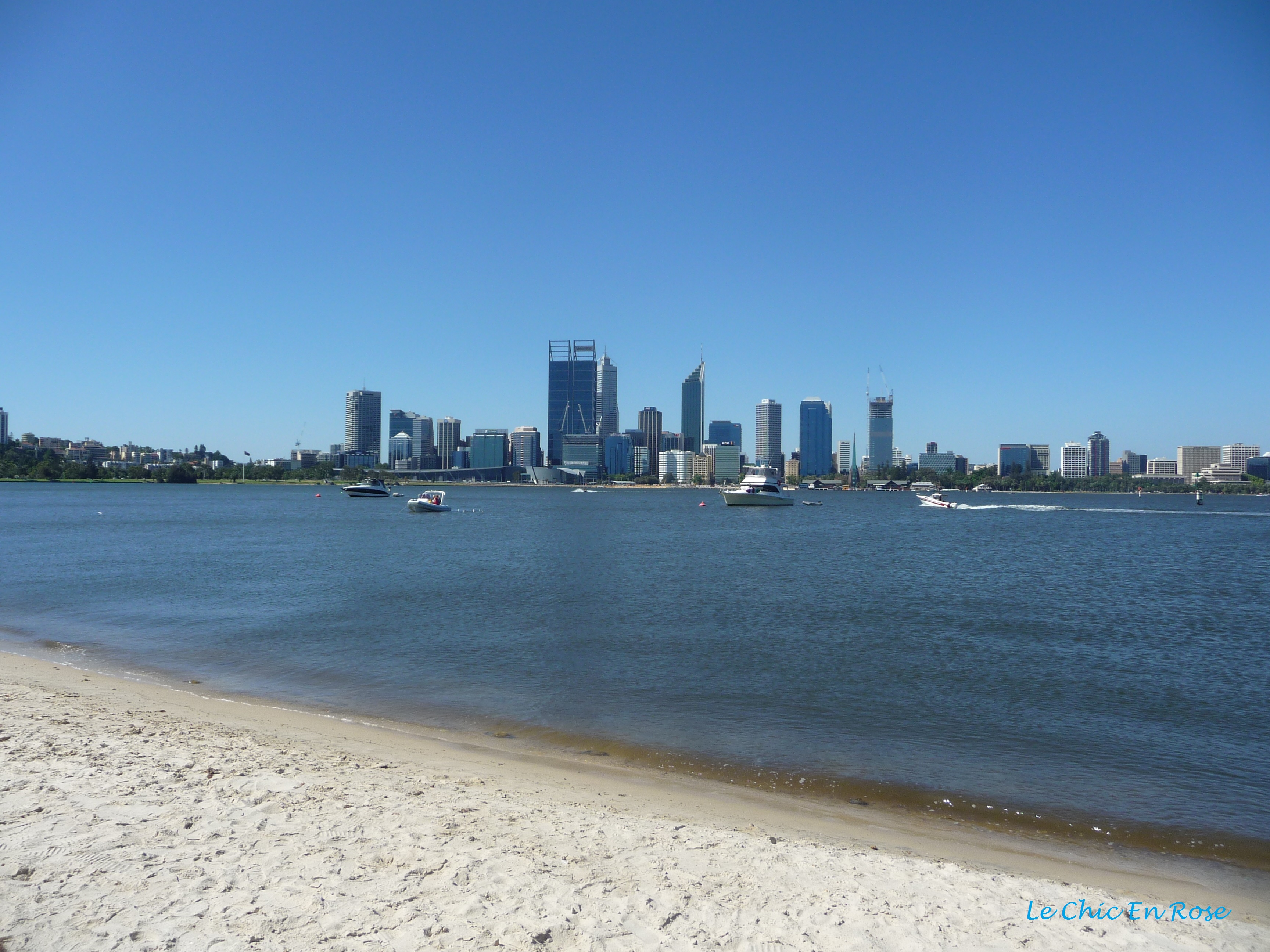
View back towards Perth city centre from the South Perth foreshore. The Swan River is in the foreground.

View back towards Perth city centre from the South Perth foreshore. The Swan River is in the foreground.

Nicole from Mein Leben In Graz (https://meinlebeningraz.wordpress.com) is a student living in Graz, Austria. She has had the great idea of finding out more about her visitors and followers by asking some of them to write guest posts for her “Around The World Page”. She asked me if I’d like to write one about Perth and it has just been published. Here it is – hope you enjoy reading a bit more about my adoptive home city of Perth!

Perth, Western Australia.

rosemaylily2014's avatarMein Leben in Graz

Hello everyone, my name is Rosemary and I blog about my travel experiences as “Le Chic En Rose”. I originally come from Yorkshire in the north of England but moved to Perth, Western Australia with my husband and small daughter nearly 25 years ago! We’ve actually lived in Perth twice as after 4 years we moved across Australia to Melbourne where we spent the next 7 years. However we moved back to Perth again in 2001 and have called Perth home ever since. We have 2 adult daughters (1 living in London, the other here in Perth) and 2 granddaughters. Today I’d like to tell you a bit about our adopted Perth home and give you some insights into life here.

View original post 1,116 more words

It was a lovely spring day in Munich, but alas stricken with the flu we didn’t have much energy for exploring. Luckily for us we were staying in central Munich only about 10 minutes or so (at ambling pace!) from the famous Englischer Garten. We decided a couple of hours sitting in the sun would do us good so set off to discover more.

Our walk took us north of the Marienplatz and we skirted round the imperial “Residenz” of the Wittelsbach dynasty (of which more to come in later posts), past the Hofgarten (garden of the imperial palace) and into the southern part of the Englischer Garten.

You could be forgiven for thinking you were in the middle of the countryside rather than a large city. Between the Hofgarten and the start of the Englischer Garten we found yet another area of parkland, this time the Finanzgarten.


I’m not sure of the exact translation of the German on the sign, but clearly green recreational space is a priority for the Bavarians and Munich is no exception. Elector Carl Theodor ordered the construction of a new park near the Hofgarten back in 1789. The work was completed and the gardens opened to the public in 1792. Not surprisingly it has been a hugely popular recreational facility for the citizens of Munich ever since!

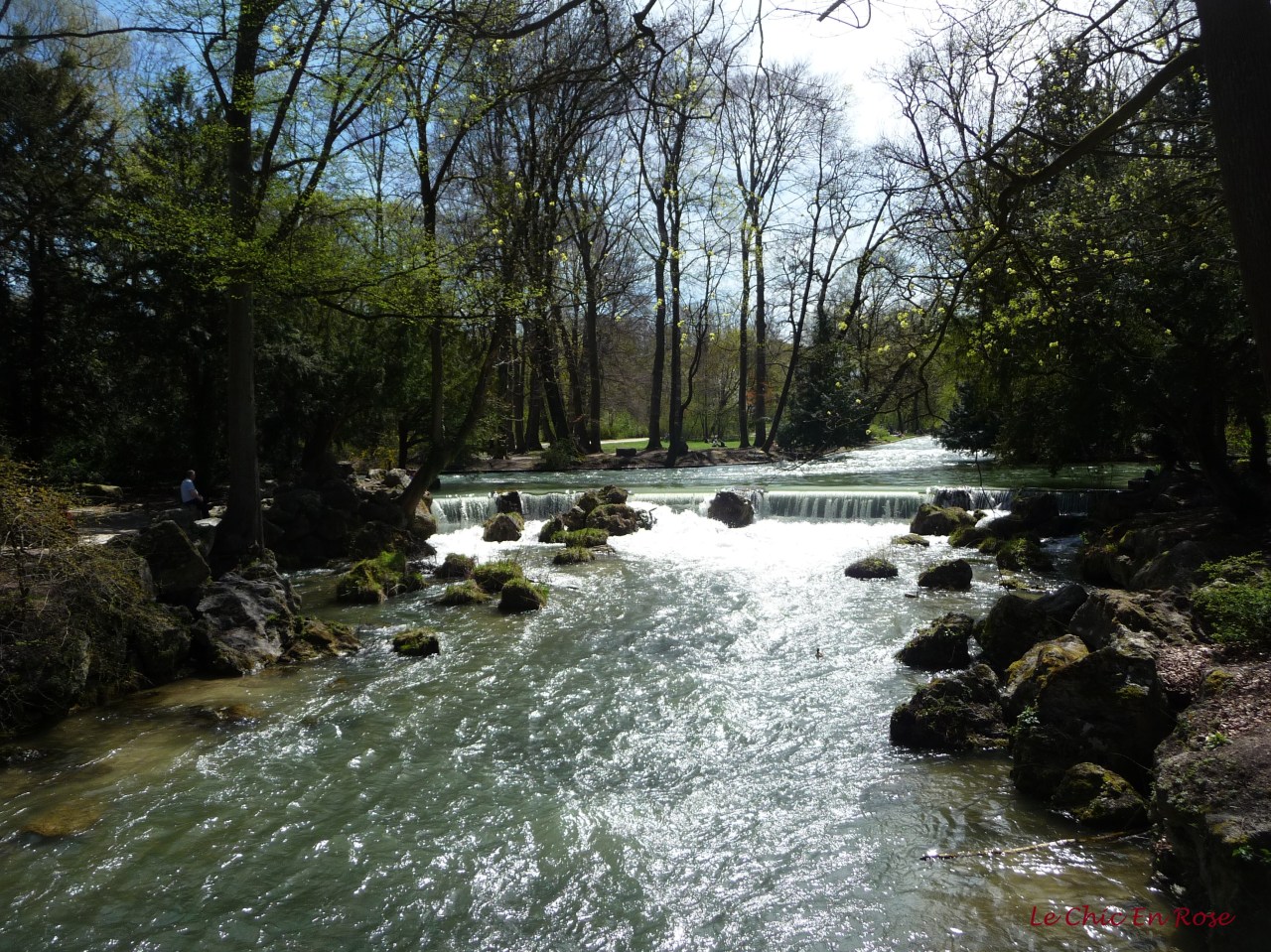
The Englischer Garten is divided into a southern part (2 kms long) and a northern part (3 kms long) separated by a busy road. The gardens are set alongside the River Isar, which meanders its way through the park.


There are endless pathways so it’s an ideal place for walking, jogging or cycling. It’s also a very popular spot for sunbathing (not always with clothes on – you have been warned!). We still thought it was on the chilly side though, lovely out in the full sun but there was still a crisp April wind.


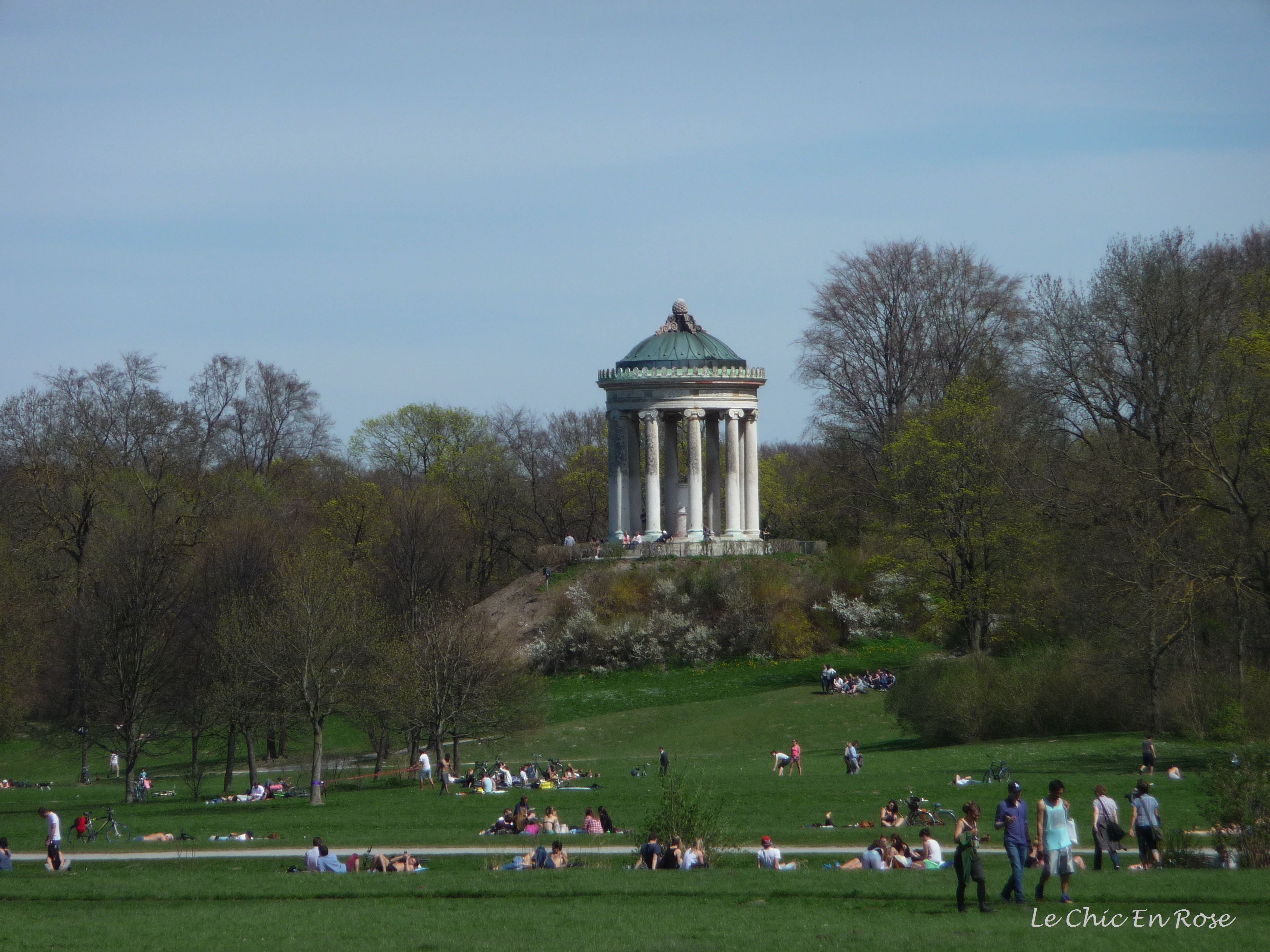
Monopteros, a small Greek style temple is a feature of the Englischer Garten

Monopteros, a small Greek style temple is a feature of the Englischer Garten


The park is home to several restaurants and kiosks plus a couple of beer gardens. The larger of the 2 beer gardens, is situated next to the Chiniescher Turm (Chinese Tower). It  is the second largest in Munich and you can find out further details here. If you want to eat at the restaurant, bookings are a good idea and if you can negotiate the online booking form in German follow the link here. Had we been feeling more ourselves we would have definitely visited the beer garden and restaurant, but we opted instead to buy gelati from a mobile stall and settled down to enjoy the delicious flavours (very soothing for sore throats too!) overlooking the river.


Gelati stall in the Englischer Garten Munich

Gelati stall in the Englischer Garten Munich


Our vantage point was actually overlooking a man-made off shoot of the Isar, the Eisbach, which has become a very popular spot with surfers (a surfing wave has been created there). There were warning signs about the dangers of swimming and engaging in water sports but no one seemed to take any notice so we were not quite sure whether it was legal or not. However I suspect that as long as you’re an experienced surfer it is ok!  There is even an annual river surfing competition on the Eisbach river wave. We had fun watching the surfing enthusiasts trying to balance on the waves and the swimmers whizzing past us down the river!


Our little stroll has covered only a fraction of this magnificent park! If you ever find yourself yourself in Munich, I’d highly recommend spending a few hours or even a brief sojourn in the beautiful Englischer Garten. It’s a lovely spot in which to relax and recharge your batteries, a wonderful facility for Munich residents and visitors alike. Tschuss till next time!

For more wonderful walks around the world head over to Restless Jo’s Monday Walk!

Copyright © 2015 Rosemary Thomas Le Chic En Rose. All rights reserved
As I mentioned in last week’s post about having the flu in Munich, we only went to Starnberger See on the off chance, mainly because we were feeling too ill to go round museums or visit castles and other tourist attractions!

The small town of Starnberg is situated at the northern end of the lake and is only about 30 kms south west of Munich. We caught the S6 S Bahn line from the city centre and a pleasant half an hour or so’s ride later we alighted at Starnberg station very conveniently situated adjacent to the lake. Just make sure you have a valid ticket (Fahrkarte) for the correct zone. The inner city zone runs out at Planegg and we had to get off here to buy an extra ticket to take us to Starnberg (fortunately we did this voluntarily not after being asked to by Deutsche Bahn staff and yes they do regularly patrol the S bahn for fare dodgers!).

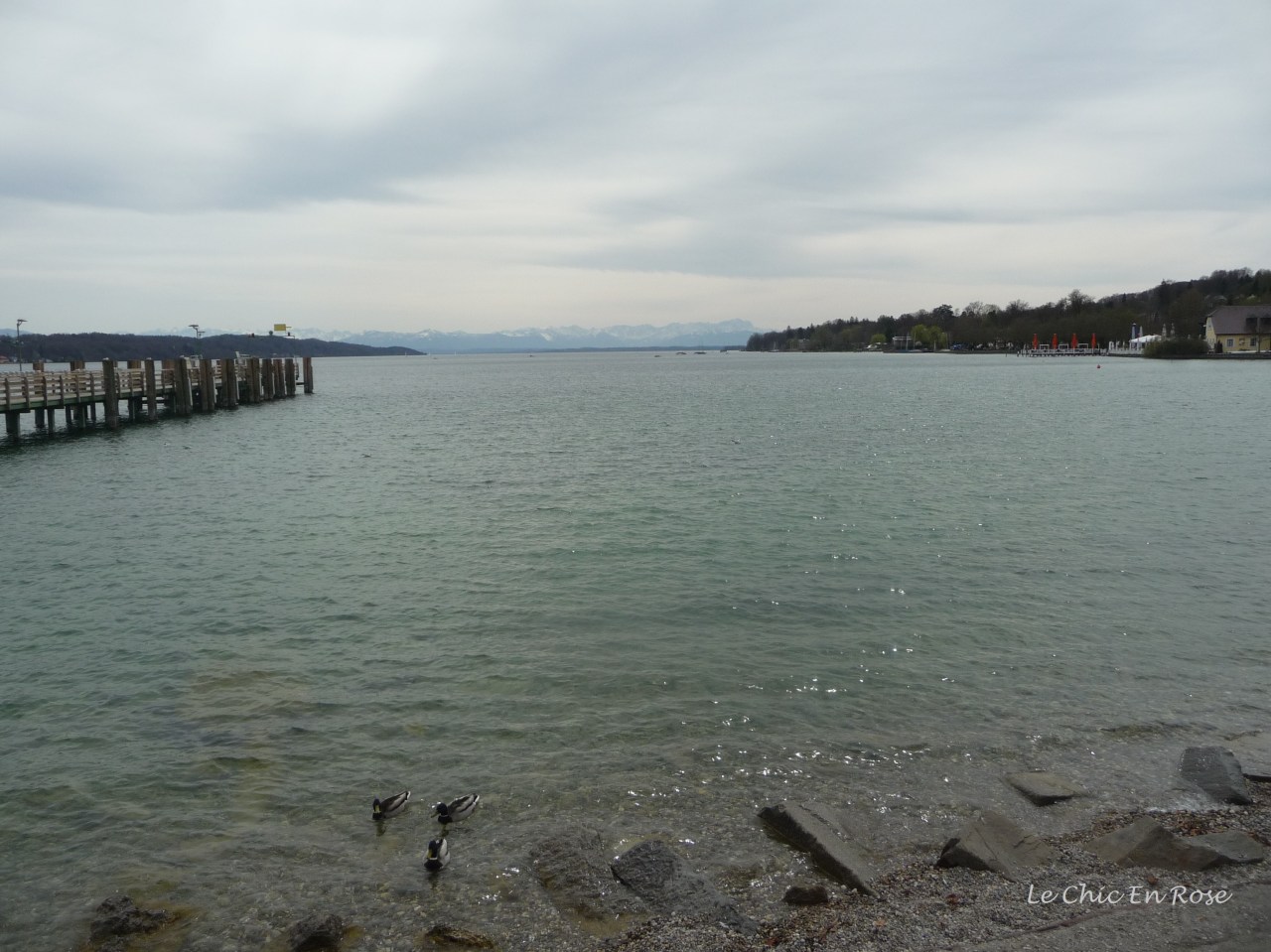
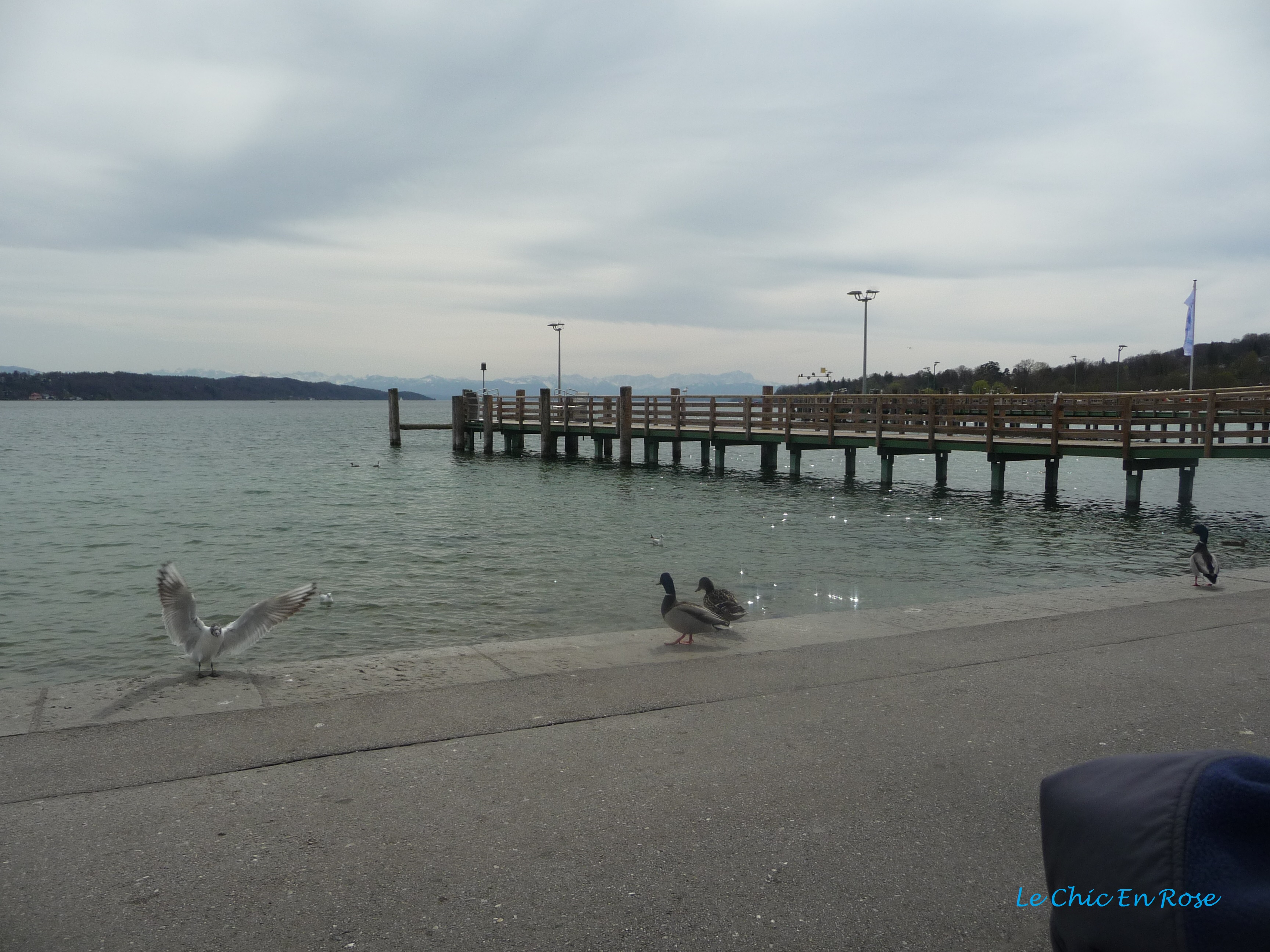
We could see why Eyewitness Travel, Top Ten Munich, recommends Starnberger See as a popular day trip escape from the city. We had a lazy lunch by the lake looking out to views of the Alps in the distance and being serenaded by the local bird life who no doubt were hoping for some scraps from the table!


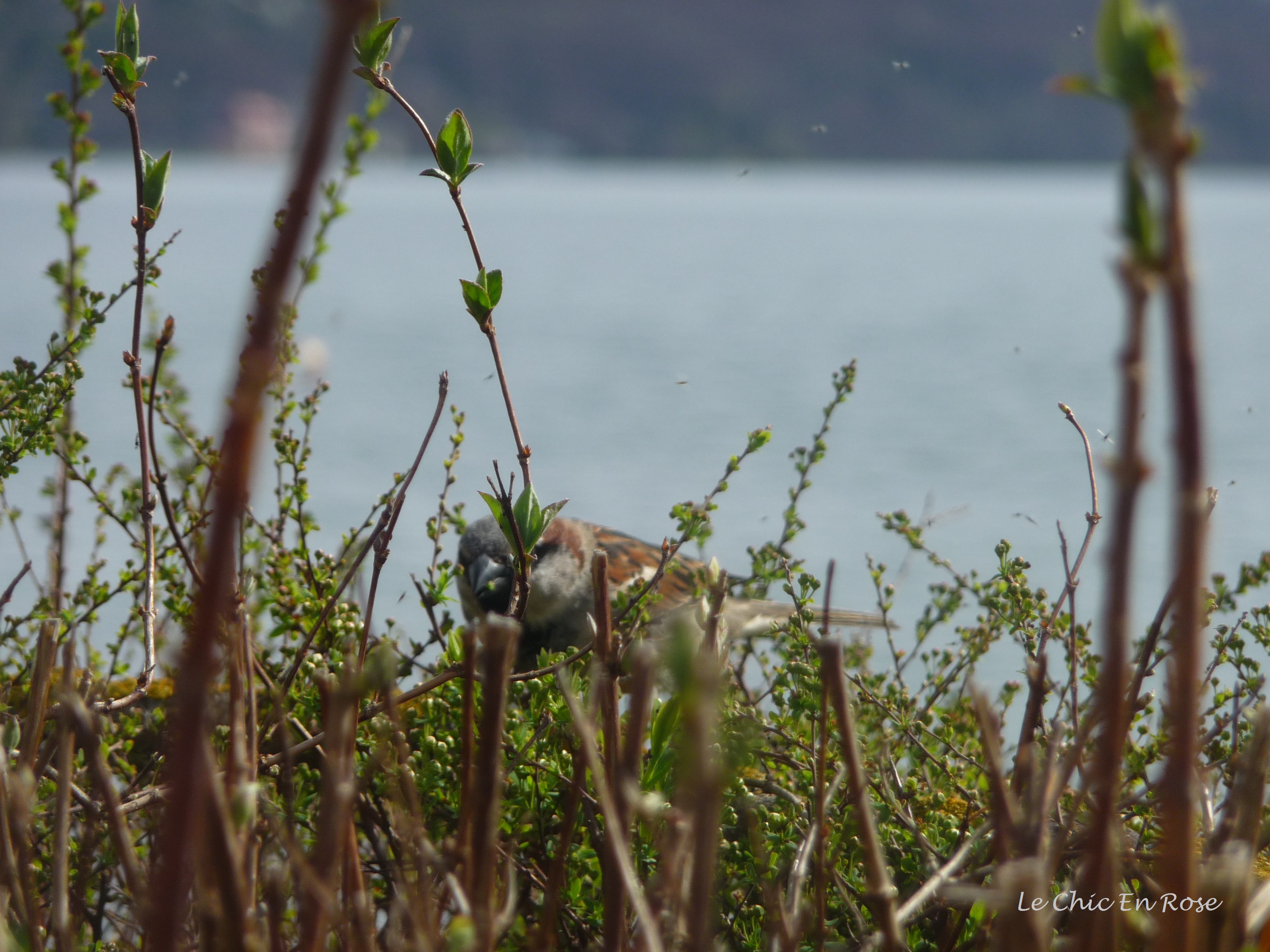
The little birds were hovering hoping for food

The little birds were hovering hoping for food


I am sure it would be busier in the main summer season but it had a peaceful and chilled out vibe on the day we were there in April.


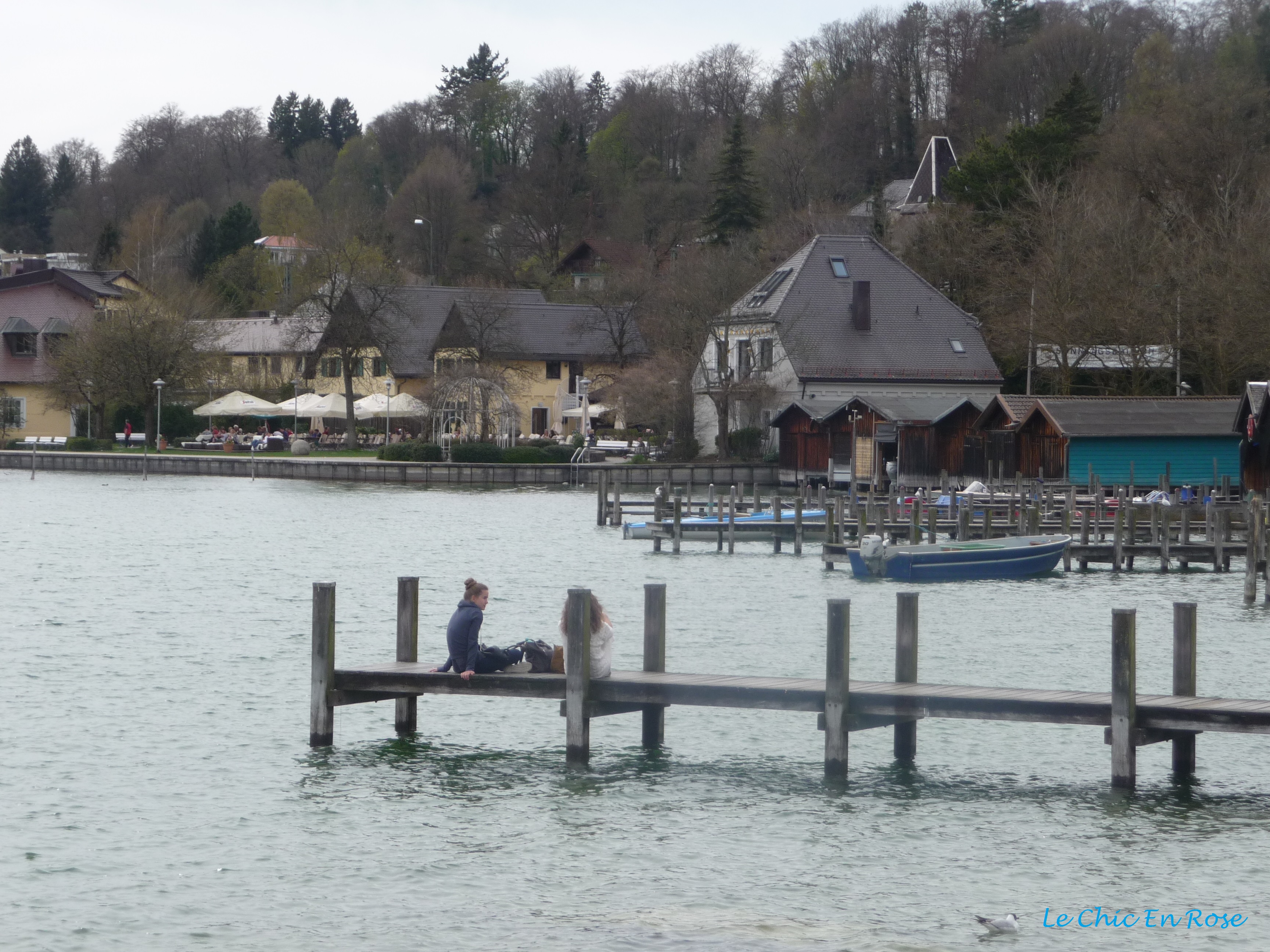
Cafes, restaurants and beer gardens are dotted around the lake. There are also plenty of boat moorings, which make excellent spots to laze and watch the world go by.


Cafes and jetties

Cafes and jetties


Not surprisingly boat trips are a popular way to get around the lake – these only operate between April and October however. Full details of the pleasure boat schedule on Starnberger See and other Bavarian lakes can be found here. Apart from just enjoying the fresh air and views, the boats can ferry you round the lake stopping off at various places of historical interest, including some castles. The local nobility built many fine summer residences in the area in days gone by. The Empress Elisabeth (Sisi) of Austria, who was a Bavarian princess before her marriage, spent her summers at Possenhofen just a bit further along the lake from Starnberg. You can also go by S Bahn to the end of the line at Tutzing where there is another castle (Schloss) and fine views of the Alps. The stations at Possenhofen and Tutzing, however, are situated a bit further inland – not too far though! Whilst normally we would have been happy to walk down to the lake, we were feeling a little fragile in our flu-ridden state so gave them a miss. In case you ever visit the region, however, here is a map of Tutzing I picked up at the station!


Map Of Tutzing

Map Of Tutzing


One special place of historical interest that we will also have to wait to visit another time, is a memorial at Berg, a little town on the opposite side of the lake from Starnberg. Here on 13th June 1886, Ludwig II of Bavaria went off on an evening walk with his personal physician, Dr von Gudden. Ludwig had been deposed as king the day before on the grounds of unfitness to rule and banished to Berg Castle under the care of von Gudden who was a noted pyschiatrist (and the man who had labelled Ludwig mentally ill). Later that night both men found were found drowned in the lake. Many conspiracy theories abound – murder, assassination, murder/suicide but the mystery has never been solved. The spot where the men were found is now marked by a commemorative cross in the water – a poignant tribute for the man who has become known as the “fairytale king” for his legacy of romantic and spectacular castles (more to come in future posts about the castles!).

Walking, swimming, water sports, boating or just enjoying a lingering lunch – these are just some of the many reasons to take a trip out to the peaceful and idyllic Starnberger See. Join me for more explorations of Munich and its surrounds next week. Tschuss until then!


Lakeside - Starnberger See

Lakeside – Starnberger See

Copyright © 2015 Rosemary Thomas Le Chic En Rose. All rights reserved
Unfortunately Monsieur Le Chic and I went down with a nasty bout of “Die Grippe”, (the flu), on our travels. Monsieur was probably at his worst in London, whilst I “fell over” so to speak when we arrived in Munich. We had very much been looking forward to our 9 day sojourn in Munich and Bavaria and a high fever, chills, cough and general malaise were definitely not part of the plan.

Germany, however, has wonderful “Apothekes” or pharmacies, which sell all manner of medications, tinctures and potions and we found the “apothecaries” a useful source of help and advice. Many of their products contained natural rather than chemical ingredients and we found they helped to pick us up relatively quickly. We made several trips to the local Apotheke as we seemed to develop a symptom of the day! Every time we left with a new product that seemed to work effectively. Most of the pharmacists spoke good English but Monsieur Le Chic did encounter one who spoke to him in fluent Russian for some unaccountable reason and spoke little English. Just in case, here is a list of useful words and phrases you may need if you happen to get the flu whilst travelling in Germany:


Die Grippe                                                   Influenza/the flu

Ich habe Halsschmerzen                             I have a sore throat

Ich habe ein Fieber                                      I have a fever

Ich habe Husten                                           I have a cough

Ich habe Kopfschmerzen                              I have a headache

Ich habe Schnupfen                                      I have a runny/stuffed nose (ie the sniffles)

Ich habe eine Erkaeltung                               I have a cold

Mir ist schlecht                                                I feel dreadful


Apothekes all have a distinctive sign with a red capital “A” on them and also a logo with a set of old fashioned measuring scales (no doubt to weigh and measure all the ingredients for their potions).

Additional measures we chose, were to spend as much time out in the spring sunshine that we could! Since we didn’t feel like walking around too much, on our second day in Munich we took a train ride out to the pretty Starnberger See, found a cafe by the lake and self medicated with hot soup, tea and large ice creams!


I’ll tell you more about the pretty Starnberger See next week. Bis dann!


Copyright © 2015 Rosemary Thomas Le Chic En Rose. All rights reserved