Following on from our tour of Neuschwanstein, we decided to take the alpine trail up from the castle to the little bridge that spans the Pollat Gorge, the Marienbruecke. The famous views of Neuschwanstein, seen in many calendars and travel guides, are taken from this iconic bridge. It’s about a 10 minute stroll up from the castle to reach the pretty lookout spot. Despite the fairly steep incline, the beautiful scenery and the crisp mountain air makes for a lovely walk.
Walking trail leading from Neuschwanstein up to the Marienbruecke
View from the trail
Looking back down to Hohenschwangau
Mlle and Le Chic En Rose en route to the Marienbruecke
We were somewhat taken aback when we found the little bridge – it was certainly rather smaller and more rickety looking than I’d anticipated! Furthermore it was teeming with tourists. Monsieur Le Chic took one look at the rather flimsy looking wooden structure (albeit with metal supports and railings) and flatly refused to set foot on it.
Marienbruecke over the Pollat Gorge
History of the Marienbruecke on the information plaque
Swaying in the wind and possibly under the weight of all the tourists too, the quaint Marienbruecke did look a tad unsafe. However I’d come a long way to see the view and really wanted some photos from the bridge, so Mlle and I, having waited for a temporary lull in visitors, gingerly set foot on the wooden boards. It did feel a bit wobbly and we tried not to look down at the deep Pollat Gorge below but we were rewarded with some amazing views. Suffice to say I took a lot of shots!
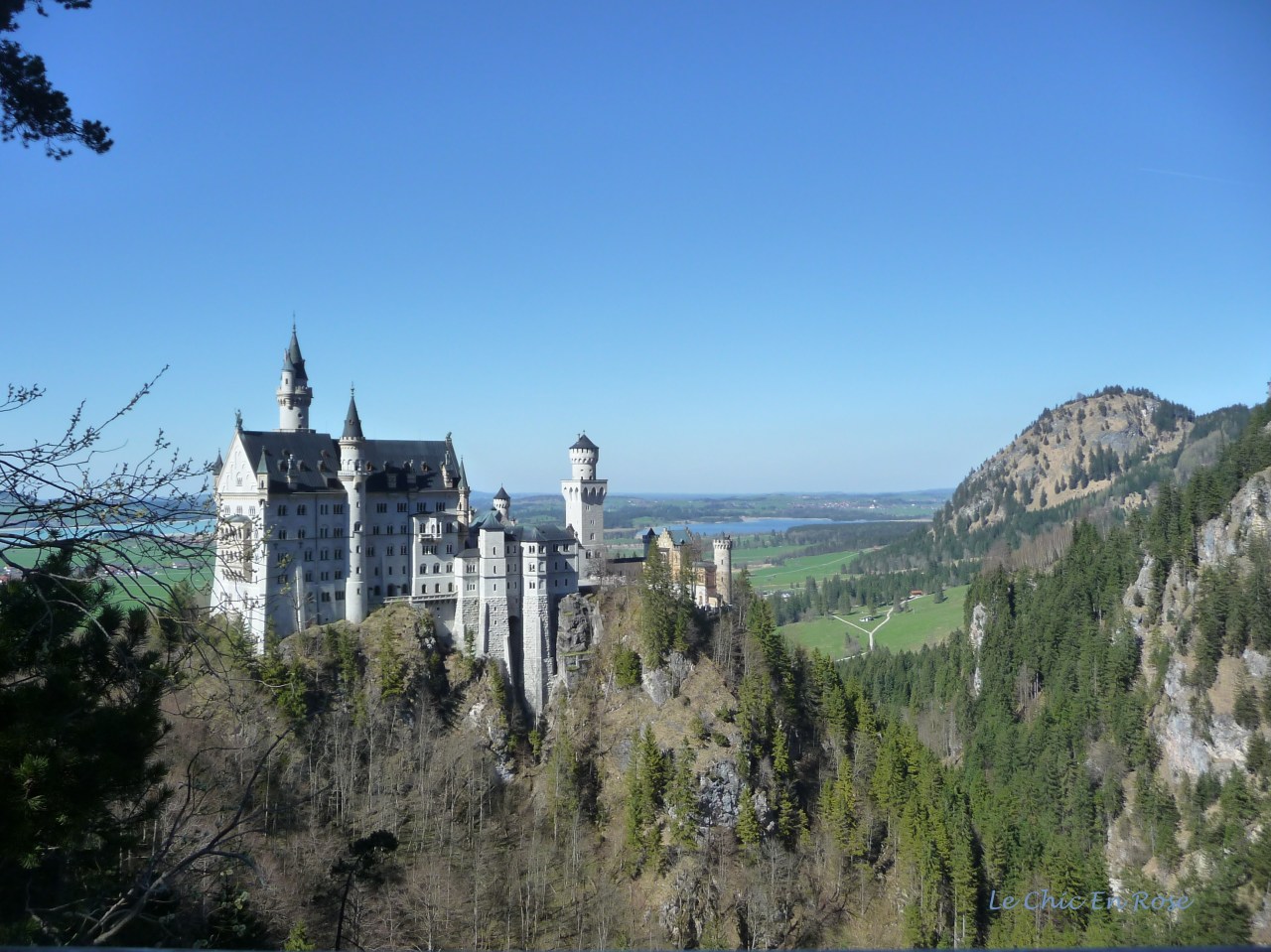
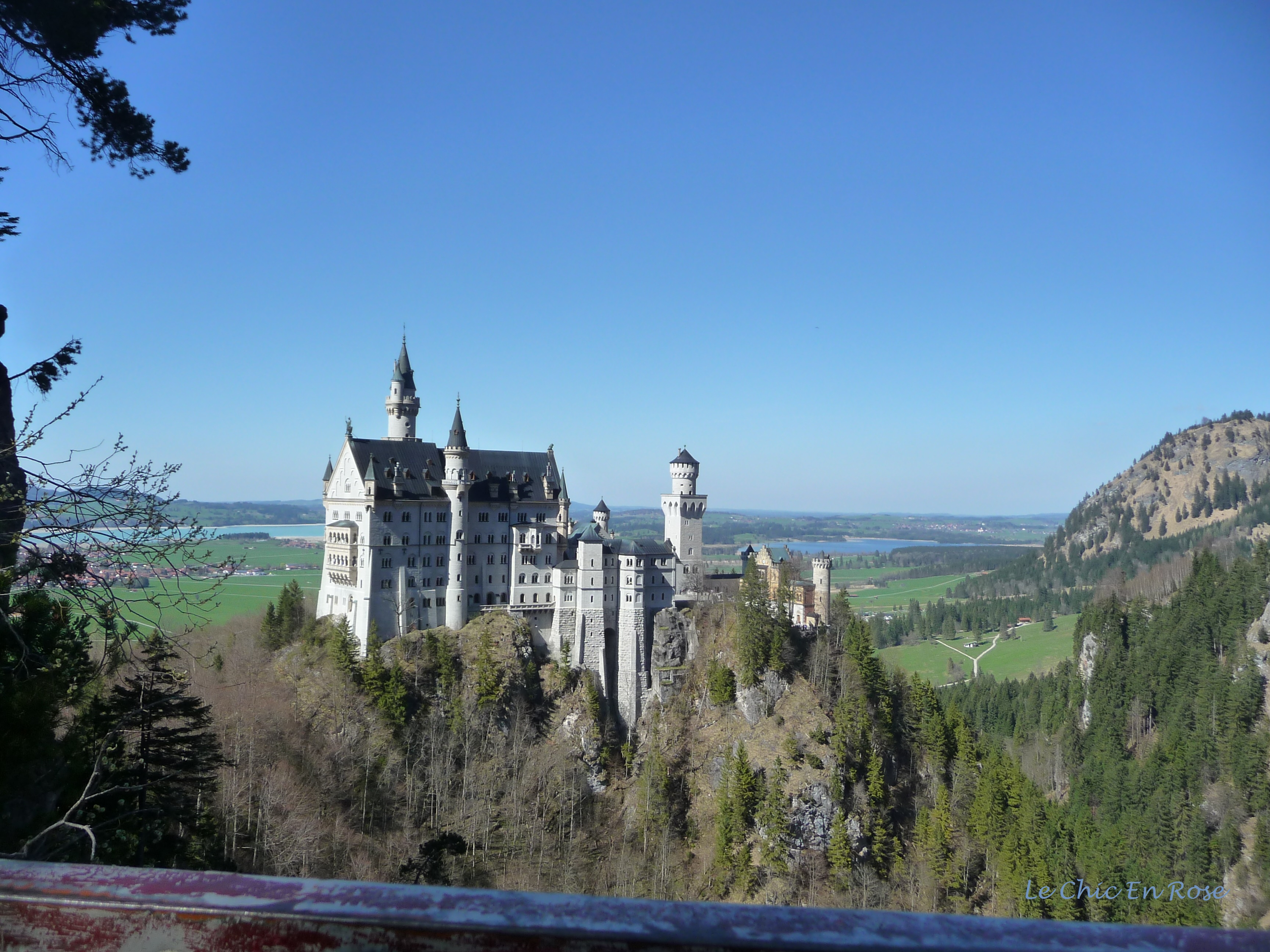
Neuschwanstein taken from the Marienbruecke
Mlle on the Marienbruecke
View down the Pollat Gorge from the Marienbruecke
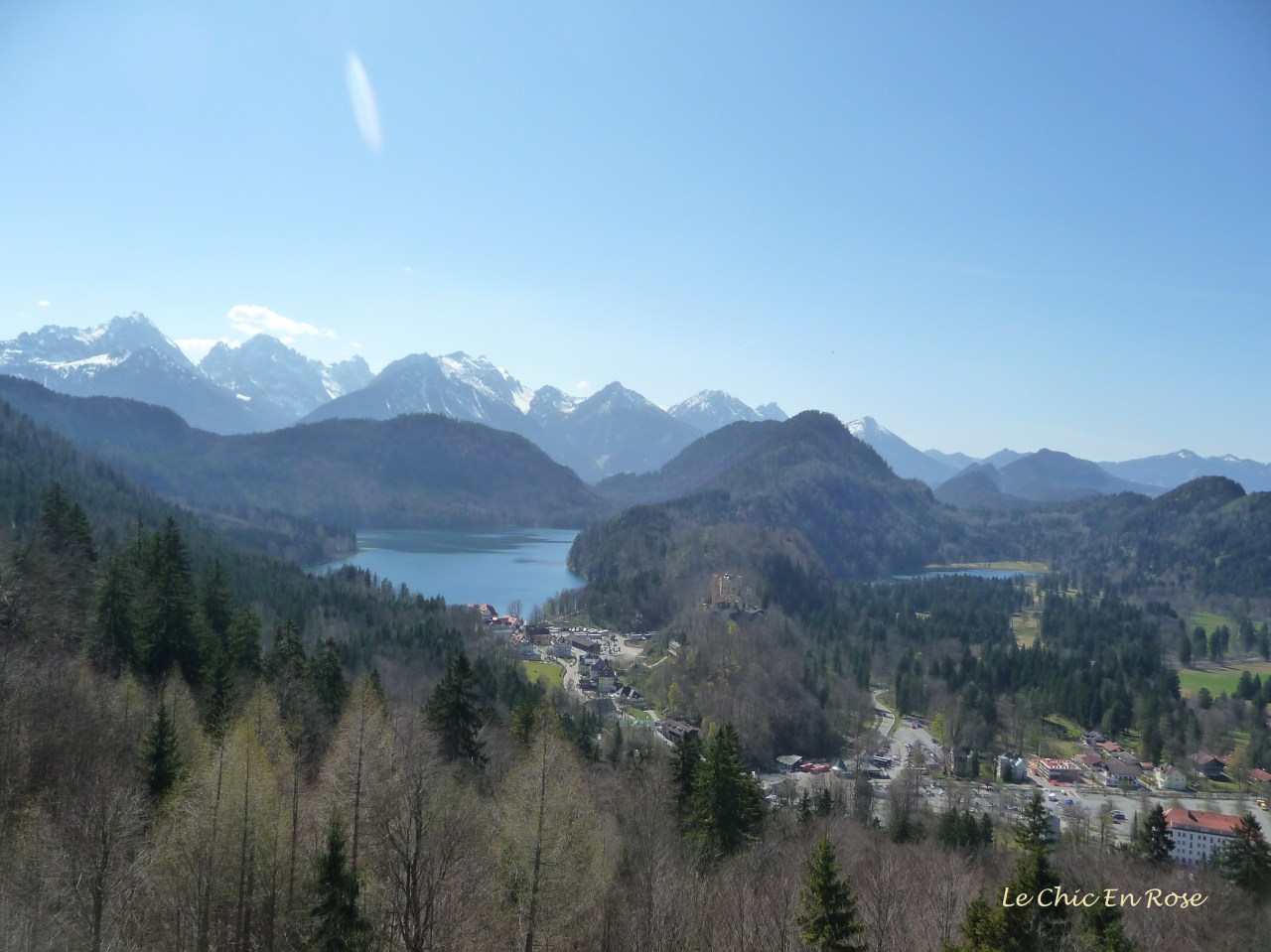
View from the other side of the Marienbruecke looking towards the Alps
Gnarled tree roots near the Marienbruecke
Neuschwanstein appearing from amongst the trees on the return journey
Neuschwanstein turret taken from the path up to the Marienbruecke
Zoom shot of Neuschwanstein from the Marienbruecke
Now there is a postscript to our visit. When I was researching my Neuschwanstein articles, I came across a message on the Neuschwanstein visitors’ information page, which gave details of renovation work being carried out on the Marienbruecke. Work was expected to finish mid November 2015 so I assumed it was routine maintanence work done in low season. However the updated message says that because of major renovation works the bridge is now not expected to reopen until the end of May 2016. In addition the hiking trail through the Pollat Gorge is closed until further notice owing to a rockfall! Monsieur Le Chic may have had a point after all! Fortunately the route up to Neuschwanstein and tours of the castle are not affected. Further information can be obtained from the Neuschwanstein web page here. I also found a good article on the Deutsche Welle website about the bridge repairs (see here), which amongst other things says that once the bridge is reopened the number of people allowed on the bridge at any one time will be restricted!
Hopefully work will finish as anticipated towards the end of spring 2016 and visitors will once again be able to enjoy the breathtaking views from the Marienbruecke, over the Pollat Gorge and beyond!
View of Neuschwanstein taken from the Marienbruecke
I’ve written about our day trip to Neuschwanstein previously in my “Holiday Postcards” series and as part of a guest article “Snapshots From Munich” for Ting from My Travel Monkey. However I thought it would be useful for anyone planning a trip there to give a bit more detail about the actual castle tour.
Firstly, if we went again we’d probably stay a couple of nights in the nearby town of Fuessen (see here for my previous article). There are a number of attractions in the Hohenschwangau area (the village nearest to Neuschwanstein), which include another impressive castle, Hohenschwangau and the Museum of the Bavarian Kings. On a day trip from Munich we simply couldn’t visit them all so made the decision to focus on the most famous castle of them all, Neuschwanstein. However, rest assured, if you are in Munich and want to do a day trip independently of a travel company it is perfectly possible.
The train journey from Munich to Fuessen will take about 2 hours and then you catch a bus (we caught the number 78) adjacent to the station platforms. The bus takes you on the 10 to 15 minute journey to Hohenschwangau, which is the hub of operations for castle tours. Book in advance for the tour if you can! We joined a lengthy queue at the ticket office and although the whole operation was conducted with military precision, we did have a considerable wait to buy tickets. You can only tour round the castles (this applies for Hohenschwangau as well as Neuschwanstein) at an allotted time. You buy a ticket for a particular tour (we did the Neuschwanstein one in English) and then you have to make sure you get to the castle door from where the tour departs right on time or you’ll miss your slot and have to buy another ticket! However you can pre purchase tickets online or at the Hohenschwangau ticket office from 2 days before your desired visit – see here for further details. If you need to, you can cancel or change your booked time up to 2 hours before your scheduled departure time. Hohenschwangau is a pretty little place but it does get very busy and was still crowded when we visited in April although it wasn’t the height of the tourist season. You do need to be prepared for your visit and allow plenty of time – casually fronting up late in the day will probably lead to a futile visit and disappointment!
Neuschwanstein Castle viewed from the village of Hohenschwangau in the valley
Hohenschwangau Castle – a summer residence of the Bavarian kings in the Alps
Main street of Hohenschwangau
Beer garden and cafe in Hohenschwangau
The next little conundrum is how to get up to Neuschwanstein, which sits perched on a precipitous rock high above Hohenschwangau village. You can walk up the little winding road, which will take you about 30 to 40 minutes depending on your pace but be warned it is very steep and obviously would not be very appealing in inclement weather. I would think you’d need good quality snow boots in the winter months too! Normally there is a shuttle bus, which leaves from the main street near the ticket centre but the road up to the castle was being repaired when we visited and was unable to withstand the weight of a bus. Therefore bus services had been suspended for the time being (though reinstated since our visit). Which left a 3rd option – horse-drawn carriage. Beautiful Bavarian farm horses shuttle tourists to and from the top – it costs 6 Euro per person and you pay the drivers direct. Monsieur Le Chic and I were still feeling the effects of a nasty flu bug and decided this would be our best option though you do have to allow enough time – it probably took us 45 minutes or so before we reached the front of the queue. It was a lovely meandering pace to the top of the road with the soothing sounds of the horses clip clopping along. We were dropped off at the bottom of the path leading up to the castle and another few minutes walk took us up to the gates of Neuschwanstein.
Horse and carriage embarkation point outside cafe in Hohenschwangau Village
Road on the left leads up to Neuschwanstein
Horse-drawn carriage plying the route to the castle
Signs along the way
The beautiful horses who kindly pulled our carriage up to the top at Neuschwanstein from Hohenschwangau
Once at the top you’re free to wander round the grounds and castle concourse at will and marvel at the breathtaking views back down the valley and across the Pollat Gorge. Just make sure you arrive at the entry point for the conducted tours in plenty of time. It is very much like a production line and tours start punctually at the designated time. You are chaperoned by a guide throughout the tour, which takes about 35 minutes and alas taking photos is strictly forbidden. I know some people probably felt it went a bit too quickly and it would have been nice to linger in some of the rooms though the decor with its grandiose murals and paintings was definitely not to my taste! However it was an amazing experience to be in a place I’d heard so much about and to get a glimpse into the romantic and fanciful mind of Ludwig II, the castle’s creator. His obsession with all things “Wagnerian” has to be seen to be believed – the grandiosity is incredible! We passed through the Throne Room, Ludwig’s Personal Suite, the Singers Hall and the rather curious Grotto before winding the tour up. From this point you are free to wander around the remaining rooms including the kitchens and balconies with stunning vistas, at your leisure. One interesting point we discovered was that Ludwig in fact paid for the massive works at the castle out of his own funds and extensive personal borrowing rather than using public funds, which was traditionally believed (and used to discredit him).
View back to Fuessen from Neuschwanstein
Monsieur Le Chic at Neuschwanstein
Mlle and Le Chic En Rose on the look out area over the Pollat Gorge with Neuschwanstein in the background
Neuschwanstein Castle gates
Monsieur Le Chic and Mlle waiting in the concourse area – the tour starts from the entrance at the bottom of the stairs
Parapets and arches Neuschwanstein
Neuschwanstein exterior
More views of the castle’s exterior
Looking up to the castle
We were blessed with a gorgeous spring day, which gave us a wonderful opportunity to admire the spectacular setting of Neuschwanstein in the Bavarian Alps and the jaw dropping views. Some of these photos were taken from the Neuschwanstein balconies and some in the grounds and environs. You don’t have to take a tour to admire the scenery but I think if you’ve gone all that way it would be a pity to miss out on seeing the castle’s interior and the over the top homage to Wagner of its creator!
The beautiful Neuschwanstein Castle in the Bavarian Alps
View back to Fuessen
Mlle and Le Chic En Rose on the balcony at Neuschwanstein
Grounds at Neuschwanstein
View from the Neuschwanstein balcony here looking down on the Hohenschwangau Village and Castle
Overall Neuschwanstein makes for a wonderful day out and a place to be enjoyed by young and old!
If you buy a calendar of Perth there is a good chance that the cover photo will be a wonderful view of the city overlooking the Swan River and the CBD. These photos are usually taken from the Mount Eliza lookout in Kings Park. Perched on top of the hill, the 400 hectare park affords a superb vantage point for miles around over the Swan and Canning Rivers and right across to the Darling Hills in the east.
View of the River Swan and The Narrows Bridge from Kings Park
Needless to say we don’t go there as often as we’d like but recent overseas visitors gave us an excuse to take a wander round there last week. We were as impressed as ever by the superb array of flowers and plants on display in the Western Australian Botanic Garden, which forms a large part of the parkland and the beautiful walking trails there. Since time has again got away from me this week (partly due to a nasty flu bug doing the rounds) I thought sharing some photos of our lovely walk was in order.
Information boards give you details about the park
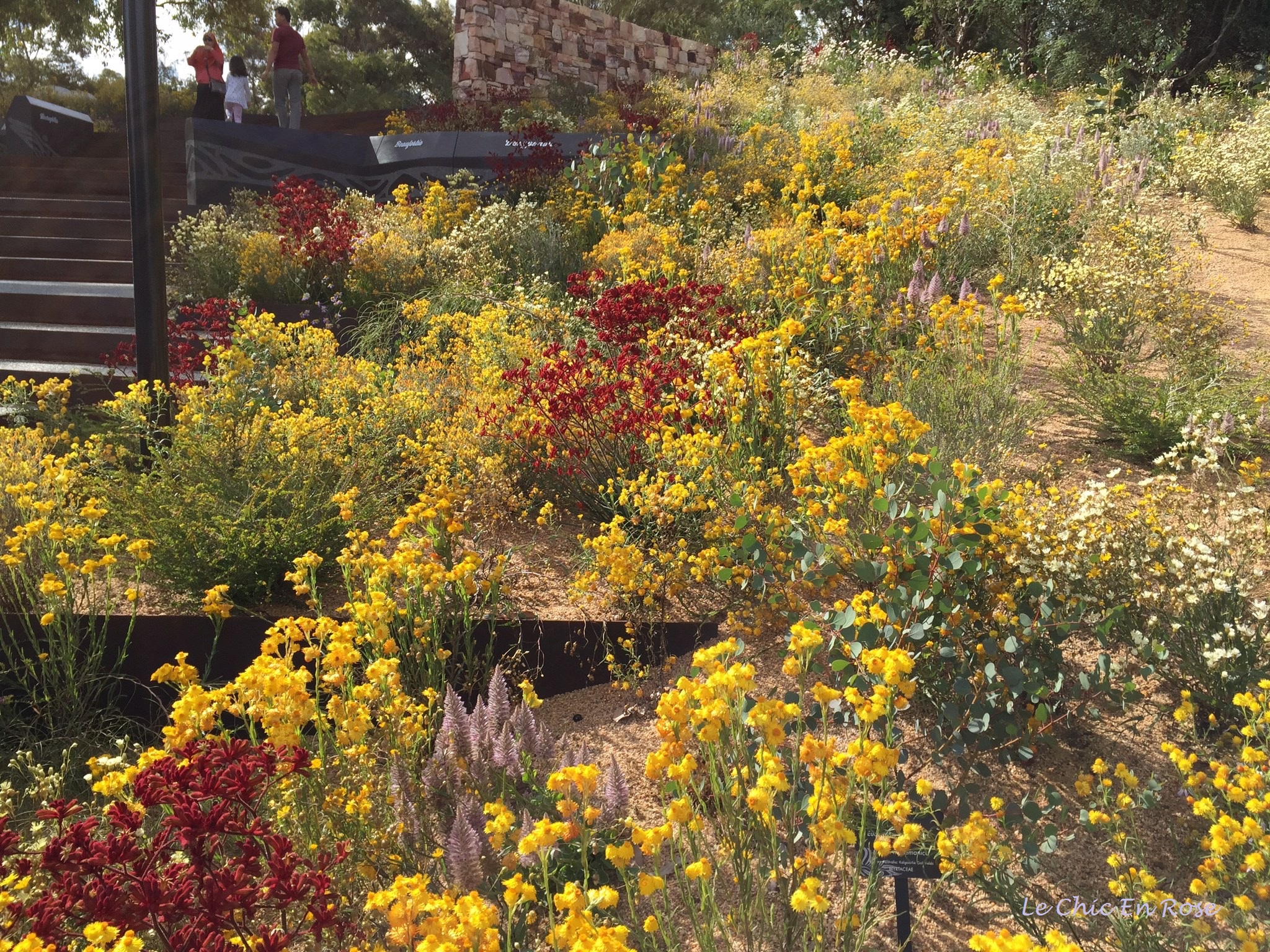
The beautiful kangaroo paw is the floral emblem of Western Australia
There is a huge range of bio diversity here in Western Australia – many rare species of flowers and plants are found in the south west corner of the state
Much of the park area is preserved as natural bushland – even the more cultivated parts are kept as natural as possible
Monsieur Le Chic’s shot of palm trees, which he feels resembles the opening sequence of “Miami Vice”!
The Botanic Garden features a wonderful diversity of flora and there is a wealth of information to read on signs as you wander round. With children’s play areas, a lake, picnic zones, a gift shop, cafes and restaurants plus well maintained war memorials, Kings Park is a must see place if you’re ever in Perth.
The famous “Boab Tree” , which was successfully relocated from its home in the far north west of the state and transported to Kings Park as a gift from the local indigenous population. It is 750 years old!
History of the Boab Tree in Kings Park and its successful relocation
More stunning colours
History of the Mount Eliza Escarpment
Next week hopefully I’ll be back on track to finish my account of our south Bavarian travels! In the meantime here is another stunning photo of the beautiful spring flowers in Kings Park.
A busy week has meant this week’s intended post about our day trip to Southern Bavaria and the Neuschwanstein Castle has gone by the wayside! However it does give me a chance to share some photos of the pretty little town of Fuessen, which nestles at the foot of the Bavarian Alps near the Austrian border. Fuessen is at the end of the rail line from Munich – the journey takes about 2 hours one way. The town centre, however, is often overlooked by tourists heading off to see the nearby castles of Hohen Schwangau – the buses leave from the car park adjacent to the station. We did 2 trips to Fuessen during our Bavarian holiday. The first, in pouring rain, was very different to the glorious day we had later on for our tour round Neuschwanstein. Despite the inclement weather the town had a certain charm even under the gloomy grey clouds. It is also at the southern end of the Romantic Road, which links some of Bavaria’s most picturesque towns. Like many places we came across during our Bavarian travels, it also had plenty of cafes and eateries serving hearty, warming meals perfect for a cold wet day!
Main street Fuessen
Trying to keep warm!
All day kitchen serving hot food – just what we needed!
Another charming Bavarian cafe in Fuessen
The Alps were rather hidden by the mist and rain
Fuessen Bavaria – road out of town heading towards the Alps
Last week we went on a tour of the Residenz – the magnificent palace and seat of government for the Bavarian Wittelsbach rulers. On our last afternoon in Munich, we decided to check out their summer residence, the Nymphenburg Palace, which proved to be every bit as palatial as their inner city headquarters!
Approaching Nymphenburg Palace Front Entrance
The Nymphenburg Palace was founded to celebrate the birth of an heir to the Bavarian throne in 1662. Max Emanuel came along some 10 years or so after the marriage of his parents, Bavarian Elector Ferdinand Maria and his wife Henriette Adelaide of Savoy and his birth was a cause for great jubilation at court. Construction began in 1664 according to the plans of north Italian architect, Agostino Barelli, and as so often happens with royal residences subsequent rulers expanded and added to the original designs to create the magnificent complex of buildings and gardens one can see today. Back in the 17th century the palace would have been well out in the country but nowadays with the growth of Munich as a city, it is a 15 minutes journey west from central Munich via public transport (S Bahn to Laim then bus to Schloss Nymphenburg or U Bahn to Rotkreuzplatz and tram to the Schloss). The walk up the street and along the little canal gives you an idea of the grand scale of the buildings and grounds.
Lake in front of Nymphenburg Palace
Canal leading up to the palace gates
Duck enjoying the pleasant spring afternoon
Glimpses of the palace
Floral borders in the grounds near the entrance
There are a number of buildings including the Marstallmuseum (museum of carriages and sleighs in the former royal stables) and the Museum of Nymphenburg Porcelain, which are generally open to the public but it appeared that there was some sort of private function taking place on the afternoon of our visit and some of the complex was off limits. Details of the various admission times to the palace buildings, museums and grounds can be found here. Since we hadn’t a lot of time left, we were quite happy to wander round the gorgeous grounds with their displays of spring flowers and relax in the beautiful surroundings.
Flower beds in the Nymphenburg grounds
Colourful floral displays
View back up to the palace from the grounds
Central canal in the Nymphenburg Palace Park
The main palace building
We stopped for refreshments at the Schlosscafe Im Palmenhaus and enjoyed some iced coffees and chocolate in the beautiful garden setting there. There was an extensive selection of cakes and tortes on offer though we decided to save ourselves for a hearty Bavarian dinner later on!
The back facade of the Nymphenburg Palace
A little further down from the palace you come to the Schlosscafe Im Palmenhaus
Iced coffees and chocolates ideal for a warm spring afternoon
After drinks we took a stroll round the landscaped park along the central canal where you can take a gondola ride during the warmer months from April to October (though again we didn’t see any gondolas on the day we were there). Some of the grounds were forested and less manicured and we came across the pretty Amalienburg hunting lodge amongst the trees.
Amalienburg Hunting Lodge in the Nymphenburg Palace Park
Pretty waterways and forests in the grounds of the Nymphenburg Park
Bridge over the canal
Monsieur Le Chic and Mlle in the Nymphenburg Park
Nymphenburg Park
You may remember the marvellous Rococo style François Cuvilliés-Theater from last week’s post. Its creator François Cuvilliés the Elder also designed the elaborate Amalienburg. It was built by Elector Karl Albrecht (later Holy Roman Emperor Charles VII) for his wife Maria Amalia of Austria between 1734 and 1739 and is another example of ornate Rococo design. We had to peer through the windows to see anything but there were the unmistakable sparkling chandeliers, intricate decor and a beautiful central “Hall Of Mirrors” – a sort of miniature Versailles!
Leaving the palace grounds we wandered back to the main road to catch a tram back into town but were sidetracked by the wonderful selection of flavours at the local gelati shop. Judging by the number of people there, it’s a hugely popular local haunt. We took our gelati back to the canal to enjoy them overlooking the water with a view of Nymphenburg in the distance.
Situated near the heart of Munich’s Altstadt you’ll find the vast complex of the Munich Residenz. This grand collection of imperial buildings and gardens was home to the Wittelsbach rulers of Bavaria for many centuries and seat of the Bavarian government. Suffice to say that Monsieur Le Chic and I spent the best part of a day there (with a pause for lunch in the middle of the day) and still felt we rushed through large sections of the place!
One of the many courtyards in the Residenz complex
Spire in the Residenz
Ornate buildings
Cafe in courtyard area
Gardens approaching the Residenz Museum
Fountain in one of the courtyards of the Residenz
Originally the Residenz started out as a small citadel or castle to the north east of the centre of Munich in 1385. Gradually more and more buildings were added on to the existing castle until eventually it became the magnificent palace that you can still see today (restored to its glory after heavy destruction in World War 2). The Wittelsbachs began their rule in 1180 and made the Residenz their seat of power from 1508 to 1918 until Ludwig III relinquished his family’s ruling rights at the end of World War 1 and Germany became a republic. With its many courtyards and buildings it took us a while to locate the reception area! We decided to buy a combination ticket for the Residenz Museum, the Treasury and the exquisite Cuvilliés-Theater. Architecture and artefacts that you can see at the Residenz include examples from the Renaissance, early Baroque, Rococo and Neoclassical periods. It would be impossible to describe or feature them all here so I’ll include some of my favourites!
The Antiquarium (Hall of Antiquities) is described as “the largest secular Renaissance Hall north of the Alps” and was to my mind the standout feature of the museum – the photos don’t do its beauty justice. It was built between 1568 and 1571 to house the antique sculptures collected by Duke Albrecht V. Thankfully the Antiquarium was restored to its grandeur following its collapse during 2nd World War bombing raids. You can read about the history of the Residenz and its post war reconstruction here.
The magnificent Antiquarium Munich Residenz
Ceiling detail of the Antiquarium
I particularly liked the beautiful decorations of the Reiche Kapelle (Ornate Chapel) with its stunning gilt ceiling and rich lapis blue colours. This chapel was the private place of worship for Duke Maximilian I and his wife and was dedicated in 1607.
Gilt and lapis blue decorate the Reiche Kapelle (Ornate Chapel)
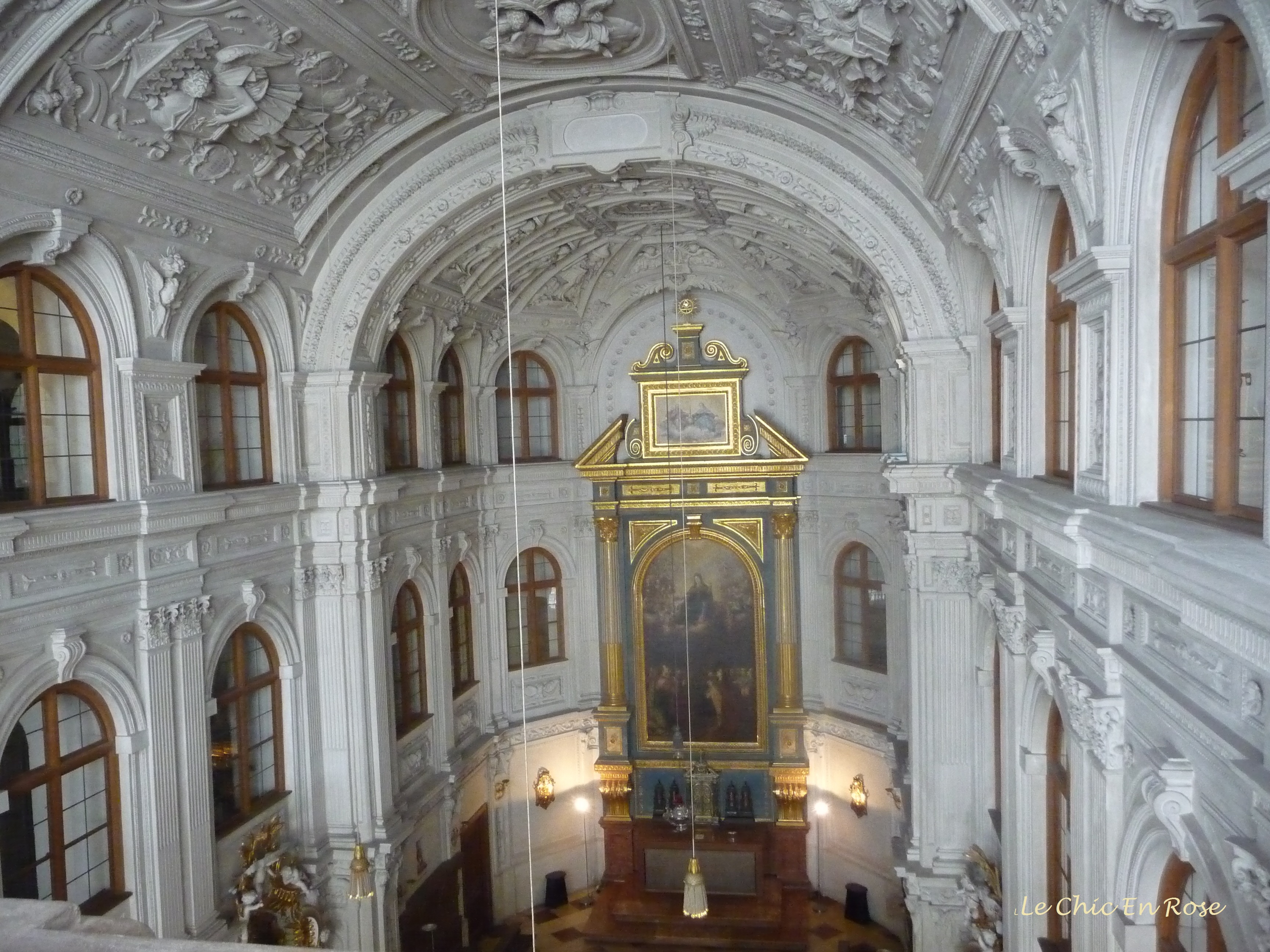
Maximilian also oversaw construction of the court chapel, the Hofkapelle, in the early 17th century.
Hofkapelle Munich Residenz
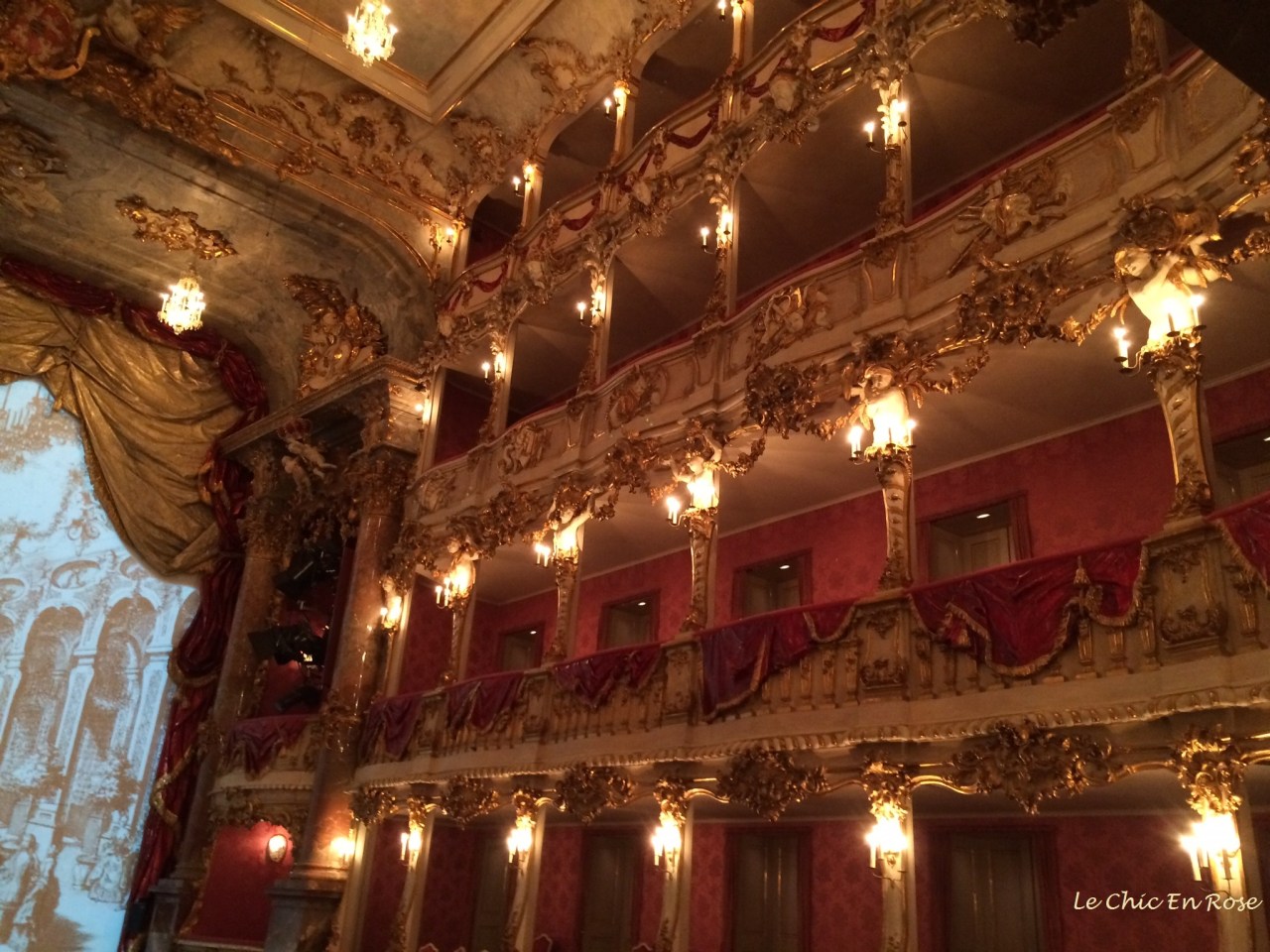
However the beautiful Rococo style Cuvilliés-Theater would probably be my personal highlight. We nearly passed it by altogether with time being of the essence and didn’t get to see it until later on in the afternoon, by which time our heads were spinning from treasures, antiquities and trying to work out which Wittelsbach ruler was which! The pretty theatre designed by the architect François Cuvilliés the Elder was built by the Elector Maximilian Joseph III between 1751-55 as his new opera house. Mozart’s “Idomeneo” had its first ever performance there in 1781. The Cuvilliés has a French Rococo style feel to it and is surprisingly cosy and intimate with its gorgeous red and gold tier fittings and beautiful carvings. Many of these beautiful fittings are original as they were removed for safe keeping in 1943 and thus survived destruction by the bombing, which devastated many parts of the Residenz in 1944.
The exquisitely pretty Cuvilliés-Theater Munich Residenz
Cuvilliés-Theater Stage
Le Chic En Rose Cuvilliés-Theater Munich
In the event of any confusion about the Bavarian rulers you can come face to face with their images as you walk towards the entrance of the museum. Parts of the Residenz are currently undergoing restoration and so some exhibitions are not on public display but there is still so much to see and do here I doubt anyone would notice the absence of a collection or two!
Luitpold, Prince Regent of Bavaria
Ludwig III of Bavaria
Meeting Maximilian 1 (Duke/Elector Prince) of Bavaria
Perth is in the grip of footy finals fever! The West Coast Eagles, one of the 2 local Australian Rules Football teams, have reached the AFL Grand Final in Melbourne! Famille Chic (we’ve been Eagles members for years) saw them win the Preliminary Final here in Perth last weekend. Our younger daughter in the Uk watched a live stream on her phone whilst she was travelling back to London by coach on the A1 (we’re pretty passionate fans!).
Domain Stadium Subiaco Western Australia AFL Preliminary Final 2015
The culmination of the Australian Rules Football season takes place at the Melbourne Cricket Ground (MCG) traditionally on the last Saturday in September. It is a week later this year as a result of the Cricket World Cup Final being played at the MCG at the end of March. Monsieur Le Chic was last seen heading off across the Nullarbor Desert with some friends on a trek to reach the Grand Final in time (well actually they flew to Adelaide and drove a hire car to Melbourne from there)! If you’ve read my article on Perth, you’ll understand what an isolated city it is. The airlines, capitalising on desperate Eagles fans wanting to travel to Melbourne for the final, have hiked up their prices!
Whilst I’ve stayed back in Perth (just as well as the cat needed an emergency operation on Tuesday to remove a pom pom she had unwisely decided to eat) I have been to 2 Grand Finals in the past. One (in 2005) the Eagles lost by 4 points, the other (in 2006) they won in an absolute nailbiter by a single point against the Sydney Swans! As an auspicious omen, I’ve hunted out some photos from our family trip in 2006 to give you a feel of what it’s like to be at the MCG on Grand Final Day. Tomorrow I’ll be going to a Grand Final party with friends and cheering the Eagles on against the reigning premiers and favourites, the Hawthorn Hawks. Footy does strange things – it brings out all sorts of emotions in usually quite mild mannered folk! Wishing everyone a great weekend and “Carn the Eagles”!
Tense moments!
The footy banner that the players run through at the start of the game
Famille Chic in Melbourne for the AFL Grand Final in 2006
Our elder daughter did not like having her photo taken back in those days!
MCG before the start of the Grand Final
Final Score Eagles win by a point!
Victory Presentations
Carn means “come on” and is used by Australian Rules crowds!
Postscript: Alas the Eagles couldn’t produce their best footy on Saturday at the MCG and were soundly beaten by the experienced Hawthorn team. The Eagles had a great 2015 season though and confounded the sceptics. Onwards and upwards for 2016, “Carn the Eagles”!
With Oktoberfest now in full swing, I thought it topical to go back to my Munich series and write up a quick overview of our experiences dining out during our trip. Since we had the flu for part of our visit, we didn’t go to as many cafes and restaurants as we usually do on our travels! Obviously this is our personal experience only – everyone has their own tastes and opinions as I found when I did some research on Tripadvisor. The same restaurant could be rated as excellent by one person and terrible by the next!
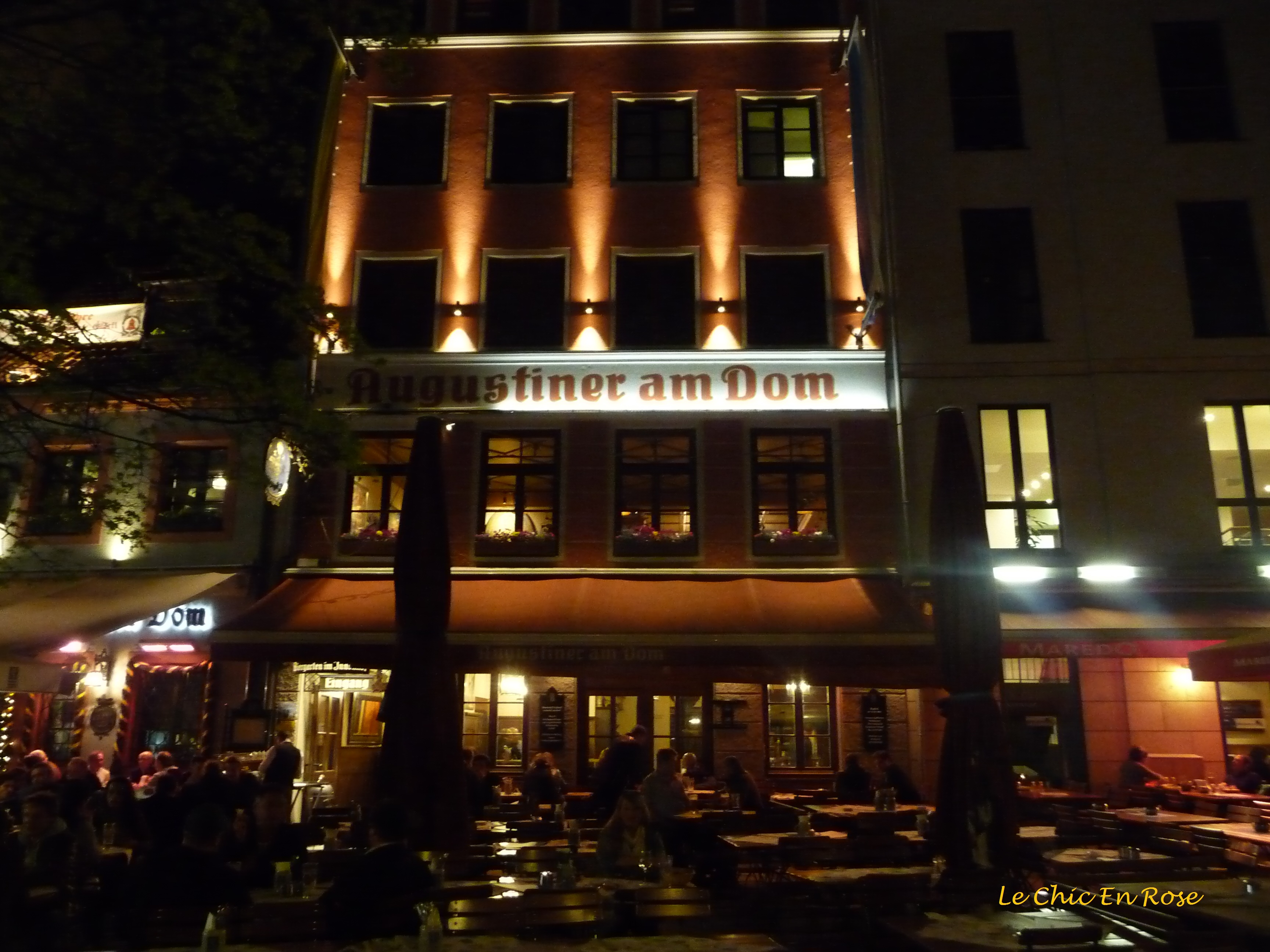
The famous Hofbrauhaus fronted on to the street at the back of our hotel, the Platzl (more details from my earlier post of the Platzl Hotel Munich here). Mlle, our daughter, had a room at the back of the hotel, which was more prone to noise than ours towards the front and there was one especially loud and raucous evening where the revellers partied well into the night – fortunately it didn’t faze Mlle! We thought we should check the Hofbrau out one evening for ourselves but there was not a table to be had anywhere, it was absolutely packed with tourists and we didn’t feel inclined to wait around. Instead we headed off to Augustiner am Dom, which I’d spotted when I went round the Frauenkirche (cathedral) a couple of days earlier.
Entrance to the Augustiner am Dom in Frauenplatz Munich
It was much too cold to sit outside (in our opinion!) but we easily found a table in one of the cosy cellar rooms and the staff were friendly and helpful. We enjoyed hearty Bavarian fayre in a warm and cosy ambiance. The portions were huge (I had the fish and there were several fillets piled up on a bed of delicious white asparagus along with a generous serving of new potatoes). The produce was fresh and seasonal – as well as the white asparagus (Weiss Spargel) and potatoes, we shared a dessert of plump, juicy strawberries with lashings of cream. We felt as if we could have been in a large Bavarian country farmhouse. There was an elderly lady sitting at the table next to us (she must have been about 80) downing pint after pint of the local brew – the waitress chatted away to her and she was clearly a regular. Eventually she tottered off home and finally we did the same (or maybe “waddled” back to our hotel would have been a better description).
The dining area in the Augustiner am Dom cellar
Fish on a bed of Weiss Spargel Augustiner am Dom
Potato accompaniments to the main dishes at Augustiner am Dom
Le Chic En Rose and Mlle at Augustiner am Dom
Monsieur Le Chic and Mlle at Augustiner am Dom
Dessert – say no more! Sehr lecker (delicious!)
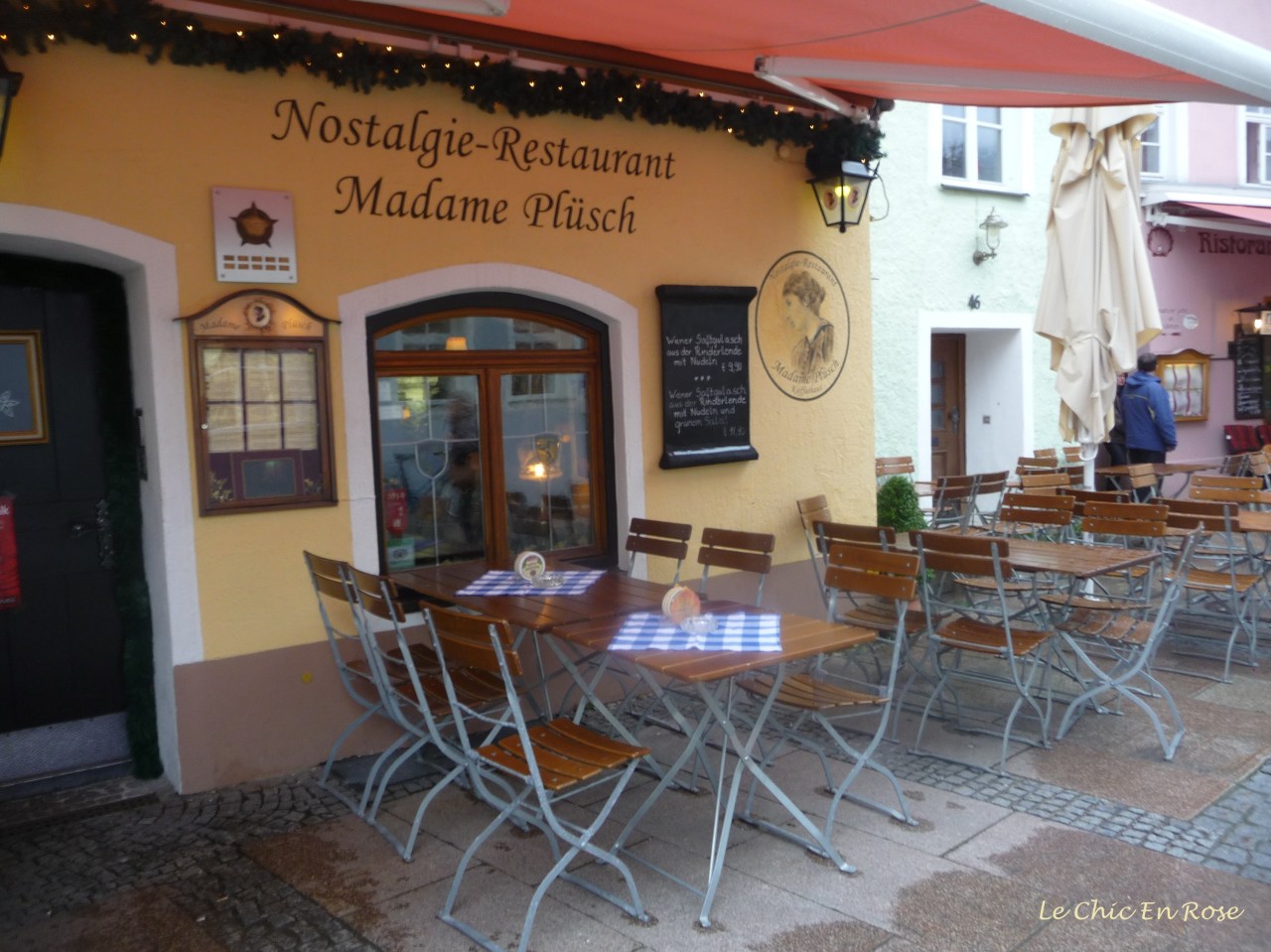
Zum Duernbraeu is another traditional restaurant a few minutes from the Marienplatz. It was originally established as a brewery in medieval times – according to the sign at the entrance it dates back to 1487. Another place with a warm traditional feel, a pretty beer garden and generous portions of typical Bavarian dishes, the ubiquitous “Wurst” or sausages, dumplings, pork hock and sauerkraut. I had a quarter of a duck, which I thought might be more manageable. All I can say is that it must have been the largest duck in Bavaria in its day – the serving was huge! The photos (including the ones at Augustiner am Dom) were all taken in dim light on my iPhone so please excuse the quality but it gives you an idea of the restaurants.
Facade of Zum Duernbraeu established in 1487
Wall decorations illuminated at night at side of Zum Duernbraeu
Beer garden at night Zum Duernbraeu Munich
Side dishes at Zum Duernbraeu Munich
My portion of a quarter (viertel) of duck!
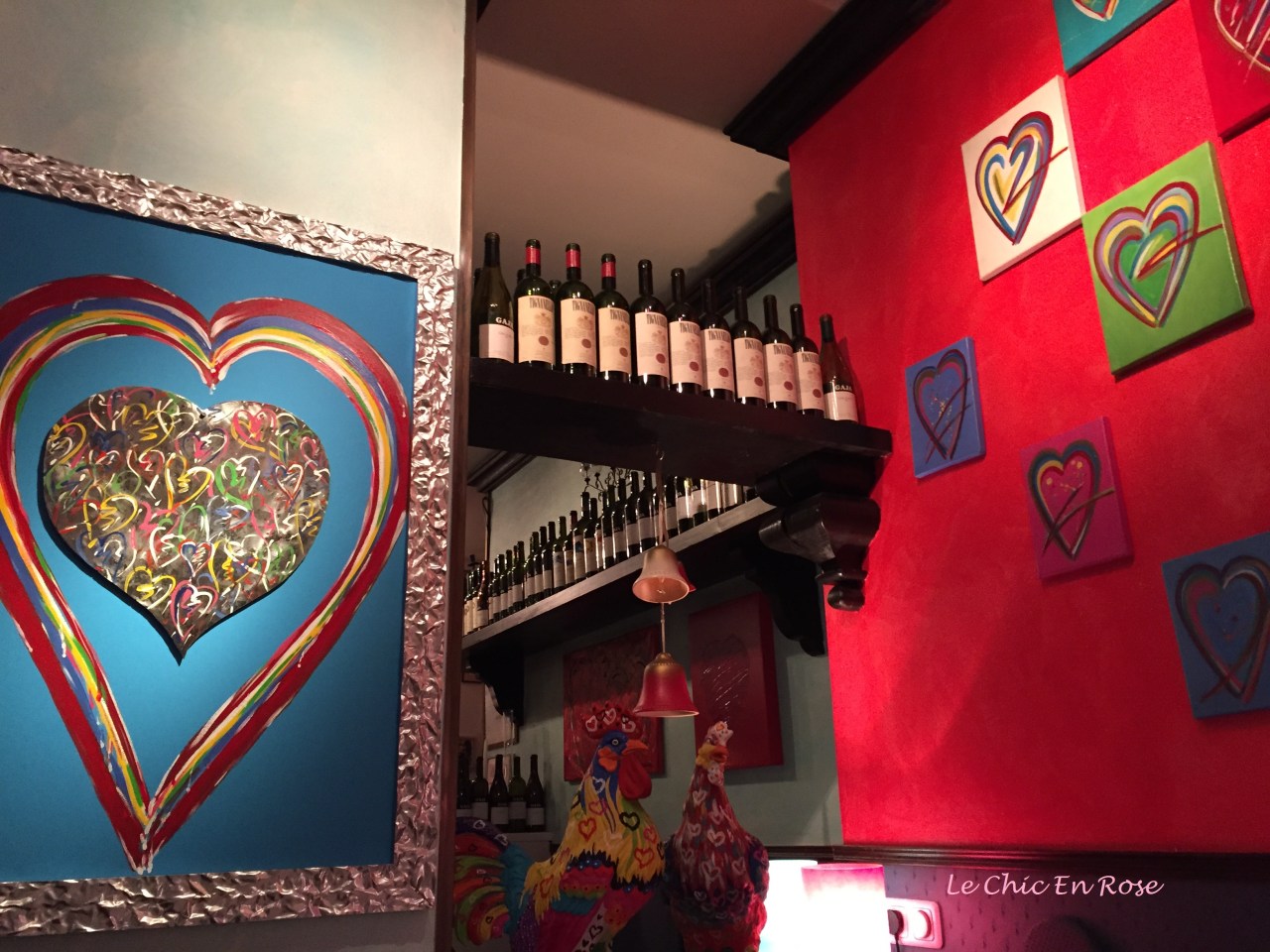
For a complete contrast one night, we decided to try the cosy looking Italian restaurant we’d walked past numerous times during our comings and goings from the Platzl Hotel. Ristorante Galleria was just down the road from the Platzl in one of the quaint old buildings along Sparkassenstrasse. The webpage, which unfortunately does not appear to have an English translation, describes the chef Andrea Pomiato Colesso, as “ein Kuenstler” (artist) in his preparation of fine dishes using high quality ingredients. It likens the dining experience, “wie eine Reise nach Italien wenn Sie die Galleria betreten” – “like a trip to Italy when you set foot inside the Galleria”! The decor is certainly bright and snappy and wouldn’t look out of place in Milan or Rome.
Inside, the Ristorante Galleria seats 45 patrons in cosy booth type seats with a small room available for private functions
Heart themed motifs and artwork
Mlle at Ristorante Galleria
Le Chic En Rose Ristorante Galleria
Framed photos of awards line the wall
It was certainly a memorable gastronomic experience and definitely not a cheap one! However we had barely gone out to eat during our first few days in Munich and we don’t get the opportunity to see Mlle that often now that she lives in London, so we felt a splurge was justified. We were encouraged to try the chef’s “degustation” a selection of small exquisitely prepared dishes designed to be a feast for the eyes and taste buds. At this point it is best to resort to illustrations – I forgot to photograph the first dish, a small spoon sized serving of a pea and mint soup but here are the subsequent 7 courses plus a glass of the Chianti we tried! I should point out that these are not sharing dishes – we all got our own portion of each course! These photos are just of mine!
Superbly presented starter
White asparagus risotto
All washed down with a bottle of Chianti
Seafood course
Fish course with a fine “mousse” sauce
Sorbet to clear our palates so we could manage to eat the next course!
Beef course
A selection of flavours and textures for dessert
By the time we had finished the fish course I was relieved that I’d managed to eat everything! When the waiter appeared with a palate cleansing sorbet I knew that meant that there was even more to follow. He must have sensed my panic as he reassured me that we were almost there (it was starting to feel a bit like an eating competition!). I admitted defeat though by this stage and shared out my plate of beef with Monsieur and Mlle. Happily I did recover sufficiently to enjoy my dessert – a wonderful assortment of a gooey chocolate confection, fruit and gelati.
When the bill arrived poor Mlle thought we’d have to phone our bank in Australia to arrange a small loan or ask for an increase in our credit card limit! Either that or she’d be washing up in the kitchens for the next month! Fortunately we managed to pay the bill and parted on good terms with the staff! The restaurant reviews that I read for the Galleria were for the most part positive. There were a few negative comments but I didn’t feel that the critics were always being reasonable. For example several diners complained that they were charged for the glasses of prosecco offered to patrons on arrival. Certainly the waitress did encourage us to have glasses of prosecco, which we gladly accepted, but we never expected them to come free of charge! On the other hand quite a number of reviewers (many of whom said they were staying at the Platzl too) said they came back to the Galleria on subsequent nights since the food was outstanding. Each to their own! Ristorante Galleria was not a cheap eatery by any stretch of the imagination though for a fine dining experience in the heart of Munich’s Altstadt it was a wonderful experience and a refreshing change from the traditional Bavarian food we’d eaten up to that point. In the spirit of Oktoberfest wishing everyone a great weekend and “Prost”!
We have always been drawn to the beautiful cape region of South Western Australia. The Cape Leeuwin Naturaliste Park covers the area from the lighthouse at Cape Naturaliste in the north to the Cape Leeuwin lighthouse in the far south west. There is quite a contrast between the more serene waters and sheltered bays of Geographe Bay in the north (see Sunset At Cape Naturaliste) and the coast round the corner from Cape Naturaliste lighthouse. Here the powerful seas and wild winds have given this western coastal area an almighty battering over the years. The beaches are a magnet for the many surfers drawn to the magnificent swell (for experienced surfers only!) and visitors who come for the coastal walks and trails and to admire the ocean.
Explanation of the formation of Canal Rocks in Western Australia
We used to visit Canal Rocks when our 2 daughters were small and have been coming back ever since. The aboriginal name for the rocks is Winjee Sam. The seas and wind have carved an unusual rock pattern into the granite rocks and formed a series of channels or canals. Nowadays a series of wooden walkways and bridges allows you to walk up to the end of the channels and witness first hand the power of the ocean with the waves crashing onto the rocks.
Walkway across the rocks and over the channels
Monsieur Le Chic rugged up though we have been there when it was wilder!
Storm clouds over the Indian Ocean
The channels have been hewn into the granite rocks
Windswept at the end of the bridge
Common sense is required – we have been there on several occasions when the water is breaking over the pathways and you have to be careful not to slip! On the day we were there recently it was comparatively mild and yet you can still see the immense power of the ocean in full force!
Crashing waves
Waves pounding the rocks
The force of the sea is mesmerising
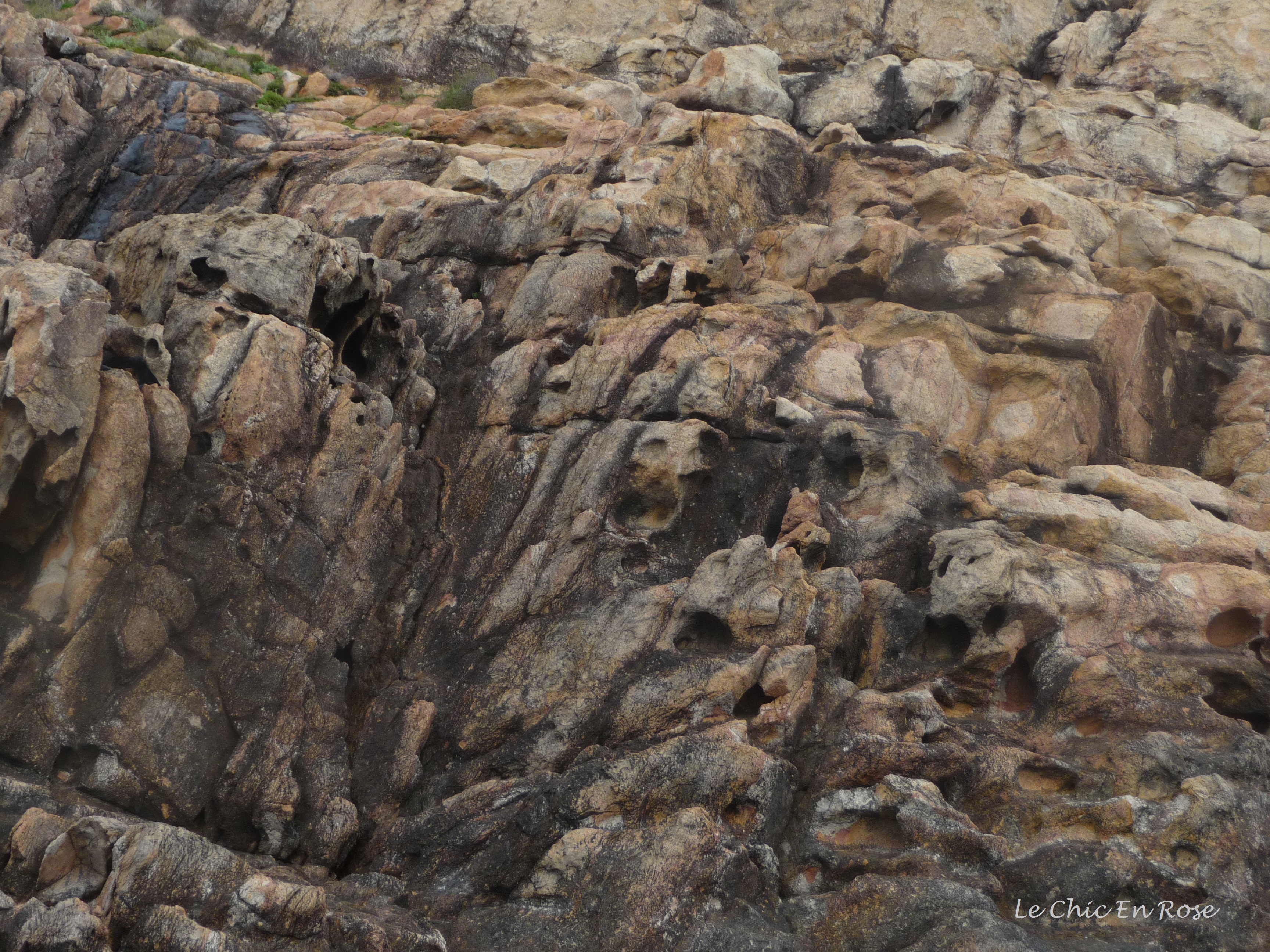
The rocks themselves are fascinating – intricate patterns have been carved out into the granite over many centuries.
Rock formations at Canal Rocks
We were there at the very start of spring and wildflowers were starting to bloom.
Vegetation in the Canal Rocks area
Wildflowers were starting to bloom
The vegetation has to be able to survive the forces of nature
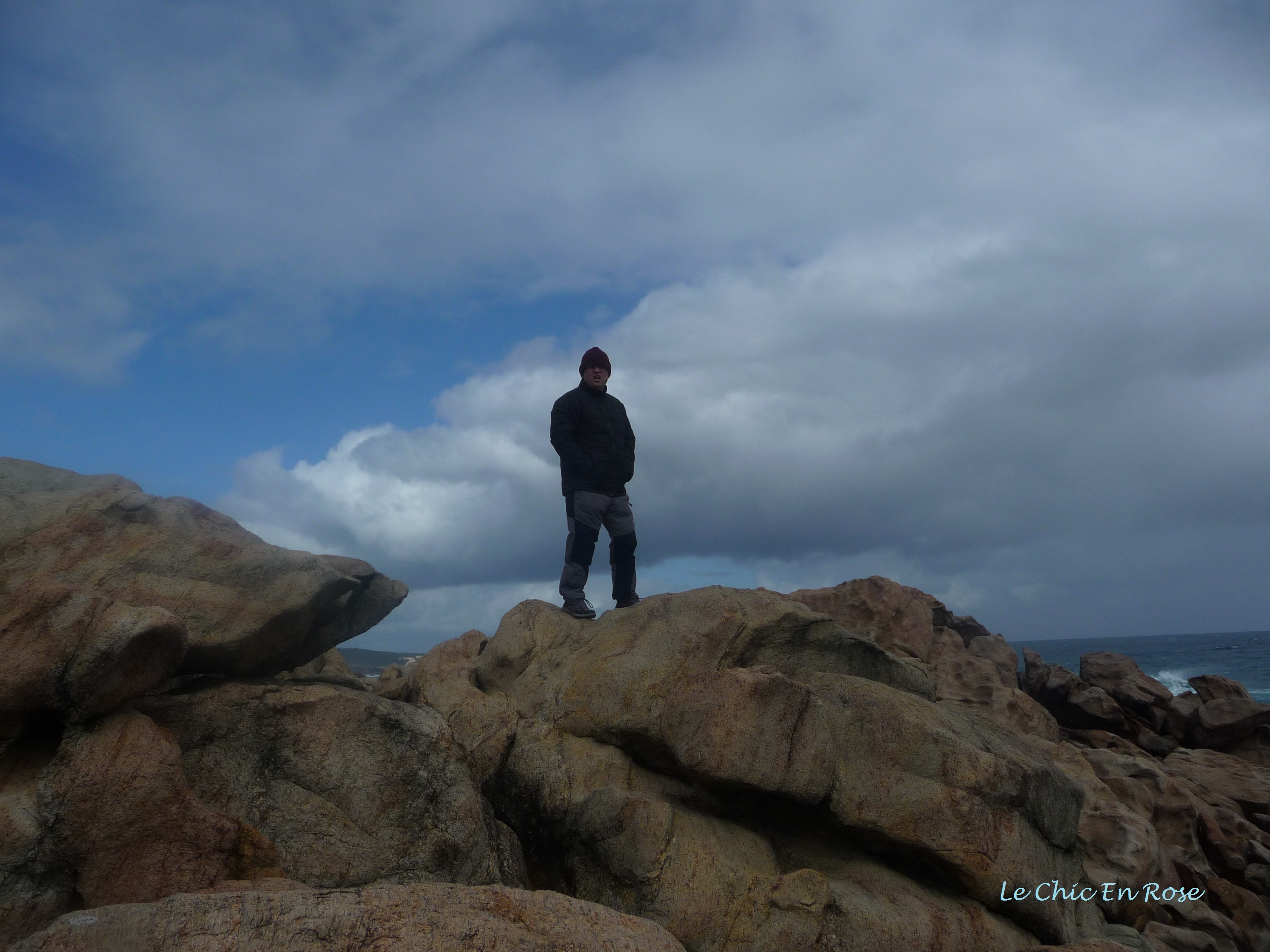
On the other side of the rocks away from the walkway and channels you can get a good vantage point of the sea. Monsieur Le Chic couldn’t resist climbing all the way to the top (be careful if you decide to do this!).
Monsieur Le Chic at the “top of the mountain”!
Whilst I waited a bit further down he managed to take some fantastic photos of the sea crashing over the rocks below!
Indian Ocean at Canal Rocks
The Indian Ocean pounding the rocks at Canal Rocks Western Australia
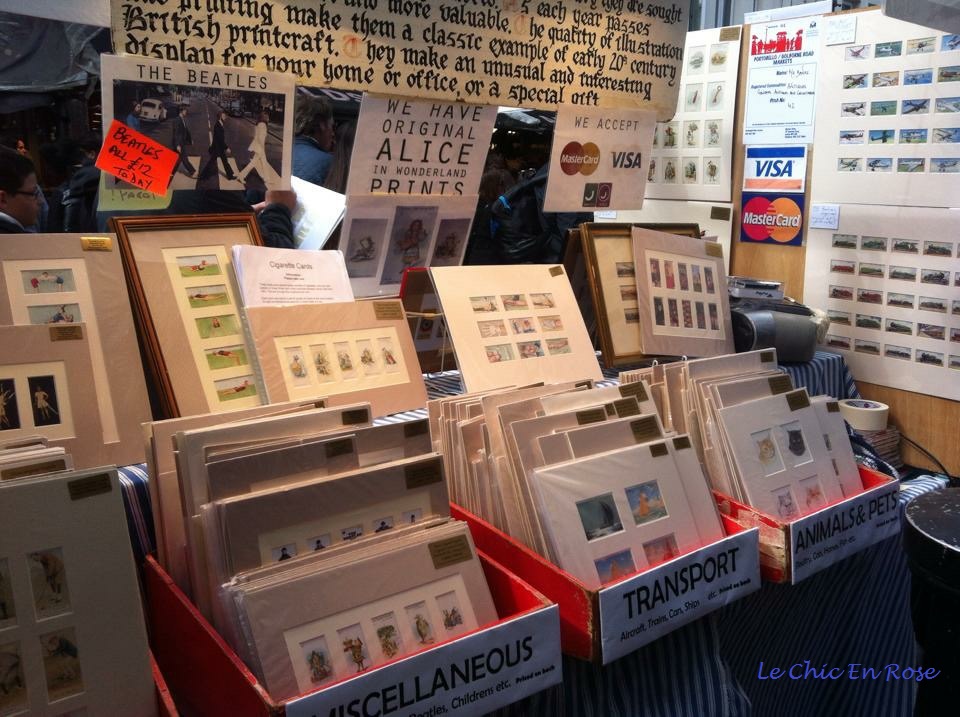
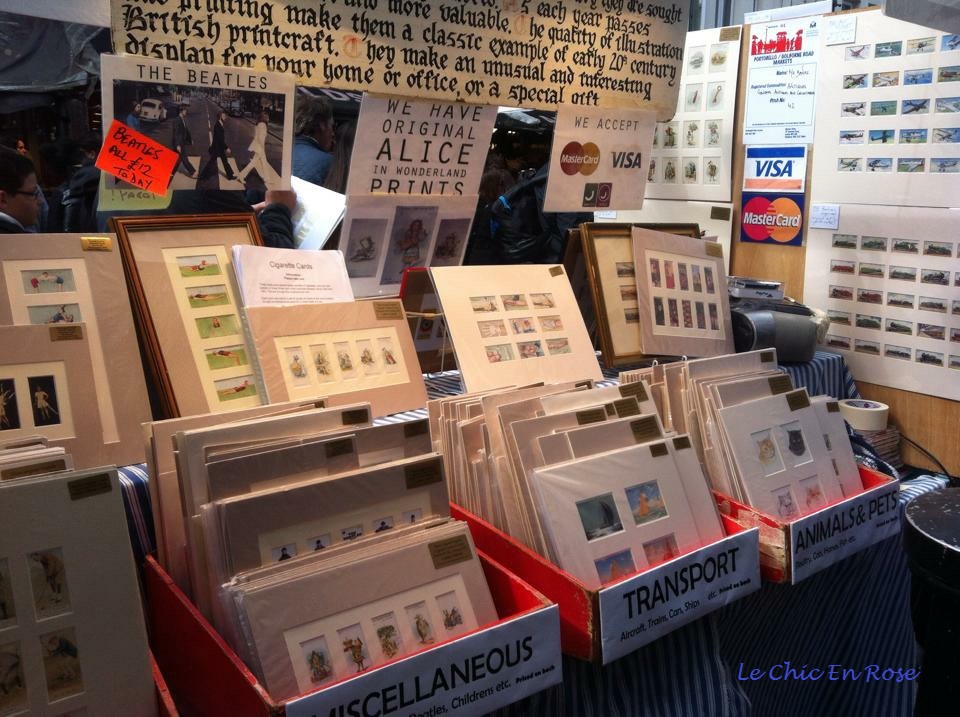
One of the antique sellers’ stalls I visited with my daughter, Mlle, was Portobello Road Cigarette Cards, where we had an interesting chat with the stall owner, David Banks, about the history of cigarette card collecting. The cards were placed, one card only, inside packets of cigarettes and were popular in Great Britain and other countries from about 1900 to 1940. According to David, “Competition between tobacco companies for brand loyalty forced the quality of the cards ever higher… many of the original cards have become extremely scarce and now attract high prices in the collectors market.”
All of the original cards have the date of issue written on the back. Reprints, which have become popular over the past 20 years or so, don’t have a year of issue written on them – only a price. This distinguishing feature is very important if anyone ever tries to sell you an original set of cigarette cards without a date written on them! Mlle had been eyeing off a print of Alice in Wonderland cigarette cards for a few weeks but fortuitously with the arrival of Maman Le Chic En Rose and her credit card, she was able to purchase it!
Alice In Wonderland print of original cigarette cards from Portobello Road cigarettes, Portobello Road Markets London
The cards are reprints of the original illustrations in the first edition of Alice In Wonderland by Sir John Tenniel and the back of the print states that the cards came from 1930.
Back of the Alice In Wonderland print with the date 1930 written on it from Portobello Road Cigarette Cards
Visiting the Portobello Road Markets was one of the highlights of my trip to London in April. They are well worth checking out – if you’re down that way you might source yourself a bargain or discover some hidden treasures! Back “Down Under” more stories from my travels in Western Australia’s south west coming up on the blog soon! In the meantime wishing everyone a lovely weekend!



















 Le Chic En Rose